How We're Using this SINGLE Cell to Change Lives!
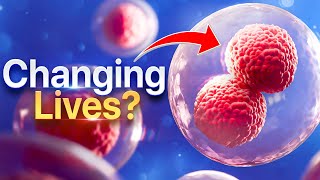
Dr. Charles Pereyra, an ER doctor, built Springs to treat what he calls "manopause" using stem cells, exosomes, and custom peptides. Testosterone and sperm counts have dropped dramatically over two decades. His clinic uses AI to profile your metabolism, then delivers personalized biologics designed to regenerate tissue and restore hormonal health.
Chapters
You can look at a study that looked at male patients from 2000, so the year 2000 and then the year 2020, and show that a 22-year-old male had a testosterone today of a 67-year-old male in 2000. So just 20 years ago, a 22-year-old male's metabolic hormonal profile is the same as a 67-year-old. And we're seeing sperm rates decline. There's some really respected researchers that are thinking that sperm counts may actually go to zero. In the year 2050 if we continue this trend.
All right, Dr. Charles.
Yes, sir.
I'm excited to be here and do this, this video. This is a long time coming. You know, naturally you guys have been making all kinds of waves in the medicine space, in the holistic health space, in the stem cell space, all kinds of medical spaces, ultimately just helping people live better lives, live longer, live happier, live more fulfilling. But I think what's really important, yeah, as we're going into this uncovering what Springs is and what it has to offer in the future of it is, I guess, let's get back to the origins. Ultimately, you know, where did your process of, man, I really want to help people live better come from?
Yeah, that's a fantastic question. And I'll try to use brevity here. So it's been a long time coming as far as me wanting to provide something different and help people. Obviously, like most doctors, you have an interest in anatomy and you like fixing things, and then you go to med school and somewhere along the lines you stop becoming a human and you become a doctor. And You have this apathy kind of effect towards you. And it's one of the things I was always cognizant of that I didn't want to lose. I always wanted to be a true version of a doctor, which, you know, if you look back in time, they're researchers. In fact, the word doctor is also amateure, which means teacher. And so, they're always learning, always teaching, always discovering. And I was walking through a lab. I'll never forget this. This was before medical school. This is when I was trying to get into a decent enough college to get into medical school. So, kind of a prep program, if you will. And I'm behind the scenes at Stony Brook University in Long Island, and I'm looking at this thing called the tissue culture hood. And so it's one of those things with glass, and then you have like the arm sticking through, like in the movies. And he had this piece of flesh, it was an umbilical cord in there, and he was flushing it out like side by side. And I asked the principal investigator, the head of the lab, who is Dr. Lee at the time, and I said, what are you doing here? Like, what is this? And he is like, Lassek, this is stem cells. This is the future of medicine. And I could not stop thinking about it. I went home researching it and then I found out people were doing it overseas. And when I found out people were doing it overseas, I was like, well, how do I get it? And then I looked up the cost and I was like, $100,000 per tree fit. Wow. It's like, yeah, like I'm never going to afford that. And I started becoming anxious. I was like, well, what if I need it? What if my family needs it? This actually works. You know, and this was, you know, it was 20 years ago now, more than 20 years ago. And I was looking at this stuff and I was like, okay, like, how do I really make a difference? In my own life and then also give this to other people and make a difference in their life. And so, obviously, I was still in the medicine track and I kept this in the forefront of my mind. I published a few papers on anti-aging and genetics. And then, finally, I found a way that we can deliver this in the States, right? And at the time, I was still an athlete, not a very good one, but an athlete doing mostly Brazilian jiu-jitsu and training with the MMA guys. And I was in a— I was lucky enough to be at a place called America's Top Team in Atlanta where there's bunch of really cool guys. I started treating them and I was working out at Lifetime and some of the Lifetime guys were coming over and really just grew a business organically and was kind of forced to get an office and open this office up. And, the results kind of spoke for themselves. And, believe it or not, you know, for the beginning of our company, for almost all of it, like 3.5 years, we ran zero marketing. We were just trying to help people. And, because the product works so well and people were doing what they loved, the business just grew. But, it was always born from wanting to actually make a change, right? I'm a board-certified ER doctor, which means I have a limited attention span. I want quick results. Yeah, yeah, it's stem cells is probably the quickest medicine that I can think of right now. And it's being used everywhere. And it's a shame people have to leave the country or had to leave the country to get this kind of care. And you had to be ultra wealthy. So the goal was to provide access to these 1% treatments, if you will, to as many people as possible.
Yeah. And so, you know, in that idea of, you know, you want to make a change, you want to make an impact, naturally, like, in my opinion, what we're told is like doctors make the impact, normal medicine makes impact, hospitals, all this stuff. Like, why move out of that space? Why leave that? Because most people would consider being a doctor one of the highest achievement jobs you can have, but you chose to leave it.
Why? That's a great question. So I still think ER is great. It's still a needed field, right? Like, there's still people who are going to get hit by a car or going to have a gunshot wound or some type of trauma or even a heart attack. And you need that kind of ER medicine. And that's what I think draws most ER doctors to ER medicine. And then you realize that's like 1% of all the medicine. And a lot of it is just pushing drugs that quite frankly, most of us don't believe in. I mean, just don't. And dealing with things that are chronic issues, which you wish there was a better way to heal it and deal with people more holistically long-term, but you don't have the time to do it because you're really pushed into just seeing a certain number of patients per hour. And actually, well, reimburse you sometimes based on that. And so, even some hospitals will call it revenue-based units or RVUs or revenue value units. And so, you're kind of forced to see patients very quickly, you know, sometimes 20, 30, 40 patients in a day. And you become disenchanted because you don't get to form the personal connections. You don't get to help people holistically and you're pushing drugs you don't really believe in. And then, there was this case that we talked about before where it was a Saturday or Sunday afternoon on the weekend and it was quiet. Which is like a dirty word in the ER. You never say quiet 'cause then something happens. And so it was so slow or quiet that I decided to order donuts and coffee. And as I was doing that, I got a phone call that there was a 70-year-old patient coming in in cardiac arrest, which is not uncommon in the ER, right? And so we prepped this critical care area, the recess bay, to help this patient. We're all ready. And what comes in is not a 70-year-old, but a 17-year-old patient. Yeah. And so it changes the game a little bit. There's a lot of lifelapse. This is not something you normally see, the 17-year-old patient cardiac arrest. And so for this particular patient, there was no pulse and no organized rhythm. So on that screen where you wanna see the heart rate, nothing really there. And term they're using, this thing called diabetic ketoacidosis. And when we took his blood gas, it was an unsustainable livable pH, which is your acid-base measurement. Like you have a base of hydrogen ions in your body, or whether it's the surplus or It's a deficient. It gives you your acid-base status. And the quick way to just say this is pH. And livable is around 7.3, 7.4, in that range. His was 6.7 and change. So, not compatible with life. And the glucose, which normally gives you a decent range, just said high.
Wow.
And no matter what we did, we worked on him for a bit, like 20 minutes before his mother came in. And I told his mother, when she asked me how he's going to do, you know, we're trained to give the truth. And I said, He's likely going to pass. And she, like, as I was saying it, fainted and had to be caught. And so we continued to do things that are very unconventional and that most doctors and even nurses was afraid that I was doing. I was giving boluses of insulin, like 40 units. I was giving boluses of potassium because I was giving so much insulin to kind of combat that. 'Cause they, they work together in a way. And I was also giving all these other medications and turns out he starts getting an organized rhythm. And then a pulse. And so we're at this rural hospital in South Georgia, so I have to call a helicopter to come pick him up. They almost didn't even want to get him because they're like, oh, he's going to be brain dead. You know, I talked to the doctor at the time, the pediatric ICU doctor, and just really interesting. They're like almost apathy and, but like, oh, you know, we'll come and get him. And I followed up with him naturally and they kept saying, oh, we're going to do MRIs, likely brain death, whatever. He was down for almost an hour before we'd had any response. Long story short, he is now healthy. He's a singer. He sings and he plays basketball and he's doing really well. And the lesson I took from that was you really have to think outside the box sometimes, and you can't just go by textbook medicine. And the system that's being designed is to beat doctors into being algorithms. In fact, if you're going to order something for people, they give you something called an order set. So abdominal pain, you're not even a patient essentially, you just click the abdominal pain box and populate all the labs you're ordering, all the tests you're going to do, and that's it. And it really takes the ingenuity out of being a doctor, like the thought process out of being a physician. And in this particular case, it needed a lot of thought. And if I just went textbook base, this kid would've died 100%. He was already dead. And so for me, it's like, okay, the world needs to think outside the box a little bit sometimes. How am I going to do this? How am I going to make the biggest difference possible? And I decided to just bring Springs to every major city in the country, giving a holistic approach, doing things outside the box. You know, some people call it fringe medicine and you know, one of the things we do to combat that is we really do informed decision with our patients and we're very upfront with them. We have a strict inclusion criteria for them and I think it's the best way to actually take care of your patients. And we have had 5-star reviews across all of our sites on Google. We've had some incredible stories, some really life-changing, and I think that's because our our team is all dedicated to thinking outside the box, and our core mission is patient outcomes, and we're patient outcome obsessed.
Yeah, you decided to move into this world of stem cells. Um, most people, including myself, you know, all I knew about stem cells was this thing that's involved in conspiracy theories. There's the, uh, a lot of controversy around stem cells, or that it was super private and exclusive and that no one really had access to it except very specialized labs or scientists. What is stem cells? And what do they do?
That's a great question. So, there's many different types of stem cells in your body, gut stem cells, the hair stem cells, all over the place. And a little over 10 years ago, almost 15 years ago, they started discovering a particular type of stem cell that became popular around that time called a mesenchymal or MSC stem cell. It's actually a little bit of a misnomer because it's not a true, true stem cell. It's kind of in the middle between a fetal cell and an adult cell because it's already somewhat differentiated. And they found that this cell has the potential to really regrow cartilage, to regrow bone, to regrow even heart and cardiac tissue, which is really rare. You know, we've seen this in some studies from everything from autoimmune conditions to neurodegenerative conditions, to cardiovascular, there's pulmonary conditions, and there's positive reviews throughout. And I think the common thing that you hear is there's not enough research, needs to be more research, and there always needs to be more research, right? But if you look at all the studies in the US and internationally, there's just an overwhelming amount of research all the way from case reports even some peer-reviewed clinical studies, which are very, very positive. And so I think people started to notice this early on, even 10, 15 years ago, and they were going overseas to find this. And so there's a big popular clinic overseas that you would go and buy it, but it started at $100,000. And this is what— and still today, if you go to some of these centers, it starts at $27,000. So the access to it isn't there. Most Americans, most people can't afford $27,000. And so When you think about stem cells and exosomes, really what they are in effect is a cell that has the ability to impact the functioning of other cells. And so, a stem cell is this specialized cell that really can turn into a bunch of different things. But what we're finding is in the human body, in our body, it's secreting these things called trophic factors, also called EVs or exosomes. And these have a mix of growth factors, peptides, all these proteins. And they even have microRNAs or mRNAs called messenger RNAs. And they send messages and signals to cells. And so, the stem cells release these bubbles or EVs or exosomes, and these cells in our bodies will actually take them up by a process called endocytosis. And when it takes it up, it releases the contents of all these little peptides, growth factors, and messenger RNAs. Called messenger RNA because it shares messages. And those messages usually are telling the cells what we think they're telling the cells is to turn on and produce their normal functioning proteins, which is why I think we're getting so much excitement. It's why you're getting all these case studies of success. And it's just incredibly profound to see things change so quickly in a way that we didn't think they would change. In fact, we had a guy with back pain just recently, and he was surprised at the way we were doing this. 'Cause he's like, oh, I thought I needed multiple injections the rest of my life. And he was very concerned at our approach. And after a series of just 2 treatments, he said he feels cured. His friends think he's cured and just very mild pain. This is a patient who was 9 outta 10 in pain. And then also just the other day, I think we were talking about it, we had a surgeon who came in for a men's health procedure and essentially erectile dysfunction and not a functioning organ. And he believes in it so much now he wants to incorporate it into his practice. This is a general surgeon, right? I know the personalities of surgeons, they're very skeptical. They don't really want much change at all. And to hear that, oh yeah, I want to incorporate this into my practice because it made such a change in my own life. It's awesome to hear that. And, you know, we have a team of all board-certified doctors and to be able to touch other doctors who are associated not with us, but with medicine in general is huge. And I think that's the power of stem cells, the power to actually give hope through regeneration and through potential healing.
Yeah. Now, recently Springs has come out with a new offer for men's health, holistic men's health vitality, getting them back on track. You know, first of all, you know, why even create this offer? Why is it important that Springs jumps into male health and vitality?
To be simple, in a nutshell, men are suffering, right? And it's a silent suffering. And it's not just this emotional suffering that some people will talk about. And that's why all these coaching programs are happening in male retreats, but it's a decline in their health at a metabolic and physiological level, which is leading to mechanical changes, right? So real structural changes in the male function, including the male organ, but many others. Really indicative of this is you can look at a study that looked at male patients from 2000, so the year 2000, and then the year 2020, and show that a 22-year-old male had a testosterone today of a 67-year-old male in 2000. So, just 20 years ago, that 22-year-old male's metabolic hormonal profile is the same as a 67-year-old. And we're seeing sperm rates decline. There's some really respected researchers that are thinking that sperm counts may actually go to zero. In the year 2050 if we continue this trend. And hormones play a big part in how we regulate, right? We know that bodybuilders take extra testosterone to feel better and get bigger and perform better in sports, but it also helps you perform, you know, cognitively. It helps your libido and your health and your relationship in many ways. And you may not need a surplus like a bodybuilder would, but to have normal levels is critical to the male function. And it's due to a number of factors. People think it's microplastics, it's foodborne. It's also our lifestyle, a sedentary lifestyle. But there's more than just testosterone at play here. As we talked about, there's a metabolic issue as well, and there's also a mechanical issue. So, you can actually damage the organs at a mechanical level if, for example, you're not metabolizing sugar correctly. And most bodybuilders will tell you they lose a lot of fat and they feel like more vigor. And so, you— they burn more calories, their basal metabolic rate is likely higher, so less blood sugar. And diet, of course, plays a role in this. But if you don't have the appropriate hormones to measure your, or to regulate your metabolic profile, you're kind of in trouble, right?
Yeah.
And so this is the real issue with men right now. You know, we talked about the term, this is really manopause, right? This is the term we're coining. And manopause is essentially the same thing as menopause. It's a hormonal imbalance, which is leading to a complete shift almost in a male's lifestyle. And it affects them in profound ways. And people don't really care as much when that male is 60 or 70, but It's now happening to males in their 20s. And so, this was the whole mission behind it is to really recognize that there's a potential epidemic and address it quickly. Yeah.
So, to compete with this phenomenon we're seeing is, is menopause. And you guys aren't just addressing the testosterone level. What else does this offer? What else does this holistic approach really involve?
Yeah. So, first, you have to test a number of metabolic profiles and undergo a series of questions. So, the questionnaire is easy because it's developed by a team of board-certified doctors and it places you down certain pathway. And so, we know which customized peptides to give you. And they're really designed peptides for you, which is one of the— we're one of the first people to do this. I've yet to see a company custom design a peptide system for patients. And then, once we get your markers, we're able to further determine another additional course we can take to custom make another peptide or peptide program for you. And what's even more exciting is if you want to get down to the functional level. So, if there's damage already done, we actually are utilizing the technology that's been born from stem cell and exosome therapy. And so, combine combining all these peptides, which we've seen to do incredible things in the clinic, and then also using the power of stem cell exosome technology to comprehensively in the most holistic way help these patients. And what's really cool is we've developed our own Springs AI health assessment tool so that you can get your biological age before you get the therapy done, and then again after, so you can kind of measure if things are changing for you. And you can get your labs before and after. And what this AI system will do is give you a pretty accurate assessment based on what we're seeing. You know, this is a tool that's being used in studies in major universities like Mount Sinai and other hospitals and other research studies. And we're lucky enough to contract with this team to make us our own AI system to evaluate patients. And so when you enroll with us, you also get an app and you can talk about your nutrition in there. You can upload your own blood results and it'll give you that along with our AI assessment, which we do in office. And it'll give you the most accurate picture possible with our AI system. And you can track it over time. It goes onto your Fitbit, goes into your Apple or your Garmin. And, it's really a way that you can monitor your health in real time, which is what we like to see. You want to know that we're making progress. You don't want to go to the doctor's office once a week. You want to look at it and be like, "Hey, I'm doing these. I'm making these changes. It's working." And so, the system was designed to be the most holistic approach possible. And, we even have a team of specialists which I work with regularly and coaches for men who really need that extra support that they can go and seek that extra support and get that long-term kind of brotherhood system, if you will. Ben: AI is a topic in today's world and it's growing more and more.
What are your opinions on AI and its future of how Springs can better help patients in medicine?
Well, I'll tell you this, they, I don't know if they released it yet. They might have released it, but I won't name the university. Major study which showed the effectiveness to diagnose cancer compared to regular doctors and the AI was 96% effective at early diagnosis. There's AI now that can read MRIs and radiographs and AI is just going to be able to process information a lot quicker. You'll always need the human component. I think a conscious human working with you side by side, but to have that physician support and that team support along with AI is certainly the future of medicine. And I go back to thinking about looking in that lab when I was younger, before even college really, and like, this is the future of medicine. And so now I feel like we have two futures of medicine. We have stem cells in the eye. And for me, that's a very powerful combination to just feed an AI system your blood work or feed an AI system things that you're talking to it about and get a real result. And then, to just give you a simple comparison of your heart rate variability and VO2 max, which alone is powerful, but then to use that with artificial intelligence along with everything to give you your biological age, it's the first time I've ever seen it done. And for me, it's exciting. I like measuring mine to see how much I'm improving. And I know the whole team at Springs tries it all the time. So, it was pretty fun. Yeah.
So, hopefully, with the men's health offer, getting men back to vitality, feeling great, performing great, living longer, living happier, you have a 3-phase process. What's really the first phase?
That's a great question. So, the first phase of this, after you go down the full questionnaire that we've curated for you, is to get the AI health assessment tool. So, you're enrolled with us, you get this app, you get to come to our clinic with it, and that app will attach you to what's called a VO2 max and heart rate variability monitor. Alone, these are pretty powerful, right? VO2 max and tidal volume are one of the greatest predictors of longevity and overall health and mortality or death. And now, we combine that with HRV, which is a very good predictor of health. The AI system uses both of these together along with your posture, right, in your seat to measure how your lungs are expanding and how your spinal system is. It'll go ahead and give you about 23 different metabolic profile factors. So, everything from cardiovascular activity, so lungs and heart, all the way to cognitive activity, even talk about your gut health, which we can discuss is a huge thing. And it'll evaluate these for you, and then it'll spit out a long, probably about 10 to 12-page report with your unique studies one by one. And it'll give you a QR code so you can scan the research behind what just happened with you and your study. It's really cool. One of the things it'll also give you is your basal metabolic rate and what zone you need to be in to burn fat, to build your cardiovascular activity. And it'll create a program with you and actually measure how close you are to like running a 5K or half marathon or how healthy you are compared to your peers. And then, at the top, you get this meter. And the meter will tell you where you are in your chronological age and where you are in the biological age. Same, better, or worse. So, you get this whole system together. And this alone is being used in the hospitals. It's fairly accurate in some studies. And many studies, it's been used as a validated tool. But to make it even more accurate, you can upload your blood work, your nutrition ongoing.
And so, when you guys have people run through this AI assessment, tell you your biological age, all kinds of different information about your health, and when you guys go into blood work? And what, what does the blood work ultimately show springs of how to treat them?
Yeah, so the blood work goes over a ton of different biomarkers. So it helps us to determine what your real metabolic profile is. So the complete blood counts are great, your basic metabolic panels are great, your nutrient profile is great, but you really want some other surface biomarkers to tell you the health of the cell. And these specific biomarkers that we're using will enable us to say, oh, there's likelihood the likelihood of deficiency in this, or you're likely to need this, or this is likely the picture going on in your body. And so, it provides us even more insight to help custom design a peptide program for you and a stem cell exosome program for you.
This is phase 1. We've got results, got deep diagnosis, and basically reporting of their health. What's the next phase? What do you guys do next?
Yeah. So, before you even come into the office, if you haven't done the eye assessment yet, we have a peptide program shipped to your house. And so that's the first phase of it. Once we get more accurate, we're able to provide you a final peptide that's designed for you, which will also be shipped to your house. And in clinic, we'll be able to tell now that you have the AI assessment in office and we're able to see you in person, examine you, give you the right stem selectosome technology for you, whether that's a men's health procedure, whether that's a general intravenous nutrient procedure, whatever it is, we're able to provide that for you in clinic.
I've heard of peptides. I know that they're good for me, but what are the What do peptides actually do?
Yeah, it's a great question. So, what is a peptide, right? So, there's a word called protein and a word called peptide. Peptide is just like a short version of a protein. It's a cute little version of a protein. And, they're usually involved in signaling your cells to do something, to turn on or turn off. And, there could be a number of different nomenclatures for the use of the word peptides. But, ours specifically can work from anything from neuromodulation, so working on processes in the brain, all the way to systemic processes in the body, including joint health, including your metabolism, including the way you even regulate sugar in your body. And so, it's important to know which one to give and at which level to give and what needs to be customly designed. We also have the ability to work with our compounding pharmacy and get unique peptides that aren't even on the market that are specific to your metabolic needs.
When do you think someone should consider taking peptides?
This is a great question. When you should consider taking peptides or any kind of intervention is really when you've attempted to make lifestyle changes or you've attempted to feel better and nothing's working. Or you're at a point in your life where your concentration's low, you have fatigue, you know, maybe your performance is dropping at work. You know, maybe you've noticed subtle signs of ED, or maybe just gaining weight, just not feeling the way you used to feel. And these are all signs of potential decay and it's signs of menopause in my opinion. And so, it's a sign that you need to do something different. And to be able to have the diagnostic feature just support, but you need an intervention of some kind, it's really helpful. And even more than just a diagnostic or a lab tool is how you feel. Like, I can show you your labs are improved, right? But if you're not feeling better or performing better, not going to do much good for you. So, it's important that we use things which we've seen time and time again that have actually helped men feel better. And the cool thing is we've worked with thousands and thousands of men across the country now. You know, and it started with just elite athletes from the UFC, from WWE, from Bellator, NFL, even Olympians. And so, we have the knowledge database from working with these elite performers and also the general population like you and I to make these educated guests with our team of physicians, which I have yet to see anywhere.
So we've gone through, we, we're in phase 2, we've gotten our treatments, our prescribed plan, we're getting better. Uh, what's phase 3?
So phase 3 is really the fun part is when you got all the cool toys, right? And you have everything that you need to help support yourself. And now we can track you. We track your progress long-term. We see what's happening in your day-to-day life through the and we can make real recommendations based on that. And we monitor how you're going long-term or how you're doing long-term. And if something comes out and you're interested in it, maybe you don't have it, but at least we can offer our expertise to you. So, that longevity partner piece, there's so much information on the market. Like, it's almost analysis of paralysis of analysis, right? You're scrolling through and you're seeing all these things. Oh, don't take this. Take this. This is good. This is bad. No, this is bad. You'll either get everything or you'll get nothing. And so, having that longevity partner to just call up your specialist and be like, "Hey, what do you think of this? You know, is this going to benefit me?" And us to look at your results and to know you and say, "Actually, this may work for you. You may want to try this," or, "This is super woo-woo. Stay away from it. Like, it's just a fad. It's a marketing thing." So, having that longevity partner makes a huge deal. And that's really the third phase is being your partner long-term, monitoring your progress through the app, through consultations. All right.
So, recently, you've really kind of coined a term, manopause. Which is, you know, bringing attention to a lot of issues that men are facing today. You know, ultimately, what is Manopause?
Yeah, Manopause is a term that we've coined as a syndrome, really. It's something that is unique to us and what we found. And we're calling it a syndrome because it composes a few things that comprise men's health, that are male health. And it's really something we're seeing time and time again. And so it's anything from fatigue from decrease in libido, poor concentration, a perceived performance decline at work, gain in weight, low muscle mass, or difficulty to put on mass or to lose weight in the gym, all the way to ED or erectile dysfunction. And all these together are part of this paradigm for men, which really is a focal point for what improves the quality of life for men. And if you start to get any of these symptoms, in this order or in the sporadic order, or even you just notice ED at first, it can be signs of something going on internally downstream, even affecting your cardiovascular health or neurocognitive health.
Many times I, I've seen you talk about or bring up studies that show the degradation of men's testosterone over the last even 10 years, 15 years. You know, I think we, as men, we all generally have a sense of, in testosterone's important. But why is it such a problem seeing such a decline in natural male testosterone?
I think this is best answered by a case of a male that I saw, right? As a man in his 20s. And we actually went out to lunch together and it was early in the day. It was in Brooklyn, beautiful day. And me and my buddy were going to go walk around and invited this person with us. And he was like, oh no, I'm going to go take a nap. And in your 20s, it's kind of odd to take a nap, like, just randomly and not want to enjoy a weekend afternoon, which is fun. You're young. And turns out that he was having some problems at work as well and hadn't dated in a very long time. And told him to get his testosterone measured. It was in the 100s. This is a 20-year-old male. And so, talking about research studies, we've actually seen some labs, I won't mention them here, adjust their testosterone levels and make that reference range lower to make it normal. So it's my opinion that probably anything under 400 is low for a man. Right now they have the results varying from 200s to 300s being low. So for his to be 100 is a big deal. Long story short, he takes testosterone replacement, a bunch of other things. He's feeling better. He's going out, putting on muscle mass. He's actually dating again. He feels better at work. And so So the short answer to this is any part of the syndrome can be affected by testosterone or a number of other things. But testosterone plays a huge part in who you are because it's a neurocognitive hormone, right? So it'll affect the way you actually perform in your brain and work, but it also affects your sexual health in the same way. It affects your metabolic health, meaning the way you put on muscle or regulate your fat. And so it has a number of things that it can do to men. So it's very important to get your testosterone regulated, but there's a number of other things that go along with that as well. So if you're having low testosterone, there's probably some other things happening as well which need to be addressed, which is why this holistic program— holistic meaning looking at multiple factors and you as a whole— is super important.
In the marketplace today, everywhere you see different products, supplements, pills for guys that say like increases testosterone, blah blah blah. What is your opinion on these supplements or like pills that just claim that they will, you know, increase a male's testosterone? Do they work? Are they any good? What's the truth behind them?
So the answer is it depends, right? If your testosterone testosterone is really low, I don't think there's any pill that's going to truly make you feel better with just a pill. I've yet to see it. There's a ton of natural substances like Tongkat Ali, Foga Aristis, which may provide some, a little boost. But for men that are truly deficient or feeling the effects, in my opinion, really unlikely. And then, there's other things that modulate male hormones which have the potential to work, but time and time again, what we've seen is they either stop working or just weren't effective in the long term. And testosterone usually has the most pronounced effect. But it's important to know that not all testosterone are created equal. Even men will tell you who have been on testosterone that when you take it, it may be different if you pick it up at one pharmacy versus another or one compounding company versus another or even one doctor's office versus another. So, having a high-quality testosterone that's really vetted is super important. And it plays a huge role, again, on how we regulate everything in our daily lives, in my opinion, as a man. Like, if you took your testosterone to zero, Would not be the same here.
So when it comes to male performance or male vitality or men just feeling good in general, I think it's almost impossible to ignore the condition of erectile dysfunction. It's a far more common condition than most people believe or even know about. And I think it's creating this stigma where men just don't talk about it right now. On the market today, there's all kinds of solutions that are marketed and promoted that solve this erectile dysfunction. You've got Viagra, Cialis, you got all these kinds of pills. Pills. What is your opinion on these pills and their effects on helping men with erectile dysfunction?
So I'll tell you this. I had a conference with MenOn. We did— we ran a web conference together with hundreds of men, and we went over the different therapies and how they're doing. And there's about 80% of men on that call that said Viagra and Cialis don't work for them and they don't like it. I did not expect to get that kind of result. I knew there was a thing called tachyphylaxis, and apparently if you take too much, there's a potential for you to need more, or maybe work at all. And there's certainly been case reports of that for sure. But to have hundreds of men on and for 80% of them to say that really there was no more effects at all, they didn't like it, was shocking to me. It's just not mainstream to hear that. And so, it's really like, okay, well, what do you do if you take all these pills and it doesn't work? There's not much left. I mean, there's an injection that you can possibly use, but that means you have to inject a male organ. In every time. Yeah. Which is not ideal.
And so with those situations, it sounds like these, they were taking it and it did work for a certain amount of time and then just stopped working, or it never worked for them?
It depends on the male, right? If you have had dysfunction for some time, you tried taking it, some of those men, it just never worked. But for the majority of men, it was doing okay for a while and then it just stopped its effectiveness. Or they would switch to a different one, or they'd take two different pills together, and then eventually nothing. So it was this progression of, okay, this kind of works. I just have to plan my intimacy to Even if I take it, it's not working. Right.
And so what, what do you say to the men right now that maybe are taking it and maybe it is working for them? Are there things they need to consider? Is there long-term effects to this? Is it solving their issue?
Yeah. For men that are currently taking it, I look at the, you know, little blue pills of the world as a great kind of Band-Aid solution, but they really don't address the root cause, right? In the majority of cases, the root cause analysis, when you look at erectile dysfunction, usually has to do with blood supply or nerve issues, and it can even be psychological. And to be able to address these three at the root cause is is what is what you need, right? Which is why we created the 3 Pro— 3-System approach to deal with men's health. 'Cause it is psychological, neurological, and functional in the blood vessel way. And to have damaged or leaky blood vessels is really something that's hard to repair. There's no surgery that does this. You can put a penis pump in, which is just a pump, but to actually fix the blood vessels, the only thing that I've ever seen that has potential to actually help repair blood vessels outside of some lifestyle changes, and even those are minor, is stem cell and exosome And so what, what is the stem cell or exosome therapy really do to help correct or fix erectile dysfunction? So what we've seen in some papers and really some new ones, including a paper that just came out, it was a multi-centered, multi-country paper, meta-analysis. What we're seeing is the likelihood of how it's working is a process called angiogenesis or forming new blood vessels. And now the only possible explanation for this is if these stem cells, which we talked about earlier, secrete these things like called exosomes or EVs or trophic factors. They can have the potential to attach to one of these cells that make up your blood vessel and tell it to turn on and potentially help your arterial system and cause that process called angiogenesis. And the more and more you look into stem cells and exosomes, or if you AI it, it'll tell you that angiogenesis is a key feature of stem cell and exosome therapy. And that's likely the mechanism we're seeing anyone get effects from it.
So this issue that we are calling manopause, who is it affecting? Is it just certain types of men, certain ages? Who, who does this ultimately affect?
This really can affect anyone. You know, we've seen men in their 20s, like we just talked about, having the syndromes of fatigue, low concentration, and even ED. And so, it can start as early as your 20s. Now, obviously, the older you get, the higher likelihood you have of experiencing symptoms, including ED. And there's some studies that showing men over 40, more than 50% of them have some form of ED. And that number is going up and up with age, which is incredible. And as what we're seeing here, if I use testosterone going down, we've talked about the studies of it going lower and lower. And as testosterone goes lower, you're likely to see it at earlier and earlier ages. And it's likely at a deeper level. So, if you think about the decrease in testosterone and the decrease in male sperm counts, it has to happen at a functional level even in the brain. Because you produce two chemicals called LH and FSH, and those stimulate women to women to ovulate and to have cycles, but they also stimulate men to grow testosterone and to make sperm. And so if your lack of LH and FSH is the only possible explanation for why we lose both, so it seems like testosterone is getting lower and lower, and it's pretty scary that it's happening upstream in the brain.
So menopause, why is this affecting so many men of all ages, not just older, but even in their 20s? Why is it ultimately affecting people more and more now?
I think it's multifactorial, right? And so the lifestyle we have now is obviously more sedentary. There's also this thing called microplastics, which is a very hot topic. And it can be one of the reasons, right? Like, it doesn't have to be an LH or FSH thing. It can really be just microplastics getting deposited in the testes and causing issues. We can now see microplastics all the way to the North Pole. So, we're a country, a world that really revolves around plastic, and we haven't seen the long, long-term effects of it. And I think now we're starting to realize it, which is why we are starting to see men in their 20s, which is— this is research— a 22-year-old man having the same testosterone diagnosed from as a male, and they're 67 years old, just 20 years ago. What's going to happen in the next 20 years? And so it can happen quite young.
So with this rising problem, you've come out with a solution. You know, ultimately it's a three-factorial solution, three-step solution. Why is this different than other treatments that exist out there on the market?
That's a great question. So almost everything out in the market is a specific thing designed as a bandaid to treat the symptom, just the symptom alone. Even if you look at Viagra or Cialis, it's just a symptom. Just give me an erection as quick as possible and that's it. You know, Trimix, you know, PT141, or even just testosterone alone. It's just a boost your testosterone and great things will happen. Well, if you boost your testosterone, but there's other metabolic arrangements, not going to have a great benefit. If I just give you an injectable solution to your penis or Viagra and Cialis, and there's other things going on, sugar issues, you know, all types of metabolic issues, you know, hormonal issues, you're again not getting to the root cause. But, you know, medicine being a practice and it's still what it is, right? It's not— nothing's an exact science when it comes to a human. You know, you may have a study that shows 70% effectiveness of a drug. Well, if you're in that 30% and it doesn't work for you, then it might as well be 100% not effective because it doesn't work for you. And so, to design an approach that has 3 components that address all of the root causes, in my opinion, of male dysfunction and menopause, it makes a big difference, right? And it makes a big deal to attack the root cause from multiple different angles. It's kind of like going to battle and you're flanking different sides of the troops and you have one going direct and one on each side and one behind. And that's the approach that we've tried to do is to really go ahead and create a more holistic approach. And I think that's why we're starting to see men super happy with our therapies. It's why athletes continue to come to us. It's what I've used for myself, friends and family, my own father. It's, it's pretty fun to be able to do it.
Dr. Charles, thank you so much for allowing us to talk and, and chat. And I think a lot of people who are listening to this, there's so many questions when it comes to medicine and how do you know what to trust? And I think this was super enlightening and I'm excited for the future of what we do.
Hey man, it was fun to talk. Awesome.
More from Charles

Anti-Aging Expert: Stop Touching Receipts Immediately! The Fast Way To Shrink Visceral Fat!