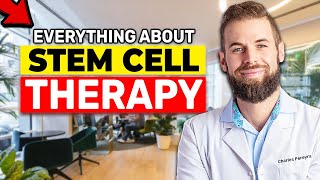
In this educational video, Dr. Charles Pereyra outlines three essential aspects of stem cell therapy. First, he clarifies what stem cells actually are, distinguishing true mesenchymal stem cells (MSCs) – especially those derived from umbilical‑cord tissue – from related but distinct products such as platelet‑rich plasma (PRP) and older bone‑marrow or adipose‑derived cells. He explains why umbilical‑cord MSCs are favored for their potency and ethical sourcing. Second, he describes who is using these therapies, highlighting high‑profile athletes (LeBron James, Stephen Curry, UFC champions) and celebrities who employ MSC or exosome treatments for rapid recovery from joint, tendon, and rotator‑cuff injuries, as well as for cosmetic purposes like hair restoration and “stem‑cell facials.” Third, he addresses common misconceptions: the cells act mainly through signaling molecules (trophic factors, exosomes) rather than directly rebuilding tissue; the optimal dosage, frequency, and duration of benefit remain uncertain; and ethical concerns are mitigated by using pre‑screened, donated umbilical‑cord tissue rather than fetal or embryonic material. He stresses the importance of choosing reputable clinics, understanding what product is being administered, and recognizing the experimental status of these therapies in the United States. The video concludes with a call to watch a more in‑depth follow‑up video for detailed procedural information.
Chapters
Why are so many people talking about stem cell therapy? Now a new treatment may delay a replacement and take the pain away. I stood up with no pain in my spine for the first time in 14 years. Because there are a lot of claims that are made that stem cells can cure. In this video, I'm going to tell you 3 things. 1, what exactly are stem cells? 2, why are people using them? And 3, what are some of the most common misconceptions about stem cell therapy? Number 1, What are stem cells? This can actually be a misnomer, as many places are actually calling stem cells different things, and different stem cells have been used for different applications. For example, PRP, that's not a stem cell. For example, fetal stem cells, well, those aren't really ethical to use. So the term stem cell comes from a progenitor cell, meaning that that cell can actually become many different other types of cells, and in some cases, any cell in the entire body. The most common cell that's used that's a The most effective, however, isn't really even a stem cell at all. It's more of an adult cell that has the ability to differentiate into one particular group. And that's called the mesenchymal or MSC line, which is what everyone's been talking about now and what all the celebrities and athletes are actually using to help them increase their performance and get back from injuries a lot quicker. So celebrities like LeBron James, Stephen Curry, Alex Rodriguez, and many other professional athletes have actually used this therapy on themselves. And in fact, at our clinic, we've dealt with a number of UFC athletes, including champions, including people from Bellator and the WWE, who have used this therapy to help heal from pretty traumatic injuries and really return to the sport that they love. And what's really cool about these stem cells is, contrary to popular belief, they've been used for a long time. And these celebrities were flying essentially all over the world for the past 10 years, whether it be Germany or Costa Rica or Panama even paying physicians to come and do it in their home. And that's why you've been seeing injuries that were typically career-ending and having these celebrities and athletes come back to perform or, you know, get back on the field in just a short amount of time, 6, 12 months from a career-ending injury. So jumping into number 2, who's using them? We've kind of already touched on, but what are they actually using them for? Well, they're using them for pretty much any and everything from cosmetic to actual severe and debilitating joint injuries. They've used them to help repair Achilles tendon injuries, which, really connect your foot and your leg so that you can actually function and perform in an athletic way. For rotator cuff injuries with pitchers who throw the baseball a lot and other people who use the rotator cuff a lot. For people even with cosmetic injuries like hair loss and people who are just suffering from alopecia. So there's a ton of applications that we're seeing emerging for this. And probably the most common in Hollywood is now using it for what's called a stem cell facial or exosome facial where they're using them to help revitalize the skin. And the base research for this is actually pretty cool and it's been studied you know, for quite some time. It's still considered experimental in the US, but even with this experimental nature, we're starting to see clinics pop up really all over the country offering this type of therapy. It's really just important to differentiate, am I going to a center actually doing the real therapy or the MSC exosome therapy or the stem cell therapy, or am I just getting something without really a lot of stem cells in it like PRP? And so that moves us into the third point, which is common misconceptions and what to look out for when you're getting or considering a stem cell exosome therapy. Number 1, just like any cell in the body, not all cells are created equal. It's just a fact. One of the things that we have to look for is, is the center reputable and what kind of cells are they using and what is the dosage of those cells that they're using and the background of, of who they treated with it. And so the most common thing we see is PRP. Now, before stem cells and exosomes came out, PRP was really the only other tool you had in regenerative medicine, which is just concentrated growth factors. Doesn't really have many stem cells. The other ones you may see are bone marrow or adipose tissue. Now, while those have a concentration of stem cells, they're older, right? Their telomeres, or the things that make them live, are shorter, and they just don't behave in the same exact way that a normal younger cell would. And that takes us to the umbilical cord, which is really what all these celebrities and athletes are using. The umbilical cord stem cells, specifically the mesenchymal line, is been shown to be the most potent for signaling. A big misconception is that, are these stem cells actually going in and forming new cells? Like, are they actually becoming a new muscle tissue? Are they becoming a new heart tissue? Are they becoming a new cell? And usually the case is no. They're releasing what's known as trophic factors, or secretotomes, or even exosomes they're called in some cases, which act as signals to tell your own body to start to repair and to heal its tissues intrinsically. And that's really the main thing that they do. Really, the question you should be asking is, how often do I need to do this? And how long will it last? And the honest answer to this is no one knows the exact answer. For example, in some patients we've seen joint injuries that repair, don't become reinjured unless you're doing that sport again and you reinjure it. We've seen other instances where people up to 7 years have had this done for their hair and their hair is still there, you know, with doing it with a combined procedure. So it really does depend. We are looking for longitudinal studies, long-term studies, but this is still very new and considered experimental. However, the application for this is extremely important to people in professional sports and people who are considering using it for cosmetic use. And we take all those factors into account when talking to our patients. And probably the most important misconception to realize is how are we getting these cells? Are we doing it in an ethical way? Is anyone hurt? Are any babies hurt? Moms hurt? And the answer couldn't be more clear, especially with our clinic. The only cell types that are used are from healthy live births that have been pre-screened for genetic factors, physical fitness factors, and are delivered healthily. And really what happens if you're inside the labor and delivery room when a baby's being born is they take an umbilical cord and they snip it and they either throw it in a biohazard bag as trash or it's donated as research. So the baby doesn't need the umbilical cord really, the mother doesn't really need the umbilical cord, and that kind of tissue along with the placenta is either discarded in that biohazard bag, sent for research, or thrown out. And so it's really like we're taking trash and turning it into gold, so to speak. And one of the most important things to know about using this is that every patient is prescreened. Prescreened for a number of different conditions to just make sure there's no communicable diseases, to make sure that they're in a healthy state. One of the things that is talked about is fetal or embryonic cells versus umbilical cord cells. It's important to note that most ethical centers, and certainly us, we never use any fetal cells. There's zero abortions that we have ever used for ourselves. They're all healthy, live umbilical cord donated cells. Another misconception is that you have to travel outside the country to get the real kind of stem cells. And it's my knowledge, what I've seen kind of throughout country is that doctors are continuing to utilize their right to treat patients in the US with this kind of therapy. It's really about finding the treatment center and physician that's right for you. But it's certainly available here in the US if you're looking in the right places. That's all the information I can fit really in this short video. But if you'd like to learn more, I created another video which goes in-depth on the entire process on how this really works. So just make sure that you click the first link in the description down below and that'll bring you directly to the video. Also, click the video that's on screen right now to watch another video.