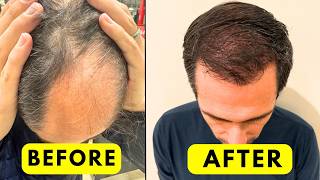
In this educational video Dr. Charles, a board‑certified physician, outlines a novel, experimental hair‑loss treatment that uses stem cells and exosomes. He structures the discussion into three parts: (1) why the therapy may have been suppressed historically and why it is now becoming more accessible; (2) the biological mechanisms behind the treatment, emphasizing studies that show increased hair density and thickness, stimulation of follicular structures, and induction of angiogenesis to improve blood supply to hair follicles; and (3) a practical assessment of whether viewers should consider the therapy, illustrated with before‑and‑after case studies—including a patient who received a combined micro‑FUE and stem‑cell injection and another who used stem cells alone—showing rapid hair regrowth over a few months. Throughout, Dr. Charles cites meta‑analyses and individual studies, clarifies the experimental status of the therapy, and repeatedly notes that the content is not medical advice but for informational purposes only.
Chapters
So there's a new way to potentially reverse hair loss and maybe even fix it. And I'm going to break down if this may be a viable option for you. In this video, I'm going to be covering 3 things. Number 1, why some officials believe this may have been suppressed for a long time and how it may likely not be suppressed any longer. Number 2, how this therapy works. And number 3, if this therapy may be something that you should look into and how it helped me from going from looking like this to this. For context, my name is Dr. Charles and I'm a board-certified physician, but this is not medical advice. If you're looking for medical advice, please go talk to your doctor. This is purely for educational and informational uses only. So let's dive right in. So first off, this is a therapy that is still being considered experimental. However, many people have begun to use this with great success, and the research is beginning to show more and more positive and potentially breakthrough results. So let me just take you through some of the studies. In fact, if you look at this meta-analysis here, you can see that this exosomal therapy actually worked to not only increase hair density, but thickness as well. And not just this study, but this study here as well. Another important thing to note is this other study right here, which shows that exosomes may have the ability to induce a process called angiogenesis, which could potentially lead to more follicular health and thus more hair growth. So why is angiogenesis even so important? Well, angiogenesis broken down is just new blood vessel growth, right? And so what we're seeing is no matter the cause of hair loss, whether it's genetic, environmental, inflammatory, or even due to molecules like DHT, there may be this inflammatory pathway that's constricting the blood vessels or kind of choking them off. Now, just like a field of grass that has a nice healthy irrigation and water supply and nutrients, if you took that water supply fly away, that grass would likely wither and die. And it's the same thing true for your hair follicle and your hair shaft. So, it would make sense that adding new blood vessel growth may potentially lead to a healthier, thicker follicle and even a hair shaft where maybe there wasn't one before. So, this leads us into the second part of how exactly does this work. And now, while stem cells and exosomes are still considered in the experimental stages, there is more and more research coming out supporting the incredible benefits that these molecules may potentially half. So let's look at why. There's a few things. And if you look at this study here, it's showing that it stimulates a part of the follicle, which is actually involved in making the shaft itself. The second part, which is really important, which you can see here, is it may stimulate a process called angiogenesis, which we just talked about, which the new blood vessel growth may further support the healthy nutrient supply or blood vessel supply to the follicle, enabling it to be healthier and possibly last even longer. Now, there's also 3 other ways listed on here, which I won't get into. If you're interested, I'll make another video on these 3 other ways that stem cells and exosomes may be impacting hair health and hair growth. Before I do that, let's jump into number 3. This leads us into the final topic. Is this something that you should look into? So we all know that it helped me from going from looking like this to the head of hair that I have today. But I'd like to illustrate 2 other patients here to give you a better concept of how this could potentially work for you. So in this case here, this patient was almost completely bald. You can see that he's shiny. Someone classify this a Norwood 6 or even a Norwood 7. This means that they have almost no hair on the top of their head and a very small donor area if you wanted to do a procedure. And so for this patient, we actually used a combination of stem cells and what's called a micro-FUE, which if you'd like to learn more about the micro-FUE, we'll do another video on this. Just comment below and we'll make sure to get this out as soon as possible. But we also combine this with a stem cell solution. Now, in just 4 months, he was able to have this kind of growth, which with any procedure, surgical or not, alone is pretty impactful and something I had not seen before. Now, there's this other patient here which just used stem cells. And again, this patient had pretty pronounced balding and without any surgical procedure whatsoever, he went from having this hair here to here in just a short time frame. As we can see here, as there's different stages of male pattern baldness, there may be potential different things you can do for each stage along the road. So, if you're interested and you'd like to see if you qualify, just click the link down below in the description or click the video on screen now to learn more. So, click below and we'll see you soon.