Client Interview: How to Sell High-Level CFO Services
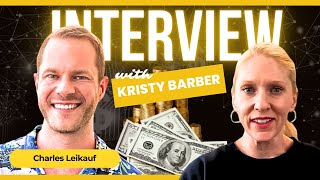
Christy Barber, a fractional CFO, talks with Charles Leikauf about moving from traditional accounting to running her own practice. She covers selling high-level finance services, the role of confidence in sales, how AI is changing finance work, and why personalized coaching matters for client acquisition.
All right, I am here with Christy Barber. Christy Barber is a fractional cfo. She's expert in all things finance. She specializes in really detailed accounting technology implementations as well as analytics. Christy Barber, welcome.
Yeah, thanks for having me.
So, really glad you're here. You and I have spent a lot of time together over, I don't know how many months it's been this point. And so I'd love to learn a little bit more about yourself, your business, and just tell me kind of what you do.
Yeah. So started out accounting side of things, kind of like what everybody does. You go to school, you become the accountant. You think you got to go the tax route because that's where you make money or you go the audit route. And I hated all of that because I didn't. I don't know, you're not free to as many ideas and innovations. And I learned along the route that there's other ways that you can bring the accounting skill sets into place. And I ended up working at a manufacturing company and as their controller and then moved into a CFO role. Role. And that's where I had the most fun is, you know, you're doing reports, you're engaging with people out on the floor, you're bringing in a lot more ideas than you would if you're just, you know, signing off on some taxes or whatnot.
Okay, that's awesome. And so a lot of people, right, we run the fractional CFO kind of coaching program, are already working for themselves. They're kind of doing the tech stuff, and then they want to move over to that. You. You did that way even before you started working for yourself. How. When was the point where you decided to make that kind of transition?
I got to a point where I started out as a side hustle, and then it got to the number of. All right, this is pretty close to replacing the 9 to 5 job. And then I just jumped ship on that.
Okay, how long ago was that?
Gosh, it's been 2015, so it'll be. Yeah, 10 years next year.
Okay, so 10 years is a long time when we think about people in the finance world. You and I were kind of talking about this earlier. Usually we're very safety mindset because finance and accounting, it's one of the guaranteed professions, requires no career creativity. Like, go, go to school, get your CPA, work for big four. You make 100 grand before you're 30. Follow the very wide path. It's not an easy path, but if you follow it, you're guaranteed to get insert result and so we tend to be people who choose like a safer kind of career path. How was it to you to like finally go out on your own? Like, was it scary? Were you nervous? Were you just like, ah, this is no big deal. Like, tell me about like, what went through, like your thought process.
I think it was easy for me. It was more so I'll call it the peanut gallery. Like your friends and your family being like, are you sure you want to do this? Why would you want to do this? Why would you want to go away from a guaranteed paycheck? And most people are so ingrained and trained to be like, I go to work at 8pm, I get off at 5pm and I don't, you know, it's. You're just trained like a robot in a lot of ways to operate in that space. And mine, it was more, well, let's see what happens. I mean, you have little things where people would push back. Well, you know, you're losing your health insurance. No, I can go buy my own and I can get it that way. And there's all kinds of other things that you can build with your own business. Business that you're never taught in school. And if you don't interact with people that are business owners, you wouldn't know that they're out there. Like having your own K for yourself because your business can do that for you. And you don't have to rely on a 9 to 5 to be able to retire with.
Okay, so it sounds like for you it's like, well, heck, like, let's go try it out for the whole peanut gallery thing. Because I had that same issue, right? I went from big company to CFO of a really fast growing, you know, smaller company. And my dad was like, don't, don't take the job. You're safe at the big company. I was like, but dad, the opportunity and the title and this and this and that, right? Because you get a boost when you go from big company to small company. And he told me, no, but he worked for the same career for 44 years. I feel like things are a little bit different today's age. Like, I don't think working for somewhere for 44 years rewards you. Right? I think we're in a different time. How did you, how did you get around that Pinot gallery? Because that's like a lot of. Like, even when you were saying that, I felt like I was like, oh.
You'Re like, I know this.
Yeah, I felt it. Right? How did you navigate that?
I think some of it is personality where I'm like, I don't care what you think others is, oh, I'll prove to you that you're wrong. And then other people that I really value what they have to say, it's like, okay, I understand what you're saying. I'm going to take these into consideration. And I did start to surround myself with other people by just networking in the business field and finding some mentors in that space to kind of help me with. Hey, I'm starting to feel fearful on this side. Show me what did you do when you were in that place? And I'm a big, like, relational type person, which I think is opposite of most accountants. And so I'm always thinking, what do you know? What have you learned? And then learning through people that way.
Okay, so it sounds like part of it was like, like, say what you want. Part of me is like, ah, I'll show you.
I'll prove it to you.
Let's be. Was it. Was it more driven by that? I'll prove it to you totally.
Because it made me think about in college. I had a accounting professor and he told me, he's like, you'll never make it in accounting. And I'm like, okay, because I'm too creative. And that was. Some of it is. I liked art and various things, and I was decent at it. And he said, well, you can't. You can't use both sides of your brain at the same time. And. And I thought, I will. I'll show you. And one day, maybe you're watching these videos now and you'll see that I need it. But accounting is creative in a lot of ways of how you do things, and people don't see it as that. It's very regimented.
Also, I love that. I had a very similar experience. I went to University of Florida, and they had a master's in science and finance program. And I was a transfer student. Her name is Kelly Herring. Specifically Kelly Herring. We don't like Kelly Heron sits down. It's like the. The first week I transferred there, I was like, all right, I'm going to transfer this program. I'm going to investment janky job and do all this, this and that, and she writes out on the board, all the jobs in the finance world on one board and then the other board and one board. She goes, because you're a transfer student, you can't get into my program. It's a big axle where she goes, you won't be able to get into these. The only reason I transferred to that school is to get into her program to do all that. And she was like, nope. I was like. I was like, you don't have any. Met me. This is my first day. Right. Like, I went to Broward College. I got a 4.0, transferred all that stuff, and. Absolutely not. Well, the cool thing is you can look up how much teachers make. I make a lot more money than you. And so that was my thing is, like, I want to prove this lady wrong. And it was driven by that. Right. So I. I can. I wish. I can't relate. Maybe it's a little toxic, but, like.
Right. Yeah. That's the thing is you don't want it to be so toxic that it drives you. You become this workaholic, and you're like, I'm approved to you. Finding the healthy balance of this is my main driver, and it's helping me accomplish my goal.
I totally get it. It's very interesting to see that dichotomy. But I'll probably edit out. Edit out her name or not. It's not the only person who said that to me for. About that individual. So she's probably doing more good than she knows. So you took the leap. You went for it. You started working for yourself. Like, tell me about your journey of working for yourself. Was it, like, amazing as soon as you started? Tell me about that.
So it was scary coming out of this predictable job that I'd been doing. However, I always knew I wanted to go out on my own. So I knew that, hey, I may start with a couple of clients, and I'll probably lose them along the way. Just kind of how it goes when you're starting a business. And I had that exact thing happen. And so trying to continually get out there networking, tons of. Trying to utilize social media for what I could at the time without really understanding how it worked. I'm like, you throw something on here, you hope somebody likes it. But for me, it was mostly the in person. And then once I had a really good network, they were helping refer me out to people they came across. And so I had some really good partnerships, specifically with banks. In the beginning was really cool. And the chamber of Commerce, oddly enough.
Interesting. Okay. All right. I don't often hear chamber of commerce.
No. But for some reason, this one worked out really well. I think because it was a smaller town and they wanted to kind of work with each other all in one place. And it was very, very helpful for me.
Okay, that makes sense.
But I would tell you, I started out just doing bookkeeping. First because that was an easy sell.
What do you mean? What do you mean by that?
So it was easy to ask somebody, you know, are you using QuickBooks or hey, do you, are you managing your own bookkeeping? Because how many people would say, hey, yeah, I have it. But my, their wife was doing it, Or a sister or relative that has no accounting experience, but they're helping them out and they're frustrated with how their accounting looks, things aren't up to date, et cetera. So it's a good way to just kind of have that conversation to get into the process of getting them on a sales call.
Okay, so selling bookkeeping is a little bit easier. So you, you had some pretty high level experience before. How did you get into whole like selling fractional cfo? Like, how did you get into sell this higher level services?
All of it was just happenstance, I think in a lot of ways. One of those people, I get curious about how other things work and then I'll just dive in and read a whole bunch of books, talk to a whole bunch of people and refine the skill sets. I have to be able to continually offer greater value services to my clients. Because if I was always just a bookkeeper, I kind of tap out on knowledge. And as I continually offer higher services, it helps my clients and then other people out there on things that they may not have the expertise around. So it's just you're adding additional consulting services and building on more of a lifetime client than a transactional client.
Okay, that makes sense. I have clients who no longer I'm engaged with. Will come back, leave, come back, leave. I'm too good at solving their problems, unfortunately. You may, you may be able to relate.
Yes.
Hopefully not, but yeah, it's a problem.
I had a business coach in the past that used to make the joke about me. He's like, you'd never make a good politician because you solve problems. He's like, if you're a politician, you'd never get reelected because you fix problems. And I had a good laugh about that.
I get it. I mean it's better than have that than people leaving because they're mad.
Yes.
Okay, so speaking about problems, right. You and I have been working together for XYZ number of months. We've kind of helped you grow some of the stuff on the fractional CFO side. We talked a little bit about your business. What was before you and I started working together, what was like the problem.
Problem was I could never put together an offer I was really good of. Hey, these one off things and it's, you know, a couple hundred bucks here, a couple thousand bucks here. But being able to put em all into one place and make an offer that is all of those services in one, what is that? I think I sat on it for like two years and I would go through multiple iterations and I didn't like anything. And we got on what a half hour or hour long call and narrowed it right down to say, hey, these are your offerings. And I was like, oh yeah, duh, light bulb moment.
What's the phrase like? You know, it's always the mechanic with a broken car. Right. I think at your point, you had so many tools in your toolkit, you're like, what do I do? Like what do they want?
How do you narrow it down?
Oh yeah. Okay, so you and I, you and I put your offer together. Now for, for those of the people who like, because offer to me is a very esoteric term, you know, until I understand specifically. But like, what is, what does an offer mean to you?
To me personally, offer is what can I take of my best services and tools that I have and give that to my client and offer it in an all in one compassing instead of, hey, it's this service and well, if you like that we can do this a la carte and add this on. And it to me is just so much work to do that of really understanding what they need. And then here's the offer and it gives them all of that and they're not having to go elsewhere for something or not understanding that you can also do that service.
Okay, so it's like what you're actually doing and then how do you communicate it to the client in a way that makes sense to them? Yeah, because I find sometimes we get stuck in finance brain instead of business owner brain. And like, yeah, if you use the word, you know, accumulated depreciation on a, on a sales call, like you're not signing that guy on, let me tell you.
No, not at all.
Okay.
Unless he used to be an accountant at one time, they're like, oh yes, I'm very familiar with that.
Okay, so that, that makes, that makes total sense, right? You got a good offer, we put it together. You know, you're getting a little more confident selling it now in working with other people to kind of help you put a lot of this stuff together. Like you're pretty tapped in on the Internet marketing world. You know, people who are pretty big in that, in that field. What was it about maybe our experience or like why did you choose to, like, work with us.
I think what stood out from you that was really unique that other consultants don't do is there's one on one time with you. And for me, that's what works. I'm not very good at, hey, go watch these 22 hours of videos. Take a quiz at the end. I hope this works for you. I have to process through and ask questions and all of that, and you know that world very well. And that's the only way people can really grow and keep it manageable is if you move more towards the video model and there's, you know, weekly calls or whatnot. But to me, I need to process those questions and get feedback and all of that and then kind of tweak things along the way. So that was what really stood out for me, is how helpful that has been.
Okay, awesome, thanks. So the. The one on one time specifically of like. Because I know you've come to me with things like, outside of what we typically do, and you're like, what would you do here? What do we do? What? How do we fix this? And at least for me, when, geez, excuse me. At least for me, right? Having somewhere where I can go, where I have someone who's kind of done the thing I'm trying to do before, because I find whenever I go through a training, trainings are great, but then I mess up everything that I learn. Like, I learn the stuff and then I go and build it and then I break it. Well, how do I. How do I unbreak it?
And you always want to have somebody that's four or five steps ahead of where you want to be so you can understand their path of how they got there. And you're not making so many wrong turns.
Yeah, yeah, that makes. That makes total sense. So we worked together, we talked about the offer, right. Some of the one on one time now when we talked about it. So we built your offer. What have you been able to do with that since we've done that?
So it's been really cool of. Because I think my offer is unique in a lot of ways. It's not traditional fractional CFO that you would think of. Hey, you're building just models and all that. Mine is more a lot of advisory that comes in and looking at your technical infrastructure as well. What is your finance department running off of? Do you have processes in place? How do we optimize it? So there's a lot of that that comes into it that I think has really helped me stand out. So as I'm messaging people on LinkedIn or wherever else. And having those conversations, it piques their interest more than, hey, I'm a CFO and I would like to look at your books, and I'm just somebody off the street and you don't know me kind of a deal. And I think that's what's been really helpful along that process. And then being able to have an offer that I truly believe in and then gives me the confidence that when I hop on a call or as I'm messaging somebody, I believe in what I'm offering and that comes across in the messaging that I, I give and what I speak to.
Yeah. So what do you, what do you mean by the, the, the confidence? Right. Like, as far as the people I interact with. Right. Like, we help people who are not super experienced, people who are very, very experienced. You're on the higher end of that spectrum. Right. You do something pretty unique. Right. Like the accounting systems integration. And that's something like, even I won't, I don't want to touch. You know, we all, we all have our, our, or, you know, our skill sets. When you, when you have that, right, like, you've, you've had the tools for a really long time. Like, what changed in your sales process to, like, give you that confidence? Was it just like, your ability to communicate it better or, like, explain that to me.
I think it was a mix of being able to communicate better as well as having an offering that had all of the things that I enjoy doing. How many times do we try to build an offer and you think, oh, well, a fraction of CFO has to do this because that's what they're known for. I don't enjoy doing that part of it. And I don't. Then I'm sitting there, I'm like, oh, gosh, I don't really want to sell this because I don't believe in this part of it. How do I make something that just highlights my skill set?
Yeah, I, I think, I think we've, we've said this joke before. Like, there is no fractional CFO police. Like, if you don't do XYZ service, you're not going to go to fractional CFO jail.
Right.
Some of the stuff that you do, I would never want to do. Is it useful? Is it awesome? Yes. And when I have clients who need it, I literally just go call Christy. She's great. Oh, and, you know, if they need heavily modeling or DCF or whatever. But also, you know, I'm, I'm happy to do that because I love that work.
Yeah. So then the call is reversed. I'm like, hey, I got this big model. I. I don't like to build models. I love to read them, but I like. I don't enjoy building them for people.
Did I. Did I send you our model template yet?
You did, yeah.
Okay, good. All right. I want to. I want to make sure you. You have that. We did that last week. So when we're talking about the sales process, I know you booked a lot of sales calls recently. I don't think that was, like, you were getting a lot of them beforehand. Tell me, like, what's changed on the sales front for you? You don't have to share specific numbers, but, you know, just to give people an idea of, like, before, after kind of deal.
Okay. Yeah. With the sales side of things. I had been. It was all referrals and people that I would meet because I'm. I'm that person. I'll talk to you in line at the airport or in line at the grocery store. Ye. To most people's irritation. I've met some amazing people by doing that. I mean, last week I did the same thing. It was a guy walking his dog. Come to find out he was the past CEO of Wyman's for 35 years. They were the ones who make the stainless steel cleaners. So it was a great conversation we had. And I was like, you wouldn't have had that if you just kept walking by. But I would say with that had come with all of my referrals, I was kind of getting to the point where I'm exhausting those referrals and they don't have as much to give. And now I got to go out to market, and I've been fortunate to not to have to do that too much over these last 10 years. And now I'm there. I'm like, oh, my gosh, I hate doing this because I don't like being behind a computer. I'd rather interact with the person and talk because it's a more natural flow of conversation to get to, what do you do? What can you offer? But the route that I've taken now with messaging clients and doing all of that and being more confident in my offer, now I'm getting, I don't know, 10 emails a day back from people. I booked four calls last week. I converted two of them. I have two others sitting with a contract ready to sign if it's something they choose to move forward with at this time. So it really does come down to the confidence. Is for me, has been my number one driver of getting sales.
That's. That's awesome. I mean, four calls, two contracts. Like, it's a pretty good close rate.
It is. Yeah. And especially this time of year, too.
I mean, where Christmas is like, feels. It feels like it's tomorrow. It's not, but it feels like it's tomorrow. One of the. One of the things is, is we got the offer, we got the confidence, we got the sales. Sales calls are coming in. It's work that you like to do, not work that you feel like you have to do. If I do all the work, I feel like I like. I feel like I have to do sales tax for my clients. Well, I don't want to do sales tax. We ain't doing that. And that's, I think of a light bulb moment that sometimes goes off for people is like, oh, wait, I get to control what I sell. Whereas if you do taxes, it's tax prep, tax planning, maybe some implementation. Right. Like, they're usually. It's very cut and dry with fractional cfo. It's, are you making the client more money and you're giving them financial clarity? So let's find the best way to do so that works for you and the client. Where do you think you would be if, say, you and I didn't connect and we didn't kind of start working together?
I'd probably still be sitting on the, hey, what should I offer? Journey of nothing right now, or I don't know of just kind of pushing more forward with all of the bookkeeping services because it's easier to acquire those. You just have to have a lot of those to be able to get to the financial goals. And then with there you're having to hire people as well to keep up with the volume. And I didn't want to go that route. I don't want, you know, tens and twenties of employees. That's just. Has never been the model I want. So. Yeah.
Okay. Awesome. Yeah, I'm not about the high volume, you know, bookkeeping work. It's. It's not for me. For some people, it is, but.
And you got to figure that out. Yeah.
I want to solve bigger problems, and bigger problems usually have bigger paychecks. So what would you say to someone, Right. Who's maybe looked at some of my ads, maybe watch this video, something like that? They're like, should I talk to Charles? Should I talk to his team? Is fractional CFO to me. For me, like, what would you say to someone who's just kind of sitting on the fence and not really sure about.
I always say the answer is always no until you make a call. Like, you don't know where you could be until you make that call. And having that call with you might open up something in them that they never knew was possible. You know, it could be a word that you say. You're just talking differently about fractional CFO like we did of. I always was so ingrained. Well, it has to be this traditional route. And you're like, no, it doesn't, because you can do with it what you want. And then that was the light bulb moment for me as well, is, oh, I don't have to do all these other things over here. I can, you know, tailor my fractional CFO services to what's along the lines with my skill set. And that's going to help me grow. And so I think people are on the fence of that. Having that conversation with you would really help them see you can get unstuck from where you are. It's very possible. And you can also see what avenue works best for you as far as the services and the offer that you'll provide your future clients.
Thank you. Yeah, it's. It's wild how, how overwhelmed people get. And I. And I guess it makes sense. I got kind of lucky. I fell into. I only know how to do really high level st. And so I got kind of pigeonholed in there. And it's actually where I love to live. But getting the clarity around it took me a long time and even longer to come up the process to get that. And so, you know, that's one of the things we love to do is like, we sit down just like you like created that together, and now you're kind of in a completely different situation.
Yeah.
When you're looking at your journey as a cfo, Right. Like, what's. What's kind of next for you? Like where. Where do you want to see yourself in maybe like 5 or 5 or 10 years? Like in your career journey? Like, we never stop, right?
No, we never stop. And I like working. And that's always a problem too. Like, hey, when do you take time to vacation? I don't know, you know, like those types of things. But I'd like to be able to get it monetarily to a number, you know, that I want. I want to hit a certain, you know, income each year. I want to be able to continually offer my clients the, you know, it's kind of the cheesy thing. The best service is possible. But really, it's easy.
If you believe it.
You can, you can. And that's the thing. It's like keeping up on what are all the trends. You know, AI right now is a huge trend, and how it's coming into finance and how people can be able to use it. And, you know, I've had, I've done a lot of marketing videos on it of how is AI going to be utilized in your accounting department? Are you ready for it?
What. I mean, let's, let's talk about that. Like, what, what is. If there's someone who's like a fractional cfo, bookkeeper, Right? Like, what are some AI stuff that they could be using? I mean, we could probably have a.
Whole separate conversation on this, but there's so many great tools out there. There's tools that can probably. The majority of you guys are working with people on QuickBooks and there's tons of software solutions out there that will integrate with QuickBooks and help you put together really good monthly reports, show them their metrics, a variety of things. If you're helping with forecasting, there's a variety of solutions out there that will help you build out forecasts and budgets, et cetera. And the only thing is, and what I tell everybody is if your client's data is dirty and it's not good data, then no AI can help give you good forecasts or give you good outcomes of it because it's, it's a mess. And so making sure that if you do start utilizing those tools and thinking that they can give you these magic answers from the sky, they can if. If your data is right. Otherwise it's better to just put everything in Excel and kind of work through there.
I love the magic data answers from the sky. We. So we build all our models in Excel. Like, I've given you, like, templates and copies to them. And it's funny, we've tried a bunch of AI tools and I probably need to dig into this deeper. Like we use Fathom and a couple others. And one of the really interesting things is, like, they're good, but the amount of time it takes me to learn how to use them. I could just build the model faster in Excel or I can just make the tweaks here. The reports look a lot fancier than ours. I will give them that.
Yep. But for, are they adding value for you yet?
Not yet. They will, they will probably soon. It's just hard to get the number of, like, customizations we make for our scenarios. I mean, maybe, maybe I'm Being the I'm too special or I'm too unique, you know, you know, maybe I'm. This isn't true, but for us, we build them in by hand. But also, like, we only serve E commerce. We're really deep in E commerce. You know what I mean? Like, our data is really good. It's just easier for us to do because we know the inputs there and we're also like, pretty particular. But maybe that's just because I'm old school, not like I was used to doing that. Corporate finance. Right?
Yeah. But I think there's pluses to all of that too. And if you're in a larger solution, if you are in an ERP solution, it has all of those tools built into it and they're tried and trusted and they're able to produce better results than a bolt onto a QuickBooks, for instance.
Yeah, good. Yeah. Right. We talked about earlier, if I can get a tableau feed from SAP, like sick, right? Let's go, let's build. Trying to do that with like an income statement from QuickBooks. No, I'll just, I'll just build a model in Excel. It's fine.
Yeah, there's not enough Data points that QuickBooks can give you. And while they're trying to give you good dashboards now and better things like that, it still can't compete with solutions that are made for that 100%.
So this has been an awesome conversation, Christie. People want to learn more about you, maybe work with some services with you. I know you do really high level, like accounting, ERP integration stuff maybe. Like, I don't want to do that, but Christy can. Let's work something out. Like, where do people get a hold of you?
Yeah, you can Visit my website, christybarber.com, you can email me directly. Christyristybarber.com Happy to chat with you and anything that you might need.
Okay, awesome. Perfect. And she posts a ton on LinkedIn. Give her a follow on LinkedIn. We may or may not post this here. So if there's anybody listening that's interested in kind of growing their fractional CFO firm, learning how to grow it, learn some marketing or some sales or what their offer is, reach out to know profit search group or Charles, like off on Instagram or just hit me up at profitsearchgroup. Com. Happy to kind of talk all these things over with you. Christy. Thank you so much for being here.
Yeah, thank you for having me.
Absolutely.