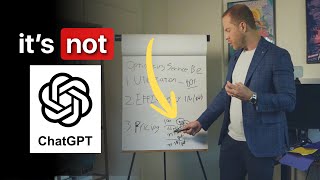
This content was created by Charles Leikauf. This content was uploaded by Charles Leikauf. This is a YouTube instructional video titled "Exactly How a CFO Would Optimize Your Service Business" (created 2026-01-21) presented by Charles Lykoff. It is a solo practical talk aimed at owners of service-based businesses (marketing agencies, fractional CFO firms, accounting/bookkeeping firms) and fractional CFOs. The presenter outlines three core levers to improve profitability: (1) Utilization — target ~80% of team time on revenue-driving (client-facing) work and perform time studies to identify tracking or staffing issues; (2) Efficiency — measure and standardize how long tasks should take (SOPs, training, systems) so staff can meet expected throughput; and (3) Pricing — set price at the intersection of value delivered, cost+margin, and customer affordability, with example staff/revenue splits (staff ~20–33% of revenue, owner profit target ~30–50%). The talk includes concrete KPIs, troubleshooting steps (tracking, SOPs, training), and a call-to-action to visit profitsearchgroup.com or the channel's YouTube series for more resources.
Chapters
If you're a fractional CFO and you want to optimize service based businesses financially, there's really three main things that you can do. And we're going to be exploring the three main things you can do to make service businesses more money. Hi, my name is Charles Lykoff and I've helped hundreds of people start, grow and scale a fractional CFO offer. I've also been a fractional CFO for over 100 different e commerce clients. I'm going to show you here how to optimize service based businesses in the three keys that you need to do. So the first key to optimizing the service taste business is something called utilization, which is when you think about a service based business, what typically what they are is you have people applying hours to a client or a project. In this example, we'll talk about a marketing agency. When you're looking at a marketing agency, when you have utilization here the idea is if you have a team of people, they have hours that they do, Maybe they work 40 hours a week. We want to see what percentage of those people are working on productive work versus non productive work. Productive work is defined as work that is productive which means drives revenue. So there's revenue basing work and non revenue basing work. Usually what you're looking for utilization rate is about 80% there and that means you want 80% of your team's time to be on work that drives revenue. So if I'm a marketing agency and I have one of my clients does social media marketing, if I have a social media marketing task that I've sold and say I charge a client $1,000 a month for that, what I want to do is I want to have the hours that attribute to that project. If I have a marketing staff member that helps them, I want 80% of her time to be focused on results that things that drive revenue. Right? For us and for the client, 20% of her time is going to be spent on administrat of things. Maybe that's training, maybe that's education, maybe that's filling out her timesheets, maybe it's responding to internal emails. If you don't have an 80% or above utilization rate, meaning 80% of your time isn't towards revenue generating tasks, you need to change the focus of what they do. Now this doesn't talk about hybrid roles that are 50, 50 or anything like that. These are direct product roles, right? So there's direct and indirect hours. We want direct hours to the project there. If your utilization rate is under 80%. Usually one of two issues. Either you have a tracking issue with your hours or you have an issue with how you communicate to the staff member or the staff. So is it a tracking issue or is a problem with the staff member that you need to change, be it part time or non productive time. So you want to get your utilization rate to 80. So you, what you would do is you would do a study, you would do a time study on all the hours, you would track all the hours that your staff do. You would attribute to the certain projects, to certain tasks. And if it's under 80%, you either need to wonder is your tracking right or do you need to have a conversation with the employee or some of the employees tasks to get them off. If it's a non hybrid role, hybrid role means internal and external which are separate. Right? Which is client facing and helping clients versus not helping clients doing internal admin stuff. So it's not a hybrid role. You should be above 80%. If it's not, do a time study, go through and have a conversation with the employee. That's one of the things to optimize the profitability of a service based business. Now I want to talk about number three. I think number three is the most important part, but you need to go in order here. So number two is efficiency. Now let's talk about efficiency. What is efficiency? Efficiency is how long it takes for you to do the actual item. So when we look at efficiency here, you have certain tasks, like we'll use our social media company for example. Each task how we have a certain amount of time. So say we have a time for it's, it's one hour, right? And these are examples per post here. If it takes us more than an hour for a post, we don't have a good efficiency. So the idea is you should have it baked in how much time each action should take. And if you don't have it mapped correctly, you don't know how much to do. So say you have an assistant who just helps with doing posts for social media for the marketing agency's clients. You don't know how many hours and it takes to do each action. You don't have many actions you can expect in an entire week. And so you might have 80 or even 100% utilization, which is kind of crazy. Expect 75 to 85 is really the kind of KPI that we're looking for. You might have the utilization, but say it takes her five hours to make a social media post, your efficiency is terrible. So she's spending all the time that she should on things that drive revenue for yourself and the clients and serving clients in a revenue facing way. But she doesn't do a good job of getting it done on time. This is usually either tracking error, right? So this number isn't where you need to be for each individual task, Right? It's usually a tracking error. The next thing it could be was just a expectations error or systems or a process or an SOP error or it takes way longer than you actually think, so you need to break through. Is it a tracking error? Is it a systems? Is an SOP error? Is it as an expectations or a training error? Getting that down can be really helpful because you need to be able to forecast out how many clients you have and how much time it takes to serve each one and what is the expected margin per client. So the first thing I'll look is utilization. The next thing I'll look at is efficiency. Once you have these dialed in, by the way, as a business owner you're probably going to do everything faster than your team, especially if you're really good at it. Because we tend to be jacks of all trade in our business. So I like to think about it like this. I'm going to assume everyone in my team, if they're not an expert of the thing, I'm probably better at them than that thing. I let them, they can take about 20% more time than I would take. Right. Once they get good, they should probably take less time than I would take because that's when they get the mastery. But that's a good rule of thumb that you can see. So time out all the stuff that you do and if they're not able to meet that or hit that with the same level of quality, then you have that's a training or an SOP or do you need to go back and fix that? Now the third thing, the most important thing is pricing to me. Now pricing is interesting when you have a service based business. Here, let's go with an example of a marketing agency. How do you know how much to charge? Your first thought is there's a whole bunch of different ways to charge. I like to think of this. We have training, our mastery course and all that stuff that talks about pricing. But when I think of pricing, there's the value you create, what is your cost plus margin and then how much can the customer afford? So if you look at those, that to me is like a Venn diagram with three circles. I'll draw one here poorly here Right, there we go. The intersection between margin plus affordability right there and value. The middle of that is the perfect price. So when I'm thinking about the perfect price, that's from a market based perspective. How do you know your cost plus margin? Typically we have these two dialed in that it allows us to get to our price. Usually when you have a service based business here, like a marketing agency, not all service based businesses. So don't go take this and be like Charles said from my H Vac company. There's different KPIs or targets for different industries or even different verticals within an industry or different sizes or types of clients within industry. But for a marketing agency, it's simple. If you charge the client a hundred dollars, right. 66, go to admin, slash the firm and 33% is cost of sales or cost of service. So staff. So this is direct labor, this is margin plus staff. The idea is here is that the business owner can take home anywhere from 30 to 50% profit right here. That 30, 50% profit. That's what you want to do. So if you're not able as a marketing agency owner to take home 30 to 50% profit, you need to look at what's going on. Right. So are you paying your staff an appropriate amount? I like to pay a staff three, a third to a fifth, which is 20 to 33% of revenue. Right. That's the staffing costs. Right. Accounting firms see if info firms fall the same kind of way, which leaves another third for marketing admin, all this other stuff, which leaves another third or even up to 50% depending upon your cost of staff for profit. So when you look at that, that's what it is. If you're not hitting those numbers, we need to go back to utilization. Is utilization good? Then we need to go back to efficiency. Are we getting stuff done in time? And then we can look at pricing here. When you get all three of these together, this allows you to have the perfect price for any sort of and margins for any sort of service based business. This is things like marketing agencies, fractional CFO companies, accounting firms, bookkeeping firms. If you take this thought process and you apply it to any company that attributes hours to a project, this is the thought process you would do. Now if you have more questions on this, if you want to learn more about how to grow a fractional CFO firm or understand some of the finances behind growing a business, all you got to do is go to profitsearchgroup.com and we have a whole bunch of education, trainings, and you can find out more if you go to www.profitsearchgroup.com. you can go and you can find out more on how to grow a fractional CFO firm, how to grow your accounting firm, or how to just learn more about business finance in general. I would go to that website, check out some of our material. You can find more information there. If not, go to our YouTube page and go look through all the different things that you can learn that we're going to cover here on our series of these. Thanks.