Smoke and Mirrors Richard Mulvey and Charlotte Kemp
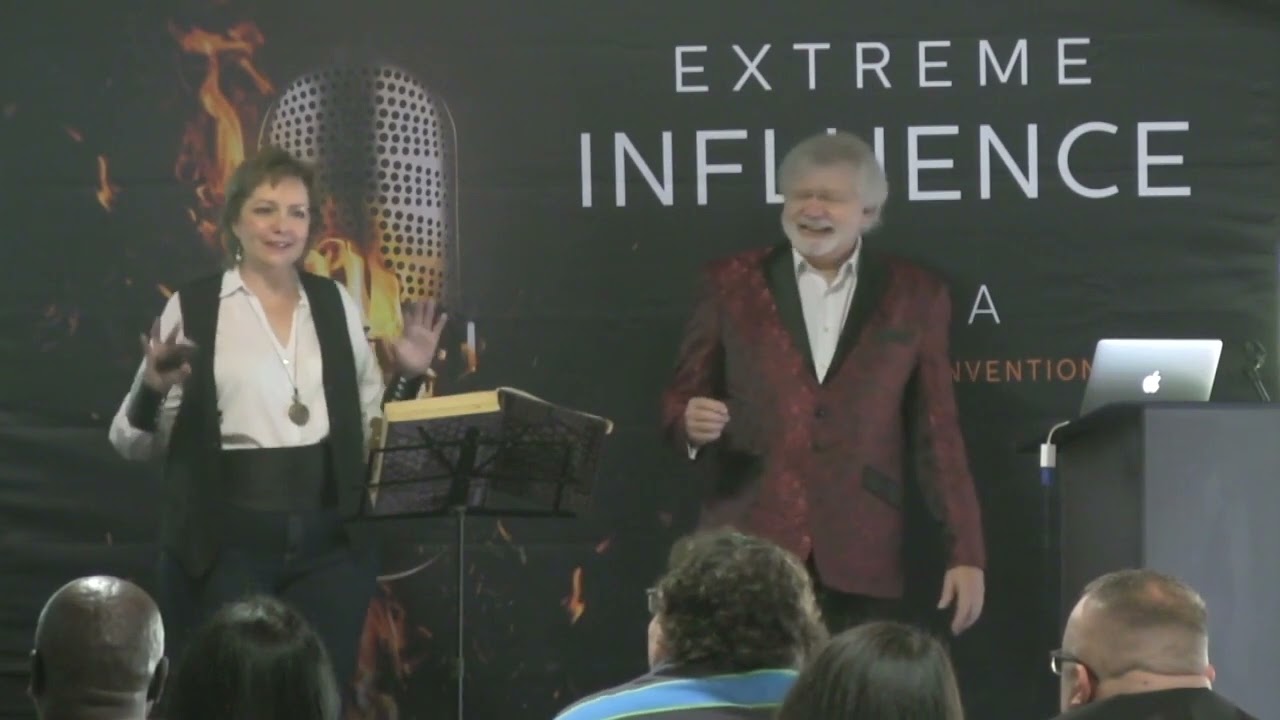
This content was created by Charlotte Kemp. This content was uploaded by Charlotte Kemp. This is a YouTube video titled "Smoke and Mirrors Richard Mulvey and Charlotte Kemp" (uploaded/recorded 2026-05-26). It is a live, English-language presentation / conversation at a speakers' event (references to PSASA, NSA, Cape Town and audience interaction) featuring speakers Richard Mulvey and Charlotte Kemp with an emcee/introducer (Speaker C) and audience participation. Mulvey and Kemp unpack the metaphor of "smoke and mirrors" as it applies to the speaking industry and PR: authenticity vs. hype, on-stage performance and storytelling, marketing/credentials inflation, personal branding, and the support needed at home. The excerpt contains many anecdotes and examples (Kilimanjaro fundraising, Buckingham Palace, radio show, CRM/optometrist story, critiques of exaggerated marketing claims) used to illustrate authenticity, ethics in promotion, and how speakers balance aspiration with truth.
Chapters
Hello, everybody.
Hello!
Oh, welcome to the White House.
I'd like to introduce you to my good friends Charlotte Kemp and Richard Mulvey. Charlotte is an award-winning mathematician, friend of a past president— I forget his name— radio show host, and futures alchemist. Charlotte also still carries a scar from her sword fighting days. I met Richard when he came to Washington. and became president. He also traveled overland from London to Cape Town and back, worked for the Queen at Buckingham Palace, and climbed Kilimanjaro to raise $70,000 for Reach a Dream. Richard is also twice past president of the PSASA and holds the top 2 awards in the South African speaking industry. Ladies and gentlemen, Richard Mulvey and Charlotte Kemp!
Thank you, ladies and gentlemen. What do you think?
And what do you have there?
Well, we're doing S&M, aren't we?
Not that S&M. Not today. That's, uh, that's for later. Okay, we have 2 double beds in our room. All right, so smoke and mirrors. Richard and I discovered this, uh, Ancient Authentic Book of Smoke and Mirrors. And we thought it would be a great opportunity to dive in and understand what it is and how it might apply to our speaking industry. So first of all, we just need to understand what smoke and mirrors really is. It's an old magic illusion, literally, where they projected an image onto a screen and then onto the smoke screen so that it looked a little bit like an apparition or a ghost. Now, in the modern use of smoke and mirrors applies more to PR, to politics, to the kind of things that we want to obscure, the things that we want to hide and, uh, and, and obscure from, from the facts. And that's what we want to discuss today. So we're going to use our, our introduction as a way to kind of unpack the smoke and mirrors. So we started— one of the claims in the, in the introduction was that Richard worked for the Queen at Buckingham Palace. So I need to ask you people who know Richard Do you think that this is true? Is this a fact or is this smoking? So who thinks Richard really, really worked for the Queen at Buckingham Palace? Let me know. Yeah, who thinks that this is a whole lot of smoke? All right.
Ha! Ha! And double ha! I actually did work for the Queen at Buckingham Palace, you see.
You did? And what did you do there?
Well, I was a waiter, to be perfectly honest.
Oh, a waiter. A waiter for the Queen. You served the Queen breakfast?
No, not really. I was waiting on the people who served the Queen breakfast. But you know, there were people who waited on me who waited on the people who served the Queen for breakfast. There were 600 people employed when I was working in Buckingham Palace. 600 people, not including security.
All right, sounds like a job growth program. Okay, all right, so what else? There's some other things. You went to Washington and became president?
I absolutely did.
Tell us. Did you go to Washington?
Well, I went to Washington.
Yes.
And then I was made president of the PSASA.
Ah, all right. So a little bit of smoke and mirrors. You went to Washington for what?
Oh, the NSA.
Which is?
Never sleep alone. No.
No.
What? National Speakers Association. The NSA is the biggest thing on our calendar around the world. Many of you have been. How many people have been to the NSA? Let's show of hands, step again, don't be lazy. Thank you. Okay, 8, 10, 15 people in the room. Fantastic, you have to go, it's brilliant.
But how many people have spoken on stage, performed on stage?
Oh no, that's very few. Steph, I think you've been on stage at the NSA. Who else? Billy has, of course he has. Anybody else in the room been on stage? Graham, have you done the NSA? Okay, Steve, yes, last year, it was brilliant. I carried the flag. You carried the flag. Now I have also performed on the main stage at the NSA.
Richard Mulvey on the main stage of NSA.
Absolutely, and I was performing.
You were performing?
Yeah.
All right, can I reveal?
Go on.
You want a reveal?
All right, is that smoke and mirrors? There I am, main stage of the NSA. The singer asked some people to come up and dance, so I was the guy. Why not?
In the gold jacket. In the gold jacket. Can you see the camera angle there picking up the gold jacket? All right, anybody, you know, recognize Richard's attire might recognize Richard's hat on this sexy lady to his right. So I'm in the audience taking a photograph of my husband on stage dancing with 2 women, but that's how he got to perform on the main stage.
Absolutely. No smoke and mirrors there, I can assure you.
All right, okay, uh, Kilimanjaro.
Yeah, definitely climbed Kilimanjaro.
You were on Kilimanjaro?
Well, I climbed on Kilimanjaro, yes.
And you went how far?
Well, not quite to the top. I mean, to be perfectly honest, I was, I was 300 meters short from the top, so I could see it. But then I passed down, they wouldn't let me go any further.
Oh, but you did raise $70,000.
I raised $70,000.
For Reach for a Dream. Congratulations.
Thank you very much. Thank you very much. Thanks, Tina.
What else do we have to reveal?
Oh yes, okay. No, you've gone too far on the slides. Hold on. We, um, what about this mathematician thing? Award-winning mathematician?
Absolutely true.
It can't be true.
Absolutely true.
Okay.
Standard 5, 1984. I won the maths trophy. And just so you know, this was a co-ed school.
I was actually competing against boys. And she's done the same ever since.
Yes, yeah, so 1984?
Yeah, 1984. I was halfway through my first marriage in 1984.
Before you caught me. I was a little too young at the time, that was illegal. All right.
Okay, so what about this sword fighting thing? I mean, that's got to be smoke and mirrors, hasn't it?
I don't know, you'll have to ask her.
What do you reckon? Sword fighting? Has Charlotte been a sword fighter? What do you reckon? Who thinks she has? Put your hand up. Who thinks she hasn't? Oh, believe me. This is typical.
Yes, it is typical. All right, so let me reveal. 1989, I was in the 2nd place ladies' epe team at South African universities, and we did quite well. The epe is the one that doesn't require too much skill, just a lot of attitude and aggression.
And your scar?
The scar? I do indeed have a scar. Unfortunately, it's in a place that only Butchie gets to see it, but it is true.
I actually I'm very impressed. Now, where was that? 1989. That was my. I think that when I was.
Second marriage.
Second. Was the second marriage? Okay, fine.
Still a little too young for you.
All right. So what else we got here? Oh yes, the radio show. Radio show. Did you actually?
We all know that I had a radio show on internet radio, hashtag radio, and I've interviewed some of the people in this room who've been on my show. There we go.
Did anybody actually ever tune in to your show?
No, that's not fair. I had the radio show, okay? We didn't actually keep statistics on audience, but it was there.
Yeah, it was there.
Good. Okay, Ma, I have a question.
Yes, yes.
Did President Obama really introduce us?
Oh yes. Oh, absolutely. Well, you saw him moving his lips, didn't you? Actually, Obama and I are like that. This is me over here. But for $5, you can get anything done on Fiverr, as you well know. And the voiceover was an Obama sound-alike.
Very good.
And he was good. He was good. Absolutely right.
Okay, so let's return to, to the smoke and mirrors and see what else we can discover. So we discovered that, uh, there are a couple of places where smoke and mirrors applies to us as speakers, and one of those is on the stage. What do we as speakers do on stage? We're ordinary people doing extraordinary things, sharing ideas, moving the hearts and minds of people, and creating some magic.
The theatre of the mind. It's a magnificent place to be creating the theatre of the mind. We need to be able to take our audiences down a road that we may— many of us may not have actually travelled before, but we know it's there. We have to paint pictures for the audience. As we know, we've talked about stories. Caspar was telling some great stories. And every one of the speakers has come up on this stage and told some fantastic stories because what they're doing is painting pictures in the minds of the audience. And we all know that if you want to be convincing, 87% of the convincing process comes through your eyes, only 9% through your ears, and 4% through your other senses.
87%? That sounds like a smoky statistic here.
No, no, no, it's absolutely true.
Alright.
Alan Pease told me it was true.
I can't believe it.
So it must be true. In fact, I did some research on these particular statistics. Now, before we get into that, let me just prove the statistic to you, so that we know it's absolutely true. So what I'd like everybody to do is please hold one finger up in the air. Put one finger in the air, everybody. Come on, thank you very much. Put it on your head. Jolly good. Put it on your nose. Good, well done. Put it on your chin. 87% of you put it on your cheek, not your chin. Thank you, thank you very much for keeping it there. 9% put it on your chin and 4% put it in other places. That's what the convincing process is all about. You're convinced by what you see, not by what you hear. Now I did some research and I thought, you know, I've been quoting these figures for years and And bless her, my darling wife here says, is that authentic? I mean, she gives me a really hard time. And putting this together, I thought I'd better do the research. So I Googled it like everybody else in the room does. Let's find out, is this 87% of the convincing process accurate? And page 1 of Google, nobody ever gets to page 2, so I read through page 1. And 6 of the 8 items on there was Alan Pease's quote. In his first book, that 87% of the convincing process comes through your eyes. So now fortunately, towards the end of last year, Alan came to dinner. Now you think, oh, what, sure he did, is that smoke and mirrors? No, he actually did come to dinner. We invite everybody over, as many of the people in this room have been to dinner with us in Cape Town. And if you come to Cape Town, let us know and we'll set up a speaker dinner. So he came round for dinner, him with Barbara and his 2 kids, they happened to be driving through South Africa. And he was my biggest thing when I started this 25 years ago. He was the one person who I actually copied in many cases, as one does when you start. And I'd never met him, but now he's coming for dinner, I'm so excited. So we're sitting down and he and I are the same age, we have exactly the same sense of humour, We had an absolute laugh. It really was a ball. So I said to him, what about these statistics? I said, you know, 87%, do you still use that? He said, oh yeah. So I said, well, where did it come from? He said, I don't know, mate, but it works, doesn't it? Authentic? Well, I'm not so sure any longer, but it works, which is what matters.
Right, well, you've got a story to tell us.
Stories are so important, and I tell stories. A time or two. We've already told 2 or 3, and some of them are actually true too. But I tell stories. Most of us tell stories. We paint pictures. I want to share with you one story that I tell. I've told it many hundreds of times over the years. I work with salespeople, so I need salespeople to move their minds. I need them to see things differently. One of the things we often talk about are CRM systems, customer relationship management systems. And within that system, what I try and encourage salespeople to understand is it's not about the system, it's about relationships. Building relationships. Letting the customers know that we care. And many of us could benefit from that sort of process in our sales package. In any event, one of the stories I tell is about my optometrist. Now you can see I wear glasses. Now I don't like to wear glasses. I didn't have to wear glasses until I was 55 years old. So, It's a real pain to wear glasses. Those people who wear glasses understand it. It's a pain. There is, however, one advantage for me wearing glasses, and that's my optometrist. She is gorgeous. And every year I have my eyes tested, and we have a date. We set up a date, her and me. And she said— she's very old-fashioned— sends me a little card with my date on it for my appointment. Oh, I see. And now when I first got my glasses, I was living in Durban. Now I'm living in Cape Town, but I still go to Durban to have my eyes tested. This is absolutely true. The last time I was there with her, the time before last actually, I'm sitting in the chair and she's got the lenses going up and down. We all know how it works. And she's trying to make me read those letters at the end. Why do we really work hard? To read them. You know, it's like a test, isn't it? No, don't tell me, I know what these letters mean. We kind of tested it. Anyway, I'm reading the letters and she's silent for a bit, but she's a talker, she loves to talk. So she says to me, how's Michaela getting on with her hockey? And I said, no, she's playing very well, plays for the province now, she's doing very well. So she said, oh, that's really great. And I said, it's fantastic. And then it went silent for a bit. What's going on? Then I said to her, how did you remember that my daughter's name is Michaela and she plays hockey? And she said, oh, I've just got a good memory. No, you haven't, I said. You've got a system, haven't you?
What do you mean?
Now she's indignant. What do you mean, system? So I said, come on, show me your system. I teach this stuff. Show me the system that will help you remember this stuff about your customers. So she eventually showed me the system, the standard CRM system, not very complicated. She showed me how it works. But she wouldn't show me my page. So I don't know what else she's got on my page right now. I shall never know. Think of this for a second. There's this beautiful, vivacious, 35-year-old young lady. And this 67-year-old man, and she's demonstrating she cares about me. How do you think that makes me feel?
All right. Oh no, come on a sec.
Gotta make me feel good. And that's the power of a CRM system.
That's the power of a CRM system and a good story. We gotta work out how much of that was true. Richard, how much of that was true?
Well, he's 69 for a start. You know, all right, can we get back to the script? You know what, I guess most of it was true.
Most of it.
Well, some of it's true. Actually, none of it is true, to be perfectly honest. Not a single word apart from the fact that I wear glasses is true. It's a damn good story and it gets the message across and it gets a laugh. My stories have to get a laugh.
Alright, so we have this whole question about authenticity. We've already discussed it this weekend. Uh, authenticity.
Authenticity is critical. As soon as you can fake that, you're playing.
Okay, wait, wait. When I started as a speaker, I, I I heard a couple of messages. One of them was that if you want to get paid again, you better use humor. People better be laughing. And this was like— this was gospel when I started. But as I've progressed in the industry, I keep hearing this message about authenticity. If we're not getting authenticity right, if people do not believe us, it doesn't matter what we're saying because we're not connecting with them. But lately, people are saying, no, with the economy and budgets, if you don't have really good content, if you're not delivering something of change, then you're just an entertainer. And We don't have an entertainment budget. You have to have content. So now I'm struggling looking at these 3 things saying which one is a priority.
Well, we know which one is a priority.
Oh yeah?
Oh, absolutely we do. So let's see, and I tell you what, I know exactly how you're going to answer this one. Okay, it's not magic. I know exactly what you're going to say. So what we want is a show of hands here. You can only put up your hand once, please. Only once. Who thinks content is the most important thing? The single most important thing. Put your hand up, please. You can only put it up once. Okay. 1, 2, 3, 4, 5 at the back, 6, 7. Thank you very much. Try and be a little bit quicker. Okay, who thinks humour is the most important thing? Put your hands up, please. Put your hands up. 1, 2, 3, 4, 5, 6, 7. Keep them up! Pretend you're in Johannesburg. 1, 2, 3, 4, 5, 6, 7, 8, 9, 10, 11. And who thinks authenticity is the most important thing? Everybody else. Now I knew, I knew that they would say authenticity because I have it in my pocket. Is that clever or is that clever?
Hey, what?
But you know that you can't get good help. You know what? Well, you should have said that to me!
Later.
I'm telling you for later.
All right, let's return to the authentic book.
This is you, isn't it?
No, no.
That's me. Ah, okay, the authentic book of Smoke and Mirrors. It's a wonderful book, by the way. You have to get a copy. It is brilliant.
What?
When I'm going to tell a joke, I'll pull my ear, okay? Then you know. Offstage. You see, we talked about onstage, but offstage your PR is also critically important to get that right. We have to do great PR to get those opportunities, and PR naturally paints a picture beyond where the audience is and probably beyond where we are.
2.
How many of us get up on stage and paint a picture for the audience that we have yet to achieve? I don't think that's wrong. I think that that's the right thing to be doing. We've got to be painting a glorious end result for the people. I remember as a young speaker, first 25 years ago, I'm driving around in a very old, 10-year-old Audi 400. I'm going to present my Initially it was motivational work, telling people what they've got to do in order to be multimillionaires, but I had to park my car 4 roads down just in case the client came out to say goodbye. Is that authentic? Is it hell? But then there's some of them. How many of the people in the room have actually not done that? We've all been through that at some stage. Lots of nods going on in the room. We have to be aspirational. Aspirational paints the picture of hope. Inspiration starts the process of achieving that hope. We have to go through that process.
And so many of us, in terms of our marketing, our PR, we exaggerate, we inflate, we play around with some concepts. We see that a lot in the speaking world.
Except for Jacques.
Yes, except for Jacques. We've tried to encourage Jacques to maybe inflate a little bit, exaggerate.
He's absolutely straight as a die, to his own detriment.
So, Jacques is one of the most authentic people who markets himself. But in this case, I want to share with you because I've really wrestled with this. When I was doing the radio show, I had a lot of PR companies trying to pitch their clients to me. And I got— this was just an example of one of the messages. You probably haven't heard of my client yet, but he's one of South Africa's leading thought leaders. And that kind of thing just kind of smacks of desperation and foolishness. Now, as speakers, we do get to play around a little bit. We've got this kind of theater of the mind that we can play with. It doesn't work so well in traditional jobs. So let's have a look at a few traditional jobs. A transparent wall maintenance engineer. Any idea what that person does for a living?
Window cleaner.
Yes, well done. Very practical at the back there. Window washer. A media publications administrator. He is your local Newspaper boy. Well done. And then this is my personal favorite: underwater ceramic technician.
Diverser.
Well done. All right. So when you see things like that, you look and everything else in their marketing just makes you feel uncomfortable and uncertain. So I kind of digged into this, you know, looking at some people's websites, looking at their claims, trying to work out where is the line between fact and fiction. Fact and faith. Now I'm going to give you this example. This is a person who actually came into our Cape chapter when I was Cape chapter president. He came in, he blustered, he postured, he bragged. I've encountered him a couple more times in the Western Cape. Don't worry, none of you in the room will know who he is, and it's not any of you, so relax. But he really annoyed me because he came in and he insulted my friends and colleagues and pretended to be something more than he was. And when this event came up and I started thinking about smoke and mirrors, his is the name that always comes to mind. So I had a look. Now, first of all, it's a snapshot from his website. I grayed out his name except for this part here where he spelled winning wrong. That's part of the name of his company. Now, we all make spelling errors and things like that, but when he's trying to position himself as much in the way that he does, That kind of thing is wrong. It doesn't take too much to get somebody else to have a quick look at your website, call out some errors. Richard and I do it all the time, and then Jacques contacts us and tells us what we got wrong. But let's have a look at a few other things. First of all, he says he was voted KFM and Telkom Business of the Week in 2014. Okay, nothing wrong with listing claims and acknowledgments and things like that. I've got no problem with that.
So who else was voted KFM and Telkom Business of the Week?
So in this context, what company did he keep? Well, with the delightful bits of bliss, bites of bliss chocolates. So this was another one of the companies that was voted KFM Business of the Week. A paint protection film company, they were just, you know, retailing this. A toy exchange for, you know, when your kids go out of toys. This is the company that this, you know, fantastic sales speaker deals with. Also somebody who makes t-shirts. And then my own personal favorite, a lady who puts inspirational quotes on candles. Now again, nothing wrong with being an aspirational speaker. We all started there. And nothing wrong with small businesses. They're the foundation, the bedrock of our, of our economy. But if you're trying to position yourself as a professional speaker, you don't go and make huge boastful claims and in the very next paragraph compare yourself to somebody who puts words onto candles. That just doesn't make any sense. I was also concerned about his numbers. So he says he's trained over 600 companies. Remember from 2014, I was looking at this last year. So we're going to do some maths here. 600 companies, 7 years comes to 85 companies in a year. If he takes 2 weeks for holidays, let's say he trains all 50 weeks, that means he's training 1.7 companies a week. Who would like numbers like that?
All right.
Now, if he had numbers like that, you all wouldn't know who he was. But he doesn't because he's made these numbers up. Now we know how this works. If you do a public course and there's a whole lot of companies in that, in that represented in that, uh, room, then, then those are the companies that you've, you know, worked with. They're not actually the companies that you've gone into their presence, into their premises and worked with them there. So he's made up these numbers. So we have to dig a little bit deeper. So we go to our good friend Mr. Google and we dig in. First 2, 3 pages of Google If you look for his name, you find his content. But it's all his websites. Nobody else is talking about him. And then I go back and I find out that very much how he's positioned himself is fake. Because we find this website here, also his. Now it's 14 years. He's trained 1,200 people and only 80 companies. And he's now using the same kind of format of marketing. But stretching it out and actually in a longer period of time training fewer people. And that website was the same time as this one. So the numbers are just exaggerated. He's just made them up. They make no sense at all. So we get very frustrated when we see that because when somebody, as Sharon was saying, when somebody makes false, exaggerated, ridiculous claims like that, it has an effect on the rest of us as speakers, and people then view us in the same way. So we really want to dig into authenticity.
Authenticity. While I make fun of it, it is critical, there's no doubt about it. We can walk the line. Sometimes we add to our stories, sometimes they, in my case, haven't started with anything at all. But my stories are usually based on fact, and one can say at least that I do wear glasses. So there is a— Based on some fact. My better stories, my other stories, are entirely true, and that's Great. So authenticity is critical. And what we've been listening today and yesterday are truly authentic speakers. There's no way of faking what Sharon has achieved, what Joanie has achieved, what Casper did yesterday. There's no way of faking how successful Roger is. There's absolutely not. And we've had— we've been exposed to that and we can tell the difference very quickly. So can our clients. And that's what's critical here. One of our great members who's not here today, Spoke last year at the convention. The previous year at the convention in Cape Town, he was the gopher right at the beginning of his career. He wanted to come to the convention but couldn't afford it, so we slipped him in by being the electrician, the gopher, go get things, all of that. Today, in fact, only just 2 weeks ago, 4 or 5 weeks ago, he spoke at Davos at the World Economic Forum. Now, that's not bad in 2 years because he is absolutely authentic. As you know, Chris Burtish stood up on a piece of wood and paddled across from Africa to America. Now, there's nothing wrong with Chris's authenticity. So we can be authentic. It's very powerful to be authentic because that's the way you get good business.
Now, we don't often get called out by clients, you know, in public. But Richard was speaking at an event the other day and I was there and a client comes up to him looking at his book. The Power of Positive Selling, available at the back of the room for R200 grand. And, uh, we gotta pay for the weekend. Um, and the client looks at the comment at the bottom, bestselling author and award-winning speaker, and says, you know, anybody can put that on the front of a self-published book. What does that actually mean? So Richard could tell him that to be a bestselling author requires the sale of—
5,000 books.
5,000 books. Richard has 8 bestsellers. And he sold over 100,000 books in his career. And he is an award-winning speaker. He's won all the awards that PSA has for him. So, we can justify those things. But it's that when we have too many people with the smoke and mirrors, then that taints the rest of us as well, and we have to do extra work and extra-long PhDs to justify the work and the value that we can actually deliver.
Okay, let's see what else the book has to say here. What else does the book have? Oh yes. We're looking at another quote here, and I think this is really quite powerful. This, to paraphrase— to paraphrase— If I wasn't standing up with Charlotte on the stage, what I would normally say is, I'm sorry, I'm wearing my wife's teeth today. She seems to be managing okay. To paraphrase the great Andy Preston from Britain—
Wait, try that again.
To paraphrase Andy Preston from Great Britain— Andy said this time last year, and I'm quoting this just to let him know that there was one piece I actually listened to, Don't let your marketing skill exceed your ability to deliver on stage. We can do this stuff, but be very careful because once you get up there— and Sharon mentioned exactly the same thing— how often have we gone to see a client and the previous speaker let the client down because they just couldn't deliver to their PR smoke and mirrors?
Alright, so that's the gap where the smoke and mirrors All right, let's return to the book. What else can we learn? Where else does smoke and mirrors apply?
All right, so smoke and mirrors according to the book, and I know it's true because I put it in the book, smoke and mirrors, so 3 places, pay attention there, Billy, thank you, there are 3 places where smoke and mirrors is evident. In your PR, on stage, but also at home. At home we have to kind of balance this stuff out, don't we? Because I don't know how many of us have done the Iran gig. By show of hands, how many of us have been to Iran, done the gig? Quite a few, absolutely right. And it's a great gig, isn't it? I mean, you go there, you're treated like royalty, you get driven around in stretch limos, you're absolutely treated like royalty. I was there for 6 days, came back with a wad of dollars in my back pocket, real cash. Such a great gig. And then you come home. And in those days, your wife didn't understand me, or my wife. I don't suppose your wife understood you. Paul, it's okay. The rumors are not true, Paul. It's absolutely okay. So in those days. My wife didn't understand me. Like my current wife does. So you get home, and you're high, aren't you? You've just been treated like a VIP. You've been treated like a rock star. You get home, and then you've got to clean up the dog vomit. Because nobody else was prepared to do it for the last 2 days. And it's your turn to do the washing up. And then somehow you get dragged back into that environment where you're not actually a rock star, you're just an ordinary human being. However, we need to find some way to get beyond that because we need to have that support at home as well. Who's the greatest boxer of all time? Greatest boxer of all time? Muhammad Ali. Muhammad Ali. Everybody answers that. The man, bless him— no, hang on. The man, bless him, died 2 years ago. But a wonderful, wonderful guy. And— sorry, Billy, did you get that? Okay. Put your glasses on.
Okay.
We take photographs later, anybody. Just form a queue here. So, Muhammad Ali. Now when I first saw Muhammad Ali, of course he was Cassius Clay. And he fought in the Rome Olympics, 1960 Rome Olympics. 18 years old, this young man won the light heavyweight title in Rome, 1960. And he had what it takes to climb onto the stage and say, I am the greatest! Do you remember that? Do you remember that guy? Can you imagine what that would have taken for this young man, amateur boxer, because in the Olympics they didn't have professionals in those days, amateur boxer, climbs on the ring and says, I am the greatest. Can you imagine what that would have taken to do? In fact, you don't have to imagine. Try it at home tonight. Stand in front of a mirror and say to the mirror, I am the greatest, and see what happens. The mirror will say back what you— you're too tall or you're too short, you're too fat or you're too thin, or you talk with that funny accent. We are our own worst enemy. So we need at home, we need also to have that support. That support is critical.
Now Richard and I have argued about this quite a bit because Richard— what Richard is talking about is appraising it, that we want somebody at home in our team really bolstering us, whole time. And for me, I'm always looking for a truth teller. I'm looking for someone to kind of, um, you know, set me right and make sure that I'm not being fake. So we've had this argument a bit.
A bit? We never argue.
No, sorry, I forgot. So we never argue. We've discussed this.
But think of this, uh, Cassius Clay, um, in order for him to say he's the greatest, he must have had that support. His coaches are saying, Cassius, You're the greatest. Cassius, you're the greatest boxer there's ever been. His, um, the hangers-on in the gym where he was training. Cassius, you must have been— he must have had that support. Um, for his family, who knows? But certainly from his friends and family, his praise singers, in order for him to say, I am the greatest. Brilliant, brilliant stuff. So we all need that. We need that support.
Yeah. Now hopefully we're getting that support at home. Hopefully we're with somebody that does understand us. Do you want to comment on that ever so briefly?
What?
People at home.
People at home? Absolutely not.
All right.
Was that for the script?
Because what Richard normally does is says, you know, if you don't have somebody at home who's in the industry with you and really understands it, maybe you should go and find someone. And I just want to let you know that we're not advocating divorce here. We're not suggesting that this is actually, you know, the route that you should be taking.
No, absolutely not.
No, it happens to be a coincidental benefit here. But if you don't have somebody at home who understands that or gets that from you—
So where did you first see me?
Global Speakers Summit.
In Cape Town?
Yes.
The PSASA?
Yes.
Absolutely great place. You're my new partner. Fabulous place.
All right. Okay. But the point is, if you don't have that person, you need to find that. You need to find somebody else. We have a fantastic— I have a fantastic women's mastermind that I'm a part of, and these people are both for each other. We are each other's praise singers and truth tellers. I've had people, you know, calm me down. I've had people set me right. I've had people say, let's have a conversation for 2 or 3 hours and sort something out. And when something goes right and goes well, we tell each other and we really support each other. All of us have made progress and made, you know, corrected direction in our careers because of each other. So we can find that from a mastermind, we can find that from coaches, we can find that from the staff that we have in our own businesses.
And here.
And here.
And here. This is where we hang out. We come to these conventions because we love to hang out with people who understand, people who have had the same experiences. We form mastermind groups out of these people in this room because we just need the praise singers are the truth tellers.
Yes. Yeah. All right, so we really want to encourage you just to make these connections. In this room, the smoke and mirrors doesn't work because we see through things, and that's why we want to be vulnerable and authentic with each other and support each other. That's what membership of PSA is about. So now we talked about smoke and mirrors on stage, in our PR and marketing, and at home. There's another element that Richard and I would like to cover when it comes to things at home, which is more of a personal thing. It's how we dress. Okay, so branding is really important, and how you come across in terms of your branding and how you appear and what you wear, those things are very personal, and you have to work that out. You have to really, really own it. So I want to explain for you a little bit of my process. When I started speaking, I came out of corporate. I was in financial services. I wore corporate blue, financial blue, almost all the time.
Isn't she lovely?
There's about 5 or 6, you know, blue blouses, always the black pants and the black shoes. And although I looked smart and acceptable, I felt constrained. I couldn't wait to get home and take these clothes off and get comfortable again because it didn't feel like me. And eventually I just threw my hands up and I said, That this is not me. I'm not going to do this anymore. And that happened at the same time that I was reinventing what I talk about and started discovering the whole futures world. Now, I know there's a little bit of smoke and mirrors. I can call myself a futurist, but a futures alchemist is something that I've made up, but I own it. And the new brand that I have when I play around with the steampunk theme, I totally own. It's not just a gimmick. It's not for the fun of it. It is really me. I never thought that I'd wake up in the morning and put on leather cuffs, but when I do, this feels good, this feels right.
She doesn't wear them at night, you need to know that.
So as I started to explore this, I've made sure that none of this is gimmicky. What I do, the ethos of steampunk is on my website, it's in my material, and the actual ethos of what steampunk is all about is the foundation of how I talk about the future, even though it's a fictitious just historical period. So, so this, this is truly me. It's not, it's not smoke and mirrors. It's not fake, um, as much as it might look a little put on.
And this, folks, is me, or at least me as I used to be. Many of us will remember, uh, in the room perhaps, that I would be, um, black suit, black lace-up shoes, white shirt, red tie, um, and that was my corporate branding because that worked for me But it wasn't me, actually. Deep down, it just wasn't me, but that's what I thought I should be. That is not authentic. That wasn't authentic. And it was only when Charlotte and I got together we began to explore the truly authentic nature of who we are.
Yeah.
The red stripe— sorry, go on.
Yeah, so Richard— I used to do Richard's social media before we got married.
And by the way, get somebody to do your social media for you. That's very important. You don't have time. But don't end up marrying her. Suddenly, zip, social media. I can't get anybody else.
All right. So I looked at Richard's branding with this red tie and black suits, and there were just so many. I did a reverse Google image search looking for where Richard's branding came up and just saw this. And then I started digging into it. Black black suit, red tie, red tie, black suit. Andy's in the room wearing the same. There we go. And eventually I thought you know that this is just too much of this branding. This doesn't really feel right.
Hang on.
And this ladies, this is just for you.
And a few men in the room.
Yes.
Yeah. You know the rules.
No judgment. No judgment. Sorry, I'm sorry, let's get back to Richard. Okay, so Richard, um, then started exploring, um, alternative clothing.
Absolutely. This is me, whether you like it or not, this is me. Uh, and, uh, and it's fun and it's different. I love that other waistcoat, you know, that gold one. It's truly Victorian, uh, gold. That's really gorgeous. This, I'm not You know what? We have such fun doing this stuff. And, you know, look, I can remember when the streets of London looked like that, okay?
But that really is the point. We have a lot of fun. The brand is not about the jacket. It's not about the color scheme on the website. It's not about a logo. It's about who you authentically truly are and how you express that All of the work that you do. And that's why we end up the way we do.
We certainly do.
We do. We should return to the book.
We should return to the book. What the gap between what's expected and what you deliver is where the magic happens. That's where we are up on stage. We have that gap. What's been— what we've booked, what we've been booked for. But when we get up here, the gap is where the magic happens. In business, And in life.
As members of the Professional Speakers Association, it is we who have the audacity to stand on stages and move the hearts and minds of people. So let us do that with integrity. We want to be better. We want to stand for more. We aspire to add value, to be more professional speakers. We don't want this to be easy. So let's stand together to use smoke and mirrors responsibly, to create a theater in the minds of our audiences, to show them what is possible, to help them to strive for more, to be better, to be more professional. And as the ancient book of authentic smoke and mirrors says, if you want to have extreme influence, don't just use smoke and mirrors. Use fire.
Now let's just check. Let's just check for the moment. What does the authentic book on smoke and mirrors, the authentic ancient book of smoke and mirrors, say? If you want to have extreme influence, you don't just use smoke and mirrors, you use fire.
More from Charlotte






Unlock the Power of Thresholds_ What Ancient Wisdom Teaches About New Beginnings



