Think Like a Futurist - Strategy to Action to Change
In this 45‑minute session Charlotte Kemp, a professional futurist and speaker, explains how individuals and leaders can move from vague anxiety about the future to concrete, co‑created plans that shape trends rather than merely react to them. She introduces a three‑part Venn diagram (philosophy, psychology, practicality) that frames a holistic futures mindset, argues that the future is co‑created and that everyone is a natural futurist, and warns against the "Law of the Instrument" – relying on a single tool or plan. Kemp then presents her "Compass Model" – a four‑stage process of gathering intelligence, managing change, describing the future (through visioning, scenario‑planning, storytelling), and testing the strategy. Throughout she illustrates each stage with real‑world examples (housing‑first in Finland, solar energy surplus, innovative materials, community‑driven projects) and stresses the importance of curiosity, wide scanning, seeking alternatives, unlearning old habits, and embracing VUCA‑resilient qualities (vision, clarity, agility). Practical take‑aways include using simple tools (mindset work, tool‑set development, skill‑set practice), engaging networks, and a short futures‑competency assessment she offers. The session balances inspirational narrative with actionable frameworks for leaders to develop futures competence.
Chapters
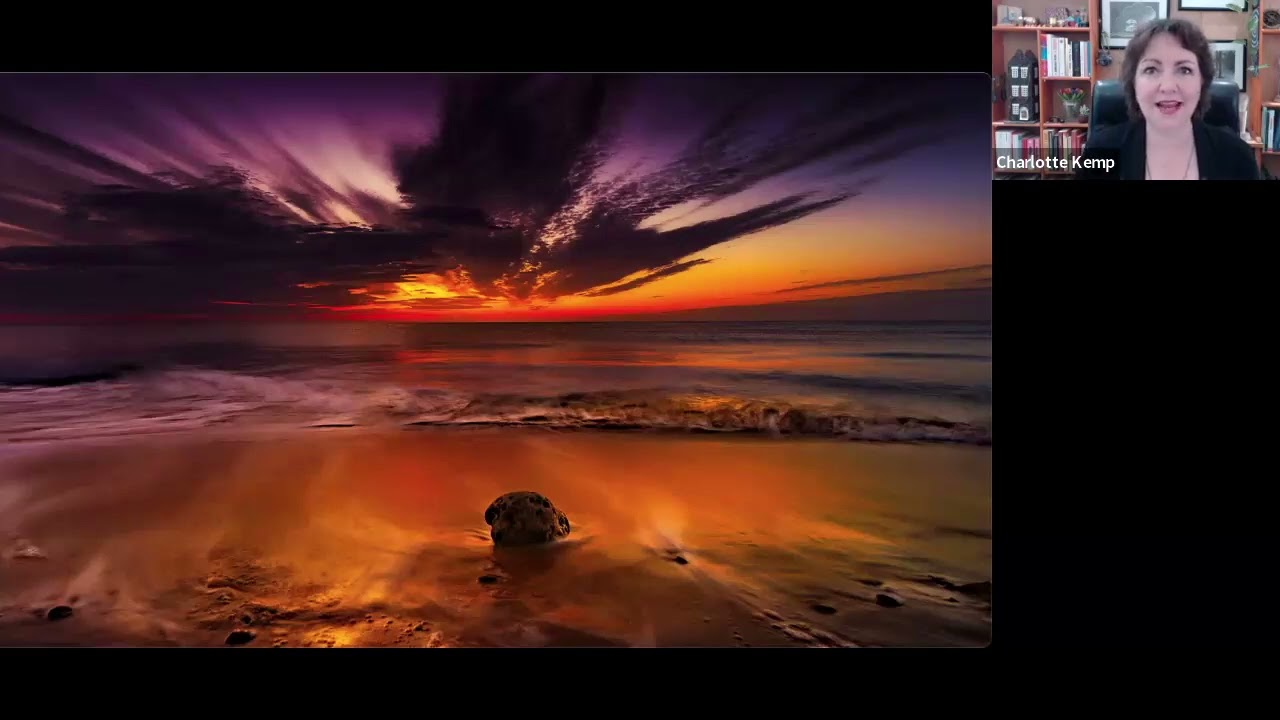
All right, so for those of you who haven't met me before or who are still trying to work out who I am and why you're on this session, I'm Charlotte Kemp. I am a futurist and I'm a professional speaker, and I coach leaders in futures thinking so that they have more tools at their disposal to have more agency over their future and to be able to, as someone said yesterday, to be able to create the trends instead of just respond to the trends. And I think that's what we all feel sometimes, like there's too much happening to us or around us and there's a bit of overwhelm, and how do we actually respond to the future? So that's what these sessions are about. I do various kinds of webinars about once or twice a month, sharing some of these insights and ideas, but I also have coaching programs and other learning programs as well. The thing about futurist thinking is that it's not reserved for futurists. My position is that we are all natural futurists, but with all natural talents, we do it— some do it better than others. But if you've ever thought about the future, started a retirement annuity, made plans for a holiday, looked at your own education or your children's education, you are futurists. But we can become better futurists with some insight and some tools, and we're going to look at that a little bit right now. One of my other very strong beliefs about the future is that it is co-created. So it's not that there's one person in charge who creates it. There's no out there they doing things. We have agency over the future, and we can do it better when we're talking and sharing. So I really do encourage you in the chat box to put down any of your thoughts or ideas, even if you disagree with me, that we're here to learn and discuss and unpack and uncover. And that's really at the heart of how we co-create a future that's a preferred future for all of us, and that actually benefits and encompasses more people. A futures plan that only satisfies the needs and desires of a few people is a very selfish plan, and we can do better than that. So this wouldn't be any kind of a business meeting if we didn't start with a, a Venn diagram. Let me just start with the right page of the Venn diagram. So this particular Venn diagram, I really love it because it helps us to, to see different elements and how they come together. And I know that I'm going to be presenting a lot of new ideas to you, and I certainly do not want to add to any of your stress and anxiety. So please don't feel overwhelmed by new concepts. I will share a set of these slides with you by email later on today, and there are other resources as well that you can follow up. But if you take away nothing other than a curiosity and an openness to explore from today's session, that will be a very good next step. So please don't feel like you have to— there's no test here. There's no There's nothing that you have to actually prove that you've learned or anything. You just want to open your mind to exploring new ideas. This Venn diagram, we have it in 3 parts, and the first part is philosophy. Why are we looking at the future? Why do we think one future might be better than another future? How, you know, all those kind of philosophical questions that are really at the heart of our values and our purpose in life and how we look at the work that we do and why we do the work that we do and, and why we're stressed or frustrated about something. That's all philosophy. And I really believe we should be doing more philosophical reflection in life generally, but also specifically about the future. So that's the first part of this Venn diagram. The second part is the psychology. How do we go about changing, adapting, changing, adapting, being agile. How do we get our team to respond to changes? How do we find the information that we need? How do we influence an industry or a sector? There's a lot of that psychology, and we need to understand how our brains work, because if we don't get that, if we don't understand how our brains work, we're not going to create a plan that is actually going to work for us, because it might be a really great plan, but we're going to resist it. even though we know it's a good plan, we will resist it if we haven't worked out the psychology, because humans are unusual. I'm just going to say unusual. Then the third part of this Venn diagram is the practicality of what do we need to do next, what do we need to put in place, what do we need to know. And once we've got all 3 of those parts together, we have a very ideal— like those lenses all come into focus. We've got an ideal approach to the future. If we only have 2 of them instead of all 3, if we've got philosophy and psychology, then we've got an impossible plan. It's nice, but we can't put it into practice, so it's impossible. If we're just looking at psychology and practicality, it, it might work, but it's irrelevant because it doesn't tap into our philosophy for the future. If it's philosophical and practical, it's going to be implausible to put into place, because we haven't added in that psychology element of how people think. So all 3 together, that's ideal, and that is what these conversations are about, helping us to name these areas, to understand them, and to also understand our own resistance, our own anxieties about the future. And it's okay to do that. In the past, in our history, when changes happened, we had a generation for the ripples to go through society and then another generation for it all to be bedded down and to become the kind of background way that this particular culture worked. And then by the next generation, then there are some, you know, ripples of maybe we need to look at this and change society again or whatever the changes are. These days the changes are happening so quickly that we're breaking and reforming systems and ideas and ideologies and beliefs over and over again within a lifetime, and it can feel like quite a roller coaster. The thing is about us humans is that we want to look at the future, we want to see beyond the horizon, and many of us hope, wish, really feel frustrated that it doesn't look as nice and neat as that. So we can't just go forward and do the work we want to do because there are too many variables. The horizon is not a nice neat line out into the future. It is messy, it is variable, it is beautiful in its complexity and confusion. If we have a very neat plan, if we've got everything laid out very precisely for us, we're also going to rebel against that because humans need a bit of novelty. So even though we think we'd like everything to be organized and neat, when we get that, we also do resist it. So we have to learn to be a little bit more flexible. As if, and I've never done this, but as if you went out on the ocean on a surfboard and you're standing there and you're having to respond to the waves on top but also to the current underneath that you can't even see. That is what we're doing, is we're responding to those tides and waves. But if we're looking at the horizon, we also do need to get perspective. And for those of you in Cape Town, this is a photo, not my photo, I wouldn't do this either, but this is a photo of just such a beautiful view out of Cape Town, and we can see much further in the horizon if we give ourselves perspective. And that perspective is, in this case, futures thinking. So instead of just saying, I don't know what's coming in my industry, it's scary, I don't know what happens next, and we get uptight and we do kind of pull into ourselves when there are too many anxieties and stresses, we need to be able to take a deep breath and lift our chins and look out as far as we can so that we have a better idea of what is happening right here and now. And that's the horizon we're actually looking at. So yeah, it does take a little bit of courage and a bit of perspective. Once we've got a picture of the horizon, one of the other things we do is that we start to build. We build the future. Now these are some examples of building buildings, and we start with a blueprint. And I did some work with a client in Pietermaritzburg recently, and they took me through their warehouse, their manufacturing floor where they build these huge constructions that go into factories, and they showed me the blueprints that they work on, and they were so intricate and precise. And they have to get all of these things right so that they can cost it correctly and that it works for the client and that everyone is satisfied. And again, for people who look at that and they like that kind of level of order and organization, it can be very distressful when we're looking at a future that isn't that neat. But we can't start to build things without having a plan, without having a blueprint. Even with the blueprint, we make mistakes. And it would also be wrong to imply that we can build the future with a blueprint. It's not nearly that neat. It's not nearly that specific. But I just want to kind of just go on a little side quest here to let us know that even with the best laid plans, people sometimes make mistakes. Sometimes things go wrong, and we, we need to have a little bit of a a lighter approach to some of these things, to be able to identify them, to be able to laugh at them, and to be able to then look at these and say, am I doing the same kind of mistakes? Do I have this lack of foresight? Am I doing ridiculous things that really should be done a lot better? Is somebody else looking at me going, wow, you could do better than that? So We want to have that openness to realizing that there are mistakes, that these things are not specific, that we need to be flexible, and that it's okay to go back and do something again. We need to use tools, but the use of tools implies that we need to learn how to use them better. And any of those previous examples, there's going to be a foreman taking them aside saying, can you see the mistake you made there? Can I help to coach you and to do something in a better way? So we do have tools for the future. There is a— there's an old quote and it's attributed to like a dozen different people and it's got now a name. It's called the Law of the Instrument. And essentially it says that if the only tool that we have is a hammer, then every problem starts to look like a nail. And that is the problem that I encounter with a lot of people when they're looking at the future, is that they have a business plan that they've downloaded from the internet and plugged information into and said, that is my business plan for the future. They don't really understand what they've crafted, but they only had that one business plan and they can't respond to anything that changes. And they probably only have that business plan because the bank needed it to give them an overdraft for the business, and they don't know how to use this tool. It's no good having tools if we don't know how to develop the skill to actually create new opportunities. So people in business, people in leadership, if they are just trying to use the tools from the past, if they have a limited toolbox with not enough things that they can choose to respond to situations that they're in, then all they do is they take that one tool and they try and use it faster and harder. They hustle, they hit the pavement, they just go and make more sales calls, They just go and do what they've done for the last month, the last year, the last decade. They try and do it harder and more and faster, and there is no way that we can keep up that way. The world is not any longer that local linear world we had in the past. It's now a global world. It's an exponential world. In fact, it's a quantum world, but that gets a little bit scary and confusing. But the world has changed and we cannot keep responding the way we responded in the past. We cannot keep using the tools we used in the past, which is not to say that any of the tools are wrong. There are lots of business management tools that we've used, productivity tools. We can do SWOT analysis, but if we, if we keep relying on the tools that got us here, we're going to fail because the world is different and those tools will not get us there into the future. So we have to be prepared to learn new tools, to change our mindsets, to find new ways to approach the future. So let me introduce you to just a couple of ideas about the tools that are possible. In the work that I do, I very often when I'm coaching with clients who are really trying to change the future for them or for their team, we start with mindset. So we really have to Look at our mindset, know where we're coming from. How do we feel about this? What are the physical symptoms that we feel about the future? What are all the chemical reactions, whether it's anxiety or excitement? We need to get a good handle on that because our mindset has to be open to creating this future. After the mindset, you need the toolset, which is what we're talking about. And then once you've got that toolset, you need to develop it so that it becomes a skillset. There are lots of tools. There are some really good business management tools. There are lots of futures tools. There are also lots of futurists, and there may be some here in the chat. Sometimes futurists come along, we check out each other's work. So if you are, say hi to me in the chat, please, and tell me what your favorite tools are. I see, Mel, you just responded. You've just mentioned that you're looking at scenario planning, which is brilliant. We'll have a little mention of that in a moment in terms of how we look at the future. But when you are speaking to, listening to any futurist talk about anything, and I know this is a very broad statement, but it doesn't matter what they're talking about in terms of the future or the tools or the approach or the trend watching or whatever it is, artificial intelligence, anything about the future will fall into one of these 4 stages that I'm going to show you in a moment. I call it a Compass Model. It's just an adjustment of another approach to looking at all of these things. When we look at this particular Compass Model, it encompasses all of the tools that are out there. Even if you have your own tools, even if you have— if you're coaches or skills development people, if you've developed something, it's probably going to fall in here somewhere as well. So let me look at this very bold claim of mine and see if I can show you what it looks like. The very first part of creating a plan for the future by using the tools we have is to gather intelligence. We need to know what it is we're dealing with. So what is the problem? Can we articulate the problem that we're looking at or the desire that we're looking at for the future? What, what is the data? What is the information? What are the trends? How are other people doing this situation? What are the industry professionals, the industry experts, the professional bodies talking about? What research is happening? We want to gather intelligence. That can be a huge project. That can be a project that can take 18 months. It can be a research project that takes a decade. Or at the end of this session today, you can take a screenshot of this, and you can sit down and do it in 20 minutes. You can have your very first futures plan within 20 minutes of the end of the session just by looking at these 4 stages, because they're, they're very scalable. And for me, that's an important thing, that when we look at the tools that are there, these should not be reserved for the multinationals, the governments, the militaries that have designed them. They need to be accessible and scalable for all of us. So any of us can use these tools no matter where we are in our careers or in business or working for a company. So we want to gather intelligence, and in there, there are those tools like Trends and Delphis and things like that. Once we got the intelligence, the next thing we need to do is manage change. And again, there are lots of tools in here that there's even an International Association for Change Management Professionals. And I love going into their website and seeing all the amazing work and projects and tools that they use to talk about change. Anybody who's looking at psychology coaching, that's all managing change. Anybody who's a parent, that's managing change. Change happens. So it's not about us saying, I'm not ready for the future, so I don't want to change, or I don't like what I'm seeing, so I don't want to change. Change is happening. It is there. You just have to find a way to respond to it. And too much resistance to that change will put you in a situation where you're falling behind what you need to keep up with in your industry sector unless you make a very bold change and go in a different direction. But we'll look at that in just a moment. So managing change is really interesting. How do you change and respond? What are the changes happening in your industry sector, in your country? What changes do you need to have in the team that you're working in? Are you introducing those changes to the team, or is it coming from them? Because one of the interesting things about managing change is we do not like it when it's imposed on us. We do not want somebody telling us what to do. We do not want somebody telling us to do the dishes, go and exercise, put on masks because of illnesses and pandemics. We don't want people telling us what to do. But when the change comes from within us, when we want to be healthier, when we want to protect ourselves, when we want to learn and grow and develop, when that change comes from within us, we're prepared to actually put in the effort to make that change happen. And part of that whole effort there is understanding how you had that conversation the people that you're working with. So any leaders here, what we don't want to do is go to our team and say, all right, I've sorted this out, I've worked out what has to happen next, we're going to do this plan, I'm in charge, now, now do it. When we sit down and we co-create the change that needs to happen, when we draw the insights and experience and desires and face the anxieties of people in a team, the change process that comes out of that is better than anything we could have imposed, and it will work, and it will produce better results, and people will buy into it. So we really need to explore that change step in terms of designing the future, crafting the future that we want, and looking at the tools that are available. So we gathered intelligence, we've managed change, now we get to describe the future. And this for me is always the fun part because this is like Mel mentioned earlier on the scenario planning. Describing the future could be visioning and scenario planning, and some projects, they actually create what they call artifacts from the future. So they create some things and people go, if this is what the world could look like, if this is what the project is, then how do we respond? And you start to create a whole kind of ecosystem around just one idea or, or one concept. Any speculative fiction, so any science fiction and, and much of fantasy, those are ways of describing the future. Black Mirror on Netflix is a way of describing the future. And when we look at those, I encounter a number of my friends who say they don't like science fiction. It's all scary. And it's not all scary. It's— some of it's amusing and lighthearted, but when we say that science fiction is scary, people are saying that it's painting a picture of something that they don't understand, they don't want, they don't like, they don't know how to respond to, and it causes them anxiety, so they want to pull away and they don't want to look. It's very easy to not read science fiction or watch science fiction movies, but that's not the point of the scenario. It's not the point of the science fiction to scare people. It's to paint a picture of what could be, and when we look at that, we say, I don't like that. I don't want that to be my future. Then we get to make a decision about how to change and go in a different direction. If we see a scenario that says this is what the world could look like, we go, that's amazing, and we do want that. Then what do we do today? What changes do we make today to aim in the correct direction so we can get closer to that. As an aside, I edited and compiled a journal recently from a whole lot of futurists in Africa talking about futures work in Africa, and one of the essays was absolutely brilliant. The person who wrote it, Michael Haupt, he's talking about an area in the Western Cape where they're really looking at the local community, and a geographic area, and it has been in a very bad place for a number of years, largely because of consequences from apartheid government in the past that has had an impact on this community in this part of the country. And they're working with the various groups that are in that part of the world to have a different future, to change the way things are. to change the economic future, the actual agricultural area, the educational opportunities of the children. And how he communicated this was that he wrote a story as if it was in a couple of years' time, like in 2035, I think. And he said that's when his daughter turns 18, and he would love to gift her with a future that is better than the one that we have at the moment by demonstrating this. So he's got all of his passions lined up. There, and he just described what this part of the world could look like. And when you tell that story of this is what we could be if we pulled together, if we did this together, if we made a few sacrifices now, if we collaborated, we can create this future. And that is a very compelling story, a compelling narrative, so that people will put aside petty grievances or their own egos in order to collaborate to create something better. So describing the future is really, really powerful. Again, lots of tools that we can use there, and those are available. But if you have any of your own tools or approaches, that's also okay. So gathered intelligence, we've managed, changed, or explored what that looks like. We've described the future. We're trying to design a futures plan now with these various tools. What is left? Well, what is left is for any good plan, we need to test the strategy. And again, there are ways of testing, there are tools to test things. Test things in advance, but obviously there are also metrics that we could be using and key performance indicators that we can look at to see how well we are doing. One of the ways of testing one of the Futures tools is that they— I'll tell you how it was described to me. So it was a full-day workshop, and in the morning session they worked on various scenarios and they talked about you know, they created scenarios in this team about what the future could look like. And then there was the lunch break. So all the delegates went out to lunch and the team stayed in the room and they changed the whole room around. They put certain things up on the walls. And when people came back in, they welcomed them into, let's say, 2035. And they said, it's 2035. This is fantastic. And remember 10 years ago when we put that plan together? This is— we've succeeded. We're here. This is Great. And so they just, you know, imagined and played with this idea of being in the future, being time travelers to the future. And then they discussed how did they get there? How did they get from that plan a decade ago to this day, to what they're experiencing? And they kind of backcast. They, they worked out if we got here, then we would have had to have this step before and then that step before that. And these things would have to be in place and we'd have to have that kind of skill set or experts on our team and we'd have to have that kind of data. and those kind of resources, and they worked their way back to where they'd started. And now they had a better idea of that strategy so that they could move forward or they could put things into place. So there's lots of fun ways, there's data ways, but there are kind of flags and indicators that we can design out of those scenarios to help us to see where we are going in the future. That slide on its own is enough for you to be a futurist. After the session. So take a screenshot if you like, but I will be sending you some slides. I want to just explore a few other things. So this is a bit of a side quest. So we're going to look at the first 3 steps to gather intelligence, manage change, describe the future. But I want to just show you a few things that these are just screenshots from social media. So I've not gone and done all the research, but I just want to I just want to paint a picture of some of the things that people are thinking about and doing, because when we have only that hammer, we think this is the only solution. When we live in a part of the world that is plagued by certain problems, whether they are political, economic, social, technological, environmental, whatever those drivers of change are, whether it's inherited systemic problems. When we live in one part of the world and we only experience that and we don't have perspective, we think that there are no options, that the only thing we have is a hammer, and it's not true. So I love going online and seeing what people are doing in other parts of the world or what they're talking about or the, the novel approaches that they have. And part of the reason for really trying to encourage different people to come to these sessions is that in the chat box, and there's some private messages there as well, and in our conversations afterwards, we get to share ideas and insights from different parts of the world. That is really important because we need to see how things are different. I had a conversation with— yesterday, I had a conversation yesterday with someone that I'd met about a year ago in Canada, and she wanted to chat to me about something, and she's frustrated with this one particular problem. I said, you need to be connected to 2 other people who are wrestling with the same thing. And the 2 other people, one is in New Zealand, one is in Australia, and I was able to connect them so they can share that conversation and they can find more opportunities coming out of it. So part of this gathering intelligence is for you gathering a network, tapping into a network so that you can find new ideas and insights. So let's just look at a few ideas that are out there. One of them is The problem of homelessness, we have that in South Africa, it's a big problem in certain parts of the world. In some parts of the world they will criminalize homelessness. In Finland, it's the only country in Europe where homelessness is in decline. They have a Housing First policy, so if there's a homeless person they will give them accommodation because a homeless person in accommodation, which obviously costs the country something is cheaper to the country than if they had to, you know, deal with their medical problems, deal with their criminal problems, deal with their drug problems, deal with anything else that comes out of that. So by changing their values and changing their approach to a problem that is all around the world, they solved it in a way that is different from how other countries are doing it. So there are different ways of approaching systemic problems. In 6 hours, the world's deserts receive more energy from the sun than humans consume in a year. Our power is a big problem. For all of my South African friends, we know this. We have problems with our power supply, and very often we go into stages of having load shedding where our electricity is turned off in cities and suburbs for 2 hours at a time because there isn't enough power on the grid. But there is enough power in the world. There is enough power that we can draw from the sun. We're not like wasting that. In fact, we are wasting it by not using it. So there are alternatives. We don't want to think that there are no other ways of doing this. There's a couple of different stories that I've seen about people. There's a couple of families. There's individual people who do it. They buy a piece of land. They reforest it. They bring back the just by planting the trees and dealing with the soil, animals are coming back, insects are coming back, the birds are coming back, the ecosystem is healthier. That can happen. We don't just have to destroy, we can actually reverse some of these trends. Apparently in New Delhi, it's the only city in the world where the buses run on compressed natural gas. That's a different way of doing it. There are these options. I love this particular one. The English civil engineer who designed the sewer network for central London in the 1860s said, we're only going to do this once, and there's always the unforeseen. And so he doubled the diameters of the pipes. He didn't just do it for, you know, just to get the project. He didn't design it in such a way that he'd have to go back and get more money to, you know, to fix it afterwards. He designed it so that it could Cater for the potential of more people using these systems in the future. And, and the, you know, this is foresight. This is a person who did not know exactly what, but with a little bit of extra effort could design something that could benefit people into the future. So it didn't have to be entirely overhauled every time. Talking of which, planned obsolescence is illegal in France. Um, there are companies that are, are designed, um, their whole marketing plan, their whole financial plan is designed on the foundation of your product being, you know, becoming irrelevant, the battery dying, um, there being a new version coming out with new cameras or whatever it is, but you're going to have to keep replacing it. In this world, it's very, very difficult to get certain things fixed. You don't get toasters fixed. You throw it away and buy a new one. It's cheaper, cheaper to buy a new toaster than to get an old one repaired. And we really have to challenge that because this is the economy that we have, and we think it's the only way an economy can work, that we and others take, make, use, waste. But it's a linear economy. We use and we discard. We're looking at recycling, There's a whole lot of flaws. There are problems. Apparently clothes that are made with recycled plastic are actually more damaging to the environment than the original plastic, because now those clothes can deteriorate and you get those little microplastics into the water system in a way that wouldn't have happened with the original. So yeah, recycling is flawed, but let's keep looking at it. Let's keep trying to work this out so that we can find a better way to have an economy. It is possible, but many of our economies are designed on the linear version, and if we don't keep up with that linear version, then there's a problem and people panic and they change interest rates and they have recessions and they force people back to work because they have to keep this going, because if anything stops, everything collapses. But not all economies across the world are like that. There are other ways to do this. A Mexican company creates disposable utensils from avocado seeds, and then they biodegrade, which is brilliant. This one, more Mexicans created organic leather out of cactus leaves. That's just a brilliant option. Scientists in Boston have created a ventilator that takes the carbon dioxide and turns it into fertilizer for rooftop gardens. They're taking something that we're producing and using it in a different way to create something else that we need to consume, which is brilliant. We know we've got a bee problem in various places, and part of that is because there aren't enough habitats for bees in built-up areas. So this one city has turned their bus stops into bee stops. These are simple things that can be done, and I'm not saying we have to all go out and start bee farming or anything, but find ways to encourage yourself to see these options, to go, if people can do that, if somebody can, can take waste and turn it into, into bricks, not just stuffing plastic bottles with waste, but, but actually turning into bricks, there are other ways we can be challenged by these. And you can see that they're coming from all across the world. And these high school students have turned the plastic bottles into— use them for 3D printers. And here in Cape Town, a company's developed new compostable courier bags made from mealies or corn. So be encouraged, find ways to challenge your thinking. The minute you hear yourself going, well, we've always done it this way, there's only this way to do it, there are no options, go and look for those options. Use artificial intelligence, have a conversation with it to explore what could be possible in your world. And the more you do that, the more ideas you will have about what is possible. And that's when we start to create the futures that we're really looking for. So we just— that was just gathering some intelligence about some of the options and for me, the encouraging messages that are out there. The second part is managing change, and here, although we actually talk about trends elsewhere, but this is a really important concept for us to contemplate. When we start to gather intelligence and we find out what the trends are in our industry or our profession, very often people will say, I see what's happening, but I don't like it. I don't want to do that. I don't want to be a coach like that. I don't want to have to commute into work, although the big trend is to go back to work now because it serves the interests of certain people. I don't like how everybody's doing marketing. I don't like how people are, you know, crafting their speaking careers or their coaching careers. It just doesn't fit right with me. Here's the amazing thing. Once you've identified a trend, You can design your own counter-trend. You can design something in the exact opposite direction to what everybody else is doing. You may not get all the business, or it may actually tap into some unmet need and desire of people, and you may get a lot of business from it. But we've got a planet of about 8 billion people now. You can find your people, even if it's a small little niche area. You can find your people who want to to connect with you because you're doing something in the opposite direction to everyone else. One quick example is as professional speakers, obviously we've been playing with technology. We've, in our speaker association, we've been learning how to have online or hybrid meetings for a long time before COVID happened and forced the whole world into that space. So we saw the trend, we prepared ourselves for the trend. It's got faster, It's got better. There are more cameras and stuff out there, lots of technology. There are some people who don't like that. A colleague of mine coached somebody the other day in the middle of a forest. Another speaker I know— I beg your pardon, I'm not getting emotional— another speaker I know plans her leadership training sessions outdoors at night under a tree. There's no technology. There is no, you know, fancy integrated whiteboard that prints out. There's no slides. It's people connecting with each other, with nature in a very different setting. And when we start to do things like that, we start to do what we as humans should be doing. We are, we can create new opportunities. We can create new insights. I know that in the big picture, I know that with the scale of things, that that doesn't serve everybody. I know that there are communities in this world right now who do not have this agency over their future. But if you do have the opportunity, you do not have to go along with everyone else. You can define for yourself the opposite direction, and that takes some effort and courage, but that is possible. All right, I'm going to move on to The third part, which is exploring scenarios, and, and I love the whole scenario kind of concept. I mentioned earlier on that we can have a business plan for a business, but if you were creating a proper futures plan for your organization, for yourself, for your team, for your career, whatever it is, you've got that original middle-of-the-road plan, like next year is going to be 10% better than last year. You know, it has to get better. That's how we imagine our futures. But we should also create a negative scenario and a positive scenario. The negative one says, what if you get less business next year than you got last year? What if things happen like COVID that could totally disrupt it? You need to have a plan for that. What happens if you get so much business and things take off and this is so brilliant and, and now you don't have enough opportunity to keep up? How are you going to deal with that? And once you start to create that range of scenarios, you have some practical plans that you can use. You can identify things that could happen so that you can respond to them. You've opened up your mind. You've exercised your brain. You've exercised this muscle so that it's stretched, so that it can see more opportunities. It can put more ideas together than you could have if you just had that one plan. If you just use that one hammer. So scenarios are really powerful. They're done in various different ways. So I talk about this middle of the road, the negative, the positive, but there are others, you know, depending on what the circumstances are or what the research project is. This particular set of slides shows one person walking down a railroad. It's a little bit overgrown, so it's probably not in use, but there's a clear line of sight where they're going. The Zen garden one, that's another path, but really minimalistic, calm, not too much chaos going on. And then the third picture there is a path that goes off into the forest around the corner. You can't see it. For some people, that is exciting and thrilling. For other people, they go, I'd rather have the Zen garden. And that's okay. How we move into the future is really going to depend on what we are wanting to design for the future. But when we start to look at different ways, we open up our minds to new opportunities, which brings me to this gorgeous image created by artificial intelligence of a brain filled with new ideas. Our brains, our creativity is really amazing. We are at an opportunity, a moment in time that is absolutely phenomenal in terms of the opportunities that are out there, the things that can happen, and we can really enjoy that. We can tap into it. We don't need to shrink away from it, but we need to tap into that. We need to be thinking about this because if we don't, we end up with— if we're not planning for the future, we end up with this. I took this photograph in a shop. It's down the road where I used to live. It's a furnitures, and this sign on the side here says, invested solid wood for tomorrow. So they got big dreams. This little sign here says, we are much bigger than we look, because it's a small shop, but down at the back there's more. It is bigger. And then the last sign that they put up was closing down sale. And I literally stopped on the road and looked at this and took a photograph. I had a business in the past, a retail franchise store, and I had invested in plans, solid plans for tomorrow. We were bigger than we looked because we had other things going on outside of the store, and the business failed. And that exercise of losing a business helped me to think about my next business so that I could respond better, make better plans. If we're not thinking about the future, we just repeat this over and over again. That's a real picture from real life. There are bigger stories. I love this one from Blockbuster because every time we're talking about, you know, companies that didn't get it right, Blockbuster and Kodak and the old ones will come out. Tweet why you're leaving Netflix. The top 3 most creative tweets get a 1-year subscription to Blockbuster, and we know how that went. This was when I came across MySpace music marketing, and there are some people in the world who don't even know what MySpace is. So when we're looking at this, when we're looking at everything that is possible in the future, when we're looking at everything that is happening, we can feel this level of anxiety, and this is real. And in a world where there are lots more mental health challenges than we've had in the past. This is real, this kind of anxiety, and this is not helpful. We can't go into the future like this, and I wouldn't want anybody in this call today to feel like they have to hustle, that they have to go and do things, that they have to go and learn new stuff, that they have to respond to so many things. The world is big enough and overwhelming enough as it is, so we need to find simpler ways to get started on this journey. So I'm going to show you just a few things. If you think about yourself as a futurist, we want to know what does a futurist do? And these are simple approaches. There are lots more complex. You can go and read the books, you can do the studies, you can get a degree now, which you couldn't before, but you can get degrees now in foresight. But let's just start with a simple thing so that you can become more like a futurist even today. The first one is to stay curious. Be curious about what is happening in, in the world and in the future rather than feeling anxiety about how it's going to impact you or how you're going to respond. So don't start with, I don't like this for myself. Just go, oh, that's interesting. Tell me more about what this is about. But it hasn't affected you yet, so just be curious. The second one is to scan far and wide. So, and this is solid advice. If you're wanting to get a grip on your business sector, wherever you are, go online and find the other companies that are doing it, the professional bodies or associations that are in your space. Look for companies putting out content in your space in different parts of the world. If you work in the nonprofit space, go and look at organizations that are in the for-profit space. If you are a commercial, big part of a big commercial company, go and look at how a solo entrepreneur does something and go and find those things and subscribe. Subscribe to some news sites, subscribe to the news sites that are on the opposite of what it is that you believe. You do not have to change your beliefs, You do not have to change your values, but you do need to challenge them, and you do need to open your mind up to understand what is happening. So I know this sounds like terrible advice— go and find all that stuff and subscribe to all the newsletters. Oh, okay, and then work out, um, how to create the rule on your mail program that you can put all of those into a folder, or create another email address and just use that and log in once a week. And once a week, once a month, go in and look at that huge folder of lots of stuff and scroll through and just look at the headlines. Just read the headlines. If you'd had a nice big cup of coffee and you scrolled through for 25 minutes and then you went, hmm, interesting, and deleted the whole lot without doing another thing, that's good. That's enough. All right. And you do that every week or every second week. And eventually you start to feel that you're seeing some patterns. You go, this is the 3rd time I've heard mention Of mental health issues. This is if the I'm sure the other day was something from like you know Latin America. Now I'm hearing something from India, which is on the same topic. That's interesting. Again, you don't have to go research this, but every now and then something will really get your attention. You can follow the link. You can read the article. You know, open up the email, read the article, maybe follow through, maybe download something and read it, and then discard it, and then. Just go and check again next week. That scanning far and wide is a powerful enough project for you to actually prepare yourself for the future so that when you hear something and they say there's going to be new legislation enacted in this country, in this place, you're not going to overreact because you didn't see it coming. You're going to go, I thought that was going to come. That's why we've sorted out these things and addressed that, and we've got an attorney we can speak to, whatever it is. Okay, so scan far and wide. That is— that will really set you up well for the future. And then also seek alternatives. This little picture generated by artificial intelligence just for the fun of it is a little girl playing with a kaleidoscope. She has her hand over the end of the kaleidoscope, so she's not going to see anything. But when we play with the kaleidoscope, we see the same things in different patterns, and they play around and fall over, and we see a different pattern, and It's that novelty that our brain enjoys, but it also helps us to keep looking and say, it doesn't have to be this way. We don't have to settle for this. If people can do it in other parts of the world, why can't we do it here? That's what we want to keep looking for. So stay curious about what is happening, scan far and wide to see what is happening, seek the alternatives to what you're experiencing. Those 3 steps will really help to set you up. The other is this poor hammer. We keep really going on about this hammer today. You want to discard what doesn't work. You want to break what doesn't work. Whatever got you here will not get you there in the future, so get rid of it if it's not going to serve you. It's not that it was bad. Hammers are not bad, but hammers have a purpose, and if they don't have a purpose for what we're trying to do, you get rid of it, okay? And then you need to really embrace unlearning. You need to be open enough to say, I've got rid of those old tools, I've got rid of those old management novels, models. I'm going to learn a new way of doing leadership, of speaking, of coaching, of doing my business, of marketing, of positioning myself for opportunities internationally. So you really want to explore how to unlearn. That's a very courageous thing. There is a concept that we hear called VUCA, V-U-C-A, and it talks about volatility, uncertainty, complexity, ambiguity. That is what we're looking at in the future. And so as we're kind of ending here, I want to let you know that we can get rid of those. We can find other ways to look at the future, and those ways are with vision. They're with understanding, clarity, and with agility. And when we start to embrace those, that's when we start to create the future that we're looking for. So there are a couple of comments in the chat. We're going to go to the chat in a moment. I just want to let you know that I have designed a short assessment to look at a couple of specific futures competencies, and if you'd like to do that, I'll send an email later with a link again. But if you'd like to do that assessment and just get a report just to show you some things that you could be looking at, then please feel free. I love designing these assessments so that we can kind of test and see where we are, and even— and this is important— Even if all of this stuff is new to you and you look at some of those questions and you go, we've never done this before, don't feel like you can't fill in the assessment. I've done assessments before where I've said, I don't even know what they're talking about. So like, no, zero, like never. You just respond. But in doing that and going through those questions again, you're opening up that gorgeous brain of yours to see alternatives, to look for other opportunities and ideas. So you really want to do that. I'll put the link in the chat here as well if somebody's really keen. And then also, because these conversations are important, if any of you want to have a short half-hour conversation with me, you're very welcome to book some time in my calendar and to chat, because again, when we start to have those conversations, that's when we learn and see what is possible.
More from Charlotte






Unlock the Power of Thresholds_ What Ancient Wisdom Teaches About New Beginnings



