Data Capture and AI-Driven Revenue Intelligence with Janis Zech
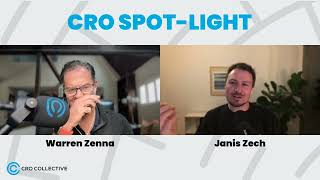
Warren Zenna talks with Janis Zech about the CRO role and how AI is changing revenue operations. They cover when to hire a CRO, how to integrate marketing and sales, and why organizational fit matters more than the title.
Foreign.
Hi, I'm Warren Zenna, founder and CEO of the CRO Collective, and welcome to the CRO Spotlight Podcast. This show is focused exclusively on the success of Chief Revenue Officers. Each week we have an open, frank and freeform conversation with top experts in the revenue space about the CRO role and its critical impact on B2B businesses. This podcast is the place to be for CROs, sales and marketing leaders who aspire to become CROs and founders who are looking to appoint the CRO or want to support their CRO to succeed. Thanks for listening. Now let's go mix it up. So, hello, everyone. Welcome to this episode of the CRO Spotlight Podcast. This is Warren Zen. I'm the CEO of the Ciro Collective and real excited today. This gentleman that posts some really awesome on LinkedIn and I download it all the time and I read a lot of Janice's posts and I thought, this is a very smart person who has a lot of very similar perspectives on things than I do. And so I thought I'd like to talk to him. So we never spoke before Janice, but I thought it would be a great way to introduce ourselves and just talk here. So welcome. Welcome to the show.
Yeah, thanks for having me. Really excited to be here and glad to meet you as well.
Yeah, man, all good. So some of you might know, right, you've seen Janice, he produces these incredible graphics of CRO frameworks and things, and they're just really well produced and very well thought out. And obviously, Janice, you're a very smart marketer because, you know, that sort of stuff is very sticky and everybody asks for it. And I get that we do very similar things in some respects, and so I appreciate that. So we can talk a bit about that because obviously you've got a good mind for how to build audiences and create awareness. But then also too, your content is great because you're talking about a lot of very important things which specifically related to operational excellence with Chief Revenue Officers and growth. So I'd love to hear a bit maybe on your background, you know, a bit where you're from. I know you mentioned that you made a couple of exits and you built some companies to some good growth and scale. And these are really important things to the audience. So what. What's up with you and how did you end up where you are and tell us a little bit about what you're doing.
Yeah, yeah, yeah, I. I'm basically probably the best description is like a. A repeat founder. So I started my first company with 21 that didn't work out. Then I started my second company with 24. My mom was freaking out because she wanted me to get a real job. And then I basically stayed with that company for eight and a half years. We started around one table with two other folks and then when I left, we were around 350 people, you know, 76 million ARR sold. The company on the way actually was public. It was later resold the second time and was a company called Fiber. And I mean, this is basically where I, you know, got in touch with a CRO title the first time. The interesting thing is, you know, I've always been on the interception of product and go to market. And so in 2010, I think I just basically called myself a chief revenue officer. And I remember everybody was like, what is this? Like, what are you talking about? And you know, it actually was a very simple definition. Like back then I was basically responsible for all things go to market. Marketing, sales, CS support, and that back then also included product. So, yeah, I think in the end whatever drives revenue outside of the R and D function. But I know that, you know, product is kind of a bit of a weird mix in here. So that's not the typical definition, I would say. Yeah, but yeah, I mean, that's basically the first time I got in touch with the CRO title.
Yeah, I understand. So obviously from your accent, you're not from Brooklyn. So like you're, you're from Germany, right? You're in Germany?
Yeah, I'm in Berlin. I've got two kids. I'm 40 years old now. After my, you know, kind of second company, I started investing. So I invested in a bunch of companies actually for a long time already. And then I also started another company which we sold to a company called Personio. And now I started basically my third company called We Flow. And we are in the revenue intelligence space. So we currently offer four products. Activity capture, conversational intelligence, pipeline management, forecasting. And yeah, we, I mean, we are building out, you know, a suite of products that ideally, and I think, you know, the core focus has been on like, how do you automate data capture? Because that has been a key challenge throughout my life to then have better insights throughout the deal pipeline and forecast management process. Right. So we typically talk with CROs, CSOs, VP of Sales, but then also spend a lot of time with revenue operation folks and sales of folks. So, yeah, I mean, that's, you know, how one of the reasons why I'm posting about this stuff on LinkedIn.
Right.
Like for us, it's obviously Marketing. And I can share a bit like, you know, our evolution on marketing and why we went down to trying to create really valuable stuff instead of, you know, the typical SEO stuff that, you know, I think nobody really enjoys reading. But. Yeah, let me stop here.
No, it's okay. I. I love it. I mean, it's great. So. So I guess one thing I want to ask about. It's interesting you mentioned before, this reaction that people had to this CRO position. And like, what is that? It's interesting, as you can appreciate for me, because, you know, in the US there's certainly a, let's say, a greater familiarity with the title because it was sort of invented here. But that doesn't mean that just because everybody heard of it, knows what it is. That's sort of what I'm trying to solve here is that there's an incredible amount of ambiguity about the role and how it's implemented, and it's changing all the time. And so I want to make sure we're sort of just on the same. On the same, but we're just clear about just what we're talking about.
Right?
Because when I think of a CRO, and the whole reason I began this business is because of what you bring up, which is there's a lack of familiarity with the role. And as a result, unfortunately, it can be utilized improperly all too often. And as a result, it causes all sorts of problems for the company and for the CRO. I was just on the phone with a colleague before, right before this call who told me that their CRO just got fired. And I hear this a lot, and they got fired. When I dig into it, you know, the story is always very superficial where the CEO is sort of disappointed with the CRO. It didn't go the way they expected, it didn't get the results they wanted or whatever, and they let the person go. And when they fire a CRO, you know, it's. It's obvious from that sort of dynamic that there is some disappointment in the candidate or the person and they let them go. But I can tell you in my experience, when 98% of the time, it was actually the company that made the mistake, not the person they hired. And the reason is this. Certainly there are people you're going to hire that aren't great, and there are all sorts of variables of talent and skill. But I know this because I produce CROs. I create, you know, a program to help get them ready, and I tell them that even the greatest CRO in the world is going to Be at the mercy of the organization that hires them. And if the company that hires you doesn't know what a CRO is or what a CRO really does, you know, you're just sort of screwed, you know. And if you don't fix that in the beginning, you're going to end up with a job that you didn't want and that is sort of different than what was expected. And when it's out of whack like that in a job of that importance, it's going to go south pretty quickly. So my definition or the, I would say the definition of I'll go so far as to say of a CRO is someone who oversees the entire, let's call it go to market or whole revenue operation from soup to nuts from all the sales, the marketing, the customer renewals and success and maybe Even in a SaaS business, probably a little bit of focus on market insights and stuff for the product group and all too often, and I'd love to get your perspective on this, particularly in Europe, that CROs are all too frequently hired as heads of sales, not a real true leader of a revenue operation. So what are your thoughts on that and you know, just what your reaction to that sort of over opening is?
Yeah, I mean first and foremost I think it's one of the most difficult roles to hire for and then also one of the most difficult roles to fill. And I think it's always in the context of the go to market.
Right.
Like there's different types of go to market. Whether you have, you know, a high velocity, low touch model, product led, right. Like open source, high touch enterprise. Right. So like I think there's so many different aspects and I think if you think about the entire bow tie or funnel, right, however you want to call it, you know, from marketing to sales to CS and, and sometimes professional services or so depending on your go to market strategy, you need a different profile of a CRO.
Right.
And so from my point of view, the challenges you have to similar with a ideal rep profile that you need to develop over time to repeatedly hire great folks. You need to really get a good understanding before you make that higher and before you join an organization. Is this a good match?
Right.
Is my skill set aligned to what the company needs and am I set up for success? Right. I think we've all seen the stat that the average 10 years, like 18 months, something like that. I think that's like, you know, that's.
A good run in a way, right. You know.
Yeah, but like it's, I Think if you think about it, right, like typically you need three to six months to really get started, right? And then like I mean to change something, right? And then I mean you're basically out, you know, 12 months later. I think that's actually extremely costly for organizations, right? And, and so, so, so I think my, my point being, right, like, so I fully agree like in an ideal state you need to own, you know, the whole, go to market end to end. And I also think it's extremely important to work very closely with finance, very closely with product, right? But I think you know, when you dive then like a level deeper, it's like the key question is really like okay, what makes a great CRO at this specific company? And you know, I've seen, so I talk to basically revenue organizations every week, you know, probably like 10 to 20 times, right. And it's so interesting because you see the same thing on the revenue operation side, right? They have revenue operations titles, but actually they do sales ops. The same with CRO. You have a CRO and then you have a CMO and a cco, right? That's actually a cso, right? In that sense. And, and so, and then more often than not actually the CEO is the CRO, but usually they're not a well qualified CRO, you know. And I think, you know, I think the, like there's always the kind of the theory and then there's the reality and the reality deviates a lot from the theory. And, and, and I think that's, that's a, that's a, that's kind of the, the harsh reality. But I would, I would say this, right? So my, my earlier point on like what, what make what is a good match, right? If you, if you have a product led high velocity business where a lot of pipeline is driven by, by basically demand gen programs and demand capture programs, right? Probably you need a CRO that is, you know, well versed in marketing and is very good at creating top of funnel pipeline that is probably different to the enterprise, right? And I think there's a bit like, right, like what is a good match? So that when you join the company you're set up for success. And then the other piece is the product side, right? Like is the company actually. Right. I think we've seen this now in the last couple of years. So many companies have fallen out of product market fit. Product market fit is always as a 0:1 definition. I fully disagree with that. I think it's a scale, right? So you have a scale from 0 to 10 and so many companies in the last years basically fall out of, you know, like an eight at a four. And so that's very hard to see before you join a company, but it's so important, right? So I think my point being like, you know, from both sides, right? The company side and this is usually the executive layer and the board, but also from a CRO, like joining a company, right? Like really spending a lot of time together before you start working together to figure out whether it checks all the boxes and you're actually set up for success so you can stay together ideally for, you know, three, four, five years. Because I think then great things often happen for, for everybody being involved.
Thank you so much again for listening to the Sierra Spotlight podcast. This podcast is an important plank in the Zero collective communication strategy and we're really thrilled to have such great guests on here. So listening and sharing the podcast with other people is really vital because we want to get as many people listening to this great stuff as possible. A couple things to note. If you're a aspiring CRO or a recently hired CRO or even a old salty CRO and you're looking to either become a Chief Revenue Officer or improve your chops and gain some more insights and improve your competencies as a Chief Revenue Officer, we offer the CRO accelerator course. It's five years now. It's the first CRO focused course that was out there. It's a 15 week course that is populated by aspiring Chief revenue officers and CROs. We're pretty selective in terms of who can be a member of the CRO Accelerator course. It's people who are probably like more like ready to be a CRO right now. They have number of years under their belt as a revenue leader, whether it be a sales leader or a marketing leader or even a rev ops leader. And they either want to move into the C suite or they're CROs that want to just make sure that they win in the role. The Serial Accelerator course, we kick off the next one in May mid May 2025. So if you are interested in being a member of the next cohort, please just write me a note on LinkedIn. Just DM me CRO accelerator and we'll set up a time to talk and then I can send you more information to give you a brochure of the course. So again, zero accelerator course. 15 week program for aspiring and newly hired CROs. Take advantage of it. It's been great and you'll see some more information about it on the website. Thanks. I want to unpack A lot of that because you're bringing up very important things. I think there's a so much there, you know, I look at it, my brain, I'm very visual. Just why I like all the stuff you produce. You know, if I could see things, I can understand them. So the way I'm visualizing the elements you're talking about, you've got a number of different factors that go into the matrix of a CRO, right? And that is type of business, the commercial model, whether it be a product business or a SaaS business or a services business. And then the other vector is stage, like where are you at in your growth and how long into the business are you? And I would look at it like not just the number of customers that you have, but I actually look at it more. What is this size and complexity of the data, the look back data that you have with which to determine future outcomes. So if you don't have enough of it, you're still in guessing mode as opposed to you could evaluate mode. And then the other part is the maturity of that company's awareness of them, of their own reality and how they measure things so that they have a clear ability to define their reality with the right terminology and the right like metrics and measures. Because as you said, companies have humans. Humans have a bad perception of themselves, you know. You know, I think I'm like this super eloquent good dude, you know, I don't think most people would probably agree with that. So you know, it's like you got to get the feedback from the world to know what the truth is. And if you're talking to an organization that has a false understanding of their current state, then you're going into a situation with the wrong information. And then there's the other part of it too, which is the skill sets and the experience and the competencies of the incoming CRO and where those strengths fit into what's needed at the company at the time. Because you're, you're correct that someone who's very like sales driven and knows how to drive metrics and build pipeline and close deals and build revenue through a sales motion is a different person than someone who understands how to build awareness and drive demand. And then there's leaders that are much more metrics driven and data driven and financially driven. Then there are leaders who are really just really amazing at being able to create a future vision for things and know how to drive and motivate people to go towards something together and know how to communicate clearly. And there's no unicorns. You know, it's hard to find someone that can do all this stuff. So I think when I think about this role, which is so complicated, is the complexities of the role related to all the things I just said. And then it's also both sides of the equation, the company and the hire, getting a clear understanding of what each one of them brings to the table, really, and determine if there's the right fit for that. And then there's that little loose stuff on the outside that we're going to sort of figure it out together and whether or not there's enough cultural alignment to make that happen.
Right.
So, and then underneath all of it, I would say, like, it's sitting underneath it. If there's like a diagram here, there are, in my opinion, there are still core competencies that every CRO has to have anyway. Like, regardless of where they go, they need to have certain things that are, like, just going to be there wherever they go. So when do you think, given what I just said, in your opinion, you're a CEO of a company, what's the stage at your, in your opinion that you should be thinking about bringing a cheap revenue officer in?
Yeah, it's a, it's a, it's a very good question. I, I think as a general rule, if you're not 100 convinced, just don't hire.
Right.
I think that's like super, super crucial. But I mean, so when I was investing a lot, right, like, there was this notion that at some point in time, you need the VP of sales, and that was typically at a Series A stage, you hire a VP of sales. And, and what we basically saw in the data was like, that higher.
You.
Know, made or break, you know, to a certain extent, you know, the company and the speed. And I think, you know, typically the CRO hire happens at the series B, Series C stage.
Right.
What's that? Like, would you say it's north of 20 or 30 million? Like, what, what, what's the, like the number. You know, I say the number being an indicator of a couple of things. I would say the number being an indicator of, like we said, sufficient backward data with which to determine future outcomes. And number two is, I would say operational complexity, where a CRO's role is going to be most utilized.
Yeah, Yeah.
I mean, I would, I would say, like, on the, on the lower end, it's probably 10. On the high end, it's like, you know, 25 million that I would, like, look at right, as kind of the range. I think I've most often seen. And the reason being that with the Series B stage, most serious B investors put a lot of emphasis in the executive team being built properly. And I say this because in the Series A stage, I think it's more the operational layers that are being built properly.
Right.
So you want to have repeatability. You want to have like, repeatability and quota tainment and, and you know, a lot of like repeatability pipeline generation. And you know, I think that is typically happening on the Series A stage. On the Series B stage, the executive layer becomes one of the core emphasis. And I, I, I would say, like, I mean, typically companies are somewhere on the very low end, maybe at 5, but then kind of 5 to 25 million. Series B Series C stage.
Right.
So I think that's like a good stage. And then the question is like, do you hire from within?
Right.
Like, do you hire externally?
Right.
I mean, that's another big question. And then I mean, obviously in context of what you do, your growth trajectory, how much you raised. So I think it has a lot of influencing factors. Right. And, but, but yeah, I'd say like that's, that's a good stage to, to think about that. You know, from my experience, like, we did this certainly too late, you know, at fiber, so I think we brought on a CRO when we were at around I think 35 million in net revenue, so arrangement. And I think that was probably too late.
But yeah, so when you say too late, what was the negative impact of waiting too late? Like, why do you say that? What's the, I don't want to say regret, but what's the learning that you got out of it?
And what was, I mean, look, I, yeah, I think the learning was like, I was basically responsible for the role. I was like 27 and I built an organization that was around like 100 people. You know, I think I tried my best. I probably did a good job. Like, we were growing super nicely. But like, I do think that if we had someone who's done it before and is very, very high quality, right. We could have probably been more successful. You know, that said, I think it's extremely hard to find someone like that.
Right.
And I don't think it's just right. Like, I think the great croes, I think you talked about these like, okay, what are the table stakes of skill set?
Yeah.
And I think, you know, for any executive, hiring and building an amazing organization and, you know, retaining the best people and making them very successful is the super skill for every executive.
Right.
It's like it. This is what scales and it comes with a variety of factors, right. And you know, so this is obviously table stakes, right? But like, I still, I still believe. Right. Like, like any. And of course, right, Like, I think everybody knows this piece from Jason Lampkin where you have X number of VP of sales, right? This could be also seen as crosbie. And I think there's different kind of phases as a company, right? So if you're in a more mature company, you would probably manage a lot more via data and analytics and insights. So kind of the dashboard CRO versus the hiring CRO, the growth CRO, the scale CRO. Right. So there's like different personality types and different stages of the company and different complexity levels. Right. You have one product, multi product. You have one GEO or multi geo. But, but I think, yeah, I think, I think in general, like, ideally, and this is a bit how we treated it, we didn't have necessarily a CRO, but we had very strong leadership under me that was basically doing fantastic jobs and actually filling a lot of the different roles. And I think no matter whether we would have hired someone or not, this is what makes CRO so successful. Because there's no CRO that will fill the entire bow tie from marketing, sales to cs.
Right.
Like standalone with, like, with all their competencies. Right. You'll always need to bring in very strong functional leaders that are amazing. And then the question is, you know, do they need to be leaders? Do they, you know, need to run larger groups? Right. This then again, depends on the mature maturity of the business. But yeah, in my mind, like, hiring and making people successful is like the super skill.
Thanks again for listening to the CRO Spotlight podcast. We're excited about all the great guests we have and more importantly, we're excited mostly about you for being avid listeners and supporting the work that we do here. Feel free please to share the Cross Spotlight podcast with any of your colleagues. We just think there's a great wealth of information here and want to get the word out to as many people as possible. And your. Your support of the show is really appreciated. I wanted to share information about a program that we offer called the CRO Masters Council. The CRO Masters Council is a bimonthly group of six seasoned Chief Revenue Officers who are looking for a Chief Revenue officer, board of directors, so to speak, that they could share what's going on with them, collaborate with ideas, get some feedback on what's going on in their current role. And these are great conversations. I facilitate them. The CRO Master's Councils. Again, they're twice a month and they last for at least six months to a year. So if you're interested in having your own CRO suite, your own Board of Directors of Chief Revenue Officers, it's a private confidential conversation that we have. It's infinitely useful. Imagine having a room full of other Chief Revenue Officers you can talk to and say, hey, I. I'm working on this. Or have you guys figured that out? Or I'm having this issue right now with my business or my results. These are just invaluable conversations with Chief Revenue Officers. Chief Revenue Officers have a very, very unique role. It's a very lonely job, and only other CROs understand what you're going through. So that's why we created this program. So if you're interested in being a member of the next CRO Masters Council, which we have a number of them being put together right now, just go to my LinkedIn and DME masters or master's Council, and I'll follow up with you and set up a call or send you some more information about it. Looking forward to seeing you there. And thank you. People ultimately are the key. There's no doubt. It always is the case. You know, every place I worked, it's, it's a function of people who are really capable and work together well, and that solves most problems, you know, but it's hard to find good people. It really is. It's a difficult thing for many reasons, mainly because the good people are usually working with somebody already.
Right?
You have to pull them away from someplace else or today it's too easy for smart people to just do their own thing now. You know, maybe I can just go off and do my own thing. I don't need to work for anybody because I have a competency. And it's become so easy to start businesses now. It's not easy to run them or be successful at them to start one. It, it, it, the barrier is limited. I mean, people are building companies on their own, like I did, so it's hard, right? So you have to have like a compelling offer. You have to be doing something that people are excited about, they want to be a part of, or you have to be somebody who demonstrates a certain level of authority or reputation in the marketplace that people want to work for you because they feel like they want to be next to what you're up to because they know it'll be successful and they want to be part of that. But it's not easy. And another thing you mentioned, which I want to make sure we talk about, and this is, it's come up a lot lately, a number of posts that were on LinkedIn that I looked at that I noticed that there's this sort of misperception, misconception of this sort of unicorn that you and I are talking about that can do all these things. And that's not what you should be looking for because there isn't anybody like that. There isn't someone who's going to take all, take a customer through all those things. It's not, that's not the point. The point is it's somebody that understands those things and is, like you said, puts the right people in the right functional leadership roles to make sure that that happens properly and that you're coordinating those things and that you're leading those things and that you're building a machine where those things are functioning together. And does that mean you need to be a marketing genius? Of course not. You're going to hire a marketing genius. You know, and, you know, maybe you could run the sales team, but instead you'll appoint a VP of sales under you who's brilliant at that and does it for you. And you're removing yourself from, or extricating yourself from the minutia on the day to day because you're coordinating and leading and building like strategies that are implemented and you're conducting. I look at it like a conductor, frankly. And I think that, you know, this idea that you're like, oh, this CRO role, what a joke. There's no one that can do all this. I don't understand how they think about this. It's dumb, you know, And I, I think that's a mistake. I think the mistake of that is what leads people to do the opposite, which is what I'm trying to help companies stop doing is get a CMO and a CFO and a CRO and a CSO and a CEO. And now we've done, is we, we create an architecture, a leadership architecture where we have a bunch of silos with a bunch of C suite executives and they all have like their own separate remit that sort of fits into a company. But they're not connected. They're not seamlessly connected together. And it's hard to. Because the weird part of the human dynamics is when you give some people C suite positions, they've been given a level of authority that now psychologically creates silos that they want to protect. And when you do that, you create breakages in the flow of the way a company operates. Right. It should Be like a factory, you know. And so how do you think about that when you're building an organization to remove those silos and create more scene like you, you produce a product now that's designed to solve this. Right? So.
Yeah, right.
So because you, you're now in the business of helping companies kind of unlock that stuff, I'm interested to know you obviously have a strong opinion about it because you wouldn't have decided to go to business to solve it. But when you looked at the product that you were making, what were some of the ways in which you felt philosophically were needed to happen in the marketplace in order to create that alignment that didn't exist and that you're trying to create?
Yeah, yeah. I mean, if you think about the typical problems, right, in a revenue organization, I would say the executive layer looks a lot onto the metrics of the business and steers via the metrics ideally. But the underlying data infrastructure is often very broken. And I think I give some specific examples. Do you easily see, you know, on an opportunity, how many emails go back and forth? Can you see whether it's stalling, slipping, whether you're multi? Threaded?
Right.
Can you see whether, you know, in the conversations there's pricing or competitors being come up? Do you actually have populated medic or medpic fields or spice fields?
Right.
And those things, right, like, like, I mean they're in the heads of the AES, they, they sit somewhere in email or calendar, they should be in the CRM, but they're often not.
Right.
And so this creates a whole lot of other problems that when you go into your deal reviews or pipeline inspections or one on ones or forecast meetings, it's actually really hard to like, you often start from a place where you try to understand instead of know and then have a strategic discussion about like, should we spend time on this opportunity, should we actually, you know, focus somewhere else? You know, what are the risk factors? You know, and then, you know, this levels up to the forecast, which is obviously very strategic for the CRO because that hits the board, that hits the CEO, that hits the cfo. And I think we all, right, like we all know the situation where you're in the quarter and then suddenly, you know, mid quarter, week six, week six, seven, week eight, things start slipping and being pushed, right. And, and, and so, so, and this is essentially collaborative process, right? You have multiple players being in there. Another huge problem is that most of the current tools are, you know, kind of best in breed. So you have many tools like on average 14, sometimes even 20 tools, people jump between different tools and then you know, you have consolidated tools, but they are very, very expensive. So you only roll them out to the sdr, AE or CSM team.
Right.
But you don't have an infrastructure that basically spans across all of that. And so like all these, like I'd say data, missing data and missing process and missing visibility challenges level up into your core ability to efficiently drive revenue, execute on deals, identify strategic insights, and then also forecast the business accurately. Right. So I mean, this is the problem we are solving with WeFlow as a revenue intelligence platform. And I mean, this is just one example, right. I think there's many other examples where, where you need to solve them as well. But I think my point being we're just the tool, right? And of course, right, Like, I mean, reps love it if they get a lot of the data capture automated or repetitive process are automated.
Right.
Like they love it. But like you still need to have a very strong operating cadence that basically runs your revenue process.
And.
Yeah, I think fundamentally drive alignment across marketing, sales and CSMs.
Right.
And yeah, So I mean, I could probably go a lot deeper, but yeah, stop here.
Okay, so when you think about tools, because you're right, I mean, it's crazy the amount of technology that's out there now and the amount of people are using and the more products that are coming into the market every single day now, right. To automate things and measure things. And I think there's an agreement, and I would agree, I would say, I would hold this agreement, that technologies are going to make life easier in a lot of respects. A lot of things that we do.
Right.
No doubt about has for all of us. I mean, everything I'm doing right now is being aided by technologies. It's incredible. At the same time, however, you still have people that have to interact with those technologies and use them and inculcate them into their workflows and use them properly and you know, all this stuff. So what's the way that you ensure your clients are doing that? Right. I mean, you give them this great platform that you built and you know, that would work, but it only works if it's done this way or if it's utilized this in this manner. And I would imagine that the success of your company is going to be predicated largely on that, you know, not on the tools. It's the way they're used. How do you like, what's your philosophy, as it were, on this sort of way in which companies are evolving towards almost like how much of it is people, how much of it is technology and what's the right mix if you're an owner or CEO of a company right now to figure out that riddle that we're getting into.
Yeah, I mean look, I think when you open LinkedIn there's a lot of buzz around like software that and AI is taking over everything and I just don't see that. I think, you know, when I look at, you know, the, I mean when I. And we are basically in the pipeline management forecasting space plus data capture, right? So I mean this is basically what often is used by the sales and then also the CSM team because a lot of those and account management team. So we don't really touch the top of funnel, right? Marketing the orchestration layer, you know, for, for all things outbound there's obviously a lot happening there, right? With signal based outbound that you know, makes a lot of sense. But still the big, the big change is actually not that you have an AI sdr, you know, burning through your tam. That is actually not the difference. What is happening there is that you get a lot better visibility into the signals that drive potential reply rates and meetings, right? That is the big revolution right now on the top of funnel side, I think the big revolution on the, you know, kind of sales and CSM side is that a lot of the very annoying tasks, right, Like CRM updates that often just don't happen or you know, meeting prep, meeting notes, meeting follow ups or deal reviews or analytics, right. They get more and more automated in a way that they streamline the processes. And I think a good way to think about that is how do you build software that basically doesn't need a lot of change management. Ideally if you send emails and you schedule meetings from Outlook or Gmail, continue to do that, but make sure that everything ends up in the CRM. If you use zoom teams or meet, just continue to do it but make sure that you know, the transcripts are not siloed somewhere but they actually write back into the CRM. And ideally not just, you know, the summaries but also you extract specific fields, right, like your medpic fields, your qualification fields and they automatically get, you know, stored back into the CRM. You know, if you do your deal reviews don't, you know, let's people create their views and then have a lot of missing information but actually surface them with push count time and stage multi threading risk warnings, things like that, right. So it's this, I'd say micro innovations that are already happening. This is, this is not like some of that is driven by AI, some is not. But it's just like that is the, the, the state, right? And that, that is, that is happening. And I think you can then more and more automate the annoying things so that you can focus on what is, what really matters, right? And I think, you know, some good examples here is like the average meeting count pay per week is around, you know, eight, it's like 30 to 45 minutes. We work 40 hours a week, often more. I think we can actually do more. But obviously you want to send a very good follow up. It's super important, right? You want to be on top of your pipeline, you want to do account research, you want to do it. So these little things, they get automated and they not only get automated to save time, they'll be a lot better, right? The quality level increases and you know, the same is with a manager, right? Like, I mean the CEO of Nvidia has 40 direct reports. How many direct reports does a manager have, right? I mean if you're like, like the coaching aspect will get automated, right? Like a lot of the things will get automated and become better so that, you know, manager can potentially manage 10 or 12 folks. And that really changes the P L, right? That changes something. And I think the great companies that embrace that, they will, you know, apply technology and they will have, you know, essentially consolidated platform at reasonable cost that help them to essentially drive these efficiencies and quality improvements or whether you call it effectiveness or.
Right.
And I think that's what personally like, I find so exciting about building in this space. Because I mean, we're basically living that every day, right? Like we're basically sitting here and thinking about, okay, like, okay, These are the 10 processes we know in three years, you know, at least in the technology world, most of them will be, you know, better and faster, fully automated. Which one should we tackle first? And then, you know, if, I mean, if you think beyond technology, right, the deployment cycle is so much slower, so much longer. And you know, I think, I mean, at least when I look at most of the revenue organizations, there's a lot of buzz around AI. There's a few very real applications. Some of them we are driving some of them top of funnel, some of them, you know, down the funnel. But the reality is if you think about the real deployment of AI into the revenue organizations, it hasn't happened yet and it will. And I think it will be baked into the existing solutions and some new solutions, right? Like, I mean, we're probably more on the new Solution side. But yeah, I, I think you know, to, to sum up like super low change management in the flow of work they're already using, not over complicating it and then consolidating so that you know, the specific roles can do everything from one place and they don't need to jump between a spreadsheet, a BI tool, a CRM and some, you know, like report they get sent via PowerPoint. Right. So I think that's like, I think where we are all going and then like, I mean a lot of like improvements in terms of efficiency and effectiveness.
You know, it's interesting what you're saying. I'm listening to this and I'm thinking to myself, it's almost like there's an opinion in the marketplace that's somewhat pervasive that maybe more like my age, I think maybe younger people don't feel this way, that we've sort of overcomplicated things, you know, by trading all this stuff and we've made more work that we need to do. But yet at the same time you can't argue that the stuff that we've created is valuable.
Right?
So it's not just work for work sake, it's stuff that, that would help and makes a lot of sense. I think CRM is probably the biggest one, right. You look at what Salesforce did to change the entire paradigm of businesses, right? Because now there's this no longer like this sort of maybe or you know, choice in the matter. You have to have some centralized system where data gets put into it on a day to day basis. And for maybe coming out of a phase where for maybe 15 years it was just a requirement that a salesperson had to sit there and just put all this stuff in in order for the company to have the level of intelligence they wanted in it. It forced salespeople to be doing things that were outside of the core competency that they were hired for, which is to go and talk to people and convince them and persuade them to do things. And so we weirdly created a need for data that would give us smarter intelligence. And we asked the people whom we need to be doing less of that to do it so that we can get the data to help them be better. It's kind of a weird screwed up thing that we did in a way. I remember when I was working as a salesperson in my earlier years when we didn't have any of this technology. I mean all I did all day was I was on the phone or I was using email and I was Talking to people, and I was closing deals, and that was what I did, you know, and I'm good at it. And I had no problem with it because I was doing the thing that I felt naturally kind of built for, you know, and then when all of a sudden these. These tools came out, you know, I didn't have the maturity at the time. I think that what happened was I was sort of getting castigated a lot by the people I worked for, because I was always the guy. I was that one guy who did a lot of good deals, but I wasn't filling out my CRM properly ever. So I just never had the right data in there. I was always being yelled at for this. I mean, constantly. It was a big problem, and I resisted it all the time because I always thought to myself, you know, I just don't. I don't want to do that. You know, I want to talk to people and, like, listen to them and get deals closed. So why are you asking me to do all this nonsense? You know, and we've reached a point, I think, where the realization of this thing has finally come to fruition, where it's probably going to end up being the way we always wanted it, which is it'll kind of happen automatically, so people will be able to get back to the thing that they can do, and it'll happen without their effort as much. And I think the real, true opportunity for data capture will be realized because we can finally automate people out of the weeds and back into where they're supposed to be. You know, and I'm grateful for that. I think it's a good thing. I mean, I don't have this situation now, but if I was working at some big company, what would be really cool to me, particularly in some of the jobs I've had in the past, if I had the ability to just get on the phone or have meetings and all the conversations and all the communications to be captured automatically put someplace in the right place, analyzed, and then, you know, coalesced and put back into some key insights and next steps. I mean, I would be a thousand times more productive because that stuff's all happening. And all the data that I'm capturing, which was good data because I'm having good conversations, could be not only utilized for the betterment of the company, but it would be done in a way that wasn't taking me away from the thing that I should be doing. And I think that it took us 20 years to get to the point where we're finally close to that being able to be happening. It'd be an amazing time to be a salesperson in the next 10 years. Excuse me. Because of this, I think that you find people who have that core skill of knowing how to communicate and talk and listen and you know, all the stuff that people need to do and not have to worry about doing any of that stuff but still capturing it. That's, that's an amazing opportunity for business.
Exactly. I think, I think, you know, I mean if you, if you think about it, right, like I don't think that the AE or CSM role will be completely replaced by AI. I think they'll be 10x as productive. Right. And you can go through so many different workflows, right. There's the stat that like 65% of time spent of an AE is on non selling activities, right?
Sure.
Whether that's like 40%, 30%, 60. It's still too much, right? It is way too much.
Right.
And so serum data captures one example. Meeting prep is another example. Account research, right. Like follow up emails. Right? All these things. And will they be fully automated? I don't know.
Right.
I, you know, would I want an AI to automatically send an email after meeting to.
Yeah, I think some, I don't think so.
Right.
At least this, you know, this is not my, like this is not our stance on it. Our stance on it is like after the meeting you immediately get the summary, right? That is AI basically prepared for you, which is on point and you can just basically have a recap structure. You copy that recap structure based on your own, you know, structure you enjoy and then you copy paste and you edit it and you send it out.
Right.
And of course, right, there's some, you know, materials you might need to do that gets, you know, more automated. And this is just one example. The same can be true for coaching, right? I mean we introduced call recordings 2016 and then you know, like it's, it's a bit like everything, right? Like you introduce something, you think it's amazing and then you know, five years later you realize, oh, there's actually a big problem with it. The big problem with it is like managers don't go through it, reps don't go through it, you have long transcripts, they're all siloed, they're not really, well, you know, connected to, to the actual deals. And so, you know, it actually like it. And is it better than nothing? For sure, right? Like the stats and everything, it's better than nothing, but it's not something you don't look, every week, oh, this week I talk 55%. Last week I talked 51%. You know, that's not really, you know, the, the coaching aspect, but if you level it up to the deal and you actually see a lot of, you know, the leading success factors for a deal, then suddenly that changes the perspective as well.
Right.
So I think. And then you can aggregate it across, you know, all the different silos that are existing. So I think there's so many examples where, you know, these things are happening right now. And then the deployment, I mean, I think is also happening. But, but yeah, I mean, many, many beautiful things that you can get out of unstructured transcripts and information.
Right.
Just not just for the sales process, but also for the product development process and things like that.
It's amazing. It is. I mean, I sort of like have this image of a CRO not too far from now being able to have some sort of voice based, let's say, revenue agent where they can go to their dashboard once a week and press a button and it has a name, you know, Jarvis, whatever the you want to call it.
Right.
And you know, you say, jarvis, give me a status on the revenue operation this week. And it says, okay, Warren, well, here are some key things that are happening and you know, here's some insights we're noticing X, we're seeing a lift in Y. Here's an area of concern, here's what we think is, is the reason for it. Here's what can be, do be done about it. Here are some key areas where you should be focusing in order to solve it, you know, because Jarvis knows what's important to me and it knows my, my, my priorities. So it's going to listen to me based on what it knows my goals are and what my sort of like, like data dashboard is. And I'm not looking at graphs or charts, which my brain doesn't do well with those things. I like someone to tell me things, you know, I like talking to somebody. And so, you know, just. That's probably not too far off. You know, I'm in the middle of building something now that I'm going to kind of keep under my vest. But it's sort of designed to do this in a way because I think that everyone has a different modality in terms of how they consume information. Some people, for example, prefer to listen to podcasts in their headphones while they're running at 2x speed. Some people like to sit down in front of YouTube and watch you and I talk to each other because they like to see people talking to each other. Some people like to read excerpts in paragraphs, you know, while they're on the train. And so if we have, you know, a way in which people can be served up content in the manner that they know they're comfortable with, and it focuses on only the things that matter to them and it's intelligence based on reality and it's consistent. I think that we could remove so much garbage from the junk and the gunk that's in between all the little machinery that we've created and we'll find ourselves getting to a much more, a much different place. So I want to switch gears a bit. So I want to ask you a question about something I'm curious to know. What are your, what's your opinion on SDRs?
Like, just open general, should they exist?
Is it a, is it, is it a good thing or a bad thing?
I don't, I don't, I don't think that way. I, I think it depends, right? Like, I mean, if they produce results that are measurable and you know, help the company grow, perfect, right? If you can do it. I think the reality is the whole game changed a lot, right?
Right.
To the earlier discussion, right? You, I mean salesoft outreach, right? Like creating cadencing tools where suddenly became very easy to jank up volume. Now AI icr, same thing, right? Like you can basically create crazy volume, but is it actually converting, right? Is it, is it a net positive or net negative? And I think, you know, in my mind, right, like the whole go to market engineer discussion, right, is more discussion around like what I call signal based outbound. And if you think about that, right, like there's so many signals that happen that could be valuable. But the reality is most companies don't know what top of funnel signals are actually valuable. So that you identify in market accounts that are very interested in having a conversation with or that you can basically identify pain where if you basically pressure that pain that you know, that they open up and want to learn more, right? I think, you know, that is the, that is the new game in my mind. And so these signal orchestration platforms that you know, are starting to emerge are essentially pulling signals from all different areas and trying to give you this context. 365 or like lead 6, 365, however you want to call it. And, and I think that in my mind is very exciting. You know, this is, this is something we've been playing around with and you know, to give a very specific example here, right. Like, so I'm like very active on LinkedIn and create these cheat sheets and guides and they often get, I don't know, hundreds of thousands of views and, you know, thousands of comments. And we, I mean, we ask them, we, we ask basically folks to comment because that obviously, you know, drives reach, but then we interact with them.
Right.
And then we have these product posts where we basically extract who like them, who commented. And then you can basically automate, you know, send them videos or, you know, and you can automate a lot of that, but you actually have a very specific micro campaign you're running that, you know, essentially is a signal that, you know, might be interesting. Obviously what you want to do is you want to layer in first party website data, right? Like, did that person also write the anonymized layer in website data so that, you know. Oh, you know, this is Warren. He was on our pricing page. He looked at a product tour and, you know, also was on the demo button but then didn't book the demo.
Right.
And actually it's not only Warren, but there's also Jason and Lena who also were on our website from the same account.
Right.
And this is constantly happening. This is.
Right?
Every B2B SaaS company in the world has this happening every day, hundreds of times.
Right.
If you're successful, but you just don't know. And so what if, you know, how would you change the STR function?
Right.
That is the game. I think that is happening right now.
I agree.
You said, and this is, I think this is like, this is super exciting, right? Like you.
Yeah, it's signal intelligence. I think that that is the key. If I would say distilling everything down, I think that you and I would agree here. My clients all have this problem which is they don't know what is important and what isn't important and what they're, what they're sort of doing in, in a way, I look at it in the way that people eat food is we've become accustomed to eating something simply because it tastes good, not necessarily because it's nutritious. Right?
Yeah.
And so we eat a lot of things because as more and more people want things that taste good, the market is filled up with really great tasting stuff because it's attractive to people. People pay for it because they want stuff that tastes good. But nutrition stuff, frankly, honestly, doesn't always taste good, you know, but it's better for you, it's longer lasting and it does the real job that your body actually wants. And I think signals that we get in from the marketplace are the same thing. I think there's a lot of really very tasty, satisfying pieces of content out there that we look at, that attract us and that we keep going for. But it's a false signal. And I think it's trying to find the nutritious signals that are really the hard thing is how to sift through everything and get distilled down to, let's say, the three or four really nutritious things that we need to be focusing on and removing our addiction, as it were, to false signals that make us feel good and that give us false reads on things. And without that intelligence, everyone's going to keep running around looking at things in a way that there's no discerning categorization of things. It's all just stuff that tastes good. And I think that's a big issue. If I have to remove something from my plate, I want to know what the right thing to remove is. I don't want to take off the wrong thing, so I'm just going to keep it all on there, you know. And I think that's sort of the challenge that I see our clients having similarly is companies that are successful seem to have figured out what they know they need to be looking at what they shouldn't be looking at.
Yeah. I mean, and I think it goes back to, you know, like, being really, like. Like being really in the details and really understanding what you're doing.
Right.
Like, I think that it is actually right if you. If you. I mean, if you read through an email and you think about the person you send this to, right. Or you do phone call.
Right.
Like, why are you doing that? Why are you executing on that action? And I think the great companies, they lay out multiple signals from different areas and they have a vendor diagram and they basically like, right. Like, they have an overlap and they say, okay, these three signals together, that essentially increases likelihood of success. And it's across account density and contact, like density, that, you know, it's. That's basically always the story, but you have to learn it, and you have to then basically create programs that execute on that. And then the challenging thing to your earlier point, right. Is like, it's not just one, but typically 20, 30, 50 people doing that at the same time. So how do you orchestrate it in a way that people can really do this at scale? So it drives a lot of outcome. But, you know, I think that's actually good, a good thing. Like, I think it goes away from this volume and goes back to quality and ideally. And then the question is like, you know, is that working in unique economics? That's a different question. But if you go after the volume game or the cold Outbound game, I mean that's just that, right? I think that's just not feasible anymore. So then the question is like, how good is your signal game, right? Like how sophisticated is it? And I think we all know this, right, from like we talk with, you know, sales years, revenue leaders, ref, see does all the time, right? We are in this community so we know that there are folks out there that just do it. Amazingly sophisticated. And you know, and this is, this is, you know, and I want to say one more thing, like if you hire folks, right, typically, like, do you really know what amazing looks like? And I think the answer is typically you don't know and that's fine. But then don't hire fast, right? Like basically try to figure out what amazing looks like. Talk to a few people that are amazing at something, try to incorporate them in the hiring process so that you find those people that are really amazing at what they're doing. Because that really has a big impact for you as a CRO, right? And it can be, it doesn't have to be a leader, right? I think if you have one person that is really amazing at demand gen or. And I think we've all seen this, right? Like these like principal people, they're experienced, they're smart, they learn, they're hungry, they have great work ethic, ethics, right? And they can do so much. And I think this is the future, right? You have smaller teams with people that are a lot more productive on every role because the technology, including AI, but not solely AI allows for that.
Right?
And I think the signal based outbound is a great example where there's a lot of buzz around the AI, but the actual innovation here is not the AI. It's actually the layering of multiple signals into more sophistication on the outbound side and then the execution of that. But that actually has very little to do with AI, right? But it's still changing the game. And I think this is like, yeah, I mean, look, I mean we could talk about this for very long. We actually have a podcast episode coming up about Signal based Outbound from a reference perspective. I think it's kind of being recorded tomorrow and then launching somewhere like in the next couple of weeks. But yeah, I think all these topics are super fascinating.
They are. I mean, it's an amazing time. We're in right now. We're living in a crazy. It's Crazy right now. I'm every day fascinated I'm able to do. I'm. I'm working on something right now. I'm using AI to do it.
I'm.
It's, it's. It's crazy, huh?
It is.
I mean, look, I want one story on that.
A lot of it doesn't work really well. You know, it's still clunky and weird and frustrating and I get really pissed off at it. But at the same time too, it's like, you know that, that Louis CK bit, you know, where he's like laughing at people who are complaining on the plane because their WI fi doesn't work, you know? You know, he's like saying basically, like, you're on a plane at 35,000ft going 500 miles an hour and you're complaining that your WI fi doesn't work. Like, dude, like, think about the world.
You live in right now.
You know, It's a great bit, you know, and it's the same thing. I mean, I'm working on this thing that's beyond fascinating. It's science fiction and I'm pissed about it, you know, like, okay, you know, all right. Just. I gotta keep things in perspective here, you know?
Yeah, I mean, yeah, it's. So we had this. So my co founder and I, we sometimes speak German.
So.
So, you know, when we launched, you know, our conversational intelligence product, we basically recorded in German and the transcript, you know, it's like, I think nine months ago was like super shitty. You basically couldn't read it in German. And then there was an English LLM based AI workflow that created the AI summary and it was on point and we were like, I mean, just think about it, right? Like basically you have something that as a German we couldn't read and the LLM could read it and summarize it and it was exactly on point. I mean, this is.
Right, like.
And I think I'm going between, like, oh my God, this is. This is really changing everything. And then like, it still has a lot of flaws. And so, yeah, I mean, yeah, it is amazing.
So tell us a bit about your company and what you do and who you're looking to talk to and some of the products you offer. So we can give you a chance to get a little bit more interaction with the listeners.
Yeah, sure. I mean, companies called weflow, getweflow.com. we are a revenue intelligence platform powered by AI. We have four products. Activity capture, often as an alternative to Einstein. Activity Capture, Conversational Intelligence, Pipeline management, Forecasting and we're basically in the same SP space as Gong and Clari. We come in at around 40 to 50% of their costs. And yeah, we're great, great people to work with. So if you're interested, I mean, just hit me up on LinkedIn, Janice. And yeah, I mean love to, love to chat, mostly working with sales leaders, CROs, CSOs and ref ops leaders or sales ops leaders. And yeah, I mean happy to also share our product tours. I think we are generally very open all our gate. Our content is ungated, you can just download it. We have a big library of, you know, cheat sheets, guides and also run a podcast called Refops lab. Released around 70 episodes with that. And yeah, I mean generally love, love the space and the people we, we're honored with working with them.
Well look, this has been a great conversation as I expected. Thank you for the insights and the time and thank you, thank you for being here and everybody stay tuned. We have a lot more great guests coming up in the next couple weeks and thanks for the listening and again, you can reach out to me as well on LinkedIn anytime. Talk about CROs and CRO competencies and building CRO ready organizations. So thank you so much Janice. It's really great talking with you and have a good one.
Thanks for having me.
Thank you for listening to the CRO Spotlight Podcast. The CRO Collective's mission is to help CRO's succeed and help founders and CEOs build CRO Ready organizations. You can find out more information about our services@thecrocollective.com that's thecrocollective.com and we look forward to having you join us next time.
More from Warren


How Misaligned Software Metrics Ruined B2B Sales and How to Fix It with MK Marsden





Advocating for the Little Guy: A Frank Talk with Dan Goodman, Warrior of The Sales Rep



The Evolution of the CRO & Revenue Efficiency Metrics with Christopher Semain and Sean Ryan
