Empowering Revenue Teams and Leveraging AI with Hang Black (Spanish Subtitles)
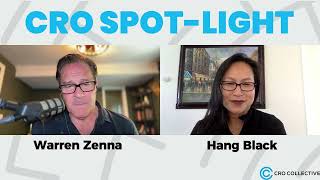
Warren Zenna interviews revenue enablement expert Hang Black about the difference between revenue enablement and sales enablement, how to empower revenue teams, and where AI fits into the work. They also discuss diversity and inclusion in the workplace.
Hi, I'm Warren Zenna, founder and CEO of the CRO Collective, and welcome to the CRO Spotlight Podcast. This show is focused exclusively on the success of Chief Revenue Officers. Each week we have an open, frank and freeform conversation with top experts in the revenue space about the CRO role and its critical impact on B2B businesses. This podcast is the place to be for CROs, sales and marketing leaders who aspire to become CROs and founders who are looking to appoint a CRO or want to support their CRO to succeed. Thanks for listening. Now let's go mix it up. Hey, everyone. Welcome to this episode of the Ciro Spotlight Podcast. This is Warren Zen. I'm the founder of the CRO Collective, and I'm really excited to have Hang Black as my guest here today. Hang and I met at a conference. Seems like that's where I'm meeting most of the people, because I see people speak and I'm like, wow, what an amazing person. And then we talk and many times we have these great connections and Hang and I had a couple of really great connections in terms of our like mindedness and her story. So I wanted to bring her on because after our conversations I thought, boy, this would be really good for my audience to hear. So, Hank, thank you for being here and welcome.
Thank you so much for having me. It was a pleasure meeting you in the first place and now an honor to be a part of your podcast.
Well, thanks. So, okay, let's kind of frame this up. So one of the things that I remember mostly and starkly about hearing you was your story. So amazing story, a cool story about, you know, sort of like what you, how you ended up, where you're at, what you're doing with your life and all this stuff. And I know you right now are very focused on the topic of revenue enablement, which we're going to get into. But I thought it'd be cool for everyone to hear a bit more about you and your background and where you're from. Could you please tell us?
Certainly. Happy to share with you. So I always start with, I am a very proud Vietnamese immigrant. My story starts with my family's escape from Vietnam. We escaped on April 30, 1975. I'm sorry, April 29, 1975. One day before Saigon fell. And it was, you know, eight children, two parents snuggled in the car with two of my father's army subordinates. So if you're counting, that's 12 people in a car the size of a VW Bug. We, you Know, long story short, we made it out to the oceans where if you're lucky enough, you get to go on a boat to go out to the middle of the ocean, where if you're lucky enough, you wait for an aircraft carrier to come pick you up. So, you know, we escape pretty treacherous circumstances. And I would say that what it has done for me is that it's given me a gratitude for the opportunities out there, the gift of observation, of listening and watching for other people's stories and where they might have been underestimated because they've been overlooked. And which is why I think it deeply ingrained in me is the philosophy of hunger and heart and hustle, you know, and so for me, I get the pleasure of working in the profession of enablement, where I get to help other people and I get to get paid for it. I mean, what a great combination.
Yeah, it's true. So how did that incredible story, by the way, how about how old were you on that boat?
I was two years old. And then from there we entered into the United States and we ourselves were, our family of 10 were sponsored by a family of four Lithuanians who themselves were immigrants. We were brought into Chicago. But eventually I was raised in Louisiana. So those of you who know me very well know that I self identify as an Asian Cajun. And again, it was a growing up, it was a lesson in observation of others and what made others take and what made others great to help them reach their full potential. So, you know, it's, it's again very ingrained in my DNA to elevate others.
Amazing. So how did you end up in revenue enablement? Like walk me through how that journey happened. Now we know how you got here, which is amazing. Now Walt, there's a lot of things you could have done with your life, but you're here. So how come this and how this.
You know, in the, in the corporate space, I feel like I've done it all, to be honest. My background is, is engineering. I'm a chemical engineer. I have multiple patents in semiconductor manufacturing. So nearly a decade of experience as an engineer and then following that, nearly a decade of experience in marketing, including product management, product marketing and field enablement. And from there I moved over to sales. So pretty end to end in the customer journey. So for me, I think of revenue enablement because I was so frustrated being in the other areas of the business. Right. As an engineer, I really liked my nerd knobs. And then as a product manager, I loved writing my 50 page white papers. And I found out that nobody was reading them. And I got really frustrated. So what did I do? I poked the bear and I would tell marketing, hey, get the sales guys to read my stuff. And so, you know, they would send it out three more times. And now you've got version control and something that nobody reads anyway. So for me to sit, to have the opportunity to move from engineering to marketing, it really taught me about the business, you know, why, why certain decisions are made, what products are made, what's the market share, what's the market opportunity, what's the market looking for? But it wasn't until I moved into sales that I actually developed a lot of empathy for what salespeople have to care about. You know, their buyers aren't necessarily looking at the entire market. Their buyers are looking for, for what's solving their specific problems. So the interesting thing is I like to call myself the sales whisperer because I am a reformed engineer and marketer. I like to, I say I translate English to English or French to French or whatever language it is from a language where what people want to deliver to the revenue teams and how the revenue teams can actually here. So, you know, Warren, if you and I were speaking different languages, me speaking louder and slower or more often wouldn't help, right? You actually need that translation because ultimately the sales folks are the translators from corporate to the end customer.
All true. You know how I feel. So this is fascinating. I like this because what you're talking about here too is also like walking a mile in my shoes. You know, I think this is a problem that salespeople have in particular, a lot of negative opinions about salespeople for sometimes, for good reason, you know. You know, there's a message and then there's the messenger, you know, so if I'm getting spammed all day long, I'm not going to like salespeople, even though many times they might be saying something valuable to me. So they have to break through that wall, you know, and then, you know, you have marketers whom are feeling like sales doesn't get it, you know, and we've had a lot of instances with companies I work with where we put sales and marketing people together in sales calls and sales activities and they're like, wow, this is eye opening. I really didn't realize what this is like. And they all of a sudden realize just how difficult and vice versa, too, frankly. You know, salespeople, all of a sudden they realize like, okay, so fine, Mr. Salesperson, you know, I know you took this, this great deck that sales that Marketing wrote and now you're going to reformat it, rewrite it. But you know, did you get a sense of why it is that marketing chose that language? Maybe there's some derivative in there that maybe that they know or some insight that may be valuable. And the cross functional part is more important which is, well, learn from each other. You both have insights. There's a third entity which is the culmination of sales and marketing and we work a lot on this. As you know, the chief revenue officer in my view is a coordinator or the orchestra master. Right. Of this whole process. And without that I believe again, philosophically I think also I have, empirically I can say that you just have a bunch of silos, a bunch of people running around doing their own thing and fighting and stuff. So this is, I think where there's been this transformation or let's say evolution between sales enablement and revenue enablement. And I have so many conversations about this. I'd love to get your point of view on the definition of those things, what they mean to you and all that stuff and their value, et cetera. So what is revenue enablement?
So in my perspective it's actually very simple. And maybe that's because I'm a simple person, but that's a lot of my job is to make difficult things and complex things simple. For me, the difference in sales enablement and revenue enablement is very simple in that it has to do with the audience because at the end of the day you have to, you have to tailor your enablement program to your audience. So if your audience is primarily sales, so I'm talking SDRs and AES, then yes, that sales enablement, once you bring on the customer success side of the house, that is true revenue enablement. Right? Because it's also, it's pre sales, it's, it's in pipe and it's post sales. And then there's what people call go to market enablement, which then I would include, you know, sales plus services plus marketing, which may or may not include end customer enablement. So in the, what I'm seeing most people go to right now is more on the revenue enablement side, which is not just covering sales, but everything internal to the revenue engine, which is sales service, sales services and partners, internal, internal partner account managers. So for me that's where the engine is. If you're only servicing the sales side of the house, then sure, it's sales enablement. But the revenue enablement side starts getting more complex in that, you know, you got customers that you're trying to renew or, or upsell as well. So you know, that's that piece of it. Now, revenue enablement, also from a portfolio perspective, we're not just looking at product but we're looking at. And we're not looking at just sales skills, but you know, operational skills as well. Like how do you do your day to day job? You know, people forget that a lot of our job is navigating this digital world that we're in. Whether it's just how to be productive during the day, but also how to communicate with our customers. Right. Because now we're communicating through, through sales cadence tools, social media tools. How do we access all of that rich resourcing to get our jobs done really well with less friction.
Interesting. A lot to unpack there. So I never heard this before. So you make a distinction between revenue enablement and go to market enablement. And the distinction I heard you make is that it pulls marketing into it at go to market, whereas it doesn't on revenue. Is that true what you're saying?
I think everyone.
That's your point.
So for me, this is my point of view. This is purely my point of view. So I worry when people say go to market enablement, like what does that mean? So for me it's like what are the different layers go to market enablement. To me it would include marketing and would include customer enablement. Because you're working with marketing collaborators.
I absolutely agree with all this. I'm just sort of, I'm unpacking this as we're talking here. Right. So because I've always sort of thought of the difference between sales and revenue, which is maybe like an earlier iteration of this conversation, which transformed, I think during the rev ops revolution, which is probably in the last four or five years. And looking at the world less from just through a sales lens, but looking through a revenue lens. And I hear some people say, oh, the same thing. It's just a different word. Sales and revenue, same thing. And I don't agree. Mainly because I think, I think you and I agree revenue encompasses a lot more activity than just sales motions. Right. And that, in that, in that this is where I would say I'm interested in hearing your point of view on this. I think marketing is a key part of the revenue, you know, part. I mean it's, it's critical. Right? Because that's, you know, how the market is seated before sales even gets involved. If marketing is doing their job properly, then I should have people to talk to whom have been, let's say tenderized properly for me to speak to them about things. And I think without marketing as part of the component, it's not a revenue conversation because I think marketing is a critical part of how revenue is built. And I'm hearing you say that again, this is your point of view. So I just want to understand it that you look at revenue enablement as not including marketing, but go to market as including marketing. And I'm just curious to know how you kind of rectify that if I make that distinction.
Yeah. So for me, enablement is about who our end customer is. Right. So many revenue enablement organizations do not enable marketing. Right. I'm not teaching marketing how to do marketing, I'm teaching sales how to do sales. Right. I am looking after my customer success to give them all the equipment, all the, all the, all the tools and resources they need. In general, revenue enablement does not enable marketing. Now, marketing can absolutely attend to, hear what the revenue enablement team is delivering. But also like we co create with them for sure, it's not that they're not included in the process, but for me it's about who the audience is.
I get it. I do. It's interesting, I think the parlance, you know, some of the nomenclature that's been created over the last three or four years, there's a lot of this stuff and he's get it all a bit confused. So there's no right answers here. I don't know. But your perspective is interesting. I never heard of it that way because I can understand your point. Go to market has the word market in it. You know, I mean, you're going to market, you have to go with a message and you have to reach out to the marketplace. I get all that. And put together your sales motions and stuff like that. Okay, so that's great, I appreciate that, that distinction. So when you think of revenue enablement, how is it activated? Then you know, what's the, what's good revenue enablement and what's not good revenue enabled? How do you sort of, what's the scorecard that you use to determine if it's effective or not?
That is such a good question. And I think the model of enablement differs and evolves over time. So if you are selling to primarily SMB and you are, let's call it sub 50 million sub 300 employees in the company, you're not going to have a lot of headcount for enablement. So it's absolutely important to have a focus on execution. Right. You're going to have a separate Portfolio, you're going to have less content, less stakeholders. It's okay to have it as a delivery engine. So you know, I think of it as mail carriers. The execution folks are mail carriers. Now as you start selling up market, you cross the hundred million dollar ARR threshold in revenue, your portfolio starts becoming more complex because you're either developing more products or you're acquiring other products. Your sellers start becoming more differentiated, right? You now have SDRs and AMs and AES and maybe even specialists and solution consultants. The more complex gets, then you start needing to operate a flight control tower system. So what I see the difference between good enablement and great enablement is how well are you orchestrating to the need of the organization. So you've got an over complicated flight control tower system for an SMB organization, it's going to be too slow. But if you're trying to move an SMB company up market, continuing to operate that way will just create chaos. So the difference for me is good enablement is let's just deliver what we're told to execute on. And you know, people call enablement training all the time, which you know, if you talk to a lot of seasoned enablement leaders, it just makes us cringe. So I actually don't allow the word training or in in our language at all or classroom at all because it diminishes what we're trying to accomplish. A lot of people think of enablement as I'm going to teach the people about the process and tools, right, about the process, product and tools to use to be successful. I think all of that is in one bucket. I call equip. So instead of people processing tools, I think of equip, empower and inspire buyer. So if you look at everything that used to be called classic sales enablement, which was technical product training essentially or sales skills or some combination thereof. That's just the equip part. Great enablement is where you start empowering folks. Am I actually measuring their behavior change? Because we're not, you know, we're not working with a bunch of kindergarteners. They're actually real adults who get to choose what they want to do and if they're going to change their behavior. That's the empower piece. And then the last piece, which are the exceptional enablement leaders and organizations are the ones that inspire. Because with adult learners they have to want to go get it. The content has to be engaging, creative, relevant, timely. It has to be presented in an omnichannel way to meet the learners where they are. Some learners are auditory learners, some learners are visual learners, and some learners are kinesthetic learners. But are you meeting all of those philosophies to meet the audience where they are in. In both approach and content? So content. You know, Warren, how many cars have you had in your life?
Good question. Let's see. I'm gonna say, yeah, five.
Rough estimate. Yeah, five or six. Right. Now, how irritating would it be for you if every time you bought a car you had to learn how to.
Change your tire or learn how to drive?
Right? So you may want learn it once, maybe even before you get a car. And then after that, you just want to know where the manual is so you can find the jack and where to place. Place it. Right. That's not my analogy, by the way. I want to give that credit to Chris Gaito. But it's that sort of thing where enablement loses credibility because oftentimes what happens as a reform product manager, we start them back 101. And especially our SEs get irritated because not only have they changed tires, they. They built the cars from scratch.
You know, I like that analogy. It's really good. And I agree, you know, you want to carry the knowledge forward. So again, lot, lot to unpack there. So you just talked a lot about this idea of empowering and inspiring because I. The equip part, I agree. That's baseline, right? It's just giving people tools and stuff and stuff. I get that. And I agree. I think people probably who have some understanding of sales or revenue enablement probably think of that. You know, how do I do stuff? Give me the tools to do things, equip me with the right technologies and dashboards, et cetera, et cetera, the right materials. But the, but the empower part sounds. It falls under the guise of more training and development. Is that right? It's like a training and development component of things. Empowering or how would you define it from a.
It's. It's. It's both. Right? It's. It's both. So there is a, you know, training piece. There's the adult learning piece of how do you address it to create that change management, but also like allowing people to create it. I'll get to be creative. I'll give you, for instance, again, if you've got SDR selling into SMB, it's okay to deliver talk tracks. Right? But as you empower folks, I would say I, I believe. I would believe less in Playbooks and more in frameworks. So let's say I'm a salesperson. I Would love if. I would love if Marketing in enablement gave me three bullet points, right? On what our latest messaging is, what our latest value prop is. And then the empowering piece is. Is teaching them to storytell. So you're empowering them to wrap their own stories and wrapping their own use cases around it rather than dictating. This is how you deliver a sales call, right? Follow A, B, C, D. Make sure you say this, make sure you say that. It's very prescriptive and restricted. It's not very empowering. Now, like I said, with an SDR, you have 30 seconds to get on the phone. Maybe a minute and a half. Yes, that works. Maybe an email. Yes, that works. But then as you go up into the more sophisticated roles, you know, the AMS and AES, that's why, you know, that's why emailing at scale stops working. You have to personalize at scale, right? So here are my three bullet points. Drop into AI message this for me, for a CEO or I'm sorry, CFO of like a fintech company on the east coast or in Asia, because cultural context will be different too. So, you know, for me, that's the empowering piece, which is not just training.
So it sounds like it's almost creative. You know, it's creativity. It's okay. So you're right. I mean, I give someone a script and you could tell when you're on with someone who's reading a script, it's pretty obvious that they're reading script and it feels like you're being written script. Humanizing a message is creative process. There's a training component to it, but it's really, how do you make this more your own? Right? So any learning, I think when you get to a. From apprentice to master, you move through the point where you're mimicking as an apprentice, and then when you own it, it becomes your own version of that, right? And then you become a new master. You know, I went through this. I had the benefit of my first sales job when I was really young, was with someone who was really exceptional at this. And I was trained to mimic, you know, he would get on the phone or he would write emails and I would listen. And he had a very specific way that he structured the conversation, knowing certain things and how he said them. And he was able to package the benefits and things to people in a certain way. And I just would literally sound like them. It was weird. Matter of fact, people would laugh at some point, they sound like two people, the same people talking. And I got to the point where I started seeing this happened organically. You know, I think I would say that differently. Like, based on my own iterations of this, I would say this differently. And so I started saying it differently, and I started experimenting with different ways, and it was better, you know, in fact, was more effective. And then he started mimicking me. You know, he's heard, like, my development was like, wow, that was an improvement. I. I was inside my own head and I was reading my own script, and there was no new data coming into my script, and now you're giving me that new data. And we collaborated on creating a whole new way of looking at stuff together. But you needed that other entity in the experience to create a new third entity. Because the issue is if you have one, you know, Einstein said, you know, you can't solve a problem for the brain that created it or something like that. Some iteration of that. He was like, basically saying, like, if you created the problem, then you're the problem. You had to get another consciousness in this, in the equation. And I would say enablement, if I may, sounds like an additive perspective to something that creates another perspective that allows people to maybe have a different way to frame things. And I think that's a really cool distinction to make in making it a discipline as opposed to an accident, which it was in my case. You know, we didn't discuss this. It wasn't like, well, what's going to happen is you're going to learn more and then you're going to share it with me. It just happened organically. But I could see how that being a process would be amazing to say, okay, guys, here's the basic marketing language or sales language. Go to market with this language because it works. You know, we've done it enough and we got customers from it. As you improve it, here's a way in which we could capture the improvements and add them to the system to make everyone better. Right. I see that as being sort of, at least my interpretation anyway, of what you're saying is that how do you add creativity to the process? So that, like you said, storytelling, which I agree is fascinatingly a whole topic in itself, how stories are almost like music to people, really, honestly, they are, you know, the best speakers. They're sort of have a. Not only is the story great, but the way the story is told, the structure of a story, like it's. It has some conflict in it, or it has some moment of decision in it or some change that you can identify with it. It's personal, you know, and if you can bring that to a sales conversation, you, you have a really great opportunity to make a big difference. And I see that as being a disciplinary function would be great. I don't see it happen all that much, to be honest. I think most of the times it's mostly very accidental.
Yeah. And it's so funny, you know, the storytelling piece of it, which is also, you know, often underappreciated in what needs to happen with enablement on the empower side. You know, you probably don't remember what date Saigon fell.
I Knew it was 75, but I didn't know the date. By no means that I know the date. No.
Right.
I certainly do. I remember the image of the helicopter falling off the, the, the tower.
Right. You remember the, this like every time we'd talk, you're like, remind me of the story again. It was, it was 12 people in, in a car the size of a VW bug. And the image of, you know, what we didn't talk about earlier in this interview because I don't want to, I don't want to be too repetitive for people who might have heard me speak before. But you know, what people remember oftentimes is the image of me as a 2 year old toddler being thrown from a tugboat to an aircraft carrier. You know, sure. That's the memory and that is the.
Image I remember most, you know, when you said that, I was like, wow, that's just, that's crazy. It's amazing, you know, it's. It's amazing. You know, you're right. I mean, it's images, you know. You know, it's weird. Our culture probably since. I'd say if I might be. Probably even track it probably since the, probably the mid to the late 50s, certainly the 60s and the 70s solidified it. But we have a movie making system in our head. We had soundtracks, edits, zoom shots. You know, stories are told to us that way so compellingly that when someone tells a story, your brain becomes Spielberg and you sort of like picture the way it must look. And you know, it's interesting to understand how the brain works. That. And I agree with this wholeheartedly when I'm working with people, cause I train a lot of salespeople, I'm thinking about these things, you know, how could you create a more compelling way to evoke this to them that's relatable, right. So that they are involved more, they're participating in a conversation with you. There's a. And you, you obviously know this. You know, your, your story that you share is, you know, you're lucky my story is boring. I've told my story like, yeah, so great. Suburban Jew, wonderful. Nice. Move on. You know, so, you know, you. It's a really cool story. And so I think this is a neat thing that you're talking about, this empower thing, which is how to turn that into a methodology of sorts and bake it into a process as opposed to kind of hoping it happens. So then the inspire part seems like it's sort of almost a natural outcome of that, because if I'm doing good job, other people are going to be inspired to do the same thing. I'm assuming that's what you mean by that, am I correct?
Yeah, for sure. You know, the, the, the empower part is so important because it shows trust in your adult learner. They're professionals. You know, some are younger, some are older than us, but we treat them as adults. The inspire piece is the one, is the part that makes you want to love to go to work. You know, here's an enabler, team and organization who really sees me, who cares about what I need, who makes things relevant to me, rather than just delivering what everyone's asking, or in treating me like a cog in the wheel. Because, you know, honestly, if enablement was only about training, we can be replaced by bots. The empower piece takes the professional creativity to make it interesting and useful to the organization. The inspire piece is like, it's the, it's the, it's the piece that brings you joy. And I think that's so important because again, we are working with adults who can choose to go to other organizations or can choose to sit, sit tight and just kind of close.
You mentioned bots. So you and I talk a lot about AI. You mentioned AI in this conversation. I want to hear more about that. Like, what's your thoughts on the way. Hey, just your perspective on it, because it's just this constant topic and how it's being used in the stuff that you're referring to. And I'd be really eager to hear that implementation of AI tools in what you're talking about.
Yeah, I mean, I look at AI as augmenting the human versus replacing the human. Now, will it replace some human functions? Yes. But, you know, five years ago, did we ever think there was going to be a career called influencer? Right. 20 years ago, was there going to be enablement in the, in the, in the way that it's delivered now, few years from now, you know, they're probably going to be A category of, of AI prompt engineers. You know what I mean? So will it replace some jobs? Yes, but will also create other jobs. So augmenting the human would be taking the menial stuff. I mean, I, you know, I write and it is frustrating when I have an idea in my head and I just don't have that like first spark. So for me, AI is great at creating, doing the mundane, doing the, doing the initial things, replacing tasks that can just create help you with a first draft. And whatever it is you do, it is still up to you to take that first draft and make it amazing. And the other thing is, you know, menial tests. Like there's a company I'm really, I'm really watching out for right now called Docket. You know, we, we, we suffer through finding content and finding what's the most relevant content. Docket sits on your Slack channel, on your team's channel. And you just say, find me a battle card about X. Right? And it looks for the most relevant pieces of content or find me the most, the most relevant competitive value value against this competitor. It will bring it up for you within seven seconds. Right. And versus you would have to troll through all of your CMS to find it. So those types of things can just help us be more efficient because there are things that will take longer in time. It used to be that we could send out mass emails to hundreds, thousands of people. Now we got to customize each one. That takes time.
So I get it. So you're in that instance. I don't want to get on a wormhole, but that particular platform you mentioned, is it deriving that information from searching the Internet or is it searching your own internal data or both?
It's, it searches what you tell it to. So it could be some combination of these, you know, these five external web pages. It could be, but primarily it's for internal documentation.
Okay, so what might be some. So you just mentioned about how it sparks something for you. Like you use AI is to kind of get you like a launching pad of sorts to get you started. What, what are the platforms you're using? Are you using like ChatGPT or what's your go to? Well, because there's a lot of options out there now.
Yeah, I mean, I definitely use ChatGPT for, for content. I use others for images. And you know, I don't need to be talking too much about vendors here in the moment, but you know, also like, there are a lot of vendors who are embedding AI into, into their systems. So for me, it's about leveraging those bells and whistles. Because a lot of us, especially in the SaaS industry, we know that SAS is pulled back and it's because we're not getting high adoption. But not only we're not getting high adoption, we're not getting adoption of the more sophisticated features. So in there is AI. Right. If we can use the tools, I would rather have X. Like, I would rather have less licenses and use them to full capacity than to have many licenses.
It's like a utilization.
You know what I mean?
Really? So let me. It's interesting. I'll hear about that. So you're saying then there's a. People aren't digging deep enough into the products they're buying. They're using only like two or three of the features. Right. I mean, I know I do. I probably, when I use a tool, I'm probably using like the three things I need most. There's probably 80 other things in there that I don't even dip into, mainly because I can't recognize their use or they maybe seem too complicated. And you saying that AI is like an assistant to dig people deeper into those features.
Yeah. And you'll see that the good news is a lot of these tools that are embedding AI, almost everyone has. Okay, I get your point.
In other words, just making suggestions, saying, hey, you should try out this feature now, or now that you've done this, you should do that. That makes a lot of sense. And I do see that. I see now because I'm as like you, I'm kind of a nerd. So I always enable because it is hard.
Right. Creatures of habit. I, I read, I read something today where, you know, you don't use 70. You know, use 70 of your space in your home, you maybe access. You probably wear 70% of what's in your closet. You know, you. There's a lot you don't access and.
Yet you keep the shoes because you like them. I get yelled at for this a lot. You know, I'm like, I'm gonna wear those one day. I know that I'm gonna put those on.
I know, but what do you default? I'm wearing them right now because they're comfortable.
So. So it's interesting. I like this idea and I agree because what I've been doing is, you know, what's it called? It's Slack. Just launched just recently, an integration of AI that I purchased. I thought, cool, I'm going to see what it does. And yeah, you're right. I mean, it just sort of throws up little stuff to me that helps me guide through things that I could do better or it evaluates the way I'm having conversations and it says hey, you know, you could maybe think about doing it this way. And I didn't really think about that before. So there is something actually really valuable in that. Again, getting people to adopt it more is interesting. I could see it getting much more sophisticated. I talked to chat GPT now I talk to it now and that's really cool. You know, I like it better than Google now because it just goes on and we can have a conversation. It's fascinating. Um, so, so now which company are you with? So what's, where are you working right now? Where are you, where are you deploying your revenue enablement skills.
At the moment? I've been having a really fun time advising for companies with 10,000 plus employees on how to build their enabled organization efficiently. What rev tech would I, what I recommend to them, looking through, you know, what programs they have, what programs they need and just kind of up leveling what they have built in its existing form. So that's been quite fun because it's remarkable. I've worked at companies that are hundreds of thousands of employees and 300 employees and there are things to learn from all of them and they're mistakes that are very common. So you know what I mentioned about from mail carrier to flight control tower. I'm not recommending the flight control tower for everybody by the way, but where are you along the journey to make sure that it's as sophisticated as you need to be while being as simple as it can be?
Yeah, I run into this a lot as you know, I mean what I'm trying to do is I'm trying to implement a leader to kind of oversee all this stuff so that there's a single point of, let's say, success and failure. And I think these tools are now becoming much, much more critical to how people fulfill on what they're trying to do. It's exciting times. I mean I know we're really in early stages and I'm curious to know, I mean it's happening so fast. Probably two or three years from now it'll be incredible to see what kind of things we're talking about. What's sort of like on next horizon for you? What are some things you're working on right now or things you want people to know about and how can they reach out to you and talk to you? What is it they they can, you can help them with?
LinkedIn is definitely the best way to reach out to me. I do have a website, hangwithhang.com easy to remember. Those are all of my social handles are hang with hang. But I'm also looking at writing my second book on. The first one was for immigrants and women in the workplace. The next one will be actually for the allies. So if you know me, I'm pretty data driven. So a lot of the, a lot of the book content is around, you know what a couple of real life stories and then what's the neuroscience behind what happened so that we can adjust to it. Right, because if you bring in the neuroscience, we take out all the emotion that can be explosive and we take out any victim blaming or privilege shaming and actually just look to how we can work better.
And what's the end goal there? What's your vision for that effort?
Well, the problem with the conversation around DEI is that a lot of people feel like it's driven out of or should be driven out of hr. And for me, my belief is I'm not an HR leader that cares about the business. We need to have the business leaders who care about this initiative and not just because it's the right thing to do, but because it is actually very good for the business. Did you know that only 2% of VC funding goes to women and yet women have a 65%, 65% success rate in, in, in their companies which is, which is significantly higher than male led, male led firms. That being said, you know, it is not my aspiration to say that women are better at things. I just think that there are areas in the market like why wouldn't we level the playing field to make more money together? It just doesn't make sense to me. However, those conversations. Yes. You know, my first book primarily focus on those who have been under recognized and what they can do about it. But what hap. What I saw happen was when white men read it to the end of the book, they would ask me, oh my goodness, I just didn't know. Now I have the, I have the, you know, it's almost like someone gave me glasses to see what can I do about it now. So that's the goal of the second book pieces that, you know, we can't make this transformation without the people in actual power. Otherwise it looks like a bunch of us whining. And that's not the end goal. The end goal is how do we bring others along so that they can help lift up the community. So I think of, you know, there's sponsorship and mentorship that's very one to one. But allyship and role modeling, that is very much where we can move the needle. On that. On that. And, you know, I'll be very frank with you. DUI is under attack. People have a problem with the word equity. And, you know, it's not about making it easier for people who are less qualified. It's about leveling the playing field to make it. To make it the same for everyone so that we can bring the best of the best to the team.
Makes sense. All right, what's the name of the first book?
The first book is called embrace your edge. I'm very proud to say it is a Wall Street Journal bestseller. And I speak on the topics in there, and I hope that people embrace your edge.
Right, Got it.
That's right.
Can you reveal the title of your next book or not? You haven't gotten there yet.
I'm still noodling on that one. I'm going to have to ask ChatGPT.
For some advice, creative support there. Well, look, as I expected, this was great, and I can't thank you enough for taking.
More from Warren


How Misaligned Software Metrics Ruined B2B Sales and How to Fix It with MK Marsden





Advocating for the Little Guy: A Frank Talk with Dan Goodman, Warrior of The Sales Rep



The Evolution of the CRO & Revenue Efficiency Metrics with Christopher Semain and Sean Ryan
