Finding Gold in Dirty Data & Creating Consistency with Guy Rubin
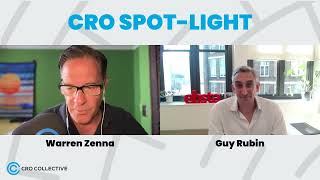
Warren Zenna talks with Guy Rubin of Ebsta about why CROs struggle with short tenures and how dirty data sabotages revenue teams. Ebsta's platform uses AI to clean sales data and surface relationship intelligence that helps reps close deals faster.
Foreign. Hi, I'm Warren Zenna, founder and CEO of the CRO Collective, and welcome to the CRO Spotlight Podcast. This show is focused exclusively on the success of Chief Revenue Officers. Each week we have an open, frank and freeform conversation with top experts in the revenue space about the CRO role and its critical impact on B2B businesses. This podcast is the place to be for CROs, sales and marketing leaders who aspire to become CROs and founders who are looking to appoint a CRO or want to support their CRO to succeed. Thanks for listening. Now let's go mix it up. All right, so welcome to this episode of the CRO Spotlight Podcast. This is Warren Zen. I'm the founder and CEO of the CRO Collective, and today I've got a great guest, a colleague of mine who been working on some stuff together and also got a great role in the marketplace. You've probably seen Guy before. Guy runs a company called epsta and they produce these amazing research papers on sales outcomes, and I think we'll talk a bit about that. Guy, welcome. I'm really glad you're here today. Thank you for doing this.
Well, thank you so much, Brian, for having me. Big fan of the podcast.
Well, thanks. So, you know, I'd be interested to know a little bit, you know, like, I know you're across the pond over there, hence the accent. You know, something I think about which I. I got to hit you with this question. What is the CRO role catching on over in Britain right now? Is it like something that you know? Because I remember when I first started doing this, it was like a chief commercial officer and no one knew what it was. What would you say the state of the state comparison between the US and the UK is on the roll today?
That's an interesting question. So I spent a lot of time in the US as you know. In fact, I'll be in New York with you at the end of May, so looking forward to that. I think a lot of organizations in general in our ecosystem bring in what they think is. I think a lot of players in our ecosystem end up bringing in a CRO far too early. My humble view is a CRO is a vital role for an organization that's ready to scale. A CRO has one primary focus job in my mind, which is to scale the organization, the commercial organization, and that includes marketing, sales, and success. If you're still trying to turn zeros into ones in any of those departments, then you really need a VP responsible for and owning that piece of the puzzle. What I see a lot is people coming in as CROs expecting to have a role where they're really there to scale. And then they get into the organization and they're still trying to define product fit, they're still trying to work out what channels are working on top of the funnel. They're still defining at the time.
But it was ironically, that was one of the impetuses for me to start this business was that experience. But I'm digressing here. I want you to a little bit about yourself, Right? So I know that aside from epsa, which we'll talk about, you're also a part of Pavilion. You run their CEO group over there, and that's a nice big community. And I know you have a lot of interactions with people. I'm curious, are you hearing more in the conversations you're having across all those channels? A common, newer, more advanced perception of the CRO role? Is that consistent or is it still sort of not really catching on? What would you say we are in that respect?
Well, first of all, come back to your earlier question. We always see our American cousins as the kind of young, enthusiastic cousin and family that tries all sorts of things. And then we kind of sit back and we just watch for it. And then when you figure stuff out, and then we're like, great, you've done.
All this hard work. We're guinea pigs across the pond, right? Yeah, Exactly.
We'll now jump on board. So. But in saying that, you know, we saw some research this month where the average tenure of a CRO now is down to just 17 months. And that's a huge challenge. Okay. And this kind of burn and churn approach, this idea, we can't all be bad, right? I mean, there must be some fundamental challenges. And I think you've hit the narrow ahead. There really is a misalignment or a misunderstanding as to what CRO's role is there for. One of the big takeaways from the 2025 Bexar report, which I will be prompting everybody to download two or three times today, I'm sure one of the real interesting takeaways is to impact growth in a single word. We need consistency. We need everybody doing things in the same way. And before we define what that consistency is, what we need to do is understand what our A players are doing every stage of the customer life cycle, and then using that information to prompt our B and C players to follow that guidance. And what the CRO is uniquely placed to do is to align marketing, sales and success to work towards a common Goal and to see the world through a single lens. And one of the really interesting takeaways from the data that we saw this year is a huge drive away from individual roles almost. We saw these kind of single purpose vehicles of top of the funnel. We saw some organizations would have a PDR and then an SDR and then an AE and then solution engineers and then you'd have onboarding and activation and success and renewals and upsells and so on. And different people responsible for all these different roles. And the customer was constantly being handed over from one to the next. And that handover process was never very good. And one of the interesting data points we SAW is over 40% of businesses are now adopting a 360 sales approach where a funnel and seller is also responsible for top of funnel creation, but also holds onto the customer for at least that initial year once they trusted them enough to sign a contract to actually maintain that relationship with the customer. Because frankly that's aimed the danger time for the customer. But also it's the quickest opportunity for cross sell and upsell. And if suddenly the burden from the seller is no longer to get that, I've only got one chance, one buy at the cherry to get a sale done. And suddenly now it's okay. It doesn't matter what I sell you. I can cross sell and sell you to the next 12 months and I still continue to earn from you that. It just changes the whole dynamic and the customer gets a much better experience because they get to interact with this one person that you trusted enough to sign the contract with in the first place. So this alignment, this consistency is really the watchword for growth. And what a CRO is a unique good place to do is bring together all these disparate different stakeholders in different departments across that go to Market Motion and try and align them through a single lens.
Ned, you and I again on the same exact page. I think the CRO is the orchestra, orchestra master, the maestro of the misalignment issue. And I think that that's what they need to do. It's a different skill set than just running a sales organization. And you know, this is an interesting topic. It is, it's, it's one of your.
Sales leaders focus on the next deal. You need your sales leaders to absolutely focus on what are we going to do to close this month, this quarter. You need your CRO to have a much more holistic view and to be looking at the longer term, which is a challenge. If the board are changing CRO every 17 months.
Well let's talk about that. Because I do think that there's so many little pieces to this. I've constructed my own puzzle here. I've been doing this long enough now. I have a pretty good blueprint for how it should work. It doesn't usually go this way, but I think to your point, we're both in agreement on a number of things. One misalignment is the issue that companies need to solve. That coordination is vital for growth. Companies that are suffering from most problems actually have a systemic problem. They don't have a sales problem. They usually have a systems problem. They don't know it. A CRO is, should be someone who comes in with a remit to fix that. Not focus on the immediate, more on longer term. But the issue is this, right? So as you know, I'm producing quality candidates in their marketplace through my programs, right? They sort of know what to do now, you know, and they're qualified cause they were already sales leaders and running big teams. So they're like an inch away from the job. But then they go into the company and the company doesn't know what to do with them. You know, the environment they're in is actually the problem. It's not them. Sometimes, you know, and there has to be a match between the hiring organization and the candidates so that not only do you get the right person, but you know, what that person needs. And the decisioning that that person's going to make is going to probably be somewhat disruptive. If you want to do things differently, you're going to have to do some things differently. Which could be, like you said, we're removing a layer of SDRs or removing an entire sales group or maybe getting some different technologies or you know, maybe having a marketing report into this person which could piss that person off and creates all sorts of things. But if the company's not ready and prepared for that, then they won't do it. And that's my view. Usually why it is that zeros don't blast is because they're fighting against the dynamics that are against or opposing the change that's required. So how do you see that being fixed? Like what's the way? Is it just time and all of a sudden a new muscle memory will be created? Or is there some specific things that founders can think about when they're looking to bring on a CRO so that they don't have a 17 month remit?
Well, look, let's acknowledge that, you know, these CROs are supposed to be C suite resources. Okay? So I Think there's an opportunity for them to take a role in educating the board as to even before they hire them. A recruitment process is two way. Yes, of course they're interviewing you to see if you're a good fit for them, but it should be the other way as well. And I think CROs need to be bolder, dare I say, in the way that they engage and go through that qualification for themselves. And they should be asking those questions. Once I get in this role, am I going to get the mandate I need? Is there really an appetite to make these changes? Yeah, we can. Usually the growth perhaps isn't where we want it to be. Well, to make, if we're going to change that, if we want to get from single digit growth to double or triple digit growth, then we're going to have to make some changes here. And really asking the intelligent questions of the board as to whether there really is an appetite or whether it's all just lip service for the PE house that are backing us because they told us we need to hire someone. And actually when you get in there, you find out that you don't really have the mandate that you thought you did. So I think maybe there's an opportunity here, Warren, for you to, to, to provide the, the interviewer.
That's what I do. It's a big part of my, my big part of my service is exactly that I'm helping, you know, my coursework, you know, I go over some time, I'm sure a lot of it, most of it focuses on exactly this point, which is that it's not enough just to be good at the job. You have to know how to get the job properly. You know, you have to know how to know that the job may not be one you should take. Thank you so much again for listening to the CRO Spotlight Podcast. This podcast is an important plank in the Sierra Collective communication strategy and we're really thrilled to have such great guests on here. So listening and sharing the podcast with other people is really vital because we want to get as many people listening to this great stuff as possible. A couple things to note. If you're a aspiring CRO or a recently hired CRO or even a old salty CRO, and you're looking to either become a chief revenue officer or improve your chops and gain some more insights and improve your competencies as a Chief Revenue officer, we offer the CRO Accelerator course. It's five years now. It's the first CRO focused course that was out there. It's a 15 week course that is populated by aspiring chief revenue officers and CROs. We're pretty selective in terms of who can be a member of the CRO Accelerator course. It's people who are probably like more like ready to be a CRO right now. They have number of years under their belt as a revenue leader, whether it be a sales leader or a marketing leader, or even rev ops leader. And they either want to move into the C suite or they're CROs that want to just make sure that they win in the role. The Serial Accelerator course, we kick off the next one in May, mid May 2025. So if you are interested in being a member of the next cohort, please just write me a note on LinkedIn, just DM me CRO accelerator and we'll set up a time to talk and then I can send you more information to give you a brochure of the course. So again, CRO accelerator course, 15 week program for aspiring and newly hired CROs. Take advantage of it. It's been great. And you'll see some more information about it on the website. Thanks. And you need to interview the company as much as they're interviewing you. And I think there is that. I think if the company's mature enough and they're hiring someone who's a chief revenue officer, there should be some degree to which they trust this person has a strong opinion about things and they want that opinion and they want that thinking in their organization. So I would encourage founders right now who are interviewing your CROs, listen to them. You know, they're coming with you with expertise and they may have good ideas that you should listen to. Even if some of them may seem uncomfortable or maybe a bit, you know, confronting, deal with, they may be right, you know, and you need to bring in somebody who knows what those changes are and understands how to make them more palatable to the rest of the organization. That's one thing. The other part too is, is I see too often the issue I see with this tenure issue we're talking about is my, my clients, they usually call me after they've gotten let go of a 17 year or 16 month, whatever, you know, remit. And they call me up complaining and whatnot. And when I ask them the three questions, we find out that yeah, they probably knew this was a dud from the beginning, but they took the job anyway because they thought they could maybe make it work, you know, kind of thing. And it's just not, doesn't work that way. And I think what they failed to do and it's not because they didn't do it if they didn't know how. What is it that I need to ask? Like, what are the right ways for me to determine if this is the right business? What who do I have to talk to? And most importantly is you have to know what it is that you need, so you know what to ask for. And a lot of times the CROs don't know what to ask for. So I think that we're sort of. Obviously, I know we're very much aligned on this, but my role here in the marketplace is sort of create a. I'm a marriage broker, essentially, really, you know, and I recognize that this is a very important relationship that could be very fruitful for both parties, but they both have to have their role right in the equation and not just one. And I think that the pe, if I, if I may be so bold and maybe vc, sometimes view a CRO as some magical flute player that's going to come in and build all this coordination, but that's not the case, you know, so I'm going to switch gears a bit here. I'm going to talk a bit more about you and your platform and sort of like why you created it and the role that it plays in the CRO position and how a CRO benefits from what you guys are doing.
Yeah. So I appreciate the questions. I think just to finish off on the point that you made earlier, I think the. I think the marriage broker or the. Or the recruiter in the journey actually has a form of a role to play. You know, businesses don't spend money with recruiters because they like recruiters. It's not because they're really nice people. Right. They spend money with recruiters because they oil the cogs. They actually help to actually. Or the good ones, the really good ones, are able to educate on both sides and actually help the customer understand really what they want. I know you've told me you want a CRO, but after I've spent an hour with you, from what I really understand, what you're looking for is a VV sales here.
Right.
And we've got a role to play in that, in educating them as to what they're actually looking for and then prepping the candidates to ask the interrogating questions to make sure that it really is a fit. And so I think there's a phenomenal opportunity there for that brokerage role because you're not hiring something you've hired a thousand times before, you know, and actually having an expert sitting alongside you going, is this really what's required. Are we clear about the role and responsibility? Are we willing to go through the change that this person is going to bring with them? Are they going to budget to make those changes? These are the things that once we've asked those questions, we can get, we can go back to the candidate with confidence then. Don't worry. This really is a CRO role, or actually this is probably more of a VP sales role.
Yep. The other thing too is, to your point, it's also sort of knowing some things that I think the CRO, the CEO, the founders don't know sometimes is what they're solving for is actually in fact more of a short term thing they're trying to solve for, not a long term thing they're trying to solve for. And they buy like the wrong car, you know, for the wrong thing. You know, they get a Porsche when they really need an SUV and they can't understand why it's not working properly for them. And I think you're right. I think there's a, there's a big opportunity there where we're hopefully solving that for them. But I do think that this is going to sort of organically work itself out. But hopefully we can accelerate it a little bit because I think there's a lot of really talented CROs out there right now that are looking for homes that I think. And the opportunity too. The other part of it is risky. If you hire a chief revenue officer, not only is it expensive. Right. They're costly. Hire, it's an important hire, has a big impact on your business. But also the goals that that CRO is intended to bring are essentially like almost like a future investment. So you're risking a lot on this and you can't afford to wing it on someone that's just because you got a referral from somebody. So I think there's a lot of de risking going on with this.
No, I absolutely agree. And I think, as I say, you spend your lives talking to CROs and talking to businesses that are looking to bring those CROs in. For most of us, we might hire, well, what, every 18 months at the moment. And so I think there's definitely an opportunity for an education exercise to help people really understand what they're looking for. And it can save a lot of pain, a little bit of investment up front and it can lead to a much better outcome for everyone.
Gives me an idea we'll talk about later. So anyway, tell me more about your platform, like your solution and how does it help what we're talking about, I'd love to kind of relate the two together so people can get understanding of from a CRO's perspective, what you're providing them.
Yeah, absolutely. Well, the key, as I said earlier, the key is all about consistency. And so for us to understand what consistency action means, we need the insights to tell us. And the problem we've got is that the insights for most organizations are based on data that's often fleeting and inconsistent and out of date because the data in the system of record, usually Salesforce these days, is only got in there because the rep chose, the seller chose to actually put it in manually. And so you've now got two or three years worth of history that you're now going to lean into to try and build benchmarks and insights as to what's actually going on during that customer journey. And that data is only as good as what the seller happened to put in on the day. And if they didn't have very much else on, maybe they populated the system really well and if they were really busy, then maybe they didn't populate it at all. So when we started a business, we didn't set Epstein up to be a revenue intelligence platform, that the problem we set out to address was the quality and the consistency of the data in the system of record inside Salesforce. How do we fix the dirty data inside Salesforce? That product has evolved and it's now what we call relationship intelligence. Now, effectively what relationship intelligence does is it mines your mailboxes and calendars for the last two or three years and it builds a people graph of every interaction the business has had with every person, every customer prospect. And then we map that data back into the opportunity records back in Salesforce. So you might look at an opportunity to close run or lost in the past that had one contact and three emails associated to it. But when we finish the job, which only takes seven days, right away, when you look back at that opportunity, it now shows you the nine SPECT poise that were in the buying committee and the 250 interactions that took place during the five stage 1000 process. And so when we do that for not just one deal but the last, say thousand deals in the last 12 months, those are pros one and pros lost. You start to build bank, you start to see patterns and we can turn those patterns into benchmarks. So now we understand what good looks like for every different go to market motion that we're aiming at and we can see in granular detail what the top performers are doing differently at Every stage in that sales cycle. Another great example, we don't just mind the mailboxes and calendars. We're also interested in all those call recordings that have taken place, all those discovery calls. Now, you might have a funnel problem where you're losing a lot of deals at late stage, but when we go back and analyze the call recordings of the discovery, it turns out that actually those customers aren't necessarily in a sales process in the first place. We never qualified them well enough to leave discovery. And so it turns out we don't have a late stage sales process problem. We have a qualification problem. And so once again, what the technology and the AI is very good at is taking a transcript and using it to extract information about how well we're qualifying them, or what objections are being raised or what competitors are being mentioned. What the AI is really bad at is building relationships with our customers. Now, that's what our sellers are there for. And so even in 2025, relationships drive revenue. But what we've got to do is take away all the admin burden from these sellers and make it super easy for them to focus on just doing their single job. And then at the end of the process, show them, give them the insights that they need. So you finish your discovery call, you should be getting a green thumbs up or a ring thumbs down as to whether you've qualified the customer well enough to lead discovery. And if you haven't, guess what, you only need a couple of red thumbs down before as a seller, you change your behavior because you want to get that badge, you want that red thumb, that green thumbs up. And so what we're uniquely good at at Ebster is understanding what those top 20% of sellers are really, really good at and what they're doing to win. And using that to prompt the B and C sellers, the long tail of underperforming sellers as to what they should be doing. And that fundamental principle of wanting to win even with the BNC players means that when you show them, look, Mr. B player, on average, you're engaging with three stakeholders during your sales process and you've got a win rate of 12%. But look, when we get six or more stakeholders actively engaged and one of them is a C level at a finance Persona with an engagement level above 67, by stage two of your sales cycle, our win rates are 37%. Suddenly, when you turn it into pictures, the sellers understand why you're telling them to be multi threaded. And then it's about introducing that consistency and putting proper gates and triggers in place across each stage of that sales cycle. So what we're really good at here at EBSTA is by fixing that historical data, we're able to build those benchmarks and show the leadership team what good looks like and what top behavior, what best practices they should be trying to replicate. And then it's about making sure that every pipeline inspection meeting, every forecast review is being done in a consistent format. You're asking the same questions. It doesn't matter who the manager is, it doesn't matter who the revenue, the individual contributor is. Every single pipeline inspection meeting, everyone knows what's going to happen in the meeting. The questions are all outlined on the opportunity record because the AI is telling you these are the things going better than expected. And these are the four things you need to address to get this deal back on track. So everyone knows what's expected of them. And then every pipeline inspection meeting happens in the same format. And for example, knowing that on average, when we win, we spend 22 days at stage three of a sales cycle, well, guess what? When we're at stage 23, we need to be questioning whether this deal is real or not, because we know that the win rates start to drop off as soon as we get past that, that delta. So it's about the fact, knowing the insights and the data being data driven in the way we is the only way we can scale a sales organization. And so what we are good at doing is providing those insights to the users, to the sellers on the ground, but also to the leadership.
Thanks again for listening to the CRO Spotlight Podcast. We're excited about all the great guests we have and more importantly, we're excited mostly about you for being avid listeners and supporting the work that we do here. Feel free please to share the CRO Spotlight Podcast with any of your colleagues. We just think there's a great wealth of information here and want to get the word out to as many people as possible. And your. Your support of the show is really appreciated. I wanted to share information about a program that we offer called the CRO Masters Council. The CRO Masters Council is a bimonthly group of six seasoned Chief Revenue Officers who are looking for a Chief Revenue Officer, Board of Directors, so to speak, that they could share what's going on with them, collaborate with ideas, get some feedback on what's going on in their current role. And these are great conversations. I facilitate them. The CRO Master's Councils, again, they're twice a month and they last for at least six months to a year. So if you're interested in having your own CRO suite, your own Board of Directors of Chief Revenue Officers, it's a private, confidential conversation that we have. It's infinitely useful. Imagine having a room full of other Chief Revenue Officers you can talk to and say, hey, I'm working on this. Or have you guys figured that out? Or I'm having this issue right now with my business or my results. These are just invaluable conversations with Chief Revenue Officers. Chief Revenue Officers have a very, very unique role. It's a very lonely job, and only other CROs understand what you're going through. So that's why we created this program. So if you're interested in being a member of the next CRO Masters Council, which we have a number of them being put together right now, just go to my LinkedIn and DM me masters or master's Council, and I'll follow up with you and set up a call or send you some more information about it. Looking forward to seeing you there. And thank you. Got it. Really? I get it. Makes perfect sense. You're. You're mining for gold and then replicating gold and codifying gold across the organization. So I'm curious how this process and the data that you glean from your system supports the other aspects of the CRO role, like marketing and customer success. Like, how does it support not just that one sales channel, but informs like you and I discussed earlier, that larger, like, customer cycle?
Well, if you. Let's start at the top of the funnel with marketing. So not all leads are equal. Okay, so what leads are giving us the best results? And last year, we saw last year, the previous year, 2023, everyone misquoted everyone pretty much. Unless you're in cybersecurity, you pretty much misquote it. So what do we do about it? Well, we've got two choices. We can choo to raise our game and spend a lot of time and energy educating our B and C players as to how they can replicate the top performers. Or we can get rid of our bottom third of sellers, hire everybody else's bottom third instead, and then just spend more money on marketing, expecting more leads come through than match icp. And guess what? You can spend more money on marketing. You will generate more leads, but it doesn't mean you're going to get more ICP leads. Come onto the business this, and what ends up happening is the delta between those A and B players ends up becoming much, much wider. Because the A players, they can smell the good opportunities they can find. The nigga in the haystack. It doesn't matter how many opportunities the marketing channel funnel generates, they'll find the ones that match icp. But the BNC players, they haven't got a chance. They just work the next deal on the list. And of course they never want to close anything. Offers loss While the top performers are closing, 30% of their opportunities offers loss in the discovery stage. So you end up with a wider delta than ever before. So the answer to all of this has to be that we as leaders have to be responsible for giving our B and C players those playbooks, showing them how to win, and then nurturing along that journey and taking away any admin distractions from them. Another great data point from the report was that top performers spending nearly half of their day actively selling and engaging with customers while the average performer is less than two hours a day because they put so many other distractions around them. And that's a real challenge.
It's amazing, right? It's gotten worse. I'm thinking maybe what we've done to our detriment in the last 10 years is instead of fixing the system, we created technologies to make up for the shortfalls in the system. And we still had a bad system, but now I think we can create a better system and maybe AI, which is a different type of technology, could help actually accelerate that system. So I'm just curious. I know AI must be obviously a big part of this system. In what ways is that working in this? Not just data analysis, but more specifically, is it prompting the stuff? Give me more, a little more insight into that because my audience loves to talk about AI and how these Absolutely.
Well, I mentioned at the very beginning of our process we build this people graph of all the relationships the business has, but we also try and tell you who in the organization holds that relationship when they last engaged. We give every relationship a score out of 100 and that engagement score is just as useful in sales as it is in customer success. So some of the really interesting data points from the report suggest that if you maintain an engagement level above 80, so it's always out of hundreds. So if the engagement with the customer is above 80 throughout that 12 month period, you've got more than a 50% chance of building up a cross sell upsell opportunity within that period of time. And some other really interesting data points from success that we analyzed this year, if the last two QBRs you've done before the renewal are a sea level, you are seven times more likely to overlap across sell on sell opportunity. However, if the last two QBRs are being done with so more junior than the C levels, you are four times more likely to churn the customer. So again, relationships drive revenue in particular within our existing customer base. And to understand the quantifiable, the value of this last year, more revenue was generated, more new revenue was generated from existing logos than it was from new logos.
Which the way it should be when.
You think about it, Y 52% of new revenue came from existing logos last year. And not only that, but the sales, the average sales cycle is much much quicker. So if I look at the data we can see that when you, when you're starting the average number of stakeholders involved in a new sales process is any. But if all you're doing is cross selling a new product to an existing customer, you only need five stakeholders. The number of days it takes on average to run that sales process is 91 days for a new sales process, but only 52 days for cross sell to an existing customer. And the win rates, if you open up an opportunity with an existing customer, you've got a 45% chance of winning that deal. While on average it's just an 18 win rate at the moment in UI grips.
Yeah. All the more reason to get more people into the win column. I know. I mean we have not focused on that enough. I see. Ridiculously hiring multiple salespeople. I think that's what the SDR organizations were hired for. My opinion is to make up for the shortfall in churn And I think SDRs are doing the role that marketing should be playing. That's an opinion I have. But in any event, I'm curious to know a little bit more about the guts of your system because it's fascinating. So you need to have the data in the system, right? You can't just, you need to have a look back window of a certain period of time to have enough to look at.
Yeah, it's fair to say if you're selling a brand new motion, it's great to capture the data but it will take time before you want to see about 50 opportunities flowing through. They don't have to close one, but you want to see 50 sales cycles before the data becomes meaningful. One of the other areas that we're using AI a lot now is or the gen AI piece of the puzzle is around the core recordings. So lots of tools out there. EPSA Squad is owned but we don't care which vendor the customer uses for their call recording. But we need those transcripts because we can use those transcripts. To then do some really interesting analysis. So not only can we take away that burden of filling out the medic or the medpic or the pant or spice or whatever qualification the customer's using and giving you that green thumbs up or red thumbs down as to whether the customer's being qualified, whether or not or not, and having a consistent approach to that so that it doesn't hit every single qualification course happening in the same way. But you can also pick up things like objectives that the customers are raising, what competitors are being mentioned, and as a leader, you can report on that holistically across the entire org. So you can see certain debtors are coming up more prominently or certain objections are coming up more often. We need to do some training around that. For example, and the latest version that I've just had a sneak peek of what we're bringing out next, and we've been doing this now for about a year where we're analyzing an individual transaction, say a discovery call. The next version of that for us is analyzing the whole customer life cycle. So imagine an AI agent, every prospect and customer inside Salesforce, and you're able to use it. You're pumping every business space you build, every email exchanged, every call that's taking place. All of that information is within that customer agents. And then you're able to ask that agent questions about how it pace, how is that deal pacing against similar deals? What do we need to do next? What are the biggest risk factors in this deal? And the AI agent's got all that information and they just talk back to you. So it's a great tool, not just for the leaders, but also for the sellers as well.
Can you look back at HubSpot data as well as Salesforce data?
Absolutely. Yeah. We work just as well with HubSpot as we do with Salesforce.
I got it. That's amazing.
It's great.
So how is it going so far? Are you making your crack in your numbers? How are things going and how is the market receiving this right now? Because I know there's a lot of people. I just spoke to someone yesterday who's trying to do some similar sort of thing and it's getting very competitive. I'm just curious to know what the receptivity has been.
It is very competitive. And look, we're not trying to be. We're not trying to build a unicorn here. What we see Amsterdam as a boutique player in this space. We have this approach of not just fixing the data and, and then delivering revenue intelligence, but we also have what we Call Revenue Insights as a service where we sit with the leadership team every quarter and we walk through all of their data, all of their insights and we show them what's going well and what needs attention. And that's not something you'll get with a traditional SaaS provider, but we found it is a phenomenal way of maintaining engagement with C suite our customers because it doesn't matter how much you tell them they should be taking a look at the insights in the platform. Actually they're much more likely to engage with me if I and my guys will take the data from the platform and extract it put into a nice PDF and I present it back to the leadership team every quarter. So all of our tier one customers getting that personal experience with us. So to answer your question, we grew 68% for a year end last year, which was a big number for us and we're on track to do that again this year if we kind of keep our numbers going. So we're, that's where we are as a business. We're pacing. I think we're at about 380 customers at the moment.
So amazing.
We're making some good momentum.
What's the size of a company that's optimal for you? What's the right customer size for you?
So as I mentioned before, there's kind of two different tiers. So relationship intelligence works for any organization that's using Salesforce. All we're doing is fixing the dirty data and giving you consistency in the way that contacts and activities are captured and giving you this new engagement score, this understanding of who's engaging with who. So what we find there is in particular the very large businesses, they'll use that product on its own. We're never going to get Accenture to use any forecasting, but fixing the dirty data, well that kind of makes sense. And there's very, as I said, no change management there. So it's quite an easy win and it's a quick one, usually up and running in seven daddies. Revenue Intelligence, our sweet spot is anywhere between kind of 25 and 250 sellers. We have customers with thousands of sellers on our platform, but the majority of our customers sit there between 25, 250 sellers. We've recently expanded out to customer success as well. So you can kind of encompass that number in there as well.
Now you mentioned many times in this conversation, this report, so what is it and how can people get a hold of it?
Well, it's called the 2025 GTN Benchmark Report. It looks very familiar to last year's 2024 Sales Benchmark Report, but this year we've extended it out to the right side of the bow tie. So we've got a load of stats now about how success are performing as well. So you can download it for free on the EBSTA website. Maybe we'll include a link warren in the app in the show notes for those that are interested. And if anyone has any feedback. If you mention the podcast, do reach out to me on LinkedIn and I'll definitely accept the invites. If you do mention the podcast and I'd love to find out how. I'm just a bit of a data unit. So tell me about how you're pacing against the numbers. I'm always keen to hear about businesses that are bucking the trends or struggling with certain data points and always up for a conversation about how you can kind of move the bar.
Great. I got the report. I read through it already. It's always great to read all this stuff and it's fascinating to see how the market's changing right now. But look, Guy, I appreciate this. It's a great conversation and appreciate the time and the partnership and like, good luck. Let's keep working together and figure out some other way to keep the CRO role the last three years. Let's try and get it to at least three years together. I think it'd be good for companies, right?
Yeah, it sounds good. Well, look, I think we're going to be giving people a sneak peek of some new data at your event in out in June. So if you're a CRO and you're based in New York June 2nd.
Right.
Come and join us June 2nd. We're gonna have a really interesting discussion roundtable. So I'm looking forward to that.
That'll be great. We've been doing a lot of them and we've had some great turnouts. So I think it'll be a really good conversation. I'm sure you'll be sharing a lot of those insights there. So Guy, thank you so much. It was great having you and again, I'm not surprised. It was a great conversation.
Thanks very much. Good to see you. Thanks again.
Thank you for listening to the CRO Spotlight podcast. The CRO Collective's mission is to help CROs succeed and help founders and CEOs build CRO Ready organizations. You can find out more information about our services@the crocollective.com that's thecrocollective.com and we look forward to having you join us next time, Sam.
More from Warren


How Misaligned Software Metrics Ruined B2B Sales and How to Fix It with MK Marsden





Advocating for the Little Guy: A Frank Talk with Dan Goodman, Warrior of The Sales Rep



The Evolution of the CRO & Revenue Efficiency Metrics with Christopher Semain and Sean Ryan
