Future of Data Automation and the Death of the CRM with Elio Narciso
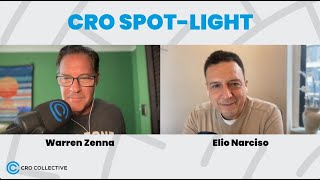
Warren Zenna talks with Elio Narciso, CEO of Skillstack, about why CRM systems like Salesforce are failing sales teams and how AI and data automation are reshaping revenue operations. They discuss what's broken in current tools and where the technology is headed.
Hi, I'm Warren Zenna, founder and CEO of the CRO Collective, and welcome to the CRO Spotlight Podcast. This show is focused exclusively on the success of Chief Revenue Officers. Each week we have an open, frank and freeform conversation with top experts in the revenue space about the CRO role and its critical impact on B2B businesses. This podcast is the place to be for CROs, sales and marketing leaders who aspire to become CROs and founders who are looking to appoint the CRO or want to support their CRO to succeed. Thanks for listening. Now let's go mix it up. All right, everybody, welcome to this episode of the Spotlight Podcast. This is Warren Zenna. I am the founder and CEO of the Sierra Collective and I'm real excited today. I've got a partner of mine here, Elio Narciso, who I work with him weirdly, sort of like we have a really interesting story. It's kind of weird. So Elio and I, we met because I was an executive at Avos and I was involved in the location space, location data space because of the mobile focus of the business. Anyway, and Eliot will tell the story anyway. We met like four or five times. We ended up living in the same building, but we'll get into it. So, Elio, welcome. I'm really glad you came and it's really been fun working with you for the last couple months.
Absolutely. Thank you, Warren, for having me. And hi everybody, my name is Elio, co founder and CEO here at skillstack and I do tell the story and when I tell it, it's super interesting and it's one of those things that I've never thought about it, but then once you start telling it, it's like quite interesting. So Warren and I met because it was at Avasta, I had a different company that was doing like our goal was to build the Google Analytics for offline and so we had developed this platform of sensors and Warren was like, you know, top notch expert in location while at the pass. Actually, I don't remember, like, did you have a practice that was doing this stuff?
Yeah, so interesting. Like when, when I was at Havas at the time. This is. This has gone a long time ago. This is 2016. So yeah, think about how long ago that is. Right? It's not that long ago, but it really was long ago. So. So we. It was the most of the media agency, they don't have this anymore. They've all been sort of absorbed into the larger Borg. But at the time there were mobile advertising units at these agencies. All the big holding companies had their own sort of respective competitive mobile focused advertising because it was kind of carved out as a specific channel to deliver ads on mobile. It wasn't yet sort of part of like the general ecosystem, which it should have been. I think we all knew it. But anyway, and so my focus there when I got there was well, how could we not just, you know, create ad experiences, which I think everybody was doing. It was more how do we take advantage of the unique location data that phones offer.
Right.
And use it in ways that can dimensionalize targeting and also other ways to make it creative for people. And so we started really getting heavily into that location data and creating programs for that. And as a result, I got really in the weeds on location data. I mean, I got really, I became a student of this, like how it works and the differences between GPS data and IP data and the whole thing. And I got really in the weeds with it and a lot of companies that were similarly also using the data because as you know, it's, it's, it's really interesting. I think it's less valuable now. But anyway, we can even talk about that a bit. So yeah, that's why we were doing it at the time. It was more of a decision to differentiate away. And we did, we created some really cool things. In fact, we created some of the programs that became pretty mainstream, one of which was we helped build the idea of using location data to track people when they walk by out of home ads, to be able to determine if there was some degree of repetition of people's recall from that device later. Right. That maybe that we could attribute the visualization or the exposure to that ad as a maybe a part partial way in which that ad call was influenced. It's fascinating stuff. So anyway, there's that it was a little boring, but that's, we, that's, that's.
How, that's how we met. And I remember it was an investor, Michael Flannery, that introduced us and then that company didn't work out. I mean, I exited like, you know, but it was, you know, something that didn't work out. I still believe in the idea, by the way. I still believe that like, you know, offline analytics should be on par with online analytics, but like it's always like lower in the priority of, you know, things for retailers. That was our primary market. And then I started at aws, but also invested in a separate company that was doing mobile advertising. And we talked about that. And then one day, I don't know if you came out of the elevator or I was like, you know, basso, like, hey, Warren, why are you in my building? I was like, no, this is my building. Yeah. And then we started talking.
Yeah, we live in the same building now. It was so funny and just kept talking. It was, you know, I believe this interesting thing that this sort of reminds me of. And you know this because you and I both are. We're both sort of always selling, you know, as part of our roles.
Yes.
We have our own businesses, so we have to be salespeople. And you know, I don't think enough of this is talked about is that we're always trying to close on a connection. Right. So you meet someone and you want to get them to kind of follow up and get them to close the deal, you know, and, you know, you want to speed up the process and get them to make a decision. And the reality is that most deals take really long time. You meet somebody and then you meet him again. And then, you know, when. When the timing is right, that relationship, if it's good, you start working together, you know, and that's how most real longer term relationships are forged is not through trying to str, you know, force an outcome, but just let it happen. I think that's interesting here. It's like, you know, we just wasn't the right time and you know, now we're seeing like we're gonna. It's. It's kind of funny, you know.
I think you say two very interesting things to me. One is this one. Although I think that it's unusual, I would say what happened to us and the fact that we've been building like this relationship over time. And then like it happened that while I was at aws, I started imagining scale stack and you were like in the early innings also like CRO collective. And it was still like a nebulous idea on both sides. But we knew that we were going to work on things like, you know, in a similar place. And then we kept talking and then like, I think now we are like going in a very interesting direction. And so that's super interesting. I do think it's unusual, but I do think it takes a long time to like gain the trust and develop the knowledge and understand, you know, and.
Then, you know, your interests, interests align and your needs align. I mean, there's a lot of things that happen. How many people? I can't tell you. It has to be in the hundreds that I speak to. And I remember that the first time we met was years ago and now we're doing business together because just, you know, your needs align, you know, at the right time. But that being said, I think that we both found ourselves at an interesting point because, you know, when I first started this business, I didn't really think about the. I did a bit, but not obviously as much as I do now. I didn't think as much about the, the operational part, like the data and the processes and all the connective stuff. I mean, I knew that it was going to be a critical part of the way which a Croat optimizes their role. But then it really got in the weeds about a year into this when I started thinking more about, okay, so less as much about the CRO's role in this stuff that we're talking about, which is I think is a unique, distinct thing. Generally speaking, companies just need to get their act together. You know, they're not clear about a lot of things and they're operating in the dark a lot of times. And you know, we're, we're getting at a point now with all this go to market stuff that's happening in the marketplace right now that we're, we're finalizing ways. I think that it's probably not going to be as much of a problem anymore in the future. I think in fact, maybe five years from now I think everyone will have enough tools to know what's going on all the time and then it'll be more about what to do with it. Right. So now that I know what I have now, now I have to know how to, how to behave with that clarity. We have two problems now, which is one is I don't know what it is that I'm looking at and I don't know what to do with what I'm not looking at. And we can solve the data side of it because I think that's the harder thing to solve. But technology has given us that ability and that's why I think that the CRO role is unique in that there's a more of a coordination about this that's afforded with the CRO today than a broken up, siloed organization where you have marketing trying to figure out their data and sales trying to figure out their data. That's vice versa, which I think is a problem. So I mean, I'd love to hear a little bit more your philosophy on that because it's a fascinating time we're in right now where these sort of things are being solved.
You know, interestingly, finally I would say about time. But I agree that it's Unsolved. I agree that it's important and I think that like, you know, the more I talk to CROs and like even at the event that we did together and like it became like it's becoming very clear that like, you know, there is a certain level of confidence that people have, especially people in place that have been doing this for a while about like what go to market strategies should they have and implement, but there is very little confidence in the data. And so like we see like the same problems over and over. Like you know, low trust in the data, go to market data which comes from like the CRM third party data sources, like data customers usage churn. All of that stuff needs to be orchestrated well in a way that is not absorbing all of your time. So that as you said, people are building on the data, using the data, but not spending time figuring out do we have the right data, how can we get to the right data? I think we're not there yet, but I think it will be very fast moving over the next couple of years where all of this will be playing out. Because now there is AI and AI is a catalyst for this because.
If.
You give an AI product bad data, the results will be awful. It's just like a spotlight on data. AI puts a spotlight on data. So if the underlying data is bad, the results will be terrible. And so that's a catalyst. In order to use AI, you need to feed AI with good data. And so the status quo that we have or had about like oh yeah, my CRM is data is terrible. Oh like yeah, it's like all unclean, full of duplicates and there is no hygiene and you know, like it's totally misaligned territories and all of that needs to be gone. But AI is not only a catalyst but also a form factor of like technology that will be used to transform this. Because now there is agents and this is what we use as skill stack that like clean the data, validate it and do automated research on top of like standard data sources or internal data sources that you have. And that's super fascinating because all of those manual, repetitive, boring tasks that you know are now done by humans or with hard coded duct tape solutions are being fast resolved by agents. And that's very interesting because it's, it's an interesting application of AI. I mean there is a lot of concern about AI replacing people's jobs and I think some of that will happen, but in this case is replacing like really boring work that people in sales and marketing still today have to do. Because technology for like the product past 20 plus years has sort of failed them to solve that very basic problem.
Thank you so much again for listening to the CRO Spotlight podcast. This podcast is an important plank in the Sierra Collective communication strategy and we're really thrilled to have such great guests on here. So listening and sharing the podcast with other people is really vital because we want to get as many people listening to this great stuff as possible. A couple things to note. If you're a aspiring CRO or a recently hired CRO or even a old salty CRO and you're looking to either become a chief revenue officer or improve your chops and gain some more insights and improve your competencies as a chief revenue officer. We offer the CRO accelerator course. It's five years now. It's the first CRO focused course that was out there. It's a 15 week course that is populated by aspiring chief revenue officers and CROs. We're pretty selective in terms of who can be a member of the CRO Accelerator course. It's people who are probably like more like ready to be a CRO right now. They have number of years under their belt as a revenue leader, whether it be a sales leader or a marketing leader, or even rev ops leader. And they either want to move into the C suite or they're CROs that want to just make sure that they win in the role. The serial Accelerator course, we kick off the next one in May, mid May 2025. So if you are interested in being a member of the next cohort, please just write me a note on LinkedIn. Just DM me CRO accelerator and we'll set up a time to talk and then I can send you more information to give you a brochure of the course. So again, CRO Accelerator Course. 15 week program for aspiring and newly hired CROs. Take advantage of it. It's been great and you'll see some more information about it on the website. Thanks. Yeah, I, I, I get it. I agree. Interestingly, I think that you're right that there's probably maybe two, there's probably a bunch. But there's two core ways in which AI I think is going to solve problems. One is going to be replacement. There's no doubt about it. I think that there's certain industries that are threatened right now by it, you know, but that's okay, you know, like there was a lot of grave diggers before penicillin was invented, you know, and they don't, we don't need them anymore. But I think at the same time, there's also the other side of it, which is there's a lot of shit work that we do that we shouldn't be doing that takes us away from where we should be and that if we can get that stuff done automated wise, it's better for everybody because it keeps us focused on things that we need to be doing. And so I think that there's good news in the future there and I think that's probably more likely. I think what's going to happen is if you look at alone salespeople, the amount of time that they've been pulled away from actually selling has been ridiculous. It's stupid. You know, it's the point where salespeople aren't salespeople now. They're like almost like, you know, like data engineers at this point. It's stupid. You know, just because someone's inside of a dashboard all day long does. I don't know if a salesperson came to you and said, yeah, I'm really good with Salesforce. I said, well, you shouldn't be. You should be good at customers, you know. Yeah, not a skill set that I want you to develop.
You know, look, I actually posted about this this weekend. I've been doing this like, you know, weekend posts that are more like philosophical and reflecting on why I'm doing this. I think it's also very important like that, you know, it's close to the core beliefs. And so what I posted yesterday was I started my career in management consulting and so in management consulting you started as an analyst. And so that's what I did. You didn't even touch sales because sales is reserved for like more senior people, you know, like the principal, the partner, those are the people that sell. And so for me, sales was not a starting job, but it was like an arrival point, something that you do once you are like senior default consultative. You understand like things, you understand strategy and then you can use the work of analysts, the work of other researchers to, to do your job better and do what humans are good, which is getting business done and like, you know, do deals and understand customer problems and trying to solve them. And so for me, sales was never this like, oh, this is like a basic thing to do. It's actually very complex sales very. It's very like, you know, difficult and you need to sort of learn it over a long period of time because it involves like human elements. It involves like capabilities to understand and deconstruct the problem and then associate appropriate solutions. And it's not like an Analyst job. It's not like a data researcher. And yet as you said, like, you know, reps have to spend ton of data clicking Chrome extensions and figuring out like, you know, how to get contact data or like, you know, trying to Google search stuff on the web about like their prospects or accounts. And so that's, you know, that's how they spend like, you know, there are statistics that says they spend like up to 70% of the time doing this stuff and then putting this data into the CRM, which is, you know, by the time you're done, you're like tired, you need to take a break and like, you know, you need to start your day job, which is selling.
Yeah, I think it's a bad thing that happened and I could speak to it. I'm perfect example of someone who was, I don't want to say victim of it, but I was. It came at the expense of some things for me. And that is that, you know, during the, you know, between 2000 and probably recently, I'd say when you get hired in a sales position today, you're, you're required to be entering data into your system. I mean, they need the data from you to be able to analyze what you're doing. Right. It's not like you can not do it. You have to and you have to have everybody do it. Because if you want the whole picture, then you need everybody to comply with these requirements, which are newfangled things that you never did when I was selling when I was younger. And so what that, what ended up doing is, you know, it's a different personality profile of someone who does this sort of thing, right. So, you know, people who are really good at. I remember this happened like three or four times over the course of my sales career was the people that ended up keeping their jobs were, you know, not only they were, they were good at closing deals, but they were just really good at complying with the data entry requirements. Because, you know, this is a weird thing, the dynamics of these organizations was that they need to be like, you know, it's like the way we look at the stock market today, right? We look at the stock market like almost a minute by minute, you know, like one little blip at between like 4pm and 4:15pm means the world to everybody. Whereas 20 years ago, you know, you looked at what it looked like for the week, you know, and that was when everybody reacted because we're so granular now in the way that we analyze things that everything has more meaningful, maybe more meaning than it should have and we were more emotional, we're more reactive to that. Meaning similarly, sales became something you could measure. So, you know, bean counters, you know, whether they be investment partners, they want to know more data all the time, they want it updated all the time if what fed their kind of need to be involved and transparent. And so operators of the business were feeding the board all these data points all the time, which means I have my salespeople give me that data so I can give it to them. And this requirement pulled people off of their jobs just to give people information that they needed that was actually detrimental to the degree of speed with which the salespeople could do their job because they were, they're being pulled off of the thing they need to do. It's like a really weird thing that happened.
I love that metaphor. I mean like finance, a trader, you know, like, and maybe now it's all, even that, it's all computers and machines, but a trader that needs to put together like all of his or her data, like, you know, will have wasted like most of his time doing this.
Exactly.
And so they have everything, they have Bloomberg terminals, they have like, you know, lots of reports, they have dashboards and like plenty of stuff to look at things, but not to compose the basic data so that they can make sense of that, to act on trades. And so reps should have everything ready for them. They shouldn't be the analysts putting together this data so that then can reflect on the data, on the insights and make connections. Oh, this person, know that person. And you know, I did that at the other company and like, you know, this company is launching a new like cloud migration initiative which is very aligned with what we sell. And so let me send like a note or like, you know, say something on LinkedIn that targets that person. So I think that that's the missing link here that like we have required reps to be also researchers and analysts and they are not, they're not, they should consume the data ready made for them. And so, you know, maybe they should spend like 30% of their time on the data, but not manually collating the data, actually thinking about the data and then 70% acting on it.
Yeah, I see the future being that instead of which I think maybe the, the pushback on all this data was maybe about three or four years ago was do we need all this data? Maybe we're swimming in too much of it. Maybe a lot of it's useless and maybe we should start rethinking this. We've kind of gotten drunk on data. Maybe we need just more competent salespeople in the marketplace building relationships, because that's what always worked in the past. And I thought maybe before these technological innovations came that that may have been the way that the market bent the other direction. You know, sometimes there's like a, you know, pendulum shift and there might have been a, you know, okay, we got drunk on data. Maybe we just pick the data that matters most and we'll just analyze less of it. But that was naive of me. I don't think that our organizations are ever going to stop wanting more data. They're going to want more. I think it's really about how to get the data to you easier and how to get it more accurate and quicker with less stress. And that's why I think the tools today are going to solve that problem. I, I, I sort of look at it like you look at Tony Stark wearing his outfit and he's talking to Jarvis, and he just talks to Jarvis, and Jarvis just does everything for him. You know, he ask anything, Jarvis, analyze my blood, analyze this thing. Look at this. And Jarvis just gives the data that he needs. And, and it all happens. And he also has Jarvis connected to all of Stark's other systems. So if he wants to deploy something from one of his base stations, he just tells Jarvis to do it. And Jarvis just call and it does it. And so, you know, it's immediate and it doesn't require that Tony has to be analyzing the data because he built something that analyzes it for him. And the AI allows it to be more personal to me so I can ask the questions that I need and get the data that I want based on the questions that I need, as opposed to having to look through data and then figuring out how to match it to the need that I have, because I don't have a relationship with someone who's controlling the data. And I think that this is where we're headed, is that I'll be able to say, hey, you know, better yet, would even be predictively so when I get onto a sales call, it looks at my calendar and it looks at all the people I'm calling, and it has already prepared for me a whole dashboard of insights about everybody that I'm going to call. And I can just say, hey, look, I got these calls today. Let's go over it together. So I'm speaking to Steve Stevenson at 4. Let's go over it. And they go, yeah, well, Warren, he did the following analysis, and here's what you need to think about. Here's some Things to note. Here's the. And, you know, so I'm. I'm being given the information when I need it, you know, not having to waste seven weeks figuring it out when I should be doing more of that. That. That'll be a really exciting time for people. And I think that's what's happening now. So anyway, I look at it that way.
And also I think that the. The other important thing, I feel that, like, there is going to be more data, but it's going to be used, hopefully not to spread and pray, but like to be much better at prioritizing.
For sure. For sure.
Right. So it's all about prioritizing, you know, who you spend time with, like, who spends time with you and like, you know, are they in target? Why? And you know, why. They could be like, aligned with what you're doing and what you want to do. I think it's very important. So we are all about prioritization. Maybe quantities would be reduced, hopefully. So, like, you know.
Yeah, I think so. Once we look at all of it, then we'll know the little bit of it that we actually need and we'll be able to focus on which is.
A tiny fraction, but somebody needs to do like the analyst job to get you to that tiny fraction without you spending time on like, you know, the iceberg underneath the tip. Right?
Yes, there's no doubt. And I think that's the. That's the main thing we're dealing with right now. What I'm trying to solve with my clients, right. Is making sense of complexity so that they can take actions with clarity and they know what they're doing and there's some resulting predictability in there. And it's where a tool like yours is useful component of that. So let's talk a bit about that for a second. So I'd love to hear a little bit more history of the company and like how you formulated it and sort of like, what's the way in which you're solving these problems for today?
The mish. It's remarkable because we started the company before, like, you know, all of this gen AI revolution that we're into. But the mission of the company has, like, you know, is super current and like, you know, still very applicable. And it is like, you know, to automate all of the manual, boring work that people do. And so if machine can do this job better, like, we want machines to do that boring, repetitive work so that humans do what they're better at. And so that was like an intuition that we had and the first element that we developed was integration. So we need to build like, you know, really stable and reliable integrations across the entire go to market stack. Whether that's like CRM integrations or like, you know, integrations with third party data sources or integrations with your customer success data and all of that. So that was step one. And the sort of like framework of reference for that was Zapier. I don't know if you're familiar with the company.
I use Zapier for a lot of my integrations.
Right. So those are integrations between business apps. Right. And so we wanted to do what Zapier does, but going down to the level of data. So because Zapier does mostly like, you know, integrations between business apps, we wanted to connect data sets and then go down to the level of like granular data points that make sales and marketing team, like decide who to target. And so data about like your ideal customer profile, data about your buyer Persona and how you define is this a good account for me or is this a good prospect or contact for me? And so forth. And so that's the second thing that we build which is like automated workflows that easily align and make the data flow semantically, like you know, cleaning in a waterfall, like and enriching all of the data. And then in the last like year and a half we built the third component so integrations workflows and now the agentic component. And these are like agents which I think the best proxy or metaphor is really the analyst proxy. So imagine having like that analyst researcher working for you that like, you know, does the automated research that like, you know, compares like between different data points and different data sources and decides which is best for which category of data that you need. Oh, you know, Dun and Bradstreet is great for larger companies and Crunchbase is better for smaller companies. And maybe there is a gap. And I do some automated research. So agents, agents doing automated research on the public web, going to websites or PDFs or press releases or anything like that and bring back data that can be used but also help you clean the data, validate the data, decide if like oh, territory UK is the same as United Kingdom or Great Britain. And so like we're not going to make mistakes in like creating a new sales territory and assigning to that territory wrong accounts. So basic things, they look basic but like until now they could not be solved unless it was like patch app, hard coded or manual effort. I mean we have customers that have replaced teams of researchers in like, you know, Countries like the Philippines, in order to basically do this all automated. And so for me, those three components, integrations, workflows and agents are like the key components that we have developed. And we are now bringing them all together. And that's why we're seeing like an acceleration in the, the quality of the output and why our customers are happy. And even though we are like, you know, relatively new company, companies like MongoDB, Redis and others are using successfully Scale Stack.
Thanks again for listening to the CRO Spotlight Podcast. We're excited about all the great guests we have, and more importantly, we're excited mostly about you for being avid listeners and supporting the work that we do here. Feel free please to share this Hero Spotlight podcast with any of your colleagues, Chief Revenue Officers who are looking for a Chief Revenue Officer, Board of Directors, so to speak, that they could share what's going on with them, collaborate with ideas, get some feedback on what's going on in their current role. And these are great conversations. I facilitate them. The CRO Masters Councils, again, they're twice a month and they last for at least six months to a year. So if you're interested in having your own CRO suite, your own Board of Directors of Chief Revenue Officers, it's a private, confidential conversation that we have. It's infinitely useful. Imagine having a room full of other Chief Revenue Officers you can talk to and say, hey, I'm working on this, or have you guys figured that out? Or, I'm having this issue right now with my business or my results. These are just invaluable conversations with Chief Revenue Officers. Chief Revenue Officers have a very, very unique role. They very lonely job, and only other CROs understand what you're going through. So that's why we created this program. So if you're interested in being a member of the next CRO Master's Council, which we have a number of them being put together right now, Just go to my LinkedIn and DM me masters or master's Council, and I'll follow up with you and set up a call or send you some more information about it. Looking forward to seeing you there. And thank you. How'd you start this? What was your background? I mean, I know, like, you're obviously not from the United States or, you know, you're coming from a weird neighborhood or something like that. So what, where, where? Tell me about your. Your journey here. Like what, how did you get to this space place? It's always interesting.
Born and raised in Italy, south of Italy, Puglia. If you haven't Been. You should go. I know they have a shirt. Corleone. That's Sicily, but nice border is there. And then great place, great family and. But I studied in Milan. Then in Milan, which is like, you know, maybe 800, no, maybe 700 miles, like away, which for Italy is big because Italy is a peninsula. So then like, you know, in Milan, I started, like, understanding, like a different, bigger city and wanted to explore more. And then I was lucky to do an Erasmus, which is a program in Europe that connects lots of colleges and so you can decide to spend a semester in another college. And I went to Barcelona. Loved the place. And so right after college in Milan ended, like, I took my car and moved to Barcelona and found my first job there in management consulting. It was a great company. And this was like 1999 or something like that. And it was like the early stages of the mobile revolution. And so this was a company that was created as a spin off a monitor McKinsey. And it was doing, like really high level quality strategic work, but only in the telecom space and primarily in the mobile industry. And so we were doing, like, really cool things all over Europe because we only had like a couple of customers per country, really. And so I traveled extensively all across Europe and then Asia and then South America and. And then I, you know, I decided that I wanted to explore the US Which I'd never visited. Um, and so I applied to, I mean, I wanted to do an mba. I applied only to one school, which was crazy because I had zero time and got in mit and then I did my MBA there and it was amazing. And that was like early 2000. And it was like the, you know, the beginning of the startup revolution and like Silicon Valley. And so much that when I was doing my mba, there were people saying, oh, you're crazy. Or like investing all of this time in an MBA when you should be in a startup in the valley. But I love the environment. I love stepping back and thinking about things strategically. I fell in love with entrepreneurship. And so weirdly, after the mba, I decided to start my career in entrepreneurship, really be an entrepreneur and start companies. Skillstack is my four companies. I've had two successful exits. One company that didn't work out, really, but learned a ton from that. And so my journey is really like, at mit, I spent most of my time at the entrepreneurship center and fell in love with this idea that, yeah, you can create a company, and if you are a believer in something that should be changed, why not? And that became like a lifelong passion with a Parenthesis at aws, which has always like Amazon was always an inspiration for me. Like I read books about the leadership principles and you know, I had applied some of them on my startups. And then when I decided to take a break, I didn't have an idea. I got offered like a great position managing BD business development for startups AWS here in New York. And I built a program called the AWS Global Startup Program which was very successful. It's sort of my legacy there still exists and we had 600 startups under management by the time I left. And, and that's where I got the idea for Skill Stack. Because I'd always thought that like, you know, my companies had bad data because they were like, you know, startups, fast growing companies and I assumed that like a company like Amazon would have had like, you know, great data. And that wasn't the case. Salesforce was still a disaster at AWS and you couldn't like really get the data that you needed so much that to manage my team and my program I had spreadsheets, you know, so I was using spreadsheets with thousands of companies that we needed to like prioritize and distribute across the, you know, BD team in order to decide who we were supporting and who, who were not going to be supported. And that was like a spreadsheet that I manually put together with tens of thousands of companies and like, you know, inputs from Crunchbase, PitchBook. And then at some point I said like, this is crazy, this should be done by machine computer or by the CRM. But CRM wasn't doing it. And so we decided to start a company with my co founder Alex. And yeah, you know, it's interesting you.
Say about it's cool, I love it. I love that story. I love these stories about how people find their way through things. I mean, it's like weird, you know, nothing's planned. But you know, I'm curious about this, what you said before. So when you look at the future of this whole business that you're in and this, let's call it data enrichment or data intelligence and data automation, I mean, is the CRM going to stay at the center of everything? I mean, do you think like, for example, ultimately just Salesforce and HubSpot just absorb all these companies and just sort of automate everything and it's going to happen all there or is it going to be pulling away from the CRM and it's going to happen outside somewhere else?
It's a very interesting question. We don't know the answer yet. I think that the AI. I mean there was a report from Andreessen that was titled like that of a Salesforce. So I think that everything is very disruptive. And so while Salesforce, I admire the company. I mean like if you look at the results every year like you know, year after year for like 20 years plus increases in both revenues and you know, margin. So remarkable company, built on ecosystem but with a product that frankly from the perspective of the rep which should. I mean it's Salesforce, it's called. It's a terrible product. I mean we have to be honest. It's product that I think works for CFOs, you know, in many ways maybe works at a certain level for like some even larger consumer businesses that use Salesforce for large like user consumer data data. But like for sales teams and marketing teams at B2B companies. I think it's. It's a really challenging product.
Yeah, you know, Salesforce is like. Is like a company that is an amazing product that's horrible for the end user.
And so weird. Yeah, it's weird. And so, you know, the buyers are probably other people. Like you know, the CFO and like wants to see.
But they're the benefit, they're the beneficiaries of the product. Right. The sales. Well, the sales reps are to some degree. But the burden that it places upon them, as we already talked about the beginning of this conversation is really. I don't know, I speak to salespeople all day and few of them tell me how much they love it. You know, they're all nobody.
This is, let's be frank, who is.
The part of their job? No, it's. It's like a. It's like almost like the idea of having to enter the data is like, it's like a. Like a root canal for them, you know.
So yeah, I think that they have realized this and I think Salesforce is obviously making a lot of investments in like agent fours and is pushing this into customers and customers are experimenting. I think like as a system of record, I see it as like being very difficult to be removed. But at the same time, I mean we used to say this also for cloud and like you know, I worked at AWS and like the story of AWS is like, you know, startups were the first users and enterprises would say first, forget it, we only do on prem. That's the model with security compliance will never go on cloud. And yet now the majority of the revenues from for AWS or other like platforms like this is like enterprises. So I think that it is possible to change. I think AI is extremely disruptive and the entire like sales workflows would be very different. For now, we think that our platform is like middleware that sits on top of the CRM and creates all of the data cleaning and analysis and validation and automation that is required to have in your CRM the data that you need, not just in the CRM but in other tools that are part of the stack, like let's say Salesloft or Outreach, all of these type of tools that are more user focused. But it is possible that like it's so disruptive that eventually people say, well, I mean, you know, why do I use. Yeah, Salesforce?
That's what I think. I think that, I don't know, I maybe, I hope, maybe it's a wishful thinking but, you know, the, the burden. Salesforce, let's call it, let's move away from the company. We'll go with the idea.
Yeah, yeah, we call it, we call it the CRM Industrial complex.
Yes, exactly, the CRM. I love it. So the CRM as the sort of central hub, right, of all these, all the products and services that you and I talk about in companies right now, the burden of those, of that tool has been placed on the salespeople. And that, that, that made sense, you know, 10 years ago or 20 years ago, to put it on them because they're the ones who are in the interactions and that's where the data came from and that's where it can be put in. And I think it probably should have been taken away from them a long time ago, but there was just no way to do it. And I think now there is. I think it's going to happen somewhere else. It'll still be called a CRM, but I think they'll be if I would say, like they have right now. Right? We're not right now, but you know, and I normally have my phone calls, as you've seen, because we've had other phone calls. We have my, you know, Fathom tool or whatever it is running at the same time as me and it's basically taking all the notes and it's doing all that stuff. And you know, an advanced version of it would be connected right to my CRM or whatever you want to call it and it would be just filling those things in in real time. And when I hang up and I look at my dashboard, it has all the, you know, all the data that's in my Fathom is going into a repository that I can then take and I can analyze so I don't ever have to touch it. You know, I'm just sort of letting it happen. And then what I do is I just talk to it. I say, all right, you're looking at my calls this week. What are the things I need to do? What did I forget about? What are some things I need to know? What are some updates? Did any of the people I spoke to change jobs? Did they change their mind, or any information you have for me about them or whatever the case may be, or maybe even like, you know, hey, you know, I was thinking about the idea of maybe even considering proposing that Elio use an additional service that I forgot to mention to him. Based on the conversation, what do you think the liability would be there for me? Should I do that or not? And if I do, what would be the right way for me to propose that to him? You know, I think that would be really cool. Yeah, you know, I don't think so. His company seems too small. You know, based on things we've seen, X, Y and Z, it's probably not the right time. But, you know, if you're going to ask about it, you should ask these three questions that would be really incredibly good for me. My personality to have someone coming and telling me that stuff. You know, I'm very much more a, you know, creative, you know, type, communicator type. I'm not a planner type. So if somebody came to me and gave me the first. And I can tell you, a lot of the salespeople I work with, other same way, they just like to just go make it on the phone and start talking to people and listening and having conversations and the prep work. They recognize its value, but they don't have the sort of brain to go and do it. It's. It's hard, you know, it's. It's certain. Type researchers are researchers for a reason. That's what they do. Their brains are made that way. You know, I need a researcher working for me. You know, that gives me the research, and I think that that would make a lot of salespeople right now. This is kind of. I'm getting a point here. A lot of sales that might fall into the B or C level in terms of their performance would become A players if they could just get back to doing the things they're really good at. But right now they can't because they're not being allowed to. So I do think, like, a lot of this stuff is pretty fascinating, and I. I look forward to the changes that are coming and I'm, I'm benefiting from it now. Great, great deal. So anyway, I want to, we're gonna getting to the end here. I want to make sure before we go, what's your ideal customer like, who are you looking for? What people work best for you, what don't, what are the ones that are not right for you?
We don't work really with early stage startups. We don't work with companies that have less than say 10 or so reps. And so that means that typically it's mid market and app, if it's a startup it's like series C and above. And for now we're you know like we're very like focusing on up to about 5,000, 6,000 employees because the sales cycles there are like reasonable for a company like us. But we could serve like even you know, aws. AWS could be a customer and benefit from what we do. But we're not going there because of like you know, sales cycle. But in terms of like the product, the product is really great. If you have like tons of data, we're talking about like, you know, if you have a wide addressable market so you can target hundreds of thousands of companies or you know, like, or people. And so it becomes much more important for those type of companies to prioritize their efforts. And so yeah, like at least 10, 15 reps. That means like you know, 300 employees or so, 200, 300 employees, the minimum up to like you know, five, 6,000 employees. And that's our like initial scoped ICP. And we're having like quite a bit of success in that target market because these companies don't really have a lot of alternatives. I mean basically the alternative people ask me, especially investors, like who do you replace? I mean there is no technology that actually does this. There is technologies like, you know, that are good for smaller companies like Clay, but they're not appropriate for larger companies. And so we typically replace manual processes either or like hard coded duct tape we call it. Stuff that, you know, companies of that size that put together like internal enrichment hubs that are like, you know, doing okay but not like a fantastic job because they distract from the main goal of that company and they have to invest like product and tech resources in order to keep them alive. And instead we have an entire company that is building this stuff which is like a pretty comprehensive set of technologies, integrations, workflows, agents. So that's our target market right now. And we sell into revops, sales ops, marketing ops, so all the people that are tasked with, like, supporting the revenue teams, like CROs and CMOs with, like, making sense of data scale.
Got it. Okay, great. So. Well, look, I mean, this has been a great conversation, as I'm not surprised. And, you know, I look forward to continuing to kind of promote together, trying to, you know, bang the drum on this stuff. It's exciting times and, you know, I'm glad we ended up living in the same building. You know, it's kind of funny.
It was totally by chance, I don't think that, like, you know, since, you know, I would not have imagined to be doing this now, like, starting from location services. No, you probably either. So, like, yeah, the building, which was a good building in a good area. Nice. And yeah, I really enjoyed, by the way, like, the event that we did together. I think, like, the energy of the room was very indicative that these are, like, very important topics on people's mind. We did an event like here.
Yeah, yeah. So Elio is referring to the CRO Roundtable events which we've been doing now. We did four of them and Elio and I partnered on the last one. It was great. And these are, you know, the, you know, you hear a lot about what's called, like, the anti conference. It's exactly that. You know, we don't have any presentations. There's no speakers. You know, there's no demos. There's nothing like that. It's a. Literally a room of people who are all CROs, and we just conduct a conversation where we all talk for three and a half hours and it goes by lightning fast, and everyone loves it. And that's what people really want, particularly CROs looking for other CROs to talk to. So these are great. These are great events. We're actually, I don't know, we're having another one with you in Silicon Valley on April 30th in the. Well, actually, it's going to be in San Francisco. It's going to be at the Transamerica Tower.
Yeah.
And so we're getting. Trying to get some more people to show up to that one. And then I'm having another one in New York with another. Another person on June 2nd and maybe another. So we'll. We'll see. We got some more stuff to do, but they're good events and everyone writes me about them, so I appreciate that last iteration. So it was good having you here. And thanks for this time.
Thank you.
And we will see you in the neighborhood.
Thank you. Ciao.
Thank you for listening to the CRO Spotlight podcast. The CRO Collective's mission is to help CROs succeed and help founders and CEOs build CRO Ready organizations. You can find out more information about our services@the crocollective.com that's the crocollective.com and we look forward to having you join us next time. It.
More from Warren


How Misaligned Software Metrics Ruined B2B Sales and How to Fix It with MK Marsden





Advocating for the Little Guy: A Frank Talk with Dan Goodman, Warrior of The Sales Rep



The Evolution of the CRO & Revenue Efficiency Metrics with Christopher Semain and Sean Ryan
