Hustle, Cancellation, and Personal Branding with Alexa Curtis
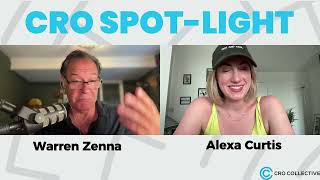
Warren Zenna talks with content creator Alexa Curtis about her work with Disney and ABC, getting cancelled after a marathon incident, and her current focus on personal branding and startup events. She discusses how influencers navigate online backlash and where the line sits between personal brand and employer.
Foreign. Hi, I'm Warren Zenna, founder and CEO of the CRO Collective, and welcome to the CRO Spotlight Podcast. This show is focused exclusively on the success of Chief Revenue Officers. Each week we have an open, frank and freeform conversation with top experts in the revenue space about the CRO role and its critical impact on B2B businesses. This podcast is the place to be for CROs, sales and marketing leaders who aspire to become CROs and founders who are looking to appoint a CRO or want to support their CRO to succeed. Thanks for listening. Now let's go mix it up. First of all, I want to thank you for doing this with me. It was cool meeting you. I'm really interested in what you do. Yeah, I think it's kind of interesting thing. I know that you had mentioned, if you don't mind me getting into it, it's kind of a neat thing. Yeah, I get into it that there was some interesting issue you had with your online presence. And I asked this question, not. Not a gross curiosity because it is an area that we work on in my business. So I'm interested in this type of thing because it's a. Yeah, it's a. It's an interesting topic. So if you don't mind, I mean, you know, I mean, sharing. I'd love to hear what. What it was that happened. You were with. If you don't mind me recalling. I think I'm right. You were with Disney.
Yes.
And then you're not. So what happened? What. And what were you doing at Disney and how did that start? You know, kind of start.
Yes. Do you mean what happened with which part, though?
I don't know. You were let go. I don't know why. You mentioned something about you had some online thing or something like that.
I think it might. I think you might be talking about how I met Chris, which was through how he reached out to me, which was this running situation that happened.
Okay. My brain is starting to. The synapses are working now, so please continue. Yeah, so start with Disney. How'd you get there and what did you do there and what was your role there?
Yeah, so I was living in Boston and I was pursuing entrepreneurship. I had this blog and that was what I was doing full time, but it was really hard. And this was back in 2016, so it's incredibly hard to build a presence and monetize a website like that considering I didn't have any money, I didn't have any connections. And so it started as this fashion blog. But what I was Actually doing to pay my bills is I would pitch these TV segments and these companies would pay me behind the scenes to go on tv, which at the time was actually quite illegal. But I was like 16, 17, signing these contracts. I had no idea that it was like legal. And so then they would pay me and I would do these segments. And so where would you distribute them?
Like, what was the viewership and how are these segments deployed?
So I would pitch it to say Fox or the Today show or ktla. So it wasn't my network, it was getting, I see, syndicated.
You were a content producer and then you'd shop the content around and it was what, mostly lifestyle stuff?
It was everything. Literally anything I could find money for. It was like the definition of hustle. I mean, I would do back to school style. The next weekend I'd be in the middle of nowhere in like the deep ghetto in Detroit, doing like the best wine brands, being like so underage, not being able to even try the wines. But these companies would. They had no idea that I was so young and so I would do anything. And so I did that for maybe like a year, a year and a half. And then I found this producer list online and that was how I ended up sending this show idea to Disney. But it was really just like a blanket pitch. I had sent out to a bunch of producers from MTV to Hulu to Netflix to Amazon, and. And I think maybe seven days later I got a reply from like the head VP's assistant. And he was like, Phil, who at the time was the vp, got your email and if you live in la, would like to take a meeting. And I didn't live in la, so I just within three days subletted my place.
I would do too.
Moved to la. Yeah, you only get one. One shot with one.
No, you gotta do this. So I'm gonna slow down a bit here. Cause I'm interested in some of these things. So you were. Your idea basically was you just hustled by recognizing there was a, I suspect a need for content out there, which there always is. There's a never ending hunger for more stuff. Right. There are people out there looking for stuff, quality stuff that reaches their demo. And you have great personality and you had some cool ideas and you thought you can interview people and create these segments and then sell them to producers who would then use them. And then the sponsors would pay you because you ostensibly you acted as a broker between these sponsors and this distribution. And you got them. Okay, got it. It's great. And who type what type of sponsors were you getting? Like what kind of people were, were agreeing to this sort of thing? If you have me asking, I'm just curious, how much would they pay for this sort of thing?
I'm an open book with this stuff with anything, so it depends. So I mean the coolest sponsorships I did were like with T Mobile and British Airways, but that was not paid. That was just everything from product to flights to you know, even like apartment buildings, whatever. But the, the largest companies are like the corporate companies. So I really found this, this niche with like the Target and the Kmart and the Walmart and those middle to lower income. The places you're finding in the places I'm from, like in this part of Connecticut, you know, it's not like Greenwich, right? So think like Applebee's and Chili's and Moe's and. Yeah, so it's, it's, it's that kind of demo. And I found they always had a ton of money like Burlington, Burlington Coat Factory. I know the brand, Clark's shoes. So at the beginning it was like 100, 200, 300, you know, it was just, I would throw anything at the wall, like whatever I could get paid, I would get paid. And a lot of the times the brands wouldn't pay until net 60, net 90. So I got myself totally transparent and a ton of debt because I, this was the only way I could figure out how to make a living. I didn't graduate from college, I like barely finished high school. But I just, I loved the blogging.
And you probably were okay. Look at her, she's really cool and she's got a great personality.
And signed a, I signed a year deal with them and then after year deal.
Is that what it looks like? Is that what it is? Talent contract?
Yeah, I was talent, but I wasn't an actress. So it was essentially a podcast. So it was a decent negotiation, probably six months. We negotiated that contract and it was for a year. And after the year, you know, it came and it went and then I left to start Be Fearless, which I had kind of started there. And then about a year and a half later I ended up selling a different kind of syndication of Fearless every day to abc. That was a TV based show that was more interviewing founders, which was really why I had signed with Radio Disney. I'd never wanted to be stuck in radio, but I wanted the, in the door with Disney. And so I waited a decent amount in between and then I really kind of went for. What's the right word? Like I Went for the kill. That was what I really wanted, was TV and I think figured out the right way to get in it.
Okay. Love it. Awesome. It's amazing. Okay, so now why founders? Like, why did you move from jumping out of airplanes to want to talk to founders? What. What. What's that about?
I had always been talking to founders throughout the whole time, so that I had a podcast prior to Disney and that was founder based. I have no idea why I never. I don't find myself to be, you know, the way that people, I hear them talk about celebrities or Taylor Swift. Like, I never had that feeling to those people. I. When I would read about a founder, you know, even something when I was a kid like Ellen or Oprah, I had. That's where my infatuation would. Would lie in a way. And so I think through the first podcast I had that allowed me to make definitely a lot of connections. But also I just think, you know, as an entrepreneur, that hearing those stories as I was starting was so monumental to every part of my career.
So what would you say it is then if you were to maybe give it some, like, a little more introspection is so fascinating to you about founders?
I think the ability to be so resilient is fascinating. You know, the stuff behind the scenes, I mean, everything from like basic lawsuits to people and their mental health to, you know, the debt and. And just these stories of people that are able to make themselves into something based on. There's a very similar theme with founders of a lot of people starting companies that end up doing really well because of a need that they were wanting to fill. Right. Like for me, you know, with a personal brand, it was more. Cause I didn't really have any friends growing up. Like, I was pretty badly bullied. And so I wanted to create that person. You know, if you look at like Andy Dunn, he started like bonobos and like it was socks and they couldn't find a good pair of socks to wear to like, corporate work. Right. And Sarah Blakely was span. So I just think there's this naiveness and spontaneity about founders that I just think is the coolest thing in the world.
Yeah. Sort of like skydiving.
I do not.
I understand. It's like there's a guy. Because I think the reason I ask, aside from the obvious why I asked the question, when you answer it, you're answering this question. You're giving me some clarity now that there's different kind of founders. There are founders that are more, let's say, business People, you know, they kind of look and they see the marketplace and they say, oh, this product would grow. And there's a. There's a tam for this, and this is the return I can get on it. That kind of thing. Very sort of, you know, corporate finance view of the marketplace and looking at opportunities to, like, scale and make a lot of money. Then there are people who you're talking about who are really more creative, and they see a problem and they just, like, they just want to solve it, and they do, and they stumble into this thing and they become like, they make a big difference in the market. Yeah, there's no doubt that people are more fascinated by that. That's what I think. The Shark Tank thing is so fascinating. You see these people get up there and it's like, you know, mom and Pop getting up there saying, yeah, we made this new way to grow plants and it works. And God bless them, they work in the garage and they took this stuff. And when you hear the story about these people turning it into something that now you'll see at Bed, Bath and Beyond, it's actually, wow, that's really cool. Everybody was like, I totally agree. I mean, look, everyone's fascinated by that, but it's okay. So that's cool. So now you're now in the story here. You're not with Disney, but now you're with abc, right?
Not. Not currently. I mean, that was like a year.
Stage in this conversation. The story that. The narrative you're sharing here.
Yes, I'm trying to get like, like a lead. Yes, there's about a year and a half in between, like, Disney and abc. But then it was like a year and a half later after that that I sold them this other show that was based on the first one, but for an older demographic, which at that point was really my demographic. It was hard to be an adult in a company like Disney because, I mean, and I wasn't really an adult. I mean, I was like 18, 19, 20. But, like, I wanted to have the flexibility to talk about real life stuff, and you can't really do that there. And so with abc, obviously there was more flexibility. But you, you still were very limited in the things that you could do outside of it and whatnot.
Okay, and then what ended up. What. What was next for you after that?
Oh, my gosh. I'm trying to remember. That was summer, I think, and then I didn't do go back to podcasting for a while. I think it was maybe like six months or so. I think I just started Hosting the events.
Right.
And then I started my. My podcast up again, and it was kind of for a bit while I was doing the events, because those events are a bit of a killing to. To do. But I definitely found such a niche also with those events. So they were really quite well for getting, in a way, new clients or more coaching and stuff. And then I guess that kind of led to here, which is like, have to be fearless stuff in the podcast and then more consulting for. For startups.
Got it. And so you ended up meeting me at an event. Yeah, a gentleman named Chris who found me. I don't remember how. I think I'm just a loudmouth. So he just found me and he was like, you know, this would be kind of cool if, you know, what you talk about would be a fit here. And, you know, it was a bit. If I would say it was fun. I really enjoyed being there and I like speaking, but it was a bit off topic. No, off market for me because I work with companies who have, you know, 20, 30, 40, 50 million in revenues or more. But it's fine. It was really cool to go. And that's where you and I met. And at that you were telling me, which I think I remember now, there was this story about you running in the marathon.
Yeah.
And that was crazy. So I'm sorry, could you share that with me? I'm curious a little bit here about that.
Yeah. And I have to be so cautious what I say, because it was such a terrible thing to have happened, but that was how I met him. And it was a bit of a bizarre situation. But I was in New York in April. Like, long story short, friend of mine was like, do you want to run this half marathon? I was like, sure, yeah, why not? I had never heard of this term banditing. I had no idea how unethical it was. I ran the half marathon, hadn't trained for it, put a tweet out Sunday morning after the marathon. That was a very inspirational tweet. However, I like a real idiot idiot for running it and not signing up. I didn't know that it was such a terrible thing. But, like, real idiot for the tweet.
I didn't either. I didn't either. Okay.
Yeah, I know. And then anyhow, this tweet within few hours amassed like hundred, a hundred thousand interactions. And I've never really gone viral. It's not really my thing. So I'm like, oh, this is so cool. Thousands of people being like, oh, my God, like, so inspirational. You're the coolest Chick ever. I'm like, wow. And then maybe like 3, 4pm I started. Well, I noticed now at that point it's probably like 500,000 okay. Interactions, right? And I'm like, wow. And then I just got. I don't have notifications on my phone for social media, so anytime I would go on and I just saw a few negative things like, you know, don't you know how bad this is? Or like, don't you have any respect? And I replied and I said something. I don't mean to laugh, but it was, it's like just, you know, it wasn't supposed to get this bad. I said something back to somebody like, life's not fair. And then I said this other, you know. And Monday morning I wake up, it's 10am and I get like an email from the New York Post. It's like, we want to interview, but you got the backlash. And like my gut, I just knew. I was like, what? What's happened? So I go on, it's 8 million people.
Wow.
It spiraled and it ended up being, you know, I would say like cancellation. If you Google my name like next to the word running, I mean, you'll see they dragged me through the mud. I mean, it was awful. Like I didn't work. I was super depressed. Like, I didn't know what to do. I flew back.
And this was all just because that there was something that was determined to be unethical about you band is called banditting. That what it is?
Banditting? Yes. And so I had never heard of this, but did it get of. I mean, it was out of. I mean, the death threats, Like I even still get them to this day. Like I'll post something on Twitter.
Just because you didn't sign up for a marathon, you're being but threatened.
Yes. And obviously there's nobody asking.
I'm just curious. I. It's just fascinating to me. This is like human like psychology stuff, which I find amazing. Like crowds, right? Crowds. What is it? What was the offense? Why, why would. I mean, I understand maybe. Okay, fine. Other people paid for this and you didn't. And I'm not to condoning it because I don't really care, frankly. But I'm fascinated how it turns into something like that. I guess I shouldn't be too surprised. I mean, we all look at LinkedIn posts and we see how quickly it can turn into like something really bizarre. I mean, it takes a left turn and all of a sudden they're talking about, you know, I mean, like, how the hell this guy was talking about, you know, attribution for online advertising, and now we're talking about Black Lives Matter. What the hell? How'd that happen? But, you know, I understand that people are weird and they go down weird rabbit holes, but I'm fascinated at the origin of what was at the core of it. Was it like an elitist thing? Like you're. Was it like that sort of like, entitlement sort of thing? I don't want to get into it. I'm just fascinated. From your perspective, like, what?
Yeah.
Did you do that?
No. I have to think about it. It's funny, actually. I mean, through it, I found all these subreddits. I mean, Reddit is insane. There's a whole subreddit called LinkedIn lunatics. Of course, I was like plastered on this and on like every other subreddit you could find about anything, which is. It's a whole other beast. And I actually just wrote a piece about this. I actually find that this is a very interest, human interest story. Like, what has happened here? I'll say, number one, I mean, throughout the whole thing, like, I was called an influencer, and I hate that term. Like, I think it's just, it's not me. Like, I own a business and part of it is the content creation. I think everyone wants to see an influencer just fail, I think, because they put that I'm from Connecticut, even though I'm not from that part of Connecticut.
It was like they're making some sort of.
From Connecticut.
I get it. Yeah.
Bragging about pace because I put in there. I ran it at 7:43, the 13 miles. It was like, which I also said it was 100% adrenaline. And like, people train their whole, you know, life to run a 7:43 half marathon. I just was like sprinting. Like, it wasn't, it wasn't something I contemplated. So I would say, you know, the number one problem I think, in this day and age is that obviously it's. It's very classic across the board to judge a book by its cover. But I think the ability people have, and what I think was actually most fascinating about this is there was top tier journalists, one in particular I can think of, who literally tweeted that, like, they should find me and cut my legs off. The fact that that is okay, right? That is when it almost just broke my heart. This is like, no longer about me.
Like, it wasn't about you from the first moment. I mean, that's obvious. This is other people's stuff. But wow. I mean, I'm fascinated. I guess I'd say I'm sorry that happened and I know that you're fine. You seem like you're doing just great.
But I got through it.
Sure, sure. So now. Okay, well, interesting to me, though, you know, you mentioned you're not an influencer. How do you define one?
Well, I think. I think number one, you know, an influencer, and I don't love the word. And this, this cancellation, I think was the number one reason. And I've said it throughout my career, though, like, please don't call me an influencer, because it's just a lot of influencers are very shallow. There's an expectation of these, you know, pretty girls on yachts and just like, that's what Instagram is and the free stuff. And they make $100,000 from an Instagram post without having to do anything. That's just not me. And so. But that's obviously part of. In a way, but so I think part of it is that. And then second of all, I mean, I think, you know, to have influence over someone, there's the word influence. But then when you're talking in a branded side. So when I'm working with a brand, I mean, a lot of times I don't have millions of followers, right? So from a brand's perspective, they're gonna add. They're gonna give all their ad money to an influencer who's got 4 or 5 million followers because that to them is worthy of that ad money, whereas they're not necessarily willing to spend what you think you deserve to be paid, even if you have a cult following that's lower than that. So I. So that words is just. It's a bit confusing also nowadays. I mean, when I started, it was 2011, right. So in a way, like, I guess, yes, rightfully so, I can call myself an influencer, but everyone nowadays is an influencer. Yeah, I mean, actually of five followers, then I see, like, them emailing publicists like, please give me a free lipstick. It's cool. But it's also like, is that really what you want to be? Like, how does that help the world? You influence it with lipstick. But I don't know.
No, it all makes sense. Everything you're saying makes sense. It's fascinating to me because I agree. I mean, I think the word influencers ticking its own definition. It's not what it used to be. I think there's a way that that word has expanded its definition to encompass a lot of different things than maybe originally what it was, which was probably someone like, you know, maybe like we look at Kardashian as like the primary, like founder of the whole idea because, you know, she was just whatever, for whatever reason she was able to amass this incredible amount of followers that, you know, I understand completely the business model. I have friends who wrote pretty big influence agencies and it's a huge money making thing. If I can get somebody to wear my pants or my sunglasses. Yeah, for, for sure. You know, and I'm, I'm guilty of this. I mean I can tell you like if I'm watching a movie and I see a guy wearing a cool pair of sunglasses, I'm like, I'll look them up and it's amazing how you could find them. You can write down the actor's name and sunglasses and boom. It totally. And so I look, I get it and I see it's, it's, it's value, but I do think it's become like almost bimbo ish, you know, so I could, I could totally get the. Why I wouldn't want to be lumped into that. How do you manage that? So you've got this business where now you're a blog. You're blogging. You content is the core delivery mechanism for what you're doing right now, which is associated with influencing. Right. You are a woman, you know, you are attractive. So there is going to be like a lot of things that get. Well, I'm just saying, it's just these are the realities, right?
Yeah.
So there are things that are going to get lumped this. So what's the way that you. Because this. I want to now jump into what you're doing now. So how do you help companies? What's fearless and what has this moved into and how do you now go to market with what you're offering and who are you helping and how did this evolve?
Yeah, that's a, that's a good point. I mean that unfortunately, I mean they say like all press is good press, whatever. I mean the mental part of getting through that was really difficult. But it got me in front of a massive audience of people, many very successful. There's always a silver lining during that. So looking down, no such thing as.
Bad, I guess, right?
No, but it also, yeah, it was a bit, it gives you. I think that kind of gave me some severe imposter syndrome. I don't think I had had before because it was just a bit of like a mind. Bizarre. Bizarre. But through that, I mean I definitely realized, I mean I would say like just in general, with like my podcast being like a sales channel for me in a way that people find me, that I run ads and stuff with. I mean it's enabled me to have much deeper intellectual conversations with founders because you realize like they've all gone through not necessarily being canceled, but something like that. And then I would say, I mean the consulting part has always kind of been going on. I've been doing that for quite a while. But I interviewed a ex LinkedIn VP on my show and so her and I have now actually decided to expand upon the agency that I already had, but make the focus more LinkedIn. And I realized through the running thing actually. I mean, and this situation with me originated on Twitter X whatever. It wasn't on LinkedIn. But now it's almost like LinkedIn people seem to be using us this massive social media platform, 100%. So now. Yeah, which is bizarre because it was never like that. So now we're kind of working to expand on that model of scaling more like selling seminars to universities or startups that the focus is just LinkedIn but really still with personal branding.
I see. So if I may be succinct about it, I understand you're saying is that it's personal branding you're selling. Right. Helping people build their brands for the purposes of growing a business. Right. To support their audience development and purposes of building, building a following around their particular area.
You said it so well. Yeah, yeah, that's it.
So, so, so I understand. So, so yeah, because I, I do this sort of organically. I didn't really sort of think of it that way. I just thought like, well, you know, this thing and people have to know about me so I better start talking about it. Right. So I just started doing it. But of course, you know, I, I do also have an agency, a marketing agency and we work a lot on this stuff. So I'm more schooled about it than I may want admitting here. But there's no doubt that the building of a personal brand, no matter what you're doing, and this is an interesting topic, is valid and important. So here's. I hear this a lot and I like your perspective on it. So, okay, I'm working for a company, I'm being paid a salary. I have a mid level management or higher level managerial role. Maybe I'm a VP or I manage people and I have an outcome, I'm trying to produce and mostly it's out facing, so it's customer facing. I'm a sales salesperson or marketing person and not only am I good at my job, or I think I'm good at my job anyway. But I also have a point of view about my job. I have an opinion about my job. I have an opinion about the way people do this job and about the way it should be done. And if anyone's good at anything, they should have a point of view about what they do.
Yeah.
And so Now I'm on LinkedIn and I want to talk about that. What's the boundary between me as an employee talking about my own personal opinion about things and about the company that's paying me. And if I'm a CEO of a company and I see one of the people in my company has a strong opinion online about themselves and, and getting a lot of followers, but they work for me. Is this a point of view that you have on the way that that should be managed today when everyone can basically have their own channel or their own influence, even if they're being paid by somebody else?
Yeah, I wish everyone would answer or even talk about that question. I mean, maybe like if you, if you read a newsletter on this, I will like share with everyone because I've actually, I've interviewed predominantly, when I think about actually a lot of older venture capitalists and they say, I mean, there's this common theme now with a lot of young people, Gen Z showing up to these job interviews incredibly entitled. They think that because of the fact that they have a mass a following or that they are aware of social media, that they can say to said boss, who's 30, 40, 50, I know how to do this better than you do. And I think it's, it's put a major power dynamic that has become a bit out of control because as an employee, you want to think that you're able to go to your boss and present ideas and whatnot. And of course you are. But at the end of the day, you work for this person, you work for this entity. Your personal brand or personal aspirations need to be very separate from that company. And so I would say to anyone who wants to go and expand on a personal brand at their company, number one, if it's taking you away from your work stream, people are going to find out. So in a way, don't be dumb about how often you're posting or how public it is if you're doing poorly at work. And then second of all, I would really probably, you know, you would probably know the answer to this a bit better than I would in the sense of if you need to acknowledge that to your employer or whatnot I wouldn't say necessarily to acknowledge it, but I would be honest about it. And the third thing I would say is it's the same that. I mean, when I coach or talk to college students, right, and they post them, like, drinking alcohol or smoking weed on social media, like, you can't do that. You can't be. You can't do that in college or high school. And you definitely should not do that if you have amassed some following and you still have a corporate job. But I think people have gotten so confused of what actually they want out of, number one life and also out of a career that they're willing to do anything to amass a following and forget the fact that, like, who they work for may see this and let them go. And then, you know, then they have to really, in a sense, be an entrepreneur where they just want the free stuff and the easy money. And that's not what content creation or entrepreneurship is.
Yeah, it's such an interesting topic. My God, I just. You said a lot there. I was thinking about, let's look at it more from a demographic perspective. So if I'm. Like I said before, my example was more around someone who's like a manager, a VP level, someone who we would. You and I would assume is a little bit older and maybe has imparted a little bit more wisdom than maybe a teenager in college did. And, you know, I'm kind of thinking this through as we're talking because I really didn't think about it as much as I am right this second. If someone came to me and I have an opinion about this, if someone came to me and said, hey, you know, I really like advertising technology and I like the business and I like online advertising, and I have a real strong opinion about it, and I have some thoughts on the way it's being done right now in the industry and its best practices. And I really want to go on LinkedIn and talk about that, but I'm worried about, you know, it not being necessarily in agreement with my company. Like, some of the stuff I'm saying won't necessarily be a criticism of my company, but it just may be different than what we're doing. But I have an opinion about it. What should I do? I mean, I really feel like this is not my last job. I'm going to work somewhere else in the future. And I want people to be, you know, when I'm. When I'm getting hired in today's world and people are looking at me online or looking at my credentials, it's a part of it now. It's not just a resume anymore. It's more. People are going to Google me and they're going to look at the stuff that I talk about, and they're going to formulate a composite of who I am based on that. And if I can promulgate on the marketplace opinions I have about things, it's going to help me. Because, you know, I, My, my point of view on this is one that I feel like I'm evolving, but I have one. And if I'm going to be in the marketplace, I'd like people that find my content online to have a positive opinion about it, because then it'll be likely that I'll go work for people who agree with me and I'll have a good experience and we'll sort of know what we're getting ourselves into, so to speak. It's no different than any other online profile. However, if I'm talking about other things, like political things or personal things, that could be dangerous, right? So there's a weird fine line, I think, the older we get, we have our social profiles and we have our business profiles. You know, I would say, you know, people follow me on LinkedIn and, you know, I don't know if they know this or not, but I suspect they don't. When they get to know me, they're like, really? You're like, you're a creative person. You were an artist. You went to school for art, and you were like a theater. You went to where you were a professional actor and you were a singer. No freaking way. You seem like this, like, sort of business person because that's not the part of myself that I'm portraying in my business. I don't think it's relevant, and I'm not getting into it. I don't really want to. So there is a segmentation or a sort of a compartmentalization of sorts in the way that we use these things. But they're next. They're sitting right next to each other on the same shelf. It's not like they're so separate. I mean, how hard is it for me to find the other one? So, you know, when you're talking to young people now, because you talk to young people and I've. I have a daughter. She's 19, she's in college. She'd probably think, oh, no one can. No one can tell me this. I know what I'm doing. I'm the smartest person in the world about this stuff. Probably is, but, you know, still, like, you Said young people don't have the foresight of knowing how this stuff is going to impact them down the road. They don't think about that crap. Yeah, just do it now. I know some people that aren't online at all. You couldn't find anything about them except maybe they have some crappy LinkedIn profile with like three or four jobs. And I find that amazing. I have very close friends that maybe they have Facebook posts, they talk about music or the sports or something like that, but nothing else. You know, I'm sorry to switch. I'm just curious, do you have a sense of this? Do you know, like, what percentage of people are really like out there on social media? How many aren't? I mean, what's the percentage, like, how many people are like me that are like sort of like nut cases and I'm out LinkedIn all the time talking about stuff. Am I part of a large group of people or am I unusual? Because I don't know the answer.
I wish they were. You are unusual for your age bracket unless you're in your 20s. So not to age you, but I don't think you're in your 20s or 30s. So anyone 40 and above, it's like probably, I would say 10, 15 of you are, are utilizing social media. I would find it very strange if you were posting a day in your life on Instagram. But I think LinkedIn, predominantly LinkedIn is.
Almost only where I am right now. Yeah, I do, I do some stuff on, on X. I will respond to people on X.
But yeah, which I love.
I, I, I, I don't do it much, but there's not a real thinking behind that. I just, I just don't, that's all. But yeah, okay, so I'm, I'm unusual for, for my, my, I would say.
But also at your level of success. Right. You can also view that platform, number one as like a lead gen for new business for sure. And second of all, as a mentor figure. Right. I mean that's how I almost viewed my social media. Like, I don't, it's all my job, so I mean, I follow my friends and stuff, but like even I never open my DMs. Like they just sit. I probably have like 100 a day because it's, it' I could have a second account, but I don't really, it's like to me it's like a job, it is a job. So I don't use it in a, in a fun way. So I think the other side of that is when someone Comes to me and is like, where do I start? Well, number one, what do you like to do? And number two, you can't rely on the Internet to make it happen. So like really, are you trying to build a business or you just want an Instagram profile? And also second of all, if you, if I didn't make money off of the Internet, I would not be on the Internet. That's how sensitive I am.
I mean I'm. The only reason I'm on LinkedIn is because it's the only marketing that I do. That's it.
Exactly.
And it works. Right? But yeah, so who hires you? Who's your client? What is it that you do for them?
So there's two almost different ways, I guess actually maybe a bit like three to look at my business. So there's like the me that's more the brand that does like the podcast and that's social media and the website and that's what I've done for years. And that's in a way what pays like most of my bills. Okay, so like branded partnerships or social media posts or etc. And then there's the middle part, which is this other startup that I have which is called Be Fearless. So we sell these events to colleges. And then the third part is more of the consulting side. And so I'll work with, I mean tons of different clients. I mean I've worked with lawyers, I've worked with, I mean predominantly startups, founders a lot of times. Most recently like somebody will. I can think of one woman who's called, she's on like a Netflix show right now, but she's, she's a chef, she's in her 50s. She has no idea how to use social media, she has no idea how to use LinkedIn. And so there's like two ways almost that could be more of like a one on one, like hourly consulting or there's more. So that's like a retainer where you know, every month I would be the one that's like taking, making her that brand. So ideally it sets her up so she knows how to do it and, or keep doing it. So that's really like the call the current sell right now.
Got it. So on the events, what are they? What are these college events?
So I've done about eight so far. Drexel, UC Berkeley, Vanderbilt, Yukon, you know, UConn because of Connecticut. Yep. Central Ecsu. And so a college will buy into like a one or two day career fair. But the spin off with this is that because of my connections it's very successful either like celebrities or exited founders who come and they're on panels and there's a lunch and there's swag and all of that. And it's back to back panels like throughout a day or a weekend. And so that's what the whole thing will be set up to be. And then I did the first one in April in New York that wasn't with a college and I plan to do another one there in November that's also not with a college because it's a very hard model to scale with universities. And so I'm now trying to scale them without the university affiliation, even though it's money. But the way that the terms are set up with working with those colleges is a bit annoying. So, yeah, that's what they are.
So is it that you're. If I may, you have a understanding of that demo. And so when they do these college fairs, these job fairs, you're able to utilize those gatherings in a way to accentuate other things. Basically capitalize on.
Correct.
I understand. I got it. Yep.
Yeah.
Cool. And then on the consulting side is people who are essentially saying, hey, you know, help me manage my online brand and you know how to do it, because I don't.
Yeah, I would say it's like that or a lot of times also even pre idea. I mean, there's one person I can think of right now that I've been coaching where she wanted to start a podcast. She didn't know how to monetize it. She doesn't really have any following. But it's a cool podcast. So everything from coming up with the name to finding the brands to like last week what I had her doing was sending me like an updated pitch for her to start sending out to media to get interviewed about the show. So I always kind of try and think I of a bit of a back door for a lot of things. I won't sit there and tell you probably anything you could find on the Internet because everything in my career I've done is just opposite of what every traditional.
Not everybody has the hustle or the interest. Yeah, I understand that. Sure. I mean, you can say that almost anything. But you know, we hire people because we need them to help us do it. And I'm not gonna do it. I understand. Very cool. Yeah, very good. And you're. You're sure and your. Your properties are. Be fearless. Right? Is it, is it befearless.com? what? What's the.
No. So the website's actually lifeunfilteredwithalexa.com and then just Alexa. Curtis. Yeah. And all social media.
Cool.
Yeah. Well, if I don't follow you on Twitter, I'm gonna follow you on Twitter.
Yeah, it's okay. There's really not much there.
I love Twitter.
Stupid little things I say to people. I need to, I think, you know, do a better job of pulling X into my business outbound. I think that it's another channel where I can probably mimic what I'm doing on LinkedIn to a degree on X, and I'd probably do well there. I just haven't, you know, but it's just. I'm just thinking about that, like, wow, that wouldn't be a bad thing for me.
I've gotten clients as well from there.
Yeah, I'm sure I could. I mean, I see a lot of people that I'm in business with using X and they're do really well with it.
Yeah.
You know, so I don't doubt that I can. It's just sort of a matter of like, you know, figuring out how to do it again. You know, it's like it's another thing I have to do, which I'm sort of trying to avoid doing. Yep.
Yeah.
So anyway, look, this was fun. I. I'm not surprised. I appreciate this is a cool conversation and thank you for. For doing this. And I know also you want me to join you on yours, I'll be happy to do it. And anything else that you want my listeners to know. I mean, remember, my listeners are mostly heads of sales, heads of marketing or CEOs. Right. Who are kind of in that revenue world. What's the ways that they would be benefiting from getting to know you?
Well, you definitely covered a lot, so you're quite a good interviewer. But, you know, I mean, I could say something basically, you know, be fearless. But I would certainly say on that side, I think it's an interesting age if you're in the marketing side of finding the proper content creators to work with or influencers to work with and where to spend that ad money and the more traditional forms of guerrilla marketing. And then you have the pay to play, and then you have the influencer partnerships. So I think strategically looking at where that customer base is, like, if you are a company that's for people in their 50s, you don't want, like, sometimes, I mean, I'll see an ad with a girl who's just a super pretty girl on Instagram. Right. Promoting something that is like, not even for that demo. And it's like, who is doing the marketing here. Do they even care? Because none of this person is to going following is going to buy that product. So I think strategically, yeah, looking at those placements and where to put that type of money if it's available. Cool.
Well that's great. Well, thank you. Thank you for listening to the CRO Spotlight podcast. The CRO Collective's mission is to help CRO succeed and help founders and CEOs build CRO Ready organizations. You can find out more information about our services@the crocollective.com that's the crocollective.com and we look forward to having you join us next time.
More from Warren


How Misaligned Software Metrics Ruined B2B Sales and How to Fix It with MK Marsden





Advocating for the Little Guy: A Frank Talk with Dan Goodman, Warrior of The Sales Rep



The Evolution of the CRO & Revenue Efficiency Metrics with Christopher Semain and Sean Ryan
