Musings on AI, Thermometers, and Borrowed Structure
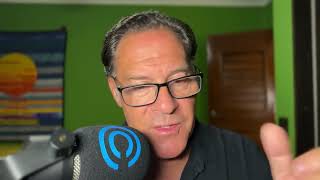
Warren Zenna, founder of the CRO Collective, reflects on leadership challenges for Chief Revenue Officers, how AI is changing communication and creativity, and the role of structure in independence. He weaves personal observations with practical insights for revenue leaders.
Hi, I'm Warren Zenna, founder and CEO of the CRO Collective, and welcome to the CRO Spotlight Podcast. This show is focused exclusively on the success of Chief Revenue Officers. Each week we have an open, frank and freeform conversation with top experts in the revenue space about the CRO role and its critical impact on B2B businesses. This podcast is the place to be for CROs, sales and marketing leaders who aspire to become CROs and founders who are looking to appoint a CRO or want to support their CRO to succeed. Thanks for listening. Now let's go mix it up. Hello and welcome to this episode of the CRO Spotlight Podcast. I'm Warren Za. I'm the founder of the CRO Collective and it's been a while since I produced a episode and been getting, you know, flatteringly, a lot of people writing me and asking me when the next episode is. It's great to see that there's people who listen and are waiting for the next one. So there's nothing wrong. It took a bit of a break. A lot of recalibration on some of the work I'm doing and some of the products and other things, some personal stuff, but everything's fine. But the good news is that I do have a slate of really great guests lined up for the next three or four months. So should be a lot of episodes coming out and this one is going to be just me. I haven't done this, but I want to start doing this more is one of the things I have been thinking about. You know, there's a lot of podcasts I listen to where, you know, it's just one person speaking and I'm providing some thoughts on things and I think those are really great. And I want to intermittently have some episodes where it's. I'm going to share some thoughts and ideas on some things and then. And most of them will be guests. Quite a bit of things been going on. There's like a lot of topics I want to get into that are top of mind for me, particularly as now we're entering into the new year, we're sort of already. I can't believe we're at the end of February already. It's crazy, you know, how fast the year goes. I was saying to my wife, you know, it's like a year used to feel a lot longer, you know, than now. And, you know, I think part of it too is that our lives are so planned, you know, I mean, I'm already thinking about things I have to do and July now. And when my brain throws a tether out that far into the future, it all shrinks the year it makes it smaller because I'm already thinking about, about that. So any event. So here we are now. It's sort of moving into almost the beginning of March and I've got quite a bit of things going on. Namely one. One of the things I've been thinking quite a bit about is, you know, since I started my, my programs, I think the course seems to be the thing that is resonating with a lot of the people that I work with. It's the entry point into my programs. And I have the opportunity for like 15 or maybe even 17 weeks to speak to a collection of really incredible people who are mostly in leadership in the revenue leadership area. So we talk about a lot of things and a lot of what I'm hearing is sort of this combination of a need for more operational help. How do I just run things? How do I improve the way I build systems and processes and data management and technologies and all the stuff related to operations on the other side. It swings all the way out on how do I lead things? How do I just run things? Most of the questions that people are most perplexed with honestly is just managing the complexity that come with a leadership position and the daunting task of someone in a position like a chief revenue officer who now has so many different points of contact that it seems overwhelming. I have to manage my, my boss, who's usually the CEO. I have to manage all the people who report into me, the cross functional leaders that report into me. And then there's the board probably has another whole perspective and everyone's nipping at their heels and trying to figure out ways to get what they want out of this person or manage that person or motivate that person to get the results that everybody wants. And it can be a huge weight on someone who's responsible for communicating across all these different functions and people and the skills that are required for that are not spoken about enough in my view. They're just not. I don't, I don't see enough focus on the day to day people and psychological and cultural management that's required for this job. Everything that I see and even across all the competitive programs that I'm seeing are focused very much on operational process data, you know, pipeline growth, things that I'm not saying are not important. They are, they're vitally important. But I, I would submit, I think this even more so now that if you don't have the proper leadership skills. Underneath those skills, it's probably, it's almost a dead end job. And I say that because that's going to be required of you a lot more particularly if you have people in place that are competent to do things so that you can delegate things to people who are good at what they do. You're left with the task of leading the charge and making decisions, which is the hardest thing, frankly. Companies, generally speaking, are really bad at decision making. And you're in a position where you have to make a lot of really critical decisions. Not necessarily alone, but even the way that you go get counsel from people around you. Like if you go to your boss and ask for his or her opinion about a decision or the board, they've got their own agendas and reasons why they support a specific position or decision that may be different from yours. And you have to know how to discern politically, is this the right thing for me to do? Is this a hill I'm willing to die on? Is this something I really feel strongly about? Can I kind of give up my position on this? The implications of all those decisions, they're huge, huge. And I could see how someone who has that position would definitely be taking their work home with them every night, you know. And so we talk about this quite a bit more in the coursework that I do is what we call the intangibles, which is like the things that aren't spoken about that CROs go through. And this is all from the beginning to the end of their cycle in the role. From the beginning, from day one, from when they first start the interview process and they actually listen to how the job is being sold to them and how it's structured and how they navigate their way through various aspects of the job structure and reporting structure and the way that the job is going to be managed and the way that they're going to be supported and the resources that they get and to the point where you negotiate the way that you're going to be compensated and the way that you're going to be provided with a level of authority that you need and the powers that you have. And then navigating the people whom are going to be interacting with you and the disruption that the job brings to an organization. If you bring on somebody that has that sort of leadership position, there's going to be some people you're going to bump into whom are going to either fearful of your role, threatened by the position that you have, the authority that you, you've been given the responsibility that you're given how it's going to displace them or maybe curtail things that they worked on. There's also a lot of competition. Who's this person? How do they know anything? I've been here a long time. There's just incredible amount of things that leadership and communication skills are vastly important for this. And I say this because I just don't think there's enough. Enough emphasis on this, not only in the courses that I'm seeing, but just across the board. I think, you know, if I may say, I think to a degree, I think leadership development as a discipline is just something that's been so overdone that I believe there's a stigma associated with it, that people see leadership development, they think, hey, you know, I'm going to go to a Tony, you know, Robbins thing. Which, by the way, those are probably pretty good. But what I mean is, it, it. It. It's not. How is that related to me and my specific position? And I think that's the. The rubber hits the road is there's specific leadership skills for specific roles in a specific position, specific situation. So I say this because I think I'm gonna emphasize a lot more of that here because I hate the term soft skills, but that's what these things are. They're critical, you know, and, you know, if you ever have anyone, I know listening, has had experiences with great bosses, there's certainly a expertise, competency that you're probably respectful of someone who you admire, someone who's good at their job, they know what they're doing, they know their. They know their subject that execute well. Then there's also another thing that you remember most about people, and that is the way that they are like their presence and the way that they speak to people, the way they listen to people, the way that they make decisions. Right. The way that they deal with conflict, the way they solve problems. These are huge skills that are very important, and I don't think that they're talked about enough. And if there's any position I can think of that probably has more need for this, it's the chief Revenue officer. So I just bring that up because I just want to emphasize the importance of that and maybe even maybe have you guys think a bit about that in your world and, you know, where are you getting the training for that? Like, how do you deal with that? Everybody I talk to in my courses, the main thing they're telling me, I'd say the main thing is how do I gain more credibility with my team? I have ideas. They're not listening to me. I have a really good perspective on how to solve X or Y problem that we're having, but I can't seem to get a seat at the table or I can't get my ideas across or, or I can't get my ideas sold through or I'm. I'm at, really at odds with the people on the team. They don't agree and all we're doing is sitting around not solving anything. And what do I do about that? How do I impact that change? And I think that these are the riddles and the big barriers and challenges that mostly are the ones that dawn most CROs. So anyway, I just, I bring that up mainly because I think it's, it's, it's a key thing. I've been playing around with AI a lot, you know, who isn't like, I'm so. I'm so unique here and I'm finding it fascinating because I'm using it a lot more and I'm experimenting with it a lot more. And it's very intentional and sort of putting myself on a bit of an AI education, you know, joint here because I want to be able to be fluent in these things. I'm listening to a lot of content and playing around with the tools and we use them. My agency business, we use them a lot now. So I'm seeing a lot of the outcome. And a couple of cool things happened recently. One was the gentleman whom, you know, I won't mention. We'll, we'll probably bring up another time, maybe even have him as a guest, but put out a post on LinkedIn where he talked about in a very nice way. It was a really great post. It was very compelling. He talked about how he formulated a sort of a very complex prompt for. I believe it was Claude Sonnet that enabled the platform to be able to engage him in a dialogue that created incredibly good outbound emails, cold emails, which is something that a lot of people use these type of things for. And it just, the way he wrote it was very good. So I wrote him, you know. Yeah, he basically said something in the DM and I'll send it to you. So I did. So he sent it to me in my DMs and he gave instructions, this monstrously long prompt. I read it and I thought, man, how could somebody know how to construct a prompt like this? It was more than just like asking questions. It had all sorts of interesting sort of vocabulary and stuff and it was very complicated. He said, just simply take this thing and paste it into sonnet. And then it'll start asking you questions and just answer the questions and it'll walk you through a process. It was fascinating. Like, I entered this prompt in and it, you know, I could see it thinking. And then it, bam. It started asking me all these questions pertaining to the things that you make sense, right? Just describe for me the kind of person you're trying to reach. And it got really detailed, like the questions that was going on and on. And I found myself, for all intents and purposes, really having like a dialogue with this machine. It was really amazing. The questions were great. And what I liked about it too, was the questions were good questions. They weren't like, just give me your name serial number. It was provocative questions like, do you think that people would like this or like that, or, you know, be more specific about the reasons that people make decisions with the product that you're offering? And it just got me thinking and I found myself responding to these questions. It was provocative in that, you know, when you're having a dialogue with someone who's really smart, when they ask you good questions, it makes you think more. And in a way, a creative process is generated because you have to answer questions sometimes for the first time and in real time, you're working things out in your brain. At the same time you're answering a question. That's a really interesting creative process. And I think that's a lot of times where innovations take place is due dialogue. And I found that happening. It was really cool. So anyway, I went through this whole dialogue thing, and then it spit out the first, like four or five emails that were predicated on all the information it asked me, plus all the parameters, like the tone and length and everything I wanted. And they were really pretty good. And what happened was when I read the emails, I saw, well, you know, those are good emails, but they don't focus on another key aspect of the way that I know my customers think. And so I told the a high that and I said, you know, these are good, but my customers tend to buy for these reasons too. And so it started asking me more questions and then it sort of bifurcated and it helped me create two work streams. One was people who buy for this reason and people who buy for that reason. And they were completely different reasons. And it created a whole different track of other emails that were designed for that. And then that created another fork of things. So I know I'm kind of getting into long winded thing here, but what I'm Saying is, this was a fascinating use of this technology because it continually learned as I was telling it things and the end product was great. I came up with about five or six really good opening emails that I would absolutely, without any editing, send to people. They're very pithy, very brief, very professional, very right, right to the point. And I thought that was brilliant. And so the two parts of it were interesting to me. One was the output, which, the quality of the work that came out of it was excellent. I was thinking it, it's possible. I'm. I'm pretty good at this myself, so I think I probably would have maybe ultimately ended up with emails that were of that quality, but it would have taken me a lot longer to do. Okay, a lot. And I probably would have actually sent out a lot of emails before I got to this point. The other part of it too was just that provocation of these conversations I have with this thing. And I learned so much about my own business because I was articulating it and thinking about it and it was, it was great. So anyway, it's a long story to say pretty much how I think AI really is going to be a way to, I use the word prompt in this way, prompt us to start thinking about things more when we have an objective intelligence of sorts of just, you know, sort of inquiring about the way we answer things. It was, was fascinating. So now we're working on the possibility of that same technology being used to create ad copy, because I think it would be great. I mean, ad copy is very specific. But anyway, it was really great experience and sort of opened my eyes to a lot of the ways that these platforms could be used. And it got me thinking about something which I posted on, on LinkedIn. It was four or five days ago and that was that so many people are using AI now to write. We know we do in our business, we use it to write things. And it's getting better and better at looking less robot like and sounding more human like. It's, it's actually getting pretty good at being able to mimic your tone or sound more human or seem more natural for people that know how to use it well. And a lot of people do. And so as a result, you know, there's a lot more content out there that is really smart. And it has me thinking, did this person write this or did a machine write this? And it came to realize that, you know, are we really, are we getting smarter from these things or are we just sounding smarter? And, you know, is sounding smart really being Smart? I don't think so. I think, you know, if you're able to sound smart doesn't necessarily mean you are smart. And it was like an interesting thought I had. So, you know, if someone is using these tools on a regular basis and they're able to write a lot of things to people and post things and they have a. They establish a communication style that people find provocative and insightful and then they meet that person live and this person sounds like an idiot, it could be really bad. You know, I think we could kind of get ourselves into a lot of trouble in that you can't make this thing sound too much smarter than you because eventually people are going to meet you and they're going to. It's going to be like the wizard of Oz. Be like, who the hell are you? It wasn't like anything like you, like, like you can't even articulate. And I'm curious to know when, when that's going to happen. Like we're going to hide behind these machines to articulate our thoughts. And in some cases it might be the obvious. Would be really cool if you had no ability to speak, right? If you were mute or you had some problem with some accident or some, some thing where you couldn't communicate. And AI would be an amazing way to be able to have you articulate your thoughts to people. But if you're a sentient individual like most of us are and we're talking to people and emailing all day long, I think it can be dangerous to like rely too much on these things and sort of sound smarter than you are. And then I think also the trapping of maybe think that because you're using these tools that you are smarter and you might not be. I certainly don't want that to happen to me. I was talking about the new update, the GROK update I was playing around with, which by the way, it's incredibly fascinating. I was asking it some questions and the speed with which it can be able to give me these answers, which is amazing and articulate. Inch long in depth research. And you know, that means that, you know, if I'm in a conversation with somebody on the, like a chat or a slack or a text and someone asked me a question, I could respond really quickly to that text with an amazingly long answer. Someone say holy shit, that was really impressive. Now I don't think that anybody would think that I came up with that because it probably would be a little bit strange, but I think that we get to the point where you can have robots talk on our behalf. And I, I don't know, I was thinking about this like what I don't want to have happen is everybody starts to question each other. Like let's say you meet someone who really is really smart and really is an amazing writer and you know, if it's someone that doesn't know that person, they might say that person can't be that smart. They must be using AI. I don't, I don't want, I don't like that. I like the idea that we immediately assume that somebody's hiding behind some technology as opposed to them really being really smart to be harder to showcase your intelligence. I think that the face to face meetings and the conversations you have with somebody, whether you don't have the opportunity to be in front of a phone or a computer, is really where the rubber is going to hit the road. And I think that's where I think ironically, you know, mediums like this, you know, this is me talking, you know, and the robot's not talking right now. Now maybe we'll get to the point. That will be the case maybe sooner than I want. But I would say like if, if I'm, if you're, if you have a skill set, a communication skill set, I think you need to showcase it in ways that make it evident that it's you. Because I do think it's going to come to a point where people are going to be thinking too much about whether or not you're a robot or not. Because it's getting to that point. It's crazy. Even on you go to, you know, X or Facebook or wherever and you're seeing all these comments. I mean, how many of them are real people? You know, how many of us just bots and the bots are getting smarter. Say this is fascinating. I was just thinking about the implications of this stuff and it's sort of overwhelming. Probably sound like a bit of a fuddy duddy saying all this stuff, but that's was interesting. So just a, just a random thing. So, you know, I'm away right now. I'm, I'm traveling and you know, I was with my wife here for a long period of time where I am and she left, she went back home for the stuff she had to take care of. And I found myself alone here and something really fascinating happened was, you know, she, she went home and pretty immediately I found myself feeling a lot less structured, you know, like on my own. Now I'm very quickly, like within a day I'm having had just spent all this time with her here I'm now alone with myself in my environment and I was very conscious of the looseness of my schedule and my rigor around my day without the benefit of being able to adhere to the structure that my wife brings to the relationship. You know, she's very, you know, she's great, she's very regimented and you know, it's, you know, like I go to bed at a certain time and we go to bed at a certain time, we eat at a certain time. And because we're like doing it together, there's a schedule that's inherent because there's a relationship there and that relationship requires cooperation. Right. You eat together and bed together and you take a walk together and without that you're sort of on your own. And there isn't another prompt to use that word again to kind of give you the structure. And without that structure, I was left to kind of create my own. Now I'm pretty good at it. I'm not young puppy, I'm quite self sufficient. But I was amazed at how quickly I found myself sort of not adhering to those things. And it had me thinking about entrepreneurship and how entrepreneurs, I believe, are incredibly good at creating structure from nothing and creating their own structures. They're not reliant on the structure that they're inside of. They're not benefiting from an existing structure that they're placed in. And I think for many people, frankly, strangely as it is because I'm, I got my own businesses is I'm probably naturally more acclimated to being inside of systems and adhering to systems and it gives me structure and format for my day independently. Entrepreneurs are probably really good at building that themselves. They know exactly how to do it. You can, you can, you know, these people, right? There's people who seem to just always seem to carry structure with them. They have a certain schedule, very regimented, they do things very specific way, they have a very, you know, a productivity mindset and they measure things and they keep rituals and they, they maintain consistency. And I think that that's a inherent capability that certain people have whom have the ability to operate independently and aren't reliant on third party structure to main, you know, to manage themselves. And I think I fall in the middle of that. And it was very, wow. I was thinking to myself, do I have an independent system or do I have a borrowed system? I think I have a middle ground. I'm not either or, but in the absence of a system, when I'm in one and then when it's gone. I find I have to really recalibrate. It's not easy for me to just get myself back on track again. And I was thinking about how many people right now whom are more acclimated to working at companies and being employees may in fact also benefit from this sort of thinking where they are really good at adhering to systems and being part of systems and creating, participating in existing systems and process systems. And they're good at fulfilling on those things because they're set up for them. They're more receiving orders and giving missions by another entity that they fulfill as opposed to creating it from nothing. It's a very, very daunting thing for people who are going to get full time positions particularly. And we talk here about Chief Revenue officers. That's a role where you're doing both, right? I mean, on one hand you have an organization that has a product and there's an audience and you know, to sell it. You want to create, you know, the value, but you know, you're sort of orchestrating a bunch of systems to perform certain functions for certain purposes and you have to create structure inside of, inside of a structure. And I was, was really amazed at how the experiment was a weird, weird sort of personal experiment to see the difference of myself inside of a system and outside of a system and how my success as a business owner is going to be very much dependent on my ability to be independently structured and how much of a. For some people, myself as one, it's not an easy thing. It doesn't come naturally. It's something I have to really work at. And I'm amazed at people whom wake up in the morning and they have a structure without with them. And those are people that think, whom probably excel at being independent. So it's just sort of thinking about, you know, are you a, if you're listening, are you a structure person or are you a systems person? Do you, do you adhere to, Are you more a type of person who likes to adhere to systems and being given instructions and being given tasks and being given projects, or are you someone who likes to create them from nothing? I think that's a good thing to know about yourself because I think it'll, it'll solve a lot of problems for people, particularly people whom are trying to open up their own businesses or run their own businesses and they're being, you know, hampered by their inability to do that. And then someone who is really, really good at, they're not good at working at companies because they don't like to adhere to Other people's systems, they like to do their own thing. And I think that, again, it goes back to the thing I talk about a lot is knowing yourself and understanding your nature so that you're in the right seat, so to speak, in your life. I'm still trying to figure it out, obviously. You know, interestingly, one of the things that we discuss in the courses a lot is this idea that, you know, one of the biggest complaint that I hear from chief revenue officers in my. In my courses is, and I said it before, is I just can't get my company to do certain things. I don't have the authority. Like, I have all these ideas about how a company could improve its go to market or how it could do a better job at its sales process or whatever the case may be. But because my role is somewhat marginalized as a CRO, I don't have the executive authority to go and make those changes. And when I bring them to my leaders, I get agreement but no commitment. And I feel incredibly frustrated all the time when I feel like I have really good ideas and I'm willing to be responsible for them, but I'm not being given the opportunity. What do I do about that? And that's a really big problem. I see. When the CRO is not given the job that they're supposed to have, they become marginalized and they're walking around with all these ideas. I call it like the Ferrari in the garage. Like, they. There's not. They're not being driven around at the speed that they should be, and they feel sort of underutilized and it can be really disheartening and, you know, demotivating. And a lot of people just like, I can't do this anymore. And so in a way, what we're, what we, we endeavor to do here, this is a bit of a. I wouldn't say a pitch, but a bit of an idea of like, things that I wanted to maybe articulate. Philosophy that we have with the way that we work with chief Revenue officers is this. We provide a means for existing CROs to what we call to right size their role, which is we have a method that enables someone in that situation to do a certain number of steps in a process that can increase their influence on the things that they want to make changes about. Because usually they're hampered by two things. One is, as I was saying before, the position that they have was not created properly. And so they're marginalized in the scope. See, they don't have the, a level of authority over the system, they have a mostly, probably a functional authority at most, or maybe dual functions, not the whole thing. And then the second part is that there's probably some history there, you know, like people probably aren't listening to them for reasons. You know, it could be that there's some history. You know, when you work at a company long enough, you establish some personal histories with the people around you and they have an opinion about you. And those things are, you know, there could be resentments or judgments or assessments or perceptions that have been created either by your fault or no fault of your own that are now a part of the relationship that you're talking into. And when you're asking somebody to make changes, regardless of whether your changes or your change suggestions are good or not, what they're listening to more is their opinion about you. And if you don't have a knowledge about what that opinion is and how it's been created, and if you can't collapse it, you're never going to get around it because they're always going to have that opinion as be the thing that drives their decision for how they're going to listen to you. So you need to circumvent that. And part of what we do is we provide our clients with a more data driven approach to bringing ideas to people in ways that are less personal, not just ideas. Because when you go to your boss and say, I have a good idea, that's all it is, it's a good idea. Hey, I think we should do it this way, or I've been thinking about this. You know, there's a, there's a good kernel of an idea, but there's no meat behind it because there's no data that can verify your supposition about that particular approach or the problem that you're trying to expose. If you have data, it's easier to do. And so we provide that. And so what we're trying to do is help two parts of the equation. We're trying to help CROs increase the authority and the impact of their role through a process. And we're also trying to get them to understand the forces that have been created that get in the way of their ability to be heard properly, that they need to take responsibility for. There's two things there, right? There's the operational part and there's the human part, which is one is do it in a way that gets data focused and exposed, that is influential and persuasive, and two is get underneath why it is you're not being listened to and that's the harder part. And I don't think people think about the question might be, if you're listening to this, you're thinking, you know, I can relate to this. You know, my boss doesn't listen to me either. The questions we ask why. And the. The answer shouldn't be it's because it's something about them. It should be more what's about you, what. What do you think you could be doing differently that would have that person listen to you more? And what might like a conversation you can have that might unlock that. So I was thinking also about something I heard yesterday. It was kind of interesting. Again, this theme of this entire podcast really is about identifying who you are and the way that you operate. And someone said this to me, I think it was this morning, actually. They said, are you a thermostat or a thermometer? And what this person meant was, are you controlling the temperature in the room or are you just someone who measures it? And it was a great analogy. I loved it. Because, you know, I can call somebody over and say, hey, tell me what the temperature is right now. I mean, I provide an epithermo, keeping the analogy, obviously, be a little bit more sophisticated. Give me a readout on what's going on. That person can articulate that to me and say, great, go ahead, get outta here. Thanks very much for giving me that information. So now I know where we're at, but I didn't ask that person if they're doing anything about it right. So I think the, the thing I heard in that was, are you someone who is really good at being able to, I don't want to say state the obvious, but are you really good at being able to report on what it is that's going on, or are you someone who can make things go on? You know, and I think that most businesses are looking for people who manage the temperature or control temperature, not just provide what the temperature reading is. And if you're in a job where you're finding that mostly what you're doing is now, now, it may be that certain functions of jobs are specifically designed for that. That's what you are. You're an analyst and you're providing me with data, you know what it is, then there are certain people who have an opinion about the data and they're looking at the data and they're creating an assessment of that data. Then there's other people who are actually making the data. They're actually making data happen. They're creating outcomes and things that then can Be evaluated. And I think we aspire, all of us who listen to this to be people who are more thermostats, who are making things happen, you know, and controlling the temperature in a room, not just reporting on. So in any event, those are some of the thoughts I had for, for this conversation. I'm going to probably struggle through these for a while until I get them right. But I collect these thoughts and I take notes on them and when I get to the microphone like this, I want to share em with you. And I also invite you too. I mean, I don't know how much just happened. I do get a lot of people that write me, mostly on LinkedIn. You know, what are some things that you want to hear more? You know, I'd love to know that for anyone that's listening to this, like what are some things that maybe you've heard a bit of in the past that you thought, wow, it was really interesting. But I'd like to hear more of that. Maybe some topics or specific areas of the CRO role that you're interested in. Do you want more conversations related to operational stuff are you looking for? And stuff related to the soft skill or leadership stuff? I don't care. But I would love to know. I mean, I'm interested in that very much because I'm really blessed. I really love it when a lot of people write me and tell me how much they like this show and they're looking forward to my episodes and that's like the greatest thing I can ever hear. So I'm very much want to do this for, for you guys. So anything, whatever, whatever your ideas are, let me know. And also another thing to note too, a couple things. So one is that on March 11th of this year, which is not far from today, I'm having a, the third event, CRO Roundtable events that we have in New York City. And they're really great. They're really great. I mean these are events that are not normal. We don't have speakers, get up and speak. We're. What I'm doing is I'm just orchestrating a dialogue between CROs and they talk and they're really good. I mean all three of these so far what's happened is people don't want to leave. And I'm not saying that like it's not a cheesy thing to say. It literally like they end at 6:30 and everyone stays, they just keep talking. And it's in New York City on the 11th of March in downtown New York City. And it's from 2:30 to 6:30 and we, some of us go out to dinner afterwards. But if you want to know more about it, just DM me on LinkedIn and just say I want to hear more about this event. Some, most of you might even got an, already got an InMail from me about it. But they're great events and I'm really proud of the way that they're going. And I'm, I think we're kind of finding a little lightning in a bottle because the thing I hear most is that CROs want other Ciro's to talk to and really have more deeper opportunity to talk about things at length. You know, whenever I go to conferences it's like people want to talk to each other at the table. They don't want to listen to the sponsor talk about their, you know, demo. You know, that's one. And then I'm also playing another one in Silicon Valley on April 29th. It's that Monday, I think it's the 28th. Anyway, I'm sorry, I should know it's the Monday of that week and it's going to be in right near Mountain View. So I'll be putting that out too. So if you're interested in that one, let me know. Same thing, just that, that market, more like on the Silicon Valley market. And then some of you may know that I, I'm the, I have been for three years now the chairperson of the Chief Revenue Officer Summits that are being led by the Revenue Enablement Society. Those guys are great. And they put together these events all over the country. They do one in New York, they do one in Chicago, they do one in San Francisco, they're doing another one in Boston and I'm the chairperson so I run the day and that event is the day after the March 11 event. It's March 12 in New York. So if you're a CRO and you want to go, just go to the, go to the website for the event. It's called the Chief Revenue Officer Summit. You'll see in New York and you can get a free pass, you just got to register. Uh, but they're really great and it's like all senior level revenue leaders there and they, I find these events to be really just amazing. So those are two really cool things going on. I do have my next CRO course probably being launched. One one's going on right now and it's great. The next one will launch in, I'd say May. So if you're interested in joining the next Chief Revenue Officer course, the CRO Accelerator course again, DM me and just ask me about it and I'll give you the information. And they're just really just been spectacular courses for people and they're really fun. So in any event, thank you all so much for your continued support. Again, Warren Zana, Founder of the CRO Collective, and I really greatly appreciate all of your ongoing support and I'll see you next time. Bye. Thank you for listening to the Cross Spotlight Podcast. The CRO Collective's mission is to help CRO succeed and help founders and CEOs build CRO ready organizations. You can find out more information about our services@the CRO Collective.com that's TheCROCollective.com and we look forward to having you join us next time.
More from Warren


How Misaligned Software Metrics Ruined B2B Sales and How to Fix It with MK Marsden





Advocating for the Little Guy: A Frank Talk with Dan Goodman, Warrior of The Sales Rep



The Evolution of the CRO & Revenue Efficiency Metrics with Christopher Semain and Sean Ryan
