Navigating the Spectrum of CRO Responsibilities with Rich Sutton
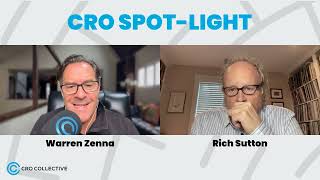
This is a YouTube video titled "Navigating the Spectrum of CRO Responsibilities with Rich Sutton" created in May 2025. It features a detailed conversational interview between Warren Zenna, founder and CEO of the CRO Collective, and Rich Sutton, a seasoned revenue leader. The discussion centers on the evolving role of Chief Revenue Officers (CROs), including sales, marketing, customer success, leadership mindsets, hiring practices, and organizational challenges. Warren Zenna leads the conversation, sharing insights and engaging with Rich Sutton on best practices and strategic perspectives relevant to CROs and revenue leadership.
Hi, I'm Warren Zenna, founder and CEO of the CRO Collective, and welcome to the CRO Spotlight Podcast. This show is focused exclusively on the success of Chief Revenue Officers. Each week we have an open, frank and freeform conversation with top experts in the revenue space about the CRO role and its critical impact on B2B businesses. This podcast is the place to be for CROs, sales and marketing leaders who aspire to become CROs and founders who are looking to appoint the CRO or want to support their CRO to succeed. Thanks for listening. Now let's go mix it up. Okay, so first I want to say hello, everybody. Welcome to this episode of the Sierra Spotlight Podcast. This is Warren Zen. I'm the founder of the Sierra Collective. And this is a great conversation we're about to have in a series of really great guests I've been having for the last like three or four weeks. I met Rich Sutton through a connection of mine. It's one of these situations where, you know, we have all these like two or three degrees of separation. And I was introduced to Rich because I was inviting people to an event that I just had, which we'll probably talk about. And it turns out that Rich and I both, you know, have very similar backgrounds. We both worked in the advertising, marketing, ad tech space. And as a result we had very similar experiences. And we're also both two old salts. So, you know, we have some really interesting perspectives on how long it's been being in, in this industry or general. And I thought, what a great conversation. We should probably jump on a podcast and talk more. So, Rich, welcome from. From all of us and thanks for being here today, Warren.
Thank you. It's really nice to be here.
All right, great. Well, look, let's get right into it. So first, if you don't mind, why don't you provide everybody with a bit of understanding of your background and you've got a really interesting story. So I'd love to hear more about your career history and what you're doing right now.
So should I start with rock and roll DJ and stand up comic?
The whole thing is great. Yes. Us being both music files and talking about. Mostly about music. Go for be interesting to hear the other.
The other interesting one was when I was on the air as a dj, I got a call from the promotion director at Ringling Brothers Barnum and Bailey Circus. The ringmaster had come down with strep throat and he couldn't talk. Would I come and be ringmaster? Which turned into a two week long gig if you can be ringmaster. If you can stand up in front of a circus crowd, you can to pretty much any public speaking there is.
You know, I, I, I'd say with some, some degree of snark, but also probably accurately, that a chief revenue officer is the ringleader of a circus. So you have probably the best training I've ever seen for someone to do this kind of job. You know, we say this a lot, you know, not my circus, not my monkeys. Right, that's, that's sort of like one of the things, but it is, it can be like that. So talk about a bit more about your, your background, how those kind of interesting things happen.
Yeah, so I, I really did start on the other side of the business, if you will, the, the talent side. I started out as a DJ when I was 17 years old at a jazz station in Pittsburgh. And then in my mid-30s, after running radio stations as a general manager, I got a phone call from a very good college friend of mine, and he said, so I saw you sold your radio station. Do you still have a job? And I had literally just come out of a conversation with a guy who was going to be my new boss, who I thought was a complete and total jerk. And I said, well, I might have one, but I don't think I want it. He said, well, what do you know about this thing called the Internet? Remember this was 1996.
I remember.
So I went to Warner Brothers. I ended up being the head of sales, chief revenue officer, if you will, for Warner Brothers Online. And I stayed at Warner Brothers for 13 years. It was, it was a great run. It was early days of the Internet. It was the dot com boom and bust. And I loved the seat that I saw it all go by from. It was a time when if you could sell online advertising, you were getting a job offer from somebody else every day. And I never took one of them because I just loved what I was doing. And then it came time to leave Warner Brothers and I went on to WebMD, had a huge success there, did another of a few other gigs including the Daily Mail and Everyday Health, and then went out on my own, which is where I am now. I've got a partner, Doug McFarland. Doug comes more from the research side and the CEO side, where I come from the CRO side. So we're well made for one another, if you will.
That's great. So what is it specifically that DM and RS does like? What your, what do people hire you for? What are you delivering?
So, two things. First, is we are fractional CROs. So if you're a startup and we find this a lot, particularly from startups that are being done by people with a highly technical background, they don't really know a lot about sales. They may be great on sales calls, they may be able to make deals, but they don't know how to take it any farther than that. And we come in and do that for them and it usually entails everything, go to market strategy, go to market materials and we don't just advise, we go out and we make sales calls and we make deals too. So we are a one stop sales department if you will for startups. We've done a number of turnarounds very successfully. So that's another thing where we work as fractional CROs and then we advise on usually series A, sometimes series B money raises and there are people who will hire for us for both of those things to come in as fractional CRO and help them get their A round raised. And while we're not bankers, we've raised enough money that we're really good and have a terrific network of investors in a variety of different areas.
Got it. So when you say CRO, as you and I have been talking now for like a while, your emphasis is obviously mostly on the sales engine, the sales part of the equation. How much do you guys get into the non sales focused stuff like marketing and customer success and the other more strategic components of a cheap revenue officer role as opposed to just getting deals and closing more business?
Well, so the biggest demand is we need more money in the door, so that's at the top. But we're always engaged in marketing, whether it's lead generation or building materials, both for ongoing, like all the things both you and I do on LinkedIn to keep top of mind with people. We do that. Um, and we think, we think we're really good at building go to market decks. We have, we have an approach that works and we have some pretty strong opinions about the do's and don'ts of going out and pitching yourself in the marketplace.
Okay. I mean I asked that question because as I may have mentioned to you, I don't know if you're familiar with this, but you know, I have sort of an opinion about this particular area and it's an interesting one. So as you know, because you've heard me, so I speak the point of view that I have and the reason I even started this whole business is because I feel that the chief revenue officer as a full time employee, right. The key functional leader of the whole go to market, which is sure, I mean sales is obviously important. There's no doubt that the engine needs to get continually drive more business. But it's also about finding the right customer and the right profitability and building the right engine, identifying the ICP and then having a marketing function that's not just to support sales, but also to build the brand and, and build awareness and drive interest and identify customers who want to have certain type of conversation. And then most importantly, if I may say, I think there's no doubt about it that the kind of a never ending need for more deals and more money is renewals and growth and customer success from a standpoint of not just making sure that customers get the value, but that they renew and that they buy more and that you turn your existing customer base into your revenue engine. I'm just curious what your thoughts are on that and how your view of that is. If I would make question more succinctly is when do you think a company needs someone like you as opposed to someone who's now, okay, we need somebody here full time whose job is to build this out and own it and not do anything else. Right. Not have any other customers or anything, just our business and they're seated in the C suite and they're actually part of the board and they talk to the board and they're integrated into the organization from a compensation standpoint, an equity standpoint, and more importantly, an operational leadership standpoint.
So three things. Let's see if I can remember them all and get them all out of my mouth in a reasonable amount of time.
Got it. Go for it.
Yeah. So when a company's at about 10, $15 million, they should be at minimum looking at a VP of sales, which is a way of saying I'm going to hire the person who's going to be my chief revenue officer. Because at 15 million, you're on the cusp of being able to afford a strong CRO. But by the time you're at 25 or 30, you need to have a CRO who does all the things that you and I have talked about, one of which is customer success. And you and I are simpatico on this. I believe that customer success has to report to the CRO. And the CRO needs to take it every bit as seriously and spend as much time with it as they do with sales. But I have a question for you based on something that you said just a minute ago. Should the CMO report to the CRO?
In my opinion, yes. In Fact, I think I'd even say I'd even go further. I was just invited to a CMO group yesterday or two days ago, some Friday, I think, and we had this long conversation. And marketing continues to be a very interesting moving target right now in the entire evolution of businesses, mainly for the reason that you and I are talking right now, which is that marketing functions have evolved and changed so much. And they used to be, as you and I both know, a cost center for businesses, right? It's like the terrible curse of the core marketing organizations that they're sort of like a cost center and like we dump money into it and we sort of hope and pray kind of thing. And, you know, when things go to, you know, that's the first organization that usually gets cuts. You know, we stop X, we stop Y. And I think that the pervasive understanding of experience, if I would say of marketing leaders for the last 15, 20, maybe even 30 years, is waiting for that moment, you know, when all of a sudden, you know, I'm going to lose my budget. Right. And I think that's a problem for a number of reasons. And it goes to answer your question and why it is, I think the cmo, if you want to call it a cmo, I think it's really someone who runs marketing, frankly. Well, I'll talk about that is because as per my original and core thesis, if a CRO, and I agree with you, by the way, 15, 20, 30 million in revenues is absolutely the time when they need to do this sort of thing is because of that, if I'm going to put a CRO in charge of now kind of coalescing the circus, if you want to keep that analogy, I need to have control over all of the aspects of revenue. And marketing is without doubt a component of revenue. And if I have a separate siloed C suite organization that's running marketing, it's going to result in some of the bifurcation that's taken place. And that's why CROs have not been able to be effective. So to that end, I'd say yes, I think the cmo, or let's again say the head of marketing should report up into a CRO for the reasons of alignment and orchestration and, you know, coalescing one single point of truth, which I think is the customer experience across all these functions. And what it does, I'm sorry to keep on going on here, but it turns the marketing organization from a cost center into a revenue center, which is a better place for marketing to be. That's my thesis on that. Thank you so much again for listening to the Sierra Spotlight Podcast. This podcast is an important plank in the Sierra Collective communication strategy and we're really thrilled to have such great guests on here. So listening and sharing the podcast with other people is really vital because we want to get as many people listening to this great stuff as possible. A couple of things to note if you're a aspiring CRO or a recently hired CRO or even a old salty CRO and you're looking to either become a Chief Revenue Officer or improve your chops and gain some more insights and improve your competencies as a Chief Revenue Officer, we offer the CRO accelerator course. It's five years now. It's the first CRO focused course that was out there. It's a 15 week course that is populated by aspiring Chief revenue officers and CROs. We're pretty selective in terms of who can be a member of the CRO Accelerator course. It's people who are probably like more like ready to be a CRO right now. They have number of years under their belt as a revenue leader, whether it be a sales leader or a marketing leader, or even rev ops leader. And they either want to move into the C suite or they're CROs that want to just make sure that they win in the role. The Serial Accelerator Course we kick off the next one in May mid May 2025. So if you are interested in being a member of the next cohort, please just write me a note on LinkedIn, just DM me CRO accelerator and we'll set up a time to talk and then I can send you more information to give you a brochure of the course. So again, CRO Accelerator Course 15 week program for aspiring and newly hired CROs. Take advantage of it. It's been great and you'll see some more information about it on the website. Thanks.
Yeah, so it I think it's a function of what my experience has been. When I've had a CMO who has been a colleague, not a direct report, I've always gotten along really well with them and I understand that that's not always the case, that there's often a lot of friction between CMOs and CROs. But because I never saw that and because I often didn't have a cmo, I often had a client marketing organization and that reported to me then. So I don't have a strong opinion on it. What you say makes complete and total sense, although there's a lot of things that the CMO does in the advertising area that I'm not a master of. I'm not. I, I can't look you in the eye and tell you that I'm the right person to entrust with your brand and growing your brand.
Yeah, I want to, I want to make a distinction there because this is a common response. It's not, no, nothing on you. It's just what I hear all the time. So I'm going to make sure I'm clarifying this point because you're right. Right. I mean, you're not going to find some unicorn that knows all this stuff and it's not possible. It might, you might find one or two, but that's not a strategy. I'm not implying that because a CRO has marketing report into him or her that, that then that CRO needs to have some sort of deep understanding of executional marketing stuff. I think that that actually is the problem. Is that what we're. The reason my opinion is why it is that CROs are not elevated to the point that they should be is because of that is because there's this perception that, well, I'm never going to find anybody that knows how to do all that stuff. And that's not what you're supposed to do. In the model I'm proposing, you're supposed to find somebody who understands systems and understands revenue and that they have an expert marketing leader who reports to them that does all that stuff and builds a marketing organization and reports into you. So it's a reporting structure and a operational integration structure. It's not a expertise, disciplinary expertise thing. It's about coordination. So I would say, just to make clear when I make that proclamation or that, that I submit that as a proposition, I'm saying, yes, you're probably correct. You're not going to find a CRO that knows all this stuff. But the idea is that they would deputize experts who represent those different functional groups who do. And I would hire the greatest marketing leader I know to report into me whom can execute those things and have a branding organization and a metrics organization and a comms organization whom you know are built together and help to fulfill on the larger strategic objectives of the organization.
When someone says to me, what is, what is a CRO's responsibility? I'm. I'm pretty simplistic in my response. Your response is, is much broader than mine. I agree with your point of view. But when someone says to me, all right, well, what are you going to do as my CRO? I say three words. Hit the number right Everything I do is based around that. Whether it's putting the right talent in place, putting the right processes in place, managing accounts correctly. And people. When I say managing accounts, people are like, oh, come on. That anybody can manage accounts.
Oh, yeah, I don't agree with that either. I think that it's an extremely complex discipline and there are some people that are brilliant at it, and there's a process for it, and you need people who have the right personalities and competencies to manage accounts. So I worked into.
I walked into a place that had. That was chasing 200 accounts. And that's, that's not too many, but.
Still it's a lot. It's not small, it's not 50, right?
Well, bingo. I said, you know what? Look, where we're having success, we're having success with a certain type of client, all these others on the fringe that are much lower deal averages. Let's get rid of them all, let's cut it down to 50. And in fact, let's not have one person call on our top four or five accounts. Let's have four or five people do it and let's have a team leader. I told some of my counterparts across the business about this, and they said, you're crazy. You don't need to do that. You need to chase anything that moves.
Yeah, that's totally ridiculous. And this actually is what brought a lot of the B2B companies down, is because they did that. You know, they just. Their ICP was too big, their TAM was too big. That's what created the SDR revolution, which I think is a disease. But, you know, let's. I want to talk to this bit more because I love what you're saying, what you're saying. We talked about it as a. From an account management perspective, but I think what you're. I think what you're saying, I don't want to put words your mouth, but I think what I'm hearing you say is that it's about, really. What it is, is I think Manny Medina on LinkedIn a couple weeks, a week ago said something like this. It was great online. He said, you know, when you see customers are churning, right, when you're losing customers instead of chasing those customers and getting them back is more importantly is look at the customers who don't churn and find out what is that's unique about them and find more of those. Right? That's what you want, is the people who stick around and finding out what the DNA of those customers are so you can identify more of the Ones that stick around. And that's an ICP thing. I think the account management role is two things. One is it's taking care of existing customers, of course, and growing them and managing their outcomes. But it's also identifying what makes a good customer, defining that good customer so that we can have less of them, but more potently the right ones. So we're going after a more refined target. What that does is that makes your company leaner and less expensive and more efficient because you're looking in the right places for the right kinds of people. You know who they are. And then marketing can benefit from that by refining their marketing efforts to go after those kind of people. And all of a sudden now you have a very tight engine. And I think that's where all these pieces fit together.
One of the things that we talk to clients about all the time, it's a curious word. It's. It's called asymptote. And that the pure definition of it is an asymptote is where two lines that are going in the up direction meet. But what it also is, is what's the top of my business? How far can I take it? And part of that, how far is how many customers can I call on? And too many people say, well, everybody is a potential customer. Well, absolutely not. Now that the easiest, the easiest example of that is in the pharma space. So there's all kinds of digital health companies, WebMD, Everyday Health, Healthline, and 98, 99% of their business is pharmaceutical companies. And there are only 886 pharmaceutical brands that are advertising at the moment. So that is their asymptote. That's. They've got to maximize to 886. Now, yes, they can get more share, but that's the top of the top. And so few CEOs think about that or know what the top of their business is. And I, I think it's critical, it's especially critical in the CRO role.
Thanks again for listening to the CRO Spotlight Podcast. We're excited about all the great guests we have and more importantly, we're excited mostly about you for being avid listeners and supporting the work that we do here. Feel free please to share the CRO Spotlight Podcast with any of your colleagues. We just think there's a great wealth of information here and want to get the word out to as many people as possible. And your support of the show is really appreciated. I wanted to share information about a program that we offer called the CRO Masters Council. The CRO Masters Council is a bimonthly group of six seasoned Chief Revenue Officers who are looking for a Chief Revenue Officer Board of Directors, so to speak, that they could share what's going on with them, collaborate with ideas, get some feedback on what's going on in their current role. And these are great conversations. I facilitate them. The CRO Master's Councils, again, they're twice a month and they last for at least six months to a year. So if you're interested in having your own CRO suite, your own Board of Directors of Chief Revenue Officers, it's a private, confidential conversation that we have. It's infinitely useful. Imagine having a room full of other Chief Revenue Officers you can talk to and say, hey, I'm working on this, or have you guys figured that out? Or I'm having this issue right now with my business or my results. These are just invaluable conversations with Chief Revenue Officers. Chief Revenue Officers have a very, very unique role. It's a very lonely job and only other CROs understand what you're going through. So that's why we created this program. So if you're interested in being a member of the next CRO Masters Council, which we have a number of them being put together right now, just go to my LinkedIn and DM me masters or Master's Council and I'll follow up with you and set up a call or send you some more information about it. Looking forward to seeing you there and thank you. Yeah, agreed. So why, why do you think that is? What do you think the reason, and I know it might be like, well, they're ignorant or they don't know what they're doing or they're not good at their jobs. I'm not sure I believe that that's simple. Like, what do you think the pervasive reason is that too many leaders of companies are shooting over the mark and targeting too wide and not focusing. What, what drives that in your view?
Well, I, I'm, I'm going to give you a curious answer, which is think about what it takes to be a CEO. First of all, you have to be a world class optimist. And secondly, you've got to be a little crazy. Now, you put those two things together and when someone says, what's the limit on your business? Keyword, There is limit. Their immediate reaction is, oh, there is no limit. There are no limits to my business. I wouldn't build a business that has limits to it. So I think the simple answer is mindset. It's definitely not stupidity. It's not Lack of education or lack of skill. It's mindset.
Okay. How would you characterize that mindset different from another mindset? Like, what's the DNA? Or the way that you'd see that mindset in the cloud and you'd be able to say, yep, that's the characteristics of it. Like, what is it? What does it look like? How would you define it, that mindset?
Yeah. So someone who's, there are CEOs who are very gregarious and have a lot of charisma, and you're drawn to them automatically. And then There are those CEOs who are a little more chill and who are highly analytic. And those are the ones that tend to be, well, show me where this is going to go. Because they want to understand that the, the more optimistic CEO doesn't want to, doesn't want to be told that there's any limits to what they can do.
So that words you're saying then that there's a certain type of leader who sees optimization as a constraint.
Correct?
Okay. And so then the mindset of someone who is more inclined to refine, right. Simplify, focus, what would you say that characteristic would be defined? How would you identify that mindset?
You mean someone who says the opposite?
I guess. Yeah, yeah. Well, they're high, analytic, analytical. Okay, so I, I, I agree with you that mindset is key. I mean, our clients are all of a certain type of mindset, right? I mean, they're, they look at us and say, okay, what you're saying makes sense. I have, you know, operation model A. You're proposing operation model B, Right. You've presented me with evidence and data with which to support your thesis. I've taken it in, I've listened to it, and I see the wisdom of this. And now this is the key part. I'm willing to make actions and commitments in pursuit of that new model because I think that it makes sense and all the risks that come with it. Right? Because I think it makes sense to me. And then there's ones that say, yeah, it's interesting and I, I hear what you're saying, but I'm going to keep doing things the way I am. Right. And I would say that, yes, the mindset that worked with us, they're analytical and they are also more, they view the world based on learning new information. Right? Taking in new information and then using that information to make changes is like a way that they develop and grow and expand the way that they do things. Right. So that's something, it's a learning Mind, Right. It's like, okay, wow, I've been doing a certain thing for a long period of time, and I recognize that maybe a lot of the ways that I've been doing them are out of habit or because I'm comfortable with them or because it fits my sort of identity as opposed to, you know, the way that I've expanded my, myself in the world is by doing things differently and always being of a beginner's mindset and being willing to do things differently. Right. And so I would say that there are unfortunately not as many of those people leading companies as I'd like. But I do think that, weirdly, it should be a core competency for a leader to think that way if their business is going to grow. So to me, it's a weird conundrum in that. Would you think that people that run and this is not a knock on leaders. I feel I want to make sure I'm making it clear. I'm just doing. The observational response here to my own experience with the people I talk to is like, why is it that someone who's running an organization not either I haven't been persuasive enough and I didn't make a good enough case, which I'll take. Maybe I need to do a better job. Fine. Or I have and they've acknowledged it, but they're not willing to do anything differently. And I look at it like this. I'm sorry I'm going on here, but I want to explain. I think it has to do the same thing. I said this so many times. I'm sick of it. It's like dieting, you know, I can go to anybody and say, tell me what the optimal health plan would be for you. And they could write it on paper for me in two seconds. Oh, yeah, I'd eat this for breakfast, I'd eat this for lunch, and I'd exercise as many times. And I think, well, are you doing that? No. Okay, so, you know, knowing it is not enough. Right. There's certain people who take that knowledge and say, Christ, you know, I want to live longer. I'm going to change the way I eat tomorrow. You know, and it's healthy. People whom have different habits and behaviors than they had before have a different brain, I think, in a way. Would you agree with this?
Yeah, no, I, I, I hear where you're going with it. And it, it's, it's interesting how when you're advising, consulting, and you're, you want to influence your client to do the right thing, you're thinking about. All right, what are the right words I'm going to use here? You're using a lot of data and you're using a lot of slides. And if your client is very. Tell them how much more money it's going to make them. And you're very blunt and direct.
That tends to be the way I operate, frankly. I don't use slides I just talked about. But. But, you know, you're right. So, you know, it's an interesting thing we're talking about, right? We're talking really about, like, change and growth and learning and adaptation. And, you know, we get. We're living in a really weird world right now, right, which is like the world is changing faster than ever. You know, we always say that, but it really is now. I mean, I just. It's chronic or crazy what's happening right now. And for two old salts like us, you know, it's easy to. And I, I'm guilty of this, right? I'm. I'm. I find myself sitting in. Oh, well, you know, I'm sort of comfortable. I found my space spot, you know, and. But I realized that if I want to continue to make an impact in the world, I have to modify to accommodate those changes, or else I'm sort of like a dinosaur, you know, and there's going to be less and less and less people who think like I do because they. They've evolved. And when I see people who are amenable to taking change and adopting and utilizing it, I think it's cool. Now, I want to make a distinction because everything you and I just talked about just now, the whole conversation we had, was what I would call internalities, right? These are all things related to the body and the human and the brain and how I think. But let's talk about the externalities, which are not a small thing. So let's say you have someone who is a thinker and they're doer, but, you know, they've got stakeholders. They were just given, you know, $10 million investment from a company who has their own opinions and their own needs the way they want that money spent. And, you know, they're holding that over you. And then you've got people in your organization who are not comfortable with change and they're uncomfortable with different things happening and they're threatened by their positions. And so even though I might be someone who is more of a mindset of change, now, I got to deal with everybody else's internalities. I got to go to my board and I got to Explain it to them. And I got to go to my CMO and see. You can report to this guy now, and we're going to run this diagnostic. We're going to find out crap about you that we never knew before. And this is where I think the other part of it is, is those externalities, they in turn then stimulate other internalities, which is, I don't want to be a bad guy. I don't want to be someone that's going to piss people off, or I don't want to have to deal with conflict. Or I don't want to have to, you know, sell this now. You know, I'd rather leave things the way they are. And that's where things get complicated and that I think change is hard because we're not alone. We're not like. Like me. I'm. It's just me, you know, I gotta fight with myself. I'm not telling anybody else that I'm, you know, I mean, it's me. But if I had five people working for me, and all of a sudden I got to go to them and say, okay, I know you've been doing this. We trained you to do it, but you're going to do it differently. Now. I got to deal with all their shit that comes up too. And that means I've got to be really persuasive. I've got to be really passionate. I've got to make a good case. I've got to make them feel empowered by it. I got to tell them what. What's in it for them and why it's going to benefit them, which means I have to have empathy for them, and I've got to know why. And these are the things I think that are. The externalities, in my opinion, are actually more powerful than the internalities.
Well, so two things. One, everything you just said and all the things that you have to do. Got it. And you're completely right. But number one, you gotta communicate what you're doing up and down and sideways, or you're gonna end up with a big, you know, a big shit sandwich. Excuse my expression.
It's okay. I've eaten them many times. It's an unwilling meal. You know, you don't do it on purpose, but you.
It is an unwilling meal. And then. And the other thing that I didn't.
Order this, you know, the other thing.
I'm thinking about here in terms of externalities. You know, what's. What's the most important thing that a CRO does? I would argue that it's hiring And I used to say that there were three things you had to look for in a successful salesperson. So skills, desire and intelligence. But over the last five years, I've added willingness to learn. Because if you have people on your team who are willing to learn, they're also willing to change. Because as you know, that's the, that's the four letter word in every organization is change. Nobody likes it, nobody wants to go through it. But if you do all the things that you just enumerated and you communicate it effectively, then your one stumbling block is going to be if you have people in your organization who are not open to learning and to change. The reason that I added that fourth dimension to my hiring hit list is I started to get a lot of people of all ages who are very set in their ways. And if somebody is set in their ways, I can't possibly coach them. Doesn't matter how good a leader I am, they will not follow if they do not want to. So if you have that in the organization and you haven't been careful about your hiring, you've made your life very difficult.
Agreed. Completely love it. And let's talk about that. So what we do when we hire people, as you know, is we usually look at past experience as one of the like characteristics or criteria. And that is a, you've been in our industry before, you have the title before that I want for you. So you've demonstrated that you've been successful in the thing you've done before. You know, I do some anecdotal stuff where I speak to people who have worked with you and they indicate that the signals are matching with what I want from you. And those are all backward looking things, you know, which are fine. I mean, those are all good. But what I don't see a lot is the what you're saying, which is, you know, what type of personality do you have given the environment that we have? And I would agree with you, I think coachability and supportability are in my view the greatest leading indicators of people that are probably going to be successful to the point you just made, which is a willingness to your relationship, to change your relationship to things doing differently. And I think that you're right, that the great leaders are ones whom you're right, communicate really well. But I would say too that they know how to find good people and they know how to put them in the right seats and get them to doing the things they're supposed to be doing. And they also set a tone in the organization which is kind of A weird, like, very big conundrum that leaders have, which is we're going in this direction to accomplish this goal, but we may end up doing it a lot of different ways. So it's like there's a constant and then there's a whole not constant happening at the same time. So, you know, it's almost like consider this idea of, you know, Columbus just going across the ocean in one straight line and heading right to the Hispaniola, you know. You know, he zigzagged all over the place, you know, like it was a completely messy looking thing. If you look at a map, he's like, you know, because they had a tick and tack and move and things and, you know, the goal was clear, but the journey had to be changed based on things that they didn't know. And I think, like, if I'm leading an organization, if I, you know, be so bold as to say, I would probably want to set a tone with people who come on board from day one and say, look, here's our vision, what we want to accomplish, here's our goal in the marketplace. And that's constant because we know that we want to do this until the market changes and it's not, you know, viable anymore, but we believe it is, and we're probably going to do it a lot of different ways. So there's a lot of things that are going to happen while you're here that we're going to switch things up a lot when we see things need to change when new data comes in. And that means that there are going to be occasions where it's going to require of you to be someone who's really nimble. And that once you've gotten comfortable doing something a certain way and it's close, close to you and you feel comfortable with it, I may switch it up. I may come over to you with reason, not just randomly, because I want to screw up with you. But, you know, we may present things that result in things changing. And I want to know that the people I'm hiring are okay with that and they have the right sort of. Not just okay with it, but in a way, they're kind of. They kind of like it. Like, they're kind of people who want to be learning and changing and adapting. And I think if you have people around you that are in that mindset, it makes everything a lot easier. Because now if I go to them with a new idea, I've already created a fertile ground for that to be listened to in a way that doesn't bring up all that crap that you and I talked about. But what we do, unfortunately is we say, well, you had this job before and you worked in our industry, so you're hired. And you know, you didn't think about all the other stuff that you need to have. So I would say like, you're correct. People, ultimately, I don't care how much we try and say that AI is going to replace people, that's bullshit. You know, we still need people, we're always going to need people. And you need certain types of people that you've identified as having the characteristics you want. And I do think in a business world today, because it's so fast moving, you've got to be open to new things, you've got to be willing to make changes on the fly and you've got to embrace that and be excited about it or else it's going to be really difficult.
That's, you know, we talked about this a little bit at your event last week, which by the way, was a great event. Athletes tend to do very well in a high paced business environment. They tend to be flexible, they tend to be ready for change. I find that people who either paid for or paid for a good portion of college are very hardworking. They want to succeed and they're open to being coached. And that goes back to intelligence, desire, skills. So you can test for skills, you can test for intelligence. But one of the ways you find out about desire is you get someone telling you about their past and not just their last job. So you get to learn a little bit about them. And then the other thing is gotta do your own references. I'm always shocked when colleagues tell me that they had HR do the references. Never, never. If HR wants to do references, that's great, but you do them too. Even if you're calling the same person, it's so, so, so important.
You know, the other thing too is I love that when you're doing references and we're getting into a lot of really cool stuff here, you know, doing reference referencing people's backgrounds or histories is a skill. And here's why it's a skill. Because let's say I go and I do some due diligence on somebody who came across to me as being really great. Like, I love the interviews and they were extensive, it wasn't superficial. We dug into it and so far everything reached great. Now I want to just cross pollinate across their past and look at some people. So I go talk to some people about their past and work experience and a lot of it is, what questions do you ask to find out what the truth is? Because there are so many other factors that go into someone else's opinion about somebody. Right. Because, you know, there's a lot of things. Right. Like, for example, I come across this a lot. So frequently my clients will tell me things like, yeah, you know, we had a CRO and it didn't work out, and I'm looking for another one. And I'll say, like, what? What about it didn't work out? Like, yeah, you know, he wasn't the right person. You didn't bring the right skills, you know, didn't work out, Wasn't X, wasn't Y. And I'm thinking, where were you responsible for that relationship not working? Did you. Did you make a list of the things that you probably could have done better, or do you have them in your mind? And I want to know what those are? And usually it'll say things to me like, yeah, you know, I could have done X. And I say, okay, so great, thank you. So then let's take into account, if you had done those things, do you think that you'd have the same opinion about that person or not? Would it change the experience you had? And most of the time they go, yeah, you know, it probably would have. Like, okay, so then your assessment right now is removing your own leadership from the equation, which isn't a accurate assessment of why that didn't work out. So is that how you lead things? Because if you were to recommend that person to me, I would think that they weren't someone I'd want to hire. But you just told me that you probably didn't support them properly to win in the first place. So they could have been a superstar. Right. So, you know, it's really important to know, like, how to get references, because something. Yeah, he was an idiot. I didn't like that guy, you know. Okay, yeah, something's going on here. I got to find out about my. I guess I'm saying, in short, is there's two sides to every story, and you want to know what to ask. Like, specifically things like, did this person understand their instruction and their remit, and did they take the actions necessary to get the goals and achieve the goals that you wanted or not? Right. And then if they didn't, was it because of a lack of competence, or was it because there were things that were not available to them that impeded their ability to do it?
Right.
And I think this is not small thing, because I do see it's important. Yeah.
Because there's not only the CEO who wasn't clear with the CRO what they expected, there was the CRO who said, no, that's not part of my job. Yeah, I have a strong opinion about CROs making sales calls. I do too, 100%. They should. In fact, every quarter they should have their little book.
You think that they should carry a bag and also have a quota?
Yep, absolutely. 100.
I. I don't agree with that, but. Okay, let's talk about that a bit. I'd like to know why you think that they should. I don't. I, I get your point about them making phone calls and talking experience with that is going to inform more about what they need to do. It's like a. Almost. I look at it like a research assignment in some respects. But to give them a quota, I'd like to know why you think they should. They should actually have a target on their back as well from sales perspective.
So, number one, as sales leaders, we all make the same mistake over and over and over again, which is we give the toughest type of business to our least experienced people and that's going out and getting you look, and as a CRO, you can raise your hand and say, no, I'm really good at that. I will help do that. And my quota will be I'll get two new logos every quarter or whatever the number is. But the other thing that we're expected, and it should be expected of us as CROs is growing the business. And one of the ways to do that is with new products being in the marketplace. Selling new products is really important because you're not getting the feedback secondhand from reps and managers. You're getting the feedback directly from the client. So you know, early on, right away, hey, is this brilliant idea of us, of ours, so brilliant, can it be tweaked or should it be discarded? Because sometimes it should be. Yep. Yeah, that's why I feel strongly.
I got it. And we're in agreement in that respect. I said it is. It sounds to me what you're, you're in agreement with me. At least I make sure I heard you right. It's like a research exercise. Right. So in other words, as the CRO, the company. And again, you made it clear in the way you answered too that you're looking at the CRO in this, this respect almost as a sales leader. I don't look at it that way. By the way, again, I look at a CRO more as like a revenue leader, which is a different thing. So if, if in fact, and let's just make sure we're being clear about the way we're talking here, is that if the CRO is in an earlier stage and they're running sales, then yeah, that makes sense because there's, there's a sales focus to the job. If it's a revenue leadership job or I'm looking over the entire go to market, I think that the sales calls that a CRO should make should be for research purposes only. They're intended for them to learn about products and services and the way customers buy so that they have more first data information about that process that makes them smarter about how they run things. That's one reason. But why I don't think that in my scenario, which is the CRO is the revenue leader shouldn't be carrying a bag and also have a quota is because that's the danger of a revenue focused CRO to being pulled into a sales position and it's a distraction from all the other things they have to do. It's very easy for that person. Particularly if the way I've seen it happen, Rich, and this is a problem is this, is that when a CRO who's running an entire organization like this has a number on their back, then what happens is the natural outcome of that is that they're going to be measured on the thing that's easiest to measure, that is did they hit their number or not. And then what ends up happening is the CRO is inclined to want to get that number so that they get evaluated properly and it gets the wrong behavior out of them. I think that what you want is you want the CRO to focus on bigger picture stuff. And if you give them a quota on sales, well, they're going to sell, you know, because they want that money and they want to get the, whatever the benefit they're going to get from hitting those numbers. I think it pulls the person off of the focus and gives them a wrong incentive. I'd rather incentivize my CRO to stay more focused on the bigger picture. So I'd say to them, if you, if you will, if you're going to make calls to companies and call customers, great, do it and use it so that the way that we measure success is that the information that you glean from those customer organizations is utilized by marketing and is utilized by sales and is utilized by customer success so that those calls benefit the entire organization, not just you and your quota. That's my concern about that.
Yeah, I, I would, I would just Add that my point of view is that making sales calls is one of the things that a CRO does that makes them a better CRO. It doesn't make them a more focused or better salesperson.
Right, I agree with you. I see the value in that. At that end too, I think they should probably also be sitting in marketing organizational meetings and helping them develop and get involved in making campaigns. Because similarly, they're going to be at a better CRO doing that too. And they should also be speaking to customers. They should be on the phone with customers about their experience and maybe trying to get a couple of renewals because that again, that's as critically in my view as maybe even more important for a revenue leader to get customer satisfaction. Customer insights how, how is the product work out for you? Why did you buy the product? Why did you pay us? What was it that you wanted to accomplish? Did we accomplish that for you? What were the businesses benefits that you can measurably see from that? Where did we fail? Where are the promises broken? What could we have done differently? How could we do that for you? If I would venture to say, while I agree with your point in general, I'd say if a CRO is on the phone with customers a lot, they're probably going to get a lot more information than they need than anywhere else because those are the people that committed to us and gave us money and they're the ones whom we want to satisfy because if we can increase that number and get more renewals, we'll have, we'll have a better business. And also it'll help me identify customer needs better and product definition better and our ICP better. And that's going to help me focus my sales organization more and my marketing organization more. It goes back to the whole beginning of this conversation about customer, I mean account management, account account management. And so anyway, I know we, we tether off into this space. It's a really very important conversation. And the reason why I harped on it was because I see A problem is CROs and companies that are 20, 25, 30 million in revenues or more are selling and they have a quota. And to me that's incentivizing the wrong behavior from someone who needs to be focused on bigger picture. Right? And so let's just say then that to clarify our respective opinions, is your the focus or the scope of your opinion is more relegated to someone who's an earlier stage CRO where they're focusing on sales almost exclusively? As I'm talking about someone who's More focusing on the more complex revenue operation exclusively. That's where I would say maybe.
Yeah. I want to be clear, though, that I've run some pretty big companies and always had my hand in selling and.
Yeah, but carrying a quota is the difference I'm making. I'm making a distinction there.
Yeah, no, no, not. Not carrying a quarter.
I want to make it clear. I'm making it that specific point is where I think things go sideways.
We're in agreement.
Okay. Anyway, you know, we could talk for seven hours. I wanted to move on to something that we talked about, which is not small and important to me, and that is music. So you and I talked a lot about this because you were a dj and you know, I'm sort of a freak for music. I'm sure both of us are not alone. I mean, we can find. This is dozens of people who are into music, but, you know, because we're both relatively the same age, you know, we came from, you know, the 70s and we had benefit of listening to music when those albums first came out. Imagine that shit being around when those albums first came out. Look behind you. I know. I see. Believe me, I had a record wall like that too. I told you. I had to sell all of it because I was traveling with it everywhere I moved, and it became just. It was ridiculous. Yeah, I get it. Well, God bless you for keeping them. I was going to get a turntable, you know, and screw it into my ceiling so I can like, have it, you know, like that type of thing. So my. I told you my first concert was Zeppelin. I saw Zeppelin in 77 when I was 13 years old. And imagine that being your first concert. I was Zeppelin at the Garden when I was 13. I was in like the 10th row, you know, like, it's insane. I can still remember that, that show. What was your favorite best concert experience that you had?
Favorite best is really hard. But I, you know, I didn't think one thing.
You remember that, that kind of resonates with you a lot.
If you think about when we were at dinner the other night, I didn't think about the who doing plummy at the Metropolitan Opera House in one of two US performances. My uncle took me when I was like nine.
Oh, my God.
Yeah, that was. That was pretty amazing. You know what? They're all amazing. I. I think I told you. My senior year in at Syracuse, I was the music director of the radio station and I saw over 200 concerts and. And that sticks out in my mind because every night you're going to A different show.
I forgot to mention, too, to the listeners that Rich and I both went to Syracuse, Newhouse, you know, I mean, it wasn't, I didn't get into Newhouse, but I, I got in sideways when I got into Syracuse. Then I got into New House there. Anyway. That's so funny. I forgot that. Yeah, I remember the radio station there. I had friends who worked in that radio station at the time, which were. You're a little older than me, but in any event, um, remember they built the, the Carrier Dome. And then it was great because what I did was wisely, I went down to the Carrier Dome office and I got a job as a security person for this, for the dome. So I worked almost every concert there as a security person. That's how I got to see all the concerts there.
Oh, that's awesome.
Yeah. So, you know, I was like, I'm not going to pay for the tickets. Just put me in the aisle, you know, and it was great because, you know, I saw so many bands there, you know, Van Halen and the Police and Springsteen, Stones. I mean, I mean, it was crazy. But what was cool about that was, you know, like, the Carrier Dome wasn't really the most, like, highly strict place. You know, people run all over the place. So usually, like, after, like the first or second song, you can just sort of like, slink away from your post and just go watch the show, which is what we all did. You know. The other thing that was really cool about it too was, and this is again, this is a very college specific sort of the mindset. But let's face it, I mean, if I'm a security guard, if I'm a security guy at a concert in, at, at a big concert like that, you know, I, I, I realized pretty quickly because, you know, as the scoundrel that I was, you know, I had all this power and I can get chicks to get further up front to the row by giving them a pass and become like a hero, you know, so it was like sort of like a cool way to say, okay, come on, I'll get you up front, you know, like, hey, you know, I'd like to pass, you know, so it was a really great experience. I remember this whole thing was really, really fun to have a concerts, environment like that, like right on campus and how many great, great bands they got.
I'll tell you a quick funny story. And then I think we're probably almost at time.
Yeah.
So I'm running the radio station. My friend Eric Frankel's running the concert. Board.
We do.
David Johansson recently passed.
Just passed away recently. Yeah.
Little club was. May have still been there called Jabberwocky. David Johansson's manager gets there and this guy was not a happy camper about life in general. And he sees this wire on the ground going across the street and he says, that better not be the broadcast line. And Eric looks him right in the eye and says, no, that's a communication thing. We have set up. It was the broadcast line. Sure enough, three quarters of the way through the show, a car with a studded snow tire runs over the line, slices it in half. I had a really smart guy running the control board that night and he had queued up a David Johansson live sampler and it was. The line broke during applause. He started up the record at applause and. And nobody knew.
That's amazing. Brilliant. Yeah, brilliant. Splicing. Splicing. Stories of splicing. Rich, this was great. I really appreciate this so much. It went as well as I thought it would be. How can people find you? How can they work with you? And what, what do you want to tell everybody about you and how we can support you and continue what you do?
Well, thank you. I appreciate that. So, yes, we are open for business. You can find me on LinkedIn, you can find DM and RS Advisory on LinkedIn. But we also have a brand new website because we're heavily into lead generation. But if you're a CEO and you are either running a startup or you're at 15 or 20 million dollars and your sales are stuck, we should have a conversation.
Great, Rich, thank you so much. This is awesome. Really, so great. We connected and I'll see you. I'll see you around the playground, I'm sure.
Warren, thanks so much.
Thank you for listening to the CRO Spotlight podcast. The CRO Collective's mission is to help CRO succeed and help founders and CEOs build CRO Ready organization. You can find out more information about our services@the crocollective.com that's thecrocollective.com and we look forward to having you join us next time.
More from Warren


How Misaligned Software Metrics Ruined B2B Sales and How to Fix It with MK Marsden





Advocating for the Little Guy: A Frank Talk with Dan Goodman, Warrior of The Sales Rep



The Evolution of the CRO & Revenue Efficiency Metrics with Christopher Semain and Sean Ryan
