Psychology, Social Selling, and LinkedIn Strategy with Chelsea Olsen
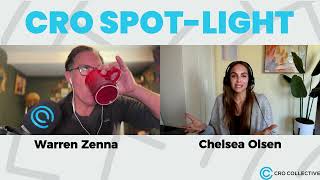
This is a YouTube video titled "Psychology, Social Selling, and LinkedIn Strategy with Chelsea Olsen" featuring a detailed conversation between Warren Zenna, founder and CEO of the CRO Collective, and Chelsea Olson, founder of Closed. Recorded in December 2024, the discussion centers on topics relevant to Chief Revenue Officers and sales leaders, including entrepreneurship, leadership mindset, social selling, LinkedIn strategies, and effective communication in B2B sales. The dialogue explores personal experiences, marketing and sales integration, and practical advice for growing business pipelines using LinkedIn. The content is part of Warren Zenna's channel focusing on CRO-related conversations.
Foreign.
Hi, I'm Warren Zenna, founder and CEO of the CRO Collective, and welcome to the CRO Spotlight Podcast. This show is focused exclusively on the success of Chief Revenue Officers. Each week we have an open, frank and freeform conversation with top experts in the revenue space about the CRO role and its critical impact on B2B businesses. This podcast is the place to be for CROs, sales and marketing leaders who aspire to become CROs and founders who are looking to appoint a CRO or want to support their CRO to succeed. Thanks for listening. Now let's go mix it up. So welcome to this episode of the Zero Spotlight Podcast. I'm Warren Zenna. I am the founder of the Sierra Collective and I'm really excited. Today I have a great guest on a colleague, friend and a real superstar, Chelsea Olson, who's the founder of Closed. Chelsea's company helps companies grow their business, develop their pipelines, refine their messaging, and provides LinkedIn training for companies who want to use that platform as a way to increase the expansion of their sales pipeline. So, Chelsea, I'm so glad you're here. Thank you for being here.
Thank you for having me.
I met Chelsea through, I think it was through LinkedIn. Right. We just, we met here right now. How is we met. What was the, what was the way.
You fired about your CRO course? I think I reached out to you.
Okay, thank you.
Yeah, that's right. And then you started to look at my LinkedIn content.
Yeah. So that's great. Good, actually. Really good. Good way to start this conversation. So, yeah, Chelsea applied to be part of my CRO course and my answer to her was if. If at the time. Anyway, if. If you're looking to be a fractional Chief Revenue Officer, I don't know if the course is right for you because I'm sort of promoting the idea of CROs being, well, full time employees that oversee revenue function. And I don't know if that's achievable as a fractional, which is. We can talk about that. It's really actually a good conversation. And I remember you were like a little, oh, well, I want to be part of it. I was like, I understand, but I, I honestly, I don't want to waste your money, whatever. But then, you know, I followed you and we had a really good conversation and I was like, you know, wow, Chelsea's really super talented, really smart, and she's doing really good work. And I learned a lot from you. I was like, wow, this is really the stuff you're talking about is really useful. So we just talked more and Chelsea ended up helping me with some things. And now we're sort of collaborators, I'd like to think. Right. We're friends, right?
Yeah, friends for sure. You're somewhat of a mentor at times as well.
Well, just because I do that. But I don't know. You teach me a lot too. It's mutual. So why don't you just talk a little bit about not just your business, what you do, but how you got there. I think it's a really cool story. So tell a little bit about your How'd you end up doing this?
Well, it's a long story, so I'll try to keep it short. When people land the plane with their stories, I like to say. So I was always a bit of an entrepreneur as a young little lady. I was washing cars, having lemonade stands, like hoarding money as a kid. Always liked to generate revenue for myself. And in college I started a small cleaning business that expanded out a bit and had my first real taste of entrepreneurship. And then I worked in finance, worked in corporate, and always ran another business while working in corporate. So I always had multiple streams of income, always had a side hustle going, and a couple of those businesses did fairly well. And then in 2017, I took a job as the director of business development for an advertising agency, which was completely new industry for me. Their. Their ICP was so different than anyone I've ever sold to before because again, I came from finance and banking and I was tasked with having to generate at least a million dollars in revenue the first year. And I had absolutely no idea how that was going to happen because their lead for a mess. So long story short, in, in having that role, I ended up turning to LinkedIn for lead generation to increase sales for the company and, you know, reach my sales goal. So I turned to LinkedIn. I created this method with LinkedIn Cold Email, Cold calling all the things and it was very effective in this agency. And then I started training other companies and people how to use this method and I've been doing it ever since and it's expanded and it's grown over the years to include things like content, which it originally didn't, but that's kind of the spiel.
Got it. What was the agency like? What sort of. I don't even know the name of it. What was their focus? Were they pure advertising agency? Was. It was like a full service agency. And who are you? Who are you trying to sell to?
We're trying to sell to top level national nonprofit organizations. So C suite folks. And again, my background was not that I knew nothing about the nonprofit space. I didn't really know anything about marketing. I was strictly a salesperson, a revenue person. So I was selling marketing services and it was a lot of traditional and then digital advertising. So things like TV placements, streaming placements in app mobile, different digital ads, social media, I mean, we ran the gamut on anything that was advertising. So the whole thing was completely new and I had to figure out a way to make it work. They also had an absolutely disgraceful CRM. So when they hired me, they told me, yeah, we have leads. They did not. They had a messed up CRM. So that took some sifting through as well. But it was very interesting experience. You know, you go into a role, they promise you a lot of things and when you get in, it's usually never what they say.
That's definitely the case. So. But you, you figured it out. You have like sort of an engine, intuitive mindset. You're a problem solver, you're a self starter. You went in there instead of complaining and saying, oh, you don't have crap for me to work with, you're like, you know what, I'm just gonna, I'm gonna, I'm gonna figure this out.
Yeah, exactly. I mean, back in 2013 I was consulting for a tech startup and I dabbled a lot with LinkedIn back then and even in 2010. So I knew it worked and I knew it had wheels, but I just didn't fully know how effective it could be until I got into this position and really saw, okay, this brings in millions and millions of dollars, not just for myself, but for my clients.
Sure, let's talk about that a bit. What do you think it is? You had that mindset. What is it about people who figure things out, solve things as opposed to people who just, you know, I think there's like certain profiles of people that you put them in a situation and they are self reliant and they work through problems and they engineer things and they solve problems. And then there are people who sort of need direction and they need systems and they need things in place for them to be successful. And what I just, I'm fascinated by this. This is probably something I'm most fascinated with as human beings and the way that they're designed and why, you know, what do you think that is? How do you, what is it about you? Because I'm like you, I just figure things out. I'm like, all right, whatever, I'll do This, I don't. What, what is that in your opinion or your estimation?
I don't know if I should say this publicly.
Go ahead.
I think it's weakness and strength, to be honest with you. I think strong people who've been through will, will take things like that and be like, this is nothing. When you've been through real things in life, oftentimes when you're faced with work stuff, you're like, this is a joke. It's not life or death. Like, this is okay, we'll just figure it out. Like if you can figure out huge things that happen to you in life when work comes, you can figure it out, you know, and you also have to have that self trust. You have to have a track record of being able to figure things out in the past. I think that's important. And then when it comes to people who can't, I honestly think it's a. There's just some lazy. There's people who are a bit lazy and they're a bit weak and that's okay. That's. That's how the animal kingdom works. Right. You have leaders and then you have the people who follow. And I don't think humans are much different. I think there are people that are really strong and that there are people who are just not as strong. And that's okay because those strong people need to rise up and help the people who aren't.
Yeah. There are a smaller percentage of leader profiles, which I think is good, frankly.
I agree.
Yeah. If everyone's a chief, it can get kind of ugly. No, I. Look, I agree. I think it's interesting. I think. So you're saying then it's a accumulation of experience. So if you, you're. What I'm, I'm hearing you say your opinion is that if someone is confronted with a lot of difficulty or strife that they develop a ability to deal with it. So that when they're confronted with things, they have a different relationship to confrontation or problems than someone who doesn't at times.
Yeah. I mean, I'm sure there are people who are leaders that have a domineering personality and have self trust so they can make decisions quickly and trust in their decision making and lead others that haven't had any strife. I'm sure there's a bucket of those folks and there, there's also a bucket of people who have been through things and just completely roll over and they become the victim for the rest of their lives. Right. But I think in my case, and in some of the cases I've seen in. If you take a personality trait like mine where you are just more of a person that's going to figure it out and be a problem solver and then you add difficulty into it, it kind of creates that recipe for leadership.
Yeah.
And entrepreneurship as well.
So you're saying it's more nurture than nature?
Maybe for some. Yeah. From. I don't know. It's. For me, yeah.
I don't know. I think it's a combination. I think you have. I think people have a innate sort of profile and then that innate profile is then impacted by their environment and it becomes unlocked or exacerbated or expanded, you know, because you put two people in the same situation and they react differently, even in the same family. I remember one had a really great mentor conversation with this person for many, many years. And I was asking about this question, which is just how much are we just victims of our circumstances and how much are we in control of things? And you know, it's an ongoing philosophical thing, but his perspective was really interesting. It impacted me. I never forgot this, told me a story about a woman who he was mentoring for a long time. And she was someone whom had addiction problems and strife. And then she overcame it. She. She worked through it and she really developed a really strong kind of revolution calibration and was able to work through some stuff. And it turned out that she came from a very, very abusive family. Really abusive. Like it was like, yeah, I want to get into it. There's some real horror stories and that she had an older sister and a younger sister and all three of them experienced all this horrific stuff in the family. It was like really bad. And her manifestation of this was this kind of period of time where she went through a lot of difficulty and drug addiction and she became really successful afterwards. And. And that. And then she had an older sister who was completely fine, like, was like a straight A student. And like it was like nothing happened. Like she was like really amazingly resilient. Then she had a younger sister who killed herself. So she was like. Her attitude was we all came from the same exact place. We all went through the same horror, horrific experience, yet the three of us had much different reactions to it. So, you know, our circumstances were factors and things, no question, but we all had different reactions to it. So there is an innate part of this that I think it fascinating. Whenever I talk to a lot of people, as you probably can appreciate in my world, who are business owners and founders and there's a certain sort of similarity between people like I'd say, like us, you know, whom. Like you. I always had my own business on the side. Even when I was working at any job, I always had my own job and I was doing my own thing. And someone would say, oh, you know, you can't focus if you have a job, you should keep that job. Why are you always doing something else? I'd be like, well, because I like doing my own thing. And it took me a while, I guess, like you, to finally figure out, like, how I can just do this myself without having to work with anybody else. And it maybe took me a bit longer than I wanted. But I do think there's a certain profile of people whom I'm amazed and I'm jealous of. Certain people whom seem to have the ability to work for other people really well.
I actually agree with that. I agree with that.
I can't do it. I think it's amazing.
I mean, I can work for other people. But I do agree that there is something beautiful about that cohort of people that can really follow direction and that are just so, so easily assimilated into every situation. Super empathetic. Like, these are all beautiful things. I don't think one's better.
I agree there isn't. I. In fact, I think I feel cursed a lot of the time because I've had a lot of jobs and I've had some that were really successful, but most of them weren't, mainly because I just had to learn, over time, kind of develop a more clear understanding of my personality that I'm sort of. My design, if you will, is more to be working, you know, in a different manner. Right. I think I can bring a lot of value to an organization, and I certainly have. But there is a resistance in my personality to completely submit or acquiesce to, like, structure and things. And I know that. And it's sort of like a. You know, it's a kind of hard thing for me to accept, but I got there, and I think once I did that, I became a lot more successful. It's kind of an interesting, weird conundrum. Right. So you have to embrace your truth, your. Your who you are, and just live with it. Just accept it and make it, you know, anyway, just fascinated by that. So let's talk a bit about social selling, because you and I talk about this a lot, and it's what you do, and you're really good at it. How much of social selling, in your view, is really marketing and how much of it is selling?
Well, I always say I'm Not, I didn't want to be a marketer. Like, let's just start there. I don't even like the word social selling, to be honest.
You're focusing a lot on using social channels as a means to get a.
Certain outcome right 100%. But I think it confuses sometimes really successful business owners. They just don't know what the hell the word means. So again, it's so my, my whole consulting business started more so in just sales and the outreach aspect. So LinkedIn provides you with the ability to find leads, to do outreach to them and then to do things like comment in their posts to give a little extra nudge and awareness when you're doing outreach and then scrape leads out of LinkedIn so you can enrich them and do some cold calls and phone calls. So that's what I focus on for most of this business was the outreach portion. And then a few years ago, I realized, okay, people have changed the way they buy, but we're not changing the way we sell. And by we, I, I meant me as well. So self reflection, what you were just talking about in your own self, self awareness, like sitting with your business, sitting with yourself and doing that. Introspection is so important. And I realized, like, I was missing a huge portion. And that's where that social selling comes in, where, okay, we need content. We need content to accompany the outreach that we're doing. And again, it's not just LinkedIn DMs, it's the cold emails, the phone calls, the text messages, the direct mail. We still need content. Because people nowadays are so much more inclined to do their own research. And you just have to aid them in their research journey with content.
Yeah. So I would submit that these things were probably a lot more distinct a long time ago. I mean, remember, I'm an old fart, you know, so when I used to sell when I was, you know, in my 20s and 30s, you know, we didn't have any technologies really. We had some, but not like we miss. It was pretty much just, you know, a piece of paper and whatever. And so it was real selling. I mean, it was purely I was getting on the phone or I was getting in front of people. And it was a sales process. And it wasn't until when the ability or the enablement occurred where I could now also act as like my own marketing department. So I could now not only sell, but I could preface my sales outreach with, like we call content today by helping to shape a better message as to why it is somebody should talk to me I think there's a marketing component to selling that we've sort of lost because we rely too much on a lot of other signals and channels to do it for us. I think the best salespeople are really good marketers. They know how to sort of create a compelling reason why it is we should talk to each other. In fact, I would even go to say, someone says to me, oh, you know, a great salesperson knows how to craft really good emails and knows how to write the right way to get someone on the phone. I think that's a marketing skill, not a sales skill, because I'm communicating value through language and maybe even imagery or imagination. Sales skills, in my view, are the point at which we're starting to talk to each other and the engagement is occurring. And I know how to listen and communicate with somebody. So I don't know. I'm curious to know what your thoughts are. If there's some degree of. There's a marriage between the two.
Yeah, for me, like, sales to me is anything that drives revenue, that brings in deals. So I don't. I guess in my mind, I don't separate marketing out as much. I look at marketing and sales and not so much in silos anymore. They're kind of combined nowadays, just going back to this philosophy of, okay, people need to do their own research. So when we're doing the sales things, right, like those cold calls, the emails, all of that, the messages on LinkedIn, what we're really doing is shaking them and get. And getting their attention. We're trying to gain awareness. So sales outreach is almost marketing, in a sense. It's top of the funnel and you're getting their attention. They're typically not going to just get on a call with you. So you get their attention, then you bring them, because they'll naturally go to your LinkedIn page and see who the hell is this person that's reaching out to me. And when they land there, then now they're back to marketing. So it's like sales marketing. Right now they're on content, they're looking at what's there, they're doing their own research. They're checking out business pages, websites, things like that, and they're. They're making up their own minds. They're 70% through their buying decision before they ever get on the phone with a sales rep. But once they feel like, okay, I was able to have enough information in front of me to make a decision, now I'll go meet with a rep. Now we're back to sales. So it's kind of doing this weird circle where it used to. Not because I was like you, I mean, I, I, I'm fairly young, but in 2004, people didn't have cell phones like they do now. Information wasn't at their fingertips, so we had to do cold calling. We were the only source of truth on the phone. People kind of listen to us. They don't do that nowadays because they could just Google or look on LinkedIn for us. So yeah, I think it's, I don't, I don't think it's as separate as it once was. And I do agree with you, if you want to be an expert in sales, you have to learn marketing. And that's what I've spent my years doing. Honestly, like I've had to put myself through basically marketing school, learning how to copyright, learning how this content thing works, because it was not natural for me at all.
Interesting. So you had to kind of self teach.
I bought programs. I learned from other people who were successful at it. I hunted down people that were really successful. I said, show me why this is working for you and why it's not working for me. Case in point, content. I was flopping. No one listened to me. I have the same face, I have the same knowledge as I did three years ago, but no one would listen to me on LinkedIn. I got zero engagement, no leads, no attention. And then I hunted someone down who is doing it well and I paid them to teach me. They taught me how to write specifically for the algo and what I was doing wrong.
What were some of those things that you did differently? What would you say were the key changes you made that started getting you results?
Well, I learned how to write, which is, it's, it's such an important skill, and specifically how to Write for the LinkedIn algorithm because I spent thousands, like well over $10,000 on agencies who told me that they were experts in LinkedIn and social media. They created content. And it also did not perform well. So I had to learn how to Write for the LinkedIn algorithm. And there is such a specific way to write on LinkedIn and if you don't know how to do it, you're not going to get any engagement. Your content's really not going to work. I mean, it still needs to be there because you're shaking people right via cold email and they're going to come to your page, so you need something there. But if, if you want to do this the right way, you need to hire someone who knows exactly how to write for the algorithm.
It's interesting because I'm sure that obviously has to be true because I know that these platforms are designed specifically this way. They evaluate the content and they. They favor things that are written, designed. I know this and, you know, the agency that I operate is all doing this with Google. So it's similar to sort of principles. But I would. There's another thing that's interesting to me, though. This might be somewhat anecdotal, but I know a number of people, maybe enough people, where this is probably true, but I'll speak to one specifically. I don't want to name any names, but there's a friend of mine who I'm very close friends with, who I think is one of the, if not the number one or one of the top five or six people who has most followers and engagement on LinkedIn. And he has been for a really long time. And I talked about this a lot because we talk about it, and he's never, ever once evaluated any of these algorithms or formats. He thinks it's all bullshit and he just writes stuff. And he's built this huge audience because of that. So he's sort of, in a way, his opinion is. And he says it a lot, is just write things that people want to listen to and share, and they will. And there's a lot of wisdom to that. I mean, it's like anything. I mean, if I. I do train people how to speak on video and in live events, because I do a lot of it, I know how to do it, and I can try to maybe, how do I say, reverse engineer what I think works. But then there's someone that goes up on stage and does everything opposite, but they're brilliant and you think they're awesome and they broke every rule. So there is another sort of unmeasurable component to this. You're. You're saying, however, that you did it a certain way and then you made those changes and it worked.
I'm the same person, right? So I have the same exact brain. I write the same way, I have the same tone, I'm very direct. All these things, what some of these folks who say that I think are experiencing. And I'm not saying it's him or her, maybe this person is just such a fabulous writer because it could be possible. They're just so fabulous that it doesn't even matter what their format's like, because they're just that good. Or maybe they're doing the right format, you wouldn't realize it because they're just so unaware, sort of thing. Yeah, they might just know how to do it because they're an amazing writer. But what a lot of these people, what I see is they created their brands on LinkedIn in 2010, 2015, 2018. And it was different back then. I just met with a guy, Morgan Ingram. Wonderful man. You should go check out his content. He does some great things on LinkedIn. And we were chatting. He's younger than me, and I'm like, how did you. Like what. Why. Why are you so successful? You know, why do you have all these followers? And he told me like I was. He was creating content back in 2017, 2018, but he wasn't doing all the right things. He was just creating video and he was sharing about how easy it was back then. And I'm sitting there kicking myself in the butt because I, back then was so focused on outreach and sales and driving revenue through outreach and building up sales systems. I. I didn't stop for a second to just be like, let me post something on LinkedIn. I posted. You know, I had YouTube and Instagram, more personal life. But he just started posting back then, and because it was that time period, he excelled. So some of it. Actually, I think that's probably true. I think that's, you know, if you're telling me five or six years ago, yeah. I'm thinking if I tried doing what I did seven years, let's say, in 2010, when I first started using LinkedIn for outreach, I was creating content for the past 14 years instead of just sales. I would. I probably would be way cooler than I am now.
Well, you're pretty damn cool. Come on. So I. I get. I think that's actually a really, really, actually very, very good point. I think you're right. I do think that, and I know this because I. I obviously am in the world like you, that the algorithms and these cut, these platforms have gone through so many changes that they changed so much of them that things that might have worked organically four or five years ago all of a sudden don't anymore. I hear people complaining about this all the time, and so I think that's probably really valid because this person I'm speaking about started doing this a long time ago. But, yeah. Anyway, it's an interesting topic because I think, like, everyone's trying to crack this. Everyone's trying to figure this out. And I'm curious to know what your thoughts are on how the future or the. How LinkedIn is going to continue. Because it works for me. Right? I built my entire Business on LinkedIn I did it accidentally. I didn't take any lesson from anybody. I didn't do one LinkedIn school. Matter of fact, you're the first person that I ever spoke to about actually looking at things. You brought up a number of things to me that I didn't think about that I was like, oh shit, I should probably should known that. But I just did it. Just Sort of figuring it out and whatever. I just did it. A lot of trial and error and I too probably wasted a number of years, but it got me so far. I mean, I have a lot more to go. But what I mean is, to me it seems like, is there sort of a bit of overkill or overload? Is LinkedIn becoming too crowded? Is there going to be another B2B engagement platform that's going to supersede that? You know, what do you think the Future is? Is LinkedIn going to continue to be a place where people can continue to grow their businesses, or has it sort of reached its peak?
Well, I don't have a crystal ball, but I will say I don't think it's reached its peak. A lot of businesses are not leveraging LinkedIn appropriately. They're kind of two steps behind. And what I mean by that is they're just now getting into the AI and automation, the cold email automation, outbound campaigns. A lot of these companies, they're not even thinking about LinkedIn. So they're where I was four, five years ago. And people really do need to catch up. Because even if, let's just say, make the argument that it's too saturated, the DMs are dead. You can't say they're dead.
They're dead.
Let's just pretend they're not. Because I have so many good conversations with founders.
Let's get.
But let's just say, let's say that it's just one of these things that people are like, I'm done, right? You still need to have content there for people to do their own research. Your website is not enough anymore. Sure, you need a LinkedIn page just as much as you need a website. And you need a place to house different types of content. So long form content, video content, articles, case studies, short form, anything, right? We need like quick, witty posts and then we need the long ones. So all of that needs to be housed on LinkedIn, not a website. And for B2B, that's where it's going to go. It's not going to go on Instagram, it's not going to go on TikTok. Like, it's just not. So LinkedIn is this platform that has to hold it for you. So when your sales team or whomever is doing outreach and you're drawing people in, they have a hub to go to to do their own research. That's just what needs to happen. So I don't. I really don't think it's going anywhere. And then the other thing is, there's another side to LinkedIn that no one's talking about that's seriously expanding and that's making your sales rep, your SDR team, sometimes your marketing team, brand ambassadors for your business. So everyone focuses on the business profile, which we know gets basically no attention, just still needs to have info there. But people connect with people. So businesses should be taking their sales personnel, their salespeople and turning them into brand ambassadors on LinkedIn. I mean, this is like the number one thing that people need to be doing and they're not. So there's a sea of opportunity, a huge sea of opportunity, and people need to tap into it. And when it's dead, I don't know, but let's like, ride it out until it is.
Yeah, okay, I would agree with that. And I think there's other things I'm seeing too happening with it, and I'm in agreement. I think that LinkedIn is underutilized, which is good news because that means that you could utilize it better, correct? Yeah, you could be like an outlier there. And there's a lot of, like, LinkedIn posts that go out and get this stuff that I think is actually really funny. You know, people making fun of LinkedIn. You know, I remember saw this great video just about a week ago. Like, it was like a scenario, like what it would be like if four people are sitting around a table talking to each other. Like they talk on LinkedIn. I'd like to announce that I'm just got a new job as a chief. You know, like, people don't talk like this to each other and they don't do it. And I think there's a lot of ridicule to the way in which LinkedIn is created or curated, a certain language and the way that people announce things, or oh, I'm so grateful and humbled to be ex and all this nonsense. But when you break through the clutter and you're really genuine and you just talk the way you normally do, I think it's actually a breath of fresh air. And if you have a good thing to say and have a good thing, you're trying to push on people Then I think you can make a big impact. So I agree. I say this mainly because I think that nothing lasts forever. Everything has an endpoint. Right. And so is there a way for people to think like, for example, like X has changed everything on that side of the coin. Right. It's become a much better platform in my opinion, for stuff like this. I'm seeing a lot of friends like doing amazing stuff on X and I'm not doing enough there.
Yeah, me neither. I don't do anything on X. And why is it admittedly bandwidth? I honestly have to be very selective in how I use my time. Our time is our most valuable resource and right now I have to focus on what's going to drive the most revenue for me and I. That's LinkedIn at the moment and then the other things I do as well.
I understand.
But that's mainly why I also want to talk about one thing you were saying. I think this whole what you were just talking about, where people speak in jargon and highfalutin and they speak in this odd way that they would never talk normally, is actually the biggest problem, problem that companies face is that they cannot properly communicate what they do and what they're selling. They try to confuse people and make it clever instead of just saying what it is they do and it does it. Yes, LinkedIn is reflective of that. But across the board this is a problem I see with every single company that's not meeting its sales goals. They have weird headlines, weird taglines, weird elevator pitches, weird value props. They don't just say what they do.
Yep.
So I think people in general need to communicate at a fifth to sixth grade reading level. They need to stop confusing the hell out of people because confusion kills deals and be more clear and speak the way they normally speak to like a stranger that's sitting next to them on a train in all means of communication with their business.
Yeah, I agree and you know, it's one of the things that we help people with. But I want to tell you a story. Interesting. So one of the, I don't know. Did you see it's thing? I point. I put it on LinkedIn, like was the biggest, probably the most viral thing I did on LinkedIn. It was only like about a month ago. Less it was a image that I saw of someone who has to make a choice between destroying their dream or not up renewing their, their URL that they bought. Right. So they. So many. How many URLs have I bought? I've bought like, you know, hundreds of Them that I thought some great idea I had, and I just never did anything wrong with it. And it's that I get a renewal in the. In the inbox. I'm like, do I. Do I give this up or renew? It was just funny. A lot of people I like, so many people wrote and reposted this thing. And I thought about it, I was like, why is that? And it's because, you know, we've got a lot of people who have this sort of notion of things I want to do and they don't do. But one of the things that I wanted to do and one of the things that I haven't renewed is exactly this. I created an idea which I started, I never finished, called the Boca test. The bocatest.com Someone will probably buy it now. What it is, is, you know, my mom, who's not with us anymore, but, you know, she. My parents lived in Boca Raton. I used to go down there all the time and I would sometimes hang out. My mom and her friends are all like, you know, in their, like, late 80s and stuff. And inevitably your mother always asks you what you do. You know, you've been her son for, you know, what, 60 years. And she wants to know what you do for a living. And you got to explain it to her in a way she understands it because what we do is not easy. So I thought, you know, it has to pass the bokeh test. If I can go and sit down at a mahjong game with my mother and her friends and they can all understand what I do for a living, well, then I'm successful because they should be able to understand it.
I love that.
So I created this thing called the Boca test, which is like, basically what I was going to do and I should do it. Maybe you and I can do it together. It's a really cool idea, is to get a bunch of women and men from Boca who are in their 90s or 80s and have them listen to a pitch. And if you can get them to understand it well, then you pass the bokeh test. And it'd be really fun, cool marketing thing to show, like how. I mean, aside from it being really fun, I mean, a lot of people probably want to watch that, but also be a way for us to teach people how to make sure that someone who is not as sophisticated doesn't understand things, that you have to distill down your language so that they can understand it. And it's. It's self evident. They can say, yes, I get it, or no, I don't, there's no the way to fudge it and say, well, they just don't get it. They don't understand it. So anyway, and I agree. I think that the main problem we see is I go to websites. You go to websites. I'm like, what did this company do? Like, I don't understand what they do. It has this weird phrase and some like bubble and like a design of a thing and like some sort of engine. And it's like what? And I. Mainly what I'm seeing happening is that it's because they have the wrong people in charge of the message, which is usually an engineer or someone who built the product. Product who trying to tell their friend who's also an engineer, of course they're going to understand each other, you know. So I think it's an interesting problem and I'm curious, how do you help people with that? So you've got someone who's working with you. What's the way that you. This might be a launching pad for another part of the topic here, which is what's the methodology that you're using when someone engages Chelsea and your organization in an engagement? What's the way that you get them from point A to point B?
I love this question. And I have a similar methodology because I have a 10 year old and when I talk to people I say, explain your business to me like I'm 10 years old. They're like, you know, and this isn't just a SaaS issue or a tech issue. I see this even with marketing agencies. They're web developers.
Yeah.
Website developer. And they're like, we imagine dreams. And I'm like, no you don't. You make websites. Like I love it. So what I do is I actually have them. Well, first we do a brainstorming session with key stakeholders and we try to get somewhere. We usually don't because everybody's caught in their own perspective and they can't get outside themselves. So I actually leverage things like perplexity AI, which I love. Similar to ChatGPT. Sometimes we use ChatGPT and we upload like the cape stack any information on the company case studies. We give Perplexity the website. Right. We give the, the AI tool so much information and we say, okay, write me a clear elevator pitch and a value proposition based off this information. And then what I ask the AI tool to do is to communicate what this company does to me like I'm a 10 year old. So then it really simplifies it and dumbs it down and Once it does that, we can start having a normal conversation with the team. Before I go through this practice, I usually can't get it out of them. And one thing they always say to me is, well, my ICP is so sophisticated, they know what this means. And I'm like, no, your ICP is so burnt out, bombarded with messages, and they don't have time for your confusing nonsense, so they don't know what you're saying and we need to fix it. That's truly how I feel. So I say it nicer than that. But this is the methodology and we get it. We get it to a VOCA test, essentially. Maybe I should call it the VOCA test. And now on I. It's more of like a kid test.
Okay.
Yeah, yeah, yeah.
The toddler test or something, right?
Yeah, well, it depends on a toddler. Don't tell my daughter.
I will. So, so this is interesting. So let's talk about your. Your client. Like, who is it that you optimally work with and who do you help?
So I truly run the gamut. I help B2B companies. They can be service based or they can have a product like a SaaS product. It's. My methodology works. We do make some tweaks, but my methodology works regardless of what you're selling because we just go through the same frameworks, but we make it unique to you and your ICP because we have to really understand who you're selling to and who your current clients are. And once we do that, we can adapt it. But what I'm telling people to do, it's not rocket science. You need to create content, you need to help people in their research journey. You need to do outreach, you need proper leads. Our messaging can't be a mess. It's like the same stuff that everyone knows, but they're just not doing it. They're not holding SDRs accountable or sales reps accountable. Right. It's like the things that we all know we need to do as business owners, but just for some reason, these multimillion dollar companies aren't doing it.
Yep, that's for sure. What is your optimal, like, stage, the company that you work with?
Well, it depends if it's, you know, a tech startup. Right. I need them to be well funded. I need funding there so they can invest in me and my support. But oftentimes I'll work with companies that have been around for a long time, like 5, 10, 15, 20 years, that mainly operated off word of mouth. And they are making, you know, somewhere near 20 million a year, sometimes less. And they don't have an outbound sales system in place. And they want to modernize their approach to sales and they want to scale.
Yep. And how do you. Is it all through LinkedIn? 100% LinkedIn, how you get your business?
No, definitely not. So it depends what I'm doing. But cold email is still important, so we still do that. I don't do cold calling. I don't sit there and cold call for myself. That's one thing I'm just like, really happy to be done with at this season of life. And then, yes, LinkedIn. And referrals as well for me, because I built a network of people, so referrals are always quick to close. But it's not just LinkedIn and it's not just LinkedIn. And even if it is a lot LinkedIn, it's not like just DMS or the content. Right. It's kind of everything together.
It's like a holistic approach, which is.
What I tell my clients to do, but I also tell them to cold call and send text messages.
Got it.
The only difference. Yeah.
So when you speak to these clients, they first engage you. What are the most, like, top three common things you see that you need to look at? What are the things that, like, if someone's listening to this right now, what are the things that they should be thinking about? Like that you recognize that they're not doing right or that need to be fixed or that you go to work on first, some commonality. And these are trends that you see among. Across all your clients.
So I would. The past version of me would say outbound. They need an outbound sales system. But this version of me is going to say, number one is that messaging? It's just they're not clearly communicating with their prospects on what they do and how they can solve their problems. That's number one, they're not clear in their communication. And then number two would be the outbound sales system. They don't have a proper sales system in place. They feel confused and lost and they don't know what to do every day and how to drive business and get new leads. And then number three would be accountability. So there needs to be a system in place to hold whoever's responsible for sales. Sales responsible for doing the activities that drive sales.
Got it, Got it. And who's your. Usually your client? Is it usually the founder, the CEO, or is it.
It's it actually. So it's. It could be the founder. So sometimes if it's like a founder Led sales situation, but usually it's not A lot of my companies. I will close the deals with the founders, but then I'm working with like a VP of sales, Director of Business development, sometimes a CRO, but it's, you know, there's usually that distinction at that point. But I have helped founders as well. I just helped a startup founder generate a ton of money in their pipe, but they're dealing with funding. So again, like, startups are a whole thing for me. I'm like, been dealing with them since 2013. It's like, as a consultant, it can be hard, it can be a challenge.
Yeah, yeah, yeah. Startups are tough. There's no doubt. Well, so interesting. So what is, what's next for you? Like, what's going on for you now? Like, what's on your horizon? Like in your business? You thinking of anything? Doing anything new? Have you developed any different additions to your way you're operating? Are you going to market yourself? Are there any new things that you're working on? What's. What's next for your organization?
That's a good question. I. I have created a community on school, which is about to launch in a couple days, because I wanted to make a free training program for people. I wanted people to get my support even if they can't afford to work with me. That was really important. And on LinkedIn, I was providing free trainings and information, but it's piecemealed. So I wanted one full course where people could come in and learn, you know, as much as they can in a short period of time from me. And then this community is also going to be a safe space for people to ask questions. I'm going to put weekly learnings in there. So that's going to be really cool. It's also a space for, you know, let's say an SDR team. They can come check out kind of this perspective I have on how LinkedIn should be a part of their day and a part of their sales strategy. So that's kind of new. And I, and I definitely want to lean more into educating companies on exactly, like how a system should be built and how to incorporate LinkedIn. Again, it's not the whole puzzle, but it is a piece. A lot are missing. So definitely more on like, just educating companies so they can make their lives easier and they could drive revenue.
And you see this, what you're doing, that particular initiative, which is sounds really cool, by the way, as a marketing initiative on your part. Is that how you define that?
Don't. I swear I am so sales oriented and maybe I'm wrong. I could admit it.
I'm just thinking about it because it's an interesting topic. Right. I mean there these things sort of. Do you know, I mean, I know you can generate without question. It's obvious how you can generate clients from that effort. It's obvious. But is the context of it is about driving awareness about yourself to people, or is it more selling to people? If you look at it from a.
Disciplinary perspective, Top of the funnel. So it's awareness.
Got it. I think so.
Anything that is going to bring in a new customer and close the deal still sells. That's why I don't think they should be. They should be.
I agree. Look, you and I are in the same boat here because it's. We're entrepreneurs, so we sort of have to do these things at the same time. Like, I don't have, like you. I don't have like a sales department. I can go to them and say, I want you to focus on these specific motions and their sales. They're about getting pipeline and stuff. Like you. I'm out there trying to provoke some conversations with people and have them think differently about things that might have them. Either one of two things might walk away smarter and go, wow, I didn't think about that. I'm going to implement that. And then they may remember I got it from Warren's podcast or his content, and I'll never forget that. And it may later on result in a relationship where they actually end up hiring me to help them in a little more deeper way. But it's a marketing thing really. But I'm selling at the same time. Right. I mean, you know, you've seen me do these things. So I'm sort of in this weird dual role where I'm selling and marketing in one motion.
Yeah. And I feel the same way. And. And some of it is truly me wanting to help people. So then it falls into, okay, I'm not going to sell to this person and I'm okay with that. And I am just going to go this education route and then the other side is, okay, no, this is someone I would want to sell to. So it. Yeah, it's a lot. Being a solopreneur is. Is a hard thing. I've. I've had companies with employees and that's its own challenge in itself. But really going after all of this, you do you have to do everything. I am the accountant. I am the marketing department and sales.
I'm with you. I know it is. It's crazy. It's. It's tough. So. Well, look, any other following. Following any final notes, anything you want to say, anything you missed, anything you wanted to talk about that we didn't get into?
No, I was just going with the flow. Trusted you to host.
That's how we do it here. That's how we do it here. You know, we just go with the flow.
I know. I love doing podcasts that aren't scripted or pre. Have pre questions like, I don't run mine like that. So I do, you know, I do LinkedIn Lives, little podcasts.
Yep.
About every two weeks. And I'm the same way. I'm like, let's just talk. Yeah, let's have a conversation.
I mean, look, people want to hear two people have a conversation. It's much more interesting. Right. You sort of, in a way feel like you're experiencing something that's happening organically and with that, there's a certain theatrical reality to it. Right. That you don't know where it's going to go. And I, I've, I'm glad that the podcasting medium has developed into that because there was a while it was really stale. You kind of got to give, you know, Joe Rogan credit for this, I guess, because they'll sit, talk to them for three hours and yeah, it's really cool to hear this conversation just go on and on and on and, you know, if it's interesting thing, you listen to it. So anyway, I appreciate you saying that because it's important to me that that's the way this is and something always comes out of it. Something always does. It's always amazing. Right? You never know what's gonna happen. But, you know, I'm a big fan of yours and I think you're awesome and I really want to thank you for doing this and being here and for the help you've given me. You know, you've really given me a lot of really great insights and stuff and I'm sure we'll continue to do that and I know you'll be really successful. And thank you for the conversation.
Yeah, thank you for having me on.
Thank you for listening to the CRO Spotlight podcast. The CRO Collective's mission is to help CRO succeed and help founders and CEOs build CRO Ready organizations. You can find out more information about our services@thecrocollective.com that's thecrocollective.com and we look forward to having you join us next time.
More from Warren


How Misaligned Software Metrics Ruined B2B Sales and How to Fix It with MK Marsden





Advocating for the Little Guy: A Frank Talk with Dan Goodman, Warrior of The Sales Rep



The Evolution of the CRO & Revenue Efficiency Metrics with Christopher Semain and Sean Ryan
