Reality of the CRO Role and the Importance of CRO Training with Dan Frailey (French Subtitles)
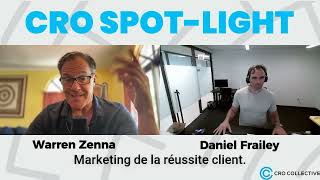
This is a YouTube video titled "Reality of the CRO Role and the Importance of CRO Training with Dan Frailey (French Subtitles)" featuring a detailed English conversation recorded in October 2024. The discussion is between Warren Zenna, founder and CEO of the CRO Collective, and Daniel Fraley, who teaches a Chief Revenue Officer program at the University of Chicago. They explore the challenges and nuances of the CRO role, the need for formal CRO training, the structure and content of Daniel's CRO course, and the broader market dynamics affecting CROs and revenue organizations. The conversation is professional, insightful, and focused on educating and preparing CROs for success in their roles.
Hi, I'm Warren Zenna, founder and CEO of the CRO Collective and welcome to the CRO Spotlight podcast. This show is focused exclusively on the success of Chief Revenue Officers. Each week we have an open, frank and freeform conversation with top experts in the revenue space about the CRO role and its critical impact on B2B businesses. This podcast is the place to be for CROs, sales and marketing leaders who aspire to become CROs and founders who are looking to appoint a CRO or want to support their CRO to succeed. Thanks for listening. Now let's go mix it up. As some of listeners know, I have a couple affiliations with some conferences. One is, you know, earhart, Schwander's Sales 3.0 event, which I do some stuff there and frequently Gerhardt has me moderate panels and speak and stuff. Anyway, one of the panels I recently moderated, Daniel was on the panel and turns out that we have something very interesting in common, which is we both lead Chief Revenue Officer courses. And that was great because, you know, there's more of them popping up. As you know, I have one, Pavilion has one, and then Daniel runs the one at the University of Chicago, which is a great institution. And so aside from doing something that we're both obviously like minded on, we also had a great time together. We ended up spending like 2 hours, 3 hours talking and we ended up just really seeing eye to eye on a lot of things. I think he's just a super person and, and then we hung out a little bit and I thought it would make sense to have him join me on this platform so we can discuss this because I think we're both in agreement that this is needed at the CRO. Training is necessary and I thought we could be have a discussion. So to that end, Daniel, welcome to the show and thanks for being here.
Happy to be here, Warren. Thanks for having me.
Great. So, you know, why don't you give everyone a little background, like how did you end up teaching a CRO course at the University of Chicago? How did that sort of happen for you?
Sure, sure. So, you know, my, my career in sales really started I guess in earnest at Groupon, but you know, kind of like yourself, long time before that, growing up in a entrepreneurial and sales family. My, you know, my, the, the family business that put all the kids through college was a distributorship of electronics assembly, equipment and supplies called Midwest Tech Services, based out of Willowbrook, Illinois. Spent nine years working there doing customer service, a little bit of sales, carrying boxes, packing boxes in the warehouse as A kid. So I spent a lot of time growing up around a sales environment. I also came from a big family with 32 cousins and 16 aunts and uncles. And literally to a person, almost every single person is in sales, one kind or of another. And so it's kind of the environment I grew up in, but it's also one I took for granted. You know, I started my professional career in hedge funds and did that for five years and then went to business school and got into management consulting. But then I had a friend, almost an acquaintance really, who was aware of an opportunity at Groupon. He actually wanted to do this job, but they told him they wanted to stick where he was and knew me and just said, hey, you should check this thing out. I think he'd be a great fit for it. And it was really insightful on his part because I had no background in technology or in sales, no interest in technology or sales. But I said, yeah, I'll take the interview, check it out. And it just felt like I had come home. I just felt like I was in the right place. And what the role was was a general manager role for a region at Groupon, but it was largely sales management, which is kind of ironic to be a manager of salespeople when you've never really sold anything in your whole life, you know. And so it was a strange position to be put in, but I found a lot that I could do a lot by, by listening to my employees and just finding ways to support them. But then kind of take what I learned from them and, and use that to guide the success that we had. And we ended up having a lot of success at that organization. And that led me to running another company when one of our finance guys went back into private equity and pulled me over there and then, then went from there to the head of sales and marketing, basically CRO at one of our biggest clients. And that was an agency at Omnicom, part of bbdo. And from there I left there to go to Boston Consulting Group to be global topic lead for B2B, go to market for private equity held companies. Which is a very long way of saying basically the CRO topic. And so at that point I had been, you know, more or less the CRO role or something equivalent three times and was working with a bunch of the world's leading technology companies and non technology companies and especially the funds that owned and invested in these companies. And that was a great jumping off point, you know, after a couple years doing that to, to actually work on starting my own business. But while I was in the course of doing that, that's when the University of Chicago said, hey, you know, we're thinking about a rev ops program, would love some of your input on it. And we talked about that for a little bit. But I said, you know, from working with a lot of these funds at University of Chicago, or excuse me, at the Boston Consulting Group, one of the things I've seen is that they really struggle to hire first time Crosby and identifying who would be good CRO talent because it's a bunch of finance guys and gals who are great at what they do. But there's a big experiential sort of cultural component to identifying who's going to be a great leader of sales and marketing if you've never done that job. Very few of these folks have hands on experience being salespeople or being marketing people. And so that was sort of what I saw as the demand side problem, is that the funds that do a lot of the hiring of first time CROs struggled to identify the right talent and they kind of knew this, so they would basically recycle the same people through a limited number of CRO roles as a result of that. But then on the supply side, very few folks are put in a position to succeed based on their background the first time they become a CRO because they've got to be responsible for the full customer life cycle from SDR teams to customer success teams and account management and account execs closing new deals and all the above, as well as rev ops pricing strategy, all these topics that very few folks have exposure to but then have to be responsible for once they get that first CRO gig. And so they have to learn on the job a lot. And so in this conversation with the university, basically what we identified was there's a really big opportunity to create a university program that has all of the heft and substance and weight that you would expect from the University of Chicago and would help close this gap in the market. Give the CROs the would be CROs the skills that they need to be great at the job as the first time or even if they're a repeat CRO at this point, if they want to get some real estate, high quality professional education and also make it easier for private equity and venture capital funds to hire first time CROs because you know, it's, it's kind of speaking their language to put a big university symbol on, on top of a resume, so helps that stand out there and then obviously provide the network to find all these Opportunities for, For the folks in the program.
Got it all makes sense.
And was that enough of an answer for you?
That's great. I mean, you know, I agree with everything you said there. I mean, we almost came to the same exact conclusion in different ways. Certainly both recognized a real hole in the marketplace, which is not only just your observation that hiring CROs is hard and it doesn't work a lot. And even more so, I think in from you and I talking, it's. It's also just the role is not defined. I mean, people don't really know what one does most of the time. Series don't do the right thing when they get hired in the first place. And so, you know, the role is too ambiguous. It's almost, I think, in a way, it's a bit of a. Of a. Of an avatar that people can make with. Do anything they want, you know, as opposed to it being exactly what it's supposed to be. And so it's so malleable that a CRO can go to a company and sort of not know what. It's like a box of chocolates from, you know, forest Gump.
What's expected of me.
And, and this is, this is a big issue because the role should be more defined and it should have much clearer definition, and therefore it's more codified across organizations, what it does and how to bring one on. And so you and I are both, in our own way, helping to make that happen. And I think it's great.
So, Warren, I got a question for you. If, if you don't mind, when, when you're working with the companies that you work with, you know, how do you sort of define for them what's the, you know, the little couplet that you say? This is what the CRO rule should be. This is how you should think about this job.
Yeah. So what I tell them is kind of like have a rote answer to this question. First thing I say to them is what? A CRO isn't.
Okay?
A CRO is not ahead of sales. It's the first thing I say. Right. And the reason I say that is because most of the time that's what they think it is. Right. So I'm immediately sort of intentionally challenging their current thinking. And, you know, that's provocative for them. And they're like, okay, well, explain that to me. Well, you know, and I explained the idea that what's the problem with having a CRO as head of sales is it sort of perpetuates a problem that you, Mr. Founder, are perpetuating in a way which is you're creating silos of organizational leadership by having a CRO, a cmo, a cso, which you know, in your world be sort of corporate. The blueprint is to have all these C suite executives oversee these functions. But that's really a crony way to look at a business. The reality is what you're doing is you're creating silos and you're codifying them by making these people C suite executives, now they're immovable because they have C on their title. Right. So you're building in fact a unbreakable silo organization by doing so. And the revenue operation is the one organization of all that cast not have silos or else it can't work. So most the endemic issue with a company, the congenital disease of a B2B company is revenue misalignment. That's the thing we're fixing here. And revenue misalignment is when all three of these organizations are sort of not operating on the same page. The only way to get that to happen is you need to have one person lead all of it. And the Chief revenue officer is the person who's most appropriate for that role. So the definition of a chief revenue officer is someone who doesn't run sales, but oversees the entire revenue function. That means sales, marketing, customer success. I define it as the three most customer facing parts of the business. Sometimes maybe they might have a little bit of an influence on product depending upon the upon the company and certainly sometimes partnership strategic growth. Right. But mostly it's really overseeing the way and coordinating and aligning and orchestration between sales market and customer success from a customer centric customer journey perspective. So that's how I define the role.
I like that. Especially the emphasis on the customer centricity and the alignment internally. Because specific to the seven courses in our program, the one that I teach, that's basically session one and session ten is exactly what you described.
Great. The reason why I believe it should be there's a couple reasons. One is the obvious, which is what's more important than the customer? I think we have as a B2B organizational ecosystem, we've completely lost the plot on customers. We ignore them at this point. They're basically just like cannon fodder, you know. And what's weird is because there isn't anybody that doesn't answer this question the same way. When I ask them this question, I say, where do you get most of your money from? They say, existing customers. Right, sure. Of course you do. Because it's Cheaper to get business from existing customers and you know, it's less, you know, cost that is required to get them. And also, you know, customers are better people to sell to than getting new ones. That doesn't mean you should stop acquiring new customers, but not at the expense of taking care of the experience of your ones that are existing. And so given that if you know that to be true, well then why would you not have a customer centric go to market strategy? That should be the way you operate. As soon as someone goes into the customer bucket, there should be an entire focus on the way that customer is taken care of such that that outcome is realized from whatever they purchased and that a renewal or an upgrade or whatever is possible. But it doesn't work that way. And so if a chief Revenue officer comes into the job with today's muscle memory from a sales and acquisition perspective, that CRO could be dangerous in that you have a leader who's responsible for acquisition only as like a mercenary, as opposed to someone who's taking care of people who've paid already. So I think the customer centric CRO is a vital part of the job. It's not just a sort of a nice to have, it's a must, you know.
Yeah. And you have to break that muscle memory too when you go from revenue VP from what you used to do to having the whole life cycle perspective and the profit perspective instead of the close this deal perspective.
Yeah, that's right.
By the way, Warren, as always, you have just great lingo. So far I've picked up two new ones from you. One of them was the congenital disease of revenue misalignment, which is definitely going in my back pocket. And then, and then you just said, was it lost the story, lost the narrative? What he said there, I don't know.
I'll send you the recording.
Lost the storyline. Lost the storyline. It's great.
There you go. Yeah, yeah. It's because we've, what we've done is we've gotten too smart for our own good. Right. We created. This is sort of like a origin story in a way. I'll share this when we do our session together with your, with your students is what's Happened is the SaaS business in particular was almost too successful. So what happened was people were becoming billionaires right from technology. And this is very attractive to investors. If they see an opportunity like that where businesses can scale that quickly, well then they're going to invest a lot of money in them, but they're investing in money in them for A reason that benefits them. I'm not saying it's an, I don't want to denigrate them. It's a good business model, right? Why not find a company out customers like this? It's a good business model, but it comes at the expense of the customer. And so what ended up happening was, you know, the unicorn chasing became sort of like the mantra for investment communities. And what they did was they started to create management processes that were designed to manage multiple companies within a a portfolio. That was a formula. And that formula was based on customer acquisition. Because if you acquire more customers, that action or that event of acquisition of customers was the thing that triggers a lot of the ways in which money becomes reinvested again. It's like the temperature gauge. You know, if we can continually get more people to sign up for something, not only are we getting more revenue in, but it's an indicator that the market likes the product, which means we'll give it, we'll give it more money. And it sort of created a incentive to do something that while was good, it was a cancer because it grew a part of the organization without recognizing the importance of the other part of the organization, which is customers. And so the SaaS business, its success and formulaic success also resulted in a lot of technologies that were developed. Think about all the tools that was built in tech to help support this, all the calling tools and the dialers and I mean it's insane.
And so SAS developed.
You mentioned them before. I think SDRs are a cancer too in my opinion. Not the denigrate SDRs. And the reason is because, you know, it's not. I mean if I hire a bunch of people that all their job is just make phone calls and send out emails all day long at a high level of activity, it's going to flood the marketplace with outbound messages that are going to turn customers off and they're not going to listen to anything anymore, which is exactly what's happened. And so, you know, I think that, you know, the CRO role is more important today than ever because of the fact that now the Chief Revenue officer, if it's implemented in the way that you and I are describing, can recalibrate these things and bring much more customer centricity and orchestration across the whole revenue stream. But I think companies desperately need and customers want. So this is sort of like, I think that it's, the timing is good for this role to be sort of re evaluated or realized in a way. So I think we've both maybe accidentally or Brilliantly. I don't know, stumbled onto what I think is a good opportunity in the marketplace.
I like the second explanation better. Great minds think alike.
Okay, fine. So I don't know. I mean, I, I, I step in crap all the time. I don't know what I'm doing half the time, but it worked. So it's good. And, and, and I think that there's a, there's an opportunity and I'm, I'm glad to see organizations like, as reputable as yours. I think it's great. I think there's another one too. Isn't Wharton doing one as well? I think there's a couple other colleges that are. Right. Isn't that true?
There is a well known university that created a knockoff program. Announced one a month after, after we went live.
But yeah, I mean, look, I get it and I knew that there were going to be other people coming into the marketplace and we'll all have our slice the pie, I suppose. But I think it's good because as I mentioned to you too, and I'd like to get your point on this. What are your thoughts on. Okay, so your, your, your factory, and my factory, at least part of my factory, is intending to produce and manufacture competent CROs that can go to a marketplace and get the job and you know, kind of come in with the right competencies or. Yeah, but you know, the other side of the equation is now they're going into companies that aren't ready for them or they're not prepared for one, or they don't know what to do with one. So it doesn't matter, you know, like if I buy a really expensive appliance and I don't know how to use it, it's just gonna sit in my garage.
Six and dynamics that are, you know, not everybody's favorite part of working in a company, but it's an important part of working in company. And so, you know, understanding what that dynamic is and is that something where the revenue organization is going to be at a loss for every time that you go and visit customers? Because if it is, then you're making sort of a Faustian choice between do I stay culturally, culturally strong in and, and connected to the sort of panel of palace dynamics, or am I going to be, you know, customer centric? Well, you need to be able to do both. And if that C suite culture isn't right, then you're not going to be a position to succeed there.
Okay, all good. I agree completely. And I think the problem I'm seeing in the Market is that people who are looking for Chief Revenue officer jobs, a lot of them, unfortunately, are looking for a title. You know, they like the title. It's a true. It's attractive, it's alluring. You know, it represents that they've ascended to a certain, you know, status. It, it comes many times, not all the time with, you know, more money. Right. More financial opportunity. Certainly it also brings to them more future opportunities. I mean, if I have a CRO on my resume, it gives me the opportunity to get other C suite roles. You know, people want to break that, break into that C suite because it represents other things to them that sometimes cloud their judgment in terms of what the CRO role really is that they're getting themselves into. And they can very easily be seduced, you know, by the stuff that comes with a C suite title, regardless of how it's going to be. And I see a lot of people who I work with whom kind of come to me late and they go, yeah, you know, they made all these promises. It was really great. And I listened to things and I knew there was a problem, but I just ignored it because I really wanted this job. And, you know, it's like anyone who's, you know, maybe had a bad marriage, you know, you look back, you go, yeah, you know, I saw the signs, but I said, I do anyway. And look at me, you know, I got no house, you know, and so, you know, I think that there's like some degree to which I'm also trying to get people to think a little bit more strategically about this role so that they're not just jumping into it because someone's hanging a nice gig in front of them, you know, because it could be really difficult. You know, it's not like a sales job. This is a tough job. And if it doesn't work, it's can be really bad. You don't want to fail as a CRO. It doesn't look good, you know, so I'm curious, like, what. When you.
These then there are well qualified bodies and hence that recycling of the same people into the same jobs, even some folks that don't necessarily do a great job, on the other hand, that doesn't mean that every opportunity is created equal.
By working with your. With your cohorts, you know, are you talking about these sort of things with them? Like, what's your thoughts on how they should be approaching the role?
Well, I think, you know, I can tell you from my own experience that I have, you know, worked at a couple different companies in the CRO role and some of them were more prepared than others and you know, they were all not terrible. One thing that I've noticed, put it this way. You familiar with John Boyd by any chance? The Air Force? Well, not perfect. And they were also better and worse in different ways. And there are a number of factors involved in that. Right. You know, I think, you know, one thing you have to think about is the, the preparedness to be able to invest. Guy invented the OODA loop, all this kind of thing. It's a great book about him. I think this is called in in Go to Market. You know, you Boyd B O Y D. But really an amazing individual. It's like a military, real life version. Can find yourself as a CRO going into a new. In a new opportunity with a company that wants to grow and you can come in and deliver great results and find that you don't necessarily have a CFO CEO investor mindset of investing in growth. They'll continue to want more with less. Right. And it's not necessarily putting the CRO in a position to win in that role. It's also not going to necessarily be a great, you know, kind of one of, of good Will hunting or of I guess will hunting from, from the movie Goodwill hunting. You know, so good goodwill hunting. Obviously I don't know if anybody's not seen the movie, but the point of the analogy is again one of the many paths in your overall career trajectory. Another thing to think about is basically the culture of the C suite, right? You know, how collaborative is it a power dynamic? Are people comfortable being expert in their domain? Or does everybody who was of really incredible genius but not super formally educated, more self learned and you know, presumably in the movie went on to do great things in mathematics. I think it cuts a little short to see where that goes. But you know, this guy, John Boyd, real amazing leader overall, but not in the traditional organizational sense. And came up with a bunch of different things, but one of his kind of separate from his three major contributions to a couple different fields of study. It was just this. But he wants to think that they are the head of everything. Is it five junior CEOs, right, quote, that you can basically either be somebody or do somebody or do something, think somehow something like that. But the gist is, is basically there are folks who want the role and folks that want to do the work and have the impact and, and be purpose driven versus title and status driven. And the importance between those two things as it pertains to the CRO role I think is that you're going to get found out pretty quick. If you want to be the title and the status and be Mr. C Suite Guy and that kind of thing, you have to be really purpose driven on making an impact at a company by making an impact for customers. And if you're not those things, you'll get found out pretty quick because either the results that everybody know could be there, that haven't been yet going to happen for you, or the company's already doing well and for some other reason, they're changing CRO and you're taking over. Things are going to head south pretty quick because you're going to make decisions with the intent that you have, which is to make yourself look and feel more important. And those are not going to have the decisions that customers and salespeople need to grow the business.
I love it.
And that's a really important thing in particular as a CRO, because, you know, not that you're supposed to be out there like a VP sales closing deal.
And I agree it is a very high exposure role. You can't hide, you know, as a CRO at all. You know, in fact, you're in a, like a fishbowl. You're entire every day, you know, and everyone's observing you. And I do think the imposter syndrome can seep in because a lot of people, you're right, they chase the role and now they're in the job and they realize that now maybe the way that they're being evaluated and the stuff they have to do is much more confronting than they expected. And I warn people about this, that like you said very nicely, I like this, this analogy a lot, is, you know, it's a being thing, it's not a doing thing. You know, you have to really want to be a certain type of person to do this job. You have to believe in the idea of being someone who orchestrates and coordinates leads and drives outcomes and wants to kind of do that sort of thing. You have that sort of brain or that sort of personality, as opposed to someone who just like wants to wear a nice suit, be in a nice desk and have a title, because that lasts not very long. And unfortunately, you know, we think C suite executives, not, not all of them, obviously, but C suite roles are, they attract that. And I think it's an important thing for not only people to think about before they take the role, but people who are recruiting people should be thinking about that too. Is this person really up for this job or do they just want this job? You know?
Yeah, yeah, that's right. You know, one other thing that, you know, kind of brings to mind as well though is that there's the doing versus the being. But another important thing regarded to the doing is managing expectations. Right. Because the one, you know, fun, sometimes a little maddening aspect of being a revenue leader is no matter what you sold, no matter, no matter how much you're growing, there's only one next job which is more. Right. And it's like that scene from Mad Men where Don and Roger are pitching Dow Chemical on, you know, taking over their account, whatnot. And Don says while he's in a, in a rant, you know what happiness is? It's the moment before you want more happiness. And that's the way I always think about these jobs. But the problem is sometimes there's different levels of more happiness that you can feasibly, realistically get on the next session. So those expectations need to be managed. And the only real way to manage those expectations, because the optics of being someone in that position, being responsible for them, is to be really strong analytically and to be able to make a case through numbers and having the right insights and the right information and the right data collected on what's realistic to be able to achieve at any given moment. So it's not making excuses for future poor performance, but instead it's a data driven, quantitatively substantiated expectation of what's realistic in the future and tying it back to the relationships with the rest of the C Suite. What it might take to get there from an investment perspective.
Yeah, look, I love it. And you're right, I think that you have to sort of like have a different mission mindset in this job because, you know, there is always the same story with anyone who's pursuing a role like this. I don't know if you remember doing movie analogies, which. I'm a big, big person on this, so I really love that you're doing it. I do it all the time. It's a great movie with Robert redford from the 70s called the candidate. I remember this movie. It's a great movie. And he was like this like local politician. You know, Redford was a perfect, perfect, perfect person for this. Good looking, kind of great talker.
Yeah.
You know, they, they had him run for president more as a way to improve his profile, not to actually win. You know, it was sort of like a way to get him just exposure because, you know, he's like, that's what you do, you run for president so people know you more. And of Course he ended up winning at the end. And it's this great scene after all this, they went through the, the dog.
That caught the fire truck.
Yeah. He goes, he goes in the room with Gene Hackman, was his campaign manager. And he looks at me, goes, what do we do? It's the end of the movie. He's like, now what do we do? And you know, it's a classic example of like, be careful what you ask for, you know, And I see people a lot of times fighting to get a job that they really shouldn't take, you know, because they're, they're, they're more driven by. They want to get to. Yes. You know, because they're sales people and they like to have, they like to be asked to, to. They want to close the deal as opposed to. They don't want the job. And this is not the kind of job to do that with. You know, it's, it's one. You really have to be kind of ready for a mission of sorts and that.
No, not at all. And it can, it can make it harder I think for, you know, if someone who takes zero job, realizes not for them, doesn't work out, wants to go find their next role as a VP sales or something like that, it can actually be harder to get that role because people see your resume and think, okay, well you just really want to be a CRO again. And, and it, it can be actually, I think tougher to, to take that different path.
Yeah. So, you know, ask. Walk me through this, if you don't mind. Then if you look at your course, the, the course, what are the kind of the core principles that you think are the pillars? Like the way that you frame the role for people. What are the things that you think are. You emphasized most if you look at the way you structure the curriculum.
Sure. So the program as a whole has seven courses and it's designed to be, as you might imagine, pretty much everything that a CRO needs to know whether they're doing the job currently or aspire to do it in the future. And so that starts with designing the go to market organization. That's the teach. The course that I teach. Then on top of that there's customer lifecycle management, which is basically managing all the customer facing teams. There's a course on team leadership called Leading high Performing teams. Analytics course. Revenue operations and Strategy. Right. Key muscle to be able to empower frontline folks with technology, but also extract data to guide those insights. Pricing strategy, of course, one of the biggest levers of value, especially in the short term that most folks don't have any professional training on before they become responsible for it. And then we have a course called Leading with Investors and Boards, which is basically about not just how to run the go to market organization, but how to be a CRO and operate that level and make sure that, for example, you're getting all the resources that you need to put your organization in a position to succeed. Also how you can make sure that you're guiding the organization in the way that's most valuable for the company. Because sometimes that's maximizing profitability, sometimes it's maximizing revenue, sometimes it's defending market share.
Yep. So who is responsible for the curriculum? Is it you? You writing it yourself, or you have a collaboration? Like what's the way in which the curriculum is generated?
Yeah. So we pulled together some really excellent practitioners, folks who've been in leadership roles at a bunch of different unicorns from, you know, the tech industry, a lot of software folks. We've got a great instructor of pricing, guy named Sergio Corbo from GE and a couple other companies. And if you know those industries, you know, pricing is a huge lever of value. There we have the head of talent for Madison Dearborn Partners, guy named Chris Chandler, who is maybe in charge of hiring more CROs than anybody in America. You know, Madison Dearborn is like the original mid market private equity fund, lots of portfolio companies. So he teaches leading with investors and boards. So the first thing is putting together a great team of instructors and making sure that they're experts in what they've done, in what they cover, but also that they're folks who can speak with credibility of cutting expertise while layering in. And this is really kind of like the University of Chicago's unique secret sauce to business education. What made University Chicago Business School the regularly number one ranked school in the world for mba. Pairing kind of cutting edge practitioner point of view with timeless principles from philosophy, or, excuse me, psychology, economics, quantitative methods, all these kinds of things.
Amazing. Great. And how long is the course? What's the length of time someone takes?
So the whole program is 10 months long. So it's, it's basically a one year program. There's seven courses in it and they're kind of divided to kind of COVID all those things that, that we mentioned. The courses themselves range somewhere between three weeks on the short end to eight weeks on the long end. There's little buffer time between courses, so you can, you know, still have time to go on vacation and whatever else. But a really important thing too is the format of the program. So this is a very unique and you know, frankly innovative educational product. You know, you think about professional education and business, you generally think about an MBA or something of that nature. It's on campus or it's evenings and weekends, but in person it's an interruption in your career that doesn't have as high opportunity costs because it's for folks in their 20s. But everyone in this program is already super successful, already super accomplished. They're in their 30s, in their 40s, some people even in their 50s. And these are folks with really high opportunity costs, big complicated lives, a lot going on. They don't have time to go back, do a, you know, a one year program or be just setting all the world to meet in person. So we made the program mostly remote is what I call it. So classes are live online over zoom. So it's, it's, you know, that in classroom experience, but from the convenience of wherever it is that you live or wherever you have to be traveling for a client opportunity that week. But then we also wanted to make sure that you have that same experience of an in person program where you're building deep personal relationships with a lot of folks in your cohort that are going to last you the rest of your life, the rest of your career. And so to make that happen, part of is how we design group projects and other kind of like, you know, live social activities, things of this nature. But then we also have an in person event that's coming up in September actually where we get everybody together for four days and you know, kind of mix bingo, have a, you know, kind of great old school sales boondoggle with lots of social events and some semi plausible academic content and just get rid together and kind of turn those online relationships into in person, you know, flesh and blood relationships are going to last forever because you know, the education is super important for being able to kick ass at the job. But a big part of the long term value of the program is that network and those relationships that future opportunities come from. And also just, you know, humanity side of it.
Excellent. I love it similarly too. My course is only for people who have already kind of advanced in their careers. I'm not looking to get some salesperson that wants to be a CRO someday. It's really important to have the right people. So I know that you have other things going on. Like I'm just curious to know what those are and, and how they may kind of tie into what you're currently doing with the course.
Yeah, sure, I have a software company that we're working on rolling out. We may talk about that in greater depth in another session, but it's for me been a really rewarding experience teaching go to market organization design while building the go to market organization at a startup company. Because the course itself, you know, starts with you've reached product market fit, meaning you've got a set of product features that you've kind of worked out, that works with a right set of customers and you've got that sort of repeatable interaction, understood to be able to sell profitably. And now you need to scale from that to a revenue organization that can make that sale happen with repeatedly acquirable assets, I.e. hiring people off the street. You don't need the founder involved to close every deal. And so as we're building this company and rolling out, it's really rewarding for me to be able to actually put the ideas from the course into practice in real time and just sort of see how they manifest it. So thanks. Little part of being part of academia.
I know you had shared with me something about it offline, but thought I'd mention it. So I wanted to. This is as I suspected, it was a great conversation and you know, unusually like minded in this respect. The first person I spoke to, that's actually the same thing. It's kind of interesting, so it's kind of cool. And I do appreciate, you know, the offer to collaborate and I think that it's great to know that there's other people out there trying to solve the same problem because it needs to be solved and I can't do it all on my own. Although I'd like to. So again I want to thank you for joining me. Great conversation again, Daniel Fraley, Chief Revenue Officer Program at the University of Chicago. Take a look at it. And Daniel, as I say, thank you so much for doing this.
My pleasure, Warren. Anybody who's interested in the program, just find me on LinkedIn. Daniel F asmfrank, ours and Richard A I L E Y and I'm the younger looking one. The older looking guy is my dad. But we'll put you in the right direction. Warren, thanks for giving me the opportunity to be here.
Of course. And we'll be talking soon.
That's right.
Thank you for listening to the CRO Spotlight podcast. The CRO Collective's mission is to help CRO succeed and help founders and CEOs build CRO ready organizations. You can find out more information about our services@the crocollective.com that's the crocollective.com and we look forward to having you join us next time.
More from Warren


How Misaligned Software Metrics Ruined B2B Sales and How to Fix It with MK Marsden





Advocating for the Little Guy: A Frank Talk with Dan Goodman, Warrior of The Sales Rep



The Evolution of the CRO & Revenue Efficiency Metrics with Christopher Semain and Sean Ryan
