Host D and constitutional law professor Pat Swanstrom examine what judges promise when they swear to provide equal justice for rich and poor alike. They argue that Supreme Court access depends on money and connections, that civil procedure rules can make judges break their oath unintentionally, and that family courts show patterns of bias against pro se litigants and religious minorities.
Chapters
You've got to get mad. You've got to say, "I'm a human being.
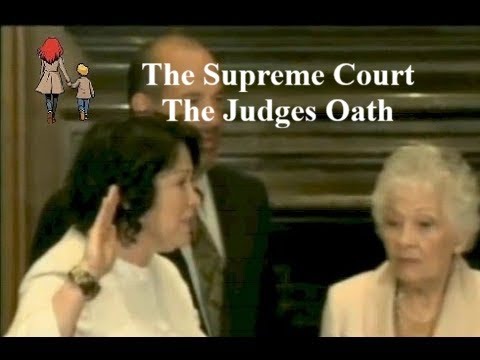
My life has value." Judge Sotomayor, are you prepared to take the oath?
I am.
Please raise your right hand and repeat after me. I, Sonia Sotomayor, do solemnly swear—
I, Sonia Sotomayor, do solemnly swear—
that I will administer justice without respect to persons—
that I will administer justice without respect to persons—
and do equal right to the poor and to the rich.
And do equal right to the poor and to the rich.
And that I will faithfully and impartially.
And that I will faithfully and impartially.
Discharge and perform.
Discharge and perform.
All the duties incumbent upon me.
All of the duties incumbent upon me.
As Associate Justice of the Supreme Court of the United States.
As an Associate Justice of the Supreme Court of the United States.
Under the Constitution and laws of the United States.
Under the Constitution and laws of the United States.
So help me God.
So help me God.
Congratulations and welcome to the court.
Hi, welcome to my show, From Rags to Middle Class. Tonight I have a distinguished guest, Pat Swanstrom, from the Southern California Institute of Law. Where he teaches constitutional law. And Pat received his law degree from Wayne State University in Michigan. He's from my hometown. You grew up in Michigan?
That's true.
Where in Michigan?
Well, all over Michigan. Traverse City, East Lansing, Saginaw, Detroit, Farmington Hills.
Oh, wow.
So, yeah, quite a few. So I still consider myself a Michigander. Even though I moved here from Chicago, actually.
Oh, okay.
It was my first job out of school, was in Chicago.
Oh, great.
I got to get out here, luckily.
Cool. It's a nice place to— Detroit's a nice place to be from.
That's right, that's right.
Can you guys bring up slide 1, please? So my first question is, in the video clip that we just saw, the oath, the judge's oath states that it's equal due process for the poor and the rich. Slide 1, you guys. Could you tell me what does that mean? Where did it come from? And when the oath was formed, the judge's oath, why was that important to put that into the oath, judge's oath?
Well, I think they would all like to, consider themselves delivering justice equally without any regard to whether you're poor or rich. And I think it sounds good, and I think that the members of the US Supreme Court, they believe that to the extent that something's in their power, that they are doing that when they are reviewing cases. And so it's an important part of the oath that is made up, with a lot of input, you know, by the members of the US Supreme Court. It's like, okay, what should this oath be? But I think, you know, as a practical matter, they review very few cases. And the cases that they actually decide that they will review, most of those probably had a long and expensive process to get there. And so it does require funding to get your case heard by the US Supreme Court, but not all the time. You could have members, you could have an organization, for instance, the ACLU, that for the right cause, they'll take up a cause, and some of those cases do make it to the U.S. Supreme Court.
I wonder if they ever have a case that they hear that's brought on through a pro per litigant. That'd be interesting to research.
It would be, absolutely. You take your case of Gideon v. Wainwright, where In the movie Gideon's Trumpet, this gentleman was denied an attorney in a criminal context, and he didn't know anything about the Constitution. It took someone to kind of look at his case and stand up for that cause. And so you go right back to due process. If you're denied your attorney in a criminal case, then that is also simultaneously a violation of due process. So, you know, sometimes this happens. Sometimes this happens that people do the right thing and they'll take up a good cause, whether it's access to justice or individuals who believe that they are wrongfully incarcerated. And some of them are wrongfully incarcerated.
But is that the oath only for the judges of the Supreme Court, or is that the oath that all judges take?
All judges are supposed to operate without regard to someone's wealth or social economic status. Absolutely.
And I propose that because of the way that civil procedure is, that judges break that oath all the time, whether they want to or not. So that's one argument I propose tonight that I'll provide argument for.
Okay, and that makes a lot of sense, and we can— it would be easily done to track, to keep track of those statistics now of the likelihood of success if you are a pro se litigant. And we can do that now. We can keep track of millions and billions of statistics.
Well, I know, but we don't. I have a list of suggested court reform on my website, my blog, From Rags to Middle Class.
Okay.
One thing that I ask for is judicial watchdog databases, watchdog databases where they attract who track who's the attorney, who's the judge, who's the legal researcher. I thought that was very important because of things that I've been through. The legal topic, the result, whether they're pro per or not. And in particular, I thought watchdogs were very important in family law, where family law judges— basically, there's such a high standard to overturn their ruling— that I think there especially should be a watchdog. Or there should be some kind of database paying attention. You could have a family law judge who's extremely religious and could make a decision about you and your child based upon the fact that you're not religious. Like, I have Judge Brown. He went to Westmont. He's very religious. I don't believe in heaven and hell. And that could be a bias without him saying, but there is such a high level of— I don't know what word I'm looking for— high standard for overturning his rulings that to me, not to have a database to track these judges and their rulings and whether they have prejudice towards men, women, pro pers, not, You know, it's— for particular attorneys is to me, you know—
I agree 100% that accountability is lacking in decisions that are made. And you brought up family law, and that is— it's very complex, not just the divorce necessarily, but these custody issues that come up with— and the issues that have to be resolved, and when you look at the end result, many of them, at least in my opinion, they seem very unfair and out of line.
Well, in family law, I mean, I went through family law. I had a child out of wedlock, and 6 months after I had my child, my son's father wanted his rights. Even though he didn't want anything to do with the whole situation when I was pregnant. And it was just amazing to me just going through family law. There are so many things, like for example, I have my list. I was going to jump to the family law right away, but—