How Much YouTube Paid Me in 2 Months
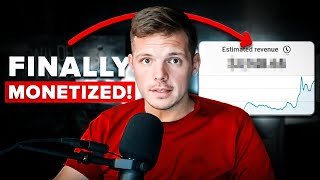
Chris Kerner (Dallas-based entrepreneur) walks viewers through his first 60–90 days after YouTube monetization (monetized July 16) and transparently shares analytics and earnings. He reports roughly $4.3–4.4k earned since monetization (shorts ≈ $1,575; long-form ≈ $2,775), contrasts RPM differences between long and short content (starting RPM $8.66, recent peak ~$20.26, average ≈ $16), and explains how shorts drove massive views (7.3M in last 90 days) and subscriber growth (~48k added in 90 days; ~50,983 total). He emphasizes content quality (hook, content, shareability) over mere consistency, explains monetization thresholds (1,000 subs & 4,000 watch hours; shorts 3M views for shorts-based monetization), and teases forthcoming videos on growing shorts and long-form strategy.
Questions this video answers
July 16 (year implied by timeline).
$4,359 (approximately $4.4k).
Shorts: $1,575; Long-form: $2,775.
Starting RPM: $8.66 per 1,000 views; Recent peak RPM: $20.26 per 1,000 views.
About $16 per 1,000 views (average over the period shown).
Chapters
Welcome to the Kerner office. I wanted to do something a little different today and kind of pull back the curtain on how much YouTube paid me in my first 60 days of being monetized. I've seen other videos like this and they're not very transparent. They gatekeep a little and I'm just gonna share my screen and put it all out there for you to see. I don't consider myself a YouTuber. I'm more of a serial entrepreneur that happens to have a YouTube channel. YouTube is tough, but I want to show you that it is doable even if you don't have an audience. It is the smartest algorithm in the world and it will keep fighting for you until it finds your audience. So I'm gonna show you how much I made, the what data I look for, how I try to make things go viral, and then in a future video, I'm going to show you how I got to 54,000 subscribers in my first eight months. So be sure to subscribe so you can watch that when it goes live. Some background on me. I'm Chris Kerner. I live in Dallas, Texas with my wife and four kids. I've been starting companies my entire life. Since I was 11 years old selling used golf balls out of a red wagon. I've started multiple companies worth seven to eight figures in value or revenue or profit, depending on how you look at it. I've had a bunch of failures and I invest in RV parks for a living as well. So three main things Start companies, invest in RV parks, make content about all of the above. Let's talk about how to get monetized. So YouTube wants you to have 1,000 subscribers and 4,000 watch hours in the last 12 months. And YouTube shorts do not count as watch hours. If you want to be monetized on YouTube shorts, then you need 3 million views, which is very hard to get unless You've cracked the YouTube shorts code, which I like to think I have and I'll talk about that later. Even if you go viral before you're monetized, you will not earn a dime of that money. So you want to get monetized as soon as humanly possible. I posted my first YouTube video in mid February, which was my podcast episode with the camera rolling the Kerner office. And at that time my podcast was me doing like a Dave Ramsey style show. But for entrepreneurs, entrepreneurs would call in, I'd hit record and answer their questions on the spot. So it took almost exactly five months from mid February to mid July. Everyone knows you have to be consistent on any of these platforms. So I was. I pushed out one to three long form episodes per week, and then a month later I started producing about one YouTube short every single day. And man, those first YouTube shorts were bad. Really bad. They're still up. You can see them, but don't. I don't want to overhype consistency though, because everyone talks about consistency this, consistency that, and I think it can set a false expectation that as long as we're really consistent on YouTube or any other platform will be successful. That's not true. At the end of the day, any social media platform wants us to keep users on their platform. If you haven't posted in three years, but you put out something that's viralable, it will go viral. If you post every single day and you never put out good content, it will not go viral, it will not get seen. Every good video, either long or short, needs to have these three things. An amazing hook so people keep watching amazing content, so people keep watching and. And shareability. Now, in long form, content shareability is not quite as important. The same with YouTube shorts, but on any other platform, you need to see 1 to 3% of people sharing that video with someone else. Let's take a look at my first few months of posting videos and see how that went. Okay, what you're looking at here is my first three months of views by week. In my first week, I believe it was February 15th, I got 92 whopping views to my videos. 357, 23, 10. And then I took a step back. And then you see in March I got 17,000 views on my videos. A lot of these are driven by shorts, though. If I go up here and set the filter for only long form, you can see a little more accurately. 92, 243, 309, 251. And then in March, I had over a thousand in one week. And then I had over 1300 later in April. Now, a lot of this is driven by my Twitter audience. I had about 60,000 Twitter followers at this time. And before you think, oh, no fair, I don't have an audience that I can point to, it is extremely hard to pull an audience from one platform to another. And here's why. People that go to Twitter for business content find me for business. They don't go to YouTube for business content. At least most of them don't. They go to YouTube to watch survival videos or something else. And so if you have an audience somewhere else and you think, oh, I'll just pull them from over there. And it is not that easy, is it? A head start? Is it helpful? Yeah, it's helpful. It's better than not having it. But it is nothing you can rely on. And I even had a newsletter with about 7,000 subscribers as well and I couldn't rely on them either. You just got to let the algorithm work its magic. Let's look at the next three months. Okay, this is May through July and you can see that I was getting these are only long form videos between 1,000 and 12,000 views every week on average. I took a vacation for basically all of June and I took a step back as a result. But in July I got pretty serious about content and things started exploding. Now let's zoom out and look at the entire year. Okay, these are my views by week for the entire year. Right here is when I got monetized July 16th. Now one of two things happened here. A, the algorithm said, hey, this guy's monetized. We want to make money from his channel. Because if I'm making money, then YouTube is making money. So the algorithm prioritizes my content over non monetizing channels. That's one theory. We all have theories, but we don't really know how the algorithm works because you can see that my traffic exploded after I got monetized. Now the second explanation is I had my first viral hit in mid July. I got really lucky and the timing worked out perfectly. And then in August I had a couple more viral hits. Now keep in mind, these viral hits were not happening on YouTube shorts. They were happening on Instagram Reels and on TikTok. And I will do a whole other video about how to take short form content from other platforms and drive them all towards YouTube because it is an art form and I love it. So I had two to five reels and TikToks going viral on Instagram and TikTok, but they did not go viral on YouTube until I figured it out. And so that viral traffic through my call to actions at the end of these videos started driving traffic to my YouTube channel. And people were subscribing before even watching a video because I was promising them content in my shorts that would pay off in my longs on YouTube. This is what it looks like on a monthly basis. This last one here is October and it's only the seventh day of the month, so that's not quite accurate. But you can see on a monthly basis after my vacation in June where I took some time off, things have been climbing every single month. But you're here for the monetization. So let's get straight to that. I'm going to reset the filters to show what has happened since the exact day when I got monetized on July 16th until today, October 7th. We're going to go to estimated revenue and we still have the filters on for long form video. So we'll turn that off because I make most of my revenue from shorts, believe it or not. Okay, we're going to reset this to weekly and boom. Okay, so since getting monetized almost three months ago, about two and a half months ago, I have made $4359. And if we separate out the shorts and the longs, from shorts I have made 1575. And from Longs I have made 2775. So I've made more money from long form videos because my rpm, my revenue per thousand views is much, much higher. But I've had many, many, many more views on YouTube shorts and it's actually provided a decent income, which means most people can't count on shorts providing any income because the longer people spend consuming your content, the more money that YouTube can make on ads, therefore, the more money they give you for their ads. Now, what's most interesting about this content is the rpm. So CPM is cost per mil, in other words, the cost of an ad per thousand views. And then RPM is revenue per mil. That means money to you per thousand views. So a good RPM for a YouTube channel is anywhere between 6 and $10. That's considered good. Someone like Mr. Beast or dude, perfect, that has a young audience that's largely international, they might only make three to five dollars per thousand views because their audience isn't as high value. My audience is primarily business owners and aspiring business owners. And so they're worth more to an advertiser. And so I'm going to set the filters here for RPM and you can see what happens when to my RPM over time. So when I started, I was making $8.66 per thousand views. That's profit to me before taxes. But every single week, with some exceptions, that has been climbing. Last week my RPM was $20.26, which is two and a half times what I started at a mere two and a half months ago. Here it is on a daily basis and here it is on a monthly basis. Now, the reasons for this are multifold, but a CPMs are rising for advertisers. Therefore, if you're on the other side of this equation and you're trying to place YouTube ads, it's only getting more expensive. B YouTube is doing a better job at finding my audience. It takes weeks, months, years for YouTube to find the exact Persona of the person that wants to watch my videos. And thankfully for me, that person seems to be of a higher and higher quality because my RPMs keep going up. So you can see right here, my average RPM over time is almost $16. So if I post a long form video like this is my best one ever. So it is an outlier. It got 30,000 views. I made $20.47 per every thousand person for every thousand people that watch that video, or $612.03. And here's what's really interesting about human psychology that I've learned from my RPM numbers. The videos that I post with very wealthy people that have built big businesses, those videos do the worst from an RPM standpoint. Let me show you an example. So this business here, I talk about starting a pet cremation business, which is very expensive to start. My RPM was $10.84 on this business. I interviewed a gentleman who started a chain of high end restaurants across Florida. My RPM is almost $10 there, which is well below my average. But up here, my best video ever, my RPM is twice as much, $20.47. And all I'm talking about is a side hustle of how to put shelves together in a garage. You might think, okay, lower value audience be watching some random side hustle video about building shelves and selling them on Facebook Marketplace. And a higher value person would be watching about how to build a $10 million alpine slide or start a chain of restaurants. No. And because what my theory is is that people that are aspirational and they just want to be motivated, but they're not really going to take action. They like watching videos of Elon Musk. They're not really actionable, but it makes them feel good. But people that want to make extra money, even a thousand dollars a month, they're ready to act. They're ready to go to Home Depot and load up their Corolla with two by fours. Those people are action oriented and they're in a phase of their life where they want to make a change. Therefore they're more valuable to advertisers. Let's look at what my RPMs are on YouTube shorts. I'm going to change the filter 23 cents. And these are also trending upward for the most part. Last week it was 22, 23, 26. I averaged around 25, but it started much lower than that, below 20. That means if I have a YouTube short, get a million views, which I've only had a couple do that, then I make $250 from that video. Now that's not much money, but my shorts take me about 30 minutes to produce and they don't cost much to edit either, so that's a pretty good hourly rate for my time. Furthermore, YouTube shorts are very, very evergreen, which means they will live on YouTube for months and years and years. YouTube will keep working hard for me to show them to the right random audience that wants to swipe on that random short or long form video. Let's recap this on a screen that's easier to see all these stats. So if you look at my last 90 days, I've had 7.3 million total views, the vast majority of those coming from shorts. I've had 98,000 watch time hours, which is crazy because it took me five months to get 4,000 watch time hours and now I've had days where I get over 4,000 just in that one day. I've added over 48,000 subscribers in the last 90 days, but I have about 50,983 total. So it took me three months to get 3,000 subscribers and then another three months to get 48,000 subscribers, which is crazy. That is just a lesson in compounding. Keep putting out videos, keep iterating, export your data on shorts. You want a high swipe through rate over 70%. You want a high average view percentage over 70% and you got to retain them throughout the whole video as much as you can. Now to revenue. I've made about $4,400 from YouTube, which is great. I never aspired to be a YouTuber. I still don't consider myself a YouTuber. It was just another platform for me to publish my podcast where I talk about business ideas and I go deep on niche business opportunities. But I'm really, really glad I did because it's fun, it's addictive, it provides an income and I'm able to spread entrepreneurship with the whole world. So if you want to see more business content like this, how to start a business tactically with exact tools, specifics, none of the fluff, none of the guru stuff. Subscribe. And if you want to see more specifically how I analyze my YouTube shorts, subscribe, because that video is coming out soon as well as well as one for long form videos. And go check out the Kerner office on any podcast platform.









