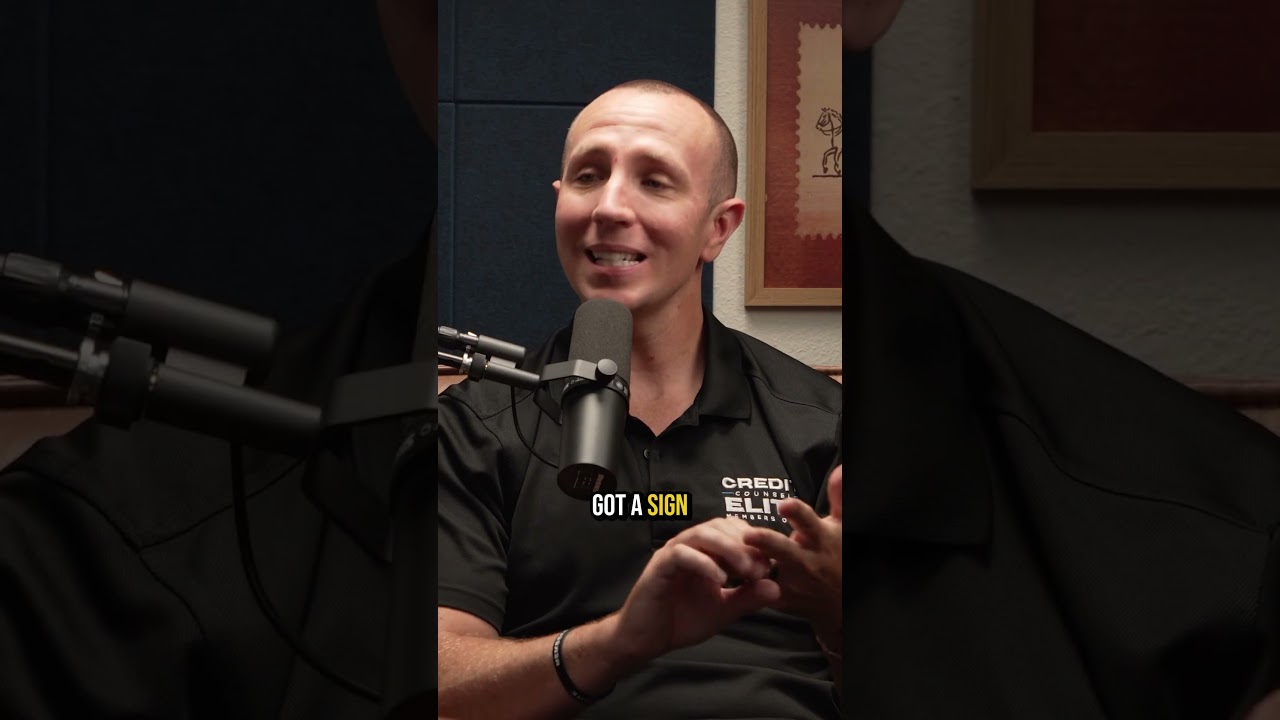
I Thought I Understood Credit Cards Until I Talked to This Guy

Brandon Elliott breaks down how to use zero-percent credit cards and bank products to fund real-estate deals and businesses. He covers Chase's 5/24 rule, credit-score optimization through authorized-user trade lines, and ways to convert credit limits to cash with 1-5% fees. He also explains the BRRRR strategy and why forming an LLC matters for getting approved.
Chapters
You can get up to $500,000 with interest rates as low as 0% and repeat the process every 6 months.
Yeah.
And it's just that knowledge of knowing that that's even a possibility, more people would take advantage of it. Like Chase, for example, you can get up to $150,000 without any documentation, 13 credit cards in just 10 days. He got $150,000, 0% interest. He got 13 credit cards. He got a signup bonus for each one. So he ended up walking away with like $15,600 in just free cash. He just wanted the cash. He didn't wanna travel, but if he wanted to use it for travel, he actually I could have got 7 to 21x return off of it.
Wow.
Hundreds of thousands.
Crazy. Wow.
I can get my credit limit transferred into my bank account and they'll do it the very next day.
I had no idea this existed.
Oh yeah, yeah, yeah. I've never heard of this. Yeah, so many people don't.
My guest today is an expert at using zero-interest credit cards to get from $500,000 to over $1 million in cash. Now, this could be cash to start a business, Buy a business, develop real estate, buy real estate, Airbnb, investment property, whatever, 0%. There are loopholes out there that are perfectly legal and ethical that everyday individuals can get. And if you don't have good credit, we talk all about very specifically how to get good credit in a short period of time. This is the episode for you. It applies to anyone and everyone. Please enjoy. How long have you been doing this?
So I've been in the funding, like, Following what the banks do and what the mega wealthy do since 2011. So I've been doing it for 15 years. I started using it finally for real estate in 2015.
Okay.
And that started changing my life, using credit cards to buy real estate.
Okay. So are you exclusively helping people get funding through credit cards or is that just one way?
It's just one way. But the 0% interest, it's only in credit cards. But there's over 400 different products and services that the banks offer. Mortgages first, prioritize. And then credit cards and then lines of credit or loans. And then lastly, auto loans.
Oh, okay.
In that order.
Like loans against cars that they own or?
Just if you wanted to get like a vehicle or something, like it's the easiest to get.
Okay.
So you want to do that last versus a mortgage. They're going to be more critical about, you know, applications you've applied to in the last 6 months.
So let's say I own a plumbing business, $1 million in revenue.
Yeah.
I pay myself $150,000 a year.
Yep.
One crew. I want a second crew. I need a second van. I need to hire. I need to make some investments. Let's say I need $150,000. You said you start with mortgage. What would you advise me to do as step number one?
Yeah, if you wanted to prioritize real estate right now and get a mortgage, then we would talk about that first. But if you're not, then you're just looking for capital, like working capital, cash, then you would go after credit cards and I would want you to go after the 0%. And on the business side specifically, if you're going to leverage it.
Okay.
And then if you needed vehicles to actually just grow and scale on that end, then we would prioritize that. You would just identify how many vehicles do you want? And then obviously we want to put it on the business side and we want you to leverage the full amount, not just like, I don't want you to have to put anything in. So there's different loans and different opportunities that you could build the For example, like Bank of America, you could open a brand new business account with them, wait about 2 weeks, put some money into it, and then afterwards apply online. And you can actually get up to 4 auto business loans up to $50,000 each very easily.
Okay. So if I, let's just say I needed 4 vehicles for my business.
Yeah.
You'd go straight to that?
Yeah, I would go straight to that to get pre-approved. And then there's some cool hacks that I would recommend for just auto dealerships or getting a car in general, like going the last day of the month. And then also looking, each dealership has like a leadership board. And so you want to look for that. And you want to look at the guy on the last, maybe not necessarily him because he might be getting canned already.
Yeah.
And go to the next guy right above it and go about 2 to 3 hours before they close.
Okay. On the last day of the month?
On the last day of the month, because they're willing, the financing department and the company itself are willing to go hand over fist to be able to hit their quotas and hit their numbers.
Maybe the last day of the quarter, even better, right?
Yeah, sometimes. Yeah.
Yep. And so John is the second or third worst. I've sold used cars before. He was the worst.
Yeah.
But, uh, you're thinking, all right, this guy's hungry. Like, he needs something.
For real.
He's willing to, to maybe sell it for a little less. Yeah.
The manager's willing to work out something for them just to keep them alive. Like, they care more about the volume. And so sometimes they'll be okay with even taking sometimes a loss. You'll get the best deal then.
Okay.
Yeah.
Okay. So that's just kind of like you consulting. But in addition to that, you would probably say go to Bank of America.
Yeah, get those pre-approvals first because now you have more power to go into.
Yeah.
And then now you can really negotiate because it's like, oh, it's basically cash.
Yeah.
You know, like I'm good to go right here.
Okay. What would it take for a business owner to qualify for that one specifically? Like, 700 credit score or what would they look for?
Yeah, ideally they're looking at credit score. They're looking at sometimes bank statements, just the last 2 to 3 months.
Okay.
So there's cool different techniques that you can do just to— they just want to see more money going in than going out.
Yeah.
Over the last 30, 60, 90 days in some cases.
Does the bank care about profit or revenue and/or like transaction volume?
They care about transaction volume. They care about how many transactions. They get very jealous and territorial because they're marketing companies basically. They're competing against other banks. So they want to feel like they're the only one. So if you can be with them for a long time, never close out your bank accounts, have multiple products and services with these banks, and then have at least 17 transactions or so per month going in and out of—
17?
Yeah.
Okay.
Because otherwise, if it's just sitting there, then it feels like—
It feels like it's stagnant. It's going to run out eventually, right? They need to see movement.
Yes. They want to see movement. They want to feel like they're the only ones. They're looking at the average balance that you're holding. They want to see more money going in than going out. Some banks care all the way up to 6 months, you know, but a lot of them, 30, 60, 90 days they'll care about.
Hey, if you are enjoying this episode, please take a second to make sure you are subscribed to this channel because you might think you are, but you're probably not. Just hit subscribe, maybe share it with a friend that could use some funding for their business. It could change their life and it would mean a lot to me. Thank you. Okay, so let's say I need $100 grand for my business just for operating capital or whatever. I'm assuming credit cards in that case?
Yeah, especially 0%. The 0% is anywhere from 6 months to 24 months. But on average, it's very common to see 18 months.
Okay.
And the cool part is every 6 months per person, you can repeat the processing and do it again.
Okay.
And so our goal is to show members how to actually get up to $500,000. So if you got just $100,000, it'd be a super disappointment.
Yeah. How is that possible? Like, what types of cards are you having to put together to get $500,000?
Sure. Anywhere from 10 to 50+ applications.
Okay. At different Yeah. Like Amex, Chase, whatever.
Well, those are, those are the common big banks. So how we break it down is 3 levels. Big banks first, regional banks second, small local credit unions last.
Okay.
There's a lot of power in the small local credit unions, but each one's going to be different between your area.
Okay. And there's the fewest of the big banks and there's probably like a medium amount of the regional banks and there's thousands of the, of the credit unions. Is that right?
There's thousands. So big banks, there's about a dozen or so, maybe a little bit more, you know, Chase, Bank of America, Wells Fargo, Citi, Capital One.
They have the most money.
Yeah, they have the most money. So they're going to be somewhat easy, but they also have certain bank rules. Have you ever heard of the Chase 5/24 rule or the 2/30-day rule? So these rules are specific to the big banks. Like Chase, the 2/30-day rule is that if you've already been approved for 2 cards in the last 30 days with Chase, they're going to naturally deny you for a third. Unless you have a business bank relationship manager that's good and knows what they're doing. If you've applied for and got approved for 5 cards with any banks in the last 24 months, 2 years with Chase, they're just going to deny you.
Okay.
Because they're very jealous and territorial and they're not great, but there are rules to the game.
Yeah. So if someone were to get $500,000 in zero interest credit cards, what would that breakdown look like? How much would they be getting from the big banks versus medium versus Yeah, that's a good question.
It is probably on the lines of like $200 to $300 they could get just from the big banks.
Okay.
Like $150 to $250, something like that. The regional banks, you can get another $200 or so. And then small local credit unions, all this really depends on your relationships with them and what you're saying and what your current credit profile looks like. If you have credit cards with limits under $1,000, then When a new bank pulls your credit, they're going to see, oh, this bank over here that you had a relationship for—
They don't like them. Why should I like them?
Exactly. They're going to say, well, they don't trust you with even $1,000. Why should we?
Yeah.
So it's important to use your credit properly to get high limits and saying the right things. Once you do that and you position yourself in a good stance, then you're just doing it in a domino effect.
And if you get that, like, are you just getting a cash advance wired to you?
Yeah. So liquidation. Right. How do you liquidate the credit cards into cash?
Right.
So there's dozens of ways to be able to do this. How I originally started is there's, you know, the quote unquote balance transfer or cash advance, like you mentioned. But you want to make sure it's at a promotional rate. If you don't do that, then it's going to end up being the mafia rates of 20%, 30%, 40%. So you don't want to do that. But you can call into them and you can ask, is there any way that I can get my credit limit transferred into my bank account and they'll do it the very next day. The cool part is usually it's a flat fee of 1% to 5%.
Okay.
There's other platforms like Plastiq that you can use, BillPay, Zill Money, Milo. There's dozens of different ways. They can just become a little bit more terms and conditions. You got to understand them so you can weave through them.
Okay. So if I have a Venture Rewards card, $40,000 limit, I call them up and say, hey, I need, I need that $40 grand in my checking account.
Yeah.
And they'll say 1% fee. And I say, done.
Done.
Yeah. Okay. That's pretty common.
It's common for about 3%.
That's a more common fee, you're saying?
Yes.
3%? Okay.
And some like Chase or some of these other banks, they've been doing the last year or so, they've been doing more of that closer to 5% flat fee.
Okay. So in this case, it would be $1,200 fee. Not getting that back, right?
You're not getting that back. It's one time. They just, they'll liquidate the full amount. They'll put it into your, into your checking account. You can use it as cash. You're responsible for making your monthly minimums, right? And then it's 0% interest for, let's say, 18 months. So it's not due, the whole principal, until then. There's certain little terms and conditions you want to be mindful of. Many times you can't use that credit card for any new transactions. If there's a little bit of availability on it, if you use a transaction or a subscription on it, then it will actually start hitting you with interest for all of it.
Mm-hmm.
It's crazy. I've learned that mistake a few times, and luckily you can call in, kind of complain, and they'll reverse it and get you taken care of.
But then I have like a full credit limit, and that's not good for your credit, right? Don't you want a lower credit utilization score?
Correct. So that's why when you leverage, you want to do it more on the business side.
Mm-hmm.
The personal is really your foundation to get more business. And down the road, let's say you get $1 million in personal credit down the road, you can use 29% of it. And it's not going to hurt your score. It's not going to fluctuate your score going up and down, even on the personal side. So if you get $1 million on the personal side, then you can take out $290,000, have a balance of it, and it's not going to affect your score.
Okay, so let's say I want to buy like a short-term rental, right? Something for Airbnb. It's $500,000. The bank needs 15% down.
Yep.
So $75,000. Yeah, right. If that were you personally, you wanted to buy a $500,000 Airbnb.
Yeah.
What would you do specifically?
Yeah.
To get that $75,000. You had no cash in the bank. You had no— what if you have no business? You have, you have no entity, no LLC, nothing.
Dude, this was my story exactly. I didn't have an LLC. I went after business credit though anyway.
Okay.
And so with some banks, especially the big ones, you don't necessarily even need an LLC.
You're just like a sole proprietor.
Yeah, it's just a doing business as.
Okay.
And I put my social for the EIN number, you know, And so my score was good. Luckily, I had decent-sized credit limits from every 6 months just randomly asking for more. And I paid it off. I would use the card heavily and I would pay it off each day, just get into that routine so I don't need to get out of control with it. At the end of the day, with certain credit cards, let's say you have a $20,000 credit card limit with Chase, for example, and then you have another airline credit card with Chase, that is a $50,000 limit, but it's not 0% interest. But you're like, what am I doing with this card? You can actually call that bank like Chase and just ask them to transfer the limit over into your 0% interest card, that $20,000. You can combine it. That whole bank, Chase, they've given you the threshold of $70,000 or whatever those numbers are, right?
Yeah.
And so, You can just leave $1,000 on that one card, transfer the rest of the limit on this 0% interest card, be able to stack it up. And then I would ask them, hey, is there a way that I can— I have this great opportunity, I want to take advantage of it. It's going to be an awesome investment. Can I use your balance transfer, the promotional 0%? You get hit with a flat fee. They'll put it in the bank account.
And balance transfer, that's just you getting the credit limit as Cash in your checking account.
Yeah. So the balance transfers, truthfully, it's their best terminology that they're going to understand.
Yeah.
So the best thing that you can do is either label it as the balance transfer or cash advance, but at a promotional rate. And you want it not to pay off any other credit cards or any other bills.
Because that's what I think of as a balance transfer.
100%. Yeah. But instead you want it into your bank account.
Okay. Do you ever use Busy for making LLCs, new entities?
100%. Yeah.
Busy's the best.
Yeah, yeah, it used to be Incfile.com. They're great. Anybody that's looking to set up a brand new one, it's, it's a great resource. You can even call them. They're very communicative and understanding and like can kind of guide you through. But within 15 minutes, you got a brand new entity. $200 later, it's like the next day.
Well, because the, the state filing websites are terrible. Like, they're so hard to work with. And Busy doesn't even charge. Like, if you need registered agent services, they'll charge you for that.
But you have to pay for that anyway. It's like one way or another.
They just charge you the state filing fees that they pass on. So it's like—
Simple.
Yeah, I love Busy. I mean, what I love about it is there's so many things you have to remember as a business owner to do. And the last thing I want to think about are like registered agent services, filing documents, deadlines, random fees, unemployment, this or that. Like, I've gotten so many scary letters in the mail in my 17 years of being an entrepreneur. I use Busy to just handle all of that so I can just forget about it, worry about sales and marketing, the things I'm good at, and Busy can just take care of all the regulatory document Stuff that frankly I find kind of boring anyway. I mean, every state that you try to file these LLCs in has different deadlines, different documents, different requirements, different boxes to check. And with Busy, I don't even need to worry about it. They have a clean user interface. I just do it through them and I can rest assured that it's all taken care of. Well, and Busy will do your EIN too, I think.
Yeah, 100%. Yeah, you can add it all in there and I highly recommend it.
Yeah. So if that were you in that case, you wanted to buy this Airbnb, In this scenario, what kind of a credit score would you need to have?
To be able to get funding, you can really be in even the 600s, like high 600s. If you don't have any late payments, collections, derogatory remarks at all, then most likely you're in the low to mid 700s. Okay. And if you're there, there's no reason in the world why you can't be and you shouldn't be in the 800 club in the next 30 days. Yeah, it's very simple. It's very easy. So getting to the 800 Club in 30 days, all it comes down to is after the fixing is done, you're not going to have— there's 6 boxes that make up your credit profile. 3 of those are for fix-related, like late payments or your payment history, derogatory accounts like collections, charge-off, things like that. And then your hard inquiries. Okay. The other 3 boxes are for build. Those make up 55% of your FICO.
Okay.
And so it's a big deal and a lot of people sleep on it. What that includes is the total accounts. You want to be at 21+ total accounts.
Like total accounts as in bank accounts, credit cards, like they don't— shopping cards or—
Yeah. Yeah. So they don't count bank accounts like checking and savings, but they do for—
Loans, credit cards, shopping cards.
Yeah. So it's 6 different products. It's personal loans, auto loans, mortgages, student loans, retail credit cards, and regular credit cards.
Okay.
So 6 different products.
So 21+ of those is ideal.
Yeah. It's not the myth that we grew up with having only 2 or 3, you know.
Right.
They want to see mixed use as well that you can handle and manage credit properly. So that makes up 10% of your FICO. Your average credit age, it makes up 15% of your FICO. It's a big deal. And this is the part where many people are sleeping on because they actually want to see that you have 9 years or higher average credit age.
Yeah.
And how they're doing that is they're adding up those 21+ total accounts, the age on them, and they just simply divide it by that many accounts.
I swear, my— on my credit score, that's like my only like yellow. Everything else is green. And I swear it's been like 4 to 5 years for the last 15 years.
Well, it's because you get new accounts every so often. So that brand new one averages it lower.
It doesn't seem like I get that many new ones, though.
But it's not. But that's why, like, over time they start rewarding you. And so you're like, all right, Brandon, well, what the heck? Like, how am I supposed to— your utilization, it makes up 30%. Of your FICO. You're always good there. You're below 9%. You pay off your bills on time by the statement closing date, not by the due date, but by the statement closing date. And so all the other boxes are good, but you're in the yellow over here. So you're in the mid to lower 700s. You're like, what the heck? All it comes down to is adding authorized users. So you could go to your parents, for example, or friends, family. There's an industry online that you can actually purchase them from.
Mm-hmm.
Right. Trade lines. And so you can get an aged— you just need to do the math. So we have on our website, there's an AU calculator, it's called, and you're basically just plugging in—
Authorized user calculator?
Yeah, exactly. And so you're just plugging in all of your total accounts and then you're seeing, hey, if I added a 40-year-old account on there, what would it do? Would it boost me up? Would I get— if I'm at 20 total accounts, cool, I need one more to get to perfect, you know, and then I need one card that's 30 years old to get to, to where I need to be, or I need 2 cards that are 60.
So it does 2 things in one. It gets you to the 21 and it increases your average amount of time.
It does 3, all 3 of those boxes. So the utilization impacts the total accounts and the age. So that's where that 55% makes it very valuable. And that's what will take you to the 800 Club. And it only takes 30 days max.
Yeah. So after the fixes are done.
Yeah, you have to do fix, otherwise it's lipstick on a pig.
You're right.
Because people do that out there too. And it's the silliest thing because you could have late payments, collections, derogatory, you're in the like 500s.
Which matters more than all this other stuff.
100%. So like you could boost your score up to the 800 club and— or like not the 800 club if you have late payments and collections because it's going to drop 60 to 100 points. So you can be in the high 600s or low 700s. with all these derogatory accounts, but you're boosted up. But the banks are going to see and they're like, oh, we don't trust you because you have all this nasty stuff.
How do I find those people? And how do I attach them to my account while being aware of like privacy concerns and all that?
So you aren't going to attach them to your account. You will get attached to their account.
Okay.
So they're going to basically— let's say I had a 40-year-old credit card. I'm going to add— and you wanted to— you would lease it, basically it's called, for like 60 days. You would be the buyer. I would be the seller. I would need your full name, your date of birth, and your social. They're going to ask 2 other things. What's the address to send the card to and what's the phone number? I would put my phone number and I would put my address. So the new card is going to have your name on it. It's going to come to my address. I'm going to call it, activate it. I might use it at the dollar store for one transaction just to show something.
Just to show me as the buyer, as the new authorized user on that account, I'll never You'll never get—
You'll never get—
because they don't want me spending on it.
Yeah, exactly. So you're not going to get access to it. You don't know any— you know how when you call into your bank account or your, uh, the back of the number on the credit card, they ask you a series of questions?
Yeah.
You don't know any of those security questions, so you're not going to be able to get—
I don't have the login.
You don't have nothing. So they have all of yours. You have none of theirs. There could be a bankruptcy, collections, derogatory, but on that one card or several cards that they add you to, it's got to be good. Like it's got to be no late payments, collection. Like it's got to be in good status, long history, ideally large limit and low balance.
Mm-hmm.
Now, a lot of people add friends and family, but they don't educate them on this piece. So therefore they end up having a large balance one day. And so whatever is on that credit profile, it reports every 30 days on the statement closing date. There's a statement opening date, 30 days later, statement closing date. That balance gets reported to the 3 bureaus— TransUnion, Equifax, Experian. 3 weeks after that, it's the due date. You have to make the due date. So you don't get a late payment, but that statement closing date, that's what reports. And so everything on that good card is going to start showing up underneath your credit profile to boost your stuff up.
Yeah.
But vice versa, if there's a late payment out of nowhere or a shopping spree and they forgot the statement, you know, closing date—
Could do me more harm than good.
Yeah, it could hurt you.
Yeah. So with me as the buyer, right, the person that needs a higher credit score, the risk to me is that that person suddenly becomes like an untrustworthy borrower. Right. And their credit utilization spikes or they declare bankruptcy and that would negatively affect me, right?
Just that one card. If it ever did, you can just remove yourself from it. You call up the bureau and you say, hey, this isn't mine. I need it removed. It's hurting my profile.
Okay. And then you're back to where you started.
You're back to where you were.
And then what is the risk to the seller?
The seller, there's no risk to them.
I can't see their transactions on my card.
You can't see anything. Nope. Okay.
What does that trade for? Like, what would that cost?
It depends. So online as a seller, Because there's an industry of trade lines. They've been doing it for 20-plus years. You can sell yours and make— I used to sell mine on there and I would make $125, you know, $200.
One time?
Yeah. And they would, they would sell it for like $2,000.
Really? Yeah.
So they make a hefty middleman.
Holy crap.
With that being said, too, you can lease— every credit card has anywhere from like 5 to 10 spots available and you can lease them for typically about 60 days.
Until like it reflects on the score and they got what they need to get done.
Yeah, correct.
After that, they don't really need it anymore.
Yeah, because you're going to— they're boosting their score up so they can go to the banks, qualify, get their application sequence in, do their mass apply, get a lot of funding. And then once you get funding, you know, you get 10 to 50+ applications approved, then you're really just seasoning it, being a good steward of it over about 6 months. Yeah, because— and then you can do it again 6 months later. The reason why you have to take a pause and wait 6 months is because the banks again are very jealous. And so when that— whether you get 1 credit card approved or you get 50 approved, the banks are going to start hitting you with denials when they start seeing it on your profile stating that you've been searching for too much credit.
Yeah.
And so we don't want 1, we go for 50.
Then I've had a Venture Rewards card for like 13 years.
Sure.
It's always been paid off. So you're saying that is an asset to me? And people like me. There are marketplaces out there where I could— let's say there's 10 spots.
Yep.
It's me and my wife. Let's say there's 8 left.
Yep.
Right. I could sell that for $200, $2,000, whether I have a middleman or not, somewhere in between. If I find 8 people and I could even do that on like a quarterly basis.
I would recommend you can do it every like 2 weeks, add somebody.
And like if I filled it up, if I added 8 people and it's full, I could swap them out every quarter or every 2 months.
You can do every 2 months. Yeah. That's the going rate online.
Is this legal?
It is legal, yeah. It's a legitimate business. It's legal, moral, ethical, no issues.
Okay, just like specifically adding authorized users and selling authorized user access or whatever?
Yeah.
Okay.
Yeah, you can look it up. So this is the best way—
I had no idea this existed.
Oh yeah, yeah. I've never heard of this. Yeah, so many people don't, and it's something that can help. It can finish the boosting of your score. What's cool too is after your removed from that credit profile, it still stays in the closed account section and the, the age adds value for the next 10 years. Okay. So it's going to be in the closed account. So those 3 boxes that it helps, it no longer helps the utilization because you don't have access. But the other 2, it does. Total accounts and the average age, it's still adding value there. So it's great. It's like an investment for your credit profile.
What is the 80/20 of getting your 500 credit score to 700, so you can start doing stuff like this. If you have derogatory marks and all that, yeah, what's the fastest way to fix that?
Yeah, so we've had people with bankruptcies, collections over a couple hundred thousand, late payments galore, 70+ hard inquiries. We've had people remove things as fast as 24 hours. Wild stuff. And then we've also had people with legitimate bankruptcies take 12 months. And so the simple truth is, when it comes down to credit repair, Quote unquote. It's, it's a crazy industry. I'm not a fan of it. Some of that stuff gets overpromised. And the fact is, number one, it's illegal for anybody to ever promise any timeframes. It's illegal. You can't. Like, as bad as you want it for yourself to get your stuff improved and as bad as we want it for you, it's not up to you and I.
You can't control for it.
Yeah.
Yeah.
It's like the bureaus are data collecting companies and they're like mom and pop companies. Okay. They're big conglomerates, but they are— they make mistakes all the time.
Yeah.
But the problem is they are data-collecting companies and they want to keep the data. And they also know that Americans aren't being taught in school this stuff. They're not being taught at the dinner table. It wasn't for me, at least. Doesn't mean that that's our fault, but it is our problem. And so it's very common that these bureaus are going to give stall tactics. And so when they give stall tactics, many Americans just give up. They just quit. And when they quit, then it doesn't hurt the bureaus. They're good to go. If you know the legal laws and the codes and how to fight for it, then— and doing it in a timely manner and have records of it, like mail to and calling in and fighting for it, then you can get favor. You can. It's just a matter of time.
Oftentimes you have to actually pay it off, I imagine, right?
No, no. See, that's a— that's a myth, too. Like, think if you have a collection, derogatory remarks, Thinking that you pay it off and that, and a lot of people do this, they get scared. They're like, oh my God, my score just dropped 100 points. And they go to pay it off really quick. That is not going to solve your problems. All that is going to do is show that it's paid off. It's still negative on your account.
Please, I need you. I need you to send me your stories. If you or someone you know made thousands of dollars in a short period of time with a business, a side hustle, a growth hack, I don't care what it is. I want you on this podcast to give you free publicity and to help grow my podcast. So if that's you, go to tkoyes.com, fill out the form. If it's a friend of yours, send them tkoyes.com, have them enter your name, and I'll give you $1,000 for the referral. That's tkoyes.com.
If you are going to pay it off, which 9 times out of 10, if it becomes a charge-off, you don't need to. The bank that—
What do you mean a charge-off? What do you mean if it becomes a charge-off?
So typically 6 months of being late in a row with whatever bank, it becomes a collection. And then a charge-off.
Okay.
And so the collection is the derogatory account. The charge-off is when the bank says, hey, we're writing it off and they should send you a 1099 because they're writing it off on their taxes. Only 10% of banks out there are sending the 1099.
Why?
Because they're greedy and they want to double dip. They write it off on their taxes, then they sell it for pennies on the dollar to a collection company that hunts you down like a dog. And then—
Even though they've already written it off.
Even though they've already written off, they make money there as well with the, with the collection company. And then they're also willing to, when you come back to them to finally pay it one day, they'll take the money too.
So this created into a profit center.
Oh dude, it's a, it's a full ring. It's a full circle. And depending on the dollar amount and depending on the bank, they might actually sue you. Like Bank of America, they're so good at this. They're the best in the industry. They have their own sister company That is its own law firm. If you owe Bank of America, they're coming for their money. They're going to get their money.
So with getting these derogatory remarks removed, who are you calling? Who are we talking to and what are we saying?
Yeah. So number one, you would typically want to get your credit report first and you want to identify what's legitimate on there and what's not. 70% of Americans on their credit profile, there's something wrong, inaccurate, off, like the status is wrong, the dates are incorrect. There's something wrong on your credit profile right now. The chances are 70%. So with that being said, what you can do is challenge it, but you got to look at your credit profile first. And then afterwards you can mail in or you can upload online. I call it the backdoor methods. You want to make a free account, not a paid one, but a free account on the 3 main bureaus, TransUnion, Equifax, and Experian. So you make a free account there and then you'll be able to upload your credit report. You want to circle, highlight the negative areas. You want to get a written document. The cool part with AI right now, dude, you can— so many people can just put their credit report in AI and say, hey, like, find all the areas that are incorrect, that's wrong.
Yeah, you know, fight this for me, fight this for me.
I'm trying to do credit repair. I want to get it legally, ethically, morally removed, improved, and drastically changed, like, now. Yeah, you know, what do I need to do? And it will draft up a letter. Sometimes you're going to want to do a handwritten aspect because a lot of these Bureaus are giving that stall tactic initially, saying it looks like you're working with a credit repair company, as if that matters. It doesn't matter. But so then they'll just stop and they won't do anything.
Yeah.
On your Social Security card, it's got to have your signature on it to make it valid. And then on your proof of residency, what that looks like is it could be a utility bill, a bank statement. You don't need the whole thing. And in fact, you do not want dates on it.
Okay.
But what you want is 3 things. You want the header. Which is like San Diego SDG&E utility bill or Chase bank statement. Right below that to the left, it's usually your name. Below that, it's your address.
Okay.
Those are the 3 things that you want for proof of residency.
And you mail that in?
There's ways you can do it. It's called that backdoor method that you can just upload it online.
Okay. To Experian, TransUnion, and Equifax?
Yes, sir.
Okay. All 3 of them?
Yeah.
Okay.
Yeah. And then give it like 2 to 3 days and then call in. Or you can mail it in to them as well. I like to do both sometimes just to make sure that, yeah, they're not playing games. Because if they keep giving you stall tactics, you're going to want to have like clear certified mail numbers and tracking and everything dialed in so that you have a paper trail so that you can actually go and sue them.
Yeah.
And people get scared when it comes down to like, oh, suing. These bureaus get sued all the time. There's data breaches all the time and they play games all the time. And so if you have something that's wrong, inaccurate, that they're playing games with and it's hurting your finances and your future, then you need to fight for it. It costs small claims court like $50, $70. And when they get served, usually they don't show up. You naturally win. If they do show up, you can fight it and most likely you can even walk away with some money.
Yeah.
And getting it removed.
Yeah.
So it's like, why not?
Yeah. When it comes to like getting 6 figures in business credit. Yeah. How important is an LLC or not?
So I told you in the beginning that when I first got started in 2015, I was getting credit without an LLC. And yes, it's definitely possible. You will get much, much more, trust me, if you have an LLC.
Yeah.
And so I do recommend it. There's people out there that think you need dozens of LLCs. You don't. Yeah. Like 1, 2, 3 max is Enough. Yeah, but understand this, they are judging you from that entity as well. Most people set up their entity structures incorrectly. The state, the name, high-risk industries, you know, you don't want that. You want something generic that goes right underneath the radar. We don't want to ever turn in documentation or paperwork. We want right underneath the radar of what these banks are able to fund.
Yeah.
Without going to underwriting and do something crazy. Right. And so how old that entity is matters. The big banks are okay with— some of them are okay with brand new entities. Most go off of statistics again.
Yeah.
So statistically, they know that most businesses fail, brand new ones, within the first year or 2.
Yeah.
So a lot of regional banks, small local credit unions, they want to see at least 2 years in history before they're able to start funding you.
Yeah.
So there's value behind aged entities.
Yeah.
This is something like I like talking about, but I also— I'm terrified of talking about because there's a lot of aged entities being sold out there and it's, it's a, it's a complete scam, dude. People are getting charged $40,000, $50,000, getting promised they're going to make $20 million off of it.
Oh, geez.
And they're not. It's one piece of the whole pie. There's 45 rules on the checklist, basically, on how underwriting is judging us.
And so entity is just one of them.
Dude, it's one of them.
So the banks don't need to see like 10 years or 2 years or 4 years of bank statements or P&Ls under the— they just want to see like when was it first incorporated?
Yes. And so they're only going to ask for full documentation if you're asking for the world.
Yeah.
And so each bank has a certain threshold, like Chase, for example, you can get up to $150,000 without any documentation. Each bank has a different number. And so stay under the radar and stay right below the threshold. If the cap at that bank is $50,000, then stay under there. Yeah, it's easier. You get quick, just faster funding. And there's so many banks. You don't need to—
Yeah.
Just get this one, build a relationship with this one, get all these other 10, 20, 40 banks. And then after 6 months of being a good steward of it, paying it off, making your investments work hard for you, then you can get increases and you can Go to other banks.
Yeah. Yeah. So, I mean, could someone theoretically go get $1 million in 0% loans and just put them in Treasury bills and then just pay it off?
Dude, of course. Yeah.
And $50 grand.
I mean, at the end of the day, you could put it into a CD, for God's sakes, and make 4.5%, 5% interest. So, yes. Like, yes. A lot of people get scared of, hey, what do I do with it after? What we do is we use a lot of it for real estate. I've always done the BRRRR strategy: buy, renovate, rent, refinance, repeat. So I love that strategy, just the value add and cash flow and appreciation, tax benefits. But lately we've been doing more ground-up construction in San Diego and it's amazing. It costs $300 a square foot to build there and it's worth $950 to $1,000 after. So it's crazy.
After it's built or after it's built and rented?
After it's built. And then I can do a refinance, get cash out refi, get all my money back plus some. I use credit cards to do it, so I get free vacations afterwards. So it can be pretty fun.
So Chase, you said $150 grand or less, no, little to no documentation?
No documentation.
Okay.
Yeah.
Like what? I mean, name?
Yeah. Yeah.
You got to fill out social name.
You just got to say yes.
Not like financial.
No financials.
Okay. Or credit?
They're going to do a soft— they're going to do a hard pull on your credit. Yes.
What are some other banks with like common like thresholds?
Yeah. So US Bank, you can get up to about $80,000. Bank of America, $50,000 depending on the relationship. If you have a strong relationship and for a long long time, like you can— some of these just do very well, you know, at a young age. I was, I think, 22, 23. I had several credit cards with Bank of America, with one at $65,000, another $80,000. I was like, I was working restaurant jobs. I was making like $30,000 a year, you know, like I was a busboy and I had credit limits bigger than, you know, a couple of years.
Yeah.
Yeah.
So. So when you say Chase is a 150, is that like a Chase credit card or like just a personal loan from Chase?
Dude, we've had people get no loans because There are certain banks out there that can give loans up to $25,000, maybe $50,000.
But those are unsecured and hard to get.
No, those would be secured, personally guaranteed.
Okay. So secured by your personal finances.
Correct. So with some banks, they're not going to ask for documentation with loans. A majority of loans, they will ask for documentation. The ones that aren't going to ask is for credit cards. But at the end of the day, we've also, you know how I told you about the 2 and 30-day rule with Chase? You can't get— if you've gotten 2 approved, you can't get a 3rd one. Okay.
With our relationship manager, He'll actually override that. Okay.
Because he works directly with underwriting. And so he's helped one of our members, Yosef, get 13 credit cards in just 10 days. And so he got $150,000 in funding, 0% interest. He got 13 credit cards. He got a signup bonus for each one. Normally it's $600 for each of those. He got double the signup bonus, so $1,200. So he ended up walking away with like $15,600 in just free cash.
Yeah.
If like that could have— he used it for statement credit because he just wanted the cash. He didn't want to travel. But if he wanted to use it for travel, he actually could have got 7 to 21x return off of it.
Wow.
Hundreds of thousands. Crazy.
Wow. Why don't more real estate investors do this for down payment cash?
It's just the lack of knowledge, man. If at the end of the day, if people knew it was out there and it was possible— credit wasn't talked about in school. And in many homes, it was like frowned upon, like credit or Dave Ramsey approach. And don't get me wrong, Dave Ramsey is incredible if you have no idea how to manage money and you're spending too much.
Right.
Like, soak up Dave Ramsey. But at the end of the day, there's a big, big difference between good debt and bad debt. And I can sleep so much better at night knowing that I'm not using what's so popular, OPM, other people's money. Like Thanksgiving's coming up, Uncle John, if he sees and he's like, hey, where's my money, dude? Or you got Grandma, loving heart, and she wants to invest in your first thing, but it's her retirement and the whole family's looking at you like, hey, don't mess this up.
Yeah.
Like, that's a lot of pressure and pain and you could mess up.
Yeah.
So that's friends and family that you don't want to— I don't want you to lose sleep at night.
Yeah.
You know, so at the end of the day, OBM, other banks' money, it's out there and it's possible and the banks have to lend to us. You can get up to $500,000 with interest rates as low as 0% and repeat the process every 6 months. And it's just that knowledge of knowing that that's even a possibility. More people would take advantage of it.
Brandon, this has been amazing. Where can people find you or your business?
Yeah, man, we do a live boot camp once a month. And so our next one coming up is actually, it's October 5th through 9th.
Okay.
They can go to capitalbootcamp.live and find out more info. So capitalbootcamp.live, it breaks down the whole process and people can get their tickets to join the event. Just a virtual live event. Otherwise on Instagram, it's Brandon Elliott Investments and our business page, it's Credit Council Elite.
Okay. Thanks, Brandon.
Yeah, thanks, man. Appreciate it.
If you like this content, please share with a friend, hit a like or a comment below, and we'll see you next time on the Koerner Office.