Webinar: RV Park Investment Breakdown + 2025 Bonus Depreciation Drop
Recorded webinar (Dec 5, 2024) led by Chris Koerner and John Cascarano describing their RV-park investment business (Blue Metric / Streamside). They present portfolio-level facts (10 states, ~26 parks, ~2,043 pad sites, ~$60M invested), a deal deep-dive for River's Edge (Springdale, AR) including purchase metrics (planned $10M purchase, 2024 NOI ≈ $950k, 9.7% cap rate, $5.6M raise with $6.5M seller financing at 4.5% interest-only for 36 months), and an offer to invest via a fund (RV Fund I) that aggregates ~12 parks and closes in December. They explain investment economics (8–10% preferred return, target ~26–27% IRR on some deals, 2.3x return of capital in 3–5 years typical), operational thesis (hybrid short- and long-term parks near destinations, amenity-driven), and tax/bonus-depreciation implications (parks favor 5- and 15-year property; fund positions may capture ~60% bonus depreciation in 2024; standalone Springdale likely ~40%). Live Q&A covers tenant mix (Springdale ~83% monthly), manager staffing, tiny homes, capital calls, and performance variance across parks.
Questions this video answers
About 26 parks across 10 states and ~2,043 pad sites (presentation quoted 25 parks 'now about to be 26').
Approximately 83% monthly tenants (per John).
Purchase price ~$10 million; 2024 NOI ≈ $950,000; cap rate ≈ 9.7%.
Raise $5.6 million; seller financing $6.5 million at 4.5% interest-only for 36 months.
Target ~2.32x return of capital within 3–5 years and ~26.8% IRR (presented target).
Chapters
My name is Chris Kerner. Thank you for joining. I have been investing in real estate since I was a freshman in College in Tuscaloosa, Alabama, buying single family rentals. Moved to Dallas 2014, started buying small RV parks in Oklahoma with a couple friends and we started buying mobile home parks. We did that for two years. We sold the portfolio in 2021. I'd love to tell you that it was brilliant timing and we planned it just like that, but. But it was just luck. So after we sold the portfolio, I started writing about mobile home park investing online. Did that for a year and a half or so. And that led me to meet John and Blue Metric and Jeff and some of my other co gps. That happened a year ago. Blue Metric had been around for about a year. So it's been about two years now for Blue Metric and one year for me and Blue Metric and we did our first deal in southern Louisiana together, kind of on a handshake, just said, see how this goes. And it went great. And we've been doing deals together ever since. Did I miss anything, John?
That was great. Shy. You want me to, you want me to go ahead now?
That'd be great. Yeah.
So John. John Cascarano. I'm a largely recovered commercial real estate attorney and been a part of a few companies going back to. Went to Duke undergrad and was part of a company company there that was later acquired. Then went to law school and went and practiced at a big law firm for a while and left. Started a company, sold the company, went back to law and was really trying to figure what I was going to do next. And I had a client buying mobile home parks and basically they got an RV park under contract. And I kept, I was asking to invest. I was wanting probably like a lot of folks wanting to build passive income and invest outside of me as a lawyer doing billable hours. And he got an RV park under contract and said, hey, you've been asking to invest, take a look at this. And I looked at it and I drove out there and vetted it and did all the things and all the diligence and I liked it and we bought it and we still own it. And it went great, it's going great. And pretty quickly after that, just started seeing lots of opportunity in the RV sector. I followed the same path where after that bought another, had a partner, bought some, really raise capital to buy some. And then I started thinking that there's something more at play in this sector. Like I think building, being an entrepreneur, you're building a Brand streamlining the management. I saw a sector kind of ripe for consolidation and then that, you know, flash forward. Here we are, 26 parks, 10 states and living, living and breathing RV parks. Never, never would have thought it. But that's, that's, that's what I'm doing. So I'm enjoying it.
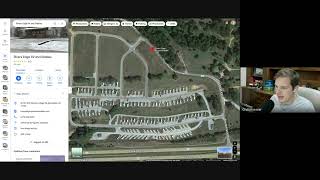
All right, thank you John. So there's going to be a, call it four sections to this. We're going to start by talking about the park in northwest Arkansas that is under contract. We won't close it until next quarter. First quarter of next year we're going to talk about a fund that we have that has a piece of every park and then we're going to talk about the bonus depreciation dropping in about four weeks. And then at the end we will do Q and A where if you could type your questions in the chat, we'll get around to it. So I'm going to share my screen and get started here. So this is our portfolio and as John said, 10 states, 26 parks. We are common theme is we like to be near a destination of some sort. Call it a state park or a national park, a water feature. It's our parks are not exclusive long term only parks. They're not exclusive short term only parks. Most are a hybrid of both with an emphasis on short term stays. Travelers staying two to four days. We like this thesis because it's a hedge against the economy. When the economy is strong, as we see right now, we see a higher percentage of short term stays which are more profitable to the tune of call it 60 to $90 a night per pad site. Whereas when, if the economy sours, the RV parks become more of a long term destination where people live month to month or year to year to the tune of call it 600 to 1100 per month. So the intent is to be amenity rich to be on that end of the barbell. If we have a park manager, we might as well add all the amenities we can so we can keep our occupancy high and keep our rates at market. We don't like being in the messy middle where you've got a pool part time park manager. We like being on that end of the barbell. That's our thesis. These are our parks. We're most highly concentrated in Kentucky, but we prefer Tennessee and any state that touches Tennessee. And we bought our first park in Montana about six months ago right outside the Glacier national park entrance. It's gone amazingly well and we recently bought a second park about an hour and a Half away. It's gone well as well. So in the Southeast plus Montana, about a few months ago we rebranded because Blue Metric was always meant to be an investor facing brand and we, we want to be like, more like koa. We want a brand that is more consumer facing where you could have a membership or a loyalty card and you can hop around from park to park and we can enjoy more economies of scale there. So we just launched the Streamside brand over the summer, which really is just a consumer facing brand to more better operationalize and professionalize what we're doing. So I'm going to let a couple people in and then I'm going to go over to the River's Edge RV park in Springdale, Arkansas. So let's start with a map. I love maps. And if you see me just pause on the screen, it's because I'm letting someone in. Super convenient. So this is where it is. Many of you probably already know that northwest Arkansas is one of the fastest growing parts of the country is the mountain biking capital of the world. Home to Walmart, of course, home to the University of Arkansas. Walmart headquarters is about 40 minutes away right there. The airport is right there on my left, about 40 minutes away. The University is just south in Fayetteville, about 30 minutes away. And this is just a great park because you enjoy the short term stays. Because we're right here on the river. There's a lot to do here. Like I said, mountain biking capital of the world, a lot of camping. The Ozarks aren't far away, so you enjoy the short term stays. But this area is so booming how housing is becoming more and more unaffordable. So we have quite a high percentage of, of long term stays. John, do you know off the top of your head, roughly what, what percent of our tenants are month to month versus nightly?
Yeah, it's, it's 83% right now is, is monthly tenants and the rest are reserved for nightlife.
Okay. So I look at that as incredible because it's, we're buying the park at a 9.7% cap rate. Which cap rate is the purchase price of the park divided by the net operating income. And so if we're at 83% at a 9.7% cap rate, it means the opportunity to pull a lever and to increase our revenue even more by marketing more to short term travelers is very high. So, all right, so that's where it is. I'm going to zoom in and show a Google Earth image and then I'm going to Hop over to the deck. All right, so you've got a single family neighborhood bordering it. You're right off the highway. It's on 50 acres. This is the room that we have to expand into. And it's 145 pad sites today. I will get into the amenities right over here. So this just kind of shows our operating structure. This shows the, you know, the size of our portfolio. 2043 pad sites, 25 parks now about to be 26, 430 LPs, $60 million invested. Those are all of our parks. Those are the states that we operate in. This kind of goes over what I was just talking about, why we like RV parks so much. It is recession resistant for those reasons. It's a hedge against the economy. We don't buy parks in areas that are very loose with zoning laws. We don't have any parks in Texas primarily for that reason. We like parks that are protected from a competitor opening up right next door, right down the road. A year or two later, we have not seen much consolidation in the space. Believe it or not, marinas are being consolidated more than RV parks. Music schools are being consolidated and rolled up more than RV parks. But we're starting to see it happen. I know that we've had people reach out to us ever since our value crossed into the nine figures range. We think it's inevitable. And the entire play here is to compress the cap rate, achieve economies of scale, you know, dominate a region and hopefully exit to private equity at a compressed cap rate wherein every LP would benefit from being a member of the whole entity. So this is what most of our deals look like. 8 to 10% preferred return, depending on the park, depending on the asset class. Which means that the first 8% in this case goes directly to LPs, the investors. Most of our targeted internal rate of return percentages are in the 25% range, sometimes lower if it's a more sophisticated park, a more well established park like it was in Montana, sometimes higher if it's a higher risk park with a little more upside or a little more rural bonus depreciation, as we've talked about, which we'll talk about more later today, sits at about 60%. And that goes to investors first. Of course, it depends on the park. It depends on what our cost segregation studies show, but it usually shakes out around 60%. It kind of talks about what I've already said. This just shows that we're bullish on the overall industry as a whole. People are going outside more. The pendulum is swinging away from being on screens all day. We've got that trend, we've got the retiring baby boomers trend, traveling a lot. We've got the Instagramable experiences trend benefiting us. Millennials wanting to travel more. People living digital nomad lives wanting to travel more. State and national parks are seeing record attendance year over year and we're trying to rate ride all of those waves. So more information about the space. I won't, I'm not going to read to you what you can read yourself, but we're very, very bullish on the space. So. All right, this is a $5.6 million raise. It's a $10 million park. The 2024 net operating income is 950,000 and change, hence the 9.7% cap rate on a $10 million purchase price. We're targeting a 2.32x return of capital within three to five years. 26.8% IRR. And as John said, 83% of tenants are long term tenants. Our seller financing terms are awesome. We're seller financing 6.5 million at 4.5%, 36 months interest only. The reason for the raise being where it is is because we're also raising for capex, we're raising to expand the pad sites by 50 units, I believe. So. We don't like capital calls. We don't like having to raise again for the same park. Correct me if I'm wrong, John, but I don't believe we've ever had to do that. We like raising enough, plenty more than we need and then returning what we don't end up using. That's the expansion area, as I said. Were you going to say something, John?
No, just that, yeah, you could see, you know, that empty area, you know, is kind of already planned out for expansion and there's, you know, some of these sites, there's room to improve the amenities and room to add some more premium sites. And you know, you get, you get the Hogs, the Arkansas Razorbacks games and you know, those, those game day, there's always, always parking needed. So there's, there's definitely room, you know, with 50 acres to, to, you know, infill this park and get more juice out of it.
Yeah, I mean, anecdotally I was at the Alabama Iron bowl game last weekend and we stayed in a hotel an hour and a half away and There were just RVs everywhere from the game an hour and a half away in a different state entirely.
So similar for the Michigan Ohio State game. Not to touch on any touchy subjects.
Did you go to that game?
We. No, we were potentially going to, but it was a long story. We went to the Northwestern game the week before, but and, but didn't get into the Michigan, Ohio State game.
Okay, this just another view of the map showing the employers that are in the area. More high level view of where it is. Bentville. We won't go into all that high level financials. Cash on cash return year one. 11.1% expense ratio today is about 40%. We plan to, you know, take a hit in the beginning because we'll be throwing more people at it and then, you know, we plan to get it down over time. That we see that usually with parks year one, we kind of take a step or two back while we operationalize it. Oftentimes we're buying these parks from the owner directly, who manages it directly, and we have to replace them with someone. So that's what we're seeing there. This is what your projected returns would look like over the next five years if $100,000 were invested. You'll see this big bump here on year three. Let him in. That's from the refinance. The goal for all of these parks is to refinance around year three. We've received term sheets from banks to refinance. It just hasn't made sense for us to do so. So far we've been doing this two years from day one. The goal has been to refinance parks at year three. We haven't had enough time elapsed to do that yet. But the idea is go ahead.
We have one that's about to go through. I mean, we're seeing rates now below 7. Rates have been kind of weird, but we just, we just locked one at below seven and the two, the two prior park purchases were both below 7% now. So that's awesome. That's great. Yeah.
Okay. So yeah, the hope is to return 80 to 120% of the capital around year three at a refinance event after we pull the expansion levers, the rent, rent increase levers. And then at year five and exit, we would exit the asset class hopefully with everything else at a compressed cap rate. And that's about it for the Springdale, Arkansas park. If anyone has any questions about this park before we go into the fund, I'm happy to answer that. See. All right, so I'm going to go to the questions. We've got about 6 here. Mobile home sector is ripe for consolidation. What percent do you think has already been snatched up from baby boomer owners who are wanting to exit, retire. So we've seen the mobile home park sector being consolidated for a few years now. I don't really look at this as the same asset class. There are three REITs, I believe for mobile home parks, but for RV parks. John, are you seeing anything like to me it's, even the mobile home park industry is still extremely consolidated or, sorry, extremely unconsolidated.
Yeah, that's a good question. I don't want to throw out number. That's a good question. On the percentages, I would, I would agree, separate the two mobile home parks is heavily consolidated, especially on bigger parks. For sure. Yeah. Sun Communities Equity Lifestyle Properties Trust, if you want exposure to those, you know, they're, they're publicly traded REITs, so you could, you know, you know, buy a little stock if you choose or you know, on the, on the, on the exchange. But they do own RV parks and marinas as part of their portfolios as well. So they often go together, but they haven't been. I mean we just see endless, endless parks, especially in like that 2 to 20 million dollar range in the RV space. Like, like, like this. I say endless, but lots and you know, inconsistent branding. I just, that's, I don't, I don't have a hard stat there. That'd be, that'd be, that's a good question. But. All right, well, well.
And we're buying an asset class that is largely ignored. Parks over $10 million are being snatched up by private equity. Parks under $2 million are being snatched up by, you know, single family investors, multifamily investors. Two to $10 million is kind of a messy middle from a management perspective. It's like having a park manager and a pool and these amenities For a private investor to wrap their arms around without having scale is difficult and it's too small for private equity. But that's, that's where we're at.
It's, it's the, a lot of, it's the management that, that drives that. The management of a mobile home park is going to be more like an apartment building. So you'll, you'll have an easier time finding a manager. But because of the variety and different kinds of RV parks that, I mean, that's where early on that was the thing that was really the challenge to solve. Like what does management at scale look like? There's a lot of mom and pop owned park, so to speak, where it's your business, you're managing it yourself. You know, you could get a USDA loan and have your own RV park. But, you know, how do you manage 10 or 20 or 30? And that's where, you know, one of the. That was one of the first things to solve.
Yeah. So Will, we already answered your question. I accidentally answered it before I even read it. So any investment would be locked up for three to five years unless there was an early exit to private equity that we. We can't foresee today. Is that right, John?
That's right.
Yeah, bud. How is the river access and associated river activities for this park?
Yeah, there's, there's. So you do have to go over someone else's property. To what extent we could do that. We do have portfolio insurance now, which has opened up ability for us to offer some of the things that were higher risk early on, like kayak rentals, you know, E bike rentals, that sort of thing. Whether we can do that here, I think will be a conversation with the adjoining property owner. So no, no guarantees. We could, we could open. Open those up, but.
So do we have easement access to the river, John?
We don't right now. No people there. Arguably we do, but not. Not of record.
Not officially. Okay. Naresh, can you share more about equity drops either 50 to 60% deal, depending once a 15 IRR hurdle is met.
It. Wouldn't you. Well, your equity. Oh, that's the GPLP split. So yeah, once we, Your. Once we achieve that rate of return, there's a. The GP percentage goes up. So when we've exceeded a certain IRR hurdle, there's a bonus to us as the general partnership to beat that return. We get an increase percentage of equity. So it usually goes. Or in this case it goes. Preferred return gets swiped off the top. Then there's an LP GP split in LPs, cash investors favor. And then once we beat that 15% internal rate of return hurdle, it usually, like we project, it's usually after the refinance, to be honest. We're, you know, we're paying the preferred return until then. And once there's some. Some event where a chunk of cash is returned to you, all of us as cash investors, then probably we've beaten that hurdle and we get more of the. Of the future distributions.
Yep. And then Usman asks, what are the bonus depreciation benefits on investing in this deal? So even if you invest in this deal before the end of the year, we're not closing on the park until after the end of the year. And so your bonus depreciation on a park like this would be more in the 40% range than in the 60% range, which is the primary reason why we're going to talk about the fund next. Because the fund would enjoy 60% depreciation benefits, which you can only depreciate more passive income like real estate related income, as opposed to W2 active income.
Yeah. And there's, there's hope. There was a bill that would have taken bonus depreciation back to 100% this year and then it stalled and then we got into the election stuff. So, you know, it's possible. There's been chatter, but no, no bill yet. But I'm hoping that would be, it would be great for obviously for us and for this deal if that were taken back up as of right now next year, bonus depreciation is at 40%.
Yep. Edward asked how many pads you need to be able to afford a manager. Are they full time? That's a moving target. A lot of it depends on if it's a mostly a full time or mostly a long term or mostly a short term park. It also depends on the area as a rough number. It also depends on the amount of amenities. Right. You could have a park with 50 pads but no amenities. You might only need someone to check in every now and then, especially if it were a long term park. But if it were 50 pads and a lot of amenities, even though 50 is not a lot, you'd probably need a full time manager. So depends on the number of amenities.
Yeah. And I'd say revenue just, you know, basic dollar economics. You know, you have, you know you're doing north of a million bucks, you could, you could afford someone. If you're doing, if you got a park 10 minutes from your house doing, you know, 200K, you can't really, you probably can't afford to hire someone. So. And you know, in terms of sites, you could see a wide variety of like date, we call it adr, average daily rental. But you know, our Montana park right by Glacier, super high adr, you know, like, like airbnb rates during the summer, during the high season. Not a, not a crazy, you know, half the number of sites of this, but this park, you know, stable, but a lot more sites. So. And this park has the revenue to afford one too. You know, north of anything, north of a million, you could probably afford someone.
Okay, John, do you want to go ahead and talk about the fund? You can share your screen. And then Kenny Byers, I will get, I will start back at your question when we get back to the questions after this.
Yeah, let's see. Go. All right. Can you See that? Okay.
Yep.
All right, so I might, what I might do is skip, skip, skip to a number of slides. Some of these slides are fairly similar to what Chris presented on Arkansas deal. Because this is, the Arkansas deal is kind of like every, that's our buy box. We're trying to buy parks like that over and over. And so the fund is going to be an aggregation of similar investments and have similar depreciation. It's more complicated obviously because it's an aggregation of those parks. But returns, depreciation, benefits and characteristics of the parks are going to be similar. Just, it's just numerous parks across 10, 10, 9 states, I believe in the fund. And let's see here. So there's the similar structure as well. One thing to point out different with the fund is the fund can sometimes take limited partner positions. So it's not wholly owning like in the Arkansas deal or any of our other deals. We would, let's say depending on the liquidity of the fund, it's, it's not going to buy the whole park, but it will invest. Now the fund itself, it has a more investor friendly structure. Like I've invested a decent amount into the fund myself because it's just giving me broad exposure to every deal for me and my wife. But the capital prior to the GP getting anything, full capital has to be returned. So it's really a return of capital fund as, as compared to the splits on any particular property. That's the main difference between the structure of the fund and individual park deals. And it's a similar structure too. Like the debt, debt always comes first, then the cash investor or class A limited partner interest, then the general partnership interest below that. So if there were, let's say we sold the park and there weren't enough cash to, there were limited cash, we couldn't hit all tiers. It would go obviously debt first, then the cash investors and then you know, it's subject to the running through the waterfall. But if there's not enough cash, let's say the investment didn't go well, it would pass, it would pass through the waterfall and the cash investors are treated, looked at first. So first preferred return, then return of capital and then if there's not enough, you know, we just, as general partner, we don't, we would not get anything. We just didn't succeed in that investment. This, this is kind of a typical debt overview. You know, the Arkansas deal had great seller financing. So we've got a couple seller financing deals in there. But typically we're putting about 30% down or loan to value is about 70% on any park. And you know we've seen a big swing of rates over the last 12 months. But we're starting to see get term sheets now to refinance and new more recent deals were back below 7%. So really, really where parks were a year and a half ago, rates are back to there which is, which is excellent. So and another thing here you're getting diversification. I'm going to scoot down and share some of the parks that are, are actually in the fund so you could get a sense of, sense of what you're buying into. And this fund closes December, this later this month. So this is really kind of the last, last chance to, to jump into this, this fund really fund one RV fund one the year. So. All right, here we go. So, so this is, this is one park, one of the first parks in the fund. It's a, it's a lake, Lakeside RV Park. 90 acres on 200 sites on a lake. An hour and a half. I'm in Nashville so it's an hour and a half for me. Beautiful property, pretty lake, developing lake. One of the few spots I, this is, this is just an excellent property. Like it's, it's, you come from Nashville, I don't know where all of you live, but lake access is, is, is in high demand and there's limited lakes. And this is, this lake is really the last lake that has significant development potential and it's, it's happening all around us. So rates are our ability to charge, increase rates each year and do other things like we're actually building 10 tiny homes on a hill overlooking the lake. So these are like million dollar views an hour and a half from Nashville. We're able to, we're about to start marketing to an entirely different audience to be customers of the park. And there's the stability of all the RV sites. So beautiful beautiful property. Here's another one. This one's wholly owned by the fund in actually not too, too far from Chris up on the, off the interstate between Dallas and OK, Oklahoma City. 50, 50 acre site, 100, 107 RV sites on it and you know, big, big kind of lake in the middle. And this, this is one we're going to be investing into more. If you're in that area, you'll see some significant upgrades happening to this park. But this is, this has a lot of the qualities of a lot of good RV parks. It's right off the interstate. Great location, highly trafficked route. Good, good size property with the, with the infrastructure that would be hard to harder and much more expensive. Every day it seems to replicate and rebuild a good quality RV park. And in many cases it's what you're, what happened with MHP is happening here where you're seeing increasing restrictions and regulations. A lot of the parks you see don't comply with some. There's actually national guidelines on how to build an RV park now. And I can tell you there's definitely what we've seen, we've looked at development deals and there's, there's, there's a number that have been shut down. So what happened in mobile home parks where you have parked in areas already existing, you may not be able to build another one. So that, which is good if you're already already owner of one. So this is, this is kind of building a moat around what we're doing and I think that's just gonna, just gonna increase based on what we're seeing. Looking at development deals, development sites or even expansions of parks. Some of the, the red tape and friction and restrictions. It's a park in Kentucky, just another nice double down the middle, steady producing, cash flow park. This one's up in another one near a lake. In Kentucky we have four parks near a lake. And there, that's where these are. These were smaller parks when we bought them, but they share common management. So there's efficiency we got, we achieve scale by buying smaller parks near each other. This is, this is a, this is a park about three and a half hours directly south of me in Nashville, right down 65 similar characteristics right off the interstate. Nice developable land with the, the infrastructure of a park and, and the amenities. This, this one's going to be.
This.
Is probably one of the ones I'm most excited about, what we're going to do to it. We're going to be significantly developing this one. And that's where you know, sometimes some parks are cash flowing out the gate. Some parks, some parks, you know, what Chris spoke to earlier is that over, you know, know, 12 months from now, this one's gonna, gonna crush. I mean this one is cash flowing now a little, but you know, it runs at high occupancy. So adding sites, upgrading the infrastructure and you know, adding a sign, that billboard off the interstate where our property people can see right off the interstate. We may even be able to charge third parties for a panel on that on that side too. This is the Montana park. Just you know, gorgeous, gorgeous place. One of the place where everyone in the company wants to go Work for the summer did had an excellent season. We'll have, we'll have our report out on this soon. It we, we were decently above what the seller did and we haven't even untapped all, all the revenue there. Let's see here. This is another one in Tennessee. That's right now a steady, steady, stable, stable property. This is western North Carolina. This is another partial position by the fund. This park was not damaged by the hurricane. We actually were very fortunate. We have a couple Eastern Tennessee and this one Western Carolina park. And we came out okay. And it was, we actually have some displaced families there. So that's, that was, that was especially in Asheville, but our properties turned out okay. North Northeast Alabama park. So west Western Kentucky park not too, too far from the park. The first park I showed on the lake. This, this one's also very expandable. And lastly we have a position in the Northern Kentucky park too. So in terms of concentration, you're getting parks in Tennessee, Kentucky, Alabama, Carolina, Montana, Louisiana. Just a good diversified portfolio and we've never had. Kentucky, Alabama, Carolina, Montana, Louisiana. Just a, just a good, a good, good diversified portfolio. And we've never had, you know, a casualty event. We've never had any insurance claim yet. Knock on wood, it will come. But I think diversification and kind of some, some risk mitigation is what you get is part of the fund.
Also, John, I forgot to mention that Northern Kentucky park, we just closed on it last month, but we're still raising for it to fill out our capex needs. So that is another option if you wanted to capture the 60% bonus depreciation by the end of the year. Right?
That's right. Yeah. So, so you have, those are really the two options between now and, and December. December 31st. So we've closed on this. But there's still, there's still a little room to, to jump in last minute. So it's really kind of a choice, you know, the fund or, or this deal to, to, to capture something, you know, before year end.
And I just put the deck for that in the chat. Anything else to talk about bonus depreciation dropping that we might not have mentioned?
Let's see. I, you know.
And then I'll get to the questions.
I mean people, there's always tons of. I thought we had a slide on that, but I don't want to. In there somewhere there's a slide. Happy to share. But there's, there's, there can be lots of questions around bonus depreciation. We have a great accounting Firm. So what you'll see if you get really in the weeds on your tax situation, we'll, we'll probably hand you off to someone to recommend you to someone. You know, we don't want to give tax advice, but there can be a lot of questions around your, your specific situation. But I mean, in short, what we're talking about is RV parks qualifying really well for bonus depreciation, which applies to 5 and 15 year property. 5 and 15 year property is very common on RV parks because RV parks don't have a lot of vertical buildings. Like the building I'm in now is an office building, you know, 27 and a half or 39 year property. You can't accelerate depreciation on that. But RV parks are mostly infrastructure improvements. Wires, electrical, pavement, it's the bones. It's all five and 15 year property, which is almost like the tax code was written for mobile home parks and RV parks. So they are best in class and qualifying for that. And then we will accelerate that and take the max deduction year one. So this year you will get a K1 by March 15th and it'll show a significant loss, paper loss. And another way I think of it too, there's a lot, this can get really nuanced, but I almost think of depreciation like a, like a, it's almost like a tax free loan. Like it's not a freebie. But it is, it does mean that you'll get a loss and the loss is if you don't use it elsewhere, it carries forward and will offset some of the distributions from this particular property until your basis goes to zero. But it's not a freebie forever. But it does increase that overall return. So we're talking like an 8, 10% cash on cash. Well, effectively it's higher because depending on how that K1 balances, how your accountant offsets that on your tax return, the real return is actually higher than that because you're not paying taxes on that.
And just to confirm, John, someone in the questions was asking that that would be a depreciation you could claim on your 2024 taxes in 2025, right. When you file in April, Correct?
Yeah. If you're, if you come in the fund or Northern Kentucky, those are deals that closed this year. So you would, you'll get a loss on your K1 for 2024, which would come by March 15, 2025. And you, you give to your accountant and you know, when you file your taxes April 15th or if you go on extension, you know, to October it would apply to this year's tax return.
Okay, now Kenny's asking about tiny homes and how that's gone with us. From what I understand, it's kind of on a park by park basis. We're not adding them 20, 24, which.
Would come by March 15, 2025. And you, you give to your accountant and you know, when you file your taxes, April 15, or if you go on extension, you know, to October, it would apply to this year's tax return.
Okay, now Kenny's asking about tiny homes and how that's gone with us. From what I understand, it's kind of on a park by park basis. We're not adding them at every park. But the lakefront parks, the Montana cabins and, or tiny homes where appropriate. And those gone pretty well.
Yeah, I think there's different models. Tiny homes is an area where there's, there's so everyone, everyone knows housing. There's this housing crisis. Affordability is an issue. And there's this explosion of kinds of models.
And it's at every park but the lakefront parks, the Montana cabins and. Or tiny homes where appropriate. And those gone pretty well.
Yeah, I think there's different models. Tiny homes. We've looked at so many different models. But on those sites, the ones you described, the lake lots, the Montana, you know, those are where you could charge a couple hundred bucks a night during the season or more for a rent is an area where there's, there's. So everyone, everyone knows housing. There's this housing crisis, affordability is an issue. And there's this explosion of kinds of models and it's, and so, yeah, you could, you could afford a nicer model tiny. So we've, we've gone with ever rooms. Like, like on the Kentucky lake one. Those are, we're doing ever rooms, which is a nicer model of tiny homes. Well, on other parks we've looked at so many different models. But on those sites, the ones you described, the lake lots, the Montana, you know, those are where you could charge a couple hundred bucks a night during the season or more for a rental. Yeah, you could, you could afford a nicer model tiny home. So we've, we've gone with everooms like, like on the Kentucky lake one. Those are, we're doing ever rooms, which is a nicer model of tiny homes. Well, on other parks that if you're, if you're spending on, on many a park, you could definitely. The economics are good. If you, you know, if you're spending 40, let's say $40,000 to. If you're getting 11, 1200amonth for a monthly. A month on a monthly lease. Yeah, that, that, that pencil is that pencil as well. But you can't, you know, on the lake lots, the Montana. Yeah. Okay. There we may be spending a hundred grand or more that if you're, if you're spending on, on many a park, you could definitely. The economics are good. If you, you know, if you're spending 40, let's say $40,000 to. If you're getting 11 1200amonth for a monthly. A month on a monthly lease. Yeah, that, that, that pencil is that pencil as well. But you can't, you know, on the lake lots, the Montana. Yeah. Okay. There we may be spending 100 grand or more on that tiny home and really furnishing it nice to grab that 500 bucks a night, you know. But it just, it really just depends on the market and by park. But there's. We always fill them like. And we've. I have some fun stories on tiny homes too. On somewhat like an early park, we I think we site built one for like eight grand. Like we bought one at foreclosure and then our. It's crazy story, but we basically bought someone on that tiny home and really furnishing it nice to grab that 500 bucks a night, you know. But it just, it really just depends on the market and by park. But there's. We always fill them like. And we've. I have some fun stories on tiny homes too. On somewhat like an early park, we I think we site built one for like eight grand. Like we bought one at foreclosure and then our. It's crazy story, but we basically bought someone had bought a tiny home, got foreclosed on, it was repoed, we bought it, it needed some fixing up. We did that and we got it on site for under 10 grand and rented it out, which is great at like a thousand a month. So that's. It's not always like that and that's kind of unique, but there are opportunities and sometimes in some of the older sites in RV parks you can, you can infill in. Bought a tiny home, got foreclosed on, it was repoed, we bought it, it needed some fixing up, we did that and we got it on site for under 10 grand and rented it out, which is great at like a thousand a month. So that's. It's not always like that and that's kind of unique, but there are opportunities and sometimes in some of the older sites and RV parks you can you can infill, infill tiny homes just depending on demand.
Yeah, I just, I can't help but compare this asset class to single family, which is where I started. And single family, you're, you're lucky. You're hopeful to make the 1% rule, which is your, your monthly rent should be 1% of the value of the asset.
$100,000 infill tiny homes, just depending on demand.
Yeah, I just, I can't help but compare this. At home equals a thousand dollars a month, but in this case, it's a luxury, top of the line $100,000 tiny home that fetches 500 a night. Right. Or 350. And at 20% occupancy, even those numbers are just crazy.
Yeah. And you know, I tell people like too like, it's like we are, we're buying this real estate together and you know, we have our return projections could go better, could go worse. But we, we have something real and it's, this is a, it play out, plays out over time. Like one of the early parks. We cash flow doing a tiny home a month for like four months. But we build it, you know, let the cash do it. And we may do some of that and sometimes it makes sense to. Maybe it, maybe it would make sense if there's an opportunity on. There's one park where we may do this. We're going to say, look, we're not going to distribute. And we'll tell investors we're not going to distribute because it makes more sense to invest in the park. Because I actually already told investors that and everyone was cool with it because there's this data center going. This is one of our Louisiana parks. Meta is building this data center 25 minutes to the east and there is nowhere to stay. So, so the message we talked about, we're like, you know what, I need everyone to be cool with us not distributing because there's a 5 billion, there's a multi billion dollar project with 5,000 contractors coming to town and they got nowhere to live. So the more sites, tiny homes, whatever we can get on our property, it's gonna fill at higher rates. So things happen sometimes for the good too.
Yeah. Usman is asking if we can share how other RV park investments have performed projected versus actual.
Yeah, I think we could. And I could also do another call with that. I think out of, out of 26 parks we've had, we've had one capital call which was to buy land. I think that there will be, there will be some. We've hit every Distribution to date. There will be some. We elect to pause. Like I'll put aside the one. There's a couple where it's a good reason like that. Like that a big development's coming. Hey, let's reinvest into the asset. So we're going to make that college DP and it's in everyone. It's one's interest in the end. I think there's a couple parks that did suffer this year in some places. Transient. The more transient parks were hit harder in this year where you have people more sensitive to fuel prices now. The monthly occupants, the longer termers, that was up year over year. So and all pretty much every park except for like Montana which is fully seasonal. Every park has some combination of monthly and transient, which is good. And then we've had to adapt on those parks.
So.
So there are going to be a couple parks where we distribute less in the short term this year I think I could, I could. It's almost. There's 26 parks. So I could like in my mind they're all there and you know, we and the team talk about them each week. But that's some of the shift we've made. We've shifted to more monthlies. You've seen sun communities do that in the last two years. They've shifted, you know, going into a potential recession. Whether it happens or not, you shift to more monthly. Monthly occupants away from. Away from the transients. But the ones that were heavy transient, not Montana, you know that anything near like a really good look like Montana held up great. You know, the lake one held up, held up well. But we do have some that there's no doubt we've had a few that, that got. That had kind of down years. Nothing, nothing down massively. No capital calls needed for that reason. So that, that, that's. That's like the P and L risk. The predictions are next year is going to be a good year. The overall trend too, you had nice up years in coming, kind of coming after Covid. So if you look like the trend, it's. It's an uptrend of RV park usage. Covid, you had this and then you had kind of a. Like you had this bump and then you had a little below and now it's kind of evening back out back on the trend. So it's a nice overall uptrend. But there were some that were impacted by just inflation which impacted a lot of things.
How many of our parks would you say didn't hit what we had hoped in 2024?
So by the end of this month, I'll know exactly. We're going through updates across the mall. We still distribute on everything. I think this next, this next cycle will, will recommend some pauses at least, at least probably into the season. I, I don't know. I'd, I'd say probably out of 26, it's like six, six to seven, something like that.
Okay, cool. All right, what is it? What do our managers get paid? And I know it's a range. Some of them are managing three parks. Some of them one.
Yeah. Anywhere, you know, typically like, you know, 40 to 55. Somewhere in that range. You know, sometimes we'll, if it's a bigger park, they'll go up. And then we have, we have district managers who may oversee multiple parks who are higher.
Okay. And then Clint asked about the capital call that was answered.
The, the one. And you would, if there were one, you have the right, but not the obligation to participate. So you have your, whatever your percentage interest in the deal winds up being. You have. If there's a capital call, you can do it to maintain your percentage share, but you don't have to. And we, we're not, we can't take more money from you. We can't force you to contribute more, but you have the option to.
And then how many of the 26 parks are in the fund?
It is. It is. I believe 12.
Okay. For the Springdale park. When is the estimated close date? We're shooting for February. Ish. Would 60% bonus depreciation apply? No. Clint asked if Your. Is your 15% IRR taking into account depreciation to come up with that number?
No, we don't, it's just too, we don't, we don't factor in.
It's too hairy to. Yeah, yeah, that's just kind of a cherry on top. How best to estimate the depreciation available for a hundred thousand dollar investment on parks that are eligible for 60 bonus depreciation? It would be 60,000, give or take.
Right around there. Yeah. Yeah.
Catherine, what is the profile of someone staying in your park? More than 50% are baby boomers. What age.
It'S around. So we're actually, we're working on a survey on this. It's, it's in the, you know, 50. Just anecdotally it's 50s, early 60s. But you know, people living there, you know, we, there are some families on some parks too. So it's really kind of a broad range. A lot of, you know, some have contractor with, you know, contractors who are there and crews. But, you know, a lot, A lot of. Lot of folks in that, especially in the. The trend, especially in the transient. You know, who are.
You have the.
Actually kind of a funny thing, because you'll get younger people now who will travel like, because of Wi Fi. But in terms of the boomer. The Boomers, yeah, it's like 50s, 60s.









