ALEX LAVIDGE INTERVIEW – How to Mitigate Startup Risk and Build Personal Wealth
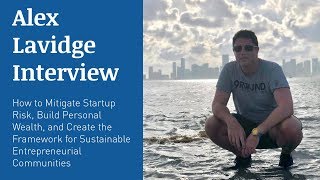
Alex Lavidge started his first business at 16 and built wealth through disciplined habits and mentorship. He explains how to reduce startup risk with market research and pre-orders, and describes Reboot Chattanooga, a campaign to create 1,000 self-made millionaires in 10 years by sharing local wealth-building stories.
Questions this video answers
81%
80%
rebootchattanooga.org
Launched at 16 and sold it two years later (age ~18).
Welcome to the Next Level Income show, where it's our goal to take your income, your investments and your life to the next level. I'm Chris Larsen.
And I'm Caleb Welborn. Our guest today is Alex Lavage, founder of Startup Champs, which helps startups secure their first million dollars in revenue. Before incorporating, Alex has also dedicated himself to helping foster and grow entrepreneurial communities. And he's currently part of Reboot Chattanooga, which has a vision of creating a billion dollar impact on Chattanooga, Tennessee's economy by fostering 1000 self made millionaires in 10 years through grassroots momentum. I met Alex three years ago at Startup Week Chattanooga through my friend Tony Perry. Alex hasn't had an interesting road to get to where he is today, and you can look forward to hearing about that here in a few minutes. Alex, thank you for joining us on the show.
Hey, thank you all so much for having me.
Yeah, no, really excited to talk to you today, Alex. And Chattanooga's got a lot of similarities to Asheville. Love the city. Taking some trips out there. Have you raced there?
I have raced there years ago in downtown Chattanooga and up around, what is it, Raccoon Mountain. Yeah, yeah, it's a great race.
Great, great, great cycling around there. So, wonderful city. Yeah. So, Alex, if you don't mind, for the audience, I know we've been talking a little bit before the show. Would you please share a little bit about your story and how you got here today?
Sure. Well, if you're referring just to sort of like, I guess, my entrepreneurial journey, I grew up with a family in Knoxville, Tennessee that lived, ate and breathed advertising. So there was an advertising agency my grandfather started called Lavage and Associates. And over the years, as he continued to understand the psychology of selling, later became a serial entrepreneur, was involved in real estate to launching products and brands in a variety of different categories. So I learned a lot just from observing that, but always wanting to understand just how it was done because everyone was so busy. And so even though someone can grow up around all this entrepreneurial energy, I've always believed so strongly in the importance of mentorship and making sure that we surround ourselves around mentors, people who have done it that can guide us, put together a right blueprint for moving forward. So my start ultimately was just a lot of trial and error. I launched my first company when I was 16. It was a little classified paper when I was in Corvallis, Oregon. And admittedly, I guess it's okay to share this story now. I learned very quickly, unless you have something to show it's very difficult to get pre ordered. And imagine this little 16 year old kid knocking on local shops saying, hey, do you want to spend $500 for a full page ad? They're like, well, this sounds like a great idea, but I have no idea what you're talking about. So I basically came up with the idea, say, well, would anyone get upset with me if I got any regular newspaper off the street, copied those ads and then asked for permission to use the larger ads and put it in for free? So that was about 1500 bucks worth of my own money that I put in from distributing newspapers. But it allowed me to have an actual printed vision of what it was I was trying to do. So I would then go around to the stores and be like, this is what I'm talking about. It's in circulation. These are the ads, this is the momentum. From there I was able to grow the business and sell it two years later.
Oh wow.
And then from there I've just always been really passionate about saving and investing. And as I've gotten older, I've learned a lot more about how to mitigate the risk through the entrepreneurial process.
Cool. I love the background. I had a paper out myself. That's how I bought my first bicycle to race on after having that paper out for about two years. And I think sales and advertising background is so beneficial no matter what you do. But can you dive a little bit deeper, Alex, into how did you develop your interest in saving and investing? I talk a little bit about mine in my book and I had a mentor in my life that did that. Is that somebody, was it your grandfather or was it somebody else?
I think it was a combination of being surrounded around great role models, but also seeing examples, lives devastated because they didn't save and because they didn't invest properly. And just at a very young age saying, I don't want to have to go through that pain.
Do you mind giving an example of that?
Just certain family members that just didn't manage their money well, it was very painful, the consequences that that led to. But then on the flip side also saying other family members, other mentors do very well financially and recognizing that ultimately the best insight I received when I was younger is that money is really just a tool that allows us to create the new wealth, which I think a younger generation and other more open minded people of all ages are starting to embrace that the new wealth is more about health, happiness and free time. I love it. You could have, you know, $10,000, a million dollars, $100 million doesn't matter. Ultimately, do you have control over your time and are you taking your life in a direction that overlooks what you love, what you're good at, what the world needs, what people are willing to pay for, or in other cases because you can afford it. You just do the things that need to get done in the world and don't pay anything so that we're living a more meaningful life that helps other people in the planet.
That's awesome. We've talked about this multiple times on the show. It's a theme that keeps coming up and it's really what drives us here is giving people the ability, the knowledge, the options to achieve financial independence. Because we believe on the show that if you have financial independence then you can go after your passion. And I think it's the people in this world that do that, that provide ultimately the most good. I was talking to somebody in HR yesterday and we were discussing how do you teach people about finances? And we were talking about individuals that are making a lot of money, hundreds of thousands of dollars a year and simply are not figuring out what to do to not live paycheck to paycheck. And ultimately we started to talk about like Bill Gates and Mark Zuckerberg and a lot of these individuals that people talk about, oh, they didn't graduate college. What people don't talk about is they also didn't have to go work. A lot of those people had families that had money or they already had financial freedom so they could pursue their passion. And now they have these multi billion dollar companies or you look at the Gates and all the good they're doing in the. I love that point that you made.
Yeah. And I would just add to that. I mean you've got roughly 81% of Americans are working paycheck to paycheck. And talk about how we're addressing that later with Reboot Chattanooga and that campaign can't wait. It's also important to remember that 80% of millionaires in this country are self made. They did not have significant family support or help. They were not given free college tuition or, or what it might have been discounted back in the day, don't get me wrong, but. Or significantly less expensive. But the point there being is that there are pathways forward towards developing that financial independence. I think the biggest issue that people face, and this is perpetuated by the media, is you have to balance out taking crazy, ridiculous, larger than life risks with just incrementally saving a little bit each month. And to not make the goal like Here, all the way up here, as quickly as possible. But instead to say, you know, hey, like, if I'm in debt, how about the first goal right now is just to get out of debt? Or If I'm at $0 in net worth, how do I get to my first 1,000 and then 10,000, and then it's easier to get to your next and then easier to get to the next 1 million. So, as you know, the saying goes, we can do it all, just not all at once. Enjoy the journey, enjoy the process. Goal is ultimately, what are you creating? How are you helping people? And as long as you make those goals manageable every step of the way. So you're setting up that reward system so that it feels good when you reach something that's realistic. Then you become this habit engineer that's just able to keep making incremental progress over and over and over, and the process becomes a lot easier. But instead we perpetuate this mythology of like, oh, I went from zero and now I'm completely loaded. But the reality is that if you look at Thomas Stanley's work, Millionaire Next Door, and a lot of other pieces, love that book, not how the majority of people who build wealth do it.
Now.
You're exactly right. That's awesome. We'll get back to that. I wrote down Habit Engine. I'm going to use that quote. That is so good.
That reminds me of Ray Dalio's principles when he talks about failing forward. You learn as you go. And kind of the hand motion you made there reflected that graphic. I think that's great. So you were talking about not taking the crazy risks or at least mitigating risks, and it seems like that's sort of what you help people do with Startup Champs, because I know a lot of entrepreneurs do take crazy risks. I don't know if it's part of the DNA of being an entrepreneur or what. But you had also talked about when you were doing your newspaper business as a teenager, trying to get pre orders, but you didn't have a product. But what you do with Startup Champs, I think is fantastic. It's fantastic helping people secure revenue before they actually incorporate. Could you explain your model a little bit and how other people can apply it?
Sure. So I'll start off with your initial point. In terms of why I wanted to finally incorporate this idea is because to date, I've worked with well over a couple hundred entrepreneurs in a variety of different capacities. Some of that was as a mentor or as a director of accelerator programs at the company lab, which Is based here in Chattanooga that works with entrepreneurs from walks of life. Headed up an accelerator program called Gigtank which is a very fast paced accelerator program for exponential technologies to working with, you know, headed up business development at a company called Variable. We were recognized by 2014 as one of the top 10 manufacturing startups in the world. So on and so forth. The theme that I saw with a lot of them that did not end up going far or did not end up reaching their potential was there is a complete disregard towards the relevance and the importance. That's it. Great ideas, great talent, great technology, great competency, amazing. Total addressable market service addressable market, you know, target markets identified in some cases if they invested in the market research. But for the most part what was missing was the discipline. Before you hit the ground running, before you, you know, all caught up in the show business and the glamour and the PR of like hey guys, I'm on the go, look at me, I'm building company which Silicon Valley has just been a detriment to perpetuating across this country in my opinion. And most communities are just not equipped to support that type of entrepreneurship. Doesn't mean it's a bad thing. It just means that it's a different game than what most people are used to playing. I've seen a lot of really bad ideas never get the time of day. And I've seen also a lot of entrepreneurs falls flat on their face because they didn't. They were more focused on getting things done and getting the right things done and in the right order. So you're asking about the process in a nutshell, having to chat more about starts with market research. In market research at a high level you've got primary and secondary market research. Primary research is the research you go out and collect on your own. If it's business to consumer, I like using platforms like aytm.com ask your target market what makes that platform so unique is not only can you do random samples, but then it also overlaps with a feature called personality radar. So you can get what's not just known as demographic feedback, but psychographic feedback. What are the attitudes? What are the preferences? How can you start to break down specifically then from that how consumers think about making purchasing decisions? That's really key on both the consumer level as well as the business level. How do organizations make purchasing decisions? Is it just one person at the top strokes the check? Usually not. It's usually what's known as a decision making unit. Lots of different stakeholders, lots of change management taking place. To make sure that there's buy in before a new service or product is adopted. So those are important things to understand is to start backwards, visualize how is the sale going to take place from there variety of different options. So I've worked on campaigns where we've had direct mailing which sounds crazy, but what's interesting about this is the direct mailing simulated real handwritten letters. So these were sent to executives and other people in organizations with a very personal touch to say hey, we'd like to chat with you to talk about this new product or service to doing old fashioned. Funny I say old fashioned compared to letters, but emails, Emails if you know the Persona that you're talking to and if it's a data driven copy, you can increase conversion significantly. And there are lots of tactics I can talk about that and then push all that way forward towards. There are different avenues towards getting pre orders and a pre order is a very specific type of understanding. But in other cases we're just as satisfied with what are known as mous Memorandums of understanding or letters of intent. Every business is a little bit different. I mostly work with software as a service and everything from financial tech to marketing technology. I've had some clients that are in manufacturing, but the principles are all the same. And then that then leads to ultimately the end goal, which most entrepreneurs don't come to appreciate until it's too late, is if you can get what's known as AR financing, accounts receivable financing early in the game so that you're not giving up equity. Wow. Because that makes your life significantly easier so that you moving forward as an entrepreneur, you continue to have more leverage and you can continue to increase that valuation and only give up equity at a last resort if it's absolutely necessary. Because the moment you get other people's money involved, they're going to have opinions and if they've got board seats, they're going to have votes. And that can drastically change the direction that you take that company and which may or may not be good in the long run or consistent with your values.
Yeah, that's terrific. Hey Alex, do you mind? You mentioned a service to do simulated handwritten notes. What is that? I've never heard of that.
So the closest thing that's publicly known, I go with a private company for this and this might actually end up of mine. But you've got websites like postable.com we have a local company here in town called Felt. It's a app where the end game is the same. That's Actually, more for greeting cards. So the idea there is, if you've got, say, 100 cards, you want to send people who showed up at a party that you held or some celebration or a fundraiser, you can simulate, hey, thank you for attending, and then they send it out for you. Postage, everything else.
That's pretty cool.
As far as I know. I haven't come across too many other people that are using it as a sales lead generation tool.
Right.
So I don't talk about it too.
Openly, but, no, I appreciate it.
I think for certain industries, it can be wildly effective with significantly better conversions. As long as it truly looks like real handwriting, you know, you can just tell if it comes from a printer.
Yeah, I have. I mean, I wrote two thank you notes this morning. You know, handwritten thank you notes. And I try to try to keep that practice, but I'll never forget our CEO of a company I worked for a couple years ago, sent like 30 handwritten notes. I'm like, how does this guy have time? And he. I mean, he was worth, you know, tens of millions of dollars on. On a bunch of different boards. So I just wonder. I wondered if his secretary wrote them for him or his assistant wrote them for him or if he did them or, you know, if he used the service. So that was. That was what I was asking. I'm just wondering, you know, it's. I can't imagine doing that for, you know, a company with a thousand employees. Something like that. Yeah.
The joke we have around here at the office is automating authenticity. It's very oxymoronic.
Yeah.
At the same time. So I. In some. In some ways it's a gray area, but in other ways, the way I justify it ethically is that if it starts a conversation where there is truly value being delivered and both sides see the benefit of it, then those ends justify the means. Whereas what I think is more on the shadier side are direct mailings where it looks like a personally written note. I get it in my mailbox, I open it, and then it ends up being a coupon for some stupid steakhouse.
Right, right.
Thank you.
Yeah. No, no, I love. That's another, you know, you've had a habit engine. And automating authenticity, one of the. Well, I'll give you a story. So a VP I worked for when I first started my career with Pfizer, he.
We.
He was in the car with me. We were doing a ride along, and I was young in my career, and he'd tell me a couple of things. He's like, oh, Chris, if you read two clinical studies a week, you can be really successful. And his point was you got to automate and create these habits, like you're saying that allow you to learn. And then one of the things he said was one of the most successful sales reps he worked with, he said he'd go in and he'd always say the same thing to surgeons. And he said, from. Or, I'm sorry, doctors. He said from Monday to Wednesday at 12, he'd walk in and say, hey, Alex, how was your weekend? And he said, we do lunch at Wednesday. And in the afternoon he'd walk in and he'd say, hey, Caleb, what are you doing next weekend? And he said it was just kind of his way, as you were saying, to generate an authentic conversation with somebody, but it was just a habit that he had. And he said it worked great. And anyway, so I think, you know, just because you, you may, like you said, automate a question or ask the same thing, it's. It's a habit that you ultimately can. Can draw a deeper connection. And I think a lot of people really want that connection in today's world, so.
And ultimately connection. I think you could take further and say when, when we see people that are most like ourselves, or you can apply it towards brands, because ultimately brands are personalities. When we see the same types of values, the same types of behaviors, same types of attitudes, we're more likely to want to give back and to help. And so taking that to really get to know what motivates people, what drives them, and to come from a place of empathy. It's not about you, it's about always about other people. And as long as we keep going to clients and customers and put ourselves in their shoes first and really think about what's fair, what's right and what's beneficial, then you can start to create a meaningful conversation. But I think that's lost in a lot of marketing and especially a lot of the digital noise. The emphasis is not on solving the problem or helping people. The emphasis is just on selling for the sake of making a sale sale. And the moment you get into that, it can be very exhausting.
Yeah, I agree.
Yeah. I like the saying understand before seeking to be understood. I always try to keep that at the front of my mind to remind myself to follow that. So going back to the accounts receivable financing, what percentage of new businesses and entrepreneurs getting started would you say, take that route compared to the ones who just go straight to equity?
Great question. I should know that off the top of my head, if I had to make a guesstimate, I would say less than 5%.
Really? Well, it's a little bit different.
I picked up the agency locked in a Fortune 1000 client last August that's made multiple mergers and acquisitions and all things related to water infrastructure and in particular around water quality technologies for utilities. What's interesting there is that when you've got companies of that size, the pre order mindset is a little bit more prevalent because you're mitigating risk and also because there's more money to do it. But I think one of the biggest challenges that most entrepreneurs face and new business owners face is again, look at the data. 81% of Americans are working paycheck to paycheck. People don't have a lot of money to sit around and to think and to analyze and to spend and to build relationships. And even though that's the right way to do it, it just takes Runway. So if you don't have cash flow coming in, that's just people aren't equipped. So people get into the scarcity mindset. Well, you know, we don't have a, you know, our strategy is called just doing things. Just do it, do it, do it, let's go, go, go. And I've seen it, I've seen it, you know, well over 200 times. And, and it's the wrong energy because if that's your mindset, then you're really relying on luck and maybe that's okay. And, but then what ends up happening is then you've got, you know this in the startup culture, you've got people over here are entrepreneurs that have been lucky. And confirmation bias, you know, gives us this sense of like, okay, well, because they're successful, therefore they must know what they're talking about. And then you've got over here people that haven't done it and they may actually have more wisdom than the people over here that are successful, but they don't get the time of day.
That's a great point.
Avoid that is to focus on building wealth in your own life first. And there are lots of different avenues to do that we can talk about. But my general rule of thumb is when I talk to well over 90% of my clients are high net worth individuals or ultra high net worth families. For them, dropping 2550 as much I've got one prospect contract now is over $100,000 to go out and go through this process of systems thinking, design thinking, agile, lean scrum, all the way up to figuring out the Right. Marketing techniques to get pre orders to then growth, hacking those pre orders and then justifying the business case for even doing this at all, because the margins and business structure make sense. In order to do that, it takes. Well, and if you don't have it, then chances are you need to step back and say, you know, one of my favorite quotes, Albert Camus was blessed are the hearts that can bend, for they are never broken. So if you can say, look, you don't have to give up your vision. You don't have to give up your passion. But if you could just put it on pause for a hot second and say, how can you, you know, get to maybe an extra 25, $50,000 in extra cash, which is more possible than people realize, in my opinion.
Absolutely.
Then no matter who you are, where you're starting from, by the way, then that gives you a little bit of wiggle room to step back and say, okay, ready to actually do this? Right.
I think that's a fantastic lesson and it's something that talked about in my book and kind of how to get there, whether you're coming out of college, whether you're. I mean, we have a lot of. With Connell Capital Partners, surgeon investors, there's one in particular. He makes $750,000 a year. And if you asked him if he had $50,000 to invest, he'd say, no, I can't come up with that. Which is incredible to me.
So, Alex, with your approach with the accounts receivable, financing, and everything you do helping these people launch their new business, would you say that you've. Is it the Alex Lavage approach? Is it your system that you've created?
I don't think it's my system. I think it's just my set of conservative entrepreneurship values. Nothing I'm doing is particularly novel other than maybe some of the techniques that I use when it comes around growth hacking. And, you know, there are lots of things we can do around AI and machine learning and, you know, personalizing emails and that kind of stuff, if we want to get tactical, talk about that. But no, I think in general, you know, this idea of crowdfunding, it's actually been around for a long time before even Kickstarter in Indiegogo. I mean, look at even the Statue of Liberty. You know, erecting the Statue of Liberty was actually a crowdfunding project hundreds of years ago, back in the day. This is not a new concept. But I think what has happened in America goes back to that old Chinese saying, the first generation makes the money. The Second spends it. The third goes into debt. There's a class of entrepreneurship that's out there that just wants to go, go, go and just make the money because there's a sense of entitlement, and it's not sustainable. What is sustainable is to embrace where you're at and say, okay, my net worth is here. And rather than obsessing about getting here, here, here, I just want to get here. Let's just focus on that. And then I want to get here, and then I want to get there. And it doesn't mean that you can't plant seeds over here and see if something takes off. But don't. But don't. But don't bet the farm on it.
I love it.
Just keep going a little incrementally because next thing you know, compound interest. I think Einstein called it the eighth or ninth wonder of the world. You keep doing that after 10, 20 years, you're guaranteed to have a fortune.
You made a tremendous point there that I think is lost on a lot of people. Alex, if you look at the insidiousness of variability or risk in a portfolio over time, so they call it, it's variance drain. So as returns go up and down, people would say, oh, yeah, If I make 20% one year and 0% the next year, and I do that for 10 years, what's your average return? 10%. It's not. It's not 10%, because if you lose 50% one year, you got to make 100% back the next year. So, you know, as people, you know, and you can take different examples, but you look at the stock market, it doesn't go up 8% a year every year. It might go up 16 and then 0, and then it might lose 30. And I think people don't realize what happens when you do that. So, you know, that's why Moneyball and that strategy, that's kind of what we talk about with our businesses. It's like a Moneyball approach. Approach with real estate, we'd rather get consistent returns that fall within a narrow range over time. And I'd rather take that than swinging for the fences and striking out three out of four times, but getting all the glory because I'm the home run champ, even though my team's not winning. So that's. I really, really like the point you made there. If we could circle back, kind of taking it up one level. You said earlier, most communities aren't set up to support the kind of entrepreneurship that Silicon Valley is. Would you mind sharing a little bit about reboot Chattanooga and what you think other cities or communities could do to replicate what you're doing to help out these entrepreneurs? Alex?
Yeah, like absolutely. So I would just say to that, to that comment, the reason why I said that is because a pattern that I've seen happen all across the country is you get people in the 1% get together in the same room and they say, we want to invest and support our community. Let's set up an angel fund, let's set up a little micro VC fund. Let's support and invest in entrepreneurs. They set up ten year funds, they write the hundred thousand million dollar five million dollar checks, they do it and then they scratch their head and they say, why are we not seeing exit? I was at the Angel Capital association conference last April in Boston. Roughly 17,000 members, now 600 were in attendance at the Boston conference. I was there with the film crew asking for angel investors that had over 20% internal rate of return on their funds. And I asked them for advice and tips and how they did it. That's a very, very small group. A lot of the angel investing community even, they're trying to figure out best practices and what's the best way to do things. And so there's, there's the, the point is that it's, it's pitched in such a way that's marketed in such a way that's very beautiful. You have an idea, you go get seed capital, you grow, you've got investors have got your back, you're just going to keep going and it's all going to be great. And that's true in some cases. But more often than not, if you're with people who don't know what they're doing, which I think is the majority of angel investors, then you could be in trouble. So all that said, how do we fix this? How do we encourage ultimately, at the end of the day, is not to launch more tech companies only or to get more entrepreneurs launching businesses only. What I care about is how do we build an America where people are incrementally building their net worth a little bit at a time. Because then I think the majority of people, testament to human nature, are good people. They want to give back. They want to invest in their families, they want to invest in themselves, they want to invest in their local communities. So how do we set them up for success? US Reboot launched last year with a $25,000 grant that I set aside and employed some researchers to go around part time throughout the community and ask what are the biggest gaps in our entrepreneurial ecosystem. And we have a stack of papers this high of interviews and research and all kinds of that was collected to the extent that it was overwhelming how well certain aspects of that system are going and how dysfunctional other areas are. Primarily for example, professional training and development. It's very difficult for entrepreneurs to get access to the structure and the education and the skills development that they need to really comprehensively build a business outside of a business degree or an MBA that you'd have from those schools. So we said, okay, well we can't address like 300 of these different topics. That's just going to be overwhelming. What's the, what's the mvp? What's the one thing we can do as a community to help everyday people who are just trying to get outside of that 81% living paycheck to paycheck trap. What's the one thing? And it was ultimately, we've got to start redefining entrepreneurship. So includes not just people launching businesses, but anyone looking to build wealth outside of just a paycheck. So it's now evolved into we're rebooting, reboot. Hired a completely new team to launch a social media campaign for the next year. And we have collected numerous stories from people throughout the community that have done just what we're talking about. They've gone from debt from being indebted to zero to that first $10,100,000, even that first million dollars self made through a variety of different ways, some of which have been through acting as a reseller or a value added reseller, not inventing a business from scratch, finding something that's already being sold and just hitting the ground running, making sure that that sales pitch is set up for success. Two other examples of, you know, there was one guy who said he made his first hundred thousand dollars starting with only a thousand, literally starting over in life, flipping real estate here in Chattanooga. And he had a fascinating strategy for how he went about doing that to also collecting stories of. There was a young woman who was making $35,000 a year doing customer support for a local company here in town. She interviewed with a company out in San Francisco and offered her a virtual position paying her twice that much to do exactly the same job.
Cool.
She said, alex, I learned over time it's not what you earn, it's what you keep. And because Chattanooga is such an affordable place to live, that extra $35,000 a year that she's got, that's all going straight into investing. That's all going straight into savings. That's all going straight into her thinking in the back of her head, how can I now take this to the next level? So we can talk for as long as you want. But I mean we've got some really exciting stories of everyday real people that have gone completely neglected from mainstream media. Because in mainstream media we want to put up the Jeff Bezos and the Mark Zuckerbergs and these larger than life personalities and say, see, that's entrepreneurship, that's what we want. And then chambers of commerces across the country, you know, say, oh yeah, well we want more of the Silicon Valley type of stuff. That's sexy, let's do more of that. Because that moves the needle. Get these, you know, operations that, you know, grow fast and create hundreds of thousands of jobs. But that's not helping everyday Americans.
That's the small business owners, right?
It's small business owners, but it's also small business employees. It's the self employed. It's just bottom line, it's just everybody. And the more we can encourage that, communities focus less on fast paced entrepreneurship and more on slow paced wealth building and a different set of values for how you go about getting ahead. I think then you're creating a foundation where over time, one of our BHAG goals, if you will, 1000 self made millionaires over the course of 10 years, all starting at different levels, by the way.
Sure.
But idea there is that once you have that, once you have that kind of foundation, your next billion dollar companies are going to happen. Mathematically just it's a numbers game because you've got more people in that realm taking risks with an abundance mentality rather than with the scarcity mentality where everyone is very cutthroat. It's like Hunger Games where we're going after this little piece of the pie trying to make something work. And ultimately that is not only dysfunctional, but the worst consequence of that is intangible. And that is not only kills enthusiasm, but it erodes trust. Because then what I've seen in communities across the country is as investors get caught up into this show business rather than business of entrepreneurship, is they end up losing millions of dollars and then it's harder for them to then stroke another check to say we're going to give it a second shot. So we really have to make sure if we're going to keep America competitive and our local communities competitive across this country and the years ahead and a global economy that's only continuing to get even more cutthroat than ever before, that we take a moment to step back and really make sure that we're doing it right and that we understand that it's about empowering people first and then helping them launch business the second.
Awesome.
That's incredible advice, Alex. And what would you say to someone who, in another city, say, similar to Chattanooga, where they don't have a program like this and they want to get it going, what advice would you give someone who feels passionate about all that you were just talking about, but doesn't know the first step to get it rolling?
I would say give us about a year. I mean, I'm kind of putting. I try to live by the standard. Don't talk about what you're going to do, but talk about what you've done. So I'm not sure when this is going to be published, but we're moving swiftly to reboot Chattanooga.org to showcase more of these stories. I've got a great team that's been hired, and I would say from there, it's Creative Commons. I mean, if other communities pick up on this concept similar to, you know, these campaigns, like, what is it? People of New York and, you know, others that are just getting everyday real stories from real people, I think that's where it starts. It's spreading hope and it's spreading this idea that there are people in your community just like you that have gone through exactly the same challenges and they've come up with solutions and encouraging this shift of attitude from it's hopeless to, hey, just because a solution isn't directly in front of me doesn't mean that one doesn't exist.
That's totally true.
And the more you share these types of stories openly and you aggregate that so it's just repetitive, positive messaging over and over and over. It reshapes the brain, it reshapes the culture of a community over time so that hopefully you then create this rising tide that lifts all ships because people are building more personal wealth in their lives, which is then used to take not only their own lives, but their community to the next level.
Love it.
You're like a quote machine, but I got like 10 quotes written down from you already. Good one. A good. Yeah, good. Kind of unique ones. So, Alex, if people want to follow the story of Reboot Chat Chattanooga, if community leaders want to learn a little bit from you, what's the best way to follow you guys? What's the best way to get in touch with you?
So that Reboot Chattanooga campaign is just reboot Chattanooga.org okay? And I would say come around later this fall. Just, just do a Google search for reboot Chattanooga and there should be a little bit of publicity and news coverage.
Awesome. Well, we look forward to sharing that with our audience when that comes out.
Yeah.
And final question. So this is a question we ask everyone who comes on the show. If you could go back in time with everything you know now and tell your 25 year old self one piece of advice from everything that you've learned, what would that piece of advice be?
I would say the best piece of advice is get paid to learn. My first startup that I did was very ambitious. I had made a little bit of money in real estate, managing properties. I was very young. I thought I was invincible. I loved the idea conceptually of what if I had a website company that was scalable and I grow it. So I go out to Silicon Valley and with six figures and a dream and I lost both very quickly. And the advice I then got from, and I should say the premise behind that was to help people pay their rent online and improve their credit score at the same time. It was a great learning experience and I wouldn't trade that for anything. But I also learned very quickly that the more sustainable approach rather than, you know, making this money and then just like going off and doing it is, it's never a bad path to get paid to work with somebody else who's doing what it is you want to do and to learn from their successes and their mistakes. And as long as that paycheck keeps clearing or that invoice gets deposited, then in my opinion, you're doing something right. And over time, you're mapping out different scenarios for how you can make sure that moving forward you've got a contingency for about 90% of what can happen.
That's terrific advice. Another great piece of advice we're going to put in the show notes here. So, Alex, thank you so much for being on board with the show today. Again, you guys can keep up with the progress@reboot Chattanooga.org and you can get in touch with Alex and learn how he walks on water here. If you.
Alex, thanks so much for being on the show today. We really appreciate it.
Absolutely. I appreciate you guys getting some positivity out.
Thank you. Appreciate it.










