BRIDGER PENNINGTON INTERVIEW – Private Equity & Investing Like a Venture Capitalist
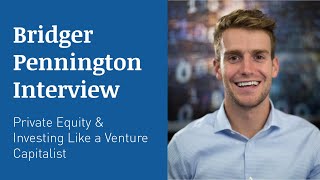
Bridger Pennington, founder of Blackbridge Holdings, talks about launching a debt fund straight out of college, how he sources deals, and what fund structure actually looks like. He shares early returns and advice for anyone wanting to start their own fund.
Welcome to the Next Level Income show where it's our goal to take your income, your investments and your life to the next level. I'm Chris Larson.
I'm Caleb Walborne.
You can get your free copy of our book at NextLevelIncome Book, where I share a strategy to not only invest, but also optimize your investments. And today's show is sponsored by Money Insights and their investment optimizer strategy. Their strategies have been used by the wealthy for generations for estate planning, minimizing taxes, preserving wealth and increasing stability for your investments. They can help you develop a plan to build an emergency fund, pay for college fund, a business plan for retirement, as well as optimize your investment strategy. And you can find more information and a free webinar on our website@nextlevelincome.com banking on today's show, we're excited to have Bridger Pennington. He is the founder and managing director of Blackbridge Holdings, a debt fund that Bridger started out of college. Has done over 235 deals in the last two years. In addition to the fund, Bridger also hosts a podcast called Investment Fund Secrets where he and other fund managers share how they launched and started funds without working on Wall street or even having an Ivy League degree. The show has gained traction and now has around 11,000 downloads a month. Bridger has also been featured on Fox and Friends where he discussed how to launch a fund in the unstable landscape that we've been experiencing this year. Bridger, welcome to the show.
Chris, Caleb, happy to be on guys.
Absolutely man.
Welcome, welcome.
Yeah, it's an honor. I love your guys show. I love being on here. So it's fun to talk to you guys.
Absolutely. We have a fantastic podcast. I think I came upon you on LinkedIn originally and started listening to your podcast which is fantastic. Really nice bite sized chunks. Learn more about your story. I was really impressed by, you know, your work ethic, your, you know, your persistence also just your background and kind of, I'm not going to dive into the kind of the secrets about your family and how you, how you got into this but for those of you that or for those out there that are listening, that haven't listened to your podcast, share a little bit about, you know, what you do and how you got here today.
Yeah, it's a good, it's kind of a funny story. And yeah, you mentioned you've, you know, on our podcast I just do quick 6 minutes chunks so you can kind of piece together the story. But I'll give you the Full story right here. So a few years ago, I. You know, growing up, like a lot of people that just want to make money, I was like, okay, I'm going to be an entrepreneur. I got to start businesses. So I was on. I think I was on business. Try number seven. And I had done everything. I had done wholesaling, I had tried, like, selling essential oils. I'd done an online marketing business. I mean, I was on. Just kept going. I felt like if I got to the plate enough times, I would hopefully hit a, you know, a base hit or a. Maybe a double or something. And I was. But at this time, my dad was like, bridger, you look like you're a chicken with your head cut off. You should go meet with one of my business partners, and hopefully he can give you some direction. I was like, okay. And I grew up in an average household. My dad was an entrepreneur. That's why I wanted to be an entrepreneur. But we just drove. We drove average cars. Average, pretty, average life. And I remember. So I set up this appointment with my dad's business partner, who was apparently good at real estate. And I drove. I remember putting it into my phone. And I drove up to his house, and I was driving through these hills, and I came over, and it was just this beautiful, gorgeous house. It was like. It was a cul de sac, and it encompassed almost two thirds of this cul de sac. It was like, holy crap, who is this guy? And I pull up and I park my car outside. And I remember walking up this door, and I thought I was gonna get, like, you know, get a boot on my car, get out of here, peasant kind of thing, because I just didn't belong there, right? And I knock on these beautiful white doors, and he comes to the door. Bridger, come on in. I'm like, hey. And I'm kind of nervous, you know? And he comes, sit down. We sit down, these big white couches in his front room. He goes, what brings you here? And I'm like, well, I've started a few businesses. They haven't gone well. It's been hard. And we start chatting. He goes, bridger, do you know what an investment fund is? Like, what do you mean? He goes, private equity, hedge funds, venture capital. I'm like, not really. I mean, I've seen Shark Tank before. And I kind of let. I kind of asked him, I said, how did you get all of this right? And he said, I did it through a fund. And he started to teach me about private equity, about venture capital and the funds that he had ran at the time, they were managing about $8 billion of real estate. And I was like, holy crap. Like, wow. And we started to talk, and he was telling me how they started it and got going. And he said, well, Bridger, you should go talk to your dad. Your dad is really good at this stuff. And I'm like, well, you obviously make a lot more money than my dad, you know. And he goes, actually, not really. Me and your dad make about the same amount of money. And my jaw dropped to the floor. I was like, what, are you kidding me? And we finished our conversation, I said goodbye to him, and I raced home to my dad's house as fast as I could. And I walked. And I was like, dad, are you. Like, what, are you rich? Like, what are you talking about? This guy has a big house. We have a teeny house. He drove a car had 200,000 miles on it with a dent in the door. I was like, why are you. And he's like. He kind of laughed. He said, bridger, well, I like to invest my money. He likes to spend his money. We started to sit down, though, and he started to teach me about this fund, this real estate investment fund they had set up, and we're currently managing $8 billion. And he was one of the co founders of this fund. And we sat on a whiteboard and he started to teach me about this. And that's what really sparked me to get into this space of alternative investments, of setting up your own fund to be a fund manager. And so I explored more. And the traditional route, as you guys know, to get into a private equity or VC fund or a hedge fund is usually you go to a really good school. And I was at an okay school at the time. You get great grades, 4.0. You land usually a really good internship at a big bank like JP Morgan Chase, you know, Wells Fargo, you land. You go to Goldman Sachs, or you go consulting, and you land a great internship. You work a hundred hours a week. You do the whole two years, you know, consulting. Then you land an mba. And then, then, and only then, you can. What everyone says is, you write your own ticket. That's kind of the phrase I don't know, that I always heard. And so I talked to alumni, and I was telling. They're like, yeah, you gotta do all this. So I started to do that. And I. At school, I did really well. I got 4.0. I was like, this is my mission. I was gonna work at a private equity fund. I actually got an internship at a big private Equity fund. I went and got a six figure job. I finally, I remember getting the documents, six figure job, stock bonus, salary, the whole thing at a Silicon Valley, huge firm out in Silicon Valley. And I was like, man, this is it. Like I've done it, right? I got the offer. And that same time I decided to call around to other people who had. Apparently they wrote their ticket, right? They had already done the investment banking consulting route, they had done the Ivy League or mba. And I started to call around and it was interesting to see. I said, I asked him the same question. What did you do when you could write your own ticket? And I think out of the eight people I called, I think seven of them were doing something else completely unrelated to what they had originally wanted to do. And I asked them why, like, why aren't you working? You wanted to get into private equity, why aren't you doing that? I said, well, it's just 100 hour weeks. It just wasn't worth it. It was hard on my family and kids. I got burnt out and I'm not gonna do this anymore. And I was like, shoot, you know, well, do I? This is the path to nowhere, it looks like, right? And at the same time I had an opportunity at my, I was working just a part time job and I talked to the owners there and they needed financing for some of their clients. And there was this unique opportunity and I was like, this could be a good idea for a small fund to lend to these clients. So I run home to my dad, I'm all excited to get this fund started. And he says, bridger. We started to organize things at Bridger. I will not work with you until you've read through the two governing documents of a fundamental 13 to 15 times. And those documents are your LPA limited partnership agreement and your private placement memorandum.
There are two.
You guys have read some before. They're massive documents, usually over 100 pages. And they're thick, thick legal documents. And so I was new to this world, right? So I sat down. It was between semesters at school. And I sat down and I read for two and a half weeks straight. I wake up, I go to the office, I just read all day. And the first like eight times I read through these documents, I didn't understand anything. I had Google open the whole time and I was googling things. And anyways, after reading a couple times, I started to figure out what was going on inside of a fund, the fund structure. And with my dad there with me, he could answer any question that I had. So he Started to. We really mapped out the framework of our fund, got things together, and we got it all together. I'll skip a few parts, but we got the fund organized and ready to raise money. And I was really excited to raise this money to get going. And I remember I was like, okay, I find investors. Who should I go to? And my dad, I was like, well, my dad must have a lot of money. You know, he doesn't spend his money. We live in a normal house, right? And he likes to invest. He would be my great first investor. So I remember walking into my dad's office and I sat down with my dad and I said, dad, thank you for helping me set up this fund. This is great. I'm looking for investors. Do you want to be the first founding investor into our fund? And he looked at me and he kind of laughed and said, bridger, I have the money to invest, but I will not do it because it would ruin the opportunity that you have to go out and actually raise money on your own. It's a huge learning lesson that every single person needs to learn. And I'm not going to give you a shortcut. You got to go do it on your own. And it was a big time, tough love moment. My dad, and I love him to death for that. Still, to this day, he's never invested in any of my deals, any of my funds, ever. And he's a great advisor, but will not invest. And so he kicked me out. And I went out, I was like, okay. I had to beat the streets. And after beating the streets for three weeks, I raised a total of $49,000 from, I think, six or seven different investors. Just this teeny pool, but that was enough for us to get started on a few. We were doing micro loans, so micro deals. And that little beginning bloomed into what we have now today, where we do. I have a whole team of guys that work for me, do millions of dollars of transactions now. But that first fund I got going, I got my feet wet. I got those first investors a 64% return on that initial investment. And then we've now launched funds, multiple funds after that, and it's gone pretty well for us now. So that's kind of the story how we got into this and got started. And it's been crazy, you know, And I said, I'm going to just. I've opted out of. I said no to those offers to go to Silicon Valley and other different banks and investment funds that I could work at to do my own. And it has taught me Way more doing this on my own versus working for somebody else and watching them drive the car.
So I love it, man.
Pretty fun. Yeah.
Awesome. That was. Thank you for sharing the story. I've heard it. I love it. I really appreciate you sharing with the audience. It's inspirational. And again, it shows. I think it shows a couple things that I really took from it. One, you don't need. You don't need, you know, Ivy League pedigree to make happen what you did. And two, I think from, from a father to two young boys here, which are. You probably see him in the background. You know, the lesson that your father gave you, you know, through your upbringing as well as through this process is very inspirational for me as a father. So I appreciate that.
Yeah. And something along those lines, like, and now we've started a podcast. We kind of have an online presence a little bit. Just because people have. I've been asked by so many people, how did you start a fund? How did your dad. My dad has just been an entrepreneur his whole life. He barely graduated college with Cs. Second, second rate college. Never has worked at anywhere. My brother runs a. Works at a $250 million fund. People ask our family a lot, how did you guys break into this fund space? And so that's why we've started talking to people and saying, yes, it's hard, but it's not as hard as you think. People put it on a pedestal. Like, I could never in a million years go out and raise money and set up a fund and do this. And it's like, it's hard, but it's not impossible. Like you, you can do it if you put your mind, as you guys know, you guys talk to us all the time, but if you put your mind to something, you can accomplish whatever you want to. There's a huge learning curve. You know, you don't learn everything, you know, in four years or in a two year mba. Right. There's so much learning that happens, especially listening to this kind of show and other shows, that you can actually, you can go out and make things happen. Especially in a market right now where there is so much capital in our markets. It's crazy how much the Fed and banks have put money. There's just so much money out there. How can I grab a little bit for my fund and scale that and make a good return?
So, yeah, I love it, man. Think you can. Thank you. Can't. You're right.
I love it.
Yeah, It's a great quote. So we have a pretty wide variety of listeners, you know, from entrepreneurs to doctors to lawyers to, you know, all over the board. So for someone who's listening, who might not be as familiar with the space that you work in, how would you describe Blackbridge Holdings? How would you describe what you do there and your business model?
Yeah, it's a great question. I'll start with a fund in general. If people are new to alternative investments. People know you can invest money into the stock market, you can put it into different mutual funds. And then there's this whole world of all they call it alternative investments that are private equity fund managers. Essentially it's saying, as a fund manager, I believe I can beat the market in some way, shape or form. I believe I can find an alpha out there where I can find asymmetrical risk, meaning it's low risk and high reward. Now you might think that's crazy. A lot of people believe, oh, high risk, high reward, low risk, low reward. That's not true in a lot of cases. And that's what we as fund managers go out and say. We're going to prove the market wrong. And, and you see on, you'll know, you'll see on the news huge fund managers like Ray Dalio or Warren Buffett, Right. That consistently have beat the markets for 30 plus years. Ray Dalio, by the way, I believe they have, I think it's about 160 billion under management. You have to have a $5 billion net worth to even talk to him. And $100 million minimum commitment to take. That's just how much money he has flowing to him. Yeah, Bridgewater, which is just wild. So in our space to kind of back it now get a little bit smaller to us, what we, what I run is a fund. It's a pool of money. You as an investor would put your money into this pool. I am the governing partner of this pool. I have over. I can oversee what happens with this pool of money. And a lot of people will do real estate or they go invest, they go trade it on Wall street or they go like me. I do, I run a debt fund. So I issue debt or loans to different companies and people. So with Blackbridge specifically our pool, I have two different asset classes that we look at. The first one is, like I said before, micro loans for entrepreneurs. These are loans, they're five to 30 grand a pop. And it's gap funding to help these entrepreneurs. Sometimes with liquidity, they're really niche. I'm not going to dive into how niche they are. We only work with certain individuals. But we found a very, very, very good return with those little, that little niche that we get into. We found a good return with them. And then our other asset classes, we lend on real estate. So if, you know, if Caleb, you came to me and you're like, Bridger, I need $800,000 loan from you. I'm going to start this cool project somewhere. I don't even care about the project. I just say, hey, Caleb, do you have real estate as collateral that I can take a first position on that I can lend you the money? You say, yeah. So I say, okay, I'm going to give you an $800,000 loan. I need a million dollar, let's say a cabin you have in Montana. Going to take possession of that or put a first lien on that and then you can take $800,000 and do whatever you want with it. And usually those types of loans are less than a year. So let's say a year and a day. You've got to pay me back the $800,000 plus our fee. That's typically how we, the two asset classes that we get into. But we have a big range of other stuff we can do. But that's what we try to focus on. Hopefully that helps kind of understand exactly what we do now to span off of this, there are so many funds that do so many different things. Especially since we've started our kind of online marketing stuff, started a podcast, our show. I've had people message us and DM us about the craziest ideas you've ever seen. People that do almond fund farms, they do solar farms, they do people that do in South America and Argentina, there's one city that they can find this cocoa bean and they're only going to invest in that cocoa bean, right? They're the craziest things you've heard on the planet where people can find really good returns doing. This one guy I just met, he's going around the United States, he's buying up hundreds of mom and pop funeral homes. He found that if he couples them together and he sells them to a bigger private equity firm, the grouping of them, he can get almost a double multiple on it because of the grouping of it. That's all he does. He just buys a bunch of companies, takes to a big private equity fund and sells it for a 2x return. So it's so vast and so, so many things you can do.
We have, we have several different asset classes that we have access to here at next level Income. You know, a lot of these operators I've known for, in some cases, you know, you know, since I was in college. So how do you, how do you underwrite these deals, Bridger? You know, obviously it's. One part is going out and getting the money and putting, putting it together in the fund. The other side is how do you find a good deal? So can you kind of share a little bit with the audience how, what you do and going through that experience?
Yeah, it's a great question, especially on the deal side of things. And I'll talk general terms and specific to my fund as well. In general, for people that maybe want to get into this space of finding alternative investments or finding deals, we talk through what we kind of have a formula we call the fund to launch formula. And this is from. I've interviewed like you guys have. I've interviewed dozens of fund managers who started funds from scratch that didn't have, didn't cheat and have the Ivy League degree or didn't cheat and have some cool pedigree where their grandpa had a $2 million to put in. You know, people that just started from the ground up and they followed the same formula. And the first step is to find a good deal, right? That's the. And I tell people about everything. Don't worry about the legal, don't worry about the investors. If you find a good deal, money will find you. And the example is if I had a Ferrari that was, you know, in, let's call it Northern Montana in the middle of nowhere, and you could buy it on Monday morning for $80,000, but it's appraised for $500,000. It's just a fire sale. Could you come up with 80 grand? You know, if you talk to friends, family, and most people would be like, yeah, you know what? If it's a guaranteed, I could buy it for 80 grand and sell it for 500 grand. Yeah, I could find it. Why then could you find money, right? Because you had a good enough deal. And so I tell people all the time and myself, I try to take. It's easy in your mindset to say, well, you know what? I can't find the money. No one will invest in me. It's really comes down to the deal and how good the deal is. And then from there you can frame the deal, you can find the money and then do the legal documents on it. And so for me, what is a good deal, right? A good deal for me is something that has high risk or, excuse me, low risk and high return. That's really what I look at and Aspect where I can come in and control the return. For me, a risky investment is something that I can't control. So I talked about Caleb having that cabin that I would take a lean on. I go through for a good deal on that. I would go out. I'm going to fly a team to wherever your cabin is. I'm going to get an appraisal on it to make sure it's actually appraised at the value that it's at. I'm going to do a lien check. I'm going to check to make sure there's you're not in bankruptcy. I'm going to check to make sure there's no other liens on that property. And then I am going to go to a title company and put a lien on that property. And I want to do usually 80% of the loan will be 80% of the value of the current property that I'm putting the lien on.
Right.
So that's for me, that's a good deal. And that's what I've decided, right. If overnight real estate markets drop 20%, it's okay, I still break even, right. If you didn't pay me back and I had to liquidate that asset, I could still break even. So to me that's a good deal. We do the same thing with our micro loans. We look at actually a similar, a little more complex but a similar structure on their credit utilization and how utilized they are between all of their credit cards, all their assets. And we can take leverage and we feel it's, it's asymmetrical risk. When we've done almost 250 deals in the last two years and we've had one half default out of 250 people and they, I think he defaulted on like 800 bucks. That's for us is like, wow, that's pretty good, right? That's a pretty good, that's terrific.
Yeah.
Little niche and it's. And for fund managers, you know, to scale now where we can scale, I tell most people with, you know, launching a fund, you've got to perfect your game first you've got to do a few what I call syndicate deals. So these are more one off deals where you'll, you don't have to, you don't need a fund behind you. You can just get money together in a simple llc, put it on a real estate product or invest a little in whatever you're doing. Apricot Farms, right. And do a few syndicate deals. Do two or three of those. If all three of them got a good return. They did. Well then and only then scale through a fund, right? A fund isn't probably the first thing you're going to do, but starting with syndicate deals gets you ready, gets you a track record and then you can scale through a fund. So that kind of helps answer your question a little bit.
Oh no, it's terrific and I appreciate it. And yeah, I mean, that's one of the things, you know, look, for me it's been real estate for two decades, but having the controlled appreciation that we see in the multifamily side and the commercial side versus the, you know, buy and buy and hope or buy and pray strategy that people have in the single family market, I really like, again, if you can control it, that decreases your risk exponentially.
That's why I don't trade a lot. I feel like I cannot control markets at all. I'm very reacting. I'm just. There's just too many big players on Wall street that can control a market. If they short sell it with, you know, half, you know, maybe half a billion or a billion dollars, they can kind of control a market. I can't control a market with a small fund. So I stay, I really stay out of a lot of, besides very safe portfolios, I don't do much in the markets because I can't control. I love that.
If anybody doesn't, if anybody doesn't believe what Bridger said, I just finished reading the Spider Network. It talks about how Libor, which is a big interest rate metric, was manipulated by a consortium of banks. It's incredible. So great read. If everybody thinks that it's a fair market out there.
Yeah, it's just on that note, so my dad, currently their funds have about 20 billion under management and he's one of the co founders there. And so he's been, had been able to peer into some of how these banks work and operate high finance. And he'll come home and tell me about it and say, Bridger, they are playing on a totally different level than any of the average investors. They are playing where they can manipulate bond markets and currencies and there's just so much manipulation that you have no clue what is going on on these high levels. Like you just said, things are happening for years and we don't know about them.
Yeah, and their numbers are so huge. They're so huge. So, so the entrepreneurs that are reaching out to you, how do they find you and what's in it for them? I mean, obviously lending. So talk a little bit about who you serve on the other side of that.
Yeah, with our lending. So we. It's really been a lot of word of mouth. It's a fun. I don't know if you guys have actually felt this before, but when you tell people you have money, it's incredible how many people knock on your door. So that was something. Actually, my dad. I was talking. My dad's my greatest mentor of my life, and I share a lot of stories from him because he taught me so much. He said, bridger, even before you have a fund officially set up, start telling people you have money ready to lend out. I was like, why? Like, what do you mean? He goes, it's crazy how many deals will find your way. And, you know, if you found a good enough deal, could you find the money? Like the Ferrari example I gave you before? I'm like, well, yeah, I could find maybe a hundred grand. He goes, okay, then you have the money. I'm like, okay, so I have access to the money, I guess, right. So I started to tell people, hey, like, I've got money. I'm looking for. These types of deals would call around, you know those. The bandit signs around town that say we buy houses, cash, we do all this kind of stuff, or we're selling a home. Call those guys up, hey, I know I'm not in your asset class, but I want. I know you're connected. I've got money, I'm ready to lend to these types. And I have this certain asset class of these certain entrepreneurs that I would lend to. And I said, hey, if you know anybody in that space, let them know that I'm. That I'm available or I'm open to unique. I would call it unique loans or unique lending because I wanted to just listen to pitches. It's really fun to be the guy with the money and people are pitching you and you get to watch 20 or 30 pitches and pick and choose. Like, wow, that's actually really good, or that one's not that good. And then for me, I looked at all that landscape and said, okay, I really like this area. I feel like I can control that aspect very well. I think I can get a good return from my investors. It's relatively safe. And that's where I decided to hone in on and say, that's going to be my asset class. So I shopped around for six or eight months before I decided to do the two types of asset classes. I explained to you before now specifically on the entrepreneurs that are raising money from us. For me, you can't just for the one asset class. We do five to 25 grand loans. You can't just call me up and I'll give you a loan. We've set it up where we only take clients from a handful of companies around the United States. They give us clients that are already. They're approved by other lenders for financing. They're already at a certain point, so they don't even. People don't even know we exist until they need us. And so that helps our default rate a lot. So if an entrepreneur just called me up and said, bridger, I need money, I need five grand, I'm gonna say, sorry, that's not gonna work now for people that need, you know, a million dollars and have real estate, and then that's more where map people just can send me an email and I just say, hey, this looks good. This looks like a good deal. We'll send an appraisal out and we'll lend on it.
So.
Awesome, man.
Yeah.
So, yeah, whenever you and your team come out to my hypothetical cabin in Montana, we can all go fly fishing together while we do diligence deciding whether you're gonna lend me the money or not.
Yeah, exactly.
Yeah. So we've been diving pretty deep into the idea of your fund and funds in general, but expanding kind of out on that. A lot of people in our audience are entrepreneurs and business owners or professionals without a side business. And you have a relatively young business, but you've grown it really quickly. So what insight could you offer our listeners on some things you've learned along the way to grow it as you have. And then also, so as we're entering a time of economic uncertainty and somewhat of a downturn, what have you learned along the way of that, of how to manage a business during this time?
Yeah, it's a great question. And before, you know, I've started seven businesses actually, now a few more than that. And some have done well, some have done really bad and in all different realms for entrepreneurs. And I'm not an expert. Right. I'm just telling you my experiences, my opinions. But for me, I was just at the beginning, just doing anywhere I could make money. And I think it's still a good strategy. I don't think people should. I would err on the side of making money versus sticking to your passion alone at the beginning.
Right.
You see Elon Musk, he's doing his passion projects now. Well, he started PayPal and made a billion dollars off PayPal by the time he was 29. And then he went out and started Tesla and SpaceX. Right? I believe in. And for me too. I don't think I'm passionate about running a fund all day. I think it's cool and I think it's a great vehicle to make money. And maybe one day I'm going to do different things right after I make a lot of money. But for me, it was choosing correct vehicles. And for a while, I was just picking anywhere. I thought I could just smell money. And then I finally decided to step back and say, what are some really good vehicles for making money in times of downturn, in times of that are doing really well? What are vehicles that stood the test of time and make people a lot of money? And I found a few. I started to look around, I said, okay, obviously, tech companies. I was like, there's tech founders that are billionaires, right? And they make a lot of money. But I'm like, I don't know if I'm that technical. I just don't know if I'm that kind of guy that could do that. And maybe one day I'll set up a tech company. I don't know. The next one I found was found online marketing. People were making a lot of money in online marketing relatively easily. This seemed easily, at least, right? I seemed like it was a good vehicle and it seemed like they could make money whatever the markets were doing up and down and they were making okay money. And then the third was investment funds. I found some of the richest people on this planet ran funds were in mutual funds and hedge funds. You look in the Forbes list, there's just dozens and dozens of people that made money from companies you've never heard of before, right? Like these weird companies out of nowhere. And you're like, how is that guy? I've never even heard of that company. And money managers. And I decided out of those three vehicles, I was like, well, my dad and brother are really good at money management. I'm gonna pick that vehicle and go for that vehicle. And then secondly, we started to do a little bit of online marketing because I believe that's a good vehicle as well to make money versus I don't. I don't want to be a restaurant owner, right? To me, that seems like a really bad vehicle. That could be someone's passion. But, man, waking up every day and getting there to make what?
Maybe.
I don't know. I don't know how much restaurants make a day, but they're kind of overhead. They've got huge leases, they've got employees. I was like, that does not seem very great. I love the idea of eight guys on Wall street managing two and a half billion dollars and all of them ripping, you know, 10, 20, 30 million dollars on a fund. I love that idea. Or online marketing, where a few guys out of a studio like you guys, right, can broadcast to the world and have huge influence on buyers and sellers. I decided on those two vehicles, and that changed my mindset a lot when deciding on what companies, what industries to get into. Because I just said, I'm going to pick vehicles that make a lot of money and I'll figure it out. I could be a B B player in a good vehicle and I'll still be better than an A player in the restaurant business. That was my opinion. So that's. To young entrepreneurs, people starting out in entrepreneurship, I would say, be very picky about your vehicle that you get into and decide and do some research on each vehicle before you get in. So that's kind of my opinion.
That's great. And I mean, I've thought about that too. And Chris and I both have read some things by Scott Adams, the creator of Dilbert, and he talks about when he used to work at an investment bank. And this is like, what you're doing that he was instructed, if someone comes in and says, I'm so passionate about this idea, will you invest in it? You basically say, no. It's like you invest in the guy who comes in and says, well, I'm gonna start a Laundromat on this street corner because the location is good and that this area is underserved and it's a really boring business. But here are all of the financials and all of the numbers. And this is my pro forma and the money that I think I can make here. And it's like, that doesn't matter if you're passionate about something, if it, you know, it doesn't make sense.
I love that. I love that.
Yeah. And, you know, you said a couple things there, Bridger. So I think, you know, if you look at Elon Musk, he wants to go to Mars, so he needs to make a billion dollars so he can go to Mars. And that's his why. I think if you got a big why, the vehicle will help. It will help steer your vehicle there, right? And I, you know, a lot of people looked at me, they're like, you got an mba, got an engineering degree, why are you working for State Farm or pharmaceutical company doing this? And I knew the skill set that I needed and what I was doing to get There. And my, you know, I was. I was looking for money to invest, so I needed to make a lot of money so that I could put it to work in real estate and do that. So really, really prescient advice there.
Yeah, I love it. And I'll tell you straight up for your listeners there. My goal, I love speaking on stages. As weird as that sounds, it's like my favorite thing on planet Earth. Like, I've spoken to youth groups, I've done like suicide prevention. I've done other stuff like that. And I just get the biggest high ever from speaking on stage. And that's why I kind of started a podcast to practice. I'm not that great right now, but I'm trying to get better at it.
Pretty good, man.
I mean, yeah, but nobody wants to listen to a speaker that's broke, you know, or didn't ever make money in life, right? And so my. I'm like, okay, I make a ton of money and maybe when I'm 45 or 50, I can really hit my speaking career just as a passion project, just for fun.
I love it, man.
So kind of fun.
So, Bridger, for people that are listening and they want to learn more about you, maybe they want to start their own fund, maybe they want to invest. What's the best way to get ahold of you?
Yeah. So we actually just launched, so me and myself and my dad, I've talked about a lot of him on this podcast. We did a free one hour training where he actually walks through how his funds work at a $20 billion level. They have parallel funds, they have international investors, the whole nine yards. And then I share how I structure my fund. I shared a little bit today, but how I structure my fund, how I found investors. So we have a one hour training for free. If you guys want to hop on there. It's actually, it's not like a bait and switch. Like at the end, we do off. We have a mastermind program that we pitch at the last 10 minutes, but this, I hate webinars where you hop on and they just pitch you the whole time. Like, we actually try to give people, like, really good content that they can use. So you can go to investment fund secrets.com and right there you can opt in and see it. And then we have our show. Investment Fund Secrets is our podcast. So we're on there twice a week. We interview fund managers and I share a lot of stories from our fund and what's going on. As we're scaling, we're growing. I'm doing this all time, like full time. Right. I run a fund full time and this is what I do. So it's a fun place to be.
It's fantastic. I love your bite size segments that you have and I recommend everybody listens to it.
Oh yeah, for sure. I mean I've listened to quite a few of them and I like the energy you bring and I can definitely tell that you have that passion for public speaking. Like when I was listening, I was like, I like listening to this guy. So for our last question before we wrap up, we'll have to adjust it a bit for you because you actually I think are the youngest guest that we've had on the show so far. And our listeners know we always ask at the end, like if they could go back to their 25 year old self because a lot of people we have on the show are quite a bit older, what would they go back and give One piece of advice, but for you, because at the time of recording you'll be 25 once we release it. But you're actually younger than 25 right now, right? You're turning 25 next month, did you say? Yeah, funny.
Sorry to ruin your question, but yeah.
We can adjust it for you.
Yeah, yeah, just for you. But no, that's, I mean that's impressive with everything you're doing. So just for like a good perspective, if you could go back instead, then let's just say five years, five years ago. What advice would you want to give to yourself at that point?
Buy Bitcoin. Probably the first advice. Just kidding. No, this is something I've had mentors tell me this before and this, I remember one time a mentor told me this and it changed, changed my life. And the reason I wanted to be an entrepreneur, reason I got into this game in the first place, said Bridger. Why is it that I know a guy, he moved here from Vietnam. He's lived here for 10 years. He still can't speak English, but he owns three laundromats, a restaurant and another little company. He owns five businesses, he doesn't speak English and he owns five businesses that all make him good money. He's been able to send his kids to college, he has a nice car, a big house in America. He came here with Nothing and in 10 years has done that. And he's like, I see too many Americans who settle for a cut rate job, an average salary and don't take a chance on themselves ever. And I remember when he said that, it resonated with me because I've seen those Immigrants that come here and they crush it in America. And I don't know what it is, it's. Maybe it's, they realize the American dream, what we have. And we just don't know what we have here in America, the opportunity that's available. But I told myself, I said that's not going to be me. I'm either going to hit really high or I'm going to go really low. But the best part is in America if you hit really low, it's not that bad. You can't go that low compared to other countries. I lived in Taiwan for two years. You can go low in Taiwan and other countries. I don't know if this is true, but in America, if you wake up every single day and try and you stay healthy, you can be successful in America. And I love Tony Robbins quote and a lot of people have said this, but people overestimate what they can do in a year and underestimate what they can do in 10 years, in a decade. And I tell myself this all the time, what is this decade going to look like for you? Not a year, not five years. What is this decade? Where are you going to be at in 10 years? And I try to really visualize where I'm going to be at. For me, I want to be a, I want to be managing over a hundred million dollar fund, have a big company, a big portfolio. That's kind of where I see myself and hopefully getting that speaking career a little bit. You know, Caleb said hopefully getting in there a little bit. But I want to be running a huge fund. And I'm like, okay, this is the long term play. Where do I need to start now to get there and you know, if I fall on my face worse and this isn't true maybe for everybody. For worst case scenario for me is okay, you know, we've got a live in an apartment for two months, three months. As I get back on my feet, I can go find a job and make a little bit of money and get back, you know, and I just try to stay as nimble as I can. I don't have any car payments, my house payment is really small. I have, I mean really no debt. I try to stay out of debt personally a lot. So, so that I can keep getting up to the plate and swinging because I know if I swing enough times I'm going to hit one over the fence eventually. So staying out of, you know, don't. It's a, it's a tempting thing to go buy that big house or to get that big lease on that car for me, it's like, I'm going to stay nimble. I'm going to, I'm going to stay small so that I can keep taking risks and keep risking it on new business ventures and it's not that big of a detriment if I fail.
So I love it, man.
Yeah, that's helped me a lot. And that's why I've decided to take a huge risk and start businesses and get in this game. And, you know, if I fall, fall flat in my face tomorrow, it's going to be okay, right? I'll be fine. And we have a house and we have cars and we'll just keep going, so.
And.
Your worst case scenario is probably the dream for 90% of the world that's out there, which is it really. It really shows how fortunate we are in this country, right?
Yeah, exactly.
Oh, yeah. Being born here and I mean, even Americans who don't make what you would think is that much money are technically in the 1% of the world as a whole. So that's great. Another thing, Scott, which is what you were saying, what Scott Adams says as well is like, in business, you can get it wrong a bunch of times. You only have to be right once. And once you're right once, like you said, swing the fences. Once you hit that home run, you're good.
So, yeah, awesome, man. Bridger, we've loved having you on the show. For people that want to learn more about what you do, they want to, they want to see, see what you got going on. What's the best way to get a hold of you?
Yeah, so I said before investment fundsecrets.com you can see that one hour free training. I check my Instagram a lot. I don't go on other platforms. So if you want to just DM me at bridgerpennnington, I reply to every DM I get right now, at least right now. And anyways, we'll see how that, if that changes in the future. But I try to reply and be, you know, answer questions stuff. So if you go on Instagram, that's usually the easiest way to get in contact with me. But yeah, both those are great ways to find me.
Awesome, man. Bridger, thank you so much for being on the show today. We'd love to have you.
Hey, thank you guys, appreciate it.










