CHRIS MAILANDER INTERVIEW – Secret Codes and Methods for Unlocking Exponential Financial Value
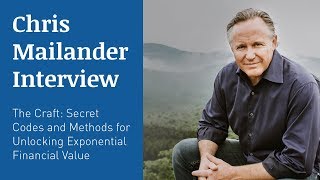
Chris Maylander, CEO of Ironheart Corporate Advisory, discusses 25 years advising governments and corporations. He ran Iraq's first electronic spectrum auction and worked on anti-corruption systems in Nigeria's oil sector. His book The Craft teaches methods to read how people think, identify blind spots, and build trust for long-term investments.
Questions this video answers
About $19 billion per year.
$80 million in upfront fees.
Around $3 billion (over time).
Circa 1994–1995.
About eight years ago.
Welcome to the Next Level Income show, where it's our goal to help you take your income and your investments to the next level. I'm Chris Larson.
And I'm Caleb Welborn.
And on today's show, we have Chris Maylander. Chris Maylander is the CEO of Ironheart Corporate Advisory. Over the last 25 years, he's worked across five continents and industries and he's been helping CEOs, leaders of nations and global investors navigate their most critical moments. He has been the CEO of several corporate spinouts, an international M and a lawyer, senior director of new venture development for a global management consulting firm, and vice president of global communications company. He holds an advanced legal degree with honors from Georgetown University Law center, where he was also an adjunct professor. He has been an adjunct fellow at the center for Strategic and International Studies, a leading foreign policy think tank, and has published in a number of academic journals. He has just released a new book, the Craft, and we're excited to have him on the show today.
Thank you, Chris. Thanks, Caleb.
I gotta take a couple deep breaths after that intro. Man, that was fantastic.
Yeah, we're really glad to have you here, Chris. So you have a super interesting path. Would you share a bit of how you got your start and how you ended up finding your way to Asheville, North Carolina?
Sure. It's a bit of a wandering journey. I started out, grew up on a farm in the middle of nowhere, Iowa, and after college went on out to San Diego and went to law school out there and as part of that process had several internships in Washington D.C. and became very enamored with Washington and the political culture and how all that machinery worked in terms of political politics and corporations and economics together. And so I went to Washington D.C. and spent four years working in the halls of Congress and simultaneously going to Georgetown Law School and getting an advanced legal degree and teaching there ultimately. And then I joined, as you mentioned, KPMG llp, which became KPMG Consulting and then Bearing Point and was new Venture development on an international level for them and then had an international M and A practice which took me to over 30 countries where I've done deals, many of which were in emerging markets, post conflict economies and societies. So I spent a lot of time on the road in some far flung places and working on creating something. And then ultimately my wife and I decided to move to Asheville, North Carolina about eight years ago as a place to raise our family. And so it's a beautiful location. We had some heritage here, she had some heritage in western North Carolina. And so we came down here and our boys have had a brilliant experience and I live on a plane, so that's the strategy.
Gotcha.
Yeah.
Yeah. Chris, appreciate you sharing that. You and I met in an investors meeting and it seems like now I see you more at the gym like we were talking about before the show than I do outside of the gym. But having two boys, you have a young family. Would you mind sharing, you know, some of your secrets about how to, how to stay balanced, how to stay healthy and mentally sharp when you're traveling all over the world and these sometimes very stressful situations?
Sure. A lot of the work, and you mentioned the book that just came out, the Craft, which is focused on really how do we perceive, react and think. And as you get into that, it's really about being able to decode the neurology and how you're thinking about issues. And it's integral, you know, integral to your physiology. So a lot of the exploration that I've done over the last nearly 30 years of traveling all over and working in pretty extreme, intense environments has been how to find that balance, how to come into new situations and be able to get that read, understand what's going on. And it's a series of emotional balancing, physiological balancing, intellectual balancing, so that you can see what's in front of you.
Wow.
So stay tuned to the end of the show because I think, Chris, you're going to have a special gift for our audience today revolving around your book launch. So make sure you listen to the end here today.
Chris, I know you have some pretty wild stories and you've definitely lived an interesting life so far and done, like you said, going off to far flung places. The average person hasn't done a lot of the things that you do. What would you say is one of the most interesting stories you have from your travels?
I mean, there are several and I think this is probably a little bit of a product of growing up in the middle of nowhere, Iowa as a farm kid and you see the planes that are going across the sky and thinking about the adventures that people are having. And so I always was very, very much desired that, which is to get out and to experience things and go to far flung places and experience new cultures and dynamics, et cetera, in terms of specific experiences. One of the projects, for example, that I ran when I was in Washington D.C. was setting up the fraud and anti corruption system for the government of Nigeria, which was focused on the oil sector there, which is a $19 billion per year per annum system that is one of the most corrupt economies and systems in the world. And so it was the first time of undertaking this international initiative of figuring out how to eliminate fraud and corruption from the system.
What inspired that? I mean, I've read and heard a lot about corruption in Africa. Like, what led to setting that up?
There's a couple things, one of which is that the international community was very much focused on this. So the World bank and the USAID and the British equivalent, which is called dfid, were focused on how do you start rooting out the corruption in core industries like this? So that was the first thing, but it really takes reform from within. And so at the time, the president of Nigeria named Obasanjo, was a former general and a very strong leader. And so he took it upon himself to carry that mantle and start to do reform from within. And he appointed two women who went on to work at the United nations to oversee this program. And they were brilliant. So you talk about interesting experiences. These two African women who, you know, you can imagine they were big women in their floral dresses and headdresses, et cetera, were some of the most powerful, charismatic leaders that I've ever been around. And they, through force of will, made that happen. But as the person that is architecting the program dropping into Abuja, the capital of Nigeria, I'm in the backseat of a white technical truck with a 50 cal on the back, because this is not necessarily a popular program with all the constituencies that are in Nigeria. So it's experiences like that. But I've also worked in Afghanistan and sat on President Karzai's family carpet and had dinner with warlords as part of those experiences. I've worked extensively in Iraq and all over Africa and Ukraine, and many of these kinds of economies which want growth, want to. To stabilize their economies, want to provide for a better future, but need to find a pathway there. And a lot of it has to go into the psychology and the abilities of the leaders in countries like that.
Makes sense. So with what you're doing in the Middle east, can you share a little bit about that, about the programs you're doing there? Because that sounds really interesting.
Yeah.
With warlords, that sounds nuts.
Yeah. For example, one of the things that was happening following the second Gulf War is that within Iraq, Saddam Hussein had prohibited cell phones within the country. And the reason was very simple, which is that he only had the ability to do eavesdropping on wire lines in the economy.
Unlike the US Government.
Yeah, exactly. So for, you know, the economy, from a technology, Telecommunications, perspective was 25, 30 years behind the rest of the economy and very closeted. So they had what was a vacuum, but also a greenfields environment following the military actions there and the CPA coming in to run the country for a period of time. And so the initiative that I ran was that I was hired by the government of Iraq to sell their spectrum to outside international vendors and so conducted the very first electronic auction ever in Iraq. It generated $80 million in upfront fees and 3 to 400 over a period of time, generated the highest gross revenue sharing ever committed in international telecommunications auction. And set the groundwork, the structure, the framework of that then was used for the more valuable GSM spectrum, which is the common mobile technology that's out there, which ultimately raised somewhere around $3 billion in revenue for the country.
Incredible.
So it was quite significant. But again, you're walking into a scenario where, you know, there's a vacuum. You have an absence of leadership. You have a number of expat Iraqis that have come back to the country that don't necessarily have the experience of telecommunications and leadership at a high level. So part of the craft here is being able to work with them to provide the support and the structure and the vision to enable something of that significance. There's plenty of room for failure, and we were successful in being able to navigate that to generate literally hundreds of millions and then ultimately billions of dollars in revenue for the country.
That's incredible. How do you go about navigating those types of talks in different cultures? Do you have to approach it much differently than you would say in the United States?
Yeah, absolutely. And this is a big piece again to come back to the craft, which is being able to get a read on what you're working with in terms of the individual or the group that's sitting across the table from you. And they're all very different. And there's certain psychological, you know, tests that I'm running to understand where are they on a spectrum in terms of their outlook, the logical constructs, how they perceive time, how they perceive risk, all those dimensions. What is their primary orientation in terms of their vision? Is it to their individual ascension and their, you know, whatever they can earn or the power that they have, which is often common when you're dealing with political leaders or the money they make, or is it to country or to God or to their family? All of these different dimensions of their outlook really affect how I go into projects like that and how you try to create success because you have to align with that. You have to be able to find a way to resonate with their primary worldview, beliefs, values and so forth.
So, Chris, I read the Craft. I bought it the day it came out. Got an electronic version. Read it last weekend, as a matter of fact. So I found it really interesting from the psychological side of things, coming from an engineering background, a sales and service background. We've talked a lot about this, dating back a year or two. Going from a tribal culture, as I believe you kind of described it back then, and what you learned there, what have you learned that you can now take to, say, an executive that is trying to help their team in a more advanced culture, or I should say maybe a more developed culture. Maybe that's a more fair description. Like the United States or the developed countries.
Yeah, it's really being able to break down those different stakeholders that are within whatever issue or strategy that you're pursuing, whatever business that you're pursuing. The tribal nature of it, we still see in America in very strong ways. If you look at our political fabric and how it's created, that's a tribal orientation to many of the dynamics that we see playing out. It plays out in companies as well. And so I see it in a corporate environment oftentimes. So, for example, when you're dealing with innovation initiatives, where you're trying to organize people to serve a common corporate objective to a larger objective, but you have these sub objectives down below it in terms of what they are able to attain for themselves or for their team, et cetera. And so it's a process of identifying those, being fairly transparent about it and then being able to knit it back together so it serves the larger objective. And I think the best leaders that I've been around, corporate leaders that I've been around, have that ability. They have that ability to see what they're working with and then knit together the fabric that serves that larger corporate objective. The ones who don't end up having very balkanized organizations where teams aren't working together, they're not collaborating, they're serving their own interest and not to the larger interest.
Chris, amongst all these, can you share a story that was really challenging in one of these environments that maybe worked, maybe didn't?
Yeah. One of the. I think the best case studies of a project or a leader that I was around that did work was early in my career when I was first starting out in Washington, D.C. i had as a client the bank of Montreal, which is one of the 10 largest.
That's where my wife's from.
Yeah, that's right.
Yeah.
One of the 10 largest financial institutions in North America. And so there was a gentleman, the CEO of Bank of Montreal is a guy named Matt Barrett. And Matt Barrett was one of the most dynamic leaders that I had ever been around. He was an Irishman with tremendous charisma, kind of a Sean Connery type of feel to him. But what he had, one of the projects that he immediately put us on is that he wanted us to go find old tapes of Ronald Reagan and his political speeches, specifically one that was called Morning in America.
What year was this?
This would have been in 94, 95.
Okay, so maybe 10 years after Reagan was in office.
That's right, that's right. So he was going back and taking a look at Reagan's speeches because America was coming out of a period of time when it felt like it was losing its identity and its role in the world, et cetera. And part of what brought Ronald Reagan into the presidency was this renewal, this sense of renewal in the American spirit. And the American identity associated with, paralleled what was going on with bank of Montreal, which had flatlined. The organization just wasn't growing at that period of time. And he needed to find a way to reinvigorate it, to create that new identity, to give it a rebirth, to see its full potential. And long story short, what he did over a course of 10 years was, did exactly that, gave it a brand new identity, went on an acquisition spree, built, built out a strong operation with United States, went into Mexico, became a truly North American bank, as well as other dimensions of the financial services organization. And by the end of his tenure, by the end, he had quadrupled the market cap of bank of Montreal. In 10 years, he had increased it by 400%.
That's incredible. Yeah, especially in a market like that. It's not a Silicon Valley growth market. Right.
And this is what's interesting to me as well, which is that this is in banking, these are people that understand numbers. They're analytical folks that are linear, they're quantitative, et cetera. But his gift was knowing how to tap into the emotion and identity and then get an entire organization to come around that vision that he had. So these are the softer qualitative skills that really are what contributed to ultimately to creating that kind of growth.
Yeah, I'm glad you mentioned that, Chris, because that's something from an engineering background or one of the things you mentioned in your book is a lot of times leaders assume that they got where they got because of their intellect. And I think it's challenging And I'm speaking from in the first person here. You know, as an analytical person, sometimes it is hard to step back and say, oh well, just because this makes logical sense, that might not mean that everybody is on board. So what for people like myself, other leaders like, like this president that you're talking about, what can they take from the craft that can help them develop some of those qualitative skills?
Yeah, it's interesting and I'm glad you draw that out because I work with lots of engineers, a lot of finance people, and they have that quantitative, linear, logical mindset which is this is the right answer. The challenge for them is that's not what gets someone to move or stand up or sponsor or they'll stall or they'll ghost you or, you know, that's not what gets somebody to move from here to there. And that taps in. To do that you have to tap into the emotion, to the creativity, to the psychological motivations associated with it and be able to get into those deeper layers.
Chris, that makes, to me, that makes sense. Again, we've worked together, so I can imagine going through that process. But so how do you help somebody that maybe they say, well Chris, this is logical, of course it makes sense. Why would somebody not do that? How do you help somebody like that find their blind spot and come to realize, oh, most people aren't necessarily logic based. They have all these other emotions and things that are wrapped around their decision making process?
Yeah, it's an interesting question and it's what I've spent a career doing. The front door that I walk through has to do with a telecommunications tender or anti corruption initiative or financing a new venture or things of that nature. But I found that that wasn't really what moved the needle. You had to understand what was going on down below the water line. And really that's how people perceive, react and think. And so the craft lays out the methodology for helping to reveal how people perceive, react and think. It's a fabric and it's a complex fabric and for every individual it's vastly different. And so what I'm trying to do is map out that fabric of, of how they're put together and what motivates them and the beliefs and the values associated with it.
So you start with the individual that's sitting on one side of the table.
Before you, but equally with if you had a group of 6 or 12 or you can extend it out from there. So it has that ability to toggle from the individual out to the group or to an organization to an enterprise associated with it. And I think metaphorically, to use another metaphor from our past experiences is it's similar to CrossFit, which is that it's a very diverse athletic endeavor. It tests you from a cardio, from a strength, from a gymnastics, from a balance perspective, in other dimensions. And the way that that is constructed, it reveals your weak spots. You might be strong, but your cardio isn't where it needs to be. Or with cycling. And I know that you guys do a lot of road cycling as well, some people are better at hills and others are for the flat out or sprinters associated with that. And there are different dimensions of it. And it's the same. And it's how you reveal the, you know, what I call the blind spots or the weaker areas that need to be developed. It's a neurological process. So what's really happening underneath this is that our brains are constructed so that we return to common patterns. It makes it easier, and our brains like that, because the brain is quite frankly, kind of lazy. It avoids challenges typically. So it doesn't want to push into new intellectual domains or it doesn't want to push into new things that are an emotional tax, et cetera.
Uncomfortable, Right, Uncomfortable.
And it looks for those comfortable, well worn grooves to come back to over and over and over. So to expand that out into the corporate environment, what that means is that when you're having a conversation about a deal or a negotiation or a new strategy, et cetera, people will have that tendency to go back to what they know. And those comfortable grooves. If you're doing a new venture or corporate innovation, or trying to grow your revenues, etc. That may not be to your advantage. You need to push into those new domains where you're weaker. If you're not strong in one, we have to work on exercises to get into the next size. So that's, that's part of what's going on with the craft, is to understand that fabric, understand where the strengths and the, and the weaknesses are, or not necessarily weaknesses, just blind spots. It's just not where your neurology wants to go. And so we start to then work on getting into those places.
Interesting.
Yeah. I was recently talking to a friend of mine about it's good to get comfortable being uncomfortable because that helps you grow and expand into new areas.
Absolutely. Couldn't agree more.
So this question's twofold. First, what inspired you to write the book? And then second, if there's one key lesson that you share in your book that you'd want someone listening to this to walk away with, even if they don't end up reading the book, which you all should. But if you could just share the main principle or break it down into just a few sentences, how would you describe it?
Yeah. In terms of the inspiration for the book, it's something that I have wanted to do for a long time, but I didn't feel like I was ready for it. You have to go through a number of experiences before you're willing to teach it. And you have to have those successes and failures, and there's plenty of failures, and you learn probably a heck of a lot more from the losses, quite frankly. You think about them, you tear them apart over and over and over what was going on here and understanding that. So you've got to live a little bit before you're ready to teach it. And so that the inspiration really was. I felt like it was time to really distill it down and crystallize it. And so in the craft, there's a number of methodologies and processes that are codified, basically that people can use and take that I think are easy to apply. That gives us a framework. It's also a way to create that transparent conversation when you are having those challenges. It gives you a framework to transparently go into those places that are otherwise uncomfortable that we would rather not talk about or where we'd rather not go. In terms of the one single idea that I think is really imperative for business leaders, corporate leaders, physicians, lawyers, professionals, whatever their domain of expertise is, is that ability to go in and get a clean read on the situation. What happens so often is that we bring our own self into that new situation and, and how we interface with others and how we think about it, how we process a particular problem is really being driven more by what's going on here than the external needs of the situation. And so that's, you know, being able to be self aware around that is a critical gift and is challenging for many of us.
Yeah, it definitely is. I mean, with what Chris was saying, you can explain to someone why something's logically correct, but to them, if it just doesn't fit feel right.
I think that's right.
Yeah.
Yeah, for sure.
Yeah. We can use that across our, you know, whether it's a business relationship or I think even personal relationships, friendships, it's great advice. How do you. How do you help somebody do that? Like, how do you. I mean, it sounds, it's like, oh, that sounds great. I'm just going to go in here with a. I'm going to go in here with a blank slate. And that's, I mean, unless you're a robot, it seems like, you know, you can't really just switch your, you know, wipe your brain and walk in and say, okay, let me look at this. Without all these. Those prejudices and everything.
Yeah, fair enough. And I think, you know, part of it is just that awareness. I think craft helps people. So, you know, go ahead and buy a copy and download it. It's available in several different formats. So it's available on Kindle, it's available on audible.com you'll get to hear my voice as part of the narration of that as well. One of the things also that I'll mention is that if your listeners out there want go get the book, study it and then go on to ChrisMaylander.com okay, and down there's a form. Down below there's a mini course, a free mini course that goes with the craft to help on that implementation. IT layer, you know, delayers, a couple of more dimensions of this. So go ahead and add yourself to that.
I'm going to go through that. And for the listeners, we're going to have this in the show notes, so we'll have a link so they can get your book. Chris, is it still in promotion? I know you can get a great deal on Amazon right now. You can get on Audible if you drive a lot like I do, you get the course. And then we'll also have our, our book as well, Next Level Income linked on there as well. So you'll be able to see that in the show notes.
Perfect. And then in terms of next steps is because you're right, which is, it's one thing then to be aware of it and be cognitive of it. And then how do you implement, which is when things oftentimes fall. Fall down. And so that's where my company, Ironheart, comes into play, which is that we do diagnostics and workshops, training, and then get involved in specific challenges. Many of the engagements that we work on are a new fundraising that's challenging and trying to figure out how do we get to a point of success or a conflict or an innovation strategy that's not quite as innovative as it needs to be. How do we get more juice out of it? And so that's where the implementation. Implementation comes in.
Terrific.
Yeah.
So with these executives you work with, have you seen any patterns in where they tend to invest their money? And more specifically, what about the areas of commercial real estate? Would you say you've seen any patterns of how they invest the money that they're making.
Yeah, I think that's a really interesting question. And it ties back to that. You know, what's logical, but also what moves me. And I think in the context of commercial real estate, that's one of the things that's around it, is that there are financial vehicles out there that make logical sense. There's a piece of this also that really is how do we move, how do we get build a team of investors and managers together where there is that resonance. And it comes down to more fundamental ingredients. And a lot of it often has to do with trust. That feeling of trust, which is that these are projects that have the right time horizon for me, it has the right risk return to be managed well, we're going to perform well. Our downside is low, et cetera. And that really comes down to something that doesn't show up necessarily on the spreadsheets or the prospectus. But it's about do I trust the people that I'm working with?
But the spreadsheet makes sense. No, that's a great point. I mean, I love spreadsheets. I've been staring at them. When I worked for Virginia Tech, that was my job to do financial analysis and there was no emotion involved. That's a great point though. Like, you have to trust the team. Because what I've come to find out is you can put anything you want in a spreadsheet. So you have to trust the people that are actually doing that analysis and know that they have the same alignment. And you kind of alluded to it here, Chris, on timeline as well as risk. That's a great point.
One of the dimensions that's in the craft as well, which is looking at that corporate trajectory over a long period of time, whether this is a three year investment or a five or a 10 or a 20. And we know that there will be certain critical inflection points that come up, particularly in commercial real estate. There is something that will happen in the future and we can predict probably what that is. That is going to create an event and it's how well can we manage through that situation to continue that trajectory so that it is, you know that that investment is performing well over the long term. You want managers who get it. You want people that know that the inflection point is coming, anticipate it, prepare for it, and have a strategy for, for getting through it, which is when things oftentimes blow up.
Indeed. Yeah, absolutely.
Yeah. That's like what Michael Zuber was saying, when there's blood in the streets. That's when you buy being ready for it.
Yeah. You don't want to create an opportunity for someone else.
That's right, yeah.
When the inflection point wasn't managed well.
So if you could go back in time with everything, you know right now and give your 25 year old self one piece of advice, what would you say that would be?
Yeah, it's interesting. It's always easy to look back, isn't it? All the couldas and wouldas and shouldas. But I think for me, I was very driven to go and experience lots of different things and really pushed into high risk, dynamic, wild events. And if I had to go back to my 25 year old self, I think one of the things that I would tell myself is to be patient in listening. So picking up more in those situations, in those experiences, instead of always driving and being at the forefront of that, you know, the tip of the spear. Also taking the time to listen because you can pick up so much texture and color and probably the jewels that are gonna really lead to a lot more success, faster and fewer losses along the way.
That's great advice.
It is. And you hear, I mean, you hear the old saying, you have two ears and one mouth for a reason, you're supposed to listen twice as much. You know, you always go back to that and think, yeah, that's really good adv. So, Chris, thank you so much for being on the show today. Like we said, you can check out the show notes, you can get yourself a copy of the craft in whatever form you like it, get the free course that you so graciously offered, Chris, and thanks again. Look forward to seeing you in the gym.
Sounds good. Thanks, Chris. Thanks, Caleb.










