CRAIG BALLANTYNE INTERVIEW — Unstoppable: How to Dominate in Business and Life
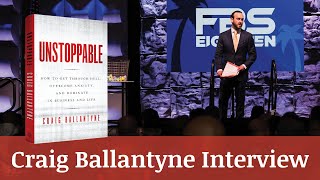
Transcript of a YouTube interview (Next Level Income podcast) with Craig Ballantyne, hosted by Chris Larsen and Caleb Welborn. Craig discusses his background (fitness coach to publisher/author), the Perfect Day Formula, his new book Unstoppable (action beats anxiety; motion beats meditation; work beats worry), strategies for overcoming entrepreneurial anxiety, productivity systems (3C: Control, Cope, Concentrate), values/vision/90-day planning, and personal advice (e.g., reduce heavy drinking). Contact and release details for the book are provided.
Welcome to the Next Level Income show, where our goal is to help you achieve financial freedom. I'm Chris Larson.
And I'm Caleb Welborn. Today our guest is Craig Ballantine, author of several books, including the Perfect Day Formula, as well as his new book, how to Get Through Hell, Overcome Anxiety, and Dominate in Business and Life. Craig also owns five businesses, including early to Rise Publishing, and he is a highly renowned speaker and business coach. I met Craig in Chicago where he really helped me gain some clarity on some areas of my life and business that I really needed help on at that point. So, Craig, thanks so much.
Yeah, thank you guys for having me. This is going to be so much fun. And that was really awesome meeting you in person, Caleb. And we had the illustrious Tim Grover come out to that, the author of Relentless. It was a real special day. So this is going to be a lot of fun, guys.
Absolutely. Man, we're fired up. Craig, I've been a big fan of early to Rise, and I know you're a Canadian. I married a Canadian as well.
Oh, really? Where are you from?
Well, so my wife's from Montreal originally. Oh, wow.
What a great city.
Yeah, yeah, yeah. So we love to get up there as much as we can and as you know, great. I mean, her family's just, you know, wonderful people up north of the border, so we love it. But so I became a fan of yours. Just reading, reading some of your stuff on early to Rise, Craig, over the years and kind of picking up probably about five years ago and a lot of the Perfect Day principles that you outlined on there and ultimately in your book, I came to incorporate in my business. But I was wondering if you could just kind of walk through your progression from personal trainer and history there to early to Rise to where you are today.
Yeah. So, you know, the whole thing is that I wanted to be this strength and conditioning coach in the National Hockey League of all things. You know, that's what Canadians do. We like to play hockey. And so I got into school and then I got this lucky break that I started writing for Men's Health magazine, one of the biggest fitness magazines in the world. And I realized, you know what? I'm more of a nerd person who wants to sit behind the computer and share messages with the world rather than be high energy guy out training people all day. So I got into that world for about the next 12 years. I like to refer to myself as Canada's version of Tony Horton. So the P90X guy that everybody but I was Canada's version of Tony Horton. So when I'd ask you to do an exercise, I would then say, sorry, sorry, but you got to do this exercise. I did that. And then I also wanted to help people grow their businesses, and I started doing that in about 2007. So I had these overlapping careers. And then I bought the business early to rise. Were you a subscriber when Mark Ford, Michael Masterson was running it there? Chris?
I think it was shortly after the transition, because I know who Mark Ford is, and I've read, well, Michael Masterson's books as well.
Yeah, yeah. I mean, Michael Masterson has written some incredible books for the entrepreneur. From Ready, Fire, Aim Seven Years to Seven Figures, Automatic Wealth. You know, all this stuff right down your alley. Right down the alley of everybody listening. And he still writes to this day. I mean, this is a guy who's, like, retired three times and he just can't stop. He's a very successful guy, and I was so fortunate. Like, this guy's become my personal mentor. I can ask him for help anytime. And, you know, he's really into the rental real estate, real estate investing as well. So, you know, everybody's on the same page here. So I bought that business and went on. But back in 2006, I had these anxiety attacks, and these anxiety attacks were because I worked too much and I celebrated life too much, let's put it that way. It might have been okay when I was 20, 21, but not when I was 30. I had the anxiety attacks, and I realized I needed more structure in my life. I know what a lot of people are thinking right now. Well, more structure. I don't want more structure in my life. I want more freedom. But when you do put more structure in your life, boundaries in your life, you do end up with true freedom and you stay out of trouble. And so that was led to the book and then led to the coaching and all these great things that we can talk about today.
I love it. You're. I use that saying that discipline equals freedom. And you might talk, if I recall correctly, it was from a Greek author. Is that right?
Is that Stoic philosopher?
Yeah.
So he did live in Greece. He was banished from Rome. His name was Epictetus. He lived around 100 A.D. and he, you know, the Stoic philosophy is kind of becoming big with, like, Ryan Holiday's writing about it. Yeah, the name Seneca. And maybe they've heard of Epictetus, and they probably heard of Marcus Aurelius, who is, you know, one of the greatest Roman emperors and wrote a book Called Meditations, which is based on stoicism. It's just like, hey, you can't control the external things in the world. And so your well being, your happiness, all depends on what you can control. And so that led to me think there was this one phrase in this one book of Epictetus teaching that said, control what you can, cope with what you can't, concentrate on what counts. And I loved it. It felt like when I read that, the weight of the world was lifted off my shoulders. Just the, the period I was going through, I'm like, you know what? So true. It doesn't matter. Like, if you have a boss and he's angry, you can't control that. If there's traffic, you can't control that. You can sit there in your car and yell, but it does not change the external factor. If it's raining, you can't control that. And so, okay, I'm going to control my attitude towards things and easier said than done. But when you can do it more often, you will feel a lot of the weight of the world off your shoulders. So I'm writing this, trying to put together my system of structure and helping people get more done. And that formula just resonated with me. And I said, you know what? I can apply that to the day. You control what you can in the morning, right? We do have the greatest control in the morning. You control what time you get up. You actually have more discipline, willpower and intention. Early in the morning, you have all this stuff going for you, so you got to make the most of it. And then I like to say that you have to cope with the chaos in the afternoon, which is the second part, cope with what you can't control. And so that's. The kids get sick at school, or one of your team members brings you their emergency that you have to put out their fire, whatever. All that's going to happen, we know it's going to happen. And being angry about it doesn't solve any of those problems. So we cope with it. We figure out solutions, we prepare in advance as much as possible. And then finally, finally, we're doing all of this for the last C, the third C in that 3C formula of control. Cope and concentrate on what counts. And we concentrate on what counts in the evening, which is we've worked so hard during the day, we've structured our day so that, yeah, we were rigid and disciplined during the day, but that allows us to get home, leave, work on time, be home for dinner, be present with our families. I teach People to put their phones away when they walk in the door, especially if they have young children. And you know, because, you know, the kids notice if you're on the phone.
I've used that rule. Absolutely.
Yeah, it is, really is a game changer. I've got this one client that him and his daughter, they made a phone bed and they come in and they take daddy's phone to the phone bed and they tuck it in and she plays the piano and she plays a lullaby as he puts the phone in the phone bed. When the kid grows up, they're going to remember, they're going to chuckle about this thing. But you know that. And it's only like 30 minutes that he does this, right? Because after 30 minutes your kid probably wants to go and do something else. They're like, okay, Daddy, thanks. I'm off to like go play with dolls or something. But you've been there for that 30 minutes, which is so much better than the opposite, right?
Absolutely.
And so we teach people that. And then you can be present with your spouse, your partner, you can do old school activities like read books, or you can concentrate on your health and fitness, or you can go and work on some side projects. That's what it's all about. It doesn't matter what time you get up. I like to use this phrase for people that I'm not one of these 5am Club people. I understand the value of getting up at 5am for some people, but it's not for everybody. I use the phrase it's not about the hour you get up, it's about what you do with the hours that you are up. And this system can be applied to the person that gets up at 4am in the morning, 6am, 8am, 10am it doesn't matter what time you get up, but you need to control those precious few hours. First few hours when you get up and then the rest of the day is yours. You've won the day.
Absolutely. I mean, I've taken a conscious effort to adopt your system. And so, I mean, I bought your book and never really thought I was going to meet you, to be honest. And then I reached out and I, I think I DM'd you on Instagram and was just like, hey, Craig, really loved your book. Thanks so much. And was already making a difference. And I ended up going to your workshop and being there really helped me figure out how to really apply it to my life. And it seriously made a big difference.
It was really great. You know, there's like, because you can read A book. And. And you can. You can go a long way with the book. I mean, there's been a lot of books that have impacted me on a great level. But when you can sit down with the author and you can go into the next level of systems and strategies, obviously, Caleb, what you did there, it was the next level. And so I love working with people at so many different levels. And then there's actually a middle level, too, which both of you guys have that Perfect Day formula kit where we. Again, because you're limited by the amount of information you can put in a book in most cases, and we have some thought exercises that we have in the kit that a lot of other people use that dive deeper into creating a vision for your life. Because I like to say that your values and vision drive every decision. And so if you don't know what you want your life and business to look like in a couple years from now, you're kind of wandering around aimlessly, and you go on a lot of detours. But if you have a clear and specific vision of what you want to achieve, then you can find the straight line to success and stay on that. That road and that path to success without going down some rabbit holes. And we've all gone down rabbit holes in life where we look back and go, if I only would have stuck to my values, I wouldn't have gotten trouble. And so that's something that I put a lot of effort into in the book, in the kit, and in that day that I spend with high performers as well.
That's fantastic.
Yeah. In your new book, Unstoppable, you have a mantra that goes, action beats anxiety, motion beats meditation, or maybe I got them mixed up, but then, oh, you.
Got it, you got it, you got it.
Work beats worry. Yeah. Can you go into the unstoppable philosophy you've developed and some of the principles behind it?
Yeah. Yeah. So a lot of the. There's a little bit of overlap between the books. Of course there's going to be. But the Unstoppable book was born out of the how do we overcome entrepreneurial anxiety? Is what I call it. Because when you're an entrepreneur, you're overwhelmed with opportunity. Like, you have good anxiety, but when you have so much good anxiety, it can build up on you. And then there's the negative life anxiety that we also get, and there's comparison syndrome and all this stuff that is brought on by this first world. But we can sort out all that clutter and throw. So I walk through people, through some Exercises again, values and vision. 90 day planning for their business, their personal life. All this stuff where they need to think bigger and how they can get rid of the little stuff in their life. But the whole action beats anxiety thing comes back to something I've been working. Those are nine words. And think, oh, those nine words. How long could it have taken you to come up with those nine words? Took me two years to come up with that phrase that some people have tattooed on their bodies. I've got people that have painted it on their entire walls so they look at it every day. Because what it means is, it doesn't mean like, don't meditate, okay? Don't take it so literal. Like, I'm a meditation person. Don't send me hate mail saying, how could you say that about meditation? What it means is, is that if you're just, if you're in a bit of a struggle and you're sitting there and you're just worrying and you're letting your anxiety engine rev and your wheel spin and your mind race, it gets you nowhere. But if you take the smallest step forward, whether it is sending the email, doing the research, calling somebody, having that difficult conversation with a team member where there's been this passive aggressive buildup over time, or maybe it's like you're worried about a real estate investment and it's like, well, you know, I should have called the guy last week. I'll wait till, well, now it's the holidays. I'll wait till after the holidays while he's on vacation or he's going, I'll just wait. And it gets worse, right? So action beats anxiety. We have to go and do it. And on the personal level for me is, you know, I started a new arm of my business, this intense coaching, advanced coaching. And there were days when I didn't sell anybody into the program and I would kind of be like, you know, I'm in a bad mood. And I could sit there in a bad mood and be upset and disappointed that there was no sale. Or I could go, you know what, what I can do is I can go out and add value. I can make a really good post on LinkedIn that will help somebody. I can go and make a video and put it on Instagram and that will help somebody. Or I can just think of a friend right now I send a lot of thank you cards and I'll just send a thank you card or I'll go and write a print newsletter and I'll send an extra print newsletter out this month and when you do that, you get out of your own head, which really solves a lot of anxiety is getting out of your own head. Because when you're in your own head, you're internally focused and. And when you're externally focused thinking about solving other people's problems, it's hard to be anxious when you're, you know, like, in an extreme example, it's hard to be anxious when you're in a soup kitchen giving meals to the homeless. Okay? Very, very difficult for somebody to be anxious in that situation. Very, very difficult for somebody. And you hear this a lot about gratitude. It's very, very difficult to be in a scarcity mindset when you are going through gratitude exercises. And it's true. So every time I was in some negative spiral, I tried to flip the script in my mind, whether it was with envy. I remember sharing that story with you at the workshop. Caleb. Envy is my Achilles heel. I'll admit it. Even to this day, when I see somebody with some success, my black old heart. Like, I wish that was me. That should be me. But I get over it really fast now because I've got ways to get over it. And you realize that it doesn't matter if somebody wins the lottery, doesn't change your life. So we got all these things, all these systems in place, but it really comes down to when you are in some kind of funk. Sitting there and stewing is not going to get you out of the funk. The only thing that's going to get you out of the funk is doing so. Not sitting and stewing, but actually doing so. That's the bottom line around that. I do need to give credit where credit is due. So the motion beats meditation is a line from a guy named Gary Halbert. Have you ever heard that name, Chris?
You know what? I haven't.
Gary Halbert has passed on, but he was a very famous direct mail copywriter. He was one of those guys. And a lot of these direct mail copywriters have a very. They're really, really good at what they do, but they have a little bit of a wild side to them. And so I think he had a little bit too much of a wild side to them. But he had this really great. And that's why he passed along early. But he had this phrase, motion beats meditation. And I was like, that's great. I'm going to keep that. And then I added action beats anxiety. And then I love the alliteration. So I had to throw in one more. And I was like, work beats worry. So there is Some. What is it? Great artist steal. Yeah, I think there was a bit of stealing in that one, too.
That phrase entered.
I want to give proper attribution to Mr. Gary Halbert for the. For the middle part of that phrase.
Well, thanks for sharing that. And I love those nine words. And I gotta tell you, so your book, a couple parts resonated with me. We were fortunate enough to read Unstoppable here before it's released on the 21st of January, which we'll announce here at the end of the show.
You got the version with 87 mistakes in it. I don't know if you know 87 of them, but there were 87. Because when I read the audiobook, I was. I caught 87 mistakes. Now, fortunately for the version that will go out, it's fixed. The audio version is awesome. It's fixed. But you got the 87 mistake version.
Wow. We're happy to read it either way. And I got to tell you so about. It's been a little over two years now. I used part of your Perfect Day formula back then to start a real estate business with my partner, Peter Cannell. And I tell people I started that business in two years from 5am to 7am every day. And that was that. Yeah, that was magic hours. That was before my kids got up, was in medical sales and before I went into the hospital. But the other thing I started doing around that time was I started meditating about a year into the process. And like you, Craig, the motion wasn't so much of an issue. It was slowing down and taking that minute to settle my mind and being able to focus. And something I just wrote down you were talking about was that entrepreneurial anxiety. I think I can relate. So a lot of entrepreneurs go to your seminars. A lot of our investors, they're professionals. So let's say you have a surgeon, a lawyer, sales professional. They say, yeah, that's great. I kind of have my system. What am I going to get out of this? Either your Perfect Day formula or Unstoppable. What would you say to one of those people?
I mean, it's a really great question. And so it's like thinking of yourself as professional athletes. And that's what I do.
That's what I told my sales guys. I'm like, you gotta think yourself like a professional athlete. Take care of your body, your mind, everything, right?
And what's a professional athlete do? A professional athlete who is committed to the craft. They're looking for the 1% edge. And, you know, so I'm a hockey Guy. And so like, not only are you doing nutrition, not only are you doing like, they go into the weight room after they do the press conference. They go into the weight room every night. Like you would think, oh my God, you just played hockey. Now you gotta go to the weight room at 10:30 at night. That's where they go. And then after that they do foam rolling. They have very specific nutrition programs. And then after that you still have like. What about the skates? Is it a certain size of skates? There was this famous hockey player named Paul Coffey back in the 80s, and he would wear skates that were like one size too small because it allowed him to have such great agility. And I've played hockey in skates that are too small and it almost makes you want to cry. So, I mean, that's how far this guy was going. And it's the same with any sport. Nascar, you name it. And it's the same with an entrepreneur, an investor, a doctor. Everybody wants to be that 1% better. And listen, I'm going to give you more than 1% from the book, let alone a day with me. And a lot of it comes down to the entrepreneur. Anxiety comes from wanting to do so much right? I mean, man, we want to do all this stuff in our career. We want to be the best there. We want to have, you know, we want to develop really great real estate portfolios and passive income and build a great empire and legacy to either pass on to family or whatever you want.
To do with it.
And then you also want to be amazing in your family. And nowadays the everybody's into health more than ever. So you've got all of this stuff. And, and now I use this analogy that this entrepreneur. It's like, I came over to this. The world has come over to every entrepreneur and opened up their cranium and took like one of those old school jigsaw puzzle boxes and poured a thousand jigsaw puzzle pieces into your head and then shut your cranium and walked away. And that's what we're left with, right? So we got a thousand pieces in our head and if they're not put together properly, man, you get anxiety for a catch all term, right? You're stressed, but a lot of it is actually like, good. It's like, man, I get to go and watch my kids play sports tonight. I get to go and look at a couple real estate deals. I get to go and have an amazing day at work. We might not look at it like that, but at the end of the day. It is like we have so much great opportunity and we're very blessed, but it's almost like we're over blessed, right, in some cases. And if we don't have systems, if we don't have boundaries, if we haven't put forethought into how not only every day should look, but how the entire week should look and what our quarterly plan needs to look like and how we can get fast results in 30 days. And then also, well, we need to look. What do we want in a year, three years? And then also, what really matters over the course of our lifetime, if we haven't asked those questions and in the proper order and in the proper sequence, and then really kind of gotten all of that out, gotten the thousand jigsaw puzzle pieces out all over the table and put them together so that we have a clear picture, we are going to underperform. But when we do all those things, man, then we're performing at the highest level in every area of life, and we become one of those people that everybody else looks at and goes, there's no way. There's no way this person is getting this all done. But those people exist because of the foresight, the planning, and then the execution of the strategy.
Love it.
That's a great point. And the jigsaw analogy, I know exactly how that can feel from times in my life. Well, what you were talking about, you're saying, I get to go do this rather than I have to. And it's like, that's such a simple switch. If you can turn that in your brain. I've been there before. Where? Oh, I have to do this, I have to do that. And I was like, hang on. Cause things have been going pretty quick for me, especially over the last year. And I'm like, wait a minute. The stuff I have to do, I didn't ever think I might be able to get to do some of it. So it's like, okay, I'm stressed about this thing. But if a year ago you would have told me, I got to go do it, I would have been like, really? In a year, maybe like 10 years, you know? So it started moving fast. It's like just reminding yourself, be grateful. Like you were saying, the gratitude goes so far.
I just heard that line for the first time this year. And I mean, it clicks on two levels.
Like.
Like the level that you're saying, man, you never would have thought you'd be able to get to go. And you say, like, you know, you might. You have busy day, and like, Yeah, I have to go to this meeting and then I have to go to this. But then like, if you go back a year, you'd be like, man, I would have to go to a meeting with these people. It's totally different mindset. But then, you know, then there's also things like, yeah, you know, like maybe you have to go and, and like up here in Canada, I have to go shovel the driveway. You know what, you got two arms, two legs, you're walking, you're able to do it, you get to go shovel the driveway. And so there's, you know, it's, obviously there's a higher level and then there is a kind of like hierarchy of needs level where, listen, just be darn grateful that you get to do anything. You know, it's, it's, that's the mindset that we should always have. Of course there's going to be things we don't necessarily want to do, but it's much better to have that approach to life.
Yeah. At least you got a driveway, right?
Yeah, that's right.
So, Craig, if you could go back and with everything you know now and everything you've learned in your journey to becoming who you are today, go back in time to see 25 year old Craig. But you can only give him one piece of advice. What piece of advice would you give him and why?
It's so easy. It stopped drinking. Yeah, I mean, it's embarrassing to say I was a frat boy for too long. I was just out last night with my buddy who I used to drink a lot with. And we look back and I mean, we still laugh about how much fun we had between 25 and 29 when we kept drinking, but absolutely 100%. And Grant Cardone says the same sort of thing in his videos. He just did this the other day. Go back to like age 20, stop drinking.
Yeah, I saw that.
Doing drugs. He said stop doing drugs and it'd just be. And invest in real estate. But the one thing for me is just stop drinking so much. Doesn't mean you can't go out with your friends, but just stop drinking so much and you know, a couple of beers while everybody else has more is fine and you can enjoy the time. But you get home and now you have another day where you don't lie around. But you can actually, even if you just read a book or you did anything. I mean, I just wish I would have stopped drinking earlier. And that's embarrassing. And hopefully nobody's like us, dummy. But.
Well, hopefully someone listening to it can.
Get something from it, play hockey and we drink beer and sometimes we do it in reverse order.
And my wife's family's not gonna like that. Greg, I'm not sharing this, this show with my wife's family.
There you go. Right? You know, and it's just, you do look back and you. Oh, man. But that said, I got, I got a lot done. I'm very fortunate. So, you know, if there's any young people listening to this, just understand you can have a great social life. You just don't need to tie one on all the time. And just make a little bit more use of your weekends. And you get so far ahead in life.
That comment just reminds me another rule that I picked up out of one of your books on travel. Limit yourself to one or two drinks or dessert and go to bed. I developed some stuff around there. I could sit here and talk about all these anecdotes. But better yet, Craig, if people want to learn more about your Perfect Day formula, if they want to learn about Unstoppable, some of the workshops you have coming up, what's the best way to get in touch with you?
Okay, so let's get everybody started with a free copy of the Perfect Day for me. Go to free perfectdaybook.com that's freeperfectdaybook.com you pay a little shipping and handling, but you get a hard copy book. Start with that. The Unstoppable book comes out January 21, 2019. We're gonna push really hard to get that as a Wall Street Journal bestseller. So if you're hearing this before, go to beunstoppablebook.com for the pre order list. And then there's two ways to get ahold of me. One, I'm an old school guy. I love email and I have a really cool email address. So I love sharing this. It's craigodfather.com you can email me anytime. And then also if you use Instagram, if you're, you know, if you're Caleb's generation and you use Instagram, I'm eelcraigbalentine and I use Instagram very, very often, very frequently because I communicate with a lot of people that way and I post a lot of content that helps people out in many ways. So you'll find me. I'm on all over the Internet for sure.
That's how we found you. And we'll put these in the show notes for any listeners out there that didn't catch that and want to go on our website next levelincome.com nextlevelincome.com and they can check that out as well.
Craig, thanks so much for being on the show. We really appreciate it. And before you go, I just wanted to share something with you at the conference or at the workshop when you're helping me work everything out. One of the questions we developed was a connection we want to make in the next year. And I wrote Richard Wilson and I, who is down in the Miami area, built a really great business.
Friends with Grant Cardone.
Yeah. And I wrote his name down, and in about half an hour, he's going to be another guest on the podcast. We had two interviews today, you and Richard Wilson. So just wanted to say thanks for helping me get my mindset right on some things and appreciate it.
It's amazing. And you have to. Everybody listen, you have to do that stuff because in 2006, when I hired my first business coach, the very first question on the very first call, he said to me, craig, right now you're running your fitness business. What do you want to do in five years from now? And I said, I want to have a business like early to Rise. And he knew of it. It was very famous at the time. And he said, okay, you need to become a better speaker, better trainer, better writer, a better coach. You need to grow your network. And then five years, three months, and 17 days after that call, I bought that business, the exact business. But it was only because I told him. It was only because I told another friend of mine who helped me. And so when you have a goal and you are surrounded by positive people, share it with positive people. Don't share with negative people who are going to be naysayers. But if you know somebody, you can't hold that thing inside. Because when you tell somebody who's a good person about a goal, their brain starts automatically working and is going to find a way to help you out. So that is so cool. That's an amazing story.
Thanks so much, Craig. Best wishes to you and your endeavors, and we look forward to talking again with you soon.
Absolutely.
Guys, thanks so much for your time. Craig. Real pleasure.










