DANNY RANDAZZO INTERVIEW – Creating $9.6 Million From a $200 Rent Increase in Multifamily
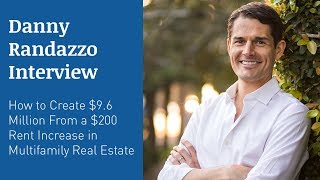
Danny Randazzo shows how he created $9.6 million in value by raising rent $200 a month across 200 renovated units. He walks through his underwriting process, team structure, and why he focuses on Southeast markets, plus shares two children's books he wrote about money.
Welcome to the Next Level Income show where it's our goal to take your income, your investments, and your life to the next level. I'm Chris Larsen.
And I'm Caleb Welborn.
You can get a copy of our ebook@nextlevelincome.com on today's show, we have Danny Randazzo. Danny is of the passiveinvesting.com team and he might sound familiar to some of you that have seen our recent closing on the deal. In the Research Triangle of Raleigh. Danny and his team have acquired over 225 million in multifamily assets across the Southeast and they plan to continue their growth in the future. Within the company, Danny's focused on asset management, investment analysis, planning, and all things finance, which he and I love to discuss. Danny's also an author, he's an entrepreneur, and he's a host of his own podcast called the Danny Randazzo Show. He's a national speaker and he's also a volunteer with the First T, which some of you may be familiar with. They're a youth development organization that impacts the lives of young people by providing educational programs that build character, instill life enhancing values, and promote healthy choices through the game of golf. Danny, welcome to the show.
Gentlemen, thank you so much for having me on. I am grateful to be here and hopefully add some value to all of the Next Level Income listeners.
Absolutely.
Yeah. We appreciate you being on the show. Danny, would you share with us how you went from being a financial consultant with international experience and Abu Dhabi to owning $225 million of real estate here in the States?
Yeah, the, you know, the experience. I was always brought up with a work ethic. My parents provided my basic needs, but anything that I wanted, I had to kind of fend for myself. And so at a very young age, I quickly got the kind of entrepreneur bug and was always doing side hustles to make extra money to either, you know, buy something that I wanted or realistically, I would look at buying something and then I would say, is that really the best use of my money? And then I would save it and think about ways to invest it. And so that kind of experience growing up and having that entrepreneurial bug always gave me the drive to learn new things. And so when I was in high school, I was reading books like Rich Dad, Poor Dad. I was reading commercial real estate books by Dolph de Ross and other personal finance books and just ways to generate income and put your money to work for you so you're not working for it. And Then I went to college, kind of got distracted and let that entrepreneur side of me get away a little bit. But, but I went into a great role in financial consulting, working for multi billion dollar companies, helping them improve their financial performance and business operations. And so that experience really allowed me to figure out how to put together budgets, how to underwrite, look at trends, how to analyze financial statements. And all of that experience coupled together with the fact that I was traveling so much, I was away from home, and I was working really hard, long hours, long days, and my paycheck stayed the same, right. I would get that annual bonus and then an annual salary increase. And I was able to look at more or I was able to look at people more senior in the company than I was, and I kind of looked at their lifestyle and I figured out how much they were getting paid. And I said, that formula doesn't make sense, I need to do something different. And so I started investing in real estate for the purpose of generating cash flow to replace my W2 income. And so with that experience, long story short, I've done pretty much every real estate deal imaginable. I've done foreclosures, I've done renovations, I've purchased condos, I had Airbnbs, I had small multi families, I had commercial office buildings. And I figured out that multifamily investing is the best way to generate income from your capital and, and the best way to preserve, protect and grow your money as well. And so that kind of led me down the path of looking at multifamily properties. Along that journey, I met my two excellent partners, Dan and Brandon, and we started building our portfolio one asset at a time. And we've scaled it up to where we're at today. And now we look at B class assets that are built between 1990 and 2010, roughly. And we look across the southeast US because of the good economic indicators like job growth and population growth, and you know, we put together deals and utilize our experience so we're able to buy, you know, more than 100 million in a year and continue to do more deals. So that's kind of the long story short. And it all started one deal at a time. And just having that drive to want to have your money working for you, that's awesome.
And you brought up rich dad, poor dad. We actually both just met Robert Kiyosaki in Phoenix. We just went to a residential assisted living investment event down there, which is pretty interesting. And Chris won like a thousand dollar silver bar in the drawing, which is pretty fun.
But I'm a lucky guy. What can I say? Danny?
Yeah, that's awesome.
I actually told the woman.
Go ahead.
I was gonna say you actually created your own luck. Right. You were at the event. You invested in going to it. It just didn't happen randomly. So I think that's a really important distinction that people need to make. You know, as you want to take your income to the next level, it's about doing the right things and investing in yourself, going to conferences. You're going to create those opportunities. And so, you know, while people think, you know, oh, it's easy, that they can do it, it takes a lot of hard work. And so I just want to highlight that, you know, you didn't just win it by chance. You were there and you had the opportunity to do it.
Yeah.
No, I agree, Danny. And what's interesting is, out of what I mean, there's almost, what, a thousand people there, actually. I told the woman that I would.
Win before I won, and we folded our slips so they'd stand out more among the ones that were flat, which is funny.
That's our secret. Ye. I told the woman, I win, and I ran up on stage. She was like. She stared at me like I was crazy.
But my goodness, that's awesome.
Enough about that.
But I was gonna bring up what you had said about the salary and the increase and all of that. I've read Rich Dad, Poor dad when I was a lot younger. Loved it. Changed the way I thought about a lot of things. But one thing he has said before, I saw it in a video. I think he never really offers very actionable advice, but it gives you stuff to think about. But he was saying, like, a paycheck is like a drug, like addiction. It's like once you're getting one, like, it almost becomes hard to quit, like a drug. And then a lot of people aren't doing the things that they need to be doing to basically create their own luck, like you were saying. So when you're saying that, it just reminded me exactly like he talks about that.
Yeah. I think people, you know, I love the name of the show, and you probably hear me say it a lot, but when people get their income to the next level, most people want to level up and they're gonna spend it. It's absurd to me, but, you know, people, like, they get their annual bonus, which, let's just say you make 100 grand a year and you get a 20% bonus, right? So you get a check for 20 grand. However, your paycheck is probably Going to be about 12, taking taxes out of it. And then they go and they take a trip and you can spend 12 grand in a trip pretty darn quick. Or they buy a car or they build a new deck on their house and it's like, is that the best use of your money or can you put that money to work for you so you're not working for it down the road? And I just think having Kiyosaki and reading that, getting that mindset thought is so important now.
Thank you for sharing that. And you said a lot of things that resonated reading rich dad, poor Dad. I still remember where I was when I read that book in Charlottesville, Virginia, when I had somebody hand it to me in a bookstore. I had an entrepreneurial streak like you as well, Danny. But you were talking about a lot of the things that I talk about in my book Next Level Income, with why I focused on multifamily. And it's no secret here that we love multifamily as an investment for a lot of the reasons you mentioned. If you could kind of tie in your previous experience and what you do now, what do you think is the most valuable experience you've taken from being a financial advisor to helping you really take this great investment space and then pick the diamonds in the rough, if you will, out to make the best investments for your group?
What you learn as a financial consultant is to be extremely detail oriented and thorough. You know, working for multi billion dollar companies. These are Fortune 500 companies and they're paying a very high premium to have consultants come in and help them generate more money or save money. But the same token, they're paying a fortune for the services. And so everything that we did for those clients was all about adding value to their business. And so that was always our mindset of it's gonna cost you X dollars for us to come in, but in return we're gonna generate a couple million. 10 million will save you a billion dollars. And here's how we're going to do it. And so we come in with that value approach and the implementation philosophy to do it. And so having that experience and working with some of the best companies in the world is an experience that I would not trade for anything. I would not go back and say I would skip that career path because it was so important to teach the most important skill set, which I would say is disciplined. You know, we're not going into a client meeting with half thought out ideas. We're going in with a detailed plan and every Single step to get from point A to Z. And that discipline, that routine has helped me create an underwriting philosophy where we go through a process. It's just like a military checklist or a pilot's pre flight takeoff routine. Nothing changes, nothing interrupts that process. And we go through it from A to Z every single time. We do all of our detailed steps. We confirm, we deny, we review, we vet all of those numbers, all of that analysis so we can get the output that we're looking for. And you know, kind of every step along the way, as we talk about multifamily underwriting and looking at those deals, we have a high level business plan, but then that's just our hypothesis. Now it's our job as operators to either prove that hypothesis or find errors in it and recalibrate or, you know, pass on that deal if it doesn't fit into what we need that asset to do from a performance standpoint. So discipline was the biggest takeaway. And of course, learning all of the, you know, financial education as far as balance sheet goes, general ledgers, how, how those financial reports tied together, how you can look at a cash flow statement versus your balance sheet, all of that financial aspect is always important. I think anybody who wants to become an operator of multifamily properties, I think you need to go and get some of that financial education first so you can understand how the numbers work. Because again, that's a very important aspect to it. But at a high level, you need to have that discipline to go through it regardless of any emotion.
That's terrific. And I mean, case in point, Danny, we were talking before the show here today and you said just that, you said, hey, we're looking at this deal and this is our number and if it goes above that, it's not going to be a good fit.
Yeah, I think there's so many deals that are out there. You just need to have good deal flow and basically take action to fill up your pipeline so you can find the one that you're going to buy. And when I look forward to our future, kind of the next year or two ahead, we want to buy a few hundred million dollars worth of property and that's going to be about six to 10 deals. Ten would be a high number. It's realistically going to be about six to eight deals. And so when we're talking about only buying six or eight, it becomes so much more attainable than saying we're going to buy 300 million in real estate. Like where does that number come from really? We need to look for six to eight deals and I'm going to even break it down even further. We're going to look for one and that's where we're going to start. And so, you know, thinking about a year buying a few hundred million, it sounds like a lot, but if we say we're only going to buy six to eight, you know, it's a lot more achievable and that's how we look at it. And you know, we'll probably look at a few thousand deals to get six to eight.
That's incredible. That's incredible. And I love the. Real quick, before we move on, I love the story about the property in Greenville that you guys. Can you share a little bit about that? Brandon was on site and you guys were able to take action on actionable or action on that deal very rapidly and get it under contract in a matter of hours.
Yeah, so we, Brandon was out touring an asset in Greenville and he really liked what he was seeing. We had previously bought 150 unit, roughly apartment deal. Just a few miles down the road, we had another asset that we were closing on within the next couple of weeks. And so we had a ton of our own knowledge of the market, but also our experience in buying those other deals allowed us to very quickly identify the opportunity. Brandon went out and toured the asset to just check the physical condition of the exterior, the interiors, what the, the renovation cost would be. And you know, using that data, again, we can go through our checklist from A to Z very quickly with all of the right inputs. And again, that process, because we've done that hundreds and hundreds of times, we know how to do it very quickly, but we were able to do that. And then of course, you know, we negotiate, get the deal under contract and then we go back and double check and vet and reconfirm all the things. But having a team again is so important. Where we have someone who builds great relationships with brokers, we have someone out there touring deals, looking at the condition, we have someone who underwrites, we have someone who helps with our overall relations and company strategy and things like that. So again, it's a team game and we just try to stay focused on what we're very good at and let's the other partners run their lanes that they're very good at as well.
Yeah, I think it's awesome. Structure.
Is your checklist proprietary?
Absolutely not. You know, we try to share everything that we can because, you know, we know that there's people out there who want to operate their own deal or some people who don't want to do all that work and finding deals and underwriting them and submitting offers in not getting the deal, spending all that time to lose it and then starting again. So there's other people who just want to passively invest in real estate. And we share everything that we do because again, transparency is what's really important to us and our credibility. We're not out here to do just one deal. We're not out here to invest in multifamily for the next year or 5 or 50. I look at it for the next 500 years because what I am personally building is a portfolio of real estate that generates income for generations to come. And I think anybody, whether you're an active investor or a passive investor, you can use real estate to build income streams that your family can use, like I said, for generations to come. And so we're out here to build long term relationships with people and giving away what we do and helping others become successful is something that is valuable. And you can get our entire underwriting strategy. We went through about three hours of webinar content and it's readily available for use. If you want to get it, you can reach out to me and I'll point you in the right direction so you know exactly what we do with our checklist and kind of how we go through it.
Awesome. And for listeners that are interested, we will have a link to get a hold of Danny here in the show notes as well.
Yeah, I like that. And thinking in terms of centuries, I remember a few years ago I read something about like the greats and empire builders think that way. And then now, as you know, sometimes you have companies that are just looking at the next quarter. So it's like when you think really long term like that that's how you can build amazing things like you're doing right now. But yeah, so we like to say that buying an apartment building is buying a business that just happens to be real estate. Could you share a bit about how an apartment building is valued versus, you know, residential single family home?
Absolutely. So a residential single family home is valued based on the comps in the area. So if the house next door to yours sold for 250,000 and you have the same floor plan layout and square footage and finishes, your house is likely worth about 250,000. There's not a whole lot that you as a single family owner can do to change the value of that property. Even if you invested, let's just say, an extreme amount of money into the house, $250,000. Let's say you have the nicest kitchen, the nicest bathroom, the nicest yard in the world, your property is still not going to be valued at 500,000 because it just is based on the comparable sales. And that's how lenders will evaluate the value of that asset. And so when you look at multifamily apartments, like you said, it's valued like a business. And businesses trade based on how much income, net operating income, or noi, that they can generate on an annual basis. So the whole idea, when you buy a multifamily asset, you want to increase that net operating income number to be the highest and best that it can be. And that way you're going to increase the overall value of the asset. So at a very high level, let's say you buy a property for $10 million in cash and it generates a million dollars in NOI on an annual basis. That return would be a 10% annual return. Right. Your $10 million in cash and it makes a million dollars a year. That's 10 million. That would trade at a 10 cap if that was the case. Now let's say you take that exact same asset and you put it into a very good market in the Southeast US that trades at a 5 cap. That million dollars in net operating income would be valued at about $20 million. And so there's ways and areas to value assets based on the cap rates. And that's how the NOI is so important to valuing that asset.
Yeah, that's powerful. And if more people knew about this, they wouldn't be buying a debt for their house with their $12,000 after tax bonus.
Yeah, yeah.
And I was, you know, just looking at some of the numbers, you know, on an asset that we're acquiring, we're looking at saving about $30,000 by using some on site maintenance staff to do work, as opposed to paying a vendor that $30,000 in annual savings. In the market where we're at, increasing the NOI by $30,000 is an increase in value of $600,000 in equity. And so every dollar that you can save or generate on a multifamily asset creates so much equity in the future that even the smallest changes one personnel shift to save $30,000 annually. And we're talking on an asset that generates about 4 to 5 million dollars. So a $30,000 shift is not a big shift at all in terms of percentage, but that impact over half a million dollars in value. That is huge. So that's why we love multifamily, because again, you can control that. If I reduce my expense on a single family house, it's not going to add any value to what my house is worth.
That's perfectly said. I was sitting down for dinner with a financial consultant, Danny, and we were talking about this and you know, controlled or forced appreciation. I love the smirk when I said financial advisor. But he said to me, he said, well, Chris, I own, I have these three properties and you're telling me that this property is going to go up in value by 5 or 10%. He said, I don't understand how you can do that because I don't know that my property is going to do that. And I think this is something that we, we can't say enough. We call it forced appreciation or controlled appreciation. So if you could just kind of talk about that one more time. You're talking about saving money from personnel with $30,000 savings, but from a macro perspective. So you buy an asset, nice asset, B plus assets, say built in the early 2000s, and you're going to go in, what types of things are you going to do to force the appreciation or force that income and ultimately force the appreciation of that asset higher?
Yeah, so the number one thing that we're going to do is we're going to look for ways that we as operators can add value to the property. And the number one thing that we can do is we can improve the interior and exterior of the property. So we may repaint the exterior, which is going to give more curb appeal. We're going to get more potential residents coming in that want to live there because it's a nice looking asset in the location that they want to be in. The second thing is, you know, you can always improve the quality of the asset. So what we look for is we look for that B class asset, like I said, built, you know, maybe 20 years ago and it has dated interiors, maybe it has formica countertops and the cheap vinyl flooring and black appliances. Well, we may go in and say, okay, if we put granite countertops in, if we put stainless steel appliances and we put a nice wood looking vinyl flooring in, we might be able to charge, instead of the previous owner getting $1000 for a one bedroom, maybe we can get 1200 because the property just down the street has granite countertops, stainless steel appliances and wood looking vinyl. And it was built in the same year roughly, and they rent for 1300. So I feel pretty good about getting 1200 or 1250 because we can put in Nicer, newer finishes, still rent it for less. And so the number one way to add value is by work that you can do. And I don't mean I am personally out there installing countertops and putting in stainless steel appliances, but we can hire the right people, we can hire the professionals to do that work, execute that business plan, and we're going to increase the income that the property generates by doing that work. Because people in the market want to live in a nice apartment that has granite counters and stainless appliances because they like those finishes, they're willing to pay a premium. Instead of paying 1,000 that they were, they're definitely willing to pay 1,200 because there's six apartment communities in the area that all have the same kind of finishes and fixtures and, and they charge 1300.
So $1000, 200 bucks a month. Now you're $1200 a month. Doesn't sound like a big increase. $200 a month. What kind of increase in value in that same cap rate that you were talking about earlier, would that generate that property?
So let's just say it's $200 a month. And let's say we have about a 300 unit deal, but we're only going to get 200 units done in 12 months. So 200 times 12 months, because you pay rent for 12 months times 200 units gets you an increase in income of $480,000. And if you are in a 5 cap market, that value add is $9.6 million. So power is in the numbers. You know, if you did this even on a smaller scale, you know, because we buy 150 unit plus apartment communities, that's where you can generate that massive increase in value. If you did $200 times 12 months, just by 10 units, you know, you have $24,000 in pickup, and at a 5 cap, that's worth almost half a million dollars. So the power is in the numbers. And having one single family house, you cannot do that. Having a four unit, you still can't really do that because it's valued based on comps instead of income. But once you scale up into the larger assets, that's where you can really create and force that appreciation through your own hard work and effort to increase the value of the asset.
As an engineer, I felt a little tingle when you said the powers and the numbers, Daniel. I can't lie.
Yeah, I love that. And yeah, I have some friends around my age who are like, oh, you're into this apartment thing. Kind of like, what's the Big deal. And then when I explain that, and then just show how those, what seems like not that much more money, how it just explodes like that. Like you're saying like $9.6 million. All of a sudden the light bulbs go on. Like, how do I, where do I sign? Like, how do I get involved in this? That's super powerful for listeners. Sorry, you're gonna say something?
Yeah, I wanted to add something too. You know, a lot of pushback sometimes that you may get from someone who isn't as familiar with multifamily. They're gonna say, well, how is someone going to just pay $200 more? That seems like a big rent increase. And, you know, you can't, you can't implement this value add approach in every single market across the country. But where we look to invest in the southeast U.S. we're looking at markets that have job growth and population growth, which allows people to make more household income. And when they're making, you know, $100,000 a year for their average household income, they can without a doubt afford a $200 rent bump. And it's because they're looking for it. They want to pay 1,200 to have granite countertops and stainless steel appliances, and they want the nice resort style swimming pool and nice fitness center and all of that included. And they're more than willing to pay 1,200 bucks. So it's a very. I don't want to use the word easy, but it's a very conservative business plan. When you look at the market economics.
I think you hit on a big point there, Danny. We say population and job growth is the lifeblood of this business. And you can't move the apartment. Right. So you buy in a bad market in a city that's dying, maybe up in the Northeast, an old mill town or factory town, and people are leaving. And you can look up these statistics anywhere you want, which is one of the reasons we love the Southeast. People are moving here, companies are moving here, jobs are plentiful in a lot of these different areas. And if you pick the right market, you're going to be going with the tide. So I think that I talked about that in the book. We've talked about that before. But I think, you know, something that maybe you could speak more to is if it's not a good market, it might be the greatest deal on paper, but maybe you shouldn't buy it.
Yeah, absolutely. If there's negative population growth and negative job growth, we're not even going to look. You may send Me the best deal in the world. And we'll just say, thank you, but no. So, you know, I think you just have to have that strong criteria. And again, it comes back to what I said earlier in the show about the discipline. Here's what we look for and we don't move from that. You know, there's no exception. Oh, it's a phenomenal deal, but it's in this market. No, it's in that market. It's not. It's not one for us. Thank you, but no.
So very good.
You know, just be disciplined. And what that also helps, you know, if people are out there and they want to say, you know, they're looking for their own deal. What I've said time and time again is you need to have criteria to really filter out what you're looking for. So I could be bombarded with deals all across the country. Never look at something that we're actually going to buy, because I've got so many deals to look at that are in all these crazy markets that we would never buy in anyways. And so the whole objective of criteria is to really filter out the junk that you don't even want to look at so you can be laser focused on what you do want to see. And then you start to comb through all of the financials and underwrite those deals to qualify something that's worth what you want to put an offer on.
Awesome.
Yeah. And when you're saying about when people are like, oh, well, someone really pay $200 more, I have like the. I'm sort of the perfect example for that because I'm like, well, I live in exactly one of these apartments right now and I love it. It's like newly renovated, moved in with, basically brand new. It was a slightly older building, but they. Some group out of Tampa had bought it and returning everything was like, this is awesome. I love it. So I'm like, hey, if you needed any proof, like, I'm in one of the target markets, you know, millennials and baby boomers, and I'm doing it, so why wouldn't everybody else? And I like investing in the space, too.
Absolutely.
So, Danny, one of the other areas that we share interest in is educating the future of this country financially. I mean, you were talking about, like you mentioned again, Caleb, hey, let's go spend my $12,000 bonus after taxes on something. One of the rules is try to have people save a large portion of their income. My goal is always 50%. What's really cool, Danny, is you've written a Couple children's books on finances. And I just ordered them two days ago, so I didn't get a chance to read them yet. I was hoping to read them before today, but I'm excited to share them with my two young boys. Can you share a little bit about with the audience about what they're about, please?
Yeah. When I kind of tell my story and talk to people I have frequently heard, oh, I wish I would have known that sooner or, you know, I wish that would have happened to me. And I basically write children's books based on my real life experiences. And so the first book, it's all about protecting your money. And I had a traumatic experience where I had my net worth go from about $120 at the age of 5 to 0. And it was something that on that day I said, never again will someone else be responsible for my money. And I took ownership and responsibility, which I think is an underlying lesson that everyone in the world needs to know. And so the books, you know, they're geared towards kids so we can have these fun financial conversations, which I don't think there's enough in the traditional education system. I think parents have like a taboo feeling or some uncomfortability around their finances. And I think it's just so important to educate kids and parents of these lessons. And so each book has its own lesson. The first book is all about protecting your money. The second book is all about counting your money. The important of being able to do simple math, addition, subtraction, things like that. To really instill these basic lessons where everyone can be just that much more involved and take ownership in what they have in tracking their income and expenses and being in a better financial position, hopefully because of these basic lessons that are again, geared towards kids. But I think parents can certainly learn a lot from it if they're uncomfortable about money. Having those conversations breaks down that barrier where money and finances, I think, is vitally important to get right so you can have it solved and then do the things that you love and are fulfilled by after you have that worry freed up. Because so many people, you know, are out there and they're worried about living paycheck to paycheck and not taking control of their own finances is never going to allow them to have a, like a clear mindset to really be fulfilled and do the things that they love.
Yeah. Yeah. One of the tools that we've used, I heard this on an audiobook I was listening to a few years ago, was a successful CEO. He said what he did was he got a couple accounting ledger books, and he gave one to each of his kids and that they would record their allowance in there. And if they did something wrong or disobeyed their parents, they may get basically a fine. And this is a good idea. So I picked up a couple off Amazon. They're cheap. And I give my boys a salary, which is their allowance, and they get recorded in there. And then I pay them out at the end of every month. So count out the dollar bills minus, you know, anytime they've, you know, gotten their mom upset. And it's been. It's been a neat tool because then, you know, they say, hey, hey, dad, you know, you didn't. You didn't pay me last month. I said, well, I forgot you didn't ask for your paycheck. Or, you know, and they're learning that, hey, you know, I'm getting this for doing my chores. There's also consequences to my action that can be financial. And then we also go to the bank and they deposit it, and they learn what saving and investing is through that. And they're 7 and 9, so they're getting to the point where they're starting to understand that. But that's a simple tool that I picked up, I think people can use to educate their kids. It's just like balancing a checkbook. So if anybody hears, oh, man, I don't want to use an accounting ledger. I don't know how to use that. It's just like balancing a checkbook.
Yeah, I think that's awesome. It's so important to do that. And the other thing I think kids and even, you know, adults need help with is understanding the value of a dollar. And so if you're a kid and you saved up $100 and you want to go buy, I don't know, a bunch of candy, like, it's gonna be gone in a day or in a week, and then your money is gone. Or could you take that hundred dollars and maybe invest it into starting a lemonade stand and turn it into $300? Well, now you could go and afford to buy some candy, if that's what you want. And then you've got an equity nest egg still available to go and kind of repeat the process. And so it learns and teaches them, hey, you know, just going out and buying what you want is a free, frivolous waste of money, especially on consumer purchases, because they're not really needed, if you think about it. So I think it's very cool and just important.
Yeah. What I would do is I would buy candy in bulk at Costco and then I would take it to middle school and sell it. And I would make a lot of money for being in middle school and I was the only one doing it for a while. Then I started getting in trouble. So I hired some other kids to do it for me and gave them a cut so they, then they'd be the ones getting in trouble and I would just like supply them with the candy beforehand. So if you're gonna buy candy, buy it in bulk and sell it.
That is awesome. I used to sell my lunch in middle school and high school and so I'd like parse out a sandwich, an apple and a drink and then I would go and buy something from the line at a lesser cost than I made. So I was always making money every day. More income than my expenses.
That's awesome. That makes a school sound even more like prison than it feels like.
Sometimes I would, I'd rent, I'd rent my video games. So I'd rent the video games out and I go buy new video games. I'd play them and the next month I'd rent those out and just keep, keep the turn and keep the library growing and that's awesome. That was when it first came out and I couldn't, I couldn't afford any games. So it's just funny, these little entrepreneurial streaks you have. I don't even, I didn't even remember that. I'd say, oh, the first time I started a business was in college, but that was in elementary school.
That's awesome.
Yeah.
Yeah.
Love it.
Yeah.
So, yeah, you actually had the perfect lead in earlier when you were saying you were, you know, you're writing these children's books to help people avoid either mistakes you made or things you wished you had known earlier. And one question we ask on every show is if you could go back in time to your 25 year old self with everything you know now and give yourself one piece of advice from everything you know now back then, what would that piece of advice be?
I would probably tell myself to go into multifamily right away, but without that experience, I wouldn't know all of the ins and outs of real estate that I do. Because like I said, I've pretty much invested in any type of deal that's out there. So that experience is tremendously valuable to me. But if you really want to grow your income and invest in an asset that has safety and security, multifamily is the way to go. You can control the valuation of it. And so if I could go back to my 25 year old self and just buy big multifamily properties, I would, that, that's the advice that I would have.
Nice.
Not gonna argue with that. Yeah. So Danny, you have, you have some great resources if people want to get a hold of you if they want to buy your children's books, what's the best way to reach out?
Best way to reach out is just to go to my website, Danny randazzo.com youm can look at the children's books there. We have direct links to buy them. You can also reach out to mediannyrandazzo.com shoot us an email there and we can get in touch with you. All of the links to the content that I talked about are available in my blog section. So again just go to the blog, flip through those pages, you'll find some interesting articles and then of course the underwriting videos there as well.
Awesome, Danny. So we're going to have links in the show notes to Danny's website, Danny randazzo.com all the books that he mentioned and also if you want to see how you can get access to the deals, the deals from Danny's team, you can reach out directly to me@chrisxtlevelincome.com or just go to our website as well. Danny, thank you so much for being on the show today.
Chris, Caleb, I had an awesome time. Thank you for being, having me on and of course, if I can add any value to any of the listeners, please do not hesitate to reach out. Hopefully you can get your income to the next level.
Thanks so much Danny.
Thank you.










