DAVID DAWKINS INTERVIEW – How You Can Become A Professional Investor
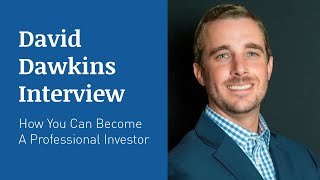
David Dawkins moved from corporate finance into real estate by starting with single-family rentals, using leverage through 401k loans and HELOCs, then scaling to multifamily properties. He focuses on 20-80 unit buildings in Jacksonville, Florida, preferring multifamily for lower vacancy risk and better control over valuations through income and expense management.
Welcome to the Next Level Income show where it's our goal to take your income, your investments and your life to the next level. I'm Chris Larsen.
And I'm Caleb Welblum.
Today's sponsor is our newly published book, Next Level Income, which you can find on Amazon. But better yet, go to our website nextlevelincome.com book where you can get a free copy. On today's show, we have David Dawkins, who's the principal of Seven Bridges Real Estate Investments and the host of the Professional Investor podcast. Prior to real estate, David spent 10 years in corporate finance and sales and also completed his master's in business administration. During that time, David gained experience in all aspects of customer and employee relations while running multiple offices for one of the largest US Fleet management companies. Throughout his four years in real estate investing, David has been able to start and grow his portfolio from one single family rental, just like me, to over $3 million in assets under management as he moved into multifamily properties. Throughout that time, David has gained first hand experience in all facets of real estate investing, from property acquisition all the way to sale and all the other aspects in between, including project and property management. David, welcome to the show today.
Hey, yeah, thanks guys. I appreciate y' all having me.
Absolutely. I saw either saw you on LinkedIn, David, or found you on the website and I reached out to you because I loved your concept, the Professional Investor. And I read a little bit about, you know, your story and I wanted to have you on the show today because I feel like you're a great example of what we try to teach here, of how to help people make more money, keep more money and grow more money. So I'm really excited to have you on here to share a bit more about your story and maybe you could start with kind of telling the audience here how you ended up where you are today.
Yeah, yeah, absolutely. And yeah, thanks again for having me. And sure. Really my story honestly is probably pretty similar to a lot of people. I would say it was really a natural progression along the way to where I'm at now. And for starters, because growing up, I had nothing, I knew nothing about real estate, had no real estate investors or rental property owners, anything in my family or around me. And then in general, didn't know anything about real business and entrepreneurship either. So I went to college. Like most, you know, that was what you're told, that was the route to go. So I did that, graduated college and then just went into the corporate world because that's you Know, again, you know, and at that time too, looking back, I didn't really. Most people's goals, I think that's natural in your early 20s is just financial goals. And so really the way for me, you know, to achieve my financial goals was to, you know, end up in that corner office, be the guy down in the corner office. So that's what I did. You know, I just worked my way up. I went back and got my mba, which then helped me further my career, took a couple promotions. And so as I started to progress my corporate career and make more income, I realized, or at that point too, because I still had student loan debt. And so I started really getting into personal finance and I really wanted to pay down that debt. So just as I continued to make more money, I live within my means, paid off that debt and, and with each promotion and raise, and eventually I got to a point where I was paid off the bottom line on a commission basis. So my income really started to escalate. And then around that time too, is when I paid off the last of my student loans. And so I had that delta, you know, between what I was, my living expenses and what I was making. And then it continued to grow. And so naturally I was like, well, now I don't have to. I'm not paying off any more debt. So I started really where I kind of started looking, but I really started looking into different investment opportunities. And again, naturally, first place you typically go is stocks, because that's again, what you hear on tv, what you see, and at the same time, it's also what. It's more affordable too. At that point, I kind of knew a little bit about real estate, but always thought, like, why don't have the money to do that just yet. So dabbled in stocks and was doing fine actually. But it was very, the returns from a percentage basis were very, very good. But I still, I didn't have any control. And over these you companies, you don't. It's very hard. You don't have a competitive advantage typically, you know, competing with everyone literally in the world. And it's hard unless you have some insider trading edge. You know, it is hard to take, take advantage and really have a competitive advantage on everyone else. And so I didn't feel confident, you know, putting a ton of money into the stock market, like I said, just with the lack of control. And even though I was doing okay, so that's when I continued to look at kind of circle back to real estate. And at that point too, again, my income kept rising. So I had a little bit of money at this point. I had some capital and I was very lendable. It was very easy for me to get. I had a high income job at 800 credit score and I actually had some capital. And then I had at that point my 401k had over the years had gotten to a decent amount. So I was able to. And that's one of the strategies. I borrowed from our 401k at times at that point too. I bought a house when we moved back to Jacksonville and at that point just for primary residence. But I had some equity in that. So then I had a heloc. So I started learning all these strategies and really. So it was in four years ago when I bought the first just single family rental. Again just as a natural progression. Didn't start out in multifamily and then bought that first single family rental. And from there everything it was too for a first property was pretty, pretty easy, like pretty. It wasn't anything crazy. It wasn't a big rehab, it wasn't, it was, didn't need much work. Third party property manager. I was working a job so I had a third party property manager. So things went well. But I was like. And I didn't expect to get rich.
Off the first one.
But I was naturally like, okay, well you know, you just put 20 grand, 25 grand, whatever the amount was, because these are about $100,000 houses. And at that time I think I was able to get in with a 20% down, even though it was an investment property. But still basically I'm doing the quick math. I'm like, okay, this isn't really, I'm not going to get where I'm going. At least not very fast. Which originally was not my plan. It was just, hey, I'm going to buy one a year for about 10 years and I'll pay them off and that'll be fine. But as I started to learn all these other strategies and actually the second one I bought was pretty much the same too. And then that was when it really went off like, okay, I'm not, this is too slow. And then at the same time just I was, you know, getting older and learning more just about myself. And you know, I was my girlfriend, she's my now wife. Like we were kind of just as you naturally go through and you kind of learn more about what's important and what y' all really want to do. And with my corporate job I was gonna have to move again, you know. And so that was something. Even though I had a pretty good situation. I was making high income, I had a lot of autonomy. There were just some things outside of my control and I kind of just wanted a little more. And so you factor all those in. I really was like, okay. And I'm learning about real estate and it really interests me. So I was like, I can start implementing all these different strategies to speed up my progress and get to where I'm going. And then it just progressed. Then I did start doing heavier rehabs. Like the next property was a full gut rehab. And then we went through different, did different strategies. But I was always looking for long term wealth as opposed to, to, you know, the income because one, I saw the jobs, I didn't need it. And so we were always, you know, or I was always refinancing these properties as I was going. And then, so they just slowly built. And then after, you know, really after three years, then I started, I had been looking at multifamily. I was learning more and I knew I wanted to get there. And so at that point when I got to, I kind of had proof of concept with the confidence on the single family side. So I knew like, and I'd done some small, like a duplex and triplex. I was like, hey. I felt I got to the point where I was going to leave my job and then I was going to go full time into real estate and then I was going to give myself a shot at multifamily. I was like, I'm going to focus on this for three months. If I can get a property under contract, then that's where I'm going to stay. And that's what I knew. That's where I want to be. I was like, if I can, if it doesn't work out, then I can always go back. I have, I knew what I was doing. I had hard money, lines of credit, I had the process and system set up to keep doing single family. And I would just ramp up my volume because I wasn't working a corporate job and then I would just sell off some to make income. So that was kind of the fallback strategy. Fortunately, I was able to get a 10 year property under contract and then that's gone well and then I've got another since and that's where I've stayed for the past eight months. Now I've been in multifamily full time.
Terrific focus. Yeah, excellent.
We appreciate you sharing your story with us, David. And there's a lot of overlap between what you do with your podcast, the professional investor and what we do at the next level Income show and creating a resource for people to find education on these topics. And like you said, you got into stocks because it's what you see on TV. And I think that's a lot of people who aren't heavily involved in finance. There's just general information out there and then you, through a lot of time and hard work and energy spent uncovered some other strategies. But it takes a while to do that and with what you do and what with what we do, it provides this resource where people can kind of skip some steps and avoid some potential bruises along the way. So yeah, I think it's great with what you're doing. So to someone listening now and here's your story where you went from successful corporate career to shifting to being a full time professional investor. A lot of people listening are probably thinking man that's awesome, I want to do that. But what advice would you give for someone thinking about moving in that direction of should I actually do that or should I find people to invest with passively and continue a focus on that career?
No thanks, that's a good question. And naturally I think that's what people face and I think first off as far as whether to leave your career or not, you have to. Are you happy today? I mean that was part of it. There was definitely a fine, a long term financial plan. Like I knew there would be more long term upside but at the same time, I mean I had a clear path of financial success that I was on and that wasn't stopping, that was just going to continue to grow. So it wasn't for me, it was not a financial reason because like, I mean I was going to my goal, I'm going to make, I'm going to reach my financial success one way or another. But then so I'd say that's one thing, if you're completely happy then, then you probably don't want to spend because as y' all know, I mean there's a lot, it may sound great that you're investing and buying these multi family properties but there's a lot of the day to day that's not, it's not that fun for lack of a better word. It's just, there's a lot of just basic monotonous just running, just day to day tasks that come with running any business. So I would say you know, first just you know, assess whether you're happy or not and if you are completely happy then maybe that's maybe, maybe just stay there and then two. But if you are thinking I'm not happy, maybe I should go this route. I would say you can kind of you1 need to be very honest, like very self aware. I think you need to understand your strengths and weaknesses. And I think one and I think you can look back which will give you confidence. Have you been, are you successful in your current role? And if not, why? Because I do hear, I talk to people and sometimes they'll say you can tell that they're frustrated with their job, they're looking at trying something new, but they're not really successful at their job. And so it's kind of like well, you maybe need to figure out why you're not successful there. Just jumping from one thing to the next. You may fail at this too. And at least you have some security with your corporate job. So I would just one, have you been successful? And if you have been, there's probably a lot of traits and characteristics that you currently have that will translate. You're probably, probably are a hard worker, you're probably a good communicator, you're organized, diligent. I mean things of those nature that are going to help you in any business. So there's maybe a lot of things that you can translate and then you know, kind of along those self awareness, being self aware and understanding your strengths and weaknesses is just to know. And this is going to vary too because in real estate there's so many different avenues you can go and there's so many different ways that you could do this full time. That one, you need to know that may help you decide which route to go based on your strengths and weaknesses. And then two, if you even once you decide that it's going to then help you decide, okay, what roles and responsibilities am I going to be handling and then what do I need to delegate or outsource or automate if possible. But that's like for me, for example I had that was there was a lot of things that came from my prior career that translated easily from my, from the financial knowledge and what I was dealing, you know, working with other companies and reviewing balance sheets and income statements. I mean that sort of directly translated the sales process that's that directly translates. It's a little different in real estate oftentimes because you're you know, the sales the same process but you're actually trying to buy like if you're looking at the acquisition, you're going through the sale a lead funnel, but it's to buy something as opposed to sell something. So but it's the Same process. That's why I feel that people, um, you know, if you, like, for example, you know, if you're an outside salesperson, then you have a lot of autonomy and probably freedom of your schedule. And if you've been able to, to do that being, being on your own, kind of in your corporate job and being successful, that may easily, you know, translate. So I think those two skills. But like I had zero outside of MBA classes and such. I didn't know, I didn't know anything about marketing, you know, like for example. And that was, that was the first thing that I outsourced. I was like, okay, I need someone to help me with this. Because even with the podcast I was able to set it up and I can get through it. But just as far as the show notes and uploading it and putting it on YouTube and things of that nature, one, there's people that can do it better than me and then they definitely do it faster than me and then as well too, if you try to do everything, you're going to get bogged down and kind of burnt out. So I would say if you're self aware, it's going to really help you set up the business. When you go full time, you're trying to set this business up because it's just like any business too. So just general business knowledge, but it's going to help you figure out based on that general business knowledge. This is how I'm going to set my company up and this is who I need to bring on to help me run this.
I think that's great advice, David. And again, big reason we love having you on the show is because, you know, you really, you have a great story about how you, you went through it. And the first thing we say is, hey, like we were on a podcast a couple months ago and the question was, hey, if you have somebody that's making $50,000 a year, what is your advice? And I said, get really good at, get really good at doing something. That's how you make more money. Look at, look at a career that can help people get really good at doing that. And then you can focus on, you know, the next steps and doing that. So I love how you said that. It's like, well, yeah, I want to invest in real estate. You know, I want to leave my job, I want to do this. Well, why is that? You know, are you in something you don't like to do? And we always ask, what, what's your why, why are you investing? Why are you doing that? I think the Great thing is when you achieve financial independence, you can really focus on what you do, love to do and ultimately have that freedom. So you were talking earlier about your first multifamily property. Um, tell us a little bit more about when you decided to go from single family to multifamily and you know, what you learned in that process. What was your probably what was your biggest challenge as well.
Yeah, that's good. I probably, you know, originally thought, I don't know, I'd say two or three years back as I really started to dive into investing and started. I think at that point I probably had a couple single families. I learned about multifamily and some of the benefits of it and thought that that's the route, you know, I'm going to go. And then to be honest, you know, one part about it just with me I had my. It starts to get difficult to get a loan on a single family house. You know, just the residential loan. So it gets tricky. No matter how much money you're making, it's tricky. I mean we had. And then it was starting to get. And I'm putting some of my wife's name like it was just. So that was getting a little cumbersome. So that was kind of part of it. But then two, the real reason, the reason why I like prefer multifamily is for a number of factors. But one, as far as lowering your risk, if you look at vacancy risk, for example, as opposed to you have single family home, someone moves out, you're at 0% occupancy and then spreading costs, you have your economies of scale. So I think it lowers your risk and you have more control of the valuation based on the way commercial properties are valued. I remember that. I will say, you know, when I first learned about that, when I first. That was what the light bulb went off, you know, however many years ago and I'm like, oh man. Instead of this taking the comp and instead of what miss Johnson paid for the, the pretty house down the street, it's like a quantitative formula like this is. This is great. And there's some. Yeah, right. And there's obviously some truth there. You do have more control the valuation. But at the end of the day, you know, with interest rates and capital, because it's such a, you know, it's a debt finance know assets. So there, there is a lot of other factors that control valuations kind of outside of just the way you're running the property, which you know, I kind of learned. But, but, but to the point of that you do still have more control of the valuation and there was just, there's just more levers, you know that you can pull on to drive income and lower expenses. I mean and that's where too. And that's why I think again back to just being a natural progression. I mean you do a few single families and, and really the only way to drive up value there is through physical rehab like actually rehabbing the properties and improving the physical condition of it. And you're still fall victim to the surrounding area, the comps in your area. And so yeah, when you look at multifamily and then once you do a few of those you get very comfortable and then you're looking at multifamily and there are, there's actually other ways to generate income through either rubs or laundry or renters insurance. I mean there's all these little things. And then when you, when I learned just how a $2 fee back for renters insurance across all the units affects the total valuation. And so there were all those factors that kind of just led me in that direction. And then yeah just coupled with the timing of it as far as I was at a point where I felt comfortable. I had other investors that I had known and been working with either prior careers or just had been in conversations with that were willing to invest in some of these larger propert with me as well. So it's just kind of a, you know, multiple factors came to a head and then really me leaving a full time job, doing this full time, it allowed me because there is a lot more going on to it. It's obviously a lot, you know, just the whole process is different. There's from their long, you know, and that also too I think it fits my personality a little bit more. So I would rather do three or four deals a year. But are, you know, multifamily larger properties as opposed to on the residential side. It's very much a, it's a volume game like you got to really and you got to be on it and that sort of, it can be kind of hectic to your, you know, to your mindset, to your health. When you know, email comes through. You got to call that guy right away. You got to call that wholesaler back or whoever it is to go ahead and lock that property up. Where this, you know, the commercial world's a little different. It's where you're networking with brokers and it's. The property process is more of a. That longer say it's kind of going back to sales, you can have like a longer high, maybe more sophisticated sale process as opposed to, you know, your daily, you know, your car lot, dealership kind of analogy. And that just fitted me if I think I was more fit my personality a little better to do these, build these long relationships, have time to go through my analysis and put bigger deals together.
No, I think that's great. And I mean I talk about that in my book. Like I was very much like, you had all these single family properties and I was getting phone calls from the tenants or from the management company and it's like, all right, this is a headache. I was on call, I was working in the hospital sometimes months on end on call and 80 hours, 90, 100 hour weeks sleep in the hospital three nights in a row. I'm like, the last thing I need to do is deal with the phone call from a tenant. But then really it's like, wait a minute, you can lower the risk and you can pick, potentially control the appreciation with these properties. And like all these light bulbs start going off. Yeah, it's just, yeah, it's amazing. Once it's like, oh yeah, this just makes so much sense.
Yeah, yeah, the light bulbs really do go off with that stuff. And when you bundle it with the unique tax benefits of multifamily, it just totally makes sense. And it's great being able to share this stuff with people who, you know, they have that, like you were saying, your financial goals and you'll find a way to get there. They know what they want, but they don't know how to get there. And when we can share tools like this with them and see how much it helps their life, it's fantastic. Yeah. And so you move from the single family to the multifamily and then say looking forward into the next decade or so, do you see or what other future opportunities do you see of asset classes to move into as the times change?
I would say I really, for the time being, I don't see anything changing in the near future. I plan to on focus, focus on multifamily and still probably at least for the immediate future, stay focused because I'm just investing in Jacksonville, Florida in my market. And the reason for that? Well, there's a number of reasons. Well, again, just natural progression. It's easier when the properties are right around. Yeah, I have looked and I've looked in the surrounding markets, but for the near future I kind of, I plan to stay in that 20 to 80 unit range and that for. Because there's a lot of. I know y' all you know, you're investing throughout the country. You obviously need to have that 100 plus, typically roughly around that size 100 plus units the property can support, you know, on site property management. And so that's. But so to me, like for example, if there's a 50 unit property in Jacksonville, like you know, y' all wouldn't even be interested in that. And that's the same. So when you get to that level, you are competing now with a lot of other, other investors. It's basically you're opening up nationwide and then where with, you know, in that smaller space, like once you get above really that 10 to 15, you know, you kind of start weeding out all of the residential investors that may step up and try, you know, a five to 10 unit property. And but it obviously does create some operational inefficiencies or opportunities as I like to look at them, because that's why, you know, because of that, you know, I've started our own property management company to handle that and we have certain processes in place and just it does take a little more, a little more manpower and attention to run properties basically at scattered sites, you know, as they are now. But, but it can be done. And that's kind of a way that I've, you know, been able to kind of create a slight competitive advantage, you know, in my market in this niche. So I plan to just really stay there. But I could see myself then and really into part of that from a, from a capital perspective, honestly, as it becomes easier over time, you know, hopefully to raise money, I could see myself progressing into larger properties, maybe going to markets outside of now. I really just look in a short drive from Jacksonville somewhere anywhere I can get in a day and back. So I may look at larger properties and then, but really probably longer term, maybe closer, more in that 10 year time. I do see this is something that's really peaked my interest. More like triple net leases or just getting in more on the debt side as far as notes and possibly lending. I mean those are kind of the routes because I've always like that financial aspect and now that's what. And I think a lot of people do, you know, a lot of people like us, they get drawn to the investments. You kind of, you're sitting at your computer going over the numbers like, oh, this is great. And then where some people fail is they don't understand the operational aspect of it. And then either they don't understand or they don't, they can't handle it themselves and they don't Strategically find a partner who can do that for them because you need, it's got to get taken care of by some. You don't have to do it. There's again, back to. There's a lot of ways you can be successful, but if, say, if you're someone who doesn't have that experience or the time, then you may need to partner with someone, you know, someone more like myself that is going to handle that and run that. So but that's where, you know, so that's kind of what I've talked to more experienced investor. Like, yeah, I kind of went through your path. I used to be doing these and now I'm transitioning from multifamily into, you know, triple net leases and other aspects that are a little just more passive, you know, similar returns, but just more passive. So that's probably, that's further down the road, though I would say that's definitely years away. But I could see myself going that route.
Yeah. And that would kind of take you full circle if you look at, if you look at kind of some of the aspects of your journey here. So one of the things that drew us together here is the name of your podcast, the Professional Investor David. So love to hear more about who you focus on bringing on your podcast and what you guys like to talk about.
Yeah, absolutely.
Yeah.
Thanks for, thanks for letting me share that. Yeah, we focus on just pretty much we do bring on some industry experts. So kind of like you had mentioned, Caleb, the tax advantages, you know, I have my CPA on there. We brought a 1031 exchange expert. We have a property management or a real estate attorney as well, kind of specific to property management. So we have industry experts that kind of help people with the specific knowledge. But the bulk of our guests are, you know, people obviously, Chris, you know, your show will be airing here in a month or so. But our other active success investors that they really are, this is their profession, they are running investment companies in some aspect of real estate. We've had a note investor on as well. Most of them do focus on. Most of them are multifamily apartment investors since that's what I'm focused on. But we bring on just established successful investors and just kind of hear their quick story and background of how they got there because that was something I know what helped me when I this was, you know, four years ago when I first started, was starting to listen to podcasts. I didn't really listen to much podcasts before. And then you understand because before real estate, the successful real estate Investors were just, I don't know, I didn't know how they got their money and how they got their start. They, it just seemed, you know, almost, I would say, unattainable. You're just like, it's not the route I go. And then you start listening to podcasts and you hear their quick story and you're kind of like, oh no, these are just everyday people that just made some, some specific strategic choices in their life and said I'm going to change as I'm going to start doing X, Y and Z. And they did that over an extended period of time and got them to where they are. So that's what we like to just bring on successful investors that are doing this as their profession and then just get a quick synopsis of where they came from and where they're at and how they got there.
Awesome. And if people want to find your podcast, what is the best way to do that? David?
Yeah, the best way, I mean you can just search the professional investor. It's on itunes, Spotify and I believe most of the, most of the other carriers as well. And then you can also, you can go to our website, it's7bridgesrei.com and those links to everything there as well.
Terrific. And we will have all that in the show notes. We'll also have a link so you can get a free copy of our book at our website. So we'll make sure we have that after the show wraps up here. David?
Perfect. Yeah. The value of hearing those stories definitely resonates with me because it's like you're at step one and then you want to get to step 10, but you don't know what steps two through nine are. Yeah, exactly. And so we've got gotten a lot of value out of having people on our show too. So one question we always ask and related from getting to step one to step ten, if you could go back to say your 25 year old self, say you're on step one or two then, and then give yourself one piece of advice, what would that piece of advice be? And it could be life advice, not business if you prefer.
Yeah, that, yeah, that would, that's a, it's a tough question because there's so much and part of it, you know. Cause I really wouldn't. It's funny if I me at my age at 25, it was 2011. So if it was me, I'd go back and tell myself just buy anything. Buy any real estate.
That's right, buy it all. Yeah. Last two months ago was sell it all, you know.
Yeah, buy everything. So that, you know, practical advice. That's what I would have said. But I wouldn't change anything because everything that, you know, really throughout my corporate career were all things like I said that easily transit. So I think I learned a lot that have set me up for success long term, you know, and if I had just say I had bought the properties back then, they would have worked out just because the market, I probably wouldn't have learned what I needed to learn and then probably would have failed at some point down the road. Road. But to answer the question, I guess I would just go back and say because at that point too, I think I was still getting my MBA and I was kind of, you know, I always did good in school, but I was the mindset of, man, I can't wait till school's over. I'm never picking up a book again. Like growing up, that's just how it was. And even, hey, I was like, NBA started to shift a little bit. I think I was just maturing. I was like, oh, some of this is actually interesting and I may be able to use this in life, but. But I would say just embrace the know being a lifelong learner, because that's something I think most. Most people are. Most successful people can have that mindset and then just. And then focus on which I learned over the next, you know, these last nine years. But would be what, you know, what makes you happy, like really outside of money, you know, because again, like I mentioned earlier, at 25, I was still. I'm like, man, I'm gonna get my MBA so I can get this other promotion. And it was all about making more money. And then once I started making more, then I started looking around. Wait a second. This. I thought I was supposed to be. I thought this was going to be great. I thought I was going to have it made. And I did. And I learned that stuff and I started looking at other aspects of my life more holistically, just everything other than just money. So that's what I'd say. I'd say, yeah, just embrace being a lifelong learner and then kind of think about what's really important to you long term.
I think that's terrific advice. I mean, you know, if you look at it, money is a means to an end. I mean, you can have all the money in the world, but if you, you know, you lose your friends, you lose your loved ones. I mean, I've lost, you know, several loved ones in my life. You know, it's the relationships and the experiences that are really worth it. You know, you can always make more money and do that, especially once you've learned it. So to that point, David, I really appreciate you being on the show today. Your story is a real inspiration. I think it's a great example of what we like to share with our audience here today. And just as a reminder, we'll have your podcast and everything in the show notes, so if people want to get a hold of you. So thank you so much for taking the time to be with us today.
Yeah, no problem. Thanks, guys. I really appreciate you all having me on.
Absolutely.










