From Financial Advisor to Financially Independent with Jim Pfeifer
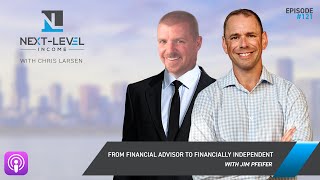
Podcast interview (Chris Larsen host) with Jim Pfeifer, founder of Left Field Investors. Jim recounts his career path from business to teaching to financial advising and then to real-estate investing after becoming an accidental landlord. He explains why many financial advisors don’t recommend or invest in syndications (licensing, compensation, compliance conflicts), argues for teaching practical financial literacy (cash flow and multiple income streams) over sole focus on paper assets, and outlines how syndications and depreciation/cost segregation can produce passive cash flow and tax benefits (the “lazy 1031” approach). He emphasizes community-based vetting of sponsors via Left Field Investors and closes with contact/CTA information.
Why your financial advisor is unlikely to recommend a real estate deal for you. One, they're not licensed. So there's a risk, right? There's that they're going to recommend something and it doesn't go well and they're. And they're not. So they can't.
Welcome to the Next Level Income show where it's our goal to take your income, your investments and your life to the next level. I'm your host, Chris Larson. If you haven't yet, get a copy of our book for free at our website, next levelincome.com. that's www.nextlevelincome.com. just, just click on the book link and I'll even send you a copy if you put your address in. On today's show, we have Jim Pfeiffer. Jim is one of the founders of Left Field Investors and the host of Passive Investment from Left Field Podcast. Left Field Investors is a group dedicated to educating and assisting like minded investors. Help negotiate the nuances of the passive investing landscape and world of syndications. Jim is a former financial advisor who became frustrated with the one path fits all approach of the standard financial services industry. And now he concentrates on investing in real assets that produce cash flow. And he's committed to sharing his knowledge with others who are interested in learning a different way to grow wealth. Jim, great to see you again. Welcome to the show.
Thanks, thanks for having me. It's, it's great to be here.
Yeah, no, it's, it's, it's great to have you. I really enjoyed our prior conversations here and I know we've had to reschedule this because of family logistics and I think that is the, you know, you know, we get on the show and we have these conversations, but at the heart of it, we're all just, we're all just trying to do the best we can as, as parents and partners. And I think that is, you know, that's really the why behind everything that we do is how can we use investing to have better lives? So I'm super excited to have you on because Left Field Investors, it's as I, as I mentioned to you, I've just been really impressed with the network, with the community that you built and I'd love for you to share more with our audience. But as I mentioned, I'd really like for you to share a little bit about your history before you started Left Field Investors with the group.
Sure. So I'm kind of on career four, you know, but it's always somehow I've.
Always been a millennial.
Yeah, exactly. Yeah, right. I've always kind of been in education in weird ways. First career was 11 years and in business. And, you know, I immediately started. Once I kind of learned what I was doing, I started getting into mentorship roles or education roles there. And then, you know, when I'd always wanted to be a teacher. So after 11 years in business, I went and I was a high school teacher, finance and accounting in kind of a city, Columbus city schools. So it was really a lot of skills, but education. And then when I became a financial advisor, which is what we're mostly talking about, that also is all education, right? You have to educate your clients and then show them what you're proposing, and then comes the sales. You know, you kind of have to convince them to do it, which is the part I really, really didn't like. I like it much better now where I, you know, I. I educate and I, you know, in our community, and I just share, hey, here's what I'm doing. Do it or not, right? And that. That's a much more comfortable place for me. But, you know, as I was starting the financial services industry and. And being a financial advisor, I was always. I was a finance major. I was big into the stock market, mutual funds, and I was just certain that was the way to. To build wealth. And it was funny.
Portfolio theory, right?
Yeah, exactly. Exactly. And so at the same time that I was really getting into financial advising, I was an accidental landlord, right? So in 2008, we had. My son was born, and we needed a bigger house, so we built a house. And. And you know what happened in 2008, right? I mean, you couldn't. We were lucky to get that house finished and complete, and we moved into it, but we couldn't sell our old house, so I became a accidental landlord, and I did not like it at all. And so, you know, I kind of was just. I found someone and I managed it, and it was horrible. I mean, he was a great tenant, but, you know, toilets and termites, all that stuff. I did not like it. So as I was learning about relearning about finance, they were teaching me all these concepts. And I was a landlord at the same time, and I was noticing that they were talking about money and finance and they were pushing certain paper investments, but most of what they were saying was more applicable to my real estate investment. And so it kind of paralleled. And at the same time, once I kind of figured that out, I turned that one accidental rental into. Into three more rentals. And I hired a property manager so I didn't have to deal with all that stuff. And that's kind of how I got into real estate. But it was really interesting because as I was thinking, yeah, I'm finally where I want to be, teaching people about paper assets. Investing in paper assets. I accidentally stumbled into the real thing that helps you grow your wealth, which is real assets. Me a while to put all that together. But the education as a financial advisor is what got me there.
I love that. I just had an know this is something you and I have in common with the finance education. And I just had lunch with a friend. He also has a finance education. And he looked at me and he said, you know, Chris, like, we, we invest in the stock market and my wife and I are, you know, doing well. We're saving, you know, money from our businesses that are, you know, that they've built here over the past several years. And he looks at me and he goes, but if he said putting a hundred thousand dollars in the stock market isn't really going to do it, he goes, we need passive income. And it's just, it's fascinating. You're the, you know, second person in a row here I've talked to in the past couple hours that has. That has said that in third, if you count me. So, yeah, it really is interesting. I am curious, what was the company that you were working with as a financial advisor?
It's just a small boutique firm in Columbus. And, you know, we were affiliated with a broker dealer and a life insurance company. It's just a small brokerage here locally.
Gotcha. Yeah. Because it is really interesting over the years in talking to investors, we actually have some financial advisors that invest with us and we have some financial advisors that refer clients. And that's unusual, as you can imagine. And one of the things that I found interesting that I learned is a lot of these financial advisors are actually. Not only are they prohibited in talking about syndications, for instance, but they're actually prohibited from investing them themselves.
Yeah. And that's part of the reason I got out of this, to be honest. So there's a couple of things. One, there's two reasons why your financial advisor is unlikely to recommend a real estate deal for you. One, they're not licensed. So there's a risk, right? There's that they're going to recommend something and it doesn't go well, and they're. And they're not licensed for it, so they can't. Right. It could either be they're not allowed to Depending on each company is different. The other reason is they don't get paid for it. Right. There's no, there's no way to get compensated for that. So that's two strikes. Right. And so when you're a financial advisor, it's very hard to think about the real estate part because you can't really recommend it. You probably don't understand it. And the more that you recommend to real estate, the less capital you have, you know, for. For yourself, for. To make money for yourself. And so that was the conflict that got me out of it. Right. Is. Well, two things. One is I always prided myself in investing in the same things that my clients were. And the more I was putting money into real estate, the less I was putting my money into the same things as my clients. And that made me feel very uncomfortable. And then also there were regulations on me from my company and from FINRA and from all these other places that there were certain deals I couldn't invest in. I couldn't do any partnerships with other people. We use a company called Tribe Vest to do group investing, do that because all these crazy restrictive rules. So, you know, that, that's really, those, those are the reasons why I got out of financial advising is because I, I couldn't do what I wanted to do. Also couldn't help my clients do what I, I wanted them to do.
Yeah, no, it is, it's interesting. And you know, the financial world, it's just not set up to really teach people about true wealth. And, you know, that's, that's kind of the mission that we, you know, behind. I know a lot what you do and a lot what we do here. You know, I want to, I want to kind of shift to, you know, maybe like a little bit more of a, a controversial topic. So, you know, we're going through this period now. We're talking about the, the student loan, debt forgiveness. I know you have two kids in college and a third soon to be. And yes, I have a couple that, that are not too far behind. And I was, I was, I try not to engage in social media. I try to just enjoy some of the positive things. But I noticed this thread that had started from one of my friends and they basically said, hey, I don't want to get into politics, but I just want to basically voice my support for debt forgiveness. And I read through the comments and it was just interesting. One side said this, the other side said this. And I said to myself, well, you know, if the, if the universities are the ones that have been benefiting from all this debt. I said, maybe they should tax the universities. So I just said, hey, what if we paid for this by taxing the universities and then mandating that they taught financial literacy in high schools at the same time and tied it to that. So you taught finance and accounting in high school. We just had on. And forgive me, I'm, I'm gonna. His Vince Shorb, who has a company that talks about, you know, basically teaching financial literacy. So what are your thoughts on financial literacy in this country? You know, teaching high school kids, you know, are we doing a good job? What can we do differently? How can we, how can we push this learning curve forward to our younger generations?
Jim, it, it's critical, right? I, I taught finance and accounting, but it was, it was in a school district that doesn't have a whole lot of money. So these kids, it was really life, life skills, right? We didn't really dig too deep accounting. We were doing how to manage a checkbook kind of things. These were the first generation of kids to go to college in their family. So. And then I would compare that to my kids who were growing up in the sub. They, they, they had a better opportunity in their school district, but neither of them had any financial education. And the real problem is, even if they do, because in Ohio now you're man to have some financial education, but it is always, it is always taught by a social studies teacher. So they're certainly not going to be an expert. But also when you teach finance to young people, you're going to teach stock market, mutual funds, 401ks, because that's what everybody knows. And also the curriculum. All these banks and Wall street companies give their curriculum for free to teachers because these teachers, you know, they're working hard. It's so hard to be a teacher. I will never say anything bad about teachers. Very hard job. But, you know, so they're going to, when a big bank sends them the curriculum for the, to the social studies teacher to say, here's how we're going to teach finance. The social, social studies teacher is just going to teach that because they have enough other that they're doing that. They don't have time to create a whole new lesson plan on a whole new subject they don't know anything about. So you're going to just get the Wall street stuff. So I'm, I'm absolutely. And I'm still trying to figure out how, how best teach my kids not the, you know, that passive income, having multiple income streams, cash flow. That because the stock market It's a paper asset. If the, what you're doing, buying a piece of paper and you're going to hold it until at some point later, you hope you can sell it to somebody else for more money. Right. And there's no current benefit.
Yeah.
So if in a real asset, it's going to produce income, like real estate, it's going to produce cash flow for you the whole time. So you have a current benefit, you hold it, and then you sell it later and you might get a gain. Right, but that's, that's a, that's a great concept, but nobody's teaching that to kids. And, you know, their idea of multiple income streams is bouncing from job to job and you lose one and get one. Right. And what we need to be teaching people is, yeah, it's okay to trade time, it's okay to have a job, but as soon as you get income, you should be saving some of it and try to create a second income stream off of that and then a third and then a fourth, because that protects you, that gives you stability. We not teaching any of that in high school or in college. So what we're doing is we're educating people to go out and get a job. And then we're saying, now you, now you got money, figure it out. And that's just, that's just, it's been like that forever. And I think it's a real problem.
Yeah, no, I think it's, it's a, it's a, it's a problem. And then, you know, you mentioned that, you know, the teacher that's teaching, you know, financial literacy or, or the advisor. Right. That's teaching how to advise. You know, they're just being taught what the industry standards are, what the Wall street standards are that are out there. And the teacher probably looks to the financial advisor or the industry and says, hey, they're the experts. I should just trust them. And, you know, that's one of the things I try to teach my, my boys is that look, you know. Yeah, you have to follow, follow the rules, you know, and learn the rules, you know, especially as children. Like, it's one of the things I teach them, but I do teach them to question authority and the assumptions because I think when you get down to it, and then you look at really what like the smart money is doing. And we've had some guests on the show here going back to our earliest episodes. When you look at these families that are worth $100 million, they're putting 20, 25, 30% BlackRock Right. Larry Fink. They're not putting all their money in the stock market. You know, they're not doing what they're telling retail investors to do.
No, they're not. And think about it. How many people do you know or have you heard of that have built wealth, large amounts of wealth on the stock market? Not very many. Not very many. And you know, it's funny, my, and.
If they have, and, and just to interrupt, if they have, and I know some people, they, they were in a professional or a profession where they started working at 25 and they, they work to about 65 and now they're living off of their proceeds. Yeah, I know, I know a handful of those people.
Yeah. And it's funny, my mom always asks, whenever they're looking for a new financial advisor, her first question is why are you working? Right.
If you're so good, if you're so.
Good at managing money, why do you need a job? And that's a great question, I think. But to your point, the fact that you have to work from 20 to 65, and then let's say that the best example that I can come up with is let's say you're that person. And just for round numbers, let's say that you get $1 million in your four and you're ready to retire. So what most financial advisors will tell you is you can only take 4% a year in distributions off that million dollars because you need that million dollars to stay at least $1 million because you don't know when you're going to die. So 4% is $40,000 and you're going to be taxed say at 25%. So you're living on $30,000 with your nest egg of $1 million. Well, let's check and say you still have that million dollars, but instead let's say you're going to invest it in cash flowing real estate. You're going to probably make 7%. Right. Just cash on cash return.
Absolutely.
That's grand. If you do it right, you're going to pay no tax on it. So you're 70 grand versus 30 grand. Right. In living expenses. And that million dollars, it, it's never going down. Most likely it's going to creep up. And so your wealth is going to continue to grow, so is your cash flow. While the 401k person is stuck just scraping and hoping that they make it. And hope is not a strategy, real estate actually gives you the cash flow. So you don't even care what the asset value is really. I mean, you do care, but it's not important.
Yeah, that's a great point. And in a lot of cases, and you know, we're going to shift gears here a little bit, but in a lot of cases, you know, if you're dealing with income producing assets, you can force appreciation. You can actually, you know, either work with an operator that does that, which I know you, you specialize in vetting, or you can figure out how to do it yourself and improve that little business or that piece of real estate so that appreciation does go up. And I think a lot of investors that have been in real estate over the past couple years where we've seen, you know, I think the official number is, you know, 8 or 9%, but you know, probably double digit real inflation. I just read a article this morning and it said Gen Z, I think it was Gen Z. It might have been millennials and Gen Z, but basically renters, their real inflation rate is over 11%. If you factor in rent, the, you know, the top line number was, you know, it's been 8 and a half, 9ish percent, somewhere between 8 and 9%. So you know, if, if you own real estate, you're benefiting from that because it is, it is a hedge. So I think to your point, you might not care, but there are a lot of ways that you know, your nest egg can still grow while it's kicking off that income. So a lot of people are listening. You know, if you've been listening to the show for a long time, then a lot of people know some of these answers. But for new listeners of the show, they're listening to you, Jim, and they're saying, yeah, that's great. Jim, you know, you finance major financial advisor, you've been invested in real estate for all these years, you know, 15 years, you've got it figured out. But I don't really know. And even more so, I'm concerned. I don't want to make the wrong choice, I don't want to make the wrong investment. And I'd love for you to share kind of why you founded Left Field Investors and what you help investors do so that they can avoid making those mistakes.
Yeah, that's a great question. So what Left Field Investors does is we are a community and we provide educational opportunities and networking opportunities for people who are looking to build wealth to gain financial freedom through investing in real estate syndications. That, that's our whole goal and our whole mission and that is what we do. And you know, the main thing is people don't understand that what syndications are. They don't know that it's possible. You don't have to be super. You do need some free cash, right, to invest, but you don't need, you don't need hundreds of thousands of dollars to get started. And especially with a company like Tribest, you know, that we work with, you can reduce your minimum by getting into a group and investing smaller amounts so it's accessible to everyone. And what I tell people like, you know, walk out your front door and go talk to your neighbor and say, hey, I want to talk about finances. They're going to talk about 401k, maybe the mutual funds, inflation. And then you say, well I'm thinking about real estate syndications. And they're whoa, whoa, that's risky. That's super stuff, right? They have no idea what it is. And so there's no, there's nowhere for someone to go to just chat about it. You're not going to see ads on TV for this. So having a community is where you can learn and you can meet other like minded people. And by like minded, I don't mean we're all robots. I mean we're all working towards the same thing. Financial freedom, financial independence, building wealth for our families. And what we do at left field investors is we, we help you figure things out, right? When I first started in the passive investing, the way I looked for an operator, a syndicate or someone to invest with was the in. You know, there's kind of three stages to my journey. Stage one, I had a self directed IRA that was, you know, from a previous employer. I rolled over 41k and I had a bunch of money burning a hole in my pocket to a seminar and I, I just started meeting people and saying, what, you're a syndicator? Here's the money, here's the money. Bad way to do it, right? I did not vet anybody, I just started handing out money. Some of those has turned out okay, some of them not so great. So phase two of my journey was I'm going to start educating myself, listen to podcasts, read books. And then I would hear a syndicator on a podcast. I would call them up, I'd have a three minute conversation, they'd send me a deal, I'd look at it, maybe I'd call them up again and talk to him for 20 minutes about the deal and, and then I have to make a decision, am I going to wire them $50,000? It was terrifying because I know, was this a great operator or was this a great marketer? Slash podcaster. No idea. Right. So I had better success in phase two than phase one, but it still were some bumps in the road. So now I'm kind of at phase three. I do not. And this is where I community comes in. I use left field investor members for this. I don't invest with a new sponsor or operator unless they are referred to me by somebody in my community who I know like and trust who is already invested with that sponsor. So what that does. I still do all the same due diligence, I change anything, but I'm 100 steps ahead because I already know that layer.
Yeah, yeah.
That this, when I send the wire, it's going to a real place. And you know, probably the person who referred me didn't, hasn't gone full site the person yet, but at least they know, hey, I invested, I'm getting communications regularly. I'm getting distributions as planned. They can give me some basic information. So at least I know they're legit and real. And to me that's a huge step forward. And that is one of the biggest benefits of left field investors is that the community shares information about deals, sponsors strategies, tax strategies, investment strategies, you know, different asset classes, markets, and everyone's learning. And we have people that are, haven't even gotten into a deal yet and we have people that are in a hundred deals and I from every single one of them. It's, it's just, you know, it wasn't, it. We didn't intentionally create this community and I'm completely biased because I, I think it's awesome. But we really do have quality people who are, who are just to help each other.
Yeah, no, it's fantastic. And I've talked to a lot of your members and I love your framework too. And that's what we, you know, it's like I tell investors, they're like, well, what's. Tell me about the biggest risk in the deal, Chris? I said, well, the biggest risk is you wire me the money and I take it and run away. And I think we forget we jump to the risks in a deal, right. Or in a market or in an asset. But we forget that what you just said, Jim, you know, people forget to vet the sponsor first about the syndicator, the operator first and do that. And that's how we get in these situations with um, what was the Ponzi scheme?
Which one? Bernie Madoff.
Bernie Madoff, yeah. You know, but that was, you know, that was, people were referring to that, you know, but you know, it's like, well, well, geez, if that can happen. But there's things you can do to, to avoid that and mitigate, you know, those risks. But a lot of people, you know, I have, I've had investors wire me money, and I'm like, well, you need to sign the paperwork first just for your own sake. So you have a paper trail. So let me do you a favor as a, As a, as a friend. So you. Yeah, I think that's the big thing. So if you're listening, I think, you know, if, if you're vetting, you know, a deal, start with the syndicator, like you said. I. I think it's always, always happy to provide referrals. I think that's a wonderful thing, especially with somebody like you said, you know, like. And trust. So we've had a. We've had a terrific run. You know, anybody that's been invested in real estate here the past few years, obviously 2020 was scary. A lot of uncertainty we came back with and then some in 2021. And there's been a lot of exits for investors here recently. But, you know, there's also. There's also investors that are selling deals that, you know, they get a. They get a big check, they get a nice capital gain. I've had a lot of questions here Recently, Jim, about 1031s or investors that have had exits they want to reinvest. Can I. Can I take this money from this one deal I sold or with a syndicator and kind of reinvest it with another syndicator and do a 1031? You have something that you like to call the lazy 1031. Do you mind sharing what that is with the audience?
Sure. First, I would like to give the normal caveat that I'm not a tax advisor, I'm not a financial advisor, and consult your own professionals, but with that.
But you used to be.
I did used to be, yes. That's true, but no longer. So consult someone that's professional, not me, but. So the lazy 1031 is just a. It's. It's not a 1031. It's just a different approach. I don't see any reason to do a 1031 exchange. I was an active investor. I had multifamily properties. I had single family properties. I not manage them very well, but I was lucky. The market kept going up, up, up. And when I sold them all, I was fortunate enough to make some money. And I went to my tax that my tax guy, and I said, I don't really pay all this tax, what do I do? And he said a couple of things. The first thing he said is, well, sometimes, Jim, when you make a bunch of money, you gotta suck it up and pay the tax. I didn't like that answer. The second answer was, how about a lazy 1031? Because he knew I was investing in syndications. So basically, passive loss offsets passive gain, right? And if you are passive investor in real estate, every time you get a capital gain and you sell something, it can be offset by depreciation losses of a new investment. So what I did initially was I had all this passive loss or gain, I'm sorry, from the sale of my properties. I invested it in different syndications. And then they do typically, especially multifamily, a cost segregation, which, you know, that's what a CPA goes in and basically accelerates a lot of depreciation. And so all.
Which means you get more depreciation earlier in the life of the investment, right?
Yes. Thank you. Get all. So depreciation goes from zero to 27 and a half years or something like that, and you can push a bunch of it into year one. So some of these investments, I was investing 50 grand and I get $40,000 of loss in year one. In one of the deals, I got $55,000 of loss in year one on a $50,000 investment. So what happens is dollar for dollar, when I. That $55,000 of paper loss, remember the money?
Because I was like, people are probably, they're like, you lost money and you're happy a paper loss, which is paper.
Loss because I, I earned distributions in year one from those. It maybe made $2,000 in my pocket. But through accounting, I lost $55,000 so that all of that loss, that $55,000 can offset a full $55,000 worth of gain. And so I ended up wiping out all of my capital gains from selling all of those properties because I invested, you know, most of the deeds, I, I reinvested. So there, what happens is you, you get on what somebody called a golden hamster wheel, right? So when I. Then when these, the syndications that I invested in, when they full cycle, right, I'll have capital gains. I also have something called depreciation recapture. Maybe there's a caveat there. And so to get rid of that tax, I go and invest in another sedation. And so I'm on the golden hamster wheel. So you know how they say you 1031 till you die? It's the same thing. The difference between these two approaches is with the lazy 1031, no time restriction other than that calendar year. The calendar year is the restriction that you don't have to look for a, like property. You don't have to, you know, the, the problem with the 1031 is sometimes you're trying to get out of active real estate. Right. Or semi active or however you, you look at it. And so, but to do that without taxing, you have to upgrade into bigger properties and bigger loans. And I didn't want to do that. Completely exited, wiped out all my tax. And you know, I, I don't like saying this out loud, but I, I haven't paid tax on my real estate since, you know, you basically love, I.
Love that you said it out loud. And that's, you know, one of the, one of my favorite expressions is if you're doing real estate right, you're not paying tax.
That's true.
And I think, you know, kind of a simple rule. And again, I'm not, I'm not, I'm definitely not a cpa. And, but you know, if you, if you reinvest money in real estate and it's, it's similar, you're, you're probably going to have some sort of tax mitigation if you do that, if you, if you sell it, you take the gain and then you go buy a boat or a car with it, you're probably going to owe more tax than if you reinvest it in something with depreciation. And I think that's one of my favorite things. And I think this is a great place to kind of wrap up because, you know, Jim, you've, you've done so much to teach the next generation about financial literacy, financial independence. You're doing it through your community. You know, real estate really is an optimal way, in my opinion, to create generational wealth. So, and one of the tricks to that strategy is you reinvest the proceeds and you keep it going. It's good for the economy. That's why the government incentivizes it. It's good for, for your net worth. It's good for your, your tax bill or lack thereof. And it allows you to continue to grow your asset base while living off that income, which also in a lot of ways can be tax free.
Yeah. And it's just a snowball. You know, you don't realize that when you start that it's just going to accelerate and get bigger because when you invest that first $5,000, let's say, and, and maybe it's a 7 or 8% prep. So you get, you know, you get that, that ach every month for $166.67 and you look at it, you say I gave somebody 25 grand and they're giving $166 a month. That's never going to amount to anything. But you know what? After five years or three years, that deal goes full cycle, that 25 grand turns into 50 grand and, and you go do it again and you didn't pay tax on it. I mean that's so much better than the alternative which is shove as much Money in your 401k and wait 40 years before you can use it or buy a stock. Hope that it goes up. And even if Apple for example, has the best year they've ever had, if the stock market tanked 30%, Apple's tanking too. Right. And so you mentioned forced appreciation. You can't do any of that. It's just the biggest eroder of your wealth is taxes and real estate eliminates that wealth erosion and then it just snowballs from there.
Yeah. No, I love it. Jim, you've, you provide a lot of great insight here. If listeners want to learn more about your group Left Field Investors and what you do, what's the best way to get in touch with you?
Best way is just to send me an email, Jim leftinvestors.com or you can go to our website left field investors.com and there's a subscribe button to get on to our newsletter and there's a contact us button which also comes to my email. So I, I talk to three or three or four investors every day as, as do some of the other founders of our community. So we're always willing and wanting to talk to, to new community members and, and you know, just get on this journey that we're all, we're all on together.
Jim, I really appreciate all the things that you've shared here. You're, you're a true example from a financial advisor to truly financially independent. Thank you. Your story with the audience today.
Thanks for having me Chris. It was a pleasure.
Hey Chris, here again. I hope you found this episode valuable. Now I have one more thing to give to you. We have a page for my coaching clients where you can get a free copy of my book as well as much more from previous guests on the show. Just check out nextlevelincome.com coaching to get a free copy of my book, audiobook and much more. I'll send you a copy of my book and cover all the shipping costs as a thank you for listening. To the podcast. Also, please like share and take just 90 seconds to give us a rating on Apple Podcasts.










