From Government Employee to Financially Free with Dustin Heiner
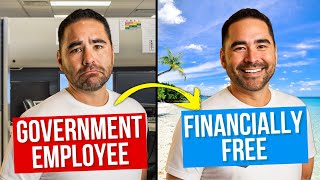
This content was created by Chris Larsen. This content was uploaded by Chris Larsen. This is a YouTube video titled "From Government Employee to Financially Free with Dustin Heiner" featuring a detailed English conversation between Chris Larsen and Dustin Heiner. Recorded in 2025, the content is a podcast-style interview where Chris Larsen hosts Dustin Heiner, a real estate expert who shares his journey from working in local government IT to achieving financial freedom through real estate investing. They discuss strategies for building passive income, investing in various markets, and teaching financial independence to the next generation. The video also promotes free resources and courses for real estate investing.
Whatever you're getting paid by your boss, you are not getting paid what you're worth. You're worth so much more than anybody could ever pay you. This is how you'll know.
Welcome to the Next level Income show where it's our goal to take your income, your investments and your life to the next level. I'm your host, Chris Larson. If you haven't yet, get a copy of our book for free at our website, nextlevelincome.com. that's www.nextlevelincome.com. just click on the book link and I'll even send you a copy if you put your address in. On today's show, we have Dustin Heiner. And Dustin is a real estate expert. He quit his job at 37 years old and had the financial freedom from passive income in his real estate investing. With his coaching podcast and YouTube channel Master Passive Income, he's helped thousands of people to invest in real estate as well. He is also the founder of Real Estate Wealth Builders Conference where he brings thousands of real estate investors together to help them connect with each other and grow their investing businesses together. And today we're going to talk about his framework for how you can do the same, whether you're just getting started or, or you're looking to scale your business that you have in real estate. Dustin, welcome to the show.
Chris, thank you so much for having me on the show. Yeah, I, I personally, I love real estate investing and honestly, real estate investing is fun but it's what it affords me to do in my life, to not have to work a job. You know, I like the term successfully unemployed. Hang out with my family, go to the gym and you know, come on podcasts and talk to great people on you. Like you. So I appreciate you having me on.
Absolutely. And I can see, I can see your why on the wall behind you. Absolutely not, not, not, not, not. What's next to the picture but the picture itself.
So the picture though, guys. So I now have five kids, very blessed to have five kids. And my 17 year old daughter, oldest daughter just bought her first rental property about three months ago. Already rented, already making like $300 a month in passive income. And so I've taught, you know, thousands of people now I've been doing so my brand master passive Income, I've been doing that since 2016 because I quit my job then and people were asking me how to do it and so I just started sharing with people how to do it and really realized I extra free time because it wasn't 40 plus hours of my life back and I enjoyed it. I enjoyed helping people. And now fast forward now, lots of students and my daughter and all my kids are going to be buying their first property before probably by 16. They all like, I'll let them by their, by the time they're 16, take out their entire set life savings and buy a first property and then hopefully they'll make more and more and more.
I love it. I love it. Yeah, we're going to, we're going to get into that. What were you just, what were you doing when you like, what job did you quit in 2016?
Oh, yeah, yeah. So, yeah, so in 2016 I was working for a local county government doing it work, you know, just technology, sit down desk job and oh, Chris. So I have a story that I love to share that really, it's what catapulted me into real estate investing. Do you mind if I share that?
Yeah. Oh, no, go. I'll, I'm going to share my, my story getting into real estate. I want you to share yours. And you know, we talk, we talk a lot about, you know, different ways to make money on this show, you know, commercial real estate. But what I, what I absolutely love, and I know you're passionate about this as well, Dustin, is for those listeners that are out there that are saying, chris, that's awesome, but I don't have $100,000 to invest in this deal. Like, I'm just getting started. Like, where do I start? That's one of the big things we do in our community. So I'd love to hear your story.
Yeah, totally. No, I appreciate that. And same here. Like, I love helping people. I love seeing people change their lives. And so I was taught, just like we're all taught this exact same plan. You go to school, you get good grades and you take those good grades, you go to college or university and get in thousands and thousands of dollars into debt and get a piece of paper that says, you know, hey, you have a degree and you go to other colleges or universities and you hopefully get a quote unquote career. Then you work 40 plus years of your life and help hopefully live on 40% of what you manage to save that entire time. Working that job is what I call it, because you're living just over broke. And so I'm doing the exact same thing. In fact, I get the most stable, secure job you can ever think of working at the local county government, doing it in California. California is not going away, that's for sure. Government's definitely not Going away and IT technology is not going away. So regular sit down desk job. But I bought one rental Property is in 2006 and I started making money in cash flow every single month from the rents that I was receiving. And I knew I needed to be an investor. Like, like full hard, like go, go all in within investing. But life started getting away and my wife and I started having kids. 1, 2, 3, 4 kids. And this is really what shoved me into becoming a real estate investor. By the time my wife had her fourth child, I went on paternity to leave. You know, that's where the dad stays home with the mom, changes poopy diapers and all that good stuff. Bonds with the baby. Well, I go back to work after about two weeks of being off. And on a Friday at 3:30 in the afternoon, I get a call from my boss's boss's boss's secretary, like top dog. And she says dustin, would you please come to the office? I said sure. And I hung up the phone. I paused for a second, I thought why in the world did they call me the office? Like this is not normal. And I've seen plenty of movies. Friday at 3:30 in the afternoon is not a good sign. So I immediately started thinking, oh, about two or three months before I went on paternity leave there were some rumors that there could potentially be layoffs. Cause the county wasn't doing well financially. This was like 2009, 10 and you know, after the, the recession. And so I immediately shook it off. There's no way I would get laid off. I got great seniority here. My boss is saying I do a great job, I get raises all the time. So I shake it off. But I get up and I walk down the hallway to my boss's office. And this hallway isn't very long. In fact it's kind of short. But every single step that I took it felt like the hallway got longer and longer and longer and it felt like my feet became lead bricks because the weight of potentially losing my job was starting to weigh down on me. Well, I get down the hallway and I turn the corner and I see my boss's door. His door is closed. And I see his secretary there, super sweet, nice old lady. And she says Dustin, would you please have a seat. So I go and I take my seat and she's kind of sheepishly grinning at me, trying to console me with her eyes because she knows everything about what's going on. I know nothing about what's going on. So I take my seat and I Start thinking about my life if I get laid off right now, that entire plan that we're all taught, that I was taught, did I just waste my life following this plan? And then I thought, oh my goodness, we just had our fourth kid. If I can't feed my family, does that make me a failure as a father? Yeah. Does that make me a failure as a husband? As a man trying to provide for his family? Well, as I'm sitting there, my hands get all climbing, my forehead gets all sweaty because the nerves are just crushing down on me. Well, the door to my boss's office opens up and out walks a coworker of mine with a piece of paper in her hands. She's noticeably distraught and noticeably upset. She's not necessarily crying, but you could tell her world has been rocked. She passes by and my boss comes out and says, dustin, would you please come to the office? So I get up and I go into the office and I get laid off. And remember, this is the government. Nobody gets fired or laid off the government. But I did. And this is the reason why I tell the story. So I take that layoff notice and I go back and I sit at my desk and I realized two things sitting there. Number one, I need to get another job. I need to be able to provide for my family. So I was really blessed, praise the Lord, to find another job in the same county, a different department, wasn't having those issues. So check. Got that. Then the second thing, realizing they're sitting there just getting laid off. I need to realize, I need to make sure this never ever happens to me again. I need to make sure that nobody can take away my ability to feed my family. So right then and there, even though I knew I needed to be an investor, I let life get in the way. I said, no longer will I ever let life get in the way. Whenever anybody asked me the question, what do you do? I would always reply, we always do this. Well, I work for this job, I do this job. And we reply with our job. But we're basically projecting out to the world what we value about ourselves is coming from our job. And I realized my value doesn't come from my job. My value comes from my God and for myself, from my family. So right then I said, every time I get asked that question, I'm going to tell everybody I am an investor. Now, it may so happen that 100% of my money comes from my job. That's not my part time job. I'm a full time investor. So fast for the story. Love it started buying.
I love that mindset. Shift.
Yeah, exactly. I started buying property after property, each one making me 300, 400, 500, 600, thousands of dollars every single month. After I had three, sorry, 30 properties, I realized I'm losing money working here. So quick last the part of the story, I went to my new boss, good boss, and all I said, hey, boss, I'm laying you off. He says. We laugh, you know, jokingly, he says, what are you going to do? I said, I don't have to do anything. I own real estate that makes me money without working. And the last quick part of the story is I would walk to and from my job every single day. A mile and a half, both ways, done a thousand times. The last time, walking to my car for the very last time, I felt like I was walking on clouds because I knew I would never, ever need a job again. And so for everybody, listen. For you listening, I want you to realize that whatever you're getting paid by your boss, you are not getting paid what you're worth. You're worth so much more than anybody could ever pay you. And this is all you'll know. Your boss is paying you just enough to keep you working without quitting, but not so much money. It takes money out of their pocket. If they paid you what you were worth, they would go broke. So instead, what I did was I found a way to provide for myself and my family and then take 40 plus hours of my life back every single week. And now I invest in more real estate and I build businesses. I now have four. Yeah, four or five businesses depending on, you know, anyways, I have five businesses that make me money every single month. But all that money goes back into my real estate because then that's generational wealth that I would literally give to my kids. So I'll pause the story because you probably got plenty.
Love it. No, that's fantastic. And you know, that's the thing. It's, you know, I think we work with a lot of professionals and they're in a period of their life. They're in their 40s, their 50s, even, even some in their 30s. They say, hey, I've got a great job, I'm successful, but I'm not happy. I'm not spending enough time with my family. You know, I want more freedom, I want more time freedom. But I feel like I've got these handcuffs and I'm doing what I was taught. I'm saving money, I'm putting money in my 401k, but I don't Know if I want to do this until I'm 65 or 70 or if I do, I'm going to miss all this time with my family. And my father died when I was five, so I did not get to have that same experience. I had a stepfather and I was very fortunate that my mother remarried. But I said, well, I don't want to let that happen. I don't want my kids to be without that experience of their father and do that. So I do everything I can not to miss my son's lacrosse games and you know, do all those things. But it's, it's the real estate that we've invested in that's allowed us to do that as well.
That's. I love it. And that's something that, because like I said the very beginning, I love real estate. It's in fact it's a game to me. I love the game of business, I love the game of real estate. But it's what really what it affords me to do in my life. In fact, this year we went to Japan for three weeks with my wife, my five kids and my dad. We took it all through to Japan. I went just recently went on an African safari in Tanzania because I just, I love traveling, I love having a good time. But at the same time I just realized now that, my goodness, 40 plus hours of your life back, you don't have to ask for time off. You don't have to worry about money coming in like, like I have 30 plus properties that are, the majority of them are paid off free and clear. In fact, my wife, by the time I was quitting my job or I wanted to quit my job, my wife said, hey, we have a lot of mortgages. Before you quit, I really want you to pay off those because if you die, I want to make sure I'm not worried about it. So blessed to pay off the majority of my homes. And we also even have apartment complexes. 350 unit apartment complex in Nashville or near Nashville and 325 in Chattanooga. But it's all about real estate. So it just keeps funneling back into real estate so that I make money in cash flow and then can give them to my kids. Now the apartment complexes you can't really give because you're eventually going to sell because you have a bunch of investors. But my single family homes, I have over 30 properties. My daughter just bought her ozone, so I'm teaching her my. But all of my kids will inherit my properties and they will get a stepped up basis which means they'll get it at the higher value of when they receive it. So that's better than taxes and they get the immediate cash flow. And so that's why I love residential. Four units and below. Now when I say residential, like it's, it's not just one, you know, single family home. Yeah. Four units and below, because you get really great financing terms. The best you can think of, 30 year fix for conventional, you know, if you're buying that. And what I then do is I make sure I make cash flow every single month. And so one quick lesson, because I want you to interject.
Yeah.
So I've, I've taught thousands of students now how to invest in real estate and get on the path to financial independence. Many of my students have quit their job because that was their goal is quit their job because they're financially independent. And the goal is or should be creating income. Creating income to replace your income. And one last thing quickly is I started investing back in 2006, and then in 2008, nine happened, the crash happened. I was so worried. I was like, oh, my goodness, I see so many people going bankrupt. All these quote unquote, real estate investors. Yeah, they were going bankrupt, but I made more money because of how I was investing. Those people that went bankrupt, they were speculating, they were hoping the value was going to go up, but not me. I invest for income every single month. I'm an income builder. I want to make sure that I'm making money every single month from every property that I buy. So no matter what, if the market goes up, I make money. If the market goes down, I make money. If the market goes sideways, I make money. And the reason why in 2008, 9 and 10, I made more money because sadly, people were losing their homes. That's definitely sad. But they have to live somewhere. And so my properties, they moved into. And so my rents went up.
Yeah, no, and it's great. So I want to talk about your framework and then I want to talk about how you helped your daughter do that. So, you know, I think one of the challenges, you know, I bought my first property in 1997 and it was a $90,000 townhouse. I was. Or 99. 99. It was. I was 21 years old and it was $90,000 and got my mortgage. I think I was paying 700 bucks a month.
I wasn't even thinking about buying a house at 21. That's awesome.
Well, and so. And I talk about in my book. So if you're listening, haven't got A copy of my book, go to nextlevelincome.com forward/book, and you can hear my whole story in there. But yeah, I was making like 300 bucks a month because I was renting out the rooms in the townhouse as student rentals. So it worked out great. But today, you know, you. I was just talking about a townhouse we have here in Asheville, and it was 170,000 back in 2008, but today it's probably 450,000. And for 2,000 bucks a month, those numbers don't work. So, Dustin, where, where are you finding properties today that makes sense to buy with prices where they are and rents where they are and mortgages where they are?
So I'm going to say a couple things that are like, just general statements that, number one, you do not have to invest in your backyard. You can invest all over the country. In fact, I invest in five different states. Ohio, Texas, Arizona, Tennessee and Indiana. And all my students, we invest all over the country. And it doesn't even have to be like, you know, hey, it's in Detroit, where I'm paying for very cheap, you know, houses. No, no, you can invest everywhere. In fact, there are different ways to make money from your properties. Could be long term, you know, 12 month rents, midterm, 30, 60, 90 days to traveling executives and nurses. Short term as well, co living is actually taking off, which means people are just renting out the room. And so no matter where you're going to be investing, there's always a way to make money. But here's what predominantly my students, what we do, and I love the most boring money ever, is long term. I don't have turnover. I don't meaning like, it's not like every night I have to get somebody else in there from Airbnb. It's so boring that I don't have to do anything. That's what's great about it. And I make money. So here's the framework of what I do. And so if you remember a couple minutes ago, I talked about becoming an income builder. You don't want to just invest for, quote, unquote wealth. The people that did that in 2008, 9 and 10, they were speculating, hoping the value go up, because that's what they wanted, quote, unquote, wealth. Well, they went bankrupt. I invested for income. I wanted to make sure I was making money every single month. And so on my personal podcast that I've been doing since 2015, I've been doing it that long. I talk all about Building a business. Because when I bought my first Property, I was 6, I was following those quote, unquote gurus. Instagram. Sorry, Instagram. It wasn't that informal back then. Yeah, exactly. I went to their. Their seminars and it's like, normally, George.
Allen, you go to George Allen's.
What's that?
George Allen. Was that one of them?
No, it was Russ Whitney back in 2005.
Russ Whitney, okay, I remember that name. Yeah.
Yeah, so. So I followed that model. Quote, unquote model. The gurus tell you what they tell you to do. And my property manager started stealing from me with six months because I didn't know what I was doing. I just found somebody say, hey, you got a pulse. Come here and manage my property. Well, if I would have hung my head and said, oh, it just doesn't work, it wouldn't be here today. But I knew that people have done it in the past. I just got to figure out. And then I've also started many businesses in the past, and I realized, let me approach this from a business mindset. So instead of from a quote, unquote investor mindset, in fact, what I tell everybody is, you need to stop being an investor now. You will invest your money. That's. But you do not have the perspective that I'm an investor. You need to have a perspective that I'm a business owner. Because every property that I buy is a piece of my business. And let me. Let me break it down so that you're listening like, as low as I can get. So let's say you're going to start a business. You're going to convenience store. Let's say you're going to start a convenience store. You know, candy bars, soda machines, and all that good stuff. Well, you would not sign a lease on a location, open the doors, and set a box of candy bars in there on the ground. You wouldn't do that. You go out of business in, like, two seconds. But what you would do is you'd build the business first. So you get the gondolas, those are shelving units that all the candy bars go on, the countertops, cold storage, bank accounts, cash registers, insurance, employees, everything in the business before you buy the inventory. Then once the business is built, all the right people are in place, infrastructure's in place. Then you buy the inventory, put it into your business. Same thing with real estate investing. We get the entire business built in whatever city we're going to be investing, and then we make sure our experts are helping us buy the right inventory. When I say Inventory. Every property that you buy is a piece of inventory that you put into your business. Now, here's one other quick thing that I want. I need to share. This is part of the framework. Remember, you build the entire business and then you buy the inventory that your experts help you find and buy and inspect and all that sort of stuff and manage your property manager. Manage it. But here's the other main thing. You want to become an income builder, which means if you're going to start a candy bar, like one of your kids going to buy a candy bar, well, if you're going to, you would not buy a candy bar for a dollar if you could only sell it for 50 cents. You'd lose money all the time.
That's right.
What you would do is if you could buy it for 50 cents and you knew all day, every day you could sell it for a dollar, be thinking, my goodness, I want to get more 50 cents over and over again to buy more, more candy bars and sell it for a dollar. But here's the great thing about real estate investing. Let's say you didn't even have that 50 cents, but it costs you 25 cents to borrow 50. Well, you're out of pocket 75 cents. You sell it for a dollar. You make 25 cents every single time you sell the candy bar. So that's what I'm talking about. You want to become an income builder, that every property you buy is a way to make 300, 400, $500 a month. Because if you buy one property, that makes you 500amonth in passive income every single year. That's $6,000. Ten properties is $5,000 a month. You just scale it. Yeah, it's. That's over and over and over again. I mean, you get the 30,000, 60,000. You just keep going and going and going. I had, I think when I, when I finally quit my job, I had 20 or 19 properties. And I remember I was making like nine, nine, over $9,000 a month in passive income from all my properties. But this was back in 2006. I'm making so much more money now because my rents have almost doubled, doubled from the time that I quit my job.
I love that. I love that. So build the business first. Build the team. Make sure you have the right team. And I love that you don't have to invest. I see people are like, oh, I live in California. I need to buy in California. You can, there, there can be good markets that make sense, but you can buy all over, all over the country. If you know what you're doing and how you're doing it. I love that. So you guys are in Tennessee, Your daughter's only 17. Where did she buy her first property?
Ohio. It was in Ohio. Maslin, Ohio. Right, right. Like Canton, Ohio area. Yeah, bought her first property there. Now obviously she does have a great advantage because I've coached many people and I've already have my business in place. And so I coached her. She went through the entire courses that my students go through, went on the calls and listened to everybody. So she did everything that my students do. And then some people ask me, well, how'd she get financing? Well, she took the cashes. She saved up her entire life as a down payment. And then we used a DSCR loan, a debt service coverage ratio loan, which you don't have to remember this, but there are at least 15, if not 16 other creative financing ways that I used. You don't need to save up, you know, a hundred thousand dollars, like you were saying, to be a part of my comic apartment complex. My goodness. I know ways to buy with very little if not no money down, which we can get into. But we used a DSC CR loan, the debt service coverage ratio. And it's basically a business loan for a single family home. And we got that property and now it's already rented. It's cash flowing, it's going so well. And she now in fact, here's a fun thing. So with my real estate investing from the beginning, I knew I wanted to quit my job but not build another job for myself. So I wanted, and I read the book Four hour Workweek. You know the Premises.
Yeah. In Paris. I remember when that came out. Yeah.
20 great book. The premises to make your life where you only have to work four hours a week. But then as I was building my business, I realized I think working four hours a week is for suckers. I don't want to work four hours a week. I don't even want to work four hours a month. And I built my business so that all I do is I take my property management statements, actually have it right here. So one of my property managers, here's the statements from, from them. And so I get their property management statements, look it over, make sure everything's looking good, and then go back to my business, or you know, sorry, not business, hang out with my family. And one quick thing, I also taught my daughter, now she is the one analyzing and, you know, putting everything inside the, you know, accounting system and telling me, hey, we should talk to them about this, that and the other, it. Because I've made it automatic, because I've hired the experts. In fact, one quick last thing, I can't always say in last thing because there's always something else you do.
That's the eight, that's the eighth last thing.
But that's okay, I'm sorry, but I'll make this one of the last things I want you to interject. So people ask me, well, Dustin, how do you afford a property manager? And I say I don't, I don't afford a property manager. Like I don't have to get a job to pay for the property manager. And I don't pay my property manager. I don't pay my taxes, I don't pay my mortgage, I don't pay for repairs, I don't pay for, I don't pay for any of that stuff. I don't have to get a job to do that. My tenants pay for that. And I make passive income. So what we do is we build on all of our expenses, we itemize them out, all the expenses. And your property manager is one. And, and, and this is something most investors don't do. Your profit, your income that you need to make every single month needs to be an expense line item. So you're not guessing. So if you know the exact profit for a hundred percent, and I've been doing this since 2006, I said I need to make $300 a month on this property. I'm not going to buy it unless I get the price low enough so that I can then make sure I'm making $300 a month. And then the property management paid for taxes, insurance, everything else is paid for. And, and I know I'm making that money in passive income.
I love that. I love that. So Ohio is a good market. What other markets around the country you mentioned Indianapolis. I think the Midwest. And the Midwest has some, has some great west price to rent ratios and those sorts of things.
Midwest is fantastic. I've had a lot of students in Alabama right now. Yeah, Alabama has been really, really good lower priced homes. Some Tennessee, Memphis is, it was back five years ago, it was a fantastic market. Now a lot of people have seen, oh that's, you know, really good area. So that's kind of, you know, the prices are going up a little bit there. But I still have students buying great properties. But here's the thing also I get a lot of people saying, well Dustin, the prices are high right now, interest rates are high right now. It's a bad time to Invest in real estate. I said, here's, here's the thing. We need to realize when is the best time to invest? Or let me say it this, this way, I love this proverb. When's the best time to plant a tree? Well, it was 20 years ago.
20 years ago.
That's right, 20 years ago. Exactly. When's the next best time? It's literally today. And so people say, it's not a good time to invest. I said, I completely disagree. There is never, and I repeat, never a bad time to invest in real estate. You do not wait to quote, unquote, time the market. It's time in the market that makes you more money. You do not wait to buy real estate. You buy real estate and then you wait and now there's never a bad time to buy real estate, but there are always, even in the best markets, bad deals, let's say interest rates are the lowest, prices are the lowest. It's the best time ever. You're still going to get bad deals. We do not buy bad deals. But we as real estate investors, what I teach all my students how to do is we capture equity. Just like, you know, you buy an apartment complex, we don't want to pay market value or above that. We want to capture equity and get it lower so that we capture that equity. We make more money because our mortgages are lower. And so when we do that, as a real estate investor, we win so many different ways. Meaning we capture equity. We do forced appreciation. I know your audience completely understands us, but equity, because I could explain it, but your audience is advanced investors. Equity capture, forced appreciation. Market appreciation is amazing. Over like every 15 years, market doubles. It's just a proven fact. You also get tax benefits, you get mortgage pay down or buy down. There's, it's just amazing what real estate can do for you.
No, I love that. I love that. So buy in the right markets, buy for cash flow, put long term debt in place, have the right teams in place, and then hold on. And that was one of the first books I read was called Buy and Hold back in the day. And that was, that was, it was a very simple strategy. I was like, man, if I could just buy 10 properties and have 5 grand a month coming in, my goal was 10 grand a month. I was like, 10 grand a month coming in, pay these down. I said, that's it, that's it, I'm done. And it was very simple. We've obviously gotten a lot more advanced. But you learned, you learned the same type of strategy and now you teach your students that you've taught your 17 year old daughter that. I wish I had you in my corner too when I was. When I was 21, Dustin. But our listeners now can have you in their corner. Talk a little bit about your business. Tell. Tell our listeners how they can learn more about what you and your company does.
Absolutely. So my goal is to help 1 million people to invest in real estate. And with that it's because I feel not an accomplishment but fulfilled. I feel so fulfilled when a student buys their first property or quits their job. So because of that, would you mind if I just give everybody a real estate investing course completely for free.
Oh we'd love that.
Awesome. So people have just used my free course and invest in real estate and become successful. If you text the word rental R E N T A l rental to 33777 rental the 33777 or you can go to MasterPassiveIncome.com freecourse all one word MasterPassiveIncome.com FreeCourse I'll show you everything in the business like literally from A to Z. Find a new area country and invest. How to build the business, experts to do all the work for you and then how to scale the keyword scale your business so that you can become financially independent. But then also you can also find me. I have my own podcast and it's. I've been doing. I'm over 2.2 million downloads now and it is 90% a solo show me just teaching how to do this and it's just so Master passive income. In fact one thing really fun Chris. So I recently found out that it on Apple podcast if you search real estate investing I come up as number one like all the other ones are. Congrats, I'm number one. Thanks man. It's just, it's a passion of mine and it's what gets me out of bed. But you could honestly everybody can also like YouTube Master passive income give out free coaching there you can get my like your book. I love. I'm gonna have to get your book. My book. I give it away for free too. It's just like how much can I give away for free? So get all my free stuff. You could even find me on Instagram the Dustinheiner. So T H e Dustinheiner. I give away lots of good stuff there on how to become financially independent and Chris you talked me into I really gotta start getting on LinkedIn. I gotta start really focusing on LinkedIn and build that up. So that's all my to do list. We'll get you. We'll get you going on that. Reach out to me. Yeah, anybody. I just want you to invest because honestly, when the more people I serve, and I know you see this too, Chris, because with your podcast and how you're helping people, the more people I serve in my life, the better my life gets. But the greatest thing is, the better their life gets, the more money they make, the better they do. And they look at me. In fact, I put on a conference called Income Building Live and we have four or five hundred people coming to the conference and it's me just sharing and bringing all my friends and saying, hey, let's just coach people how to do this. And in the end, I just get such a rush and a feeling of fulfillment when I see people get success in their real estate investing.
I love it. And Dustin, you've been doing it here today. We're going to have all the links in the show notes. So if you're listening, you can check out the links in the show notes. If you're on YouTube here, they'll be right down below. Dustin, this has been a blast. We can get back to talking about some of the crazy stuff we were here before the podcast, but thank you so much for sharing your knowledge with our audience today.
Thanks for having me, Chris.
Hey, Chris, here again. I hope you found this episode valuable. Now I have one more thing to give you. We have a page for my coaching clients where you can get a free copy of my book as well as much more from previous guests on the show. Just check out nextlevelincome.com coaching to get a free copy of my book, audiobook and much more. I'll send you a copy of my book and cover all the shipping costs as a thank you for listening to the podcast. Also, please like share and take just 90 seconds to give us a rating on Apple Podcasts.










