How One Man Created a Movement Around Financial Literacy with Vince Shorb – Ep. 113
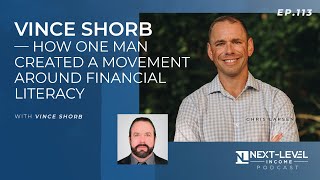
Vince Shorb founded the National Financial Educators Council in 2006 to teach money skills across all ages, starting as young as three or four. He covers practical parenting tactics like chores and expense-sharing, why college ROI matters, and how state mandates are pushing financial education into schools.
Today's show is sponsored by Money Insights and their investment optimizer strategy. In my book, I share how I use the same strategy starting over a decade ago to invest my money in two places at one time. This strategy has been used by the wealthiest for generations for estate planning, minimizing taxes, preserving wealth, and increasing stability for their investments. Now you can do the same thing. In addition, you can build a plan to build an emergency fund, pay for college, fund a business plan for retirement, and ultimately optimize your total financial picture. To find out more information, check us out at the banking link@nextlevelincome.com on today's show, we have Vince Shorb. Vince is one of the country's leading advocates for promoting financial wellness and a thought leader in teaching and scaling financial education programming. After spending 15 years in financial services, working one on one with more than 20,000 people, he founded the National Financial Educators Council. Vince's mission today is to create a world where people are informed to make qualified financial decisions and confidently take effective financial action that best helps them meet their human needs while moving toward fulfilling their personal, family and global community goals.
Welcome to the Next Level Income show where it's our goal to raise your income, investments and life to the Next level with your host, Chris Larson. Get your free copy of his book@nextlevelincome.com book also, if you're an accredited investor, check out the Invest link to learn how to gain access to institutional quality real estate opportunities.
Vince, welcome to the show.
Hey, Chris, thanks for having me.
Oh, man, this is. I told you, I told you before we started recording, when I saw the invite come across for you to be on the show, I was. I would just like. I got tingles because I. Our big mission at Next Level Income is financial literacy, financial education, helping people move to a better place. Whether that's just the first steps of financial literacy or actually becoming financially independent. And it's a little bit of a mouthful, but the National Financial Educators Council, we used your resources at our local nonprofit last year and used all the core structure to teach financial literacy. So thank you very much for what your company does and provides.
Yeah, thank you so much. Great to hear. And now you are an educator on a mass scale. So we are really excited to be here and thanks for accepting our invitation.
Yeah, no, this is. Again, this is fantastic. And hopefully we can continue the partnership going forward. So I have tons of stuff I'd like to talk about today, Vince, and we may have to have you back on. Um, but you. You founded the company many years ago. So I would love to hear kind of what inspired you to do that.
Yeah, you know, I've always been interested in money investing, and real estate was my first passion. And at a young age, I had some success. I bought some real estate at 19, 20 years old, had some small businesses, invested some stocks. I mean, I wasn't well by any means or I had jobs on the side as well. But I felt comfortable with my vision for the future. So I was excited about that. I felt I was, you know, have direction my life. I thought I had a head start. Then I went to college. I made some mistakes. I got into some trouble, you know, with money and take out student loans and car debt. And that cost me a lot. Three, five years, really trying to recover from that period. And more than that, just a lot of time, friends, a lot of, you know, needless discussions and worries about, hey, is my car going to make it home from school today? Right. And that was a painful. But the thing I really miss most is when I was, you know, first having this success, a lot of people asked me about money and hey, I want to buy a house, or hey, I want to invest. How do I prep for that? I love to sit down and work budgets. That was really what I enjoyed. So I reflected on that, decided to get into financial services. Spent about 15 years in a variety of fields there. And after about my fifth year on the sixth year on the mortgage side of things, I really felt putting band aids on people, you know, I'd pay off all their debt, give them a low rate. Monthly payments are, you know, a third of what they were doing before. And then six months later, they would come back and I need another fifty grand, another hundred grand. And it was like, okay. And it was a time in my life when I'm like, I need to do something to make a difference. I felt like I was doing that in financial services, but I just got beat down by, you know, these people just struggling. Right. My mom mentioned trip up to Montana to visit her. She said, you know, you always talked about, why don't they teach personal finance in schools? And from that point, we founded the National Finance educators council in 2006 and went through a few iterations, but the vision started in 2006 and now we're really focused on building out community, funding wellness programs around the globe.
Yeah. And look, you know, using your company firsthand, it's just, I mean, it's an amazing, it's amazing resource. We'll tell the audience how best to get in contact but, you know, if you have a program, and I'd love to hear kind of who. Who you work with on a greater scale, but it is. It's a wonderful platform. It was very easy for me to help the rest of the group kind of figure out the curriculum. But, you know, what was interesting, Vince, is that we were teaching financial literacy, the financial literacy class, to high school kids. But in the back of the room every week, the parents as well as the people at the nonprofit, they started showing up in bigger and bigger numbers. What groups do you work with? Is it mostly adults? Is it mostly children? Who are your programs kind of tailored for, and who do you see using them the most?
Yeah, initially, we're focused really on that sweet spot, that high school, college, because that's the last chance that somebody has to proactively avoid common mistakes. College debt, credit card debt, setting up the right account, missing a payment on a car loan that throws your credit in whack. For years, yeah, all these things were major. So we look at life stages, and we identified that as the most critical life stage. So that's where we started. We grew from there. Started to grow into adults because most adults have never had it. You probably saw in the back of the class, the parents were there because they wanted to learn. They never had this. And now we're focused on all ages because financial habits form young. Cambridge University points to about age 7, when financial habits form. Brown University did an interesting study of 50,000 kids that point to chore habits or work ethic habits developing by age nine. So very critical, formidable years. And so now we see all ages because we think it's a cycle. You know, those early years, it's more behaviors getting them into habits and systems. The teen years, it's more preparing them for those important stages. Then we get to adulthood. It's all different, right? Some people are struggling. Some people are just keeping their heads above water. Other people are good financially, but they all need lessons at these different life stages.
Yeah, and it is, you know, that's. That's one of the big things, you know, I talk about when I go on. We go on some parenting podcasts, and I have. If you haven't checked out, you're listening. Go to nextlevelincome.com kids we have 5 tips on how to teach your kids to be money pros. And the first one is talk about money. Set up a bank account. You know, I know going through your curriculum, you walk through all those different steps and do that.
What?
You know, so credit cards, college debt, Student debt. What are the biggest mistakes that you see are made out there? And, you know, maybe we can even get into the bigger, the bigger topic, which is, you know, number five, which is on my list, which is teach your children the true value and also the cost of college.
Yeah, I definitely agree with all those. And really it's. I think the base of that is them having a fundamental understanding of, hey, I need to work to earn, to spend, because there's things that cost and I should save for the future, things like college and so forth. So, you know, with, with kids, we're really focused on chores. So getting them in the habit of working so they value and earn money and the parents can pay their kids more because we want the kids to contribute toward household expenses. That part of, you know, if they're young, you know, four or five, it might be, hey, you're paying for the house in the car. As they get old teen years, we're breaking down the budget. So they're paying a piece of everything. That's a fractional piece, but you're paying them more. So they're getting used to that. You know, here, here's what you have to taxes, right? Here's what you have to pay for the house this month. So it's a monthly regular thing where they're going through those different bills with their kid. It's the parents and good for the kid, and then obviously saving for the short term, things that they want now and the long term. This way, every decision they make, instead of a parent going to a store with the kid and the kid wanting some certain toy and them having a fight and so forth, it's like, hey, great, you can have it. Do you have the money? Right. But you said you wanted a bike. Did you want to save for that bike? Or is this stuffed animal more important? Right. So we're getting them to really start to develop the basics of opportunity cost. The basics of, hey, I work for this. I spent hours out there raking leaves and taking out the trash. Am I going to blow it on some teddy bear I don't like? So these. It's a muscle, right? Personal finance is building a muscle and what we see. And then circling back to your question, I think some of the biggest mistakes that people make are largely behavioral and living above one's means. Things like college and credit card debt, all those things are part of that bigger issue that you mentioned.
I got it. Yeah. So I see the tie in. So if children don't develop these good habits early, you don't teach Them these habits. Then when they get to a big decision, like buying a car, getting a credit card. I remember my Buddy had like 5 or 10 or $15,000 of credit card debt in college. I was like, what?
How did you do that?
Just like going to the Gap and stuff. I was like, what the hell? And he's like, I'll get a job and pay it off. But it blew my mind because I paid cash for everything. I had a credit card, but I pay it off. So what. Okay, so what's the. Let's. Let's kind of start here. What's the. What's kind of the prime age to start teaching kids? You said four or five is around.
Yeah, about, about three. We can start kind of with the basics of chores. You know, it's still kind of conceptual, right. They're not getting it, but it's part of forming that habit, that muscle and that work ethic. I think, you know, work ethic we can develop younger. And I think really the backbone of personal finance is. Is income. Right. And developing that, that motor and ref. So you're a producer at EARN and able to contribute to not only yourself, your family and your community. If we don't develop that, it's problems. We see this in multi generational families that are receiving public assistance. Right. There's. They're not developing that. And it's a problem over and over. So it's a critical thing that we need to develop. Once we have some money coming in now, we can manage it.
Right.
And so. But I think that work ethic is critical. And some people separate financial literacy from. But I think it's all one and the same because, hey, we need money to manage money to invest money to grow and be secure. And the topic you talk about a lot is, hey, how do I achieve financial freedom? And that lifestyle you mentioned a lot of your podcasts, that's all a critical element of this foundation.
Yeah. And you got to. But you got to get to that point where you're making enough that you can keep some and do that. So a lot of people, they say, hey, go get a good job, go to college, get a good job so you can make enough money to have a nice lifestyle. And I think a lot of parents, Vince, they hear that, they've been told that. And I push back a lot of times when I hear that from people because there's a lot of different things now I'm an engineer and one of my favorite websites when I was in College was retireearly.com. i talk about it in my book and it was run by an engineer. So I just grabbed it. I was like, I was gravitated towards it. I was like, this makes a lot of sense to me. But I only paid $25,000 for my entire college education, engineering and MBA today. Yeah, today you're looking at twice that for one year in a lot of cases. So what can we do? Two things. If you're a parent, we're speaking to parents today say hey, how can we educate our children how to make the right choice on college? You know, one, that and then if we have college age kids listening, you can say the same thing to them. What are some good tips that you can give to parents and college age kids as they try to decide should I go to college and what type of education should I get and pay for?
Yeah, yeah. College cost is scary and I'll get into that tip. And you know, with the outpacing inflation for the last 50 years.
7% annualized.
Yes, yeah, exactly. 7, 8% just depending on the year. And it's just very scary for the prospects of an education really. You can do online pretty cheap or free. Now you're missing out the experience. Right. But is that experience worth 100 grand? 200 grand in some cases. And with a like yours, I'm guessing to 250 today for 250,000 for a similar type degree today. And I'm just estimating there. But you know, I think it's important, number one, they understand return on investment, right?
Yes, yes.
And if you do not have a career plan already, I remember myself 70, 18, 19. There's no way I should have been choosing anything for my future. I'd like the investing stuff, but I was like, okay, maybe I'll do this, maybe I'll do that. I was all over the place. Right. So you know, it's at an age where our vision is framed and leading up into this in school, children never receive any career planning. A lot of parents don't take those field trips or help the kid dive into those explorations. So I know you're into, into biking, you know, and if your child is, and I think you mentioned he is and you know he can go to you bring him there and point out the different types of jobs people have. Hey, you know, I want to be a pro rider, that's great. But there's also a pit manager, there's also a product sales.
You better own the, you better own the cycling company because you're not going to make any money, son. So.
But you know so it's, it's a lot of those different areas of career planning, return on investment, and just consider that. And there's a lot of options today. You know, there's community colleges, there's online education. I mean, programs like yours. I mean, you can get some information if you dedicate time per day. The beauty of the world today is we have access to information. If I want to learn about next income strategies, I know where to go. Right. If I want to learn about anything, I just put a. We were talking about home repairs. I put a deck back on. I didn't know how to do it. Well, I talked to my dad, you know, and I watched some YouTube videos and my dad said, hey, here's what you do. And he was there. Guide me on FaceTime. So a lot of ways to learn. So I would say return on investment. Get a sense on what you want to do before you invest a lot of time, money into a college.
Degree.
Degree. And another point I'd really add here is it's so critical that we are training our high school counselors to properly counsel. Mine told me, look at three and four colleges, see what one you like most and go there. Right. Horrible advice. It's, hey, what, what are you going to do? What does that pay? What is the college? You're thinking about cost and when's the return you're going to receive for.
So, yeah. And you know what would be great is if you saw that counselor pull out one of these, a financial calculator, and help you figure out the return on investment. Because I was doing some calculations in preparation for an interview about a year ago, and something like the majority of college degrees don't give a return that would outpace if you invested that money instead. I think the calculation I did, it was the average person makes like $1.1 million more over their career, whereas if you invested that money at like 8%, you get like $1.5 million and you wouldn't even have to go to school. You just go the other benefit. Yeah. So it's like, hey, if you spent five years educating yourself for four years on how to invest and just did okay, then it's pretty wild. So, yeah. So then you mentioned something else that we don't do a great job of teaching our children. And that is you called it being a producer, being an entrepreneur. And I really, I mean, you look at the amount of jobs that small businesses create, the problems that small businesses solve, I guess talk a little bit about where entrepreneurship fits in this whole scope of things.
Yeah, I think it's a vital element, especially today with so many people doing these side hustles and things. I think that's entrepreneurial. Right. And all these things are. Anytime you're earning money outside of a career where you're kind of hustling and finding those opportunities to pay for your bills and your families and so forth, I think that's entrepreneurial. One of the things that, that we promote is FLE subjects. Financial literacy, entrepreneurship and career planning. We think that was in schools and replacing some things that nobody uses. Right. You as an engineer, you may use a lot more of the things than I did learn in high school. But, you know, for me, you know, I'd say 50% of my high school career completely wasted on things that don't. Didn't benefit me. Whereas financial literacy, entrepreneurship, career Planning will benefit 100% of attendees because we all need to make money, we all need to feel some sense of security just so our basic human needs are met and help us drive toward those life visions that have set for ourselves. So entrepreneurship is a critical thing, especially today for these youth to understand. But on the hind side, I think the beauty of people seeing like the shark tanks and these other shows, I think it's inspired outside the school system, outside parenting. I think we're seeing a lot more of that, which I think is great. But I think it always works better when you have support of other key stakeholders, parents and schools.
Yeah, no, I agree. And I mean, maybe you can speak a little bit. Like, I remember I posted the article when Florida just passed the bill or the law to mandate financial literacy in schools. And I was like, this is awesome. And I got all these replies. People were all excited about that. Why do some states teach that Vince and others don't?
Yeah, you know, it's, I think it's just, it's interesting all these states that have passed it. It's a good first step.
Yeah.
But I'm not on the excited side yet. So for instance, New York, Florida, they're unfunded men, so they're not funded. It's like, go teach. And we're not going to test, we're not going to train the teachers, we're not going to provide the materials. So you guys figure it out. So like in New York, they kind of use like, you know, low quality, like visa football. Right. Very low quality education. Just trivia. Right. It's not really teaching the way we should be. So I think it's critical when we are pushing in these states, which I think is a Great first step. It's in there now. Let's go. Let's make sure the teachers are trained so they're confident. So we don't have a coach teaching personal finance. It's like, what do I do? Make sure it's tested. Make sure it's a standalone class. Because when it's not tested and integrated, teachers don't have to really do it. And make sure we're supporting them with funding so they can actually have a successful program and monitoring the student progress. I think that's where long term change would come. If we're able to progress and showing these results over time, I think that's critical. But yeah, I was excited to see Florida as well and, and I hope more states do follow.
Yeah. Just what is, what is Texas doing?
They have mandated financial education. Again, I'm not the only one I think is, I would rate on a positive side is Utah. They have standalone classes. It's done multiple years. So, you know, a lot of, you know, states. I think Florida's 10 to 20 hours of education.
Yeah.
You know, I took two years of Spanish and no office spaniel. Bien. I get, I get away, you know. Right. But, but it's still like I'm limited. Right. I can get a bus and I can say I don't speak, forgive me. But that's about, that's about kind of the extent of it. So you know that, that's two years of Spanish for me. You know, financial literacy, it's because it's largely behavioral and we have influencers that are powerful advertisers spending billions of dollars a year targeting kids. We have the influence like YouTube influencers, these kid unboxing videos where they're opening up new toys. That's one of the biggest YouTube things. So there's. And then we have Kardashians and all that stuff that are showing this lifestyle.
Hey, she's a billionaire now, so.
Yeah, I mean, it's amazing. I love, just because I respect him before that, you know, the influence on kids and I wish they would talk more about, hey, it's just not about throwing yourself on Instagram. You're going to make all this money.
Yeah.
There's a lot of work that went into the back and I love for them to tackle that side. So it's, it's a positive influence, you know, for these kids. So we're combating that teaching personal finance. So more time and rigor is needed.
Yeah, no, I think that's a great point. And man, you just mentioned, you mentioned a couple states There. So, you know, Florida, Texas, Utah, we've seen a big exodus from states that, you know, their finances aren't. Aren't in great order. You yourself moved from California to Texas. Maybe not because of the finances, but I don't know if that. That played in. I feel like if we.
Yeah, big time. I mean, that California taxes people to death. Yeah. Texas has no state tax. Yeah.
What is the highest tax bracket is 14% state in California?
14. I think it's 14.9. I might be off, let's say 13 to 14 to 15 to be careful. But, yeah, it's ridiculous. And gas prices highest in the nation because it's all taxed. Right. They're taxing gas price and there's a proposal to write checks out to offset the.
I saw that. Yeah. They're going to give people money. And I'm like, for a guy that's got a master's degree in finance, I read this stuff and I just have to close the page or just stop watching because you say, wait a minute, if inflation is high, if demand is high and you give people money to buy more of it, demand is going to go higher and prices are going to go higher, and you just want to. You just want to punch yourself in the face when you see this stuff. So hopefully, if we can. If we can get more of this financial literacy at a basic level, hopefully it can benefit all the way up to the politicians. Although I don't know if they're making these decisions based on finances or something else. Vince, to be fair.
Yeah, yeah, I'm certain. Probably it's not. It's not our finances, let's put it that way.
There you go. There we go. All right. So, you know, we become financially literate, we solve some of these issues, we look at our emotional responses to money, and we're in a good place. That's out there. Right. At what point do you start talking about investing with your education, with children, with these sorts of things?
Yeah. What we encourage is, hey, find the thing you're interested in. Hey, here's what investing is. Find what it is and learn about it. Right. There's some foundation work we need to do to make sure you're prepped for that. Find those people that have the podcast that have the books like you, and get out there and find those people you like. I know for me, early on it was Rich Dad, Poor Dad, Kiyosaki. You know, that was one of the cashflow quadrant. You know, that was one of my first.
So good.
I tore through that Thing, you know, highlighted that whole thing, you know, and that was, you know, these types of things. So find that mentor, find that person. Today you have so many people that can, you know, you can look for that really relate to you. I didn't really relate to a ton of the stories, but I just really enjoyed the book, so. But there's people out there you can find. So tell them, hey, adopt a long term plan of education. You should know as much as the people guiding you, right. So you can have intelligent conversations. So you, when you do make a decision, you're not laying awake at night thinking, should I have done that? Right. They just told me I don't know. And then get your basics down right. And this kind of went off. I didn't, you know, I wasn't focused on credit, I wasn't focused on keep my budget tight. You know, I didn't have that long term strategy. It was like, hey, what, what's, you know, fastest create that overall plan. Get that foundation, get that emergency money set aside, that risk capital. Now we're in position to execute just like any athlete, you know, you're going to train, you're going to eat, you're going to die, you're going to work out. And now's game day, right. When we make that investment, it's game time. And you have to be prepared if it goes against you quickly and just have that strategy planned out.
Yeah, I think that's great. And I mean, one of the big things, you know, we talk about entrepreneurship, you know, if you save, if you have money to invest, to put at risk, you can start your own company, which, you know, if we talk about really wealthy people, number one, they started their own companies. Number two, my favorite real estate. But you know, it's forming businesses first and the big piece, you know, and this drives me, it's like once you have the ability and you have the knowledge to do all these things. Vince, giving back and how does giving back fit into financial literacy in your mind?
Yeah, you know, it was really founded on the principle. I just want to help people avoid what I went through.
Right.
Needless. I thought it was, didn't need to make, you know, I just did dumb things. At hindsight, I'm like, why did I do that? But I just didn't have that knowledge. You know, I focus on the real investing. I love that. I read a ton of books on that. I knew that. But I didn't have that other foundation piece. So really it's just promoting, you know, the social impact piece is kind of the heart of what we do. We just became a certified B corporation, which means we meet.
Congratulations. Yeah, thank you.
Thank you. Yeah, so it's like, focus on. You're always a social impact company for the world and the population trying to promote education, but also now, you know, relates to how we treat our workers and environment. Even though we don't do much in the environment, but, you know, how we look at the whole agenda. So I think, you know, the mission of us is, hey, we help people, you know, avoid or get out of. Out of problems. And I think, you know, with businesses today, those corporate social responsibility programs, that's a big thing that people are promoting. And I think it's a great thing when you can find a cause that aligns with your brand. You know, we see people that, you know, it's a business. They'll have a different flag on their. On their website every day. Find a cause that aligns with your brand. You know, how's that going to fit a sporting goods store in downtown Oklahoma? You know, are you going to be saving cheetah cubs in, you know, Pakistan there? But let's find something locally. Maybe you sponsor a sports team, maybe you get involved on the community level. Find something that aligns with your business. Now, if you still want to support baby cubs in Pakistan, you can, but that's not part of your business. You do that on the side. Nobody else needs to know about that. So finding that cause aligns with your business. And I think there's great opportunities. You know, we've been able to partner with a of lot. A lot of different nonprofits and groups that have been able to help us increase reach and frequency of our messaging. So, yeah, I'm glad you mentioned social impact. I think it's a critical, critical thing. And I know you're active with a lot of different charities, as we discussed before, as well.
Yeah. And I think it's full circle. Right. It's like, you know, at some point you realize, hey, what, what impact, you know, do I have? And I think if you get to the point where you're fortunate enough to have a certain level of financial independence, it's. It's your duty to look at how to. How to give back and do that. So I know there's a lot of people listening, Vincent. They probably fall into a couple of different camps, but they're saying, hey, I want, I want to know how I can utilize the resources that your company provides, either personally or with an organization that they're with. And then other people might say, hey, Is there a way for me to get involved? So who, who do you work with? How do we get in touch with you and how do we have, how do we access your resources either on a personal level or say, you know, we want to, we want to get a local organization or school or something involved.
Yeah, definitely. So Visit financial educators counsel.org or connect.
Me in the links down here below.
Thank you, I appreciate that. Or connect with me personally. Vince Shorb on LinkedIn. Happy to help you. And really we're focused on helping anybody that's really passionate about brain bringing financial wellness to their communities. Whether you're financial services, entrepreneur, faith based organization, nonprofit, school, college, we work with anybody. And the cool thing is everybody has all these different kind of plan. It's backed by one shared mission and vision. And our goal is to help them scale and grow local financial wellness programs so people in the community have access to, to quality training, trainers and materials. And our focus, we're really a B2B organization. So we serve those people that want to serve others. And that's our vision, that's how we scale. Of course, we have a lot of resources for families that want to teach your kids. And if you want to learn as well, there's some resources there. But we really mainly lead that up to our certified educators and coaches and local communities.
Yeah, well, again, I fully endorse what you guys are doing. I've used it personally. Our local nonprofit, Open Doors of Asheville, has used it to great effect. It's really well set up. So the last question I want to ask you, Vince, this came up a couple times here and I've read some different books. At the core of a lot of money issues, as you mentioned, are emotions. There's a lot of emotions. People, whether it's how they felt, you know, with their parents, what they learned from their parents, a bad experience they had. One of my partners, Danny, wrote some kid books and he talks about his emotional experience of losing his wallet when he was younger. For people that are saying, hey, like, man, I'm feeling some of this. Are there any good books out there that deal with emotions and money in your opinion?
You know, I'd say I think there's a lot of good books, a lot of good podcasts, a lot of good YouTube videos, and what, what I always tell people is explore. You know, it's things that I'm doing resonate with me. You know, I'm reading a lot of like business books, growth books, scaling books, and campaign books. That's kind of my focus but there's a lot of people. And you know, most of your podcasts are dealing with the psychology piece as well. The. The emotion piece that seemed to be a reoccurring theme, what I heard from your podcast. So finding those people and, and sometimes too, it comes down to reflection, right? Thinking back, and if you find yourself making a mistake over and over consistently, overspending or whatever it may be, think, hey, why am I doing this? When did this start? How was I as a kid? And kind of it back. And sometimes when we shine light on a situation, it's like, oh, I kind of get a sense of why I'm doing this. And it's easier to address from the.
Yeah, no, I think it's very personal. It's a lot like a relate. It's a relationship, you know, and everybody can't give a relationship advice, in my opinion, because everybody's different. You know, it's like I always tell people, and I gotta. I gotta. I gotta tone my language down a little bit, but I say the secret to happiness in a relationship is finding somebody that's just as messed up as you are. But I don't say messed up. So. And then, then you have a good fit in there. So money's a lot like that. You got to get through a bit of that mess so you can have a great relationship with money and ultimately use it as the vehicle it is, which is to help serve you and serve the world in a better way. And Vince, you and your company, the National Financial Educators Council, is doing just that. Thank you so much for sharing your story and everything you do with our audience today.
Hey, Chris, thanks for having me. Appreciate all your efforts too, in getting this out there and all the support, support in promoting financial wellness. So thank you.
Absolutely. Absolutely. My pleasure. Hey, Chris, here again. I hope you found this episode valuable. Now, I have one more thing to gift you. We have a page for my coaching clients where you can get a free copy of my book as well as much more from previous guests on the show. Just check out nextlevelincome.com coaching to get a free copy of my book, audiobook and much more. I'll send you a copy of my book and cover all the shipping costs as a family. You for listening to the podcast. Also, please, like share and take just 90 seconds to give us a rating on Apple podcasts.










