How to Build WEALTH As Your Build Your Career or Business with Chase Insogna
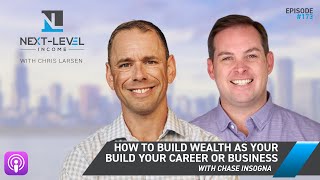
CPA Chase Insogna explains how business owners build wealth alongside growth. He contrasts reactive accounting with proactive tax strategy, recommends the Profit First approach using budget buckets and retirement accounts, and details how to maximize Chase Ultimate Rewards by transferring points to airline and hotel partners like British Airways and Southwest.
Now you're getting 50% or more points per dollar and transferring Southwest just when you need it. And then they stay in the Chase account so they're more flexible as you need them throughout the years with hotels or airlines, it's just not all Southwest anymore. So just one thing to remember in the in the points game.
Welcome to the Next Level Income show where it's our goal to take your income, your investments and your life to the next level. I'm your host, Chris Larson. If you haven't yet, get a copy of our book for free at our website, nextlevelincome.com. that's www.nextlevelincome.com. just click on the book link and I'll even send you a copy if you put your address in. On today's show, we have Chase and Sonya. Chase is the founder of Insania cpa, a highly successful Austin, Texas based CPA accounting firm. What makes Chase and Insania CPA different from other accounting firms, investment advisors is that he works with business owners and to build their wealth while they're building their businesses. We're going to talk about what that exactly means today. For instance, the profit first formula. We're also going to talk about some fun stuff like how to maximize the points that you get on your credit cards to buy fun stuff or to take travel, to take trips and travel for little to no money. Chase, welcome to the show.
Hey, thanks for having me.
Absolutely, man. It's my pleasure. I'm excited to, to have this conversation today. And for those of you watching on video, Chase is billing me. He's not billing you, so don't worry about that. But no. So Chase, we're going to, we're going to talk about a couple really cool things today. One of your favorites and my favorites is like how do you, how do you leverage some of your business expenses and some of your systems to, to get benefits that you know, we, we don't usually have as business owners. But before we kind of get into your different conversations today, if you would please share a little bit more about your background with the audience.
Yeah, been doing accounting and taxes for 25 years now. I've had my firm since 2011. We are a team of 20 people currently focus on half accounting, half tax, but really using the transactional services to drive advisory, you know, we're doing weekly check ins with larger clients, forecasting, budgeting and then you know, using that to leverage for taxes and tax planning as well as like trying to advise to help build wealth for clients. If they listen to us. And, and you know, just me personally, you know, I, I just love like entrepreneurship. I love helping. I just love hearing stories about businesses. And you know, we're, all of my team here is really just facilitating to help people is what our background is. So that's, that's a little about us.
Yeah, so one of the things that we talk about a lot, especially with our investors, we talk about on the show how to make, keep and grow your money. And the pillars of keeping your money involves protections, proper legal entities, but also tax strategy. And a lot of people say, well, Chris, I have an accountant, they do my taxes for me. What's the tax strategist? So if you don't mind sharing, what's the difference between a quote unquote accountant and more of an advisory service or a tax strategy service like you guys do?
Yeah, I mean, historically, you know, if you're just getting taxes done, it's always looking in the past and you know, you submit your documents in March, February, March, you know, and get them done. And then, you know, they're like, oh, you should do this last year. So, you know, we, we keep track for business owners, we're keeping track of the data monthly so that we can be on track for December 31st to do that tax plan, whether it's, you know, do you need to make an S corp election or if you're an S corp, your reasonable salary, not overpaying yourself or wasting payroll taxes from deductions, making sure they're classified properly, especially like E Comm. You know, a lot of people think you can just buy inventory and it's expense, that's not the case. And, and then, you know, for savings too. So, you know, depending on your cash flow, I mean, obviously it's case by case basis, but after the conversation, like kind of, you know, do you want to participate in a 401k if you're an S corp that needs to run through payroll, so. Or you know, maximizing IRAs depending on your income or you know, doing a backdoor Roth, something along those lines. So defined benefit plan, et cetera. So just kind of looking at all of those like basic, consider basic tax Planning strategies before December 31st is what we're trying to achieve here, just on a first level. And then there, you know, we get into really the kind of nuts and bolts of like deductions and you know, running it through your business or making sure we're capturing all of those things within the financial statement or filing. When we're filing your taxes too.
Yeah, no, I think, you know, it's really challenging for, you know, somebody that's a W2 employee. You know, they, they pay their taxes, they get their W2, and at the end of the year they settle everything up. And, you know, it's is. There's not a ton of stuff that a W2 employee can do. Who do you usually work with? Do you work with. Do you work with your typical W2 employees? Do you focus solely on business owners? And, you know, kind of a corollary to that question is who should look for a tax strategist? Like, when does it start to make sense?
We do some 1040 work. I mean, mostly, you know, if you got like some stock options or, you know, you've got something a little more complicated, foreign reporting or something. But if you just. Normally we're just honest and if you just have a W2 and a mortgage, you can just use TurboTax. As to your point, there's really nothing you can do as far as, like a strategy. You know, it's. We really mainly focus on Butters business owners, whether it's one owner, consultants, you know, all the way to like about 20, 30 employees. You know, anywhere from like, you know, 100,000 plus to usually like 20, 30 million is kind of our range. So it really just depends on what you're selling, you know, doing. But for us, we, you know, we don't do construction accounting, we don't do restaurants. Generally we'll do some taxes for them, but the month of things different. So anything outside of that is pretty agnostic for us as far as, like, industry is concerned. And the accounting and taxes for us are the same. It doesn't matter what business you're in outside of those two. It's all the same planning for us. It's all the same accounting.
Now that makes sense. And I think, you know, we can kind of talk a little bit about what, what you could do, you know, going forward if you are employee and some of the things that you can do to maximize that. But the big topic I want to talk about is really how to build your wealth while you build your business. I think the financial planning system is broken in a lot of ways, and we've talked about this multiple times on the podcast. But most people, they go to their financial advisor and they say, okay, let's figure this out. And their financial advisor says, oh, just contribute to your 401k or whatever plan you have an option and you know, if, if things work out and you know, keep your fingers crossed because we don't know what the market's going to do, but maybe you can retire by the time you're 60. And for somebody that's 30 years old, thinking, well geez, I've been working five years, I gotta wait another 30 years to retire. Like your typical business owner doesn't have that mentality, right? They're a hard charger. They want to, they want to continue to, to be productive. They may want to sell their business. We just had an individual on the podcast and they talked about, you know, how to, how to start, you know, take like strategies to take equity out of their business. When you say build wealth while building your business, what are some of the things that, that you're referring to? Chase?
Yeah, good question. A couple things there. Just on a basic level, you know, most business owners are just continually reinvesting in the business or you know, trying to build something and they don't really pay attention to themselves. Kind of in your profit first model to you know, at least an IRA, I mean $500, $5,000, you know, whatever it is, just contribute something annually is what we're trying to promote here. And then from there, you know, if you, if you built the business where it's cash flow sustainable and you have the money to do it, then you know, at least putting it in buckets of 4K, I mean it's only 22,000 this year. Like you're making a good amount of money. Like that's not that much. Max out an ira, you know, and just do those basic things. And then beyond that, depending on cash flow, maybe getting like defined benefit plan or you know, you're looking at rental property. But my philosophy has always been, you know, spread out the risk spectrum, so putting in different little buckets, obviously you got short term savings. I mean that's the first thing we're promoting. And if you don't have that, start there but you know, and then from there those kind of retirement accounts and then real estate. Like I have 15 rentals myself, you know, but I'm maxing out 401k. And so I have all these different buckets of kind of the retirement spectrum. And, and so that's, that's what at the basic we're trying to promote for business owners is at the end of the day, save enough so, or save along the way as your business is growing so you can not have to worry about selling your business. I think the statistic was it is 85% of all small businesses never sell. And, and so you know, when you, you get to that End point or the end of that rope, you know, you've all that blood, sweat and tears just like myself that I've put into it, you know, you think it's worth a lot more than what the market's willing to pay for it? Mostly. You know, sometimes you get lucky, sometimes you don't. At the end of that rope, you know, my, my philosophy and how I manage my own money is I, I don't, I don't want to be beholden to the end of that rope. And, and that's going to be my retirement. So saving along the way, I'm building, you know, that retirement spectrum of buckets of money and doing it, you know, conservatively because, you know, I'm cpa, so you have to be conservative. And, and you know, so at the end of the day, if I sell my business, I'm just going to consider it a bonus. I don't need to open, pray that somebody's going to give me a check and I can walk. You know, obviously I'm in a service based business, so it's a lot different than I'm building a software. You know, I've got a brand or something, you know, it's a little bit different. So that's how, that's how I live my life. That's how I, you know, building my wealth in retirement, growing my business. And that's what we communicate to our clients in the same way of thinking about that way, you know, and doing it as you're growing, whether it's, you know, paying yourself, paying your spouse, paying your kids, like let's put something away annually just so we're on track for some kind of, you know, goal at the end of the day in retirement.
I think that's great advice. I've watched multiple friends, I remember back 2001 after, you know, the towers came down. We just, just passed 911 here and not, not too long ago as we record this, and one of my friends ran a very successful private charter flight business and that literally disappeared overnight. And then I have another friend and you know, as we went through Covid, you know, he was, he did small business lending and when all the small businesses shut down, you know, his, his, his business literally just disappeared. So, you know, even industries that seem very sustainable or very, you know, recession resistant, when we can't predict the future, you know, when you have all your eggs in one basket, you say, hey, I'll just sell this one day. And that's, you know, that's my ultimate retirement. That, that can be very risky. You know, although most people, that is probably their number one way to invest is to reinvest in the business for growth. But we were talking about before the show the profit first model, which, which is something that I've been doing kind of in my personal life and we talk about, I've talked about it multiple times, but basically, you know, pay yourself first, invest first, and then spend the rest. You know, it's funny, we're in this. You know, most people hate budgets. Maybe you love budgets because you're an accountant, Chase, but most people, they just don't like budgets. And it's like, well, if you don't like a budget, then, then hack the system. So I say, well, hey, set your savings goal first. And once you hit that savings goal, then whatever's left at the end of the month, you get to spend it, you know, and maybe you don't spend at all. Can you share a little bit more about kind of what, what that philosophy is, like what profit first is and, or your own version of that?
Yeah, sure. You know, I think, I think the people perceive like a budget as like this thing that they got to follow every month. And, you know, it's just like, I can only spend X on food and clothing, but I mean, yeah, I put a budget together myself, the business and personal. But really what that budget is is basically figuring out how much I can contribute into the different buckets of money.
Yeah.
Whether it's savings accounts, whether it's retirement, whether it's, you know, vacation or whatever. I know annually when I do it, you know, in December, January, I know for the, for the year. What. In general, if, you know, my business and income is stable, what, what. Where that money's going in those buckets. And so I think on a very simplistic level, just have that. Because especially if you're a business owner, it's very hard to just manage your business by looking at your bank account. I mean, you can't. That's not really a judge of like, how you're doing. That's not a judge of, like, where you're going. You can't really plan, you know, and so you got to know, I mean, you gotta really plan out a budget for your business and know, okay, I've got these costs coming. You know, there's obviously variables month to month and throughout the year, up and down, depending on what you do. And then you've got costs and maybe you want to increase labor. So you plug that in and Q3, Q4, that's going to affect the ending Cash flow. But at the end of the day that budget for me drills down into what is the ending cash that comes into me and then I take that flows down to my personal budget. And so now I know, okay, I've got this bucket of money for savings and this bucket of money for retirement and this bucket of money for growing the business and reinvesting back into it and you know, adding to the organization chart. So you know, I think looking at it that way it not necessarily thinking, oh, I've gotta put you know, $5 in this envelope. Like I don't, I don't really believe in the envelope system but, but kind of the same way because I know mentally like where the money's going to go throughout the year and you know, where like do I need to move things around? Things change, you know, and shift. I can think, okay, well I can take a little from retirement and you know, put it into growing the business because I got this opportunity right now. I mean that I think is, is going to take us to the next level and add value. So those kind of things. That's what a budget is really for. And forecasting it out annually.
Today's show is sponsored by Money Insights and their investment optimizer strategy. In my book I share how I use the same strategy starting over a decade ago to invest my money in two places at one time. This strategy has been used by the wealthiest for generations for estate planning, minimizing taxes, preserving wealth and increasing stability for their investments. Now you can do the same thing. In addition, you can build a plan to build an emergency fund, pay for college fund a business plan for retirement and, and ultimately optimize your total financial picture. To find out more information, check us out at the banking link at next level income dot com. Yeah and look, I will tell, you know, be 100% transparent. I track everything that I spend business wise as well as our family. We review it every month. We make sure that we're quote unquote on budget to make sure that we're, we're not missing different things. But you know, I think from a mental perspective if you can, you know, set aside that money first, that's going to be, you know, for your future income or passive income or those investments. It makes it more fun. It's kind of exciting you know, when you get to spend, you know, spend stuff and enjoy it on the back end and do that. Yeah, my rule, our family rule has always been save 50% and then you know, it's cool like if I got a big bonus and Say I got a $20,000 bonus, put $10,000 aside and maybe I would go buy a new bike, you know, and race bicycles for a lot of years. And you can do it kind of guilt free, which is, which is a lot of fun. Or maybe take a trip. And this is something, this is really cool to hear you talk about this. When we were chatting, you were talking about points. I was like, point. I was like, wait, you're a points expert? Like what is that? I was like, do you mean like credit card points? You said, yeah, one of my favorite things is like we found all these little ways like one of the things we do with our Amazon card because I mean, shoot, we probably spend a mortgage is worth of money at Whole Foods and Amazon every month between our personal household as well as our, we have a couple of short term rentals and you get 5% back on your Amazon card when you go to Whole Foods or Amazon. And we use those points and that's how my wife and I do our Christmas shopping on Amazon every year. So like it's, it's really nice but you're, you're way more experienced on, on the travel side, we were talking about like the Chase trifecta. Let's spend a little time talking about some fun stuff. Like if you're a business owner or even if you just, you know, are high income, you know, earner and you spend money, what are, what are some of the strategies where you can take advantage of these reward systems that are out there so you can save money on some of the stuff that's fun, like travel?
Yeah, it's kind of one of the, you know, quote kind of building wealth tools that I try to advise business owners with and because you know, you're already spending the money so you might as well get the benefit of using the right cards in my opinion. Right. And know, I, I mean I've very fortunate. I mean I could, I could pay cash for all these vacations I take. But you know, I, we were talking on the show before we recorded here and I told you I went to Bali for two weeks. You know, I flew first class business class. I stayed in five star hotels and I probably spent you know, maybe two grand that was just on like food and like spa treatments and you know, that's in place.
That's. Yeah, yeah.
And so you know, we, but that's all points of mind. There's a lot of points and miles, but yeah, they accumulate when you, when you business especially and you're spending every month and, and, and so that's kind of one of the wealth tools that we try to promote. And, and the way to do it is, I mean, obviously I'm a little more sophisticated. I've been doing it like since 2007 or 8. I just kind of figured it out on my own one day. Long story. But yeah, so I've, I've been building from there and you know, I, I have on my credit cards I have like a little printout that tells me like 4x for this or 2x. So I know like what card in my wallet to use when I'm buying stuff. Like, I know that's very CPA of me, you know, but.
Yeah, so what you're referring to is you get, like I was saying, you get 5% cash back at Amazon. So we use that at, at Whole Foods. We, we pre program that on Amazon. But some points, like one of my business cards, it gives you like three or four times the points for hotels or for gas or business expenses. Another one might be, you know, 2x on, on things like that or the base might be 11 times the points. Is that right?
That's correct. Yeah.
Yeah.
So, you know, all different. I mean there's really three main programs, maybe four. I mean I, if you're just starting out, I always recommend the Chase platform because it's one ultimate rewards system and you can transfer points between your personal and business cards in one place. So that's what I usually recommend to start out. But like I have, you know, Chase Inc. Business Unlimited. You're earning one and a half points per dollar for the business you've got, you know, the Chase Sapphire Perfect. Prefer to either 2 or 3x on dining and travel. Yeah. And then there's, you know, Amex. I mean a lot of people use Amex, but you know, the really only use the Platinum card for anything over 5,000 because you get one and a half points per dollar on large charges. Over 5,000. And the gold card, one of them I have for restaurants and Software like Microsoft 365, you get 4x max points per dollar. And then another gold card I have is just for gas and advertising, which is like 2x per dollar. So yeah, it's a little sophisticated over here. But you know, just to start out, to keep it very simplistic, like just look at Chase, look at a personal business. One key rule is never joint cards with your spouse because it's the spouse cannot apply for the same card and get the bonus. So you each should have the same cards and you in order to get the bonus and then spend on those cards individually. But yeah, once you get the balance, you can cancel it.
That's good to hear. I'll put the link in the, in the show notes here for the Chase trifecta that you talked about. Yeah, and I'm kind of, I'm not quite to your level. I'm like, I'm like, oh, I can aspire to this. But yeah, we fly American Airlines a lot, so use that card for some of the benefits. And you know, I'm always, I'm always calculating as we go through the year, so I can always achieve executive Platinum status on that. And the same thing with Marriott. And then as you transfer points back and forth, it's, it's fun because, like, when we go to lacrosse games, for instance, with my boys, we stay for free at the hotels because we have all these points. And, you know, it's always, it's always like I was mentioning, like at Christmas time and these sorts of things. It's cool. You know, which you can actually.
One of the things, yeah. You know, one of the key things to remember and, and how I, how I flew, you know, all those flights for points is that I don't book it through the portal itself. I don't use those points to book through the Chase portal or the hotels. The key is to transfer those points into the program. For example, like, you transfer Chase points into British Airways and you find reward tickets on British Airways. Transfer those points, they're usually immediate. And then, then book it. You're booking at British Airways. That's how you get the maximum value in order to fly for at least amount of points. If you just book it through Chase, they're only giving you one and a half per dollar on a cash value. So that's how you leverage it. But I try to, you know, example is like Southwest people buy Southwest Airlines. And so if you have the Southwest card, it's great. You know, if you can spend enough to get the companion pass for sure. But outside of that, you're better off accumulating points in the Chase ultimate reward system because you're getting 2x, you know, 1 1/2x, whatever it may be. You're getting more than one point per dollar, usually with the right cards. And, and it can accumulate in the Chase open reward. You can use it for cash back. You can use it for buying gift cards, which I don't recommend, but you can do that and you can transfer it to Southwest. So instead of continuing to use the Southwest card at one point per dollar. Now you're getting 50% or more points per dollar and transferring Southwest just when you need it. And then they stay in the Chase account, so they're more flexible as you need them. Throughout the years with hotels or airlines, it's just not all Southwest anymore. So just one thing to remember in the points game.
That's a great point. So I think start with a program like Chase that you and I are so fond of, and then build on it based upon the airlines you fly on, the hotels or whatever you stay at, and then figure out how to maximize the points based on the card for spending. And it turns out to be pretty easy because you go to the gas station or you, you know, a lot, a lot of times you can just put your card in right, and it's memorized for certain things and then transfer between the, the different rewards programs to maximize those points. And it takes a little bit upfront research, but it's like, like you were just saying Chase, it can be, you know, a 50 or 100% or even more difference in the points and ultimately the dollars that you get in those programs, which is pretty cool.
Yeah. A couple sources I recommend, I mean, I, I read them almost every day too, is One Mile at a Time and View from the Wing. Those blogs are generally consolidating the industry and they're, they're good at keeping up with stuff.
I love it.
Well, but you know, back profit first, you know, like I said, I mean, you know, you're already spending the money. You know, just getting cash back is okay. If your goal is to travel and take the family to Disney or, you know, wherever you want to go, then you might. The cash back is not going to go as far. And so that's why I recommend like the Chase portal, because you can do cash back if you want, but you can also do travel. So if plan is to take a family vacation, then let it build up in there for a little while, transfer it to the programs you need, and then leverage that X spending to pay for it virtually for free. I mean, obviously there's a cost to it because you're not getting the cash back, but you're going to get more value out of those points to travel than you are just getting cash back and paying for it with cash.
That's exactly what we do. And yeah, I love that strategy.
I mean, I'll just, like I mentioned on the call, just real quick. Yeah, no, prime example, um, you know, I could pay $30,000 one way from Bali to Houston on Emirates Airlines for Business of first class.
Yeah.
Or I could transfer points to Emirates and, you know, fly that A3 for free with the shower on board, you know, and unlimited caviar. So there's no reason to spend that kind of cash, you know, when I'm already getting the points of charging everything and I can just do it virtually for free with transferring points. So that's just one example.
I love that. So I want you to raise your hand if you're listening and you've, you've flown taking a shower and eating unlimited caviar like Chase has here. And if not, check out what he's talking about. Well, let's, let's wrap up and I'd love, love to hear you share what's your top tip for a few different categories? So if you're, if you're a W2 earner, what's the, what's the number one tax strategy you have as a first step for somebody that's just, just collecting a paycheck and getting a W2 and paying taxes before they have any say in what happens there.
Really just depends on your, you know, your personal goals, obviously. But, you know, if you want to get into real estate, I mean, that's one way to do it. You know, you can also not invest directly in real estate and, you know, earn pretty good returns in the market right now. And real estate investment trust, REITs, you know, making 8 to 12%. You know, you can also.
Do what.
You'Re doing and kind of the commercial programs, you know, and invest in those, those strategies, so multiple different ways. I mean, we are limited, obviously, in how you can save. I mean, you can't, you know, do another 401k outside of your, your job, but you can At Least Do IRAs Annually for your, your spouse. And, you know, that's, that's pretty much limited on the W2.
Yeah. What do you think about. So if I'm a W2 employee, like, for instance, my wife, my wife's an architect and she was working for somebody else and she ended up starting her own business and her own practice and doing that. If somebody's a W2 employee and they have flexibility or, or their partner has flexibility, do you recommend starting, like, a small business if that's something that they're interested in?
Yeah, absolutely. I mean, and that's where, you know, we, we tell people we can add value. If you have a small, if you have a business, you have rental property. We're, we can capture more deduction out of these tax softwares that, you know, are Black and white in the box. You know, we could play in the gray area and max those deductions out so that. Yeah, yeah, you do that. That's great. One thing I like to remind people that normally they don't read is, you know, rental property is cool. Like I mentioned, I have 15 myself. But if you're making income over the IRS threshold, you cannot take those deductions. So a lot of times people think, oh, buy this rental and I'm going to reduce my high income just by having this rental with depreciation. But that's not the case. That that loss accrues until you sell it or your income drops. But as you earn, you know, over the threshold, IRS threshold of income level, I think it's 400 something for married filing jointly right now, you know, you're not going to get that deduction against your income. So that's one thing to be aware of.
Yeah. Unless you're a real estate professional. And that's something that I know. I have friends that are surgeons, very highly compensated, and their spouses go out and they, they manage their real estate portfolio and they're able to, to kind of take advantage of that. Yeah. What about if you're a small business owner and you can't say, call us and work with us, like, what's the number one. Although that might be a great, a great first step. But what's, what's like a really good tip for somebody that is a business owner that is looking to, you know, really, really optimize their tax strategy.
You know, I would just say we always recommend, you know, working with a licensed cpa, you know, because there's recourse there. But business, you know, there's probably deductions you might be missing or not even thinking about. So just on, you know, if you're doing, if you're just doing very basic small business or you just started something, I mean, you keep track of it in a sale. You don't need like a complicated accounting system, but keep track of your expenses. You know, have a dedicated bank account, dedicated credit card, so it's easy to download those transactions come January and categorize them. Yeah. You know, when you get a little bit more transactions and, you know, you're kind of growing a little bit, certainly quick. We use QuickBooks online here and keeping track of that accounting, you know, and then as you're scaling, you know, we keep track to that transactional work monthly in order to help advise for the end of the year and make sure. So maybe, you know, you started out and you're a sole proprietor or you start an llc, but, you know, you're not making that much. But now you're making, you know, 50, 60 pay net profit after expenses. That's kind of our break even. So now we need to talk about an S corp election and that requires setting up payroll. And then if you want to do 401k, you got to run it through the payroll. So, you know, making sure we can't do that in March and say, oh, I want to set up an LLC for last year and save money. You can't do that. So why we're, you know, constantly trying to be on track for December 31st and, and make sure we're meeting those tax goals.
Yeah, no, I love that. And I think, you know, if, if you are a business owner, I think the biggest thing you can do is go and find a tax strategist like Chase, like his group, figure out what can we do going forward? Not, hey, it's March of 2024. Which should we have gone done in 2023? Because at that point you're, you're kind of out of luck at that point. So on that note, Chase, I've been trying to take notes here. Some of the, the one mile at a time view from the wing, the points guy. Chase, trifecta. But what's the best way for the audience to get in touch with you if they want to learn more about what you do?
Yeah, just reach us on our website and sonycpa. It's I n s o g n a cpa.com and just hit us up in the contact page and you know, my team will reach out to you. You got a team of 20 people here, so, you know, you can call. Our office is answering the phone, but happy to have a conversation. You know, happy to see how we can help. You know, if not, we'll refer you to some, you know, refer out. But you know, we're always happy to help people here and see how we can build wealth for you.
Love it. We'll have that, that link in the show notes as well. Chase, it's been great talking to you, geeking out on all these different topics about how you can not only save money, but also take advantage of the money that you're already spending through fun stuff like we were talking about with the point systems. Thanks so much for sharing your story with the audience and bringing some value today.
Thanks for having me, Chris.
Hey, Chris here again. I hope you found this episode valuable. Now I have one more thing to give to you. We have a page for my coaching clients where you can get a free copy of my book as well as much more from previous guests on the show. Just check out nextlevelincome.com coaching to get a free copy of my book, audiobook and much more. I'll send you a copy of my book and cover all the shipping costs as a thank you for listening to the podcast. Also, please like share and take just 90 seconds to give us a rating on Apple Podcasts.










