How to develop your “Rich Brain” with Bronson Hill
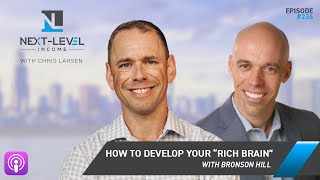
Bronson Hill left medical sales to build wealth through real-estate syndication and has raised $45M. He distilled mindset practices from 2,500 millionaire interviews, including visualization and daily goal-setting, and targets replacing living expenses with $5-6K monthly passive income. His book Rich Brain launches in early 2025.
Questions this video answers
About $45 million.
Approximately 2,500 interviews (average net worth ≈ $2M+).
Fire Yourself — Amazon bestseller.
Within the first half of 2025 (he referenced finishing the manuscript).
About $5–6K per month.
What are my values? What really is important? A lot of people, they get what they want and they have to kind of go back and say, well, hey, well, what, what really what am I create? What was all this for? You know, and so I think it is very spiritual. It is a very spiritual, like what's, is God? What God have a plan for all this? Or what's my purpose? And all those things, you know, so it all, it all ties together, you know.
Yeah. Welcome to the Next Level Income show where it's our goal to take your income, your investments and your life to the next level. I'm your host, Chris Larsen. If you haven't yet, get a copy of our book for free at our website, Next Level Income.com. that's www.nextlevelincome.com. just click on the book link and I'll even send you a copy if you put your address in. On today's show, we welcome Bronson Hill. Bronson are going to talk about the strategies that he's Learned from over 2,500 interviews with multimillionaires and how you can use these skills and lessons that he's learned to your advantage to do the same. We're also going to talk about the two books he's written and his new book, Rich Brain, which is about to come out. Join us for a fun conversation today with Bronson Hill. Bronson, welcome to the show.
Hey, Chris, excited to be here. Love talking real estate and next level everything in your life.
Absolutely, man. We're going to talk about all things money, but really how to take your mindset, your wealth to the next level. But I know you and I share some commonalities in our history here. I'd love for you to share with the audience a little bit more about your background as well.
Yeah. So like you, I was medical sales for 10 years. I did it and I had enough after 10 years, I said I wanted to instead of working for somebody else and for them, I thought, man, I want to create more time freedom for myself. And so even though I was making a good income, over 200,000 a year working 30 hours a week, I didn't get have control of my time. I couldn't take the vacations that I wanted to. And so not just that, but to be able to create space and time and memories with family. And so I started to learn about real estate, discovered this thing called syndication, you know, was able to get started. And I realized there's some transferable skills of being able to be in sales. And also I Didn't realize raising capital is a sales role. So now about five years later, raised about $45 million. Real estate, different businesses. We really do, you know, cash flow appreciation or tax benefits in different sorts of assets.
Yeah, no, I love it. And yeah, I think, you know, having that background like we do in, in med device, but really, you know, being, being a high paid professional, that's, you know, very technical. It's very exciting. You know, I don't, I don't know about you, but I was, I was like so thrilled to get the opportunity. And I work my tail off, you know, over the course of like five years. And finally I was like, I'm, I'm making great money. And I used to tell the reps I trained Bronson, I say, you know, this is the, the one of the only careers where as soon as you make it, your next question that you say is, how long do I have to do this? Like, when can I get out of this? Because it feels like, you know, you're on this just, you know, true rat race where, you know, every day you get up and it's like, go, go, go, go, go. And you do well, but man, it feels like you're just kind of like a little piece of your soul gets chipped away every day.
You know, it's funny, I had a, about two. It was, it scared me to death to leave a job. Like, my family's in education. Everybody's like, why would you leave your great job? And it really does become the golden handcuffs where you just can't leave. You get in a lifestyle and you, whatever. And I remember it was about two months after I left. I had some entrepreneur friends that I got in touch with and they were just like, like almost without exception, they're like, you should leave your job pretty much as soon as possible. And they're like, if it doesn't work, you could always go back. And it was like in my mind, I just didn't say, oh, I could always go back. But I was sitting right at this desk here and what was going, I was doing some work for real estate and things I was doing. I was no longer in medical sales. And what came to mind was this imagining a call from my, my manager saying, oh, how many more of these are you going to sell this month? And what came out of my mouth was, thank God I'm not doing that job anymore, right? So like, it's just amazing. And then now like this year, you know, recording this late 2024, I've recorded, I've, I've traveled six times internationally this year, went to Nepal and India. I just got back from Portugal a week ago. And so, dude, just creating these adventures and experiences and also writing music and books and so, like, being able to have that space and time. And it's unfortunate that most people are stuck in jobs that they're not engaged with. It's, it's, it's. The money's good, it's easy, but it's not. There's no. You're not learning in the same way. You don't have the flexibility. And so what I, you know, I think it's what you're trying to create, too. Is.
Is.
Is it possible to work less and make more money passively? And like Warren Buffett says, money while you sleep. Right. That's what I think we all want.
Absolutely. So, yeah, let's. Let's dive into that a little bit because I was just having a conversation with a friend. He's actually a parent of one of my son's lacrosse teammates, and he's an asset manager in the real estate space. He was with kind of a startup, and they came to him a couple months ago and said, hey, we're a consulting company. Came in, said, hey, we're basically doing away with your role. We're going to restructure and try to save money through this merger. And he said, you know, I feel. I feel kind of lucky that I'm getting this opportunity to kind of step back and look at my life. And, you know, for me, Bronson, I'm. I'm. I'm curious about, like, kind of when you came to this realization. I. I always wanted that freedom, but I always liked that excitement, you know, of, you know, going to work. It's very challenging roles, right? And it's really cool, you know, you get to work with literal geniuses, right? These super intelligent, you know, super skilled individuals, these surgeons. But, man, when, you know, you're racing back from the hospital with the balloons in the back of your car to make it to your son's, you know, fifth birthday, you know, because, you know, you're the last one there, or you can't be there for Mother's Day, like I, like I had with my wife and, you know, these moments I said, okay, like, I gotta. I gotta find a way. Unfortunately, I started buying real estate early, you know, and, you know, my moment, I was. We were. We were doing syndication. We had already syndicated some deals. And my son and I were flying back, actually, from Salt Lake City. And he looked at me. He's like, man, dad, I wish we could do more of this. And I was like, yeah. He's like, why, why, why, why am I not doing more of this? Yeah. When did that kind of moment hit you? Or when did you come up with the plan to, to really be able to exit, you know, that. Those golden handcuffs, as you were saying?
Yeah. You know, there was a decision that was made. I had started doing some syndication. I wanted to get into really managing, you know, time and having more creative opportunities. I want to be an entrepreneur. Wanted to do it. Of course, entrepreneurship is a lot up and downs. There's, there's challenges with it. It's great. Of course, you know, there's just things that come up. But I think there was a decision that I made that I, you know, I started saying, what is the life I want to live? And I actually went to an event that was kind of a goals event, and it was like, well, within three years, I want to be out of this job and I want to have. Replace my being expenses with passive income, which I think is the first level of, of financial freedom. Right. That's the base, which is if you cover that, you're gonna demand. You don't necessarily have to replace your income, but you give you your living expenses, you're in a good spot. So it was only like, you know, for me, 5 or 6k a month. It wasn't that lofty. I can do that. I can figure that out. And it was.
It.
When I was able to do it, I was like, oh, I feel like I'm free. And just something changed. You know, for me, I think it's, it's, you know, Tony Robbins. I'm a big personal development guy. And, you know, you keep, uh. And a lot of people I talk to do stuff like you, what you and I do, it's just keeping the goal in front of you continually, you know, reading it every day, whatever. I read my goals every morning and I go through. And I don't always hit all my goals, but I, I make progress on almost all of them. So keeping the goal in front of you and then continually changing your approach, you get there. So it was like, oh, I tried that. I tried. Single family, didn't really work. Right. It wasn't really getting me where I wanted to go. It would have taken me a lot longer. And so I said, well, let's try this indication. That sounds crazy, but let's try it. And so then it opened up and just a lot more to be able to develop. So I think, yeah, for me it was really about creating the time freedom as well as doing the things that I'm passionate about. Because for me the role has been, you know, I've done different medical sales jobs and of course, professionals can relate to you. For after, you know, a year or two, you kind of know the job, you know, the people kind of like the growth. I think it's just harder to be in a place where you're continually growing. Maybe some people's work is just continually a lot of growth. But I just love learning. And so I love being in a place where it's like learning something, learning a new asset or learning this. And it's like I'm in a place where I'm continually learning new things and it's really fun.
Yeah, yeah, no, I hear you. And yeah, it is, it is interesting. Like, you know, remember that, like I can just roll out of bed and go into this complex surgery and I know it's going to go well because I've done it a thousand times before. And I think a lot of people, you know, get to that point where they're, you know, I tell, I said, hey, if you're happy going to your job three out of five days, like, that's pretty good, you know, like sometimes, you know, you've got, you've got a young daughter, I've got two young sons. I'm not going to say that seven days a week that I, my, my boys are awesome kids, you know, but if we get four or five good days out of seven, like, that's a really good week, you know? Yeah, it's like, it's like, all right, this is, this is going, this is going good. Yeah. So I guess, you know that you go to that event and I love that three year time period. That's what we talk to our coaching clients about. Like that, that three year vision. Like what, you know, how can that happen? I think a lot of people, Bronson, they, they don't know where to start and I think that's a great place to start. So you say, okay, get that vision in your head. Put it down. Get it crystal clear. I just got, you'll, you'll appreciate this. I got an email last week from a coaching client and he's also in the medical device field. And it was like pulling teeth to get him to get that vision down. And he's like, well, Chris, I'm doing this, I'm doing that. I'm like, I know. I was like, but this is really important. I can't, I can't stress it enough. I know it might seem kind of silly or woo woo. I know Tony Robbins is big on this because I did this process with him and he did it well. He sends me this email, Bronson, and he goes, these are all the things I've accomplished. And then at the end of the email he goes, and I've got to thank you because you push me to put that vision in place to get my mind right. He goes, in everything that I just listed out, Chris, I had in that three year vision and it's only been two years. So talk a little bit about, you know, you put that vision together. Talk a little bit about some of the other tools that you use to get your mind right. And specifically when, you know, when things aren't always going well, like how do you kind of get yourself back on track?
Yeah, well, I talk about this in my book Fire yourself behind me. The subtitle is replace your working income in three years or less. And so that's become an Amazon bestseller, which is awesome. But it basically is just the process of like where I'm at, from where I go. And I went to an event a few years ago, it's called create your future and actually do recreate this event every year for myself, just by myself and I'll go through and it's like getting to a place of figuring out what's really important. Like if I were, if I had one year to live, like what would be the things that really mattered, what would be the things that I would do and just really getting a little more reflective of a place because you know, life has this way. And I know you probably realize this too, you might be a little younger than I am, but you know, it just like every single year, like the time this, this phenomenon happens and it says as you get older, the years go quicker. And I think it's just so true that just the time goes, you know, kids grow these. Everything, like everything happens very quickly. And so like if you just in your mind as somebody listening you fast forward 5 years or 10 years, you can kind of imagine based on what you're doing right now, what the results you're going to get.
Yeah.
Unless you win the lottery or crazy like it's, it's going to be pretty predictable generally. But so if you want to have something change, you've got to be very, very intentional about the words that you're using, the images that you're creating for yourself, what you're imagining for yourself, because it's like the things that we're creating. We're saying we're doing. Those are the things we're becoming. And so I have a whole morning routine where I go through. I read my goals each morning, usually about 10 or 12 big goals per year. I read them every single morning. I go through my values, my mission statement. I go through some stuff about who I am. You know, this is how I want to. This is how I show up. This is the person that I am. And I create these things really through my words, through my imagery. And over time, I've been. I've been just floored that these things have happened. I mean, it's just amazing. Like, I've raised $45 million. That's. I never thought that would. Right. But I was able to leave my job or write my second book. Now it's like these things can be created through visualization and actually starting to talk about. My next book's called Rich Brain. So it's Rich Brain, how wealthy change their brain to change their bank account. So this actually comes from 2,500 interviews I've had millionaires. So typically average net worth of at least 2 million. And most people have. They're very wealthy. They have this practice of really creating and really, you know, I call worthiness. Right. Sometimes we just feel like we're not worthy of. Like, we kind of revert back to wherever we feel like we should. The $100,000 person a year finds a way to make 100k versus somebody who's, you know, a million won't find like a million. And so it's this. If you want to move up in that, you've got to change the way you see yourself. And there's some mindset, principles and actions that you can do to help change that.
I love that we're going to, we're going to dive into Rich Brain because it's going to be coming out here shortly here in the, in the new year. Which is why we were excited to have you on as is the first show of 2025. But I love what you said, Bronson. Like, you know, when I was, you know, we're talking about a little bit about our athletic endeavors before we started recording today. And when I was 18, I'll never forget, I first read about sports psychology and how, you know, your brain doesn't really know the difference between what's, what's, what you conjure in your mind and what is reality. And, you know, Michael Phelps talks about this, how he visualized himself winning and when his goggles filled up with water, he was able to know exactly how many strokes he was, he needed to take exactly where the wall was. And it didn't even matter that he couldn't see because he'd done it so many times in his head. You know, we, we did the same thing. You know, if you're, if you're a doctor and you're listening or you're a medical device rep and you're listening, you know, you stand in front of a camera and you get recorded as you do a presentation or you do a surgery alongside of a surgeon over and over and over again. So these are normal things that occur out in the professional world. Yet people think it's kind of silly to. As we were talking about the coaching client that didn't want to write his vision down, or they might be listening to you and say, oh, that, that's silly that, you know, you're. You do that. But Jim carrey wrote the $10 million check to himself. Yeah. So, you know, you mentioned you interviewed 2,500 people. And I agree with you. More often than not, when I'm talking to people that are successful, that have made that jump, they do the, the silly things. Right? Yeah, that, that seems silly to everybody else, but it's like the old Dan. It's like the old head and shoulders. Well, you don't have dandruff. Yeah. Because I use. I do the work. Right, you do the work and the outcome comes. So you talk about putting your vision together. You talk about reviewing it every day and doing that. What other tools have you learned or do you personally use to help move forward and hit those life?
Yeah. Yeah. I want to reiterate something you said because it really struck a chord with me too. It really surprised me. It was interesting. When you do research, you learn something, and I think it should surprise you if you already know what going to say. It's like, well, what are you this for? But what's surprising is that the highly successful people, I'm talking like people 10 to 40 million net worth or, you know, over 5, like almost every single one had some practice in place where they were really intentionally doing this. And there was affirmations, there were vision boards, there were all kinds of things. And these things would become a reality. And so it's just amazing how that stuff creates one. One practice that I found that is useful in this. And it's something we can all relate to because it's something that, you know, from a young age we, we talk ourselves. Right. So something happens when we're a kid and, you know, like we fall down in front of, you know, their classmates laugh, we say, oh, I'm so stupid or whatever. We have this self talk very naturally negative. We have this negative kind of thing. We don't like the way we look, the way we show up, the way we talk. And there's this negative bias. And a lot of it comes from. Scientists say it's from a survival. You know, we look for the negative because those are threats. Right. And so when we were being chased by a bear or a lion, like you know, you had to, if you didn't pay attention, like you'd die. So like there's this reason, but you don't have lions and bears chasing in our culture mostly. Unless you live in somewhere in the backwoods maybe, but. But anyway, there's a practice that I found that Texas. Yeah, or in Texas, exactly, maybe is super helpful to help change the way that we see ourself. And again it comes this idea of wealth worthiness and really I call it whisperings. And it's the idea of. It's not just like an, an affirmation is standing in front of the mirror and saying things about yourself. And this, it's part of it, but things that we whisper to ourself when something bad happens. Or like for example, let's say I'm single and I see a beautiful woman across the room and I want to go say hello, but what goes through my mind and I say to myself is, oh, she's not going to like you anyway. You're not good looking, whatever. Like, how's that conversation going to go? I'm going to walk in with this already kind of self defeating talk. And I go in. And so we see this in personal development. We see that, okay, that may affect that relationship. You know, I may not show up in the way I want to show up, but it also affects the way we approach business deals or we approach career or we approach where we want to be in the future. So it's like there's a way we can change that dialogue through creating these whisperings that are like one example of this is an example. I went through a divorce, unfortunately about eight years ago. And I came through this and I just felt like when I was through, I was man, I just felt no sense of self worth. Like I just felt like no sense of self confidence. So I created with my words, I created the statement like, like I show up and you know, I own the room and the confidence and authority of a king. Right. And it's bold to say that on a Podcast.
So say that I. So say that one more time. Just so slow it down. Just say that one more time.
So I, Bronson, you know, I. I show up with the confidence. I own the room with the confidence in the authority of a king. And so I say that, take that into my spirit, and I take it in my mind and everything. There's things we can say, but we don't actually feel them. And so that's why, like, people will say things and like, it doesn't. It doesn't feel. It doesn't feel authentic. But over time, the more you do this, the more you take it in, you actually generate it. And this is why people. This is how people do impossible things, Chris. You know, those. Like Elon Musk will say, we're going to Mars, whatever it was, because he's. He's incorporated that vision into who he is. And so this is how, like, people's lives really change as they take information they know to be true or they want to be true, and they meditate it on it a way, and they speak it, and there's in front of them, and then it starts to come from within. And it's. It's kind of magical when it happens for the first time. But then when I show up in a place and I'm like, man, I do own the room. I do feel this way. I do feel this confidence. It's amazing. So I think that's the biggest, most powerful thing I think I learned from all these interviews.
I love that. And it's, you know, I think inherently we know this, like, when we hear it and we feel it, we see it, you know, we know that, but we don't always believe that it can actually happen. When I was racing, I had my trainer down the basement. I had a separate AC unit, a big fan down there, and I had. I had, like, my training vision board. So I had, like, pictures of me winning and some of my heroes at the time with, like, their arms up, and they had these sayings, like, I can do anything for a minute. So, like, when things were really tough, I do that, or I climb like a champion. Light as a feather. So I had these sayings and these meditations that I'd listened to, and I. I started doing that, you know, for money as well as we got older. And again, I think, you know, if you're an athlete and you're listening, you know, you. You've done these things, you know, you picture yourself when you're a kid hitting the. Hitting the baseball over the fence, you know, or you know, raising your arms in triumph. So as you're saying Bronson, like these are some, these are some fantastic things that you can do if you're out there. And it's not just silly. It's not silly, you know, just because we're not used to doing them. These things that you're talking about, these are, these are things that are common. I've seen the same thing with these people that have, that have changed their lives or become, you know, truly successful. Are you a high income business owner or professional earning 2, 300,000 or even more a year but still feel like you're living paycheck to paycheck? Are you comfortable working until you're 65 or 70 to retire? Or do you want to achieve financial independence and live life on your own terms? You could join myself and Matt Foer and learn how we both became financially independent in our early 30s. We will teach you how to make, keep and grow your money. Teaching you strategies to maximize your earnings, keep your income that you've earned through tax strategy and legal structures and ultimately teach you how to grow it by determining your personal investing strategy as well as teach you how to analyze investments so you can grow your passive income to the point to live life on your own terms. Our coaching clients reliably do this in seven years or less. To learn more, check out our coaching program at nextlevelincome.com forward/coaching. That's nextlevelincome.com forward/ coaching.
Yeah, and that's the challenge about this in enriched brain that a lot of people, their plan to be wealthy is like, you know, have their rich uncle die or win the lottery. And it's just like these are not only they're not likely, but it's not sustainable. You have to become the person Robert Kiyosaki talks about be do have. Right. So it's the idea that like you don't just have this. Everybody wants to have the stuff, but in order to actually do it the right way, you have to become that person is wealthy, which is not just having stuff. It's the person who responds this way. You do the things that they do and then you have the stuff. And I wish it was another way, you just kind of inherit it. But yeah, but most, most people that win the lottery only like I think it was like 11 or 15 are actually happier after they won the lottery like years later than they, than if they had. It becomes a real challenge for them. So yeah, this the mindset. Huge.
Yeah. You said be do have is that right.
Become the person. Do the actions have the stuff? It's got to be that order.
Yeah, I love it. And if you haven't yet, you'd like this book. It's called the Rise of Superman. So it's about, it's written by Steven Kotler and he's got a, he's got a Little video on YouTube. It's, it's several years old now at this point. It came out about 10 years ago, the Rise of Superman. But if you're listening, what's really cool is Steven Kotler talks about in the book how sports really changed. And he talks about the moment they changed was when the GoPro Hero Camera came out. And the reason is that when people would like say, jump a canyon on their skateboard, then they would show it and just like the four minute mile, it became believable by other people. And what he was explaining was because we can see this thing actually occurring in the world, then we believe that it's possible in our mind and this exponential growth rate of success and these accomplishments began to happen in extreme sports. Specifically. He talks about a guy that fell, he was BASE jump and he fell into this, this cave, like vertical cave. I forget where it was. It was in Central America, I think. And he said time slowed down. He was actually able to see the rope as he was falling and grab it with his hands and he, he caught the rope like in midfall. You know, these things that are superhuman events or, you know, being able to kind of visualize the, the path of a climb that had never occurred before. So again, it's if, if, if you don't believe what Bronson and I are telling you, check out the rise of. The Rise of, of Superman. It's, it's really, it's really wild, some of these stories. And you start to really see these things that have occurred that you can go watch on YouTube or, or see in the world and have them happen. I, I want to transition a little bit Bronson. So I think two things. One, I want to talk about some, some tips that you have for people, you know, that have, that have faced a setback. Like, you know, you're just talking about going through a challenging point in your life. And then also, you know, those, you know, when you hit plateaus, like how do you stay motivated? So you're, you're, you're about to finish your second book, which is amazing. I know how hard it is. You know, people know. I hope, I hope, if you're listening, you know, we got our book@nextlevelincome.com you can get a free copy and we've got some other stuff there as well for you. But you know, Bronson, you have the freedom, you have the ability to travel, you can spend, you know, time with your, your daughter and, you know, be a great dad. You know, why not, why not just sit back a little bit and enjoy life? How do you stay motivated when you've already hit, you know, these things that you, you visualized several years ago and they're here now?
Yeah, yeah. That's a question I ask people. I was like, if you had a billion dollars, like, what would you do? You know, I don't have a billion dollars. But if you did, what would you do? And I just think like, I'd be doing the same thing that I'm doing now because I'm able to really help people in a way that I think really significantly and changes their lives and I think income to me, it's interesting. Part of my background as well, I was a youth pastor for four or five years. I had helped people, you know, spiritual matters and things. And people say, oh, you went that to medical sales and now this. And I'm like, well, it's kind of all this. You're helping people, it's just right. And money is like, it's never been to me, the yachts and the Mai Thai lifestyle.
Right?
It's never been about that. It's been about, well, how can I impact the world? It gives you more freedom to do more things. And also, you know, big why is to really end modern day human slavery in the world. And there's 20 to 40 million human slaves in the world today. So it's a big, a big why for me that I'm still getting my head around what it means, what it looks like and how to, how to help in that, in that cause. But so I think that, you know, what's way more powerful than freedom just for the sake of freedom? Is that its significance, its legacy? Watch people that go through, and we've seen many people, you know, we have a mastermind too called the Wealth Forum. That's for high net worth individuals for networking. Education involves people that like, you know, kind of have everything really becomes, what's my legacy? What are my kids? Can I bring my kids into this? What's the impact I'm making in the world? How do I want to give back? And it's, it's a great place to be. It's a great aspirational place. A lot of times we just want to out of the job or get out of the thing, whatever. But then it becomes like, well, no, what. What is. What are my values? What really is important? And a lot of people, they get what they want and then they have to kind of go back and say, well, hey, well, what. What really, what am I create? What was all this for? You know, and so I think it is very spiritual. It is a very spiritual. Like, what's. Is God? What God have a plan for all this? Or what's my purpose? And all those things, you know, so it all, it all ties together, you know?
Yeah, no, I love that. And actually my, my youth, my youth pastor, youth minister, she married my wife and I. So. Okay. Which was, which is really, really cool. So we have, we have some great, great memories from, from her. But yeah, I think that's, that's a great point. Like having, having a goal that's bigger than yourself. Like, you mentioned ending modern slavery. So you said 20 to 40 million. Is it true that there are more slaves today? I guess the population's so big. There are more slaves today than. Than at any time in history. Is that true?
Yes, it's actually true. Yeah. And they don't know exactly how many, but they think about half of them are actually in the country of India. And there's this labor slavery thing that, like, there are literally people that are like, yeah, I'm working at this brick factory as a, you know, like as a slave, basically. As a slave because my grandfather took a loan. Like, it's literally like there's just a lot of corruption in these areas too. And so it's just stuff that, for us to really, you know, even, even in India, nobody know, you know, people like living a mile away don't really know what's going on, that this is happening. And, and just some of the stories are so sad. It's going on, you know, for generations.
Yeah, yeah, no, that's. That's. Again, you know, we hear, we hear stories, you know, with, with, with the border in Africa, with the cobalt mines. Yeah. And those sorts of things with India. But yeah, so that I love, I love the size of that goal. And it's one of those things where, you know, like, like Elon, you know, you're mentioning, you know, you know, billionaires and Elon Musk, I'm going to go to Mars. He's got this, his whole, his whole drive, which you really understand if you watch the way he operates with Tesla, with, With Now X, as he bought Twitter, even with how he got involved in politics. Is, you know, he wants to perpetuate humanity and do these things. And it's, it's like, how do you get, man, that's like an unlimited supply of energy. You know, when you do this, you know, you've given us a lot of tips, you know, from your first book, some from your second book. Let's talk a little bit about what else people will learn from rich Brain Bronson.
Yeah. So really, you know, I think I talked about just the common things people believe about finances and the people that are highly successful, they just have very different views around what wealth is, how to, how to create it. And you know, there's the mindset, there's the biggest thing is getting your wealth worthiness there where you feel like, hey, I'm actually some people get it over time where they're. So what is success to another.
Yeah, wealth worthiness. I think I know what that is, but just describe that for the listeners. Yeah, yeah.
So wealth worthiness is really that kind of internal thermometer of what we feel we deserve. And so I mentioned it before, the idea that, you know, the hundred thousand dollar person making a hundred thousand dollars, you kind of finds a way to make a hundred thousand, making a million or two, they'll find a way to do that. And you see that those in the medical field professionally find people that make a lot more money or 10 times the amount of money of someone else. And so it comes down to a belief that we have ourselves. And so once you become aware of that, you can change it. And so some people, they, they, they grow over time. So they'll have a job, they'll get a raise, they go here, they grow their business. What? Yeah, but there's ways you can grow it very quickly. I had a, I had a situation where I basically about 20x my net worth over four years. Right. And so it was a very quick move and it happened because I was able to see myself at that next level. There's a great book called 10x is easier than 2x.
Yeah.
If you like. Mindset is one of my favorite books on mindset. But he basically says that it's easier to go 10x and go much larger than it is to go 2x, because 2x is just more of the same of what you're doing. So if I'm doing what I'm doing now, just keep doing it. So I'll get to twice the size. But 10x, you've got to let go of 80% of what you were doing and just focus on the 20% and he talks about this guy who did it multiple times in a row in the financial world so that he had the ability to do something a lot of these people do is to rapidly accept a new identity. To rapidly accept a new identity. Because you and anybody listening, wherever you are, your income right now, if you 10x what you had. So if you're making a hundred thousand, you add a million, you would have to be doing far less than what you're doing. You would have to let go of 80% of the things that you're doing. That's been a challenge for me. I grew up, you know, going to garage sales and thrift stores, whatever. I've got to pay for a lot of things now. And it's hard to say, okay, well, my time is more value. I've got to, like, become this person in this way. So I think that the worthiness side is, is really, it's that process of creating a bigger Future and going 10x rather than just a incremental 2x type improvement.
Yeah, no, I love that Dan Sullivan. Great. He's got a ton of great books out there. Did Ben Hardy write that with him? I'm trying to remember.
He co wrote it.
Yeah, yeah, yeah. Great. Yeah, we got to get Ben on the show. He's, he lives right down the road in South Carolina, I believe. So he's got some, he's got some great stuff out there. But no, I, I love what you said, and I want to paraphrase some things, and then I want to transition into more of the how as we wrap up here today. But, yeah, you got to get your mindset right. And then I think, you know, as you mentioned, you know, surrounding yourself with the right people. You talked about your masterminds, the coaching, you know, reading the right books, you know, understanding that there's other people out there doing these things and learning how to do them. You've had the benefit of talking to 2500 people as you wrote your new book, but then also being able to change, to rapidly accept that. So, you know, if you're an athlete and a coach says, hey, you need to, you know, change your stride or your stroke or whatever it might be, if you're not willing to do that like Tiger woods did, you're not going to be able to get to that next level. So I think those are some amazing tips that you provided there. Bronson.
Thanks, man. No, I think it's, it's, it's huge. Just, you know, big, you know, big changes start with incremental things and it's just a daily focus of doing a little bit each day.
Yeah, no, absolutely. And I think you, if you're listening, you realize how important that Bronson, I feel the mindset is to this. But let's wrap up with the how, Bronson, how did you do it? What types of real estate? What do you have going on right now and how can the listeners find more out about that?
Yeah, yeah. So, well, I started with single family. It wasn't moving as quick as I wanted. So I learned about raising capital. You know, they say it takes make money. It just doesn't, it doesn't have to be your money. It could be other people's money. So that's kind of what I did and also invested my own money. So we started with multifamily, did a bunch of things in multifamily. We also shifted the last couple years to do car washes and ATMs, oil and gas and other private businesses. And so right now we're doing some of those. We're doing some oil and gas, we're doing some, we took a little break from multifamily back to multifamily now. And then we're actually in the process of buying a large E commerce business that's very high cash flow. So. But how people can reach out? You can go to my website, bronsonequity.com I do have a free guide for your listeners which is about inflation. A lot of us, they say inflation is only 3% or whatnot, but know with a high degree of certainty that you know there will continue to be inflation. And there's ways you can actually use that to your advantage. So you don't see the pain at the pump or just see it at the store. You can have the other side of the equation where it actually benefits you through things like real estate or using debt or even some creative strategies through precious metals and, and just some unique things. So that's if you text the word inflation to the, to the number 33777. So inflation 337777.
Okay.
Yeah. And then we'll send you a free copy of that. How to use inflation to your advantage.
Terrific. And we'll put that in the show notes as well. And when can we get your new book, Bronson?
Yeah, well, I, I've written most of it. I've got, I finished the whole thing and I was like, I forgot to write chapter seven On Habits. So I went back to On Habits. And it's fun when you write something you just like, you have to, like, get your head around it again until I get you thinking about it. But I'm hoping within the next, you know, the first half of. Of 25.
Excellent, excellent. We're excited. Check out Fire Yourself by Bronson Hill. Can you, can listeners get that on your website?
Yeah, you can get it actually at Amazon. Amazon. Fire Yourself became a bestseller, but yeah, I'd love to share that with people, too.
Yeah, grab that. And then look out for rich brain. And you too, if you're listening, can benefit from not only the wisdom that Bronson shared today, but the wisdom that he learned from 2, 500 others as he had those conversations. And you also got a great podcast out, Bronson, that I'll be. I'll be on upcoming.
Well, you'll be sent a mailbox money show. We'll have you on there. I'm excited, man.
Me too. Me too. Well, Bronson, thank you so much for sharing your wisdom, how listeners can change their mindset to reach the next level of success like you did today.
Thanks so much, Chris. Pleasure.
Hey, Chris, here again. I hope you found this episode valuable. Now I have one more thing to give to you. We have a page for my coaching clients where you can get a free copy of my book as well as much more from previous guests on the show. Just check out nextlevelincome. Com coaching to get a free copy of my book, audiobook, and much more. I'll send you a copy of my book and cover all the shipping costs as a thank you for listening to the podcast. Also, please like share and take just 90 seconds to give us a rating on Apple Podcasts.










