How to Find Winning Real Estate Investments During a Recession with Kevin Bupp
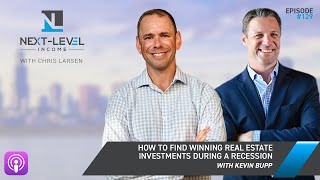
A November 2022 YouTube interview on the Next Level Income show where host Chris Larsen speaks with Kevin Bupp (founder/CEO of Sunrise Capital Investors) about lessons from the 2008 recession, how to prepare for economic downturns, and which real estate asset classes are more recession-resistant. Bupp emphasizes conservative leverage, preserving investor capital, and highlights mobile home parks (manufactured housing) and parking assets as attractive during downturns due to affordability, diminishing supply, and resilient cash flows. A short promotional segment with DJ Van Kern describes the Four Institute executive program for family-office real estate investing. The episode closes with book links, company websites, and details about Bupp’s charity cycling event.
Folks are being priced out of the, out of the markets that they've lived in for the last one, two, three decades, right? They literally can't afford to live where born, raise their families, and they need alternatives.
Welcome to the Next Level Income show where it's our goal to take your income, your investments and your life to the next level. I'm your host, Chris Larson. If you haven't yet, get a copy of our book for free at our website, nextlevelincome.com. that's www.nextlevelincome.com. just click on the book link and I'll even send you a copy if you put your address in. On today's show, we welcome back Kevin Bupp. Kevin is the founder and CEO of Sunrise Capital Investors, which invests in mobile home parks, parking lots, apartments, offices and single family homes all across the US he has 16 years of experience in educating investors to locate, acquire and create higher than average returns from the widely misunderstood niche of mobile home park investing. He shares his experience through the mobile home academy and also is the host of the Real Estate Investing for Cash Flow podcast which has become one of the hottest real estate podcasts on itunes. He's the number one bestselling author of his new book, the Cash Flow how to Create Financial Freedom Investing in Commercial Real Estate. Kevin, welcome back to the show, Chris.
Thanks for having me. It's good seeing you, my friend.
Yeah, it's good to see you too. I'm a little jealous of your hat, I have to say. And it's not because I want one. It's because if I was wearing that hat, it would say 1978 on it, which is. Yeah, yeah, yeah, yeah.
So, buddy, that's all right. I think we were talking about cycling earlier and I think you're a better cyclist than I am. So like, it just your age means nothing because I think you're in better shape than I am.
There's, Listen, you know, there's always somebody younger and there's always somebody faster out there. So we could, we could, we could play this game for, for a long time. But I'd love for you to share. You know, you, you, you're one of, one of wonderful guests that's come back on the show here to join us again. But I'd love for you to share a little bit about your background for any of the audience that hasn't heard that first episode.
Yeah, yeah, sounds good. And again, thanks for having me back, Chris. You know, I've been a full, I've been a full time Real estate investor for, for two decades now. And I kind of age myself when I say that. It's, it's weird saying that, but um, I got introduced to real estate. I always like to joke that it found me, I didn't find it. So very grateful for that pivotal moment in my life where you know, ultimate, my first mentor came into my life and kind of showed me the ropes and again, I wasn't looking for it. It just happened through a relationship that I made and, and then here we are 20 plus years later and it's been a, it's been a fun, fun ride, you know, profitable ride. A ride, I mean all the above, right. And you know, I got my, I got my start back at 19 in single family. Really didn't property till I was 20. So that first year was really just underneath the, you know, the tutelage of, of gentleman by the name of David who happened to be dating my mom or my girlfriend's mom at the time. So just very random occurrence there. But that's how I met David. And he was a local real estate investor in a small town in Pennsylvania I grew up in and you know, he owned single family and small multifamily rentals and must have seen something in a 19 year old kid that really didn't have any direction at that point in time and, and, but saw, saw something there that, that you know, ultimately, you know, gave him the desire to want to help me along and, and in turn I helped him grow his business as well. There was some things technology with technology that he just struggled with. Ultimately that's how I added value to his business. But about a year and a half I worked with him in between tending bar and going to school and helped him wherever to help. And a year and half into that I bought my first property with $7,000 I saved up from tending bar and it was in a really not so great part of town, really run down property, leveraged a lot of the resources that I had, you know, met through David over that year and a half, you know, contractors, hard money, lenders, lenders, things of that nature and got that project done. And what I realized, Chris, very shortly thereafter, that is David's model had been kind of baking for like 20 years, right. And he had a lot of buy and hold rentals that was his business model. What I realized very quickly is that if I just held this one property, I did rent it and if I just simply had and saved up the couple hundred dollars a month deposit of cash flow that it would take me A very, very long time to ever buy that again. Where I grew up, there wasn't a lot of appreciation. I obviously had built equity in that deal, but not necessarily enough to do a cash out refi and literally keep turning around and compounding those efforts. And so I realized very quickly that I needed to simply wholesale. Learn how to wholesale. Wholesale. A couple properties, keep one. Wholesale. A couple properties, keep one. That's what I did for many, many years, I guess the first couple of years. And then ultimately I was able to build up enough of a business and a network base to where we could start keeping holding properties. A number of private lenders we worked with and built a pretty large portfolio of single family properties, you know, 120 plus, you know, in my, I guess early to mid-20s, and started buying multifamily property shortly thereafter. That really saw some inefficiencies with the single family model that could be eliminated by, by, you know, by buying multiple doors underneath one roof or, you know, in a concentrated area. And, and then fast forward to today, you know, that period. To today. I've owned retail, I've owned office, I've owned self storage. In 2010, got introduced to mobile home parks, bought my first mobile Home Park 2011. I've been buying those ever since. I really love that asset class. We're buying them today. That's where most of our holdings is. And then aside from that, one niche that we've recently dove into is parking assets. So parking lots and parking garages and very specific MSAs and in markets. And anyway, that's kind of like a 20 year condensed version. Obviously had some trials and tribulations in the middle of all that. 2008 was a very challenging time. But, um, been at it, at it full time now for again, you know, 20 plus years. And it's been a fun ride.
Yeah, no, you've seen, you've seen a lot. And it's. I think it's an awesome story. Cause I think a lot of people listen and they're like, wait, you know, how do you get to this point where you're buying these, these huge properties? But you know, I started with that one single family. You started with a single family rental. That's one of the amazing things about real estate is that, you know, you can leverage a small amount of money and resources into, into a lot of. But one of the things I'd love to talk about today, Kevin, is, you know, you went through the Great Recession. I think a lot of real estate investors today, especially, you know, the younger generation they haven't seen that type of recession. You know, I'd love to hear some of the. The lessons you learned from that. You know, kind of where you see us today in the economic cycle. And, you know, how are you preparing for that?
Yeah, that's a great. It's a great question. A couple questions there. We'll try to dissect it now. I'll start by saying that, you know, the housing crash last time around, you know, the. The underlying fundamentals and the base of all was very different, just a very different time. And what I mean by that is, for example, we owned all of our property down here in Florida, on the west coast of Florida, you know, over about five different counties, which is an absolute thriving area today. And even back then, it was a thriving area. Unfortunately, back then, the big difference was that we had a surplus of rooftop. We had a. In addition to that, paired with that, we had a lot of subprime loans. Anyone that could fog. Mere could essentially get a loan. And so rooftops were being built for folks that never intended to live in a home, and. Or they were being built for a population that was supposedly coming to Florida, and essentially all that just disappeared. Those loans went in default. Builders that had rooftops that were being built ended up with just a massive surplus of not just hundreds of homes, but thousands of homes. And very different challenge back then to today, because today we've got a massive shortage. I mean, literally, I read something the other week that if all the major home builders, you know, be homes of the world, if all the major national home builders doubled down today and doubled down for the next 10 years, we still wouldn't be able to meet that demand.
Yeah, four. Yeah. I think complete opposite. Yeah. I just did a podcast on this. I think we're. It's. It's over 4 million units short. You know, you had the multifamily, the storage. And I think you make a phenomenal point. You know, we're. We're at this period where, you know, coming into 0809, we had this massive building, you know, glut, and then we just stopped building, and we never really restarted at those same levels. And then you have the millennial generation that's now forming households, and the baby boomers were the biggest generation in history, but if you add all the millennials up, they're even bigger, and we just can't satisfy them.
Yep. Yeah. And so, again, just. I think we're in a very different scenario. I'd say the. One of the biggest things that we look at nowadays when we look at deals is just if you're looking at an opportunity today, the cap, I think the capital markets are the biggest threat. You know, what type of leverage do you have in place and all. No one can, no one's got the crystal ball to look out five years. And so whatever type of debt you're putting on the day and you know how leveraged you are in that particular asset I think is where the risk comes into, into the equation. And so really I always like to, I always like to say that there's really only one thing that can absolutely, you know, kill a deal. If you own an, if you own an asset and you're managing it properly is the actual debt is being over leveraged or having debt come due and not being able to actually get new debt put in place or pick up any of the deficiency. If you got to bring more equity to the table, you know that, that, that happened, that happened last time around. And so um, well you could get.
95% leverage with you know, practically nothing, all kinds of.
But even then I think there's a lot of just being really conscious of you know, getting into bridge type debt at this point in time. You know, a lot, a lot of value add deals. Surely if you're, if the equity is going to be locked up, you sure don't want to tie like a Fannie or Freddie agency loan and place in the front end and then have that equity locked up for years where you've got the feasance or some type of significant prepay. Right. And so there's not many other options. So I think it's just being very cautious of getting into these, these, these shorter term deals to where they're irr driven, where you've got to get in and out of them and two to three years in order to hit that target. Because again if we look back like three or four months, I think some folks would have argued that we would have been at this point where rates are and now the Fed's, you know, they got another meeting coming up, probably we're going to see another bump at that point in time half the, half the, half the population would have argued that like they're not going to push them that aggressively. At some point they're going to have to put the brakes on sooner rather and that is not happening. And we're not doing a great job at tampering inflation just yet. And so I think we've got a little bit more of a bumpy ride to go. And so just being conscious what your exit looks like on that opportunity and in the event that you can't exit out of it at your desired cap rate and you got to recap it what's case scenario, what's your cliff look like there? And just being very conservative and that might mean that you miss, you might, you might lose deals. Like you might get outbid by someone that is just a little bit more aggressive than you. I just, I feel like there's always the next opportunity, there's always the next deal. And so if it ultimately you're getting in something that's incredibly thin and there's even a moat chance of risk there that, that you might not be able to execute in that business plan then us. I'm a little different though. I had challenges in 08, so I'm more conservative than most. I'd rather just wait for the next deal. That's kind of how I feel. So that. And we've always run our business that way though. You know my, and there's been many times, Chris, where my business partner will, you know, he, he's a little younger than I. He did not go through that last period of time and so he didn't personally ever experience it. And so he hoped and say, you know, I think we're leaving, we're leaving an opportunity on the table here. And I'm like there will be another one that comes along, right? And yeah, and he'll look back and argue with me and say we would have done really well on that. I'm like fair. Rising tide lifts all boats. Yeah, everyone did really well over the last seven, eight years. And if you didn't then you should probably find another line of work to be in. But I just know that will always be that next opportunity and I'm willing to wait for it and just want to be a steward of our investors capital and ensure that I preserve it and put every ounce of effort into bring their capital.
No, I think that's a fantastic rule. And one of my favorite authors, he's a little wonky from a financial perspective is Nassim Taleb and he wrote several books but I think his most popular is Antifragile. And in that book now he's talking more about Wall street and he talks about how, you know, Wall street has this short memory because these traders get blown out. The new generation comes in, they don't, they don't remember. I think we're seeing that with real estate right now. But his saying is don't get blown out. He says have a strategy where you are able to get up and you're able to play the game the next day. You know, what you mentioned, Kevin? You know, having adequate cash flows, having adequate reserves, not being overleveraged. If you follow those rules, you can keep playing that game not just for five years, but for 50 years.
Yeah, yeah. Make sure that your strategy has longevity. Not just a plan A, but a plan B and probably a plan C as well.
Yeah, no, I love that. So, you know, I know a lot of investors are nervous right now. You know, I was just. Just talking to some before our podcast here today, and, you know, it's like, okay, this is what we're seeing. You know, this is. These are the things that we're doing. You know, we're buying a property, it's less than 60% leveraged, you know, a little bit lower returns because you got a little bit less leverage on that deal, but it's safer. And, you know, we can cash flow it for a lot longer period of time. You know, we're about to go into 2023, Kevin. You know, I think we can guess if we kind of look behind you here, but I would love to hear your thoughts on, you know, what your company is looking at in terms of favorable assets, you know, going into 2023 that you feel are going to be recession resistant.
Yeah, I mean, we love mobile home parks. I mean, again, we. We can all. I think we can all agree, everyone that's listening in here, that there is a massive affordable housing crisis, and it been accelerated over the last two years since. Since COVID hit. And so while, you know, mobile home parks always have performed well, they've performed incredible. Now folks are being priced out of the. Out of the markets that they've lived in for the last, you know, one, two, three decades. Right. They literally can't afford to live where were born, raise their families, and they need alternatives. And so mobile home parks, you know, manufacture housing, do a phenomenal job of filling that void. They give. They give an opportunity to someone that still just wants to be a renter. There's renters by choice, or there's folks that are still forced to be a renter. So there's options there. But also those that choose to be a homeowner that are on a somewhat limited budget, that want to own their own home, that want to have their own roof over their head and put their Christmas lights and pull their car next to their mobile home and have a carport and things like that. Right. Don't want to let their living apartment. So mobile Homes are phenomenal in good times, and they're even better in downturn. So they. They performed incredibly well during the last recessionary period. So we love mobile home parks for all those reasons. In addition to that, there's a. It's the only asset class diminishing supply. And so there's more mobile home parks that get redeveloped that might be in the path of progress, and there's a higher, better use. They get redeveloped or maybe just get shut down for one reason or another, then new supply that's coming online. And so you've got this ever increasing demand, but a dwindling supply. It's favorable economics if you actually own the asset.
That's. And I think that's very surprising. You said a couple of things. I think. First off, you know, a lot of people, it's like our mayor was in a meeting with local real estate investors here, and when asked, talking about affordability and housing and you know, what the city was doing, like, oh, we're doing this and this and that. And actually my partner asked her, said, well, hey, are you. Are you willing to approve more mobile home parks because they're the best option for affordable housing? She just immediately said, no, that's not an option, and moved on to the next question. I don't think a lot of people realize what you just said, Kevin, which is, you know, we're not making more mobile home parks. They're not being approved. The supply is going down. But you also said something that I think is eye opening for a lot of people. You said that not only do mobile home parks perform during good times, but they perform even better, relatively speaking, during bad times. Why, why is that again?
I mean, even. Even at the apartment rental space, look what's occurred with rents over the last couple of years. Really, the last two years, again, Covid, really fueled this. And so, yeah, even, you know, exploded. We're living in a C class apartment. You know, if they're in a desirable marketplace, I mean, the rent probably went up over 20% over the last two years. Maybe even more. More likely. More than that, right?
Yeah, I'd say best case, you know, 20%, probably. Yeah. 20. Yeah, 20 plus 30.
40.
Yeah, yeah. In some markets, they went up over 30 to 40% over two years. It's incredible.
Yeah. So I'd say across the board, we look at our portfolio and we've got some incredibly nice communities that are probably more akin to, you know, a B plus class or even maybe an A minus class depending apartment community, maybe not as new as an A Plus, but as far as like the amenities, the quality of the homes, yeah, you got some sweet properties and then you know, then we've got some stuff that is more definitely, you know, it's, I mean it's, it's in the sea gray but it's, we're, we're servicing a blue collar demographic. Other clean, nice parks, they don't have a lot of amenities, they don't have swimming pools and fancy things like that. But generally speaking across the board, when we look at our, our mobile home parks, if we look at, let's say that if we're renting one of the units, most time we prefer just to sell the home and rent a lot. But we do have a couple hundred rentals in our portfolio on average if you compare apples to apples. So whatever the comparable apartment is in that market to one of our mobile homes, our mobiles are about 15 to 20% less on a month. It's more than that. If it's in a kind of a hyper growth market where your rents really did go up 40% over the last couple of years, then we're going to be substantially less than that. So it's just a more affordable but not lower quality option for folks that are again getting priced out of either getting priced out of the market or just maybe they'd love to rent a single family home but they're, that's way out of. So this is, this allows them to kind of the, get some of the elements of a single family home. They kind of get their own little yard, their own space, potentially a carport and they don't have a neighbor side of them and above or below them that you might have an apartment. Again, to each his own. But you know, it's, it's just a, it's a very desirable option for folks that are looking for affordable place for family.
Yeah, no, it's, and there's, there's really, you know, there's nothing more affordable and it's, it's wild you know, because you know, Asheville here I was actually, I was in a meeting with Ken McElroy and we were talking about affordable housing and Asheville wants more affordable housing but it's, it's only, it's only apartments and it's hard to build affordable housing because it's, it's expensive to build right now. So I love, I love the mobile home park space for affordability. DJ Van Kern, it's good to see you. I look forward to talking about the Four Institute and your upcoming fall program. I'd Love for you to just introduce yourself real quick and tell us a little bit about what it is.
Yeah. So DJ Van Karen and I'm the founder of the four Institute. And then I've also worked for a number of very prominent families on the real estate portfolios.
Yeah, we've had DJ on the podcast and DJ works with family offices that are typically and correct me if I'm wrong, $250 million or more in net worth. And the four institute I'm super excited for this program that I'm going to be attending. Typically this is information and access to typically only these family offices get. But you're opening this to our investors as well.
So we actually it's an executive education program and in the program we've put together some of the most prominent professors around the country and industry experts. So we have professors from Wharton and Harvard and University of Denver, University of Chicago. We have family office and real estate experts and we focus in on, you know, what it is to maintain and really generate significant growth through real estate. And it in a format that's extremely valuable. And you know, on our front page@4.institute not.com but institute you can even see videos of people and their experiences.
Awesome. And so I guess DJ what what is someone going to learn that attends this class?
They're going to learn how to analyze opportunities. Opportunities. They're going to understand about market cycles, where are we in the market cycle and what to look like look for in the various property types. They're going to understand, you know, get into some of the issues about maintaining your wealth from long term perspectives, tax strategies for your investments and really how to make better decisions on of state investing.
No, I think it's awesome. I think a lot of people have concerns about where we are right now in the economic cycle. What's going to happen to real estate. I follow you know one of the faculty, Dr. Miller's quarterly reports to stay on top of these things. And I'll tell you what it makes. It makes me feel a lot more confident knowing this information, knowing historically what has happened and to have access to these faculty this information. I'm really excited about it. But how can people find out more if they want to attend?
Yeah, so they go to Ford Institute, which is F O R E for family office real estate. So it's ford.in dude it's not.com but it's.institute. so Ford Institute and you can click on there to receive a brochure and then sign up for the course.
Perfect. And we'll have the links right here along with this short video. DJ, it's great to see you. I look forward to seeing you in person here later this month.
And you ask why, you know, you're, you're making mention of your friend asked the. So was it the county commissioner or whatever you know about a mayor?
I won't, I won't say, I won't say that.
You know, how about manufactured housing? And honestly, there's a couple reasons. Number one, you know, for whatever reason, we get lumped into one bucket.
Yeah.
You know, we get lumped into the bucket of just the stereotypical image, mobile home park, trailer trash, that type of thing and don't get it. That exists and that exists in every market. Yeah, that exists with single family homes. There's really bad neighborhoods, there's really bad apartments complexes. Like you can find homes, you can find the middle of the road, which we have that too. And then you can find the really nice A class. And we have that too. Right. Unfortunately, we get lumped in that one bucket. And in addition that you've got the, and it's kind of one of the same. You've got the, you know, the NIMBY syndrome, you know, the not in my backyard. So it's just again, that stereotypical image, you know, property values get know, get pulled down if a mobile home park gets built in and around my neighborhood or my subdivision. And so there's lots of, lots of negative forces against building new manufactured housing communities. But you know, there's, there's been more new developments that have come out of the ground over the last two years, in the last two decades combined. Still, it's got a diminishing supply. But I think, I think some, some counties, some municipalities are starting get the clue that this could be a great alternative. But I mean it's surely not on a mass scale.
No, no.
Yeah, we've got a mass scale problem.
Yeah. And I think, you know, it's wild. Like we actually have. I've seen it in Colorado, I've seen it here. I've seen in other, other different markets I've been to. I'm always like looking out and checking like what are some cool affordable options. You're seeing these tiny home communities now, which if you look at it, you're like that tiny home is built on, on a trailer base. It's built on, on a base. But you know, you're talking about a tiny or micro home. 200 square feet. And sometimes they're, they're smaller, they're not even as nice as some of these, you know, trailer parks. But those are cool. We got TV shows about them and doing that and it's trendy. They're trendy, but it is, it's a, you're really talking about the same thing. I think it's a really, it's a really great option for people that, you know, are. I mean, it's. Some of these are. I've been in these tiny homes. They're like, they're super nice.
They're not affordable though. That's the thing. Have you ever not per.
Square them? No. Yes. They are not per square foot.
They're not.
They are not affordable per square foot.
Yeah, so it's, it's a completely different element and demographic that we're serving.
But.
Yeah, no, I agree. It's, it's more of a. I've seen a lot of success in the Airbnb short term rental model with, with those tiny home, you know, little communities and developments.
Yeah.
But again, just, it's a good option, but probably not as good of an option as what the traditional mobile home is right now. Even with the, even with inflation, you know, we can get a mid tier quality build, three bedroom, two bath, single wide.
Was.
Which is just shy of 1100 square feet for right around $60,000.
Yeah.
So. And yeah, two years ago that was 45,000.
Yeah. Yeah. And that's, I mean, that's still unbeatable if you look at the space that's out there. Yes. So last time you were on Kevin, we were talking about parking lots. You shared your, your ebook with the audience. So if you want to check it out, you can go back and listen to his, his prior podcast there. You got another book coming out. I love it, man. Every time you come out with a book, we're going to have you back on the show. Tell us what readers will learn when they read the Cash Flow Investor and what's in your new book.
Yeah, so, you know, Chris, it's, it's a lot, it's a lot of my equal amounts, my story over the last 20 years, kind of my progression through single family and then realizing the bigger picture and getting into commercial real estate. But then in addition to that, I've been doing my podcast for almost nine years now, which is crazy. January.
I love it, by the way. It's one of the first, yeah, it's one of the first real estate podcasts I consistently listened to.
Yeah, I've interviewed some really cool people, you know, just over the years and have, have taken, you know, tidbits and advice and strategy from, from all those various conversations. And a lot, a lot of friendship, friendships and partnerships have been actually formed through those many years of those interviews. And, and I just, I've put it all together and a lot of our business is built around those fundamentals, all those things I've learned over these last 10, 20 years. And so it all gets dumped into that book. But in addition to that, I also really go into depth in, into some of my favorite commercial asset classes. I mean, obviously mobile home parks being one of them. Parking be another multifamily is one of them. But we go into specifics as to why. I've got five in there in total, and I'll keep the other two secret. Just so encourage people to go with the book. But really going to detail as to, you know, one's not necessarily better than, I mean, there's a million different ways to make money in real estate. Commercial real estate's the way to go. Mobile home parks aren't better than multifamily. Multifamily is not better than mobile home parks, parking. And then again, there's a couple others in there that I really love. But you know, I think my objective with this book was to kind of teach you the path I took, show you some of the options that are available of assets that I really love and that I think are very viable today and have a great opportunity associated with them for you to find that path forward and then pick your lane. Pick, pick one. May not one of those five, but just here's five options, but pick one and go all in on it. And you know, I think that's the, and so I wouldn't say it's a beginner book, but ultimately a great pathway for those that are maybe looking to play a bigger game and, and, and, and, and have determined that it's commercial real estate, but really haven't got there yet.
So I love it. And look, if you're listening today, you know you've heard a little bit of Kevin's story. The thing is, he can't tell you all his experience and everything that he's learned over the past couple decades. Get his book. We're going to tell you how to get it here at the end of the show and give you a link. But don't, don't make all the same mistakes I did. Don't make all the same mistakes Kevin did. Learn from our mistakes. Take the shortcut, get his book.
Check it out, make them. You'll still make some.
Fair enough, fair enough. But don't make them all.
If we're not make mistakes, Chris, we're not growing.
That's right. There you go. Yeah, exactly. That's why I tell my boys, I'm like, look, if you're not losing, if you're always getting 100 on your test, you're, you're not learning, you're not growing. You gotta fail. You gotta fail to grow and learn. And it's like, you know, you get that last rep in the gym, it's like, well, that's great, but try the last rep where you need, you need a little bit of help and you can't get it up. Then, you know, you're, you're, you're pushing your limits, right?
My wife doesn't like when I use that analogy. When one of the boys fall on their butt, they're trying to do a jump or something, I'm like, they're fine. Let them do it. You know, and they, it's good for them. Yeah, that's it.
It is.
I, I, to a certain extent, I mean, I'm not going to let him jump off the roof of the house or anything, but there you go.
You know what? I, it's, it's, that's, that's got to be that motherly instinct. I think the same thing. You know, they come home, they had a little issue at school, and I, my wife's like telling me, she's like, oh, it's terrible. I'm like, that's great. I'm just glad they're doing it now at 12 instead of 24, because, you know, the consequences just get bigger and bigger when they get older in life. So. But, well, wonderful. Kevin, what's the best place for listeners to check that book and get a copy of it?
Yeah. So you can go to kevinbup.com freak, grab a copy of it, download a copy, and then kevinbup.com that's my main website. I host my podcast on there as well. And then if you have an interest in what we're doing in the investment space, you can go over to investsunrise.com and there we've got any of the current offerings that we have available. And it talks a little bit about our business model, both in the parking and the mobile home park sector.
Wonderful. And again, I've, I've been listening to Kevin's podcast for years. It's been one of my favorites. Check it out. You can take it. Real Estate Investing for Cash Flow, which is right behind him. If you're watching, if you're listening, you can check that out again. That link is down in the show notes here. It's Kevin bup.com freebook. Get a copy of his book, the Cash Flow Investor. And Kevin, it's been, it's been wonderful having you on today. Before we let you go, you and I are both cyclists. I mean, I've had a lifelong love of the sport ever since I learned to ride. It's just that sense of freedom and what it's done. I know this year you guys aren't able to complete your ride, but please tell the audience what you do with respect to your. Your charity ride every year and how they can learn more about that as well.
Yeah, no, absolutely. I appreciate that, Chris. And you know, I just, like Chris had mentioned, he's got a love for slide, as do I. And I put together Charity ride this year would have been our 11th year of actually putting the events. Actually our 12th year, but one year we had to cancel due to a hurricane. This year, unfortunately, due to Hurricane Ian, we had. We had to cancel the event, which was supposed to be next weekend, but ultimately we ride from Fort Myers Beach, Florida, which is here on the west coast, down west about 285 miles over three days and, and raise money for two charities that are near and dear to my heart. Both are related to children and ultimately feeding during the holidays and providing the necessary life skills to, you know, find their path forward outside of, outside of high school, into college or, you know, the military, what have you. And so the phenomenal two charities that we support and yeah, it's just been, you know, it's interesting you bring. You asked me about it. I'm glad that you did. But I really reflect back every time I talk about this. I. The reason I. Not the reason I started it, Chris, but I'd been involved these two charities for many years, personally helping with them. One's, one's run by my good friend Rod Khleif and then once, you know, Tampa Bay charity and, and I had personally been involved, you know, physically helping with these charities over the years. And 2008 happened. And Rod used to fund the Tiny Hands foundation, his charities, the fund that I was on, Pocket. And he lost basically everything in 08. And it went from feeding, you know, we went from feeding like 3,000 families and a holiday down to like 2 or 300. And I started the ride because at that point I lost everything as well. And so Rod and I were both broke trying to figure out ideas of, of how can we, you know, give back more because we we didn't really have the infrastructure in place to bring in outside sponsors. And that's why I started the ride. I said, you know what? I literally, I, I, I'm, I don't have, I've got my, my, myself and my being to offer. And so how can I leverage that into, you know, helping raise, you know, money to feed, feed these families during the holidays. That's where the, the ride was born. You know, first year that we did it, we literally had eight riders. I was about to cancel it. I'm glad I did it now. Every year we sell out thereafter and have raised hundreds of thousand, I think close to half a million dollars at this point in time for these various charities. And it's been a, it's been a great ride. So I appreciate you bringing it up and let me talk about it.
Oh, absolutely. What's the name of the ride again, Kevin?
It's called 72 Hours to Key West. And you can go to 72 hours of key west.com if you'd like to learn more about it. If you'd like to join us next year, hopefully you will. Chris, you got to come down and join time, my friend.
I would love that. I would love that. And that sounds like a great movie too. 72 hours to key west sounds like you could turn that into. And look, if you haven't. Rod was on the podcast. Listen, that episode, his mindset is amazing. I mean, from a guy that lost was like $50 million, it is, it is incredible. The, the positivity that he shows, the gratefulness that he has, and he really talks about the power of vision, giving back. And Kevin, I know you, you have a lot of those, the same traits, the same mindset. I really appreciate you sharing your knowledge and that attitude with the audience today.
Well, Chris, thanks for having me. My friends, it's been a pleasure.
Always welcome. Have you back soon. Hey, Chris, here again. I hope you found this episode valuable. Now I have one more thing to gift you. We have a page for my coaching clients where you can get a free copy of my book as well as much more from previous guests on the show. Just check out nextlevelincome.com coaching to get a free copy of my book, audiobook and much more. I'll send you a copy of my book and cover all the shipping costs as a thank you for listening to the podcast. Also, please, like, share and take just 90 seconds to give us a rating on Apple podcasts.










