JON SARVER INTERVIEW – How To Invest In Your Community To Develop A Sustainable Local Economy
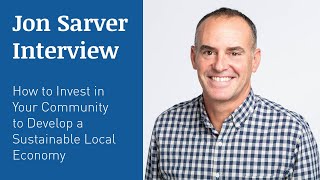
Jon Sarver built Alfie to connect local investors with real estate entrepreneurs through bridge loans. The platform offers short-term, collateral-based financing with quick closings, and is expanding across the Carolinas while pursuing B-Corp certification.
Welcome to the Next Level Income show where it's our goal to take your income, your investments and your life to the next level. I'm Chris Larsen.
And I'm Caleb Welborn.
You can get our free book@nextlevelincome.com on today's show, we have John Sarver of Alfie. Alfie helps develop sustainable local economies by connecting real estate entrepreneurs seeking flexible financing solutions with investors seeking profitable investment opportunities for their mutual benefit. John is also the principal broker and owner of Sarver Realty Group.
John.
He also has a new book coming out on local investing that you can access for free at our website or alfiloans.com John, welcome to the show.
Thank you. Appreciate it, Chris.
Absolutely.
Yeah.
Glad to have you here. John, can you share with our audience how you went from being a bike messenger here in Asheville to running a investment firm with over $300 million in transactions?
Sure. Yeah. And the 300 million is a little bit of a. That's really between the Sarver Realty Group and Alfie. So I don't want to mislead everybody that Alfie has actually done 300 million. But between it we have and we're having a lot of fun in the process. So. I got here to Asheville in 1989. I was 19 and I was a freshman at Warren Wilson College. I grew up the son of a single mother in Cambridge, Massachusetts, like a latchkey kid in the 70s and rode my bike always, like constantly, and then raced BMX as a child. And when I got to Asheville, I fell in love with mountain biking, went to Warren Wilson for four and a half years, including a semester in India, which was amazing.
Oh, wow.
And when I graduated, I wanted to ride my bike for a living. And I was definitely not going to be a pro racer. So figured with a buddy of mine, we figured we'd start a bicycle messenger company in downtown Asheville. And we rented a small office in the BB&T building, which is now the Heiress Hotel up the street. And we basically sat around waiting for the giant, like bag phone to ring. This was like in 94, so early cell phone days. And we built that company, you know, one delivery at a time, delivering to like the craggy prison food, legal documents. Anyway, I've always had an entrepreneurial streak, so we were persistent and built the company up. And in 2001, we sold it to a local group. And at that point, I headed to business school to get an mba, thinking I wanted to pursue logistics and transportation. And business school was a horrible Fit for me. It didn't really honor my skill set. And it was proposed that it would be kind of an mba. This is at UT Knoxville, which is a great school, but it was proposed that it would be kind of a MBA for the entrepreneur, but it was pretty much a traditional MBA program. So I had two young kids at the time and it was a horrible fit and I decided to bail out. So I'm an MBA dropout, which I'm actually glad. I think my biggest regret was deciding to go there in the first place. At that point I started working with my family's firm. My father had a business for 40 years helping nonprofit groups, developed special needs housing for nonprofits. So development consultant, got my real estate license. I did that for 11 years, mainly working with HUD programs, developing group homes and small apartments for people with disabilities. It was a very great like learning experience as far as real estate development. But it wasn't a very good business model. So my father really was doing it to change the world, not to make money. I always had this entrepreneurial streak growing up with a single mother who was struggling financially. So I kind of saw the writing on the wall and knew I wanted to do something else. And in 2005 I started Sarver Realty Group, which is still around today. We're a small full service brokerage, commercial and residential and basically just built relationships through the brokerage. You know, we only work on personal referrals still and built relationships in town and really that was kind of the segue into starting el about four and a half years ago. Alfie is, as you mentioned, a private fund. We have about 250 investors and growing and we make really common sense real estate loans to entrepreneurs in the community, really in north and South Carolina. So that's kind of the backstory and really Alfie and Sarver Realty, all of it is really based on just trying to operate in a way that was aligned with my conscious and treating people right and the relationship building and really looking at the long term relationship rather than the deal itself, you know, and making sure that people were taken care of. So that's, that's really what our philosophy is based on. Alfie too is helping people succeed.
Awesome, John. Yeah, thanks for the background. I learned a couple new things even though we've known each other through the cycling community, I think.
Absolutely.
I think we first met. I think you're run in a running group with Jess, my wife.
Yeah, I was. That's right, yeah. And Mike Figura. We were training for a full or A half, I can't remember.
Yeah, that was like 10 years ago. I don't even think we had kids.
Danny Dreyer.
Yeah, exactly. But yeah, I know recently, past couple years we've been acquainted on the real estate and investment side. So if you could share with the audience a little bit, John. So what types of projects? You know Caleb, and you mentioned these entrepreneurial type projects, right? Can you share more with the audience? Maybe isn't as familiar with that.
Yeah, definitely. Alfie's a highly entrepreneurial firm and we really, like I mentioned, want to help people succeed, which kind of differentiates us from some of folks in the private money world. We don't loan to own and we have a variety of borrowers from the first time real estate investor, maybe a mother who has a day job who has watched HGTV and is ready to flip her first house all the way to very sophisticated, like bankable real estate developers who just understand what bridge financing is and it's really a tool for them when speed and service are paramount.
Can you share what Alphie stands for?
Yes, yes, it's alternative lending for inspired entrepreneurs, which is a pretty good description of what we do. And the head of our advisory board, Rob Raccoon, who's a little older than us, came up with Alfie. I guess there was a movie in the 70s, what's it all About Alfie? I have the soundtrack on Spotify now.
Oh, there you go.
Good stuff. So, yeah, so Alfie, our fund is at about 3, just under $35 million now. And we are currently raising capital, which is exciting and we have a lot of loan demand kind of naturally after four and a half years, we have become a tool for a lot of people in north and South Carolina. There's quite a few larger billion dollar bridge lending companies around the country, but we have a kind of more community based model.
Yeah, no, so you said a couple things there, John. So one, you know, you guys, your goal is to help people and I know there's private lenders out there, they lend and they're happy to take a property back and you guys are doing kind of the opposite. So could you share with the audience? So for people that aren't familiar with bridge financing because like the property that we just acquired, big multi unit property, we use bridge financing. A lot of investors say, what is that? How is that different than, you know, a typical mortgage?
Yeah, that's a great question. Yeah, so we. First of all, you're right, our philosophy is one of helping people succeed. And we have had over nearly 450 loans, we've had two foreclosures. We've spent a lot of time and effort helping borrowers. Several have gotten into trouble, which has happened sometimes, helping them work out and find a way out without losing their property. So that is definitely a reflection of our philosophy, which we don't want a loan to own. There are some more predatory actors in the private money space that have a philosophy where their business model really is to kind of own the real estate. And they, you know, they, their program might set people up to where it's more likely to fail. So, you know, and that's. So yeah, bridge lending really is a tool like your group that took advantage of it and it was. We are collateral based and we are very, we're real estate people, so we understand real estate and we can act very quickly. You know, typically we had a loan application come in the other day, it was very hot. On Thursday it came in, we closed on Tuesday. So you know, that's exceptionally fast. But typically within a week or two for a smaller loan, under a million dollars. For the larger loans, typically less than 30 days. So it's very swift, it's common sense. And it's really designed when every borrower has an exit. So it's either a refinance, that's probably what you did, or a, or a sale, you know, or there's some kind of event. And we look very carefully at exit strategies because we don't want a borrower to get stuck because our loan, our interest rates are higher than traditional banks, but they're designed, you know, we have a three month minimum interest period. So typically our loans are from three months to 18 months. So three days, super short term.
Yeah, no, that makes sense. And then, yeah, I mean, geez. The house that my wife and I are building, I think when it was all added up, it took us like six months to get approved because the bank was purchased while we were going through it. It was a mess.
Yes.
So 30 days sounds pretty appealing.
Yeah, I mean we closed a loan in West Asheville for some developers, fully bankable. And the developers basically said the brain, they called it brain damage. Like the bank just kept on coming at them. And you know, and a lot of this is from Dodd Frank, which is, you know, really well intentioned and important laws, but it's, it's like blocked a lot of people from getting access to capital or it's made it super tedious. So these guys, you know, we closed a $4 million loan in about 45 days. It would have taken them over six months, you know, and they just were like, listen, we're going to use this money. We're going to use it quickly and swiftly. And there are, you know, right now they've sold five of the units and they're, you know, they're knocking down our debt. So it's a good tool to use. You know, we convince people often that we're not the right tool. So we really, you know, we really take pride in advising borrowers and saying, you know, why don't you come back if you have, you know, a deal that this really works. But if you have access to traditional financing and you have the time to take advantage of it, that's probably better option.
Yeah, so, yeah, so it's pretty clear. I mean, while you guys are obviously focused on the numbers and making sure it's profitable, you're somewhat of a mission like wide based organization focused on developing sustainable local economies. Do you share why developing sustainable local economies is important?
Yeah, and definitely we do. You know, we do. It is important for us to make a profit. And we, and we, you know, we like that part of the business. We also are somewhat mission based in our philosophy. I'm actually pursuing E Corp status for Alfie just at the very beginning. We're not, you know, we believe that we qualify and that it makes sense to do that. So that's exciting. It's a kind of exciting side project.
So can you dive into that a little bit, John?
Yeah.
Explain what a B corp is.
Benefits corporation. There's a national program that basically certifies companies that have a philosophy and a structure where they take into account more than just shareholder profits. So people who, you know, and there's a huge checklist and, you know, again, we're just starting the process. There's a nice scene here in Asheville. A local group actually in this building that meets a couple times a year. So we're hopeful to do that. And you know, if we end up getting that, we'll be with folks like the French Broad Chocolate Lounge. There's a capital company, there's a registered investment advisor in town that does socially responsible investments. I think East Fork Pottery, our friends Alex and Connie over there are pursuing it. So it's interesting. Yeah, it is. It's neat. So your question was about how we build sustainable economies? Yeah.
And why they're important.
Why they're important? Yeah. Well, you know, I've been in asheville again for 30 years. I've raised, I'm raising, continuing to raise three children, you know, between the ages of 10 and 22, two of them were born here. One was adopted in Ethiopia. And I really love Asheville and I care about the community and I care about the people here. So, you know, it's really important. Any business that I'm going to be involved in that it actually contribute to the economy. And then being an entrepreneur and knowing how important capital is really, that's kind of the goal is to help people make money by providing them access to a tool that allows them to make money. And then on the investor side, which is really neat because what we really do is we pair local investors who may want to make investments in the community but don't have a vehicle to do that with local entrepreneurs that can use the money. So we have both local and, and national investors who don't live here and they can, you know, we oftentimes will drive them around and show them where their, where their capital is working.
Right.
And you know, and introduce them to the borrowers. So it really is neat because you can, our investors can have a really defensive cash producing and stable investment and they can see how it's helping people in the community succeed.
Right. So you're really the platform that connects the two of those together.
That's interesting. Exactly. Yep. Yes.
Quick question about the B Corp. Are B Corps treated differently by the IRS or what are the differences?
There's only a couple states that actually have a B Corp registration. North Carolina doesn't have one. So it's almost like more of a certification process where you get certified as a B corp and they annually review your processes and that sort of. It's not actually an IRS designation except maybe in California, New York or something like that. The super progressive states.
Yeah, gotcha.
Yeah. Interesting. Yeah.
Well, John, I know investors like the returns that they get working with you, but maybe you could share some of the other side. Maybe some response that you've gotten from investors that you've been driving around or a favorite story that you've heard from investor.
Yeah, definitely. We have a lot of investors that are really, they really like Alfie because they feel like they're getting a nice solid return, but they really do see the people in the community that are benefiting from it. We've had quite a few investors that started. We have a $50,000 minimum investment. We've had a lot of investors that have started small and put in much more money after they see what we do. Trying to think of an actual like individual deal. You know, there's so many. I can't really Pull it out of my head right now. But you take a second. Yeah, yeah, but let me think about this. Well, there's. There's one that comes to mind is a. There's a woman in town here who married with children, and she has a day job, and she really wanted to be. She really wants to be a real estate investor. And super organized, super sharp. And so I'm not sure, maybe Rodrigo or someone referred her to us and we helped her. Her and her husband do their first project, and they're great at it. And. And they have now done five or six projects, and they're getting ready to buy a small apartment building, and they have done some kind of rehab sale projects as well as they're building their own rental portfolio. And so we've told that story to some of our investors, and they just really like the idea of it, and they're getting a super solid return, and we're finding more and more investors that are interested in it. I think that's because it's just a very unique, unique match in the economy. And because it's not. They're not getting. I mean, they're getting a really nice. You know, most of the folks that are in our fund, the investors are looking for an income investment, and some of them will roll it back into the fund and compound, and others, you know, will take the interest quarterly. But it's not like subsidized. It's not low just because we're doing good work. It's actually really solid.
So, yeah, that's great. I mean, it's giving them an opportunity that they otherwise might not have. So.
That's right.
That's fantastic. So, yeah, that's a cool success story with that family. What sort of effects have you seen on the community at large when all of these different projects kind of all compound together?
Yeah, well, we, you know, haven't calculated what the economic impact has been, but what we've seen is we've seen people who had a dream or a vision really manifested, and that's exciting to see. These people, the borrowers or they're in the community, they may have children, they may have dreams, and it's super fun to help people realize this. So that's my favorite part of the business, really. And on the investor side, helping people understand what we do is really fun too. So, you know, and bike riding is a great platform for that. So I found myself riding with investors and borrowers and sometimes both at the same time, which is. Which is really great.
Yeah, no, it's amazing. I found over the past 10 years and I. Maybe it came about with Lance Armstrong and that generation, but started calling cycling the new golf.
Absolutely.
I found it, you know, especially, I think a couple things with Asheville. One, there's a tremendous cycling community and then two, there's a lot of people that are very intentional about being here. Like my wife and I moved here with intent. You know, I've seen a lot of the crowd from Warren Wilson that you've met as well. Do you find that that makes up the majority of your investor pool, John, or it doesn't?
I built my real estate business in the early years almost entirely with cyclists who are affiliated with cycling and probably still. Probably 60% of the folks that we've worked with on the real estate side have been cyclists in one way or another. But you're absolutely right. Asheville is an amazing cycling community. World class trails and road riding and it really is like golf here. I've never played golf, but, you know, we get out, you're not missing too much. It's like, you know, fellowship and exercise and networking all, you know, all at the same time. Yeah, I, again, it's one of the reasons why I love Asheville and you know, yes.
Now it's an amazing place to ride. I tell people it's. It's world class. I mean, and I think, I mean, if you look at what we have from a mountain bike perspective, road cycling, we even have the track.
Yes.
You know, cyclocross gravel, which we were just talking about before the show started. It's, I mean, I don't, I don't know a better place in the country when you take everything combined. There's some amazing places out west, but it really, it really is amazing, so.
Totally agree. One of the guys in our Tuesday ride group just went out west and he came back to. I think he went to Mount Hood or something. And he came back and he was just like, man, Pisgah, is it?
Yeah, yeah.
Yes.
A lot of people from, they'll say, oh, Pisk is too tough to ride. So I've done some stuff with you, John, and I said, this is too tough, but you'll ride it. So I enjoy riding with you.
As long as you wait for me at the top of the hill, I'm all good.
Well, it makes sense he did BMX growing up because I've seen some crazy photos of him hitting massive jumps.
Yeah, the BMX suit really helps, you know, a lot of the bike handling skills kind of as you're growing up and your body's you know, getting stronger. So a lot of the people I know who are really amazing mountain bikers, like Justin Mitchell and Chris Herndon, those guys have BMX backgrounds.
They're legit. Well, John, I know when you started Alfie, you guys were really focused on the Asheville market. Can you share with the audience some of the recent growth you have and some of your plans for the future?
Yeah, definitely. We started Alfie again about four and a half years ago. Basically it was a trial run. We raised $3 million and it took us nearly six months to find our first loan. And then the momentum has really been great. Great as people have discovered what we do. About a year and a half ago, we opened up an office in Greenville Spartanburg, South Carolina, which is close to Asheville, as you guys know. And we really like the economy down there. It's very different than Asheville. Asheville's kind of a mysterious economy, shadow economy. And a lot of people come to Asheville with outside money from other places or they're creatively employed. And we all have like two or three jobs, right? Everyone's got a couple businesses here in Asheville. Are there a couple jobs?
Why not?
So it's a tough, you know, it's a tough place to figure out. And we have a lot of people who work in the service industry. And so Greenville Spartanburg, you know, is just a very different economy. Housing is much more affordable there. They've got the great Swamp Rabbit Trail and if you've been down there, super, super neat bike infrastructure. So anyway, we opened up that office and our main guy down there is Craig Peters. He lives in Asheville and commutes down there a few times a week and has found really nice success helping entrepreneurs down there. And just recently, about two months ago, we opened up an office in Greensboro to serve the Triad area. And that has been really well received because that's another really neat economy. There's a lot going on there. Downtown Winston Salem, downtown Greensboro, Burlington and Alamance County. There's kind of like bedroom communities between Winston Salem and Raleigh. So we are very excited about that growth and the opportunity down there.
John so with everything you've learned over the years, if you could go back in time and give your 25 year old self one piece of advice from everything you've learned, what would that piece of advice be?
That's a great question. I think it would be to, to really believe in, listen to your gut really as a guide in your life and trust your skill set and really try to use that as I mentioned I pursued business school and that was really in an attempt to become something that I wasn't. And that was a really valuable learning lesson. And what I've found in business is that I can really use the gifts I have and I can connect my business partners and accountant. So there's my MBA right there. So that is, I think that's what I would go back and tell my 25 year old self. And also to really just operate in the world in a way that feels right and it will, you know, it will pay you back really in many ways.
That's great advice.
It is great advice. I went through a situation, business situation here earlier this year and if I trust him I got probably wouldn't happen. So that's super good advice.
Definitely. I mean you can feel it literally and if you pay attention to it then it really will help you.
Yeah, that's fantastic. So John, you have a new book coming out. Can you tell the audience a little bit about what the book is going to be about?
Sure.
And then if they want to get a copy of it when it's released, how investors can get a hold of you, how they can get the book and then also if they're interested in getting, looking at information, getting a loan.
Definitely. Definitely. Yes. Yeah. The book that we have coming out, that I have coming out is really about building local economies in a sustainable way. You know, Alfie, we have kind of, you know, I believe what we do is unique. And so we decided to write this book to kind of share that experience with other folks building sustainable local economies. We do that on a micro scale here. I mean not micro but a pretty small scale. But really the lessons can be adapted anywhere. Anywhere where there's a community and things are happening. We think our model works. So that's what the book is about. And if anyone has any questions for me, the best way to reach me is by email jonjohn@alfiloans.com and that's a L F I E, not with a P h. So John alpheloans.com or by phone 828-552-0166 I like to text, but phone calls are good too.
Terrific. So in the show notes you can see the link for John's new book. You can also get our book@nextlevelincome.com and John, we want to thank you very much for being on the show today.
Thank you Chris. I really appreciate it. Caleb, thanks so much. Thanks for having me.
Absolutely.










