Leveraging Online Presence to Grow Your Business with Sean Pan - Episode 94
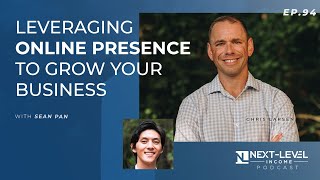
A March 2022 YouTube/podcast interview where host Chris Larsen speaks with Sean Pan — a former engineer turned real-estate investor, hard-money lender, and content creator. Sean recounts moving from engineering into real estate (house hacking, out-of-state rentals, and flips), building a large social-media presence that surged when a single video hit ~12M views, and scaling into hard-money lending and a growing multi-market portfolio (including properties in Florida, Georgia, Texas and retained California short-term rentals). They discuss market selection, building a local team (agent + property manager), leveraging content to grow business, and cautious growth plans amid rising rates.
Today's show is sponsored by the Airbnb Kickstart course. My wife and I started our first Airbnb here in the last year and we've come to love the ability to earn more money than we would if we had a long term rental. If you're interested in starting your Airbnb business with little money, scaling your Airbnb business, or just learning tricks about the industry in general, check out our airbnb course@nextlevelincome.com Airbnb BNB. That's a I R, the letters BNB and you'll get a 20% discount code. On today's show, we have Sean Pan. Sean is a hard money lender, a real estate investor and a content creator. He has over a million followers on Instagram, TikTok and YouTube. He's also the host of the Everything Real Estate Investing show where he interviews top investors and professionals, including yours truly, to shed light on what they do and and how to help investors succeed in the industry. Welcome to the Next Level Income show where it's our goal to raise your income, investments and life to the next level with your host, Chris Larson. Get your free copy of his book@nextlevelincome.com book also, if you're an accredited investor, check out the Invest link to learn how to gain access to institutional quality real estate opportunities. So, Sean Pan, welcome to the show.
Hey Chris, thanks for having me on.
Yeah, man, it's great to see you again. Glad you're feeling better. Really excited to talk to you about a few things today. But before we do, I'd love for you to share a little bit more about your background with the audience and how you got here.
Yeah. So. Hey guys, My name is Sean Pan. I'm a real estate investor and hard money lender. I was from the Bay Area, but recently moved to Dallas, Texas. Before I got started with all this, I used to be an engineer. Used to work full time for a defense contracting company. But after a few years in that business, I realized that that's not where I wanted to be and ended up here in real estate.
I love it. Well, we love engineers here on the show and we love real estate on the show. So we got a lot in common. I want to start. You have over a million followers on social media and this is what's fun is I'm a little bit older than you, Sean. If people aren't watching, they might not realize that. Cause I don't always act my age. But social media is something I've really had to Learn how to figure out. Cause I took a while to go on Facebook. I even took a while in college when we had email to really adopt it. Even though at Virginia Tech, we were one of the first campuses to have Ethernet, so we had technology very rapidly. But how do you start building an audience of a million? I mean, that seems incredible.
Yeah, well, I mean, Chris, you're doing it yourself, right? You have this giant platform here, this podcast. So the same thing happened with me. You know, I used to be a real estate investor, and when I was only investing as a flipper, I was only concerned about myself. So after doing that for a while, I realized this isn't what I want to do long term. Right. You want to provide more value. It's better to teach people, help other people. So I started my own podcast, doing that for three and a half years. And then a couple months later, someone convinced me to start doing YouTube. You know, I met my wife, who was my girlfriend back then, and we started these other online platforms together in 2020. Kind of like right before the pandemic hit, she started experimenting with TikTok, and her account actually blew up first. So she's at like 500,000 or so on TikTok. And so for the longest time, I was kind of like in her shadow, seeing her Instagram blow up, her TikTok blow up, her YouTube being blow up. And so it wasn't until I actually went back to these conferences that I go to. So one of them is called fincon. It's like a financial content creators conference. And suddenly you see all these young people. Before it was all older folk, like podcasters, bloggers, YouTubers. Now you have a lot of people who are still in college who are just like massive TikTok. And so I thought, wow, maybe I should get down on it too. So really it was just focused content creation. In November of last year, that skyrocket count to 1 million. So, I mean, it's honestly, it was only one month, right. That blew my count up.
Really?
Yeah.
Was it a particular piece of content that you recall that really, really took you there?
Absolutely. So it was one viral video that hit like 12 million views. And it's a very simple concept, too. It was basically just how if you make extra principal payments, then your loan will go down significantly. You're paying much less in interest, and you're also paying it for 26 years instead of 30 years, and you only pay 100 bucks extra. So, like a simple concept like that, but just delivered, I guess, better than other people cut the algorithm and build my channel up.
That's amazing. That's amazing. Yeah. Well, we may have to talk more about that afterwards. In all seriousness, the big point is the goal of next level income is to share, you know, some of these concepts that to you and to me are simple. We've been talking about, in some cases for decades. But, you know, people haven't heard yet, and they don't. They're not. They may not hear it from, you know, the traditional financial gurus that are out there and do that. So, like me, you were an engineer. You were. You weren't satisfied, you know, with your career track. Let's go back to that first deal, Sean. Like what. What motivated you to become a real estate investor? And tell us about that first deal that got you onto this path.
So I was in real estate investing way before I bought my first property. I'm sure many people are like this where they're interested in it, but they spent a couple of years analyzing or doing research, learning. So that was definitely my case. I really got interested in real estate investing back in maybe 2011 or so during my first internship at that defense company. And again, the job itself was pretty chill. I enjoyed working there. It was fun talking to my coworkers. But it was just sad that people who are my father's age who were working the same position as me, we tell me these stories of how they wish they did things differently in their lives. Like, they wish they took more risks with their career instead of just staying company. They would jump around or, you know, the opportunities to try new businesses. But they were too scared to take the entrepreneurship route because they wanted that steady paycheck. But then here they are 30 years later. Kind of like, sad that the company has all the power, right? If they don't want to give you a raise, then they don't give you a raise or they take away your bonuses. You know, it's. It was basically a sad play. I didn't want to see myself 30 years from now. So I figured I was young, I have chance to do whatever I want to do. And so I started learning about financial freedom, about different businesses you could try. And actually, I did try different businesses. You know, like, I tried doing a startup with some of my friends. That didn't work out so well. I tried selling selfie sticks on Amazon. That also didn't work out so well.
Sophie?
Yeah, yeah. I mean, yeah. But ultimately what I found was that real estate seemed to be a very stable business model. There are people from very different backgrounds who are all successful with real estate because it's a very scientific and formulaic process. And, you know, as engineers, we like that there's rules, unlike creative, you know, like, I'm not very good at writing essays because it's so creative, there's so much interpretation, Whereas for engineering, it's like exact science. It's the same way with real estate. Okay? If you can buy a property that cash flows from day one in a very stable market, then chances are you won't lose money. Because even if the market turns on you, as long as you have a good population that will continue renting at the same rates, then you can withhold or you can withstand any of these downturns in the market. So my thought process. So then flash forward a few years later when I'm an engineer, I've been working for a while, I've been saving and investing, and I said, finally, let's get into real estate. So my property was actually a house hack. So, long story short, I used to be from the Bay Area. I moved to la. My mom wanted to retire and move to Taiwan. And I was like, no, I want to be a real estate investor. Let's hold on to these properties here. I don't want you to just sell it to some random stranger. So I actually bought my mom's home thinking that it would be a rental property. I happen to have a job opportunity that would move me back to the Bay Area. So instead of renting it out, ended up living in that property. And then all my other friends who were also coming from Los Angeles, need a place to. So I said, hey, just live with me. So I rented all the rooms. And of course, when you rented out piecemeal like that, you can still rent out each individual room at a price relative to market, but combined it will cover your entire, like, expenses. So that was my first, like, quote unquote investment. But the real first was my first property that I bought over in Jacksonville, Florida. So simple rental property.
So hang on a second. So you're living in California and you buy a property in Jacksonville, Florida, all the way across the country?
Yeah, across the country. I mean, honestly, even with an engineer salary, there's no way I could buy a second Bay area of property. Wouldn't happen. Property in Florida is more affordable. So, yeah, those were my first real estate investments. One house, I get one rental property across the country.
So that rental property, I assume you had a local property manager that was handling that for you, doing that?
Absolutely. There's no way I would want to handle or manage a property from across the country. The way I see it, you're going to pay your property manager 10% around of the gross rents every single month. So either you're going to pay that to someone else or you're going to pay that to yourself. And for me, that's not a job that I want and I'm not willing to pay myself 10% of that rent for that work.
There we go. Yeah, I love it. No, it took me a little while to come to that conclusion was some of my properties, but I came to the same conclusion as well. And yeah, I know we share a couple different things on our journey, and this is one of them. My first property was a house hack too. I had actually, what do I have? I had two townhouses side by side, six total units, and rented out each six of those rooms, which was like you said, you get a premium when you do it that way. It's a little more work. But when people are like, well, Chris, you started 20, 20 some years ago, like, I can't. Can't do it. You're showing. Sean, you did the exact same thing, you know, you know, 15 years after I did, almost. So, yeah.
And the thing is you can. You can just rent them to your friends. So it's not even that scary. Right. Your friends aren't likely to screw you over. Well, I've had on my podcast, they ran out to random strangers on Craigslist and they still have a great time. So I mean, yeah.
That might, that might throw a couple people off, but yeah, so, yeah, so if somebody's listening, like, yeah, Sean, that's great, but I don't, like, I don't want to do that. Like, what's your advice to somebody like that?
I don't know. For me, it was a really great way to get started. Right. Like, investing, like, saving is hard enough already with all these expenses you have. So when you house hack, you dramatically reduce your. And so it was really cool because we know the Bay Area is known to be one of the most expensive places to live, but because we house hacked, like, it was really no difference from living else with a very low cost of living.
Yeah, no, I think you got to get creative. And I have some coaching clients in California, and we just explore different strategies than if you're in Ohio. Right. Or if you're in Jacksonville, Florida. Although Florida has been blowing up, as I'm sure you've happily noticed here, if you have property down there here over the last year. So how did you find that property in Jacksonville.
Yeah. So I think the first thing I did was I. They did the cities first. It wasn't targeting the properties, it was targeting the markets first.
So top down.
Love this top down. So the most important part for me at least, is when you're getting a real estate, especially out of state real estate investing, you need to understand the markets because that's more important than the individual properties. The markets will determine your growth, your appreciation potential, all that stuff. So, I mean, there's a lot of ways to do that, but basically, once you find your target market, the next step is to find your team. So for me, I started looking for team members, most specifically the real estate agent who could help me, who can kind of give me the lay of the land. Show me. Okay, these are goods for renting out properties. These are good neighborhoods for people who want to buy and live in, all that kind of stuff. So I actually went on websites like BiggerPockets, and I went on the forums and I just typed in, like, this area. Who can tell me zip code breakdowns? And there are actually a lot of very friendly real estate agents who do go on biggerpockets. They lurk on the forums and they'll be willing to help you. So from there you just call. Just call them and find the realtors that actually drive with you. For one. Some people talk too much, some people don't talk enough. And some people will tell you the wrong things. Some people will talk about, oh, this beautiful school, this beautiful fence, and it's like, I don't care. I'm an investor. So once you find that, then you find a good property manager. And honestly, once I had that team set up, then it was like, all right, I'm ready to go. Just start looking at properties. And so my agent just started sending me deals. And even though they were on the mls, they were still decent. I understand that for your very first deal, there's no need to be super greedy and a crazy home run. I think when you're first getting started, just get started. Buy a deal that makes sense because there's so much to learn through that process. And then once you're the first deal, maybe the second deal, you can get a little bit more creative and then a little bit more fancy, a little bit more rehab work needs to be done. So take it step by step.
I love that. I call it the Moneyball approach. So don't get up, don't try to swing for the fences. Your first time at bat. Get up, hit singles, hit doubles, be consistent, Buy a property That's a nice solid deal. And I think what you really said, Sean, that's the most important is learn from that experience. I always say, hey, if you're going to buy, if you're waiting into an area, it's way better to partner with somebody, not make a mistake. Learn all you can, even if you don't make a profit, so that the next deal, you know, can be profitable. So I think two amazing lessons that you just mentioned right there. So you're working in the Bay Area, you're working for a defense contractor. You start your investing career. When did you make the transition from part time investor to full time investor and how did you end up in Dallas?
Yeah, so it's a pretty long story. But sometime after I started buying these out of state rental properties, I started hanging out with a lot of real estate investors at these different meetup groups. And a lot of people in the Bay Area, they actually don't invest out of state, but they flip in California. So the way I see it is with real estate investing, it may not make sense to do long term buying holds in the Bay Area because the rents to price ratio doesn't quite make sense. You're going to lose money every single month. But flipping houses in the Bay Area is very, if done right. A lot of people I know are making millions of dollars every single year flipping houses. So naturally I got interested and I started flipping houses as well in the Bay Area. And after my first few flips, I made more money flipping houses than my base salary at my full time job. So then I would sit at my full time job, 40 hours, just thinking, why am I here? This is a waste of time. I need to do something different. There's also some differences. I was a contractor. It's a complicated situation. They had me on assignment in Northern California even though I was a SoCal employee. So they had some expectations for me to go back to SoCal. The contract finished, I was like, I like the Bay Area a lot. I have a lot of friends here. I started dating my now wife. I was like, there's really no reason for me to go back to California. So that's basically when I said, okay, time to cut ties, let's do real estate investing full time.
Now.
I'll make a quick transition here. I did real estate investing full time, but because I didn't have real daily systems of finding new deals, I ended up just not doing much with my time again. That's when I poured the content creation side. I'm like, let's add Some more value if I'm not doing things on a daily basis.
And this was just for the audience timeline about when was this?
This was around late 2019.
Okay, so this is just two, three years ago.
Exactly. So late 2019 I left my full time job as an engineer. I was doing real estate investing full time. But then I ended up doing content creation a lot more. But by doing a lot of content creation I got approached by my hard money lender and they said Sean, you're referring us so much business, why don't you work to be a hard money lender? And I thought it makes sense because it's synergistic with what I'm doing anyway. I'm talking about real estate investing, I'm doing deals myself, I'm already referring business, might as well get paid to refer more. And so I ended up start working for a hard money lending company and I've been there now for two plus years. So yeah, it's been an interesting ride.
Now wait, because you came off, you came off a really steady job. 2019, was there a period of fear and uncertainty when you hit, when the pandemic hit and you're like did I make the wrong choice?
A little bit, yes. So I realized that when the pandemic hit I, I was starting my hard money lending business. Right. So I didn't really have a solid book of business and so I didn't have that consistent income that I would have had with a full time job. And in the meantime I saw my mates who were the ones I house hacked with and they were engineers and they didn't have to go to work anymore, they were working from home, getting paid.
Their like I could, I could still get paid, I'd be home doing my thing.
Exactly. I was like wow, I could have done that. But you know, I'm glad it worked out because that gave me some time to figure out what I wanted to do. I tried many different things during the pandemic as well. But then flash forward one year later, I'm making way more money doing hard money loans than I did as an engineer because of commission based. So anyways, it all worked out for the best. But yeah, there was definitely some during the pandemic. But I do have to say this. During the pandemic my rental properties did not fail me and that gave me consistent income during that entire journey.
Yeah, it's phenomenal. Right? Because it was a scary period. I know. I looked at my wife Q2 2020 and I said between our med device business and real Estate. I was like, there's no surgeries and I don't know if we're going to get paid rent. So it is a testament to how stable the industry is, especially in the residential space. And in the intro here, I'm going to have to update it because as we speak, you're increasing the size of your portfolio over 20%, Sean. So now you do hard money loans. You were doing flips. Tell us about how you've grown your portfolio and where's your portfolio now?
Yeah, so portfolio has grown. So I've kind of moved out of just Jacksonville. We've moved to different markets in Georgia and Texas. And then of course, I got married. So when we got married, we combined our portfolio as well. Thank you.
Oh, nice.
Yes. And then of course, we started working together. We started buying more properties together. And yeah, we're in escrow right now for a 7 property portfolio. Basically, a seller just wants to offload their properties and move on with their life. There's a lot of cool things happening. I think it's just slowly growing. Slowly we're making money from our content creation side. We're making hard money loans and just using that to then buy other assets. We're not just buying real estate, we're buying stocks, crypto, et cetera.
Yeah, I love it. No, it's important. Especially people want to know, hey, Chris, what's this year going to hold? Last year was amazing for residential and multifamily real estate. You know, we're getting longer and longer into the cycle, I think I tell people, diversify, make sure you have income producing assets that are coming in. You want high quality income producing assets with some diversification that can hedge against not only inflation, but also any downturns if they may occur. You're in Dallas. What other country you talk about? Dallas, Florida, Georgia. What other parts of the country do you like right now for investing, Sean?
Yeah. So again, we are also in California. Like I didn't sell your properties, I believe.
Sorry, I left out California. Yeah, and California.
Yeah. But you know, we keep that one as Airbnb right now. So I think it's like we don't really want to go to different right now because finding the market and creating a team is the most work. After that's done, then the rest is pretty easy. Just find a good deal and you buy it. So we're not really in that phase right now. It's instead, now that we've moved from the Bay Area to Texas, our plan was to do more active real estate investing. So One is maybe do flips here in Dallas and Or second is to do renovations and then convert them into short term rentals or midterm rentals. Yeah. So those are our strategies going forward, at least for 2020.
Yeah. I think that's interesting because when you start buying properties, it was easier to make the numbers work. A lot of people come to me today and they're like, chris, I can't. I'm looking at this property and the numbers don't work. They look at short term rentals, they look at co living options, they look at more what I would call operational real estate. We're doing the same thing with car washes, with mobile home parks. Senior housing I think is another opportunity for that. Something that has an operational component that you can exploit. Inefficiencies. And we love short term rentals too. My wife and I have two here on our property and the profits are 10x what it would be if you were just doing a long term rental, for instance. I think that's a fantastic option here. So, Sean, we've covered a lot of awesome stuff here. What does the future hold for you and your business?
Yeah. So I think like we mentioned before, we are trying to do more of that short term rental stuff, more active real estate investing. Like you mentioned earlier, podcast, we are also content creators. So we have YouTube channel, podcast and TikTok Instagram. The beauty is it's like a nice cycle. Right. So the more we do, the more content we create. The more content we create, the better real estate investing we can do. Because now we can talk to real estate agents. We could talk to other people and show them our profile. When we show them our presence, we are actually legitimate people. We're not just some random people who might be wasting their time. So all these things kind of synergize together. So that's why we're more interested in doing active real estate investing starting from this year. Now, that being said, with this current economic crisis, and I see stocks going down, our interest rates are increasing. It does seem a little bit scary. So I think we'll take it slowly. We're not just going to start doing 10 flips at once. Take it one at a time, do projects, do them right. We're lucky that we do have a lot of liquid funds. So we might not use as much leverage as some people might want to use. Just keep it safer.
Yeah, I think that's great advice. Keep the leverage reasonable. Nassim Taleb in the Black Swan, he says, don't blow up and that's some terrific advice for investors if you're listening here and if people want to follow you. Sean, I know we have everything in the show notes here, but what's the best way to find you? Let's say people want a hard money loan or they're looking to do a flip. Tell us a little bit more about how people get in touch with you to follow you, but also if they're interested in working with you.
Yeah. So I think the best way to follow me is through Instagram. You can find me at SeanLovesRealEstate because I answer every DM that comes through Instagram. You can also send me an email@seanverthingrei.com that's s v a n@everythingrei.com and I do have a website, rei.com and the podcast the We Love Real Estate Show.
Awesome. Well, Sean, it's been a blast talking to you again. We wish you all the best here in this year and thanks for sharing your inspirational story with our audience.
Yeah, Chris, thanks for having me on.
Absolutely. My pleasure. Hey Chris, here again. I hope you found this episode valuable. Now I have one more thing to gift you. We have a page for my coaching clients where you can get a free copy of my book as well as much more from previous guests on the show. Just check out nextlevelincome.com coaching to get a free copy of my book, audiobook and much more. I'll send you a copy of my book and cover all the shipping costs as a thank you for listening to the podcast. Also, please like share and take just 90 seconds to give us a rating on Apple Podcasts.










