NICK BOULLE INTERVIEW – Insight on Business at 200+ MPH and Building Successful Family Businesses
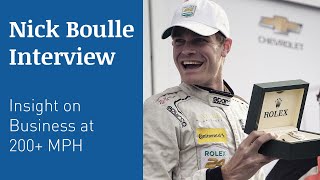
Recorded June 2019, this is an interview with Nick Boule (race driver and jeweler) about his motorsport career, athletic background (cycling), rigorous fitness routine (including neck training and 1–1.5 hours gym sessions), endurance racing calendar (Rolex 24, Sebring, Watkins Glen, Petit Le Mans; possible Le Mans return), team logistics for endurance races (12–15 crew, multiple drivers, 2–3 hour stints), family business role at Daboul Diamond & Jewelry, and investment preferences (real estate, stocks, cars).
Questions this video answers
12
About 15 pounds of lead weights
2–3 hours per stint; average heart rate 150–180 bpm
Park Place Motorsports in a Porsche GT3R
De Boul (D E B O U L L E) and he prefers Instagram for updates.
Welcome to the Next Level Income show, where our goal is to help you take your income, your investments and your life to the next level. I'm Chris Larson.
And I'm Caleb Welborn. Our guest today is Nick Boole, a professional race car driver and jeweler from Dallas, Texas. His driving results include winning the 201724 Hours of Daytona prototype challenge, third in the 2018 Spa 24 Hours, eighth in the 2018 Le Mans, and sixth at the Sobrique 12 Hours just a few weeks ago. In addition to this, Nick runs sales and marketing for his family business, Daboul diamond and Jewelry, one of the preeminent independently owned jewelers in the United States, with locations in Dallas and the River Oaks district of Houston, Texas. I first met Nick about nine years ago in the Texas road racing scene. It's been a pleasure to see his accomplishments since. Nick, thank you for joining us on the show.
Thank you guys for having me excited to be here.
Absolutely. Nick, we were talking, I was looking at your background before the show and it's impressive. Today you told me you're working in the family business.
You.
Yet you have all these results in motorsport, you have a history in athletics. We're talking about your multiple state championships as a cyclist. And I also saw that you're. Is it, is it true you're one of the world's 50 most eligible bachelors?
Yeah, I was number 33 according to town and Country. I'm not really sure how it happened, but yes, it's true.
Impressive. So do you mind sharing a little bit about your background and how, you know, you went from when you met Caleb racing bikes in Texas to where you are today?
I grew up in Dallas, Texas. I've always loved competing. Even I remember going as a kid to what was it like the roller rinks for birthday parties and they'd have a race at the end and that was always my favorite part. Anyway, I started racing go karts when I was 12 through a friend of my dad's who introduced us to the sport and then sort of developed in what's called karting and started taking it more and more seriously. Eventually found a really great coach who was an IndyCar driver at the time and sort of progressed through the ranks doing everything from F2000, where I think I placed ninth in the championship my first year and second or third placed rookie. And then that was around 0809 and I saw. And it was when. What do you say? That there was a huge financial collapse and throughout the world. Yeah, anyway. And I needed a I needed some kind of outlet because this sport I'd been training for and putting together sponsorship and partnerships for the past. I don't know, at that point was eight years, nine years was gone. Right. Nobody was investing in something like that at the time. Everyone was just in a battle for survival. And so I found cycling and used that as my competitive outlet for the next, what was it, three or four years. And my. What do you say? The skill set that I developed in karting and car racing somehow translated well because a lot of it's about momentum and I was able to apply that and then just focus on the fitness and use that as a way to sort of another thing to structure my life around and another thing to have as a competitive focus. And obviously that's where Caleb. And then sort of a lot's changed since then.
Yeah, well, awesome. So, yeah, you brought up the fitness and I find it fascinating, the level of fitness that's required to compete at the top level of motorsport. Can you give our listeners a bit of an idea about what it's like competing at that level and what it takes to train for it?
You know, you're a former cyclist, you understand better. You're a cyclist, you understand better than anybody that the hours and commitment and regimen it takes to compete. Now, because I've joined the family business and I'm also competing professionally in motorsports, it's a bit. I don't want to say it's a struggle, but it's just not. And it's not a compromise either. It's just I have to be very focused in how I do it from the perspective of cycling, when Obviously you're training 30 hours a week, the hours were crazy. I don't have that kind of time. I fly back and forth between Dallas and Houston to help with both of our stores operations in Houston helping. And luckily, I can do a lot of digital marketing while I travel. But from a fitness perspective, I'm spending like maybe an hour, hour and a half in the gym a day. And then usually on my day off, I'll do a little longer. I'll try and go for a long bike ride or a long run to really work on that endurance side of it. In the past, where I could sort of. I could have. What do you say? Fitness is like a bit of an outlet as well, because I could say, okay, well, I'm going to run. I'm going to run and cycle and compete in a triathlon on the side. Now I have to be. Just to manage my time. I have to be very much more, I have to do it in a structured way so that I can be very motorsport, have a very motorsport orientated fitness level, if that makes sense. From training my core, my arms, having really good cardio and then also training my neck, which sounds like sort of a strange thing, but I've literally got a helmet that I've added 15 pounds of lead weights to and I'll sit there four times a week and do a neck workout. And it's truly, it's one of those things you have. You experience a lot of G forces in the car and you feel that on your core and your legs and your arms and everything. But one of the few things in a car that's not supported at all is your neck. And the cars are so fast now that you're experiencing under braking 4G, which means if your head weighs, I don't know, let's say your head weighs 12 pounds and then you've got a four pound helmet on it, that's 16 times four. You're looking at 50, 60 pounds of weight that the muscles in the back side of your neck. And then the same thing when you're going left and right. So it's a really specific kind of fitness. And your heart rate's up the whole time. So a stint will be 2 to 3 hours and your heart rate average will be 150 to 180 beats per minute the whole time. So it's like staying on a. It's like a long run. Yeah.
So Nick, if you took your tie off, does your neck look like Henry Rollins under there?
Not quite. I wish. Maybe that means I need to work out more. I did hear of a story of there was actually competed at the 24. He won the Daytona 24 this year. Fernando Alonso. I heard a story of him putting like a nut on the side of his, like a pecan on the side of his neck and he leaned over and he cracked it with his neck muscle. But I haven't found the video. I'm not sure if that's, that's the truth. Pretty funny though.
That is wild. So how many races do you do per year?
We've worked very hard to get to this point, but this year it looks like I'll be doing. I'm running the full endurance championship campaign with Park Place Motorsports in their Porsche GT3R. So that's my North American tour, if you will. I'll be racing or raced at the Daytona 24 hours, the Rolex 24 hours at Daytona. Excuse me, the Sebring 12 hours, which was two weeks ago, I guess. Is that right? Yeah, two weeks ago where we finished sixth, then we finished seventh at Daytona. Now I'll race in Watkins Glen and then Petit Le Mans in Atlanta at the end of the year. But then additionally, it looks like I'll be racing two races in Europe. My fingers are crossed I'm going back to the Le Mans 24 hours. But that's a pretty wild race to get to, so I'm not going to say that until I've got everything sorted and know what car and team and all that. But we're pretty close on a deal, so hopefully it comes together.
Yeah, you did it with Jackie Chan racing last year, right?
Correct.
And yeah, impressive racing calendar. And we, we do deals down in Atlanta pretty often, so we might have to come down and check out the race. That'd be awesome.
It's actually a great race to go to as well in Atlanta. Beautiful part of the country. And then the race itself is 10 hours long. And it's one of the few places really you're driving and it feels like, and it even looks like you're going somewhere. I don't know how to explain that, but I think you climb eight stories in vertical elevation in the first corner. It's wild.
Oh, wow. That is cool.
That's kind of like Circuit of the Americas too, right? In Austin.
Yeah, yeah. It's actually, it's probably a bigger hill than that.
Oh, wow. Yeah, that's impressive.
Interesting. Now we have to check that out. And you, you said something interesting next. We were talking about bike racing before we got started. We talked about teams. So you just said we won or we did well there. How many people are on your team? Like tell us a little bit more for audience that isn't as familiar. So you got yourself who's driving, what's the support crew look like? Mechanics, all that motorsports is a lot.
Like cycling in that respect because. Especially in endurance racing, because the events I'm competing in are they range this year they'll range in length from 6 hours to 24 hours. Right. So you'll literally start at 2:30 on Saturday, for example, and end on Sunday at 2:30 the next day. And we'll have, let's say Le Mans, the most extreme example, but you'll have let's say 15 crew on a car, 12 crew on a car. And those same guys, engineers, mechanics, will all be up throughout the night doing upwards of 26 pit stops, I think. And so obviously they're as big of a part of your Success as anyone from how you work with your engineer to the pit crew's ability to execute during every pit stop, which sounds small and it's easy to change tires, but there's a huge number of ways that things can go wrong and freak time, they can cost you or gain you. And then because it's such a long race from a driving perspective, I'm sharing the car with a minimum of two drivers at every race. So it literally becomes like a relay. Every two hours in the car is about 1800 calories, especially in the prototypes, because it's very physical and it's hot. Your heart rate's high. The G forces are the loads you experience throughout the race, and even the weight of the steering. And I think every time you hit the brakes, it's equivalent to. It's like a 75 pound deadlift. And at Le Mans, you're doing that 15 times a lap, take a little rest down the straight, but then you're doing it again and then another straight and you're doing it again. And things happen quickly at 212 miles an hour or whatever we're doing there. So it becomes a relay back and forth. You don't really want to do any more than three hours in the car at a time. But yeah. Long answer to your question. Sorry about that.
No, that's super fascinating. And you know, one of the reasons I asked. A lot of people don't realize what a team sports cycling is. I don't think a lot of people realize what a team you have behind you. I didn't realize it was that many people and that you have the relay going on. And we even talk about it in my book on real estate, how real estate investing is a team sport as well. That's the. One of the things is younger listeners that are paying attention to the show. Some of my friends that have, that are a little older, that have kids in college, we talk about how, how do we get our children to realize that one of the biggest skills in life is working as a team and that's how you become successful collaborating, doing that. So no, I love, I love the answer. Thanks for, thanks for going in depth there. So you do you do a dozen or more races a year? What, what's your favorite race or venue?
You know, it's funny, that's. That there's two answers to that question. From a driving perspective. I've got two answers to that. So the first one would be the Rolex 24 hours was like my really. My first big win. It was really special. And I love.
Awesome, man. Yeah.
So that's very special to me. And I like it because it's very physical. That sounds strange because it doesn't seem like it would be, but because you're on the banking the whole race at Le Mans, you go down a, I don't know, a one mile straight, right? And down that one mile straight. I can adjust my belts, I can communicate with the team on the radio. I can take a moment and make sure everything's just right. At Daytona, you'll get in for a two hour stint and the time that you're resting is on the banking and cars are going past you. It's very tight and narrow and you're still experiencing even under that quote, unquote resting state. You're dealing with one G on the banking, so your neck never gets a rest. You're constantly focusing. And it's a fairly small, it seems like a fairly small circuit for what it is. So there's constantly cars going past you. I think it's 3.4 miles, but it seems tighter than that because of how quickly a lap goes by from a perspective of like a show and also a circuit in and of itself because you're truly going somewhere. Le mans, you've got 350,000 spectators. Well, I think Forbes listed it as the number one sporting event in the world, ahead of the World cup and the Super Bowl. There's no words to put into perspective the scale of the event and some of the corners. There's so much history there. It's one of the oldest sporting events there is. Right after the first car, these manufacturers wanted to compete and prove who had the best machine. Perspective of a sporting event. Le Mans is untouchable. It's like the fans. I'll never forget. It was the first day of the test day and a guy walked up to me and he had a picture of every car I've competed in for the past 15 years. And what that I was. That he wanted me to sign. And I'm like, that's not, that's not, that's not something I'm used to. But the people are just so die hard. It's there, it's. It's extraordinary.
Cool. What's, what's the wildest experience you've had on or off the track? Pg. PG story.
Yeah, PG experience. You know, it was probably last year at the start. We started, I think, one, one or two behind Juan Pablo Montoya. That was really special. And I remember standing on the grid and stretching and getting warmed up because I was gonna start for the team. And who was it? Rafael Nadal was waving the starting flag. So he was waving the green flag to start the race, which is a French flag at Le Mans. And he walked past and I was like, wow, that guy looks really familiar. And then it clicked as to who it was. And I had. It was the surreal moment of oh, there are 300,000 people standing around. This moment, like this is pretty unbelievable. The next. But so then cut. Ten hours later, it's midnight in Le Mans. I'm going in for my third stint or something. And the greatest racing driver to have ever lived and my idol growing up for a bunch of different reasons, this guy named Michael Schumacher and the guy raced formula or the guy who was sort of his right hand man at Ferrari when they were winning their won their first through their or second through their seventh world title was a guy named Jean Todd. And he's one of the most respected people in motorsports. And I'll never forget standing last year in the pit lane in Le Mans. And he's standing. He came in to check on our car because he was friends with one of the guys on the team. And I remember shaking his hand, talking to him in French a little bit and having this like wave of chills and being so mad that I'd left my phone in my helmet bag and I did. I couldn't take a picture or anything because nobody was going to believe that it had actually happened anyway. Those are the two.
That's really cool, man. It's awesome when you're able to meet some of your idols and that you look up to in sport. Really neat.
So one thing you were talking about was focus. And with cycling it's like you can be in the pain cave, you know, your heart rate super high, you're just dying and you can kind of stop focusing on what's going on. If you just need. No, you need to make it over the climb and you can just spray yourself. But with you're going 212 miles an hour you ha. Or you're going to like die if you don't. How do you balance the. The physical exertion with like the. Seems like you need a lot of precision to do what you do.
Yeah, it's funny you say that because that was always something that I felt like I brought that motorsports brought to cycling for me it gave me an ability to focus much more intensely Over a six hour race. For example, on the road when you have 125 mile stage you catch people zoning out or not focusing every moment. And the decisive moment would happen three hours and some obscure time into the race, and you'd realize, this is the moment, this is the race right here. And you'd see people who were stronger than stronger that weren't focused in that moment, and they'd miss it. But what's interesting is I think that's something that you certainly train for, and the fitter you can be, so that the less taxing it is on you mentally to just simply be in the car driving, the better. What's interesting from the perspective of motorsports as a physical endeavor, a sport, if you're going and running up a hill as fast as you can, right? Riding up a hill and you can't quite keep up with the person ahead of you, you sort of lose them, right? They slowly roll off ahead of you. Well, if you get tired in a race car, the car will still do. And you can't hit the brakes hard enough, right, because you didn't train and your legs are tired or in certain cars, the steering is literally so heavy that it takes an immense amount of force just to turn the wheel. It's like holding two 15 pound weights for three hours, right? And so that sounds fine, but then after it's a drip, drip, drip. What's interesting about motorsports is after that two hours, the car is still doing 212 miles an hour. So you have to be able to stop the car, you have to be able to turn it, you have to be able to hold your neck up, because if you can't, you can't see, you can't stop the car to its full capability. There's, there's. Yeah, it's, it's, it's, it's, it's interesting from that perspective. So the training is super, super, super important, but to keep that focus, like you said.
But yeah, that's incredible. What similarities and differences do you see in what it takes to be successful in motorsport and what it takes to be successful in business?
You know, it's funny, and I kind of go back to the cycling front on that because I think that well, and the motorsport side. But the most important thing that cycling taught me was the importance of discipline. It took me, after about three months, I realized, of getting on the bike, I realized how important every single workout was, every single moment on the bike was when you were preparing for an event, if it was raining. Those were always my absolute favorite days because I knew that a lot of people were going to sit on a trainer for an hour and a half, and I'd try and go out and get my full four hour ride in, whatever it was, and see that pay dividends. Especially if it was like a week of rain and spring showers in Texas or something, I'd show up to the next race and feel just that much more confident. So I think there's that side applies to everything from its whether it's family, business, friends, it's about that continued effort and focus. And then in terms of the motorsport side of it and cycling, it's the importance of people. There's different things that motivate different people. I know what motivates me and I know what motivates different people on each team and how important it is to play a part in even the smallest aspects of it. I think translating that to business, that's one of the things that can be challenging. But that's the reason I'm down in Houston this week, because it makes a difference. Putting a face to a name and shaking people's hand and having that personal connection, whether it's people walking through the door of our store or whether it's the people who are down here on the ground every single day. So I think, yeah, I mean, those are the key things for me, obviously, I feel very lucky because we're in a business where we get to be a very small part of a big moment for people. And because of that, it's literally just about looking out for people's best interest. And hopefully whether it's in sport and you're on the same team, it comes back to you.
Those are some wonderful tips you put in there, Nick. Just the importance of relationships, you know the focus. Jocko Willink, he says, discipline equals freedom, which I love. And then I always used to say when I was training, I'd hate riding in the rain, but I hate losing more. So I thought I was nodding my head up and down when you were talking about training in the rain. I absolutely love that. What other advice could you give to people that are in a family business? And maybe even more specifically, you hear oftentimes that it takes a generation to build wealth and then it takes what, two generations to lose it. So people that are maybe in a family business and then those that are second generation that may be looking at their parents and saying, do I really want to do this? What advice do you have for people like that?
The biggest thing that happened for me, I knew that I wanted to get involved with the family business at some point because I'm very proud of what my dad built. He came from nothing. He started in the early 1983 he started this company and he's grown it through word of mouth, making the right decisions, and then also through relationships. I remember as a kid him always saying, you meet the same people on the way up as you meet on the way down. And that's something that really stuck with me. I think from the perspective of advice for someone looking. I actually had somebody ask me this question recently. I never really thought about it. I think what can be challenging in any business is a clash of egos. I'm very fortunate that my dad and I have a very similar perspective on those things and my mom, because she's a huge part of the business and I hopefully my sister will be at some point too. But I think it's about keeping that in perspective. After college and after I sort of started falling out in the cycling world a little bit, I actually started a separate company. I did digital marketing for a company that I started called wowbirds Marketing. It was a funny name, but we were easy to find once you knew the name. We did everything from built websites for banks and our biggest client was a multi billion dollar resort in Mexico. It sort of grew upon itself, but I focused on the luxury sector and what it taught me was how much I didn't know. And it was this amazing experience to sort of learn and then also realize how much effort my dad had truly put in over the past 30 years to get this business to what it is now. And after four years of doing that, I realized we were going to start looking at opening another store and looking in Houston. And that was sort of the moment I said, okay, now is going to be a good chance for me to transition into the family business. But yeah, I think those will be the two things you have to a know you have to understand, gain outside experience so you can bring something back and be respected in your own right. And then also make sure you're willing and able to deal with many different people and not hold yourself with too big of an ego because inevitably it gets chopped down somehow.
So Nick, this may be kind of an extension of that same question we usually ask our guests. If you can go back and give your 25 year old self advice, what would it be? Now you just turned 30. Happy birthday. So I'm going to switch the question up a little bit. If you go back 10 years and give yourself advice, I know that was around the time that you said was a challenging time after the financial crisis, but what advice would that be for yourself?
That's a hard question. Yeah, you Know, it's something that I've started doing really in the past year and a half, two years. One of the. This is silly, but I think one of the. I'm always. I like to keep pushing myself. I think that's one of the reasons that I love motorsports. It's finding that limit. And I love. And that's what led me to cycling. You get to see how far you can take your body and mind and push through pain and do it with 125 other people trying to cross the line first. But in terms of advice, I think it would be probably twofold. A, not to take anything too seriously in terms of setbacks and things like that, but then also to read more. I think for me, one of the first big. One of the first books that I ever read and really realized I could take some free enjoyable time in my life and improve myself was my dad gave me this book when I think I was like 13 years old. I have to be one of the youngest people who ever read it. How to Win Friends and Influence People by Dale Carnegie.
Yeah, most 13 year olds are not reading that book.
I'd say that's in my top.
Yeah.
Really?
Yeah. It definitely improved my life once I read it.
Yeah. So. And it's funny you mentioned Jocko Willink. Is that right? Jocko Willink?
Yeah. Yeah, that's exactly right.
I recently read that Extreme Ownership book and I don't. I've never read a book that communicated complex ideas so clearly and without. Without any ego that I. In a weird way, that book changed my life. I don't know how to explain it, but I'm now on the second one, the Dichotomy of Leadership. And I'm halfway through.
He's a great business leader and I would recommend anybody listening to the show that especially that runs a team or works with the team. I have a sales team I work with. I mean, it's got tremendous advice in there. And when you see that guy, he's. Maybe that's whose neck I should have referenced in the beginning of the show, Nick. Because that guy, he does not look like you want to cross that guy. He's at X. Navy seal. Yeah, it's your. Your quote reminded me, my good, good friend of mine. We were out in Colorado, we were cycling the Colorado trail and we did our longest day. We got lost and it was coming up on dusk. We didn't, we didn't have cell service, our GPS had run out. The roads crisscross what they look like on the map. And my Buddy had bonked, and I was, like, literally pushing him and telling him, thank you, your daughters. Like, we got to get through this. And we're coming down. We fortuitously found a guy who gave us a lift. We ended up catching up to our guide, and we're in Silverton, Colorado, Spent the night. We get up the next day, and we go to this coffee shop. And we walked in, and on the wall was this mural, and it said, you should always go further than you should go.
Yeah.
And I'll never forget it. It was like. It was just perfect for that day. I took a picture. I was like, I'll never forget that moment. So I love. I love your quote. Like, keep pushing. Keep seeing what your limits are, and that's. That's what life's all about.
You had mentioned your motivations earlier. Would you say that's your main motivation, is to see how far you can go, or how would you define what your main motivation is?
I think certainly finding the limits is something that I enjoy, and I think it's also probably because I consider myself a bit more of an introvert than an extrovert. I'm a learned extrovert, and that's somewhere that's a part of my life where I have to. Even because I'm on the sales floor a lot. I wouldn't say I'm not taking people who walk through the door, but I am managing a sales team. Right. We've got three guys in Houston, three guys in Dallas who. They're on the ground every day. But I have to be a part of that oftentimes. And I think that's sort of what pushed me through. Learning. Seeing my weaknesses and sort of being able to expand on them is always something that. And improve them. I make an effort each day to improve, so it's probably twofold. Finding the limit, maybe not quite in everything, but that's certainly something I enjoy. And luckily, that passion for pushing things works well in business and in sport.
You and your family have built this impressive business. Other than reinvesting within the business, what other areas do you all seek to invest capital in?
Certainly in real estate, we do a little bit in the stock market. And then it's funny, when I bought a house a couple years back, and that's done very well for me. It's a lot. A lot of that's luck and timing. But when I've always sort of. We've always liked tangible assets. I think because of being in the business we're in, after I was. When I was Running Wildbirds marketing, I couldn't help but with this extra free time I had start finding a new way from motorsports. I knew cars very well, so I was flipping cars on the side to have A, something to fill my free time when I had it, and B, to put. To put money to work because like our business was growing. But I felt like I had. I needed to do more at the time to make it. To make it. To make it happen. And I'd meet these amazing people doing that. So, yeah, that's kind of a long winded answer to answer to your question, but yeah.
What kind of cars were you flipping, Nick? Were they sports cars? Were they just. Were they specific type or.
I sort of built up. So I found like what was. I found a mini for like a Mini Cooper S that was a works edition and I bought and sold it. And that was like 15 to 20 grand at the time. Something like that. And then sort of like kept it rolling and kept it rolling and kept it rolling. And then finally I had a. What was it? It was a BMW and then I did a Range Rover and then I did. So I sort of. It was funny, but it ended up sort of. That ended up being the money that I built up. I was able to do it nicer and nicer and nicer and nicer over about three years until I used that car for a down payment on a house. I got my fingers burned on a car and I got scared and I thought, okay, this is probably not a good use of my time anymore. And sort of tried to find something a little bit more safe long term. And yeah, so it was everything. I did not discriminate.
Yeah, no. I think one of our guests. And was it our second show, Richard Wilson, he talks about. He runs the family office club and we're talking about families, $100 million plus families. And one of the statistics that we like to quote is he says about 30% of money that these families invest that don't have money in real estate. They put it in real estate. They put in tangible assets. He also talks about art and collectibles and some of that other stuff, but it's true. A lot of families that have real wealth like it to be tangible. I mean, stock market's great for building wealth. There may not be real estate and stock market, probably two greatest wealth generators, but those tangible assets, we're fans of those as well.
Yeah, that's a really cool story about flipping the cars. If our listeners want to learn more about dabool, diamond and jewelry or follow Your racing calendar. What are the best ways for them to do this?
Certainly the easiest way for them to do is to follow de Boul, which is D E and then space B, O U, L, L E. Like my last name. We've got a ton of information on about our history and sort of the name behind us, which is Andre Charles Poule, who's preeminent artist in Paris at one point under Louis xv, I believe. And then from a racing perspective, we do have some on our website, but pretty much the only place that I like to share is Instagram because it's simple and I can share one picture and give an update. I feel like it's a very small lens into my motorsports and business world, but yeah, that's probably the best place for me from a personal perspective and business perspective. But we've got a ton of information on our company, social media as well.
Great. Well, yeah, I follow Nick on Instagram and if you guys have Instagram, I'd recommend you do as well. It's pretty interesting.
So, Nick, we were talking before the show. I was raising money for cycling teams when I was 15 and did that all the way until I quit racing. We raised money from investors today in our business. Do you mind sharing a little bit for our listeners? The business of motorsports and what it. What it takes. You're talking about the challenges during the financial crisis of having the financial wherewithal to have a team. Can you share with some of the audience the challenges, the similarities, the differences with other businesses?
Motorsports is very interesting from the business side. It's certainly not something that makes me money, but I'm very passionate about it. And it's also certainly something that Dabool, our company, invests in because of the marketing return we get from it. But we've got sort of. We've got a very. It's one of the things that's sort of. It's funny because it's one of the most important aspects of it, but it's sponsorship, but it's. I hate to say it, but it's almost rare. There's so many people and cars and teams that exist thanks to an individual or someone writing a check. It's wild. And what we struggled for 10 years as I was learning and karting was something that my dad and I did together. It wasn't some big team or anything like that. It eventually became very serious when I'm competing in national international championships throughout North America. But it really wasn't until about four years ago after I fell back in through a Big karting race and realized I hadn't lost as much of the skills that I'd learned as I thought I had at about, I think I was, what was I, 24 at the time and I'd saved up enough through my marketing firm to go and run this big go kart race. And I went back and I finished in the top. What did I do? I finished second, second in one heat, third in another heat, and then seventh or eighth overall in the final out of 100 people. And I'm like, wow, okay, first of all, I can't believe I made weight in this thing, but I haven't lost as much as I thought I had. And we started talking to some. I met a close family friend and actually a guy we've done real estate deals with and he's now a big sponsor on the side of the car, started talking to us and how much he loved motorsports. And through this I realized that the most important aspect of motorsport that at the time hasn't been very touched on by a lot of people and professional motorsports especially is the experience of a race weekend. And yes, the signage means something. Yes, all of the people that see these businesses through De Buels Motorsports and my motorsports posts on social media and the people we meet through racing itself are very important. But the most important aspect is this experience that our partners can bring their clients, their closest partners, whatever it is, other people they do deals with and have this unbelievably sort of transformative bonding experience over a four day weekend at a race where you're not just watching on TV your logo fly past, which you can barely see. It's you're actually on the team, you're sitting, listening and talking with the engineers. And everyone in this 15 person group is absolutely unified in terms of watching this one car with 15 people working hard around it, go around a racetrack. And it brings everything to a pinnacle because in business you've got accounting, marketing, sales, you've got all these different branches which work together thanks to a CEO, hopefully. Well to a. Well, thanks. Hopefully they work well thanks to a good CEO and they're brought together. But there's so many moving pieces, it's really hard to sort of embody that effort. Right. You can see it in cycling a little bit in terms of like a lead out train and a sprint. You'll have five people and then all of this hard work and focus together comes in one moment as hopefully your guy crosses the line first with his hands up. Right? Well, in Motorsports you see 15 people working together and you have the embodiment of that work going around the racetrack for 24 hours straight oftentimes. And that's your apex, that's your focus. Everything is in that one point. There's an absolute focus on that and nothing else. And whether you've got business or family or whatever it is, there's something addictive about being in that situation. And we've sort of built. We've built this network of partnerships that revolve around that experience and we've expanded it. So somehow I made it to Le Mans and won some races and hopefully it keeps going.
But yeah, man, to watch your face and your energy during that, you can tell how passionate you are about it. Nick, that was awesome.
Selfishly, it also makes it much more special for me because we've got this amazing team of friends, business partners, families who go and get involved. And as special as these moments are, they're made even more special because I get to share them with these awesome people who can, after a weekend of it, appreciate everything that's happening. And it's significant. It's not quite like sending a rocket to the moon, but it feels like it. We're trying to put the partnerships and budget together sometimes.
Yeah. Wonderful.
Well, Nick, I knew this was going to be a fascinating interview, and you did not disappoint. To anyone listening, if you want to learn more about his business or his racing, you can find it in the show notes along with Chris's book, Next Level Income. And hope you guys join us next time. Thanks, Nick.
Thank you, Nick.
Thank you, guys. I enjoyed it.










