PAUL CLARK INTERVIEW – Making Money, Having Fun, and Doing Good Through Angel Investing
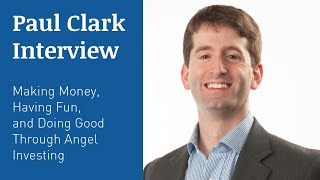
Chris Larsen interviews Paul Clark, Managing Director of Venture South, about angel investing and how to make money while supporting startups. They discuss investment strategies, the growth of Venture South and Asheville Angels, and what entrepreneurs and investors need to know.
Welcome to the Next Level Income show where it's our goal to take your income, your investments and your life to the next level. I'm Chris Larson.
And I'm Caleb Welborn.
You can get your free book@nextlevelincome.com on today's show we have Paul Clark. Paul is the Managing director of Venture south, which operates angel investment groups and funds comprised of more than 300 accredited investors across the Southeast. Prior to co founding Venture South, Paul was the senior Vice president of Mergers and acquisitions at a multi billion dollar bank in South Carolina. He was also part of a team responsible for investments in financial services companies and vehicles, including an SBIC fund and developing junior lending capabilities. Paul has extensive private equity investment and fund experience as a principal at VC Partners in New York and London and Early M and a advisory experience at NM Rothschild & Sons in London. Most people may not know, but as soon as he starts talking, you'll find out. Paul is from Britain and venturesalth's Asheville Angel Group, which he helped co found, is a group that finds and funds startups and early stage companies. Paul, welcome to the show.
Thanks Chris. I'm very pleased to be here and I'm not going to try to disguise my accent during the course of the conversation.
Oh no, it's fantastic. I think it always gives people in the financial industry more credence when you have an English accent.
That's right. I use my accent just to enhance my credibility. That's why I keep it.
Fantastic. Paul. I joined Asheville Angels. It'll be almost five years ago in 2015. It was founded in 2014. Would you mind giving the audience a background of not just Asheville Angels but really Venture south and how you came to be here in the South Carolina Asheville area?
Yeah, happy to. So the story starts when a few folks in Greenville, South Carolina got together in about 2008 and formed an angel group. We'll talk later. I think about what angel groups actually are, but they started theirs in 2008. I was working for private equity fund in New York. Moved to South Carolina because my wife teaches at Clemson. Got involved in that group in about 2012 and just really enjoyed seeing what they did. So much so in fact that I decided to stop doing what I was doing at a bank and work together with that group to try to expand what they're doing outside of Greenville. So in 2013 and 2014 we put together our business plan for growing a network of angel groups which is now called Venture South. At the time it was called South Carolina Angel Network because it was mostly focused in South Carolina. But very quickly we found that other cities wanted to have an angel group like the one that had been pretty successful at that point in Greenville. So we put together this plan to go out to other cities to launch a group. Fortunately, at the same time, Josh Dorfman had just been recruited here in Asheville to the Asheville Chamber and the EDC to try to catalyze the entrepreneurial ecosystem of Asheville particularly. And he said he wanted to have some kind of capabilities around investor capital into early stage startup companies and supporting the ecosystem. And so that was good timing on his part and ours to be both working on the same thing at the same time. So we got together, joined forces and launched Asheville Angels in October of 2014. And then we continued doing that in other places as well. So at this point, Venture South a few years later is a 12 group angel group stretching from Greensboro in North Carolina down to Hilton Head in South Carolina. And we operate basically as one big angel group of which Asheville Angels is a sort of founder, member and constituent. And we all work together to do angel investing as a group.
Yeah, no, it's been fantastic to see it grow, Paul, over the past five years and. Yeah, thanks for sharing that.
Yeah, it's been fun. So we've had about 125 people from the Asheville region, part of Asheville Angels, and we've currently got about 250 people that are part of Venture south across the whole footprint. So it's been fun meeting all these people, helping communities grow, helping people make investments. It's been a fun ride.
Oh, yeah, it's a tremendous network. I mean, the people that have been a part of it that I've met, just diverse backgrounds, very successful from different things. It's been cool to see the impact on the local Asheville area. I think one of the big things that is a younger entrepreneur in the area. It's a challenge to come to Asheville and find a job. So to have a culture that's supported not only by the city, but by a bigger regional group, I think it's been terrific for the area.
Yeah, Chris actually connected me with Josh a few years ago and Chris has connected me with a ton of people to help with my business around here. But Josh also, once I got to know him, he's connected me with a ton of people. So it's really great having him here in the community. So you're actually here for an Asheville Angels meeting. Can you share what the mission is? Of Venture south as a whole and then also Asheville Angels and sure, if those are congruent or.
Yeah. So Venture south and Asheville Angels motto is to make money, have fun and do good. So that's what our mission is as well. We're at heart a group of individuals that want to invest in companies in order to make a positive return on that investment. But that's not the only thing we do. We'd like to have fun and do good while we're at it. We have fun by hearing young entrepreneurs tell us their ideas, which range from crazy brilliant to crazy crazy. Is interesting to hear. The energy and the passion that entrepreneurs have is infectious and is really enjoyable to be part of. It's fun to be part of and our groups get together like minded individuals that want to invest in those companies. So the whole atmosphere of being excited by entrepreneurs, networking with experienced community leaders and investors is a good recipe for a lot of fun. It's not all fun all the time. Obviously some of these companies fail and there's tough times in there as well. But when the companies succeed, there's a lot of fun in that as well. And then the do good part is there's a few things that come with that. These companies grow, employ people, generate wealth for their local communities, generate good headlines and enthusiasm for those communities, help attract people here. And then we also fund companies that actually themselves do good things. So we've got companies have portfolio that recycle food waste and turn it into compost to reduce landfill and greenhouse gas emissions. We've got electric vehicle companies that turn solar energy into car driving. We've got a company that screens newborn babies for rare genetic diseases. All of those good things that companies can do, those get a lot of investment from our group and so make money, have fun, do good. That's the mission that we are working on.
Love that mission. So you had named some crazy brilliant ones right there. Can you give us an example of crazy crazy?
I can, but I probably don't want to publicize them too much. We have a lot of electric scooter companies that come to us now.
Oh really?
Yeah, I think maybe miss the wave on electric scooters, but still working on it. The mind would boggle if I shared.
Some of the plans, but I've seen a few of them, Paul. I've seen a few of them. So when the camera's off we'll talk a little bit more about that. So kind of taking a step back, I think a lot of the listeners, they're like, okay, angel investing. I think when I heard it, it's like, okay, you need to think about Facebook, you think about Uber, and these sorts of things. Can you help define angel or venture capital investing, Paul? And then talk about the larger footprint across the nation and also some of the numbers, like what success look like, what's realistic when it comes to this world?
Yeah. So there's a lot of jargon, a lot of opaqueness about what all this stuff is. Ancient investing is simply people investing in companies that are not their own, investing their own money into some other entrepreneur's business. In general, you can do that on your own, just with your friends and family, with your nephew who's starting a company, or your grandparents are starting a company, whoever it might be. You're then an angel investor if you're the outside funding for some of that. We use it in a more formal sense to talk about people that get together in groups to do it through a formal group kind of structure like ours. Those are angel groups, and there are hundreds of those across the United States at this point. It's a little different from venture capital because venture capitalists are sort of professional investors investing usually somebody else's money in the same kinds of companies, but in a sort of more corporate structure. An angel investor is typically making their own investment decisions each time. They might be finding companies on their own, or they might be using the infrastructure of a group like ours, but the idea is they're investing their own money in things usually close to home, that they like. Usually sort of technology companies or things that can grow quickly. But really, whatever particular flavor of investment suits their taste is the one that they can participate in. This happens all over the United States. Obviously, some places have more history and experience doing this than others. Asheville does not have a long history of early stage tech investing, but Silicon Valley and New York City and Boston, they do. But it works very well in markets like Asheville or South Carolina, if you can put some infrastructure and find enough people to do it. There's lots of great ideas for entrepreneurs around here that aren't going to attract money from San Francisco, but could attract money from their local supporters. That's sort of the recipe in terms of numbers. So our base math when we're looking to make an investment in the company is to try to make 10 times our investment in five years. So it's high growth, it's high risk, but the payoffs are potentially very high if these companies go on to achieve success, which is usually the goal.
Yeah. So what's in our book, we talk about the risk adjusted reward. So we buy stable properties, then we enhance their value. Venture capital or angel investing is a little different.
Right.
Like you're like, we're not making 10x our money typically. What are the failures you mentioned? There's some failures. Like what's the failure rate typically in angel investing?
So, yeah, our investment philosophy is the chances are that this particular deal I'm investing in is not going to be successful.
Okay.
More than half of early stage companies don't succeed. They don't return the money back that investors invest in them. Our own particular track record in the Southeast is a bit different than that. But that's the sort of general idea. So you need some winners to be home runs because you're going to strike out a bunch of times as well. And so your overall return if you average those together is sort of comparable to other asset classes, alternative asset classes like private equity or venture capital or real estate investing.
Absolutely.
We're aiming at sort of a 20% annual rate of return. But individual startups are risky, so people have pooled their money into one deal. Chances are you're going to lose it all. And you shouldn't do that. You should be diversified and patient and informed about what you're doing. And then it's a legitimate way to invest sensibly.
Yeah, no, it's been fun to learn about the companies and maybe being former cyclists, where you definitely don't win 20% of the time, typically in cycling. So it's high risk, high reward when it comes to stuff like that. But looking at 10x returns and some of the cool things and some of the interesting companies has been a lot of fun.
What kind of investors are part of your group? And if someone listening is considering the idea of getting involved in angel investing, what advice would you give them to let them sort of determine if it's a good fit for them?
Yeah. So anybody can be an angel investor. The sec, the securities and Exchange Commission set some rules about who's allowed to do it in companies they don't already sort of know. You have to have a certain wealth or income threshold to be allowed to do that under the sort of rules. But aside from that, anybody can do it. So we've got retirees, we've got trust fund babies, we've got dentists and accountants and attorneys. We've got tech entrepreneurs who sold their last company and made some money and want to give back to the next generation of entrepreneurs. It's a huge variety of people that can do angel investing successfully. And we try to encourage more diversity, more geography and more people getting involved in it. Because it's a helpful thing for everybody to have some experience of. Anyone can do it if they want to. The advice I'd give to people is don't put all your money in the first deal you see. Take your time, get educated about it. There's tons of resources, not just from a group like ours, but the Angel Capital association has tons of educational materials about things you should consider not doing, things you should consider doing. Be patient and make sure you're diversified in what you're looking at because as I said, one deal, chances are you're not going to see your money again if you do the first one deal.
Definitely. So anyone can do it. Is there anyone that you think should maybe think twice about getting involved? Or say, what life situation would someone be in to be ready to do it? Or versus you might say, hey, maybe you might want to wait or maybe it's just not a good fit for you.
Yeah. So you've got to be risk tolerant. So you've got to be prepared to lose the money that you invest in any given deal. So if you can't afford to do that, don't do it. Or at least do it a few times and not just once have the capability to do it a few times.
And not just numbers game.
It is a lot of people that say to us, look, I've been an angel investor, I lost money on the deal that I made, I don't want to do it. We say, well, okay, because you invested in one deal, you lost money. That's exactly what we would have told you would have happened had you asked us. So yeah, be informed about that, be educated. If you really can't afford to lose the money, don't invest in something like this because the chances are that you will regret doing that. But if you're at a stage in your life where you can spare a little bit, it's not hundreds of thousands of dollars we're talking about through our group. If you invest in a particular company, $5,000 is the minimum we ask you to put into it, just from keeping administration manageable. And if that's a life changing amount of money for you, you shouldn't be doing it. But if it's not, those are relatively small bets that you have the opportunity to make. And it might make sense to allocate some of your investment portfolio to something like that that probably isn't the same other 10 things you've already invested in.
Yeah, no. And it's a different segment than a lot of people are interested in. And what I've learned, Paul, is Venture south has kind of a unique structure when it comes to filtering some of these companies. Because you mentioned your track record is a little bit different than the national average. It's been fun to watch that. So can you kind of walk through the structure that Venture south has and how you screen companies? So if I have an idea as an entrepreneur and I walk in, I'm like, hey, I heard this interview on Next level Income. I reach out to you. What's the next step? Kind of walk me through walking in the door to success or failure.
Yeah, sure. So I guess the first tip is don't walk in the door unannounced. Let us know you're coming, email us, get in our process, we have a formal process where we screen incoming deal flow. We pick the companies out of that that we think are a fit for what we do. They come and present. That entrepreneur comes to present to our members. At least once a month. We have a screening meeting of some of our members that hear four or five pitches and pick the one or two they like the most.
We'd be doing about what, six hours?
We'll do the next step in about six hours. Ones that graduate from that come and present in person to most of our in person meetings like the Asheville Angel Group this afternoon. So we usually separate out at that point, one or two each month that we think really have some credibility or some attraction. They pitch. It's a pretty grueling process. The idea is to try to make sure you know what you're doing and you can present the case to a skeptical audience that what you can do has a chance of beating those odds that I talked about earlier, which are not very attractive odds. Right. So you've got to be in that 2 or 3% of entrepreneurs that can really go do something significant and effective. If you can do that, we do a diligence process. So essentially we ask you every question we can think of about the chances of you being successful. How big is your market? How much money you're going to make? Do you know who your customers are? How much will they pay you for it? All the questions we can think of and particularly who eventually is going to buy this business you're creating. Because that's the only time we really get our money back from our investment. That's a big piece of the puzzle for us to understand. If the audience likes what they hear, then our model is kind of an opt in model so everybody can choose to participate in a deal if they want to. They don't have to if they don't want to. And most of the time people pass on most things because it doesn't quite fit their flavor. If we can aggregate enough interest from our groups, those individual members write a check to Venture South. We aggregate all those checks and Venture south then invests in that company. That's really just the start of the journey. Then we've got five years of working together to turn that company into something very successful. It might be shorter than five years, but three to five years is the goal. Takes a while to build companies. Then our hope is that company is acquired by somebody in five years time. Everybody makes a lot of money from that. We recycle the proceeds into the next deal and then we rinse and repeat that for the next 25 years. That's the goal.
Yeah, no, it's been fun to see the process kind of from soup to nuts. We just finished 2019. We had our big investor summit back in December. We're in February now. So can you share one of the recent success stories from Venture South, Paul?
Sure, yeah. Always happy to talk about when things go well from a Venture south perspective. Last year was a record year for us. We invested $12.7 million into 28 companies, which is workload that. Looking back, I'm not quite sure how we managed to do that, but we saw a lot of interesting companies last year that we wanted to invest in. New ones we've not seen before and existing ones that came back to us for more money. And we're doing well enough to convince people to put some more money in. So we've deployed capital, particularly last year, which is a success. The real success in investing is when you get your money back again somehow.
I hear you there.
We like to talk particularly about a company we sold a couple of years ago that we sold and it generated 10 times the money for our investors in two years, just ahead of schedule. Company did an amazing job, got acquired efficiently and we'll talk about that for hours, not just 25 minutes of this interview. So that was a couple of years ago, more recently.
I'm sorry, what company was that?
It's a company called Target Pharma in Chapel Hill. Excellent story that we can talk about recently and this probably is interesting from a local Asheville audience. Avadum health filed their S1, the public S1.
Terrific.
One of the stages potentially to going public sometime this year. So that would be a great story for Asheville as A community. And for some early investors from Asheville Angels and the predecessor Greenville Group ought to make some money if that happens too. So that's a. It's not completely success yet because the money's not back in the bank. But that's heading in the right direction for sure.
Awesome. Look forward to following those.
Yeah.
From a local perspective too. Are you able to give any details about the bus company?
Yes. So one of our, the early investors, or one of the early investors, early investments we make with a company called Proterra in Greenville. We've invested in them a bunch of times over the years as they've raised more and more money from more and more sophisticated institutional investors. And they sell electric buses. So they've sold electric buses to pretty much every city within a six hour drive at this point.
Including Asheville.
Yeah, yeah.
So look around. If you're listening to this show and you're from Asheville, you'll see the Proterra buses. You can check them out online. It's really impressive, the technology and.
Over.
A billion dollar valuation.
Now there was some speculation in the press last year their last valuation was over a billion. Wow.
Wow.
They've done a great job. They can't stop selling buses and yeah, look out for them. Pay particular attention because they're very quiet, they sneak up on you. But seeing your portfolio companies out there in the wild is another aspect of the fun. You can see these companies actually having a real impact in daily life and transport and making Asheville a quieter from a vehicle noise perspective and less smelly from an emissions perspective. It's great to see that.
Yeah, that's awesome.
So before Chris had asked about the process of getting involved with you guys. And so for an entrepreneur being a good fit, what advice would you give someone listening who's saying, hey, I would like to maybe work with them to raise money? What sort of company is a good fit to have money raised through you all and take that in and who would you say, hey, maybe even just this private equity in general isn't the best thing. Maybe you should bootstrap it or what advice could you give there?
So the kind of capital that we offer and other private equity places offer is hard to get. So if you want it, you have to work hard to get it. It doesn't suit most people. So another piece of advice we give people most of the time is try and find it somewhere else. The best way to fund your company is get customers to pay you for your product. And revenue is the cheapest way for you to Fund the company. But if you need to get outside money for some particular reason, like you want to grow faster than you'd be able to do that way, then we're one option for you. We invest very selectively. Most people don't invest in this asset class at all. We're pretty selective on what we invest in. So it's going to be a struggle. So you've got to be prepared for it. You've got to be impressively prepared for it. So do your homework on finding out what that means, what kind of companies we look at, really. Preparation is key and if you don't want to do that, that's fine. But don't come to us and say, I don't really know what I want, but are we a fit? The answer is going to be no. But if you come to us and say, I absolutely know what I want and angel this angel deal of this kind of size and for this purpose is what I want, then we'll happily learn a lot more from you. Because of the math that we're talking about here, we know we're going to lose money on a lot of things. The winners have to win really well. It needs to be something that can grow very quickly. So it usually has some kind of technology underlying it. A software company, a medical device, something that can grow fast.
Compost.
So there's some sophisticated technology in composting so they can compost this stuff in 30 to 45 days, reliably to really high quality. So actually, surprisingly, yeah, it was a surprise to me.
I saw that Atlas Organics, Right.
Yeah.
It's been wild to see their growth and it's been very impressive.
Yeah. So the technology doesn't have to be super niche. I know if it is too niche. In fact, it's probably too complicated for some of our members to understand. So you might need to focus your investment raising on people that get what you do.
Interesting.
But the technologies are marvelous and across a wide variety of things and we'll learn about them. So, yeah, even composting would work. But things that have a real, real estate component to it, just because of the risk, return, timing and upside potential on that is a bit lower. Obviously the liquidity and the reliability of that's better. But from a 10x, returns a bit more unlikely. If you're investing in real estate or a restaurant or something like that, those things are not typically a great fit for us. But if you're the next Facebook, we'll take a look at you. But even if your ambitions are not quite that crazy. You just want to build a good business in a space, you know, well, in education, technology, software of some kind, whatever it might be. That's the kind of thing that we'll look at. The unsexier it is, the better because we will get it and be interested in it.
That's typical for us too. We say these aren't sexy real estate deals we're doing, but they work really.
Well and also nearby. So that's the other thing that we're not trying to invest in companies all over the United States. We want companies within a sort of three hour driving distance so that we can really get a sense for you as an entrepreneur and we can be helpful once we've given you the check. You've got a lot of people now on your team trying to make you successful. You can leverage the connections that our group members have, which are extensive, to help you be successful so close to home somewhere. We can supervise you, but also help you. Tech company looking for half a million dollars or something that really start growing. Well, give us a call.
Makes good sense. And you guys venture south. That is, I should say, we guys. Despite focusing on a regional capacity, Paul, last year we became a top 10 venture group in the venture capital group in the country. Is that right?
Yes. Yeah, that was the Angel Capital association, which is sort of the advocacy body for angel groups and they help form them and educate them and everything. They did a study on deployed capital and that was in 2018. Actually, we were named a top 10 angel group for investment capabilities in 2018. Nearly doubled over 2018. So. Awesome. It might be somewhat surprising that a market in the Southeast that doesn't have a big history of early stage tech investing has one of the top 10 angel groups in the United States operating in it, which is good to have.
Congratulations on that.
Thanks. Yeah, there's a lot of people that have a lot of credit for that, so I'm happy to take the thanks. But a lot of people that contribute to that.
So you were saying that this asset class, there's not really a ton of people who are involved in it overall. And you went from banking to dropping that to go and being successful at it, dropping that to go all in. So on a personal level, what is it about this that drew you to it so heavily and made you decide to dedicate yourself to building out this group?
My background is in investing in larger companies, which is fascinating and hard work and interesting. But there's not a lot you can do with some of these companies once they've grown to 50 million of EBITDA. Your potential impact as an investor is pretty minimal. If A company has $50,000 of revenue, then your potential impact can be the difference between them being successful or not. So what really attracted me was the ability to impact some of these entrepreneurs who are starting out, maybe haven't done it before. A landmine in their path that I could navigate around because I'd seen it before, that they would just walk into is a problem for them. But just being able to tell them, look, don't go there, is helpful. So it was that ability to be impactful that really attracted me to it. There are lots of reasons for people to do it, from that kind of personal education and impact side to wanting to support the local community, just to simply having something interesting to look at every month. There's lots of, lots of good reasons to do it.
Yeah, I understand that totally from the fulfillment aspect, seeing the results of your impact on it. So, speaking of, say, the advice that you can give younger entrepreneurs who are starting out, if you could go back in time and give young Paul, say, 25 years old, one piece of advice from everything you've learned up to today, what would it be?
That's a tricky question. I'm not sure I'm any wiser now than I was when I was young Paul. I think on a personal level, it would be to propose to the woman who's now my wife earlier because I never hear the end of how long it took me to propose. So that would be one piece of life.
We're not going to get our wives together because they can talk about that, professionally speaking.
I think I'd probably say don't put all your eggs in one basket too early. Try to learn about other things outside of what you happen to be working in when you're 25, because the chances are when you're 35 or 45, that won't be the same thing. And it certainly wasn't for me. And I wish I had known about ancient investing when I was 22 and put something small into this asset class then, because I might not be sitting here now. I might be on a beach somewhere, had those paid off. So I think my advice would be try to diversify. Look outside of your 9 to 5 focus and see if there's something out there that's just as interesting that you can participate in in a small way when you're, when you're younger and maybe that blossoms into something bigger later. Yeah, that's great advice.
Yeah, especially. Yeah, especially in the economy. We're in now with the millennials, with the culture, with the opportunities. I think we've never seen a better time in the history of the nation to be able to participate and do things that as an entrepreneur, it's pretty cool. And it's really cool to see what Venture south is doing in the region. Also here locally in Asheville. Paul So for listeners that are interested in either learning more about Venture south or maybe they say, hey, I'd like to participate, what's the best way to get in touch with VentureSouth or with you?
So our website's VentureSouth VC should be fairly easy to find or Google Angel Investing North Carolina. And there's not gonna be a long list of people to go find or just email us Paul at VentureSealth office. He's the easiest way to do that. Okay. If you have a truly terrible, crazy idea, I'd encourage you not to do that. But anybody that wants to, to pitch to our group or become a member of our group, we'd love to, love to hear from you.
Excellent. Well, in the show notes, you're going to be able to find the links to Venture south to get a hold of Paul. And on our website, you can also find our free book@nextlevelincome.com Also, next level Income show will have all the former podcasts as well that you can listen to. Paul, thank you so much for being with us today.
Thanks, Chris. Thanks.
Absolutely.
Thanks.










