The Basics of Underwriting: What Quality and Numbers Can Tell You About a Potential Invest
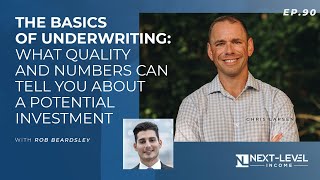
A March 2022 YouTube interview on the Next Level Income show where host Chris Larsen interviews Rob Beardsley of Lone Star Capital about underwriting multifamily acquisitions. The conversation covers Rob’s background, Lone Star’s track record and structure, the importance of qualitative market fundamentals before quantitative underwriting, details on adjusting pro forma revenue/expenses, cap rates (going-in, yield-on-cost, exit), and capital-raising considerations for operators and passive investors.
Questions this video answers
Lone Star Capital (website: lscre.com).
Over $200 million (all in Texas).
A 260-unit property in Houston.
$100,000 minimum.
The Definitive Guide to Underwriting Multifamily Acquisitions.
Welcome to the Next Level Income show where it's our goal to raise your income, your investments and your life to the next level. I'm your host, Chris Larsen. You can get a free copy of our book@nextlevelincome.com just click on the book link. Also, if you're an accredited investor, check out our Invest link to learn more about our institutional quality assets, including our self storage fund. You're not going to want to miss today's episode if you are an investor, if you're an operator, if you are somebody who's interested in purchasing commercial real estate or just interested in the methodology behind how we we make the numbers work. Rob Beardsley, today on the Next Level Income show. Today's show is sponsored by the Airbnb Kickstart course. My wife and I started our first Airbnb here in the last year and we've come to love the ability to earn more money than we would if we had a long term rental. If you're interested in starting your Airbnb business with little money, scaling your Airbnb business, or just learning tricks about the industry in general, check out our airbnb course@nextlevelincome.com Airbnb that's a I R, the letters BNB and you'll get a 20% discount code. On today's show, we have Rob Beardsley. Rob Beardsley oversees acquisitions and capital markets for Lone Star Capital and has acquired over $200 million of multifamily real estate. He's evaluated thousands of opportunities using proprietary underwriting models and published the number one book on multifamily underwriting, the Definitive Guide to Underwriting Multifamily Acquisitions. And we're going to share with you in the show notes as well as at the end of today's show how you can get a copy.
Welcome to the Next Level Income show where it's our goal to raise your income, investments and life to the next level. With your host, Chris Larson. Get your free copy of his book@nextlevelincome.com book. Also, if you're an accredited investor, check out the Invest link to learn how to gain access to institutional quality real estate opportunities.
Rob, welcome to the show.
Hey, thanks for having me.
Yeah, man. Well, so I don't know if everybody can say this. That's listening. But this is one of my favorite topics. I love spreadsheets, I love underwriting, and I'm excited to have you on to discuss this topic today because I think you do a phenomenal job. You got a great book on the subject, which we're going to let the listeners know how they can get a hold of it. I finished reading it this morning myself. And you may be the best dressed guest we've had in the past two years, Rob.
Well, I'm going to assume that's not saying much, but I appreciate the compliment.
You look good, man. You look good. Your background looks good. So, Rob, you're coming to us from New York City, if you would. Before we dive into the subject, let's talk a little bit about, you know, kind of how you got into multifamily and how you ended up where you are today.
Yeah. So grew up in Silicon Valley. My parents ran a residential brokerage firm buying and selling luxury homes for the most part for their clients. And then on the side, my dad a long background in construction, so he did some single family developments and fix and flips essentially along the way. But growing up in that household, I saw my parents really stressed out. They're very transactional. Everything was about the next deal and they weren't really accumulating wealth. They're making money. It's kind of that middle income or middle class purgatory where you make a lot of money but you have expenses, you're busy running your business, you're kind of like you've just created not a business for yourself, but a job for yourself. So I didn't really like what I was seeing from my parents, but I did learn a lot about real estate being around them and they worked from home, spent a lot of time with them. So that was kind of my upbringing. But also on the flip side, being from Silicon Valley, I also was very interested in technology. So I went to school for computer science. Figured I would go into consulting or maybe start a startup and big that way. But while in college, I was doing research and started kind of jumping on the podcasts and listening to different people about multifamily specifically, but just real estate investing, bigger pockets, buy and hold. I love the idea of long term wealth. I love the idea of delayed gratification. So all that with me really well. And as I started learning this stuff, I became more and more compelled and just committed to this idea that this is the right path. So I started, you know, networking as much as I could, started talking to my parents about it more. Hey, we should get into this stuff. And my parents were too busy running their brokerage firm so we couldn't, I couldn't really drag them into multifamily. They, they were excited about it but didn't really Know, they were ingrained in their old ways, which is, you know, one of the negatives of having experience. Right. Obviously there's a ton of positives of having experience, but that, there's that negative where you're kind of ingrained in your old thinking. So me being just fresh, brand new, I was able to absorb things very quickly and just buy into it and say, okay, yes, I get it. This makes sense. I get the terminology. I get the kind of the basics. So that led to meeting my business partner at a real estate conference through a mentorship group. And we formed Lone Star while I was still in college and while he was still a tax attorney full time. And together, once we got our first deal on track, we made the leap where I left school and he left his job. And, you know, so far, so good.
Yeah, no, that's, that's amazing. You know, you came from Silicon Valley, you have this kind of almost this startup mentality, but you're doing something that real estate, which is as old as almost any investment out there. So. No, it's. I think it's. You said so much in there, and I want to, I want to kind of get, kind of circle back on a couple of these things. Um, I hope we can pull this quote out. You love delayed gratification. I mean, I think that's one thing today that, you know, a lot of it's. They have like the marshmallow test, right, where they put the kids down. And I remember when I was a kid, this is something we have in common. I used to, like, I used to get, you know, like different things and like candy bars and I would keep them in the freezer. And, you know, it's funny, you look back and those, those traits that are ingrained in you, they definitely help. But you're also now bringing in investors. You're helping people that may not have some of these traits. Rob. But I also wanted to, I wanted to dig into this a little bit more. Your parents, you said, and this is what I took from it, they were too busy working in their business than to actually work on their business and in their investments. So tell me a little bit about. Has your parents mindset shifted since seeing you? Are you guys working together? They still work in the residential side.
No, they're not. The last five years have been life changing for all of us. You know, obviously I've launched my career and they've had a complete career shift slash retirement phase now. So they have exited the brokerage business. They have, you know, pretty much both on an Active and passive basis, gone completely into multifamily. They're doing tremendously well. They're so happy. And I think you can see that most in the freedom. And when you're talking about residential real estate and servicing clients, it's a very local business. So you don't have location freedom. The other freedom you don't have is time freedom, which, who does? Right. That's very rare. But especially when you're talking about buying and selling homes in a very good market. You're writing offers at 8pm buyer, you know, deals are happening over the weekend, you know, so my dad was just completely astonished to see how our operates and that people actually observe the weekend.
Yeah.
So no business, you know, brokers, because this is a, it's a commercial business. Brokers, investors, lenders. Nobody expects you to be on call on the weekend. We work on the weekends, but it's. You don't have to. So that's a life changing. So now my parents are, are traveling more and hopefully they're just enjoying life a bit more.
I love it so much and it means a lot to me when you say that because neither of my parents are around anymore. So the fact that you've gotten to experience that with your parents, give them that opportunity, I think it's just amazing. Congratulations to all you for going through that. And it is, it's interesting. You know, I remember when I was getting into sales, I thought, hey, one of the appealing things is I can work anywhere. But the interesting thing is that most people, when they do get into sales, they find that while you can choose to work anywhere, you end up basically having your customers, your clients, unless you're all across the country, that you have to service in an area. I was in the medical device industry for a lot of years. A lot like your parents. Totally different than what we deal with now. I was on call and I worked an average of six days a week for most of my career. And it is interesting, you look at yourself. This is how, you know, most of the commercial side of the businesses, you know, they wear suits, you know, they operate, you know, Monday to Friday. They work hard, very hard. A lot of stress, a lot of big deals out there. Right. But it is different. So I guess, tell me, when was your first multifamily deal? Share that with the audience that you guys closed on.
So there were kind of two firsts. The first one was when we were still obviously new and we were the ropes. And the first step for me that I felt was best was to partner with somebody with experience so that we could kind of bolster the credibility and the track record. So for the first deal, we partnered and raised a little bit of money for a deal that was already closed on. And the numbers really made a lot of sense. And since then, that deal has been exited and tremendous returns. I mean, it's crazy how strong the market has been over the last few years. So that was a deal where we were more passive and got to learn a lot about, to learn a lot from being in the deal. But the most that we learned was kind of the capital raising process and giving ourselves some confidence around that piece, because that was the biggest unknown, which I think is the case for everyone when they get started. But then our first deal that we actually took down as Lone Star with my partner myself, that was a 260 unit property in Houston. So it was quite a big jump. Big deal. It was fortunately off market. We got it at a good price. We had to put up a lot of money as the deposit. And then we had to go raise $4.5 million, which is a big jump. It was a big deal into. I don't know what we were thinking, but we eventually we made it happen. We made tons of mistakes. It was very tough. We learned a lot doing that. And one of the biggest things I took away was you can't really, if deal didn't do it. For me, certainly the following deal where I even had a harder time raising the capital, it shattered the myth for me that if you have a good deal, the money will come, because it's just, I don't buy into that whatsoever. So it taught me that you need to be working on your capital raising ability when you have a deal, but before the deal.
Yeah, I love that. That's such good advice. And I've had this conversation with multiple people. It's interesting. The first deal my first partner and I did was about a four and a half million dollar raise as well. And I think it took us about six months, if you look at before closing and then scraping the rest after closing. And it's true. If you're listening and you're, you're about to hear Rob go through kind of the fundamentals of his underwriting the other side, the capital side of the piece. Just like with underwriting, you have to underwrite a lot of deals. You have to be constantly honing that skill. You can't just wait till you have a good deal and say, oh, here's a great deal. I think investors, they want a track record. They want to know that they're working with somebody that has executed before knows that it's tough when you're, you're getting on that first one. Did you all. So was that the first one you all did on your own or did you partner? Do you have anybody else that kind of held your hand a little bit? The reason I bring that up is that's what we did in our first deal.
Yeah, so the first deal was a smaller one where all we did was really raise capital as a way to get into the deal. And then we jumped into that $4.5 million, which was our own deal. We initially took it over with third party management. We later, vertically integrated, brought management in house, and now that deal has been sold.
Terrific. Awesome, man. Congratulations. All right, one more thing before we jump into the underwriting. So now you guys are vertically integrated, Rob, so tell us a little bit more about Lone Star Capital, your structure and how you've grown from just, you know, like you said, just kind of sidecar in a deal.
Yeah. So now after about almost four years, Lone Stars acquired 200 million in property, all in Texas. And like you said, we vertically integrated. So we brought in management in house. We launched a new management company called Living, based in Houston. And that's going really well. That was in the works for two years. And so the, so the transition was very slow, seamless, which is great. The way that we're structured is we raise capital on a deal by deal basis. So when we put a deal under contract, that's when we reach out to partners, reach out to investors and put the deal together. We're pretty diverse when it comes to our capital raising. We $100,000 minimum. And so we work with non accredited investors, accredited investors. We also have family office partners, private equity firms. So we kind of have a range from the retail investor all the way to very sophisticated institutional investors. So one thing that we pride ourselves on is being able to service all partners. And so the way we do that is we take the same sophistication, transparency, rigor that the institutional clients expect, and we really deliver that across the board. So we have limited partners who may only be investing 50, 100,000. They come from some sort of institutional background or they're an accountant or something like that, and they just love us for our transparency and the more sophisticated stuff that we do. So that's kind of who we appeal to.
No, I think it's fantastic. And I think again, building that vertically integrated model, you have a lot of control control, you have a lot of different levers that you can turn, which I think is increasingly important in this competitive environment. So I want to get back to that because that's on the back end of how underwriting has shifted over the years. So let's talk about, if you could walk us through now your process, Rob, on underwriting, and maybe even give us a synopsis of what you go through in the book. Um, I think a lot of people. So I had a. I had a friend coaching and of coaching clients, friends. I've just like a little one page spreadsheet. I send them, I say one page, you know, it's like you can see it without scrolling around on Excel for, you know, for simple deals. Our spreadsheet is, you know, as, you know, when you look at one of these multifamily deals. So if you're not watching on YouTube here, if you're listening, these spreadsheets have, I mean, how many cells does your spreadsheet have? Can you even. Do you even know?
I have no idea. I mean, I think we have about six tabs.
Yeah.
We try to limit the amount of inputs but still maintain as much detail as possible. So it's kind of most bang for your buck for inputs. That way you're not inputting data all day, right?
No, it's. No, it's great. And by the way, you can get a copy of Rob's book. We have the link in the show notes as well as the model that he uses. So. All right, so Rob, get us going here, start to walk us through kind of the fundamentals of underwriting, what you start with and then how you built this model around this process.
Yeah, so for me, I think the best place to start is actually the qualitative before the quantitative. You can get lost in the numbers and kind of miss out on just the basic fundamentals. So starting with the fundamentals, which are more qualitative would be things like population growth, job growth, the schools, the median household income, the new supply situation, the supply and demand in the sub market. So getting a sense of all those things and understanding if this is a desirable location to begin with to invest, because you can make the numbers work anywhere for anything. So you have to be careful to make sure that you're actually fundamentally in a good place. And then from there, once that's been pre qualified, then actually start diving into the numbers which at a high level, it's first getting revenue and expenses dialed in on a trailing basis just to understand where the property is today. And that's not super hard, that's just a lot of copy and pasting and making adjustments, being able to read the last 12 months of financial performance for the property and being able to find any aberrations or one time item to be removed or just certain adjustments. Then we. So we typically adjust things like that and then also adjust the taxes and insurance because that's off jumping year over year. So we make sure to adjust that and also adjust the expenses for the way that we manage property. I always tell people I don't care sellers managing the property, it's because we're the ones that are going to be managing it. So we need to put our expenses in. I can't say oh this is a great deal because they don't have a management fee and the owner's brother's running the property himself or whatever it is. We have our own way and that's how we have to write. So that's kind of the first step.
You bring up a great point. So the qualitative things is really important. I think I'm in a mastermind. One of our members sent me a deal. He's like, hey, what do you think of this deal? Little town in Alabama and I'm talking small, like 20,000 people town. And I said why do you want to invest in this town? And he said I don't necessarily want to invest in this town. I just wanted to look at this deal. I said, well the deal doesn't matter if you don't want to invest in the town. So I think that's really important. We've talked a lot on this show about the lifeblood of markets which is as you said, very well rob, Population growth, job growth, income growth. Real quick, what are your favorite markets today in the country?
So I mean there's lots of good markets out there and everybody knows what they are, no secret. So kind of going from west to east, I would say Phoenix, of course, that's one of the top markets in the country. Denver, Dallas, Houston, Austin, as far as Texas. I mean people like San Antonio too, but we haven't really spent much time. Atlanta and then the Carolinas are fantastic with Raleigh, with Charlotte, Charleston and even Greenville. And then of course Florida has its major markets which are fantastic. Tampa, Orlando, Miami, Fort Lauderdale. So I think those are the Sunbelt, the smile states that really are doing fantastic. But for us, we like to stay focused. So we could be in many markets, we could great deals everywhere. But I think for us being focused in Dallas, Fort Worth and Houston really afford us the ability to be experts in our markets, hone and build Strong relationships and also build our local operating team to really manage our portfolio. The best.
No, I love it. All right, so you made a great comment. You were walking through kind of the high level synopsis here of the underwrite, but you said something, you said we make our adjustments. Now I've seen investors, like beginning investors take numbers from a broker and they just plug them in and they're like, hey, look at the numbers. Look how well they work in this. So where do you get the actual numbers? Rob, if you're underwriting a deal in Houston, the broker sends you the numbers, how do you adjust those? What's your adjust? There's a lot in that one word.
Yeah, there definitely is. So. So as far as adjustments, we're really not making any adjustments to revenue unless we find something that's a one time thing, like maybe they got a cable contract, they got an upfront payment, we're going to strip that out of the other income because that's not a recurring revenue line. So we just need to make sure that the revenue is fairly reflective of what we can expect moving forward as a baseline. So about the expense side and the adjustments that we're making, like for example, the seller might be running the property with six people, we might be able to do it with five. And we might want to adjust other things such as repairs, maintenance, turnover, taxes. So those are simple adjustments that we make. And it's based on our just understanding of the market, our portfolio. Right. We can look at our existing properties maybe nearby that we can say, oh, well, look how to operate this property. And then we can make those assumptions there. And just by virtue of us underwriting so many deals in the same market, we get a sense of how all these deals are running on a cost per unit basis for all the expense line items. And then as far as data, of course, you have to use rent comps to substantiate your pro forma rent. So now we're talking about projecting things out into the future and so utilize nearby properties that are reflective and really, truly apples to apples to be able to make a projection about rents in the future based on our business plan.
Yeah, no, I love it. And again, Rob dives into all this in a little bit more detail in his book. We've seen some really interesting stuff here the past couple of years. Rob, I know you've been in it through the pandemic over the course of the last two years, 2020, I don't know about you, it was scary. It was tons of uncertainty. 2021 was insane with just how well the market rebounded back. Tell us a little bit of how your process has had to evolve in 2021 and what has that meant for the underwriting for these deals that you've been looking at.
So, yeah, coming out of 2020 and the transaction freeze from COVID 2021 was like you said, picked up and got really hot. There's a lot of capital that was on the sidelines the year before, so it was jumping back in. So it's very competitive. And we've seen pricing go up for that reason as well as for. I would say because multifamily has performed so well. Investors who would normally invest in other asset classes are now moving towards multifamily because they just because they see the performance. Right. So they're getting out of retail, they're getting out of office, and they're going strong into multifamily. So increased demand from the capital side and then also interest rate reductions from the COVID response also buoyed pricing and made prices go up. Rents are up, so that price go up even more. So it's just gotten more. And it was competitive before. So we have been, you know, the ways that our underwriting has adjusted is in response to the lower cap rates. We've seen our exit cap rates go down a little bit, which for those that aren't familiar with what that is, is basically.
Let's do that.
Yeah. So when you project.
Yeah. What is a cap rate first off? And then let's talk about, you know, projecting in the future.
Yeah. So a cap rate is simply NOI divided by value. So your net operating income. So the income of the property divided by price gives you an expectation of yield. So if I buy a property that's a 5 cap and let's say I buy it with no leverage, I just buy it all cash. I expect a 5% return on my price or my money every year through the income. So that's how investors primarily value properties on just an income basis. So, so if we are buying a property at a 4 cap, we're going to try to add value, increase the NOI so that in the end it's maybe a 5 cap, a 6 cap. Right. And improving its yield. And then when we go to sell the property. Right. Let's say built this property up to a 6 cap and that's what we are operating it at. Well, when we go to sell, we'll sell it at the market cap rate. And let's say investors are still willing to pay for cap for this Type of asset. Well, we're going to make a ton of money because our basis in it is a six. So we've essentially built this stream of cash flows that cost at a 6% yield and we're able to sell that same stream of cash flow to the market at A4. And that's where you get the increased value. So commercial space, property valuation is directly tied to your income and your cap rate. And so that's this formula that allows you to force appreciation, drive value high, and to be conservative. The way that people underwrite is they forecast a future cap rate that they'll sell the property at which derives their projected sale price. And what you want to do is you want to make sure that your projected exit cap rate is more conservative than where the market is today. Right. It's super hot today. People are buying deals at three caps, three and a half caps on the higher end, four caps.
Yeah.
So you want to project market will soften up a little bit upon your exit, which gives you some buffer and cushion to be conservative. So today we're projecting to exit most kind of somewhere between four and three quarters cap rate to five and a quarter cap rate, which gives us a good buffer because we think the market is somewhere between three and a half to four today.
Yeah, I think that's great. So you covered a lot of stuff there. For investors that are listening, some of this stuff might be new, they might be still trying to learn it. Maybe you could walk through what an investor could look for. So if I'm an investor, I'm looking through a deal by an operator. Any red flags? Rob, you just touched on a big one, I think, which is looking at today's cap rate versus exit cap rates. But give us two or three red flags or things to be aware of. If you're an investor and you're trying to understand and underwrite, maybe with a new operator that you're vetting.
Right? Yeah. You can look at as much little as you want. So you want to pick just a few key points. So I think the one we cover with the exit cap rate is definitely a key point because with one simple number, you can radically change the outcome or the projected outcome of a deal. Right. If we project that we're going to sell the property for double in just three, five years, it's going to show up in very strong potential returns. So making sure that the exit cap rate is within range, the difficulty is knowing what the right exit cap rate is, which experts don't know. So it's hard as A passive investor to be able to look at it, but to have that rough guideline and to understand that wherever the market is today, your exit cap rate, you want to be somewhere between 50 to 100 basis points north of that. So it's not too hard to get a sense asking investors ourselves, where are cap rates today? And then adding in that buffer. So we touched on the exit cap.
Rate and that's an easy way. Just real quick. I think that's an easy way. If you're looking at deals from different operators and you're like, this operator's giving me 50% higher returns than this other one. Take a look at the cap rates. You can always have a little bit more of an apples to apples comparison by adjusting those out. We're asking the operator why they came to those. If it's a different market, for instance, right.
Since we talked about the exit, we talked about the entry as well. So some people will tell you, oh well, my going in cap rate doesn't matter at all because I'm a bad buyer, I'm going to increase the cap rate. And then there are other investors that are just highly fixated on the cap rate and if they don't have a good cap rate, then they won't do the deal. And the right answer, of course with many things is somewhere in the middle. Yes, you're going in cap rate matters quite a lot. But no, it's. But that doesn't mean you can't buy a low cap rate. We bought deals with essentially a negative cap rate because we bought the property and it was losing money every month and we had to come in, stabilize the asset, fix it up, lease up the property, bring up the occupancy and then get it to a good cap rate. So it's good to know what you're going in cap rate is because it gets you that baseline. So if you are buying a deal at a three, there needs to be a business plan and a story to get that 3 cap to somewhere more acceptable like mid fives. And of course, the lower you start, the higher you have to go because you need risk premium. So understanding those three cap rates, right, it's getting complicated. But there's the three cap rates, you're going in cap rate, then kind of your stabilized cap rate, or more correctly put your yield on cost. So that's kind of the technical term, your yield on cost, which is your future noi divided by your purchase price plus your capex. We're factoring in the cost to get to our stabilized noi so you have your going in cap rate, then your yield on cost, and then finally your exit cap rate. And getting that suite of cap rates will really give you a good sense of what's happening with the deal. And like you said, if there is a big difference between your going in cap rate and your yield on cost, that means the business plan has a lot to do with that. I mean, that has 100% to do with that difference. So you want to ask, okay, well, what is the business plan and how much value really seeking to get? And is it realistic? Right. Are we renovating units for just a few thousand dollars and expecting a $200 rent increase? Because that may or may not be realistic.
Absolutely. No. You covered so much there. If you need to go back and listen to that again, what Rob went through, because it's very important, all the different aspects of the cap rate as you go through a project. But also, I think you really said something very important, Rob. It all comes down to execution. So at the end of the day, we can move the numbers around our spreadsheets, we can wave our hands and, you know, do things with our pens and erasers or pencils and erasers, I should say. But you really need to know what the operation plan is. And does the story behind the cap rate going in, where it is operationally and also where it is from an exit perspective line up with all that? I think that's like, that was, that was pure gold, what you just went through there. So we're gonna be wrapping up here in a minute. Rob, let's pivot a little bit and talk about interest rates, inflation and how that all factors into this process.
Yeah, absolutely. So through the exit cap rate discussion that we just had, we're making somewhat of an implicit interest rate bet. Right? I said this last week. If you're one of these investors who believes that interest rates are going to go to the moon and we're going to have the Fed's going to raise rates and the 10 year is going to go to 5% or something crazy, right? If you held that belief, then you absolutely would not forecast a 5% exit cap rate for your real estate deal. Because why would you assume that investors would be willing to pay a 5% yield for property if they can, on a risk free basis, get that from a Treasury bond, Right?
So just to clarify. Sorry to interrupt here, but just to slow you down here for a second, so if the 10 year is like right now, let's say it's. Well, let's just say it's 5%. What kind of cap rates would you expect to see in a market like that?
Yeah, you would certainly expect them to be higher than where they are today. I would say there's so many other factors. For example, lender spreads factors into that because if the 10 year is at 5%, then a lender's going to have a spread on top of that by let's say 2%. So you're borrowing money for your real estate deal at 7% and you never want to borrow. Not never, but you typically want to borrow at less than your cap rate. So then you'd want maybe a seven and a half cap or an eight cap. And so now we're talking about eight caps, which is unbelievable. And I personally don't think we'll ever have eight caps ever.
Well, I saw those when I was probably your age, Rob. But anyway, now we're in a different market. So yeah, just to summarize, so the 10 year is going to be below interest rates, which are typically going to be below cap rates.
Just so, just in a healthy environment. Right. The other factors in play, however, is let's just say that there's big inflation, right. Like there is now. So you could make the case that cap rates are actually driven lower by inflation. Because what happens during inflation, you're printing money, the money goes to the deals. Now the deals get bid up scenario cap rate is lower. Also inflation, a lot of that inflation is showing up in rent inflation. So rents are going up. So if I'm a real estate buyer and I look at this property and I say, oh wow, I can expect rents to go up like crazy, I'm willing to pay a lower going in cap rate because every year as my rents go up gets better and better and better. So those are some of the factors at play. It's obviously never just so simple, but so that's kind of some of the things that we're making implicit bets on when we underwrite. But in my opinion, the way to keep it simple is really to try to keep as much market forecasting out of your underwriting. Which is why whether we're early cycle, late cycle inflation notion, I want to keep the exit cap rate methodology as uniform as possible.
No, I love it. And again, if you just listen to all that and you're like, well, how do you know exactly what to predict? That's the magic. That's why there are people selling, that's why there are people who are buying. That's why, Rob, what you do is so valuable for investors. Because you can go in, you can understand the market, you can figure out operationally what needs to be done. But some of this is partially luck and dependent on the cycle. So that's why it's investing. There's inherently risk involved. And the market cap rates aren't always going to go down, they're not always going to go up. They're going to move back and forth. And that's why I love this business.
Absolutely. Yeah. It's a lot of fun and it's always changing, so there's always something new.
Yeah. Well, Rob, I feel like we just started to scratch the surface and I feel a little selfish, like I should just continue this conversation for another hour with you offline over a beer or whiskey or something like that. But we mentioned in the intro your book. Please tell us again, your website, your book, and if people are interested in learning more about your underwriting model and getting in touch with you, what's the best way?
Yeah, so you can learn more about us at Lonestar Capital on our website, which is lscre.com and on our website, there's a free download like that you mentioned, actually, it'll be in the show Notes, which is even easier. You can take a look at our underwriting spreadsheet giveaway for free. And there's also from that link, a link to click to Amazon and check out the book, which is on Kindle and paperback.
Yeah, please do again. I finished reading it this morning. It's well worth your time if you're an investor, if you are an operator, if you're going out, check out Rob's resources. Get in touch with Rob with Lone Star Capital. Last question before we let you go here, Rob, if you had to go back and talk to yourself when you're in college and you're trying to make this choice, what's one piece of advice you would give yourself today?
So, me, you know, one of my strong traits is I'm very entrepreneurial and I make decisions quickly and I take massive action. But when young and pretty much, and always, it just makes sense to get a second opinion, make sure to utilize mentors. And so it can never hurt to take a. Slow down a little bit when you make decisions and seek counsel. Um, so that, that's something that early on I could have. I mean, I could always benefit from it, but I made mistakes early on and I probably could have avoided them if I were just to have slowed down a little bit. So move fast, but then make sure to think slowly.
I love it. I love it. That's great advice. Great advice for anybody. Rob Beardsley, you've been awesome talking about a subject that I personally love, but a lot of people just crave more information on. Thank you so much. Best of luck in 2022.
Thank you.
Hey Chris, here again. I hope you found this episode valuable. Now I have one more thing to gift you. We have a page for my coaching clients where you can get a free copy of my book as well as much more from previous guests on the show. Just check out nextlevelincome.com coaching to get a free copy of my book, audiobook and much more. I'll send you a copy of my book and cover all the shipping costs as a thank you for listening to the podcast. Also, please like share and take just 90 seconds to give us a rating on Apple Podcasts.










