The Cash Flow MD with Danny Bramer
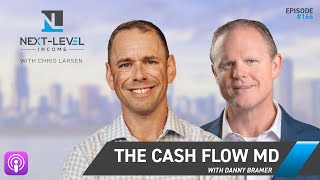
Dr. Danny Bramer left anesthesiology after an autoimmune condition damaged his vision, then built an 800-unit real estate portfolio and launched Cash Flow MD, a fund-of-funds platform that invests in car washes, mineral rights, mobile home parks, and other alternative assets. He donates roughly 10% of earnings to nonprofits and missions work.
So you know, my background in actively investing and owning in several different asset classes. It just really made sense for me to have a fund that offers the investors the opportunity to invest alongside me in these different.
Welcome to the Next Level Income show where it's our goal to take your income, your investments and your life to the next level. I'm your host, Chris Larson. If you haven't yet, get a copy of our book for free at our website, nextlevelincome.com. that's www.nextlevelincome.com. just click on the book link and I'll even send you a copy if you put your address in. On today's show, we have Danny Bramer. Danny is a physician and serial entrepreneur. He's been a business owner and real estate investor for over two decades while gaining expertise in other asset classes. He's been a key principal on over $200 million worth of real estate and business transactions on the acquisition, operational value add and sell side. His strong attention to detail and ability to identify ROI opportunities in varied asset classes enables him to systematically produce financially successful entities. He completed his residency in anesthesiology at the University of Kentucky as well as a postgraduate certificate in Global health from the London School of Hygiene and Tropical Medicine. His passion medicine, led him to work alongside NGOs and ministries of health to improve surgical and healthcare delivery developing countries through training and education. Dr. Bramer, welcome to the show.
Thanks. Thanks for having me, Chris. I really appreciate you having me on this podcast and I really love the way that you continually give of your time and your talents to help all those in your investor circle. And I've definitely benefited from our relationship over the years and learned a ton from you. So, so much appreciated.
Oh, well, thank you for saying that. And yeah, we were just, we were just reminiscing a little bit about the first time we met and yeah, I was, you know, talking about which, you know, people that are listening to the show know that my friend Caleb, that was with me when we met. Geez, that was, was four years ago now, Danny, in October. He passed away earlier this year. And we keep, we keep doing what we do and a part of that is to honor, you know, everything that Caleb did to help, help get this started. So if you're listening, Caleb Welborn was a, was a big part of that. And people like Danny are, are the ones that make this show a reality. And I love your story, Danny. You know, as I mentioned in the, in the intro, you are a doctor, but you don't, you don't really do that anymore. So share a little bit about your story and your journey, about where you are today and. And where you came from.
Yeah, absolutely. So, you know, going all the way back to the beginning. I'm the youngest of seven, so there was nine of us growing up in a super small house. And my dad was a builder in the 70s. Interest rates are sky high. Not the best time to be in real estate.
Yeah.
So we didn't have a lot of means, we didn't have a lot of stuff growing up. But my dad definitely believed in hard work. He believed in character, he believed in honesty, integrity, Integrity. And he walked those things out and really instilled those in all of us. And I really didn't know what I wanted to do when I grew up, but I knew that I wanted to help people because I saw my parents do it all the time, whether it was through church organization or other ways. They were just generous with their time and their finances. So kind of fast forward to my first mission trip out of the country, and I was hooked. And medicine was really, I felt like I was meant to be. And I went back to medical school a bit later in Life in my 30s. And actually my first taste of the possibilities of real estate was, you know, I use single family rentals and flipping homes to help pay for my medical school. And then after residency, had an unbelievable job, lived in Alaska, quite literally one of the most beautiful places on the planet. If you haven't been, definitely go. I was a partner, my anesthesia practice. Have four awesome kids, an amazing wife. Life was great. And then kind of what started as a floater in my left eye when I was balancing my checkbook turned into something that was going to change the course of mine and my family's life pretty much forever. After tons of testing and many sleepless nights, we found that I had a progressive autoimmune condition. Thankfully, it was only going to affect my vision, but that was going to take away my ability to practice anesthesiology. Anesthesia is very procedural, so you need your vision. And, you know, I remember the day I had to call my partner and tell him, man, I'm not going to be. I can't see well enough to do my job. And little did I know that was the last time I was ever going to practice clinical anesthesiology. You know, as a hard moment, a hard season for sure. Very tough to digest. You know, kind of all the years of hard work and dedication, effort. I mean, I know you've been, you know, paramedical you understand when you go to medical school and residency, you don't do that alone. You do that with your family. So it's kind of a loss for all of us. You know, while I was searching for a diagnosis, still we hadn't been diagnosed yet. I was also researching different career and business opportunities. Right. I had to put food on and you know, I, I went to tons of conferences. There's. There's none clinical positions for physicians, conferences out there. Had a job offer as a chief medical officer. But you know, at some point I realized that all these are jobs and they could be taken away. Just like my. As an anesthesiologist was being taken away. And as an employee, you know, you're kind of one catastrophic life event away from true financial devastation. Now, I mean, we all need to work. I'm not bashing W2 jobs here, but, you know, we also need to prepare in my mind for times that that may be taken away from us. So as I kind of navigated the new normal, we went through a lot of tough transitions. But one of the ideas that kind of manifested and materialized and stuck me was that no matter what path I took forward, I didn't want my income to be based on a circumstance or a job because both can change very quickly. And that's something I was experiencing firsthand. So, you know, I knew there were a lot of different asset classes or really three main asset classes. But I saw my dad fortunately lose everything in the stock market twice. The dot com bubble and the great recession. And this was in his retirement year, so he needed that cash flow. Paper assets are kind of off the table for me. I didn't live in Texas or Oklahoma or North Dakota, so wasn't an oil and gas man yet. And striking it rich in oil didn't seem likely. Lived in Fairbanks, Alaska. Gold fever was rampant. Everybody loves gold. They like to invest in all different types of gold. Yeah, it seemed more speculation than investing to me. And. And so then came real estate. And I, like I said, I had some previous success flipping some single family rentals and you know, it helped pay for med school. And then I read a book that I believe most people should read, any person should read when they're to figure out how to create wealth, which is rich. Dad. Bo. Dad.
And then we met who? We met Robert when we. At that same meeting.
Amazing, right?
Yeah.
That was a unique time. Got. Got a photo with the. The master.
Yeah.
And then I had a chance encounter with a medical school colleague at a wedding. We're both in and, and all these factors kind of combined to really change mine and my family's trajectory. I came to realize that, you know, assets that generate cash flow last generations jobs don't. Right. And, and I was hooked on real estate. And as if any of your listeners are physicians right now, they understand you learn a ton in med school, but you really learn your craft and you hone it in residency. So my business partner and I, we sought out and we paid mentors in the space to really teach us everything they knew multifamily. And we then scaled very quickly to we had over 800 units in a matter of a few years. And, and I was actually able to replace income as a physician in about 15 months with our first apartment complex. So to me that was definitely proof of concept. And you know, we were heavily invested in multifamily at the time. And another principle I have is diversification, no matter what asset class that I'm in. So I started looking at different, different avenues in real estate in order to generate, you know, multiple different income streams. Because I mean, we've talked about this before, you know, truth freedom doesn't come from 1, but 2, but 4, but 6, multiple different income streams. And you know, I'm an experiential learner. So by doing so I started really learning everything I could about lots of different avenues in real estate and private equity and other forms of alternative investing. I started branching out into hotels and events and restaurants and then triple nets like Walgreens, Dollar Generals, medical office buildings, jumped into timberland investments, mobile home parks, RV parks, self storage, single family homes, both for long term rentals and converting them to short term rentals land, both developing and flipping it really, you know, if it's something tangible and I could put my hands on it, has intrinsic value. I was interested, you know, so I've really been fortunate to gain and gain a lot of experience, foster relationships and build network and I ton of different categories and asset classes over the years that have abled, you know, really enabled me to unlock both a brand adept in real estate and other asset classes in this investable universe that we all live in. That, you know, enabled me to create diversified cash flow streams and, and continue to grow no matter where I am or what I'm doing. And to me that's the definition of real financial freedom to me.
Yeah, no, I love it. And your story, it really illustrates, you know, several amazing points, Danny, which is one, one of the reasons I wanted to have you on here. And you know, one of the big things that I. I heard you talk about. I went through this in a different way, but having to reinvent yourself, you know, you spent, you know, all those years in school, med school, residency, you know, all wrapped up and combined, you know, well over a decade of your life, you know, getting to that point. And how long did you practice after that?
After that situ. After that call to my partner, I was done.
Yeah, well, after you got out of residency, I mean, how long was your quote, unquote, career, you know, is in with that?
I was in clinical practice for a little over three years. Yeah.
Three years. Yeah. And I mean, I think a lot of people, you know, hearing. Yeah, it's like, I mean, you know, you didn't even get to practice as long as you really, you know, studied and trained to do that. And the reason I bring that up is because you. You were very successful in transitioning, and you use that adversity that you faced and that perspective that you gained to improve your situation, like you said, replacing the income that you made in less than a year and a half and 15 months. So I think a lot of people that I work with, a lot of people that I've coached, they say, oh, Chris, I want to. I want to retire. I want to get to the point where I don't have to do what I'm doing. And one of the things that I face that, you know, I'd love any perspective you have here is that when I got to that point, Danny, when I was walking away from my career, which was about 18 years, you know, which was a multiple of what you did, it was. So add that, you know, add your training, your residency and your practice together, it's similar timeline, right. It was really hard when your identity is wrapped up in that. So what did. What are some of the things you went through as you. I mean, you were kind of forced into it, but what are the. Some of the things that really helped you, you know, make that change and really, you know, from a mental perspective.
Yeah, I mean. Well, first of all, like I mentioned was my. My parents, right? I mean, they. They instilled a very strong work ethic in me. And then all is my faith, you know, I realized that there. There was not a reason that I would be in this situation unless there was a greater purpose for it. And my wife and my family were unbelievably supportive. And, you know, really going back to why I went into medicine in the first place, passion's helping others. So that's what I dove into, you know, and. And I think Real estate is a perfect platform for that because it can be win, win, win across the board. Tenants win, bankers win, you win, your investors win, everybody wins. You know, and helping other physicians and entrepreneurs who, you know, at this point when I've started this new venture, helping other physicians and other, and entrepreneurs who may not necessarily have a life changing event like I did, but, you know, feel stuck. Maybe they feel lost because they're in a current healthcare climate they don't understand anymore. Yeah, maybe they're burnout. Maybe they, you know, have to see more patients and make same or even less money. Or maybe you're a, an entrepreneur and, you know, the business climate that you're in just doesn't give you the joy and fulfillment it used to. Or maybe, you know, you came to realize like I did, life is short, our next breath is not promised and you know, it could all be taken away and life is simply too, just to keep trading time for money.
Yeah.
So really I'd like to help all positions from, from pediatricians to surgeons understand I make money work for them and not the other way around. I want my colleagues to be able to practice medicine because they love it, not because they have to do it. You know, we've, we've all heard when we're at the end of this life, you've never heard someone say, man, I wish I had more money. Right. It's always more time.
You want more time back, more time, more experiences, more connections. Yeah, all those things are really, as you just illustrated, the most important things. And you mentioned, I think, you know, the most, the most important thing. You know, you talked about mindset, having the right mindset, you know, you know, whether it's instilled by your parents, your or, you know, your experiences, whatever that may be, the training you mentioned, you know, the importance of going and seeking information and education, not being afraid to pay for that. You'll, you know, both in your practice or your medical career as well as real estate. And then the mentorship, like that, accountability. And then, you know, you've brought it to fruition. Now, Danny, you know, you talked about your faith, you talked about serving others. Um, we're going to talk a little bit more about what you do with your business now. But I'll never forget when we, we were sitting there together and yeah, you had, you had the, the glasses on that you were wearing at the time because of your, your vision and you told me your story. And the thing I, I, that, you know, I remember vividly was talking about you going on mission trips and that's been a big part. Would you mind sharing a little bit about the trips you've been on? You know, what, where you go, the types of patients you serve with those trips. Do you wash your car? You're probably shaking your head up and down. Yes. But I mean, do you actually wash your car yourself? Do you fill a bucket with soap and water and go out into the driveway and physically wash your car yourself? Now chances are you're shaking your head left and right. No. Because 75% of Americans have someone else wash their car and incredible, increasingly they're going to what's called an express tunnel car wash. Now what is an express tunnel car wash? There's a lot of different types of car washes out there. I'm Chris Larsen with Next Level Income and I'm going to be talking at Wealth Without Wall Street's Inner Circle Live event next month, August 25th through 27th. Now I'm going to be talking about the different types of car washes. I'm going to be talking about why express tunnel car washes can be one of the best investment opportunities, opportunities over the next five years and how you can take advantage of this trend as well. I'm going to talk about how to find the best locations to own and operate these. I'm going to talk about the keys to maximizing revenue as well as decreasing operating costs. And I'm going to talk about why when you build a portfolio of these, you can massively increase the value of these locations. Private equity is excited to get into this space. I'm going to tell you why that is as well. So hope you can join me next month at Wealth Without Wall Street's Inner Circle Live event and get a free copy of my book before you come. Www.nextlevelincome.com Just click on the book link and I'll send you a copy as well. Join me next month. Sure.
Yeah. You know, I mentioned earlier, I think I went to my first mission trip in Honduras back in the 90s and man, I was absolutely just, I don't know, I was blown away by the poverty, the, the, the conditions they had to live in. And I knew I just couldn't sit back and do nothing about it. And it was truly the first time I ever experienced anything like this. And you know, that experience in no small part prompted me to go back to medical school. Could be more effective admissions. And you know, during medical school I was still active admissions. You know, I served on a non profit, one of the founders of a medical dental Mission and really going on to participate in different mission organizations and trips throughout residency as well. And you know, when I started having those issues with my vision, I was concerned be as effective in missions as I'd hoped. But it turned out just the opposite was true. You know, I was able to do things like get a postgraduate certificate in global health from the Lemon School of Hygiene and Tropical Medicine that allowed me to work with ministers of health and people on the ground and build those relationships. Was able to build, help build educational program in Myanmar that trains people up to about a physician assistant level. Oh wow. Been able to participate in amazing work in Africa training anesthesia personnel, you know, going to Nigeria and, and help a ministry that focuses on like they call it the four pillars of society, which is economic, healthcare, agriculture and education. And you know, these aren't one off levers, they're long standing relationships. And you know, we're building human capacity by training and working with rather than coming and doing for. If that makes sense.
Oh, it makes perfect sense. You're. Yeah, what you're doing is you're literally creating a cascade of, of education, of learning, of impact through what you're doing. And I love the way you describe it. Human capacity. That's, that's awesome.
Well, the coolest thing is like literally kids just got home from serving in their own capacity on a mission trip from church. They just got home last night like one o' clock in the morning. So I'm sure they're all crashed out still. But I'm, I'm humbled, I'm thankful. I'm unbelievably blessed in life. You know, like I said, I didn't grow up with a bunch of money, but dad was ad about serving others and just instilled that. And you know, one of the things I always tell my kids is if you're in a funk or if you're in a bad mood, serve others, man. Yeah, being grateful and serving is one of the best antidotes I know for a bad attitude or a bad mood. And you know, I'm an unabashed Christ and I take his teachings very, very seriously. And I love the way he lived his life. You know, he lived his whole life in service to others. He spent a disproportionate amount of time and energy with those that most of the world had forgotten. Right. So there's a verse in Luke that, that always inspires me and challenges me daily. And it says, you know, to whom much is given, much is required. So don't get me wrong I don't serve out of an obligation, but literally out of a place of gratitude and grace that I get each and every day. I mean I'm a flawed dude going to help other flawed humans and just kind of share why I have hope so you know, we can serve with time, talents or treasure. That's, that's one of the reasons. I don't know if you've been on my website, but if you've seen, you know, at least 10% of our earnings at the cash flow MG go towards missions and non profits serving the forgotten all over the globe. So thanks for asking about that, Chris. It's something that obviously I'm passionate about. It's a big part of the, what I do.
No, I love it and look, I, I've, I've experienced it as well. And when, you know, when you, you, you said you made a specific word used was being grateful. Right. And you know, if, if you're in a place of, of being grateful, it's really hard to be upset, it's hard to be sad. And one way to be grateful is to, is to be around others that don't have as much as you and give and do that. So if you give, if you're grateful, it really helps to impact that and it's a challenge. I know you have a wonderful family as a father as well. You're like, well, how do you teach your children to appreciate all the things that we have in this country and all that we're given? And that's one of the big things at the school my boys go to is they do service on a regular basis and it's very impactful. Right. It gives them that perspective and it's a shame if people don't get to have that. I grew up going on service trips with my church and you realize, you see how these people live that don't have as much as you and you think, oh man, they must not be as happy as we are. But what we found was the opposite was true.
Exactly.
And what, what they wanted to give back to those people that were helping them, it really, it impacted me forever. So. No, I appreciate you sharing that and.
No, that's very well said. I mean I, I couldn't agree more. There's, you know, we think that we are the ones that are going to help and serve them. Man, they teach us so much more about, you know, living gratefully, living in community, how to support each other and really how to lift each other up. They're, you know, they're everywhere. I've Gone. It's, it's been truly amazing and different in their own special ways, for sure.
Yeah, no, and, you know, it's kind of shifting gears, but really along the same vein, you know, what you're doing today is also making a massive impact in people's lives. And you, you said something earlier. You're talking about being a win, win. You know, it's a, it, it's a, it's a win. When you can make money, real estate can be a win for the people that are, are utilizing that real estate. It can be an economic win for the, you know, the tax base, for instance, you know, when you improve a building, it can be a win for investors. And, you know, I know one of the, one of the things that you and I share is, is a passion for helping others understand finances, understand investing, and being able to really be a good steward of that. I'd love for you to talk a little bit about the cash flow MD what you guys are doing. You know, I know you've been, you've been hard at work here the past couple years, and I'd love for you to share a little bit about what you guys are up to over there.
Sure. Yeah. So, I mean, the, I think it kind of started by, you know, a few physicians asking me, hey, you know, how did you do what you did? And coffee, you know, that started once a month and then it was once a week and then it was a couple times a week. Before I knew it, I gained 50 pounds having coffee and donuts and dinners, and I'm like, oh, got do something different. Right?
So you look great now, by the way, I gotta tell you. Yeah, well, thanks.
You know, that's because I've started a platform and quit eating so much. So it's amazing. You know, when you quit putting food in your mouth, you lose weight.
Right?
But, but yeah. And more recently, we've just launched our fund, which I'm super excited about. It's kind of a new model. It's called a fund of fund, and it wasn't something I came up with by any means. It's relatively new to the scene, but my standpoint, its use was really born out of necessity as more and more people began asking for access to the curated deals that I was involved in. I wanted to give them a way that made sense to invest. And, you know, the model really allows folks to see kind of different deals that I'm investing in and pick themselves the one that fit their investment strategy the best, rather than just giving me money. And I go Invest it for them. And you know, I really think it puts them in the driver's seat where they want their money to go. And I'm sure a lot of your listeners may not understand the nuances between a fund to fund and the traditional find. And I don't want to go into detail and fun mechanics and modeling, but, but just a few differences between traditional fund and I think the fund to fund may be maybe beneficial. Sure, yeah. But you know, with normal funds, I think everybody knows them, they're, they're generally centered around one specific subclass of assets. We'll just call it multifamily. And then you give the sponsor the money and with the full faith and confidence that they're going to go out and invest that money in a portfolio of, let's say, apartment complexes. And that'll give you a return over the lifetime of the fund. Once you invest your money, the fund manager decides where it goes. So you don't really have much of a say in it. The lockup of your money is generally five to seven years, sometimes 10, which means your money is in that for the lifetime of the fund. And sometimes the capital that you invest is called all at once, sometimes it's over different tranches. Your money may not be going to work for you immediately, but the way the fund to fund model works is it gives the investor lots more diversity and you know, it allows you, the investor to invest in different subclasses of real estate all within the same fund. Yeah, so when you, when you log into my portal, you see a lot of different investment options. Right now there's a car wash and mineral rights, but soon there's going to be short term vacation rentals, there's going to be mobile home parks, going to be self storage, maritime shipping, oil working interest. And then you, the investor, direct where you want your money to go. So, you know, my background in actively investing and owning in several different asset classes. It just really made sense for me to have a fund that offers the investors the opportunity to invest alongside me in these different deals. And you know, as the fund grows, it's going to be more and more opportunities to invest in different asset classes as we. Broad offerings.
Yeah. And I think it's really cool because we were talking about the platform before we started recording today, the, the technology today, you know, some of the regulations have, have changed over the years which gives, it gives more investors access to these investments that, you know, you had to be, you know, ultra rich in the past to have access to. They weren't even available to people like you and I. And now the technology is such that it's bringing down the cost. It's bringing the ability to, you know, not only more investors, smaller amounts of money and also more asset classes. So it's really cool that you know what you're looking at and being on the, on the cutting edge, being on the front, front line of, of allowing investors to have this. It's, it's really neat.
Yeah. I really do think the model is going to prove to be highly effective because, you know, there's like simplicity. They like diversification and pooling our funds together and investing in a wider range of deals through one fund is really attractive to a lot of positions I speak with. And then it's also attracted to sponsors because they have one fund come in and fill a large portion of their raise. So it's really a win win. And kind of as an aside, you know, I know you would appreciate this being involved as many deals as you are, but if you already have several investments, you only get 1k1 out of this fund. So let's say you're in a car wash deal, a short term vacation rental deal, a development deal, mobile home park and RV park. You're in five deals. Well, at the end of the year we take all those. Yeah, we take them all and we coalesce them. So you'll get one fund, K1. You don't have to go around chasing five different sponsors and trying to get those K1s. We do, but you don't have to do that. So CPAs generally love you for that.
Oh, I bet. Yeah, absolutely. Well, that, you know. But I like to count my K1s and compare them like, hey, how many K1s do you have, Danny? So we don't. It's just one. I'm just kidding. I'm just kidding. That's an ego thing. Yeah, I know.
That's not you.
Well, so look, we've covered, we've covered a lot today. But really most importantly, you know, I think your story is, it's inspirational. It has so many different lessons throughout it. But if listeners want to keep up with you, if they want to learn more, not just about what you're up to, but also about the fun that you just mentioned and what you have going on inside there, what's the best way to get a hold of you?
Sure. Yeah. And once again, Chris, thanks a bunch for having me on. It's been great, great catching up.
Always. Yeah.
You can find me by just going to my website, which is Danny bramermd.com or just email me@dannycashflowm.com that's Danny thecashflowmd.com and you know, I'd also love if you don't mind, to give your listeners access to I put their an ebook because I talk with tons of physicians and they've same questions come up right. So I put together an FAQ if you will for for physicians who are wanting to start their investment journey. They can get that by going directly to the cashflowmd.com and that'll take right there and they can download it from Perfect.
If you're watching, it's down here in the show notes. If you're listening you can also see it in the show notes on the podcast. But again that's the cashflowmd.com where you can keep up with Danny Bramer, his business, all the different investments that they are doing over there. Danny, always great to see you my friend. Thank you so much for spending time with our audience today.
I appreciate it. Thanks Chris.
Hey Chris, here again. I hope you found this episode valuable. Now I have one more thing to give to you. We have a page for my coaching clients where you can get a free copy of my book as well as much more from previous guests on the show. Just check out nextlevelincome.com coaching to get a free copy of my book, audiobook and much more. I'll send you a copy of my book and cover all the shipping costs as a thank you for listening to the podcast. Also please like share and take just 90 seconds to give us a rating on Apple Podcasts.










