The Secrets to a Winning Mindset with Dr. Cassidy Preston
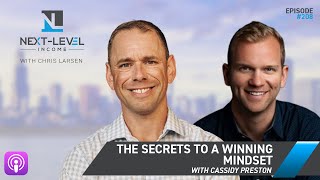
A June 2024 Next Level Income interview where Chris Larsen speaks with Dr. Cassidy Preston, a mental performance coach for athletes and high performers. They discuss the mind-body connection, an "inside-out" or "mindset first" approach to performance, detaching from results by accepting outcome ranges, defining who you want to be in high-pressure moments, growth vs fixed mindset, and using adversity as fuel for grit. The episode closes with promotion of Preston's book Mindset First and his coaching firm CEP Mindset (drcassidypreston.com; cepmindset.com).
Why do I play in the first place? Why do I want to build this business? Why is it meaningful for me? The intrinsic drivers? So, yeah, it's the really unique balance. So I think you tease that out actually quite nice and what you were alluding to, but.
Welcome to the Next Level Income show. It's our goal to take your income, your investments and your life to the next level. I'm your host, Chris Larsen. If you haven't yet, get a copy of our book for free at our website, Next Level Income.com. that's www.nextlevelincome.com. just click on the book link and I'll even send you a copy if you put your address in. On today's show, we have Dr. Cassidy Preston. Cassidy is a mental performance coach for professional athletes and high performers like surgeons, hedge fund managers and CEOs. The challenges he faced as an elite hockey player created a passion for finding a better way to work on the mental game. He's dedicated his life to helping his clients use practical and personalized strategies that deliver repeatable and reliable results. After completing his PhD, Cassidy founded CEP Mindset and built a team of coaches that utilize his approach and system. The team has quickly become one of the largest mental performance coaching firms in the world that has coached tens of thousands of athletes and high performers to improve their mindset and achieve consistent elite performance. Today we're going to talk about Cassidy's new book, Mindset. What you will learn in here. It's a fun conversation that you're not going to want to miss if you are seeking the highest performance in your life. Dr. Preston, welcome to the show.
Awesome. Thanks, Chris. Pleasure to be here.
Yeah, I'm really excited. You know, we talk about a lot of financial matters on this show and one of the series, one of my favorite series here in the past few years has been the series Billions. I don't know if you've seen it or not.
Yeah, my pretty much me, but the female. I'm the male version of that.
Exactly. Yeah. My favorite character on that show is Wendy and she is a performance coach at this hedge fund. So, you know, I was reading about you. I saw your new book mindset first, which I got. I'm going to be actually listening to the audio version with my boys like we were talking about before the show and I was like, I got to have. I got to have Cassidy Preston on here. So I'd love for you to share a little bit about your background with the audience before we jump in here.
Yeah, I know you bring up the Wendy reference because especially if I do like a corporate speech or I'm talking, I'm like, I'm pretty much Wendy. It's like it's not, not the stuff behind the scenes, but.
Right.
But the, but the stuff in the office, that's how I operate and coach people in one on one settings. And I got into that from a sporting background. My background, I'm from Canada, grew up playing hockey on frozen lakes. Like it's the Canadian dream to play in the NHL. I fell pretty short of that in days. I did play a little bit of pro hockey, but my mental game, like I really got in my own head a lot, lots of adversity. So I kind of like my own self preservation. Like there's gotta be another, like how can we work on our mindset, mentally prepare, you know, so we can be at our best day in and day out. And that's what led me to go to school, read all these books, you know, try and crack the code and find this new way and, and then. So that's what's led me to now the work that I get to do now, taking all these principles and strategies, helping people think differently about their mindset, their mental prep about success and failure so that it can be more level headed, you know, even grounded and light and therefore be at their best day and day out. So that's the short version of it is from my own kind of voids of my own, you know, created this value and unique take and, and that's where it's got me to now. But we can dive into more nitty gritty stuff as we go.
Yeah, well, you know, it's funny because Gavin McHale has been on the show talking about a money mindset and he has a hockey background, he's from Canada. And one of your, one of our mutual friends, Justin Rothling Schofer was just on the show, he just dropped his new book and was talking about health. And you know, I think it's interesting, right? We talk a lot about physical health in this country and. But it all starts in the mind. And when it comes to performance, you know, business performance, sports performance, you know, we've, we've seen all these different stories that are out there, right? And I was, I was listening to a political commentator of all things, and she's an African American woman and she's talking to another African American woman and she was basically saying to her, you know, listen, if, if you want to feel oppressed, feel oppressed. If you want to be successful, change your Mindset and do that. I was watching this and I thought, wow, it's on your mind. This is just, just here in the past day. So I guess let's, let's start from a sports perspective because we both have sporting backgrounds. I first read about like, mental sports performance, and I'll never Forget, I was 18. It was a summer in between college and I forget who gave me the book or how I found out about it, but I was racing, I was a category one cyclist, and I was reading about how to visualize performance and doing that. So maybe we can talk about the mind body connection, since I feel like we talk so much about the body and health and these sorts of things. But there's a lot of mental aspects that we kind of leave behind in this country. You know, from a health perspective, but from a performance perspective, where does the mind come in with the body?
Oh, 100%. Great question. And there's a couple different ways we could unpack that, but the first of which is like, clearly your mind is inside body. Right? So one of the, like the favorite lines.
Ah, good point. Yeah, right.
Like it's, it's, it's literally in there. And so, and you talk about like, well, how can I get a more calm mind and less anxious? Well, if you calm your body down, it will calm your mind down. And. But on the flip side, you learn to calm down and, and work with your mind helps your body. They're, they're connected. There is no separating them. They're in there. And so, you know, treating both sides or working on both sides really matters. And then a good way that I like to often explain the work that I'm doing is a lot of mindset is actually about taking action. It's just putting in the work, getting on the bike, going, reading the, the articles, putting in your effort, like showing up on time, how, like doing the work, you just show up and you do the work, you learn, adapt, do the work that builds momentum and creates confidence and builds your mindset. The hard part and what I work on is what I'll say then is like 10 to 20% of your mindset is actually about the tangled thoughts and the feelings and the fears and there's like the emotions get a bit, know, tangled up. And therefore when those things get tense and there's not alignment, well, now it takes, makes it harder to take the action. And if you're not taking the action, then you'll get more angled and then you'll take less action and then more tangled. And so athletes and High performers in any world can get into this little vortex where it gets a little bit of a trap or they, or they hit a ceiling because there's just too much tension or tangled in their thoughts, feelings and action. So then when I come in, it's like, okay, well let me with this 10 to 20% and get clarity and help you clear some blocks or look at things differently so they'll free you up so you can go back and out into the real world. Take care of your health and take action. Do the work, make the calls and show up and learn and read and apply yourself. And so, so again there's. It is helpful to separate them and understand the differences. And again, often it gets so overlooked because a lot of the world is living in the outer world. Easy to focus and see the outer world. Live in the outer world. Like the outer world matters, but so does the inner world. And, and we, and that six inches between your ears, your mindset, how you approach things really matters. And the way that I like to really then encourage it in the way the highest performers, the people that show up day in, day out, they take an inside out approach or what I'll often call a mindset first, which is like, let's focus on the inside first. Get grounded, get light, now let's go tackle the outer world versus the outside in approach is, well, what's going on around and letting that external world then dictate how I feel.
Right.
And how my inner world is. So now you're becoming dependent on external factors. Yeah, it's not a consistent plan, game plan that's going to lead to yo, yo and emotional ups and downs. If your mindset's not in a steady place. Well, now your performance and your results, you're an athlete or a high performer in any area, you're going to be less consistent. And so from a really understanding, you know, the mindset and why it's important is like, yeah, maybe it's not the most important thing, but like without it, things can really spiral. Right. Like.
Yeah, I love that. Yeah.
And so you need both. It's not like, oh, which one's more important. Well, yeah, if I just have inside and take care of my inside and never go and take action. Yeah, that doesn't work either.
It's. Yeah, it's like the guy, it's like the guy in the sauna. You're like, I see this guy when I'm, you know, go to like the hot springs in Bozeman, Montana. There's always the same dude there. I Don't think the dude works out, but he always sits in the sauna, and that's important. But it's like, wait, there's this other piece. So let's. You. You said a lot of things there. I want to. And I want to walk through this kind of sequentially in a couple ways. But, you know, I've heard, like, do you see the snake and do you feel afraid? Or do you see the snake and you. Re. Your body reacts instinctively, and then your mind feels afraid because of that? So, you know, I think. I don't. Do we even know the answer to that question, Cassidy? I mean, we know they're intertwined, but, yeah, we really know, like, how, like, what comes first in certain circumstances. Because I know we can. We can create a feeling in our body, but we can also create a stillness in our mind through our body. Right?
Yeah. So that's a really cool. And so one of the common things when we think inside out and our mindset, what I'm usually helping people do and navigate is do I want to live in a place of fear and threat. Adverse adversion, which generally doesn't work well. And like, if you live outside in. It's like, oh, happened today, or, oh, that could happen. I'm wor. Like. And therefore, it's causing fear, worry, anxiety, ups and downs, and emotional. That state which, you know, generally from a high performance standpoint is not helpful. Right. It is actually helpful. If you go into a dark alleyway, person's got a gun. It seems kind.
Scary.
No, screw it. Run. Like, fear response. Helpful. Keeps you alive.
Yeah. So.
And then flip that with the response or the mindset we want generally in a high performance setting is courage, trust, you know, be aware and be deliberate and. And do what I feel is better. And that confidence and that swagger and resilient and. And focus. And there's that. That light and grounded feeling.
Yes.
Which is not that fear response. And so we all have both. But we can't remove this. We can't get rid of it. So when we see the snake or the danger is there is a natural response to be like, okay, is this. How risky is this? Let's assess the risk. Now, if your emotions and emotionally charged things, they think of someone that, like, I'm gonna say deathly afraid of snakes, like, they overreact. Let's just take an extreme person. So this is cool, fun.
Let's. Yeah. Let's say. Let's say I'm. As a child, I fell into a pit of snakes and got freaked out. And now I'm, you know, I'm just, I'm just super, you know, super freaked out for whatever reason.
So me. And then versus like someone's who's let's say a snake whisperer or deals with dangerous animals more often. It's definitely not me, just to be clear. But let's just say there' a person.
That has Steve Irwin. Remember that guy who used to grab two of the seventh deadliest snakes in the world, one in each hand. He's like, check this out.
Yeah. So what will happen, you know, you. If you. You're deathly afraid and you have this, I would call it an emotional charge and reaction. So both of us walk by all a. Oh, a snake is out. And it's kind of a dangerous looking snake.
Well, you're.
You would go, oh my gosh, freak out, panic. And so we both have the same. The bot. Oh, that's dangerous. And yours is like, it's so. And then you're like now you're having a. Actually an unhelpful response and it's probably more likely to make want to attack you potentially, etc. Versus if you don't have this emotional charge, you're more centered around it, but you still be like, oh, that's dangerous. You respect the danger, if that makes sense. But you can stay more calm and composed. So when we're mentally preparing people, which it's often not to deal with snakes, just to be clear, we're dealing with like the market's going up or down. Am I going to make the sale? Am I going to score? Not score like get the result that I want. Which are. But often they make it feel like it's a dangerous snake. Well, now that's really inciting the fear response and an emotionally charged one often.
Yeah.
So we want to collapse those charges and get grounded.
So let's. My apologies for interrupting. So moving from, you know, kind of where this originated in our body. Right. Which is. Or in our evolution or however we want to define that. It's here and it's helpful, but it also is hurtful. So we're trying to make a business decision or we're trying to make a sale. I spent almost 20 years in sales and if I'm thinking, man, I'm going to go see Dr. Preston and he's not going to always going to ask me all these questions. I might not answer him properly. He. Maybe he doesn't like me wearing the right shirt. You know, I'm. None of those things are really helpful. It's all anxiety that's coming about. How do you take somebody that's going into a, you know, like a high pressure negotiation or they have to make. We're in the middle of a big business decision with a property that we have. So we got, you know, a lot of people are trying to make a decision on this. How do you. What are some tools that business people that executives that high performers and you know, that are outside of the sports world can utilize to help prepare them for that?
I give two big ones on the first one I'll go is the first question is, okay, well, we know what the outcome is. We want to get a deal. But who do you want to be? Is like I would prioritize. Who do you want.
Do you want to be Negotiation.
Right. How do you want to show up in the negotiation? That's mindset first. That's inside out.
Right. There's this.
John demartini has this he do and have model. Right. And most people are like, if you're just going to well, what do I want to have? I want to get this deal. This deal will be so good. It's so important. We got to get the deal. Need to have shoulds anxiety, like just inherently probably not going to show up in the right way.
Right.
Be more needy. You're going to be less patient and adaptable, present and, you know, certain and, and prepared. And so it's like, no, who do I want to be? How do I want to show up? So that would be strategy one is, you know, the priorities from, you know, the results to your mental state for your. Who you're being and, and then, and when you're doing that, you need to detach from the results.
So this is detach from the results. Now I'm got, I'm got like writing some great quotes down here for me here. Right.
So detaching from the results, which always easier said than done, but very doable and not necessarily that hard either. Right, Right. But again, some people that are used to just holding on and you have to should they're gonna have a hard time making that switch. So therefore the second thing to help make sure you don't fall into the trap of like, yeah, I want to focus on being this and get the results and then you're still holding on to the result, then you're not truly focused on who you're being and just being present and how you want to go through the negotiation is the word acceptance. And so that's going to help us detach. It's going to help Us embrace the result, the external thing. Right. Let me go back to the snake example to highlight acceptance. If you can't accept that there could be snakes around and you know, they could try to attack you, they're probably not going to hurt you or whatever. But like, if you can't accept it, then don't go through the force. Does that make sense? Don't do it.
I do this in the heat. Stay out of the kitchen.
Stay out of the kitchen. Exactly. So I do that with people all the time. Like you can't. Except that a deal might not go through. Then don't go into negotiations. Or like, or like, just give them whatever they want. So like, like. But it's accepting the range of results helps you detach. So now you goes on, who do I want to be and how do I want to negotiate? What are my, you know, non negotiables. Like, be clear on your approach versus so obsessed about the result and feeling you need to. Oh, it's going to be so great if it happens to be so awful. Doesn't. And like, that's not using.
Which you can't. Which you can't control ultimately.
Which you can't control.
Right.
Yeah.
So.
So those are. That'd be the one, two punch. That's, you know, there's some other things in there, but that was. Will be the main.
Yeah, yeah, I love it. So just to recap that, as you go into a situation like this, remind yourself, who do you want to be? Like, what is the type of person that you want to be? How do you want to show up and then detach from the results? And have. I really like that what you said. Look at the range of outcomes that are there and you know, like you said, if you don't, you know, if you, if you're not okay getting bit by a snake, maybe don't go on a hike ever. Right. Which, you know, most of us are not going to be that. Or you could say, hey, if I get by, get by, get bit by a snake, this is what we would do. I coach my son's mountain bike team and one of the things that we do is wilderness aid training. So, yeah, you go out and, you know, I've, I've been on, I've, I've cut my leg down to the bone before, you know, and had different situations. And it's funny, right? When you hurt yourself a lot of times it's not that big of a deal. And I don't know, I spent a lot of time in surgeries too, so Maybe, maybe I'm just okay with it. But it's like, okay, if a child does this or a young adult does this, how are you going to treat them? Or if a fellow coach injures themselves, you go through those processes and do that. And, you know, we kind of accept the range of outcomes that are out there. So I really like that. I want to, I want to back up a little bit. Cassidy. So another book which is, is kind of a similar name, it's one of my favorites. I really like Grit by Michelle Duckworth. But the other book that I always recommend with it, and I think it's because I can't. I can't. I read them back to back and I can't remember what comes from what. But the other one is Mindset by Carol Dweck. And yeah, I'll. I'll never forget. And this is where I, I forget where it's from, if it's from grit or mindset. And I think it's from grit. But the author said, she says children that ultimately become the most successful in their fields, they're not the ones necessarily with the most talent. They're the ones that have the mindset of becoming what they are, setting out to be a professional musician, a professional hockey player, a doctor, those sorts of things. It's that mindset that occurs. So I know we've talked about kind of mindset in the moment, but when it comes to kind of this, I'll call it kind of this underlying mindset, this baseline of, of how you see yourself and ultimately how you show up on a regular basis. Can you speak to that at all?
Yeah, 100%, I think. I don't actually know which one that would be in, but I might be.
I'll. I think it is Grit.
I think it is great because I know, I know the Mindset book quite well, Growth mindset and Carol Dweck's work.
But I think, yeah, growth versus Sorry, real quick. It's growth versus fix. Right. Yeah.
And so which will also then tie into this because, you know, think of an athlete or somebody and you're in position, you know, one. And you want to get to the next level.
Yeah.
But you're not there yet. So like, but like it takes a new set of skills and then maybe a new mindset or more work in those things. So if you don't see yourself being in like the next level, then you won't do the actions to get there either. Right. So it's like a fixed mindset. Start to label, like one of is really common in youth sports. When a young athlete performs really well at a young age, that can actually be a very limiting factor because then they're like, they get very afraid to fail because they haven't a lot get praised so much for their success and not praised on their mind and their effort and their grit and, and those things.
So I saw that when I was racing. I was 14 years old and I started racing and by the time I was 15, I was a state champion. So I was like, decent. I was so jealous of these kids, Dr. Preston, that had started when they were 12 or 13 and they're winning national championships. I'm like, win the state championships? Like, well, what a big, not a big deal. Most of them had quit by the time they became adult cyclists. So I saw this and it was, you know, whether they were afraid to fail or it just sucked. Right, because you like weren't really getting better. I've seen this directly. Are you a high income business owner or professional earning 2, 300,000 or even more a year, but still, still feel like you're living paycheck to paycheck? Are you comfortable working until you're 65 or 70 to retire, or do you want to achieve financial independence and live life on your own terms? You could join myself and Matt for and learn how we both became financially independent in our early 30s. We'll teach you how to make, keep and grow your money. Teaching you strategies to maximize your earnings, keep your income that you've earned through tax strategy and legal structures, and ultimately teach you how to grow it by determining your personal investing strategy as well as teach you how to analyze investments so you can grow your passive income to the point to live life on your own terms. Our coaching clients reliably do this in seven years or less. To learn more, check out our coaching program at nextlevelincome.com forward/coaching. That's nextlevelincome.com forward/ coaching.
Yeah, and there's, you know, and think of like the highest level. It's like, it's a grind to get.
Like you got to grind. Yeah.
You got to love it. And some of those got to be a level of hustle. There's no like magic cure that just gets someone to the top level. Like you got to put in the work and then have the right mindset along the way. Like, because if you've got to put in the work, but then you're fearful that that's. And that's what where we come in. A lot of times people fall Apart because they know but then they're not doing what they know, not focused on who they're being. And there's fear and those things. So but to your point around like it becomes people that keep rise. They're intentional. Like, who do I want to be? How do I want to show up? They have that forethought and intentionality or priority of who am I being? And like. So there's a clear like vision on the process for the mental state versus like, well, what do I want to achieve? Everybody same goals. Like I want to make more money or I want like external goals. I want to get to the next level. I want to win. Oh, no. I showed up today. I would like to come in six point. Like it's like, like, no, I have.
I will say there are. There are people that are like, oh, I just want to do my best. And I'm like, is. Could you get a little more specific? Like, you know. Yeah, yeah, but get something in your. Like get something in your brain, you know. Yeah, yeah.
So. But the goal intent is to rank as high as possible, right?
So to speak.
There's. There's name on. On Netflix. He's like, somebody's got to be the 70th best golfer in the world. It's quite funny approach.
That is really funny. Yeah, well, I was. I was. My Both my boys are. Are into like really into lacrosse. They're. They're both talented. I saw this one day, so I had a. This is a cute little anecdote. I have a friend who played for Johns Hopkins which is. I think they're ranked number two as we. As we record this in the country. So they're very good. And he played for Hopkins, so he sent as a gift because he had some leftover stuff to my boys, a pair of his old gloves, his pro gloves and his Hopkins gloves. And his Hopkins glove has his number on them. You can't buy them. It's really neat. My younger son really wanted. My older son said, sure, sure, you can have him. And I was like, oh, wow, that's like, that's pretty cool of you to give. You know, he kind of gave up first right of refusal to him. And I put my hand on my son's shoulder as my younger son walked away. And I was like, Ethan, that like that was really, really admirable you. And he looked at me straight in the eyes, not joking around, just matter of fact and said, dad, it's okay. When I play D1 lacrosse, I'll have my own gloves. And I was And I'll never forget that moment because it reminded me of what we were just talking about, which is having that, you know, that vision of what it is and you know how that's, that kind of carries through. So I think, you know, to kind of put an underscore on that, you know, if it's, if it's business, if it's sports, you know, whatever it may be, you have to be clear on where you want to go. With our coaching clients, we get really clear on that three year vision. And what I found is our coaching clients that do that work and get clear on that, they're immensely more successful.
Oh yeah, no, big time. And, and the, and the clarity, my guess is when someone really gets clarity on like, what is it going to look like? Is clarity like who are we being in three years? And also then clarity like, who am I going to be now to keep working towards that. And sports is a great example. But so is in business where the trap becomes, we focus too much on just the results. I want that scholarship, I want to play at that level. And then I need to, and I have to. And I call it falling for the allure of results. We get stuck in the, the outside, in the results first approach. It's like day to day, if your son's showing up day to day, okay, I got a score today, I got to play well. I got to, you know, get all this external validation and that's his priority day in, day out. That will hurt his mindset. That makes sense. Which then will actually hurt his performance. So it's this, this, this balance and a bit of a trap where it's like, yeah, we all have external goals and you want to have clarity and you want to believe in them and be committed to them. But then can you also really focus on who you're being and what does it look like to be up there and what's the. Like you don't have to map out the whole journey, but you want to map out like, who am I going to be today? What do I, why do I play in the first place? Why do I want to build this business? Why is it meaningful for me? The, the intrinsic drivers? So, yeah, it's the really unique balance. So yeah, I think you tease that out actually quite nice in what you were alluding to.
But, but that's so good. The why, right? The power of why, as Simon, Simon Sinek says. And I think, yeah, that's, that, that's massive. You know, the other thing that popped into my head as we were Talking is. I think it's a Jack o' Willink quote. He talks about discipline equals freedom. And I come back to this a lot when I'm in. When I'm in a tough spot. And what I mean is I had. I had a friend, really close friend, die. He actually helped me start my business here. He passed away just over a year ago and I was in a real. I was in a real funk. It was really hard for me to go over it and I was just. I didn't. I mean, I got up at five, it was like seven o'. Clock. I was still in bed. I was like drinking too much, you know, because I was just kind of like, eh, wasn't going to the gym because people would say, hey, how are you doing? I didn't want to tell them. So I kind of had this slow slide. And it was only for a couple weeks, but I was like, I looked, I'm like, what the hell are you doing, Chris? So I remembered that Jocko Willink quote and I was like, discipline equals freedom. And what I did was I just got back to the basics. Getting out of bed at 5 o', clock, going to the gym, eating the right food, cutting out the alcohol, you know, getting back to, you know, meditation and those things. And that changed, you know, all those things changed my body, changed my mind and with some other stuff, help me get back on track when someone is going through a tough period. We've talked about the importance of having the mindset and the vision and the why figured out. You've talked about showing up and how to view the outcomes. But what do you suggest to somebody that really is in a funk, whether it's business or personal, that's having these issues? What are some strategies that they can use to get out of that?
Yeah, and that's a great question and always an interesting one because everyone's a little bit different. And so it's not like cure all, like saying or strategy that I can easily express to like, oh great. Everyone's challenges are not like, we can overcome.
And you just snap and like anybody that's listening will immediately come out, yeah, that'd be terrific.
That's it. But with that said, there's some fundamental ways of thinking and operating that then people can reflect on and engage in, one of which is. And any adversity or challenge or failure, there's always a silver lining, which means it can give us perspective that allow us to actually move forward in a new way or another way of saying that. And this comes from John Demartini as well, are great guy. Our voids drive our values, right? So what?
The voids drive our values.
Our values. So it's like, so when you go through a tough time, it can create this value and of wanting, like, to have an impact or drive you forward. And so. So there's always a silver lining is the premise. And so it's. But it's aware and open and looking for it. Or how can I grow from this versus I'm the victim. Look at me. How much does this suck? And you don't own the story. We call it one of the strategies like, okay, let's own your story in terms of you're not just the things that you do or achieve or think or feel. You're more than that. You're more than just the character or the author. And you get to narrate the facts of the facts. They've happened. But are you narrating? Oh, this is not going well. How's the next page going to go? Or is it all right? Yeah, this has been some tough times, but look how I'm growing and learning and moving forward and it's fueling me. And so. And then I'm either here, the victim, and then there's this new blank page is tomorrow. How am I going to write it? What story? You know, how am I going to show up tomorrow? Who do I want to be? And so. But none of that happens if you don't own it. And none of that happens if you don't have the ability to get the perspective. So if we embrace the hard things and the challenges in life, they can serve as a powerful source of grit in fuel. Right? And so, like, and there's some good research on where, if you ask people that are really gritty, like, you know, really resilient athletes, business people, it's like, where'd you get your grit from? Yeah, they'll go back and point to it in their life when they struggle. It's not from somewhere else. It's from going through hard things. You can't replace that 100%. Like. And there's no escaping challenges in life. Like. And everyone's challenges look a little bit different. Right?
So.
But it's. But it's of comparing one person's challenges to another. What challenge are you going through? And when you're going through that challenge, how can you see the silver lining? Own it from it. Use it to move you forward. Use it to find what are your values. Your values can come out of that void or that challenge in and of Itself. Oh, this really matters to me. I was like, you know what? This really sucks. And it doesn't matter to me. I'm going into this, you know what I mean? Like, yeah, it's like, it's. Which is, also gives you value. Does that make sense? It's like, absolutely. I actually don't value this. It's like, you know, actually this pain, this is just a nuisance. This is what, it's actually interesting. This is what sparks joy for me or meaning. And so, and then, and then maybe like a secondary quick point as I alluded to the word, a big issue just in terms of our general society is our people are trying to be happy instead of be having meaningful life. And if you try to chase happiness, you're gonna like, you're gonna like, you know what I mean? You're good. Like, yeah, don't chase happiness, chase a meaningful life because like, yes, and going through meaningful things create challenges. So. Because then people have like this adverse thing to challenges when they're focusing on too much on happiness.
So yeah, that's very powerful because it can be, it can be very short lived. It can be very hollow. Even my, A lot, a lot of listeners know my father passed away when I was five and a lot of my values as a father in the time that I devote to my boys is because I didn't, I didn't get to have that experience. And I, I don't know when this, this time for us will end, you know, God willing. It's, it's a long time. I had a guy that worked for me. He was a Green Beret, fantastic guy. One of, one of my favorite reps that I ever worked with. But we were, we were finishing up a particularly tough day and I kind of put my hand on his back and I was like, hey man, like that was, that was a tough day, you know, But I was like, hey, you know, you really, really held up well and kind of complimented him. And I'll never forget he looked at me and he goes, chris, at least I didn't get shot at today. So you know, again, those, those adverse things that do occur really push forward. As we wrap up here, Cassie, I'd love for you to share a little bit about kind of who you wrote the book for. You know, where listeners can get your book and what they're going to learn in the book as well.
No, I appreciate it. Well, the book is definitely written more for athletes than people, but we've had lots of business people read it already and it's, yeah, it applies to high performers in all rounds. But instead of trying to write it for everyone, I made it more targeted towards athletes and specifically hockey players. There's a lot of tons of law hockey examples but again got soccer players but everyone's reading it. So one of the most famous mental games is actually the Inner Game of Tennis. And it's like. But like hockey players are in the Inner Game of Tennis by Timothy Galloway. So it's like. So I. My background in hockey and stuff. We picked a hockey focus.
I have to pick.
So. But it's. Anybody trying.
Yeah.
The Inner Game of Tennis by Timothy the G. Just. It was written 1985. Still like constantly read. It was a good. It really contrast like some of the inner voices and things and ways of them and overthinking. So it's a good foundational book. But the um. So that. So it's. Anybody that's a high performer wants to play with more confidence, wants to break from the weight of results, perform what it matters most and anybody that wants. It's definitely. There's good theory and principles in it, but it's very practical. It's meant to be a concise, practical guide. Here's how you can work on your mental game. Here's a new way to break free from this. Play with confidence and use it. And so it pretty much takes what I do with people one on one and condenses it into a nice digestible format. There's like a workbook PDF you can download my site and stuff too. So. So that's who the book's for. Find it on Amazon. Best way to go get it and just look up mindset first. And I forget what your last question was but. Or what they can expect.
Yeah, you're right. Yeah, yeah. Who. Who you wrote it for and where to get the book and what they're going to learn. That was perfect. And we're going to have. We got your website drcasidypreston.com here in the show notes. But you also have coaching website CEP Mindset. And who do you work with with that business? Cassidy.
Yeah, so that's mine. We. It's like a coaching firm of mental performance coaches. So we have like about 20 coaches now because it's just people want. When they. Especially when they want to like they got a pain or they want to work through it. They're going to block one on one is the best way speaking. That's what people want.
So.
And often creating the business side of it. So we just pulled together and eventually started create a team. And so that's@cpmindset.com so if people are interested in one on one coaching, that's a great place to check out the ranges of coaches we have. And then you know, they reach out that way and get booked in for new free intros for people so they can meet and greet the coach first before an actual program.
I love it. If you're looking listen, you want to learn more, check out drcasidypreston.com check him out on his website. Also CEP mindset.com will have that in the show notes and check out his book Mindset first. I got a copy. I'm going to be sharing the audio version with my boys on some of our car trips here this summer as we come up. Dr. Preston, thank you so much for joining us today and sharing your knowledge, wisdom and your new book with our audience.
Awesome. Thanks so much for having me, Chris.
My pleasure. Hey Chris, here again. I hope you found this episode valuable. Now I have one more thing to give to you. We have a page for my coaching clients where you can get a free copy of my book as well as much more from previous guests on the show. Just check out nextlevelincome.com coaching to get a free copy of my book, audiobook and much more. I'll send you a copy of my book and cover all the shipping costs as a thank you for listening to the podcast. Also please like share and take just 90 seconds to give us a rating on Apple Podcasts.










