Using the S.A.F.E. Method to Evaluate Investments with Tom Dunkel
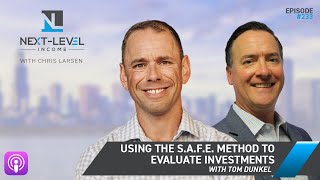
Tom Dunkel, a real estate investor and CIO, built a $58M business buying distressed mortgages at 20-30 cents on the dollar starting in 2009. He co-founded Bellrose Storage Group and now operates 19 self-storage facilities, which maintain 80-90% occupancy. He walks through the S.A.F.E. framework for evaluating real estate investments: Sponsor, Asset, Financials, and Exit.
Questions this video answers
2006
Over $65 million
Approximately 20–30 cents on the dollar
About $58 million (surpassed $58M)
About five years ago (relative to the interview date)
So we really like that. We like of course that it's real estate, it's cash flowing. You know, you don't need a, you don't need a degree from an Ivy League school to run an operate a self storage facility. I mean, look, there's lots of nuances and special things that need to happen, but it's, it's not the most complicated business model in the world.
Welcome to the Next Level Income show where it's our goal to take your income, your investments and your life to the next level. I'm your host, Chris Larson. If you haven't yet, get a copy of our book for free at our website nextlevelincome.com. that's www.nextlevelincome.com. just click on the book link and I'll even send you a copy if you put your address in. On today's show we have Tom Dunkle. Tom brings over 28 years of real estate finance and investing experience to his position as Chief Investment Officer. Working alongside his world class team of professionals, Tom makes it his mission to find great investment opportunities for his clients with while helping them meet their wealth building goals. Since launching a full time career as a real estate investor in 2006, Tom has raised over 65 million in private money across three asset classes, self storage, short term rentals and distressed mortgage debt. Prior to investing in real estate, Tom worked in mergers and acquisitions, closing over $1.2 billion of deals in aerospace, IT services, software and logistics. Tom lives in Wayne, Pennsylvania. Enjoys golfing, hiking and playing guitar. As an average investor and lifelong learner, Tom is actively involved in organizations including Self Storage Mastermind. He's a master's coach and was recently named a marquee who's who honored Listy. And today Tom's going to share his knowledge and his safe method that you can use in your due diligence process. Tom, great to see you again. How are you? Hey.
Hey Chris. I'm doing great, buddy. It's great to be with you and all the listeners today. Looking forward to our chat.
Yeah, yeah, I'm excited. We're going to be chatting a little bit about your methodology on how to evaluate investments. But we're gonna, we're gonna get to that in a little bit. We're gonna talk a little bit about the state of the economy here after the election. Also talk about kind of where we see the real estate markets going and people can look back and say you guys are idiots or you guys were geniuses. That's right, that's right. On Any given day, just flip a coin and I'm either a genius or idiot according to my family. So. But Tom, if you don't mind, share a little bit about, share a little bit more with the audience about your background and, you know, how you are today.
Sure, sure, yeah, we'll do. And just a, just a quick personal note before we get into that. I'm, I'm the. I know you're down there in the Asheville area. You guys said that awful storm about a month ago. I just want to let you know my thoughts and prayers are with you and, and Bryce and the other folks down there in the Asheville area. Just horrendous, horrendous damage down there. So I hope you guys are doing okay.
Yeah, thank you for that. And you know, it's, it is, you know, it's, it's interesting. The devastation is really heartbreaking, but, you know, you really see, and you know, I saw the, the community come together afterward and you know, especially in a year where you have an election and, you know, people kind of going back and forth. I'm on this side, you're on that side. It was like all that went away. And you know, it's a shame that it takes a disaster to have that occur, but it was, it was really, really heartwarming and really. Yeah, I won't say restored my faith in humanity because I hadn't lost it, but it really, it really gave, gave me a boost when it came to that. So thank you for saying that.
Yeah, yeah, that's great to hear. But. But yeah, I was. But I'll keep it punchy and we can go into more specifics later if you want. But yeah, I got out of business school and went into the aerospace industry where I was doing mergers and acquisitions for a company that was growing aggressively through acquisition and kind of repositioning itself. This was at the dawn of the Internet era. And so there was just a lot of amazing new technologies coming out and so surrounded by some amazing people. Harvard MBAs, Wharton MBAs, ex fighter pilots, astronauts. And so it was just an amazing environment to really cut my teeth on deals, you know, finding good deals, doing the due diligence, doing the, the modeling and the projections and getting the financing together because we were doing, you know, we were doing big deal. You know, these were 50 million dollar acquisitions, 120 million dollar acquisitions. And so we were going to private equity firms, you know, Wall street, private equity firms, and working with big banks and, and you know, some people might not realize this, but banks, if you Go to a bank and you're getting like a huge loan, like 140 million DOL. Actually syndicated out as I know probably investors and the listeners are familiar with an equity syndication. But yeah, when you're doing big, big commercial size, you know, deal institutional size deals like that, they actually syndicate out the debt piece to different banks. So anyway, so I learned a ton, worked with some great people, and then, you know, from there just sort of continued to build on that for the next several years in corporate life until 2006 when I got fired for my corporate finance job. And you know, so it's a whole story, but that was really the kick in the pants I did, Chris, to. To really go out and do what I had been wanting to do for a while, which is go and do my own thing. And I wanted to, you know, build my real estate empire. But, you know, you've got a wife and two young kids at home and, you know, you've got kind of the golden handcuffs. You know, you got a nice gallery. I was a vice president at a publicly traded company, so I had stock options. And so, you know, it's kind hard to, you know, break away from all that. But when it, when it happened to me, sort of forcibly, I was like, all right, this is, this is my chance. So of course, 2006 wasn't the best time to get into real estate.
Yeah, I was gonna say, man, that was like, you could say it's either is a great. And that's. That was like the peak in 06.
Yeah, exactly. So, you know, I learned some hard lessons those next few years because of course, you know, even though I had a great education, great training, you know, going out and being an entrepreneur and trying to build a team, you know, do some of those things. And in a, in a market that frankly I hadn't been in before, I hadn't bought a house except for the one that I lived in prior to going into residential estate, doing fix and flips and picking up some rental properties and doing some wholesaling.
So were those your first. So what was your first type of deal was. It was a residential.
Yeah, yeah, I tried to. I tried to wholesale property in Philadelphia and it didn't go well. But. So everyone has those stories. But yeah, so learn some hard lessons over this next few years. But I was determined to kind of get out. It was not going back to corporate life.
Yeah.
And so I, through going to some real estate networking events, I started learning about distressed mortgage debt and, and through. And through those investor meetups, I Also met my business partner, Joe Downs. We've been business partners about 15 years now. And so we, we started out in distressed mortgage debt and people thought we were crazy. We were charged off defaulted second mortgages on residential.
And this was what year?
2009.
Yeah, so this is, this is great because you know, we got in that space a little bit after that and we've had, we've had some people on the show talking about this. I think, you know, it, it surprises a lot of people to hear that. Wait a minute, you can, you know, there's this, there's this market where mortgages are sold which is very common in, in the banking space. But yeah, then there's the non performing note space and then there's the secondary non performing note space. So just, just share a little bit about what that is. And also, you know, I, I can probably guess, but tell me kind of what you were paying on the dollar for those types of non performing seconds back then.
Sure, sure. Yeah. So you know, it's not as common anymore, but back in the, you know, late 90s, early 2000s, there was a pretty popular structure out there where they call it like an 8015-5-1010 kind of mortgage.
I think we did an 80, 10, 10 on our first, my first property.
So there's an 80% first mortgage, a percent second mortgage and then the, the property owner, the purchaser puts up 10%. And so there were a lot of those second mortgages, you know, written back in those days. And, and then you know, unfortunately in good times and in bad times or bad times and in good times, sadly, you know, sometimes people will have a life event, they have a health issue or a, you know, divorce or they lose a job or you know, something happens where they're just not able to, to pay their mortgage anymore so they stop paying. And you know, the bank, the loan servicer, you know, they're not very entrepreneurial. They, you know, their box and dealing with a borrower is about this big, you know, it's tiny.
Yeah.
And so what's happening is that loan gets charged off, they call it, which is, you know, just sort of set aside, which is bad for the bank because the banks have regulators and the regulators don't want to see banks have a lot of charged off loans.
Yeah.
And so the, so what the bank does is they clean up their balance sheet by selling those loans, those non performing loans out into the world. They sell first, they sell seconds, they sell home equity lines, they sell even business lines of credit. You know, so Once you get in this world, you start seeing and then you know, credit cards. Of course, yes, there's all kinds of debt out there that you could buy. But when we started looking at this opportunity, you know, we, we saw that there was a huge price discrepancy between, you know, what a first, a non performing first mortgage sell for versus a non performing second. You're still secured by the property in second position. A lot of people don't know that you foreclose from second position. I mean you have to deal with the first, but you still have some leverage there. You still have some ways to, to monetize that loan and but the, you can buy them at such deep discounts. I think you know, our first this was when we were buying from an intermediary. You know, now our company has grown. We're buying direct from the banks and really good pricing. But back then when we were buying from an intermediary, we were paying anywhere from maybe 20 to 30 cents on the dollar for a non performing sector. And so you know, if you're buying a $50,000 second for 10 grand or 15 grand, you know, it gives you a lot of room to work with the borrower. And, and you know, we got into the paper business because we didn't want to own the brick. So our, our absolute last resort was foreclosure. In fact, over 10 years, I, I think I can count on one hand how many homes we've actually foreclosed on. So you know, we'll work with the borrower to come up with a payment plan that works with their current financial reality. You know, their, whatever it is, it's changed from when they originally underwritten. So we were able to build a really nice business there. And you know, we're, I think we just surpassed $58 million of revenue in that business for the past 15 years.
Which. Yeah.
Which is pretty cool for you know, a couple of guys. A couple of guys and a laptop. And we have like two support people in that business. So.
Amazing. I love it. Yeah, I think the numbers, you know, just to break it down for, for you, if you're listening today, you know, if you take like you said, if you take a $50,000 second, you pay 10 grand. You know, even, even if you cut the payment in half for that individual or a quarter, you can still be making really good money on that and help. Help that borrower out. And a lot of the borrowers in our experience that we, we dealt with, they, some of them didn't even realize they still owed the money because they were, you know, they had gone through something or, you know, if it's, you know, they, they want to get that worked out. They just didn't have the means to do it and the bank didn't have the means to do it with their, with their structure like you said, because they had that small box. So I think that's right. One of the, one of the cool things about the business is you can make money, but you can also help these individuals out by being more creative than a typical bank structure. And you know, you learned a lot, Tom. You know, I love, I, I, I saw my parents both lose their jobs in the early 90s during the savings and loan crisis. You know, I was in business school when 911 happened and watched that business cycle with the Internet, you know, watched 0809, you know, that period. And you know, I started to study the real estate cycle, which is one of the reasons I want, I was excited to have, have you come on today because, you know, as, as we talked, you know, the, the real estate cycle does, it goes in these booms and busts and sure. You know, what, share a little bit about what, what you have seen how you kind of, you know, were able to zoom out because a lot of people think, oh, real estate just goes up. You know, it goes up and to the right, you know, goes up 3% a year, 5% a year. You know, in some cases, you know, people are seeing 10% a year over the past several years and they don't realize that real estate, like the stock market and other assets does go up and down and it's largely influenced by, you know, credit and banks and those sorts of things. What's your take on that?
Sure, sure, yeah, 100%. You know, you mentioned, you mentioned 9 11. I mean that was, I was in investment banking back then and I had, I had a bunch Internet stocks. And you know, Years later after 9 11, you know, the, the Internet bubble burst. So that was really my first experience with, with a big bubble. Although I do have to say I remember the 1987 stock crash. I was just, I was, it was in college. But so, you know, I, I guess I had seen over the years that you are these ups and downs and these swings and different asset classes, different markets. And so, you know, sadly, I guess I, I didn't, when I went out to do my own thing in real estate, I was just, you know, focus. I was like, we're, and I'm going to do this, I'm going to buy this stuff it's going to be great. But you know, had I, you know, learned a little more from my past, I would have probably gone maybe a little more cautiously. But you know what, things all happen for a reason. You know, if I had gone through that crash, I wouldn't have found distressed mortgage debt and build this great business and. Which has allowed us to get into other asset classes too, like, you know, hard money lending and, and self storage and short term rentals. But anyway, yeah, you know, that was a, that was a big learning experience coming out of that. And, and you know, I, I hope, I hope people out there watch the movie the Big Short because that, that was really what was going on a lot. People saw that big crash coming and you know, and it was sad that they felt bad, but they made a gazillion dollars on, against the US Housing market. But it does, it does go in in cycles. And, and that's a good thing because I feel like right now we're, we're kind of at the, we're at a tough spot in the cycle. You know, the last, you know, year, year and a half, two years have been pretty tough with, you know, interest rates running way up and.
Yeah.
And you know, that's thrown a lot of wrenches in the, in the real estate market. But you know what I feel like, you know, right now, like if looking back, you know, trying to learn from the past, I think, you know, people who started buying properties again in 2010, 2011, you know, when it was tough. Right. You know, the lending markets hadn't really loosened up yet and it was tough to find investors to.
Yeah, we couldn't get a loan to build a house. We were building homes, yeah. Until 2013, you know, took five years really to, to get to the point where banks would lend on that. It's, it's crazy. Yeah.
But, but yeah, if you, so if you can manage somehow to get some deals done during those tough times, you know, those are gonna, yeah, those are gonna be big winners. But, but you know, real estate has never been, you know, a get rich quick, you know, kind of thing. It's, it's, it's a longer term kind of asset. And if you understand the cycles, you know, you can certainly build out a nice, a nice portfolio that, including, you know, different kinds of state. And that's what I love about it too is, you know, you know, the, the stock guys, you know, they talk about, you know, diversification being, you know, growth and value or large cap, mid cap, small cap. That's their idea of of diversification. But you know, when the market crash, there's a correlation of 1.
It all goes down. It all goes.
Yeah, in a. But if, you know, if you're in an apartment in Houston or you're in a self storage facility in Asheville, North Carolina. We actually just sold a facility not far from you down there, but.
Cool. Yeah.
You know, yeah, but you, you know, you're, you are then diversified, you know, diversified markets, diversified operators, diversified asset classes. That's diversification.
Yeah, absolutely. And yeah, I think that's one thing as we've just had a gentleman on, Mark Miller who manages basically the Hilton family office and we talked about this. You know, they're putting say a quarter in the stock market, quarter in private equity, real estate, those sorts of things. They're splitting it up. And what's diverse to the average retail investor of say 60, 40 portfolio in stocks and bonds. That's. That, that's not even, you know, that's like just having the, the meat on your plate for dinner. You know, it doesn't even have any of the other stuff, which.
That's right.
You know, that's one thing that I think people forget. Like we're talking about hedge funds in a, in a podcast last week. Hedge funds are designed to zig when the market's zagging. And you know, not every asset class is always going to go up. So like, like you, Tom, you know, we're invested in, in different asset classes in different markets. Private lending has done really well here the past couple years as interest rates have gone up and you know, we've been able to kind of effectively become the bank, which is, which is a good time. What are, what are some things that you can give the audience in terms of tools to protect against the downside when the market, when the market does go down. Aside from diversifying, what are some things that you take into consideration? Are you a high income business owner or professional earning 2,300,000 or even more a year but still feel like you're living paycheck to paycheck? Are you comfortable working until you're 65 or 70 to retain, retire, or do you want to achieve financial independence and live life on your own terms? You could join myself and Matt4 and learn how we both became financially dependent in our early 30s. We will teach you how to make, keep and grow your money, teaching you strategies to maximize your earnings, keep your income that you've earned through tax strategy and legal structures, and ultimately teach you how to grow it by determining your personal investment investing strategy as well as teach you how to analyze investments so you can grow your passive income to the point to live life on your own terms. Our coaching clients reliably do this in seven years or less. To learn more, check out our coaching program at nextlevelincome.com forward/coaching. That's nextlevelincome.com forward slash coaching.
Sure. Well if we over the years have learned some lessons, we've had some successes, but we certainly learned some lessons. And you know it really to me because you know, not only am I an active, you know, investor myself, you know, with a storage company and now, you know, starting a fund, but you know, I also invest as an LP and other people's deals. And so you know, the big thing I start with is, is the sponsor, like who, what is the background of the sponsor? Because at the end of the day, you know, if I want to sleep well at night, I want to know like, hey, you know, Chris is a good dude. He's got this great track record. He's in all these asset classes. He's a smart guy. He's, he's got the receipts as they say now. Yeah, so he's a guy, you know, that's picking the jockey, not the horse. Right. So, so actually we've, we've developed if, if you want me to go here now, a safe method. We've. Yeah, let's actually dive into it. Yeah, yeah, we've developed. So you know, we've been investors. You know, I've been a full time sir for going on 19 years or. Yeah, 19 years. And you know, over the, over the years looking at different deals, different classes, different operators. You know, I think it, what we learned is that you gotta really dial on the sponsor. A lot of investors jump straight to the, the deal. Right. What are the returns looking like? What's you know, is it an apartment is a self storage, you know, what is it? But you know, we developed this, this really, it's a due diligence template. It's, it's kind of a framework which has become really helpful because especially for newer investors, you know, maybe they've only been in stocks, bonds and mutual funds. And you know, they, they see that people are doing well, you know, investing in multifamily or, or other asset classes, but they're just not sure how to get started. So this framework, we call it the safe investing method and SAFE is an acronym. Investing isn't safe. But if you use the safe method, you can de risk and hopefully, you know, not hurt yourself. But S is for Sponsor, like we just touched on, you know, get to know your sponsor. You know, take a little time. Don't just, you know, get an email or see an ad on Facebook or something and just, you know, throw 50 grand at it because it looks good. You know, you gotta at, you know, have a call with the, with the sponsor. If you're close to them, that's even better. You can sit with them personally and you really, you know, kind of get to know them. And, and is it like, you know, joe syndicator gmail.com and it's a huge red flag right there. It's like, it's like, no, you want to know they have a team behind them. They have a track record, you know, which is super important. So this, so the E book that we have has a whole list of questions, certainly not exhaustive, but a list of questions just to get, get your brain going in the right direction. Questions to ask about the sponsor. A is for assets. So what is it exactly that you're investing in? Can you explain this investment to your mother or to your children or, you know, so, so that you have, you need to have that level of understanding about it that you can explain it to somebody else. So if it's a, if it's a multifamily property in Atlanta, is it, okay, well, is it, is it in. Is Buckhead, is Marietta, you know, where, you know, and what's happening in that specific market? You know, what are the macroeconomic drivers? There is a population increase. What's the crime like? You know, so you want to look at all those kinds of things when you're looking at your asset. Then F is for financials. So what are the financial projections look like? Is it a hockey stick? Are they promising move? That's a red flag. And, you know, what are the tax implications? What does this investment mean to your personal investment folio, you know, is it going to make you too overweighted in self storage or, you know, or some other asset class? And so you need to, you know, consider those financials. And then E is for exit. How do you get out of this thing? You know, it's not like you can go to schwab.com and click, click, click and sell your position in About Storage Group, Self Storage syndication. It just doesn't work that way. So as an investor, you need to go into these eyes wide open, knowing how long your capital is going to be up, what needs to happen for you to get your capital back, and what's going to drive those returns and, and those Kinds of things and is it. And has the sponsor delivered on those kinds of financials and exits in the past? So, you know, they all kind of tie together. But the, the ebook just gives a list of questions in each of those categories that just hopefully help people sleep better at night, knowing that they've asked some good questions, they understand the sponsor, they understand the asset, the financial projections and how they get out of it. I think it's a, it's a, it's a good way for new investors especially to get in, but also seasoned investors to just, you know, sometimes you get lazy when you've been in it for a while and, you know, you just sort of skip past some things. But we use it as a, I use it personally as a framework to get started when I'm talking to a new, a new sponsor, for example, or learning about a new asset class.
Yeah, no, I think it's terrific. And what's the best way for people to get that? We'll put that in the show notes here, Tom.
Sure, absolutely. Well, if I would say if you DM me on LinkedIn, you can find me LinkedIn. Tom Dunkel. I think there's only a couple of us out there. D U N K E L But yeah, I've got a. If you DM me there, I'd be happy to respond with the ebook. And then also, you know, any, any other questions you might have. Happy to jump on a call or, you know, share whatever I can with you. That's where I, that's kind of where I'm at in my career, Chris. I'm like, I've accumulated so much great knowledge and experience and so I just, I'm trying to find ways to just, you know, share the world out there, the cool stuff that I've learned and along the way. So hopefully someday let's get further faster.
Absolutely. And that's what we're all about here. So, you know, Tom, thank you for that. We're going to make sure that we have that in the show notes you talked about, you know, coming out of your VP role. And I think, you know, I'm going to say this, it's going to be, it's going to sound kind of easy coming out of my mouth, but I think sometimes it's easier when you're forced into that role because it's so hard when you're working for a big company and, you know, you have this title and I'll never forget I had, I was actually interviewing for a VP role and I started to think about it I looked at my life vision that we work with our coaching clients on. I said, do my kids really care what's on my business card? And I got all, I got tied up. It's like, oh, you know, get the bp, you're traveling here, you're going there, you got, you know, the Marriott Platinum status or whatever it is. And. Right, right. And then you realize I would just want, I just want to be home with my boys and have a nice dinner. So, you know, if you're, if you're struggling and you're like, I want to make this move, you know, take it from me, take it from Tom, like, build a pathway. Find somebody that can help you build that pathway so you don't get stuck in those golden handcuffs. And Tom, you know, you started at a great time when it came to distressed debt. You talked a little bit about storage and the fun that you have coming up. Please share with the audience before we wrap up today, what is it that you're doing now at Bell Road, Bell Rose Storage Group, and what are, what are the acquisitions and assets that you're most focused on right now during this part of the real estate cycle?
Yeah, yeah, sure. So we started bellrose Storage Group about five years ago. You know, we had this great run in stress mortgage business and but it's very volatile. It's, it's a, it's a very up and down kind of business, especially because, you know, we're buying direct from banks and so if the bank doesn't want to sell, there's not a lot of, lot of, not a lot of inventory that we can accumulate there. But so over the years we've been looking at different asset classes, try to diversify into, build another business or two. And so, you know, around about 2017, 2018, we started looking at self storage and it checked a lot of boxes, Right. Because it's a very steady asset class. Good times and in bad it's, you know, people need storage. Right. So we actually have a chart in our investor deck that just shows self storage occupancy across the country. It just sort of meanders between like 80 and 90% for the last 40 years. And so, you know, if you think about what's happened the last 40 plus years, it's, you know, we've had booms at busts, we've had wars, we've had pandemics, we have, we've had all kinds of crazy stuff. But storage maintains, you know, pretty steady use. So, so we really like that. We like, of course, that it's Real estate, it's cash flowing. You know, you don't need a, you don't need a, a degree from an Ivy League school to run an op, operate self storage facility. I mean look, there's lots of nuances and special things that need to happen, but it's, it's not the most complicated business model in the world. I mean we use the latest and greatest technologies and that kind of thing and that business make sure we're staying on top of best practices. But it's a pretty simple and pretty lean business model. So we really like that cash flow and it's becoming more and more adopted. Chris, the market, the market penetration for, for self storage use is just steadily increasing, increasing, increasing. And so you know, this new, that's, those are new customers coming on board and it's creating demand and all that good stuff. So, so we started buying facilities and put the team together in 2019. So you know, we were going to the conferences and the, you know, join the mastermind team together in 2019. Bought our first facility in 2020 and now we're about to buy our 19th facility. So we've had a good run there. It's been challenging for sure. You know, we had, we started when things were, you know.
Oh yeah, ripping.
Yeah, they're ripping for sure.
Yeah.
But last few years, you know, we've really had to hunker down and focus hard on operations because of course, you know, we don't control interest rates, we don't control the debt markets or you know, we just focused on what we could control which is, you know, just making sure we are running these facilities as best as we could. And you mentioned about, you know, cycles and whatnot. So you know, we knew we could see the writing on the wall, you know, that real estate was going to be coming down and so we started using less and less leverage as we were acquiring these facilities the past few years. So we actually had a, on a deal that we bought out in Kentucky. They said hey, you know, really like you guys, you know, we'll do 80 loan to value. And we were like thanks, but our model works really well at 75% so we'll stay there. And we're glad that we did because then of course, you know, the market kind of came down and softened. But yeah, but yeah. And then another deal, we were only at like 53% loan to value. So that's a way that we, you know, protect ourselves, protect the investors and just try not to get too out over our skis.
Yeah, no, I love that and that's, you know, that's one of the three tenants in my opinion which is, you know, reasonable long term debt that aligns with your, your timeline, your hold period. You have reserves that are backed up and make sure it's, it's a, it's a cash flowing deal. So Tom, that's great if, if investors want to learn, I know you already shared your contact information but just one more time talk about how they can learn more about Bellrose Storage Group and where they can find out about you.
Sure, yeah, you can go to bellrosestoragegroup.com and again you can find me on LinkedIn. Tom Dunkel on LinkedIn and you know, excited to share too Chris, that I'm at the very beginning stages of launching my own fund. You know, I've met some amazing, you know, operators over the years like our mutual friend Bryce Robertson and you know my multifamily guy in Atlanta, Steve and you know, the guys at Loan are, you know, so over the years I've, I've created these great relationships and so, you know, I've been investing with them and so now I'm going to be doing, to just invite investors to, to invest with me and take advantage of my relationships and my network that I've been able to build over the past, you know, 19 years banging out, banging around out here in the real estate world. So yeah, so people can get with me on LinkedIn and states for that big announcement coming soon.
Love it. Check out tom@bellrosestoragegroup.com DM if you want a copy of his ebook to learn about his safe method where it can help you walk through your due diligence process on your investments. And Tom, thank you for sharing all your knowledge here and have a little fun chat with us today at Next Level Income.
Awesome, Chris, great to be with you, buddy.
Hey Chris, here again. I hope you found this episode valuable. Now I have one more thing to gift you. We have a page for my coaching clients where you can get a free copy of my book as well as much more from previous guests on the show. Just check out nextlevelincome.com coaching to get a free copy of my book, audiobook and much more. I'll send you a copy of my book and cover all the shipping costs as a thank you for listening to the podcast. Also please like share and take just 90 seconds to give us a rating on Apple podcasts.










