What is the Ultra-rich's #1 Asset?
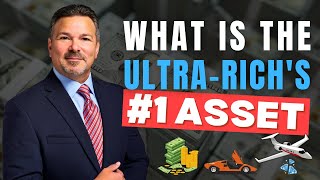
Podcast episode (YouTube) where host Chris Larsen interviews franchising expert Cliff Nanemacher about entrepreneurship, franchising as an investment asset class, and practical advice for parents teaching work ethic. Cliff shares his path from youth hustling to Wall Street to acquiring a master franchise (New York & Connecticut) and building multiple franchise businesses. He outlines a franchise-investor framework focused on AI-resistant, high-margin, scalable concepts and names four opportunity sectors: aging care, pet services, wellness/biohacking, and child enrichment. The episode includes parenting anecdotes (teaching son to earn iPhone funds, limited phone app time), a preview of Cliff's forthcoming book 'Beyond the Brand' (mid-2025), and contact details (fornosity.com, cliffn@fernosity.com).
Everything's out of whack, men and women in this country. Our food supply is absolutely poisoned. And there are franchise concepts that are now helping people get centered, get balanced and regulate their hormones.
Welcome to the Next level income show where it's our goal to take your income, your investments and your life to the next level. I'm your host, Chris Larson. If you haven't yet, get a copy of our book for free at our website, nextlevelincome.com. that's www.nextlevelincome.com. just click on the book link and I'll even send you a copy if you put your address in. On today's show, we have Cliff Nanemacher. He began his career as an investment banker at Morgan Stanley and even before that he was doing odd jobs as a true entrepreneur at a very young age. He ended up leaving Wall street in 2003, acquired a master franchise for New York and Connecticut and dove headfirst in the franchising industry. Since then, Cliff has owned and operated various franchise businesses including Cartridge World, Personal Training Institute, Pure Clean and Made Right, as well as non franchise company. With over 25 years of experience in franchising, finance and business, Cliff has been involved in every aspect of the franchisor franchisee relationship. His passion lies in mentoring franchise owners and helping individuals explore whether franchising is the right path for them. Cliff, welcome to the show.
Thank you, man. Thank you for having me, Chris.
Yeah, absolutely. I, man, I love the studio. I love the kind of the, the subtle green of money that's, that's, that's, that's flowing there around you. And Cliff, you speaking of money, you're, you're well associated with it. You know, your background on Wall Street. We're going to dive in and talk about franchises and how, you know, our listeners today can learn more about the franchise business and if it's, if it's something that makes sense going forward with everything that we have in the economy. But Cliff, I'm going to let you share more about your background. You know, we're, we're talking about your really cool story, help you got onto Wall street. But I'll let you take it from here for a few minutes.
Yeah, appreciate it. Thank you. I've been a serial entrepreneur my whole life. I've always known I wanted to be self employed, like literally as a kid, a young child, call it 6 and 8. I knew that I wanted to be a business owner. It just was blindingly clear to me. Did all various things that you would do as a Kid raking golf balls, you know, breaking leaves, shoveling snow, watching dogs, you name it. And then ultimately I started doing some things on my. I actually lived on an island. I grew up in New York is where my journey began.
Yeah.
But I moved to Marco island, an island that is three miles by six miles. You being a real estate guy, are probably familiar with Marco Island. Naples, Fort Myers.
Absolutely beautiful area. One of my favorite areas of Florida.
It, it, it is a beautiful. I moved there when there the roads were dirt, so I moved there in 1988. I, I literally lived on a dirt road. It was waterfront road. My parents relocated me down there and I started a food delivery concept that ultimately had multiple vehicles, 16 restaurants. We delivered for the pharmacy, we delivered auto parts. I did that for years. Yeah, we, we delivered around.
How old were you?
I was 20. 19. 19. 20. Yeah, actually it was 19 because I graduated high school, so I was 19. And I did that into my 20s and then got involved in water sports where I owned the, the boats, jet ski rentals on the. I had Jersey Shore. I had Marco in Florida. Expanded that for years. And then as I was mentioning. Right. Making money. What do you with the money? I just loved finance. I, I do love money. I love the concept of it. I love the freedom of it. Not the, necessarily the, not necessarily the greed of it, but I love, I love what it allows you to do, which is to live your life the way you want to live it. Absolutely. So, yeah, got a satellite system. I'm dating myself. I got a satellite system that was bragging about level one, level two trading where you could see buy side, sell side activity.
Right.
Volume.
Yeah.
Yep. So I started trading and took my portfolio to Wall street, got a job I was offered by every member firm. I took a job because my next door neighbor, who I admired was with Smith Barney. I took a job with Solomon Smith Barney. I was with a group, we managed around 250 million. And I got that. Yes, that's self employment, but not to the degree. I mean, we're managed by lawyers. We would do. We would do seminars at yacht clubs and country clubs.
Yep.
And you know what dollar bill ad I'm dating myself. Right. You know the dollar bill ads used to run in the paper? Oh, yeah, yeah, that 70% of the size of that ad was disclaimer 75. So 25 of that ad was where you get when, where and time and place. Right. So it was like, it was ridiculous. So I said I got to go back out of my own. I was young, I was in my 20s, and I ended up finding a company in Australia that reverse engineered printer consumable. And that was my introduction to franchising. I bought the rights to the entire state of New York and Connecticut and started scaling brick and mortar printer, cartridge refilling and remanufacturing locations. And then from there, I never Left Franchising. That's 2,000 free. Never left. I just felt I fell absolutely in love with this world that I can literally reinvent myself like that. Just boom. I'm in a different business. Today it's cartridges. Tomorrow I own a water, fire, mold, and buyer hazard business doing 3 million a year.
Just.
And that's real, like, Just like that.
Yeah, that.
That's franchising. Right? Here's the blueprint, the model, execute and. And grow it and scale it.
Yeah, that's kind of. Yeah, Cliff, I love that. And, you know, for our younger listeners out there, I. I want to. I want to highlight a couple things. So one, you know, share a little bit about your, you know, growing up. Because I grew up blue collar, you know, same thing, like going door to door saying, hey, can I rake your leaves? Can I shovel your snow? Deliver newspapers? Selling wrapping paper door to door. My mom was an assistant teacher. My stepdad. My father passed away when I was. When I was five. She remarried. My stepdad was a contractor. And they, you know, they were savers, you know, and I say they supported me in the fact that they really didn't inhibit what I was doing. So I had to go learn on my own. I wanted to. We didn't have a lot of money. My grandmother made my clothes. I was like, well, how can I. How can I go make some money and. And really kind of increase my little personal quality of life? When I was younger there, I tell everybody they should. They should do what I did, which was I. We had a local beach. I grew up near the Chesapeake Bay. And I'll tell you what, if. If you have an empty trash in the middle of July after people have thrown out meat and diapers and let it sit for a couple days and have all the maggots in there, then, you know, you don't really fully appreciate what it is to get your hands dirty and work. What was. What was it like growing up in your house, Cliff? Like, how did you learn kind of the mechanics of money? And where'd you get the desire to go out there and really make a living for yourself at such a young age?
So I'm adopted. So, you know, when you talk about, you know, you Talk about a stepdad. So I'm actually adopted. I was adopted as a baby. So my father was a police officer and my mom was an interior decorator. They were play it safe. They were smart, they were very good with their money. They were able to live in beautiful neighborhoods. They were able to live a nice life. Middle class, the upper middle class upbringing, I would say risk averse. Even though my father always wanted more and wanted to do something bigger and better. And in many businesses, some hits, some misses, some good swings. Right. All, all of it. Like, like every entrepreneur experiences, you got to get out there and play in traffic in order to get hit. So, you know, he did what he needed to do. I think that the, the cornerstone of everything would be, I was taught from a young age, you hustle, you hustle, and if you want something, you go buy it. It's like, what, what do you want? You know? I wanted a scooter as an example. I wanted this new Mongoose scooter. And my parents like, go, yeah, yeah. Remember that thing?
They were hot. Oh, yeah, dude.
Oh, it was. Yeah. Well, today they're a razor. You and I, we were, we were the Mongoose. Like, they started this whole craze.
I got mine when I was. For my 11th birthday, I got a scooter. Yep.
Oh, yeah, absolutely.
It was teal green. It was hot back then. Teal green. Just like my rollerblades were too.
That's right.
Columbia. And my Columbia ski jacket, all teal. That was the early 90s.
Oh, Columbia. Yeah. Lands and Columbia. That Columbia with the Timberland boots.
Yeah, those were good numbers only.
That's right, that's right.
All these, all these millennials in Gen Z are like, what are they talking about?
Completely. Yeah, right. Remember when you had to peel back the lid on the now? We really lost them. Right. So that's funny that someone. I, I remember when my son, my son's 16 now, and it's like I had to explain to him that Michael Jackson was, was a black man. And he looked at me like, like I was crazy.
Like, okay, that's funny. That's. That's funny. Yeah, yeah, that's.
No, I thought. No, no, no, I'm serious. I'm serious.
That's funny.
He was a black man. My son still does it. I don't know if he still man or no, but, but he was. There was a time. So a lot, A lot has changed to your point. But yeah, hustling. Hustling and fighting like hell to win and not taking no. And Giving up like that was everything in my household. My father worked like a, a mule. He had multiple jobs, multiple businesses. He's constantly working. I think I have the same exact work ethic. And as a kid, I just started hustling.
Yeah, I love that. And that's one of the things, you know, I, I, you know, as, as you've probably experienced as well with your son, you know, how do you translate those skills and those lessons, you know, you know, when, you know, when our children have more than we did, and I love sports for that, you know, teaching them how to do that, how to make their own money. I'm curious, because my boys, I pay them a dollar a day as a salary to do the jobs around the house, but if they really want to make money, they got to go, you know, they got to work around the yard, they've got to wash our cars, they've got to clean our airbnbs and do those things. What are some things that you've helped teach your son and some, some ways that you've helped teach your son some of those same lessons that you and I learned at that age. Wow.
This is a, this will probably not go over well with the audience, but my attitude is deprive them. The problem with kids today is they have abundance. They have abundance, and they work out of it. So you're surrounded by all the riches and you're doing backstrokes and gold bullion, and you've, you have accomplished nothing.
Yes. Yeah.
So it's like, so you've experienced. There's an old saying, like, it's like success only comes before work in the dictionary. But these kids are successful teenagers because we've indulged them with all this stuff. So here was my attitude. Yeah, you want an iPhone? What are you contributing to the iPhone? It's thousand dollar phone. And you're like 14.
Yep.
It's $1,000. So he contributed half of it. How did he get half of it? I taught him how to go get half of it. You could go knock the neighbor's door and you can tell her that the garbage goes to the curb two times a week, and for five bucks, you'll bring the garbage can to the curb and back to the house and back and forth two days. We also walker dog, watch your dog. You can pull weeds. You could, you could do all sort. I live in South Florida, so we're limited on certain things, and we're in an hoa.
No shovel and snow. Yeah.
The dogs clicked with him. The dogs became the thing. My wife was Very involved in encouraging as well and getting clients to dog sit. Made a great. This kid actually Contributed at probably 13, a full IRA Roth contribution in a calendar year. Maxed it.
I love that. Yep.
Yes.
I love that. So I love that.
I've always made sure that he had skin in the game. Do you want to know something funny, Chris? My son is.
By the way, this is. I don't care if I. I think this is going to go over well with the audience. This is gold right here.
He has never lost an iPhone. He has never broken an iPhone. He has never scratched an iPhone. Why is that? Oh, because you have 500 in it. I see. And you knew. And you knew how many dogs it took to watch. And of course, now the legal age to work in the state of Florida. And they're not. Not every business does this. 14. When you turn 14, you can have a job here. You're only allowed to work 11 hours a week. Well, guess what? On his birthday, my wife included online applying to Chick Fil a, which allows 14 year olds to work again, 11 hours a week max. And Publix, which is our grocery store that you probably have public.
We just. We just got him here for several years. Yeah, absolutely.
Yeah. I was going to say they've expanded into North Carolina.
Yeah.
He has been now working for public since he was 14, and today he's 16. He's going to be 17. So awesome. Working, making money, hustling, never cold and sick. Just where we're building as you. Right? We're building a productive male human being to the workforce, to society, respect, provide, hustle, work, make money, and take care of your things.
Cliff. I love that. And yeah, one of the proudest things this past weekend, my son, he actually boards at a local school. He plays for their lacrosse team. And he's, you know, again, trying to instill that work ethic. He comes home, he's got these, like, winter slippers. I said, where'd you get those? And my wife's like, where'd he get money for this? Because he's. He's had. He's had some hiccups along the way where he shows up and like, Where'd you get $20? You know, did that. Did you make that or. Oh, I found it. It's like, did you find it? Did it? You know, so, you know, we've had some bumps along the way. So we're like, well, like, how did he get this money? And I'm, I'm take. I'm taking him home this weekend. I said, he's he's got the slippers on. I said, because, you know, they're like indoor, outdoor. I said, oh, you got new slippers? He goes, yeah. I said, where'd you get him? He said, oh, I got him from Target. I said, how did you buy them? He goes, I bought them with my own money. And he had 20 bucks in his pocket from the night before when he went out. He bought his own dinner when he went to the ski slope with his buddy. I said, where'd you get the money? He goes, oh, I fold clothes for my dorm mates. So he went, he's gone around and he's, he's told the kids. He goes, hey, I'll fold your clothes for you for five bucks. And he's always got 20, 40, 80 bucks in his pocket. And he goes, he buys his own stuff. He doesn't ask us for any money. And it's, it's just, it made me so proud because I'm like, hey, there's, there's dignity and work and, you know, I want, I want to make sure that they, they earn those things and they're not given. And it's tough because we want them to have the opportunities, we want them to have the educational opportunities and these developmental opportunities. But I'm always curious how people like yourself that are successful, that you know that, that have, have learned these, these lessons, teach them to their kids. So thank you for sharing that.
Absolutely. I, I'll tell you a quick thing, and hopefully the audience will appreciate this. This is going back to the very beginning of a phone. No social media accounts I repair. Don't do it.
Nope.
The phone itself is digital heroin. So that's the first problem. The fact that we actually handed him a phone. But, but what I did is I, and I was the, I was the only keeper of the password. My wife didn't even have it. 45 minute max on any app that's not education related. 45 max. So like a. To go by. And he would constantly come to me for the code. 5 more minutes, 10 more minutes, and then you could set how much longer the code.
I just got that same message from my son.
Yeah, so, so I asked him. I go, be honest with me. You don't ask anymore about the code. Did you figure out how to like, unlock it? He goes, dad, honestly, you have limited and restricted my ability to use these apps that I don't even care anymore. And that's it. Man, that was one of the proudest. Like, there's so much you could do for your kids. It's changing tires on the car, you know, making them contribute. There's. So listen, this isn't rocket science. This is basic stuff. Just go back to baby boomers. Go back to a couple of generations where we raise some of the most. The. Some of the best human beings on the planet. Which would be our parents. Yes. I mean, come on. We ruined it. Gen X will go down. Gen X will go down as those parents in history. We ruin these kids. We're the ones with the furries and the nonsense, and I don't know what I am. And we're the ones who ruin these kids, and they're lazy and they don't want to work. And we got 1.8 million females on Only Fans, and that's our generation that did that.
True. Wow. Yeah.
1.8.
I will say I've never been on Only Fans, for the record, but, yeah, it is. And again, it's. It is. It's a fine line between introducing our children in this generation to the digital age, to these tools, but also teaching them responsibility, much like, you know, it's like, hey, is it okay to have a drink but not. Not get hammered? And, you know, you. You know, you know, you see that with this generation. So we could. We could spend the whole time on these lessons, I think, Cliff. But, you know, you transitioned into franchising. You mentioned that. And before we dive into, you know, what you do, how you build franchises, some of the lessons you've learned, I know you got a framework that you've put around that for the audience share. For those that aren't familiar with franchising, what's the difference between, like, going out and starting your own business versus buying the rights or actually buying an existing franchise that's out there?
Sure. Yeah. One, they both work. Right. So to start, I would never discourage anyone from just putting themselves out there, taking a chance to create wealth and to be financially independent. So if you want to hang your own shingle, which is option number one, just go out and do your own thing, great. I think those folks tend to be a little more entrepreneurial, and they're definitely taking on way more risk than someone that joined a franchise system where the concept was. Was already created. Now, granted, someone can say, well, I'm going to home care. I didn't create it, but I'm going to create my own home care agency, and I'm going to scale it. Great. Some folks say I'm going to hang my own shingle and I'm going to go create something, you know, like Star Like Elon, you know, he's just creating things and PayPal and you know, electrifying the phone book and all the things that this guy did that, that, that to me is visionary entrepreneur.
I don't know, most people don't know that about Elon. That, that was his first business was they went out and yeah, they, they basically, like you said, digitized the phone book.
That's right.
Which led to PayPal. Yeah.
Which led to PayPal and then led to. And led to. And led to the richest man in the world who is incredibly humble, has a lot of kids and talks about what we're talking about right now. So yes, you could go hang your own shingle, do your own thing. Great. Not everyone can do that. So for someone that says look, maybe I'm 40s, maybe I'm in my 50s, maybe my Runway is 10, 20 years where I really want to hustle and I have that fire in my belly and I want to create additional wealth to retire uncompromised.
Great.
Buy a franchise, scale it, follow the model. Collapse time, which I think is critical. If you're 50, you have to collapse time. If you're 50, you don't have 50 years to build something like right. You need. Right. If you're years old and you're like I finally have enough money I as they call it that fu money to get out of corporate America and go out in their own. If you have it, great. I think you need to do something that is proven you proof of concept. It's highly scalable. You have liquidity, you have an exit strategy. It's something that you could get behind and believe in and introduce to your community and against. So I think the differences are people got in their own are definitely have a higher risk proclivity. There's no doubt about it because you have way more risk, there is way more failure, way more failure in the independent than than there is in franchising. I mean that, that's a statistical fact that the average, average independent business owner will fail within X number of years. Call it under five. Where in franchising in the fifth year more of those people are still in business and importantly have liquidity. So they can.
Because. And that's. And I want you to go through some of the reasons because of that. But you know, I think one of the, one of the things. I think this is very important because a lot of our listeners are investors. They look at alternative assets that are out there. You know, the first time, you know, I'm hearing this, I'm thinking, and I'm sure a lot of other people are listening, saying, well yeah, that, that's cool, Cliff. I don't want to go buy a job for myself. Because you see a lot of these franchise owners where the franchisee is sitting there and they're, they're the face of the business. They're in the business operating. What is there a mindset? How do you, how do you work with people that come at you and say, hey listen, Cliff, that's great, I want to own the business, I want to work on the business, not in the business.
That's right.
How do you, how do you differentiate that and what are the lessons? To not get stuck just transitioning out of corporate America back into another job for yourself where you're getting paid even less than you were in corporate America, for instance.
That's great.
Excellent.
So first of all, there's nothing wrong with someone who says I've been making 75, 80 grand a year and I just, and I don't want to work for anyone anymore. I'm okay. We call them Chuck in a truck, right? It's just the guy that wants to buy his own business and he's okay driving his own van and doing some random home services jobs around town or whatever business it could be, you know, dog grooming, it could be dog training, could be something he's passionate about. But they, but they do. There are people who are like, no, I want to buy myself a job for your listeners that are like, absolutely not right. I want a highly scalable business that is profitable, that does not rely on my day to day involvement. Okay? Now we're talking executive model, semi absentee ownership where we call it. You're managing the manager. There are plenty of businesses like that. We tend as a consulting firm for Anocity is the name of our company. We tend to focus on businesses that are what I refer to as asymmetrical, very low buy, high margin, highly scalable, have proven to weather multiple economic cycles. I'm very leery of any business born in the of times when the Fed's printing money and everything is good. I want to know that a brand's gone through a housing crisis, right? I want to know that they have those battle scars and came out the other side, you know, relative unscathed. They're at least still operating. We look for businesses don't require a lot of employees. We just said what we said about our workforce. Our current generation is really lazy. They don't have the hustle in them. They don't Want to work. They'd rather make 30 grand making YouTube videos than making 60 grand by getting a job in a cubicle. They don't want cubicle life. They really don't want their parents life. They don't want to travel. They really don't want to do much. So with all that being said, you have to look for businesses that do not require a lot of employees or have that AI component. We've already eliminated them, which a lot of businesses are working on right now. With AI.
Absolutely.
You know, you go back and you look at your first job and you. And my first job. That job's dead to our current generation. They're not going to have the first jobs that we had. McDonald's was a first job for a lot of kids in this country. That, that, that opportunity has been removed due to AI and a ridiculous minimum wage to do something as remedial as. Would you like to Biggie size your fries? That is not worth 20 an hour. I'm sorry, it's just not.
Yeah, that's a, that's a great point. It's, you know, I think I'm optimistic because, you know, you look at, you know, Elon talking about Tesla becoming a robotics company and, and putting Optimus out there and doing that. You mentioned home health care. I'm dealing with the situation with my stepfather right now where he's in need of some additional care with his condition. And it's like, how do you solve this when you don't have enough people, enough resources to take care of that? So I think it can solve a lot of these. But the flip side of that cliff is when you say, hey, we're going to mandate a minimum wage that is above the amount of productivity produced by that position. You effectively eliminate that position and you make things like AI and robotics a viable alternative. So that's. Yeah, that's a, that's a really interesting point. I think what I like to do is say, okay, wait a minute, like, let's not look at this like a doomsday scenario. Say, hey, how can we take advantage of AI, take it and use it as a force multiplier when it comes to these. So let's shift a little bit. I'd like to hear your perspective, because the stock market's been ripping, you know, 20, 30% returns the past couple of years. You know, Trump's back in office. There's a lot of optimism. I think it's, it's one of the highest small business optimism scores that we've seen in recent history. But we see a lot of things changing with AI, with demographics. Baby boomers are turning 80, 10,000 a day. What are some of the trends that you're seeing that over the next five to 10 years are going to be great opportunities for people that are interested in starting their own business, looking at franchises?
It's a great question. So we're writing a book called beyond the Brand. It'll be out probably middle of 25 just for the audience. And it. Why did I mention it? It actually addresses what we're seeing in an era of AI and now quantum computing and an aging population and all this, all the societal issues that we've kind of discussed. Like people don't want to talk about these things. I think it's healthy to talk about these things because with awareness comes change. It's like that statement, what gets measured gets done. Right? It's like, oh, yeah, we don't measure. Yeah, yeah, we don't measure cap rate. Wait a minute, you're in real estate, you don't measure cap rate. No. And that's why you cap rate is 1.5%, you know, because you're not measuring it. What gets measured, it gets attention. So what we're talking about is getting a lot of attention. And I is going to be an absolute game changer. And I don't think enough white collar people realize that their job is currently in jeopardy if with white collar work. I mean, I really do. And I think that 100%. Yeah, I think Goldman and I think a lot of these NZ, they've all nailed it. Like 350 million jobs on the planet will be lost due to AI. And then there's Elon who is saying it's okay though, because you're going to live in a world where things cheap. It's like, hey, how much is that car? Oh, the car is, you know, 10 grand, you know, so.
Or even better yet, you don't even have to buy a car because you just hit your app and you have it come pick you up and drive you wherever and it's cheaper than owning a car.
You're. You're exactly right. So you're going to see huge, you know, will you. And I see it. I don't know, but seeing the beginning of this. So what is trending? We focus as a consulting company with our clients on five areas. The first area we focus on is exactly what you just said. The aging, graying, the silver tsunami of America. We have the largest demographic that has ever been born in this country. Let's call it 46 and 1964 we birthed on it. I was 69, let's just say 70 million babies right after the war. Well, those babies are 70 and 80 of age and they, they need a lot of care. And you know, and everyone goes, yeah, I don't want to do that. Why? I don't want to care for the elderly. There are ways to make money and have a beautiful legacy as an entrepreneur by caring for, come on, there are elders, there are parents, there are grandparents. It's part of the fabric of our society is aging. And the way society works is youth takes care of the elderly and the cycle continues because youth will become old and the psych. That's why you have to repopulate a planet. Otherwise there's no one to care for your elderly. It can't be seniors caring for seniors. Like you can't have a guy with a broken hip caring for a guy with a hip. Like it just doesn't seem to work that way. So yes, you could care for the elderly. You could do non emergency medical transportation. You could do all things mobility. I know people making millions just fixing, renting, repairing all things scooter mobility related. Installing chair, not a mongoose scooter, not no, no electric scooter like the ones you'd see at like a theme park where you buzz around the grocery store and you know, the theme parks. So yeah, the scooters, those things break, they need new motherboards, they need new, you know, compone. There's a lot of money made there. And what we did learn about our aging population is they want to age in place as long as they can age in place. Well, when you live in Maryland or the Atlantic region or northeast and everything is a colonial two story home, you have to install a five, $6,000 stair chairlift to get them to that second floor, grab bars and anti slip and ramps and that there's a lot of money to be made there. So I don't want the audience to always associate the aging of America with I don't want to care for elderly and one component of many in that space. The second category, which is feeds on, we're not repopulating is the actual humanization of, of pets and animals. That's category number two. We have literally humanized pets and animals. There are, there are couples now, we'll call them Gen Xers and millennials and that are just having pets, not, not actual children. They can't afford them. They feel like I can't take care of myself. How am I, I going to Take care of this, this child. There's a, you, you're talking about 100 plus billion dollar market cap. With everything involved in the humanization of pets and animals from boarding to grooming, to daycare, to train them, to retail, to selling products. There is a ton of money to be made in the pet space. The third category that we, we have coined the feminization of men in America and let me explain why we coined it that we've weakened men to the point that their sperm count has dropped 50% in the last decade in Western civil.
Yeah, that's a, that's a fact and it's crazy.
Yeah, thank you for saying that. So a lot of people like, oh, where is he going with this? I'm not getting political and I'm not saying anything that can't be substantiated with empirical information. There's a war on men. Like literally. We can't think about this. Chris, for the first time in the history of this country you had both sides of the aisle in a presidential election. Speak of ivf. Why? Because we can't have kids. Our kids can't have kids. So there's something inherently wrong there, There are franchises that are back filling testosterone therapy, ED therapy right there, taking care of men and women. Women are not balanced. Women need hormone therapy. Women feel like their cortisol levels are depleted or their progesterone levels or their estrogen levels are out of whack. Everything's out of whack. Men and women in this country, our food supply is absolutely poisoned. And there are franchise concepts that are now helping people get centered, get balanced and regulate their hormones. And if, and if anyone wants to say I'm wrong, think about this for a minute. There isn't one person listening right now who's general practitioner under modern medicine told them to get their testosterone hormone levels checked. Never. And everyone's going, that's true. Oh, but they'll write you a prescription for an antidepressant. They'll write you, you'll get Cialis and Viagra, you'll get all sorts of that you could, you could take from the pharma industry. But they will never say to you, you should really get your T levels checked out. I, I do it every year. I'm sure that I'm off. I don't want anything to do with, with modern day medicine and I want nothing to do with pharma. Nothing's entering my body when it comes to prescription drugs because it's unnecessary. So again, huge opportunity in franchising to Fill that void. And next category is. Because we're aging. What about beauty and vanity and wellness and biohacking? We, you and I, live in a time that you and I can log into atia, Asprey, Huberman Lab and learn about things no one ever talked about. Your circadian rhythm. No one ever talked about cold plunging. No one ever spoke about. Come on, Chris.
Right, let's go.
This it. Red light therapy, sensory deprivation. All this stuff is so important. There are so many franchises involved in beauty, vanity, wellness, all these things that I'm telling you, anti aging. It's important. And then the final category. This is my belief. I believe that public schools have failed us and they have failed our children by eliminating and eliminating program after program that help children be the best version that they could possibly be in this country. They really have. They killed music, they kill art, they kill sports. They kill things that make us men and make us women and make us productive members of society. They killed it. So franchises are backfilling all that stuff. And when they do backfill, it's. It's powerful. You know what's interesting? We had a woman that had an art brand, and she was in Michigan, and she ended up getting her art concept and like, 30 public schools, and she's like, wait a minute. Killed art, but yet you're allowing me in. And the school's attitudes. Yeah, no tenure, no pension, no benefits. We're giving you nothing. We are here. As long as we allow you to be so sure, if you want to do art after school in an aftercare program, go ahead.
That's cool.
So it is. Yes, it is interesting that they'll bring it in. Is it truly? Not sure. I'm not sure what the logic is there, but again, these categories are huge. We refer to it as child enrichment. Anything to help a child. And a lot of people Today, when they 50, they're looking back saying, how did I leave my mark on society? What's my legacy look like? What have I done? So those are our categories we tend to focus on with clients. They are all AI resistant, and they are all what we would call TEMU and Amazon resistant. You can't do these things through the Internet. Can't replace them with AI.
I love it, and I love how he kind of came full circle, Cliff, because we started talking about the next generation and how to teach them some of those same lessons. And you ended it with that, talking about what the school system is lacking to teach our children a lot of the skills for success that those that are out There listening that are our age or older, knew music, sports, all of these things I also love. We've been building, man. We're running out of time. So what I want to do is one, I want to have you back when your book comes out. So we're going to be reaching out for that. But two, how can people learn more about your company? What's the best way to get in touch with you and learn more?
First of all, the audience. Our services are 100% free. They're always free. We're paid by the seller, much like a realtor, so we are compensated, which is not paid by the buyer. So we do the investor for free. They can visit our website@feronicity.com fr a n o c I t y dot com. They could also reach out to me at cliff n@fernosity.com and Schedule A free consult. Get on the phone, schedule free consult. What are your investment objectives? Everything we do, Chris, revolves and the CL is centered around the client. It's your phase of life. It's your investment objectives, it's your income, it's your investment level, it's your risk tolerance, it's your liquidity. So it's not. Oh yeah, you're going into pets. No, it has everything to do with the client and the client's invest objectives. This process takes three months. We are incredibly disciplined and they are not buying anything. All we're doing is investigating. Is franchising an investment vehicle for you. And you started the call out with a lot of Wall Streeters, a lot of accredited investors, a lot of diversified investors. Franchising is an asset class like art, like crypto, like stocks, mutual funds, like real estate. Franchising is another asset class and sectors rotate. Franchising has been a very good sector to rotate. Rotate some money into.
I love it. Top two assets that the ultra rich have, real estate. But number one is business. If you want to learn more about how you can incorporate business into your legacy wealth plan, check out Cliff at fornacity. Cliff, thank you so much for joining us today.
Thanks for having me, Chris. Thank you, sir.
Hey Chris here again. I hope you found this episode valuable. Now I have one more thing to gift you. We have a page for my coaching clients where you can get a free copy of my book as well as much more from previous guests on the show. Just check out nextlevelincome.com coaching to get a free copy of my book, audiobook and much more. I'll send you a copy of my book and cover all the shipping costs as a thank you for listening to the podcast. Also, please like share and take just 90 seconds to give us a rating on Apple Podcasts.










