Where are People Moving Now? How to Use “Geographic Arbitrage” to Identify the Best Place to Live
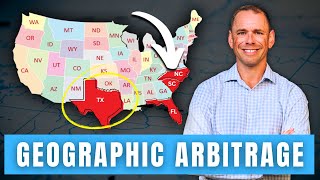
Chris Larsen breaks down geographic arbitrage: moving from expensive, high-tax areas to cheaper places with better quality of life. South Texas, North Carolina, Florida, Tennessee, and South Carolina are seeing the biggest inflows. The strategy works when you balance growth, cost of living, and climate risks.
If I want to live in an area and I want to invest in an area, specifically when it comes to real estate, or if I have a business that I want to move there and grow, I want to look at population growth. So I want to see significant inbound migration. Now why is that? Welcome to the Next Level Income Show. It's our goal to take your income, your investments and your life to the next level. I'm your host, Chris Larsen. If you haven't yet, get a copy of our book for free at our website, nextlevelincome.com. that's www.nextlevelincome.com. just click on the book link and I'll even send you a copy if you put your address in. On today's show, we're going to talk about one of my favorite topics about how to use geographic arbitrage and where people are moving. Now. Over the last few years we've seen a massive shift. Covid really highlighted this. As people moved when they didn't have to go to work, they had more flexibility. And what we saw in general was a demographic shift we've been seeing over the past decade, which is people moving from higher cost areas of living and lower quality of life. Places like New England, Chicago, California even, which has high cost of living, high taxes, but can be a great quality of life in terms of environment. And they're moving to areas with lower cost of living. Higher, higher quality of life. One of the things I want to highlight for those younger listeners out there is something called geographic arbitrage. Now what is geographic arbitrage? My wife and I used to live in the Washington, D.C. area and just to get a condo there, you know, rent there at the time we're talking 20 years ago was three to $4,000 a month. We only owned one car. Now there's some really cool things like the Metro. We could explore all the things that Washington, D.C. had to offer, including the culture, the museums, the restaurants. But we really paid for it. And I paid for it in terms of quality of life because I sat car sometimes for hours a day. I remember a particular afternoon when it rained and I was stuck on the Beltway in traffic for three hours trying to get home just, just with rain. It wasn't even anything extraordinary. So you really pay for, you know, some of the population density in areas like DC, LA and areas like that. So if you're younger, what can you do if you have the opportunity to take a high income career in a high cost area of living, get your momentum going and then Move to a lower cost area of living like we did Asheville, North Carolina almost 20 years ago, you're able to take that income with you. We were able to cut our cost of living almost in half, which meant we could save thousands of dollars a month. So that's a really simple concept that you can use in today's day and age when there's the opportunity to work from home or a lot of positions are remote where you can travel. If you can live in an area with an accessible airport where you can afford to buy a home, you can have access to higher quality food, the outdoors, recreation, like skiing, for instance, if you're into that, or like me, mountain biking, it can be really cool to do that. And also it can have a massive impact on your income. So if you're struggling to get to that 50% savings goal that I talk about in my book and I've often talked about on this podcast, what I mean is, if you are making $200,000 a year after tax, get to the point where you can save $100,000. A simple formula is if you can save 50% of your after tax income for seven years and invest it at 12 to 15%, you will double the amount that you've invested and you will be able to replicate in passive income, your active income in seven years with that strategy. So I think that's a great option if you have flexibility in where you can move. So where are some of the top destinations in 2024? One of my favorite annual surveys is U hauls, U hauls 2024 growth index. And we're going to have a email going out alongside this podcast so you can, you can read through this and access this study as well on U Haul's website. But the top five areas from 2024 were South Texas, North Carolina, Florida and Tennessee. These states offer a combination of not only affordable living, but also favorable tax policies and they have growing job markets. And again, if you're, if you're young, this isn't a surprise to people that are listening because all these areas are places that experience real population booms over the past five years. We live in North Carolina, which is number three, and we actually own properties in every single one of these top five states. We were just in Florida. We've seen a lot of influx in Florida in terms of individuals and companies, individuals moving from places like California and New York. There's been a big influx of finance and investment companies moving to Florida and really expanding their base there in the Orlando and the Miami markets. Tennessee Has Nashville, which is a real fast growing city. Nashville, where you have a lot of opportunities for not only jobs, but they have a great airport. It's fairly centrally located. One of my business partners, Matt, lives there in Nashville. We get out there frequently. I kind of jumped over Texas, which is the elephant in the room. Austin has seen a massive explosion in individuals and companies moving from California. Elon Musk is probably the most popular of those. And Austin saw a massive boom in the real estate market that subsided little bit. So it may be an area that you may reconsider, but also areas like Dallas, like Houston. Houston is a real stalwart in terms of economy now because Houston has diversified away from the energy company, energy companies, energy industries, there's medical, there's education in Houston. There's all kinds of different industries that have located there. And one thing that we're taking advantage of and a lot of our investors are taking advantage of are some of the innovations that Houston city of Houston is doing in terms of affordable housing. So they're really trying to be innovative and solve the affordability issues when it comes to real estate and options in that market. So. And again, I'm going to put these in our article as well. But what are some things? What are some, what are the top five things or five things that you can consider when you're looking at geographic arbitrage, when you're looking at a new location, U haul growth index, it talks about population growth. So when you look at population growth, if I want to live in an area and I want to invest in an area, specifically when it comes to real estate, or if I have a business that I want to move there and grow, I want to look at population growth. So I want to see significant inbound migration. Now why is that? That's the tide that's going to raise all ships. When you have individuals moving to a state, you typically have businesses that want move to that state. You have real estate that's going to be buoyant, that's going to be going up in value. And if you're young, this is fun because you have more people moving there and you have more energy coming to that city. One of the things that I like to look at when I was specifically looking for a long term place to start a family, build a home, was the state's fiscal health. And there's a ranking that's done every year by U.S. news. You can just type in states, fiscal stability, U.S. news. And this is gonna, this report is gonna pop up and these states typically tend to be more business friendly. They also tend to have a more conservative approach to finances. And why is this important? If a state has good fiscal health, that means that its taxes are probably gonna be lower or more stable. If a state is in fiscal trouble, that means it's gonna have a hard time paying its bills. It's, it may have a hard time paying its pensions. It may need to raise taxes, both income and property taxes. And that's going to be challenging if you're going to try to grow your savings and your income because you're going to have to be swimming upstream against those higher taxes that you're going to be facing in that city. I'm sorry, in that state. You know, we talked about California earlier. 14% state income tax. If you're, if you're making a lot of money out there, on top of paying 25, 30 to 40% in federal income tax. So you can be looking at paying 50% or more of every dollar you bring in in just federal and state taxes. So take a look at the fiscal health and also the tax rates when you are considering an area to live or invest in. One of my favorites is quality of life. We talked about how California is a great climate, but when you move somewhere, it's great to know that you have a good climate somewhere. Like South Carolina and Florida, both have very nice climates. Columbia, South Carolina is a fast growing city right now as well. It's where one of my partners is located. You also want to consider healthcare education if you have children or if you're looking to go to college. And also, like me, you want recreational activities. How cool would it be if you could live somewhere where you like to vacation and, and start a business or grow your business and family there? Then you literally can enjoy more of every day that you have out there. And that's going to not only improve probably your lifespan, but it's also going to improve your health span, how much you really enjoy and get to experience every day. Tying back into the fiscal health is the cost of living. You know, if you're in an area like San Francisco or New York or San Jose, California, it's going to be much harder to keep more of your money and ultimately invest and grow more of your money. So look at a quality of life index alongside of the cost of living index. Again, we. You could pull this up. I'm going to have this in the link in the article that I have alongside of this podcast that you can access. But you want to look at a cost of living index along with a quality of life index, and that's going to show you the relative cost to live in a given city or or state that you may consider. We're in Asheville. We just got hit uncharacteristically by a hurricane. Fortunately, our home was okay. The city is recovering nicely. But that's the other thing. You know, Are you in the line of hurricanes frequently? Are you in an area that's on a fault line that may experience, you know, a catastrophic earthquake? Wildfires, tornadoes, things like that, I think are also important to consider if you're looking to live somewhere for a long period of time. I have a friend and he and his family moved from Oregon because they watched fire after fire get close to their home and they said, we do not want to experience this ever again. So just to recap, how can you use the concept of geographic arbitrage to your benefit? Number one, if you're getting started in your career, if you're young, look at areas in the country that have great job opportunities, great quality of life, and lower cost of living. If you are looking for areas to invest specifically in real estate, look at the top destinations for inbound migration. Top last year, South Carolina, Texas, North Carolina, Florida and Tennessee. Again, not a big surprise if you've been listening or following the show for a while. And then blend in the fiscal health, the quality of life to the cost of living and these growth numbers to get a short list of places that would be great places for you and your family to live as well as places for you to invest. And that means not only can your family and personal finances thrive, but also your investments can thrive as well. Be on the lookout this weekend for article highlighting all of this and stay tuned for our next episode next week of the Next Level Income Show. If you haven't yet, please like and subscribe and share on your favorite platforms. Hey Chris, here again. I hope you found this episode valuable. Now I have one more thing to give to you. We have a page for my coaching clients where you can get a free copy of my book as well as much more from previous guests on the show. Just check out nextlevelincome.com coaching to get a free copy of my book, audiobook and much more. I'll send you a copy of my book and cover all the shipping costs as a thank you for listening to the podcast. Also, please like share and take just 90 seconds to give us a rating on Apple Podcasts.










