Why the DST Was Created for Times Like These with Brett Swarts
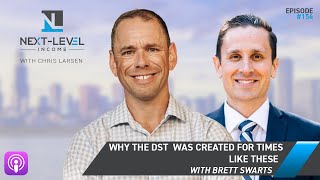
Brett Swartz explains the Deferred Sales Trust, a flexible alternative to 1031 exchanges that works with primary residences, businesses, and crypto. The structure lets you defer capital gains taxes while holding a promissory note, with setup fees around 1.5 to 2 percent and a recommended minimum gain of about $1 million.
Questions this video answers
About $1,000,000 (or two gains of $500,000 combined).
Setup about 1.5% and recurring fees about 1.5–2% of net proceeds.
Sale price ≈ $7.6–7.7 million; debt ≈ $4.6 million; net into the trust ≈ $3.1 million.
Building a Capital Gains Exit Plan.
About 5%.
They don't know about our strategy. They haven't got confident about what it could do for them. They just end up paying the tax. And guess how quickly the government's going to spend that money, Chris, no matter.
What side you vote for, they already spent it.
They're going to. It's going to be gone. It's going to be gone. Right. And so we've got to work together to educate people to understand this and ultimately to execute on the business plan. This is what we love to do.
Welcome to the Next Level Income show where it's our goal to take your income, your investments and your life to the next level. I'm your host, Chris Larson. If you haven't yet, get a copy of our book for free at our website, nextlevelincome.com. that's www.nextlevelincome.com. just click on the book link and I'll even send you a copy if you put your address in. On today's show, we have Brett Schwartz. Brett. Brett is considered one of the most well rounded capital gains tax deferral experts and informative speakers in the US he is the founder of Capital Gains Tax Solutions, is an exclusive deferred sales trust trustee. He's the host of the Capital Gains Tax Solution podcast and an exp. Multifamily broker in both Sacramento, California and St. Augustine, Florida. And today, Brett's going to join us to tell you why the deferred sales trust can be the right thing at the right time, which is right now. In addition, he's going to talk about his new book. Brett, welcome back to the show.
Chris. So good to be here. Great to see you again.
Yeah, man, I had to go back, I had to click back and back and back. I realized you were with us three years ago, Brett, you know, early on in the podcast.
Yeah. And it's good. Grateful to be here again. Right. A lot has changed in years and it's good to be still podcasting, still, you know, in, in, in the same business. It's, it's not easy. It's not easy to be in business. And so I'm glad to be you're here and I'm here.
Absolutely, without a doubt. And look, man, I know you gotta, I wanted to invite you back on. You got a new book that's out that I'd love for you to share with our audience. I see it sitting there on your desk and I got a, I got a wonderful text from you. I picked up a copy myself. And the reason I'm having you Back on one is to talk about your book prep. But also, you know, there's a lot of people that have taken advantage of the 1031 exchange. There was a lot of nervousness and anxiety if the 1031 was going to disappear. You know, in the past few years we had guests on talking about that and you know, now people are nervous to invest. And I think that, you know, from my impression the DST that we're going to talk about here can potentially be a tool for a lot of people that covers all those different topics. But first, share a little bit with the audience about yourself, Brett, your company, Capital Gains Tax Solutions and your new book.
Absolutely. Thanks, Chris. So, yeah, you know, I grew up in the real estate industry. Fell in love with real estate at a very young age with my parents building homes mostly in the Silicon Valley, East Bay area and California and, and found out that it's great to have cash flow and a great to have appreciation. It's great to be entrepreneurial. Right. But my brother and I were the first two to actually graduate college on both sides of the family. So my parents did tell us, you know, we don't want you making it just in hammering nails and building houses and such. So we actually want you to go to college. And so we went to college. I had a chance to play basketball and scholarship. Six foot white guy who could play hoops. I still love it every single day if my knees don't fall apart. Um, and so, and, and then, and then, and, and kind of fell and not really fell into. But I got invited to check out commercial real estate and an internship at a place called Marcus and Millichap. And that began my, my love with investment, multifamily real estate investing and brokerage and quickly learned about 1031 exchanges and how amazing those were. But it was 2006 at those, at that time things were going pretty good. And then it quickly kind of shifted and that's where things kind of fell apart pretty quickly. And for those who had leveraged, had too much debt and not enough diversification and perhaps had paid a little bit too much for those multifamily problems, those cap rates were going so low. I saw friends, family and clients lose half or everything over a few years and that began the of. Well, we can build a massive amount of wealth of multi family, but we've also got to be prudent and careful with how we structure deals. I heard Warren Buffett say it. Well yesterday he says, hey, you basically can't, you know, be in a good deal with a bad person. Or I would say, you can't be in a. In a good, multifamily deal with bad debt. Right. And if you're in a bad debt position, you can create the situation where now you are chasing the banks and you are chasing rent, and now your operations are in a tough position because you're having just paid all the debt service. And so bringing this all together. The 1031 exchange, we learned, was the. Actually the enemy at this point.
Right.
Because although it had deferred the capital gains tax and often pressured our clients to overpay for those properties, which has now put them in a compromised position when things. And so we learned about the deferred Sales Trust in 2009, and this became the solution to, or the alternative for a traditional 1031 exchange. And now we just coach and train people how to do Deferred Sales Trust, Delaware Statutory Trust, 1031 exchanges. Right. But mainly the deferred sales trust is our niche so that they could. They don't ever feel trapped by that capital gains tax. They can still defer the tax and they can invest at optimal timing without having to require any debt, though they can't get debt if they want to when it makes sense. And so that's really the, the, the passion, passionate focus that we're helping people with.
No, I love that. A couple years ago, a few years ago now, opportunity zones were big. And I had a friend who. Selling his business, and actually very close friend, and he said, man, Chris, if I, If I sell my business and I invest this in an opportunity zone, even if I don't make anything for 10 years, I'll still come out ahead. And I said, no, whoa, whoa, whoa, whoa. That's not, that's not actually true. Let's go through the math. But aside from that, you know, people asked what I thought about opportunity zone funds, and I said, you know, I don't know yet, because I said it's a. It sounds like it's a. It's a good structure. I've seen some really cool projects, even here in Asheville, that you and I have some friends that are working on. But I said, you got to know what the investment is, and I think that's key. Right? We're talking about the same thing, which is it's good to save taxes, but don't let the tax tail wag the investment dog. I think you always have to be comfortable with the investment. If you're forced into an investment, if it's not the right time, if it's not the right investment. It's not ideal. Then it doesn't really matter how much you save in tax.
Yeah, 100%. And one of the neat parts about the deferred sales trust is you can, you can practice not only optimization, timing, meaning there's no forced 45 day identification, 180 day close or even with the opportunity zones basically forcing you to stay for 10 years. Right. Plus yeah. As having to basically, you know, whatever the investment is to double that in order to get the actual, the actual, you know, tax freedom that's with that. But the deferred sales trust allows you to go into stocks, bonds, mutual funds. Not that I'm, I'm actually the least fan of those, but you can actually put it into T bills. T bills are paying 5% right now.
Wow.
You know, it's the US government. The government fails. Right. And so we have clients that really only do real estate but they'll put some liquidity into some and they're waiting for the real estate market to shift. You can also do lending to multifamily operators. That's one of my favorites. You can do it into multifamily funds like your Chris or you're syndicating, right. Which is amazing. But the point is you go to self storage, mobile home park, parking lots, multifamily, right. You can do some building, you could do some value add existing deals, you can do some lending. The point is you don't have to do anything. You can sit in the bank and wait. You can slowly dollar cost average or diversify within the commercial real estate space. And that allows you to have some of those freedoms such as freedom, diversification, freedom, 1031 freedom. And oh by the way, on the other side, if you, the way that we structure it, you can joint venture partner with the trust and get a new depreciation schedule which is part of what we, you know, we teach Chris, which is it's not just about cash flow, it's about tax flow. Right. You want to be able to use cost segregation or straight line depreciation to offset income that's coming in. So that at the actual level of where you get tax it could be potentially zero. And imagine a lot of your deals are like that Chris. Right. So all of these things together. But most people are just so focused on cash flow, they're not looking at the tax flow portion of and then the deferred sales trust really opens up that tax flow freedom. Then couple that with optimal timing and cash flow freedom that you like to provide on compassive Deals, Right. And it's like a, it's like a marriage, right, that this fits.
Yeah, yeah, I love that. You know what I mean? We can talk about the structure. Brett, I'd love to go through an example. I know you have a, a client. I don't, I don't want to use his name necessarily, but he sold a property. Thing was around seven, seven and a half. It was at $7.6 million. Property had debt and he didn't. He used a deferred sales trust versus a 1031 exchange. Could we, could we go through an example?
Yeah, yeah. He doesn't mind sharing his name. I mean.
Oh, perfect. There we go.
His name is Dave. And you can actually watch him on my YouTube channel. Just go to my YouTube channel. Capital gains taxes. He literally shares this entire story. In fact, he sold this deal in Athens, Georgia and he has done hundreds of sales over the years and lots of 10 exchanges. And he decided for the first time to use the deferred sales trust. And he would ask that, well, isn't it just swap until you drop, Brett, Isn't it just, you know, get the stepped up basis that make the most sense? And you know, in Dave's words, the DST was created for times like this. And what do we mean by that? Well, times when you're uncertain about the market, real estate or stock market, uncertain about debt, uncertain about banks, uncertain about a lot of different things where you can now pay off your debt. So he 4.6 million of debt on the $7.7 million asset. So we saved his failing 1031 exchange. He was able to pay off all of his debt and net into the trust, about 3.1 million and take a promissory note back. And the promise, you know, it's slowly paying him now for him now pay off his debt, diversify his wealth. He was able to invest it passively with a, you know, Brian Burke, you may know Brian. And he was able to invest with him and then he had a run on a deal in Florida and then he was also able to put it into the multifamily and their lending fund and get a nice solid return there. He's one of the guy, he's not a stock market guy. Right. So he went, he went just basically real estate and kept some liquidity on the side. And so this is Dave's story. He also wanted to retire. He's a part of the baby boomers, which is part of the largest wealth transfer in history of the planet. For him. It was traded for times like this, because guess what? He doesn't need or want to have to go into another deal and get tied up for three to five years and not have the liquidity or diversification or the ability to spend and enjoy his time and energy. And he lives in California. Right. It's very difficult to own a lot of real estate there. So for a number of reasons, he used the deferred sales trust and not the 1031.
Yeah, no, I love that. So we'll make sure. I'll get the link so we can, we can put that in the show notes so people can go to YouTube and check that out. Yeah. So you touched on another issue, which I'd love to kind of dive into this a little bit. So, you know, we have, I think when I started talking about this, it was, you know, it's, it's tens of trillions of dollars now of wealth that's going to be transferred from the baby boomers to the millennials. And I know a lot of millennials are nervous because they're saying, well, hey, I don't, you know, I, I don't want to, you know, I don't want to, you know, sell all these, all these assets. You know, whether it's their business or real estate or maybe it's a stock portfolio. That's not, I mean, as you know, that's not as common with ultra high net worth individuals. Typically, it's real estate and businesses where they've created a lot of their wealth. But, you know, they have children that may not want to, you know, either own the real estate or run it. They may not want to run the business and do that, and they're trying to figure out what to do. So, you know, how can that help this generation and what they're, what they're trying to accomplish?
Brett? Yeah. Yeah, great question. The first thing is to define, you know, what, what the challenge or the problem is or the need is right beyond just the flexibility and the freedoms that they desire for their time, their energy, their, their wealth, our clients. And if you're listening to this and you have a million dollar net proceeds, million dollar gain is, is the minimum for, for the deferred sales trust.
All right, million dollar gain. Okay.
Yeah. Million dollar, Million gain. Unless you have two at 500 each that you can combine. It could be LP position or it could be a smaller asset, but it needs to be two at 500 that you're gonna basically into one. So the first thing is all about discovering the need for the investor. And so whether you be an entrepreneur and you want that flexibility like you have a Shay Pope who sold a two point over two million dollar business, deferred his tax and invested into multi family development with the project. With the project. That was thing right. And so you can't tend to do in a business. So that was his need or it was like Dave where he's going I want to exit and I want to Defer up to 100% of the capital gains tax. And that gains tax was somewhere between around 40% or so this gain right. And so depending on the need is you're going to define that tax. Also the other need for high net worth individual is the estate tax and that has to do with 40% debt tax on anything above essentially 24 million married, 12 million single adjusted for inflation about 14. That's set to expire and drop in half in 2026. So as soon as you understand what their tax problem is, then the next what's the ideal outcome? What's the ideal outcome? Well, location, freedom, time freedom, optimal timing, investing freedom, estate tax freedom, 1031 freedom. Then you start to add up what you're really trying to achieve. And for some people it's selling a primary home in the Silicon Valley that they live there for 25 years. There's a $10 million house and they're real estate rich but they're cash flow poor and it doesn't qualify for 1031.
Are you ready to gain new tools, close more deals and network with the highest level real estate investors in the business? Join me at mfincon 2020 Charlotte, North Carolina June 12th through the 14th. I'm excited to be speaking again this year alongside Dr. Robert Cialdini, Mark King of Taco Bell, Joe Fairless and over 75 other real estate experts. Sharpen your knowledge on capital raising strategies, asset management, alternative asset classes, underwriting and so much more. This event will include everything you need to define your goals, improve your mindset and find the right connections to succeed. The networking opportunities at mfincon are not to be missed. If you're serious about apartment syndication investing, real estate investing in general or just commercial real estate, MFIN Khan is for you. And you can use our Special promo code, next level all caps to get $200 off your ticket. Learn more and reserve your seat by clicking the link below. That's M F I N C O N.com www.mfincon.com. hope to see you there.
And so there's.
So say that one more time. I think you just made a really good point. So if you're renting a property. We have a lot of investors. They sell a property, maybe a rental. I just had an investor. He sold a single family rental in California and netted over $2 million. But what you're saying is this is somebody that has a primary residence that may be worth 2, 5, 10 million dollars. They can you, they can put that into a deferred sales trust.
100%. And that's actually the lowest hanging fruit out of all of this. Right. Because the primary home is not 31 eligible. Businesses are also not 1031 eligible. Right. Neither is crypto or public or private stock really anything. Artwork, collectibles, none of those 31 eligible. And so us in the real estate world, I'm part of that real estate world. I love real estate. Love 1031s. But guess what? 1031 is blockbuster because it's so restrictive that certain things. Or there's a thing called, we call it Netflix or the deferred sales trust version of exit planning. It gives you way more flex, it gives you flexibility, it gives you diversification. Now, does it come with fees? Yes, higher fees? Absolutely. FEES are about 1 1/2 to 2% recurring on the net proceeds. It's about 1 1/2 to set it up. So this, it's expensive, Right, compared to the 1031, which is like $1500. But if you're selling a 10 million dollar asset and you have 3 or 4 million dollars of tax, it's an investment and not an expense to work with a third party trustee. That's us. If you need or want to spend it on all of your own personal stuff. The government doesn't allow us to defer tax on personal stuff. We receive payments from the trust. You'll pay tax on that. So it's just an installment. Simple. Yeah. It works for primary homes, S Corp, C Corps, LLCs, businesses, you name it. You can separate partnership. We did a 12 and a half million of crypto before the crash, and they were able to reinvest that and diversify that wealth, which is huge. So.
Yeah, yeah. Beautiful. Beautiful. Okay. So you can go from one of those, those different assets into real estate. You can go from real estate into those other assets. It can be, it can be rental, it can be commercial, it can be personal. That, that's wonderful. So what, go, go through this. Like, how does that work? So walk through kind of the structure, Brett, and how that works.
Yeah. And so, you know, step one is, let's imagine Chris, Chris was selling a multifamily property to, to Dan down the street, right? And Dan's like, hey, Chris, I'd like to buy your deal. It's worth 10 million. And let's imagine you've owned it for 27 and a half years. It's multifamily, so you fully depreciate it and you have no debt to keep it simple right now, Chris could finance Dan. In other words, Dan could say, I'll put 2 million down. Chris, would you carry back 8 million? Want to get the financing from the banks. And Dan says, it's a good deal for you, Chris, because you're not going to pay tax on what you haven't received. It's a deferral. And you're like, oh, that's a good point. Yeah. And. But here's the challenge with the traditional installment sale is that the timing is typically three to five years, no prepay, and they're going to pay tax anyways. And you forfeit the tax one. And so you're like. But for some people, they'll take that deal because they just want to defer the tax. Well, sure, we do the exact same thing, except we give you a lot more flexibility and the timing can go on for as long as you want. And what we do is we insert a trust right before, right in between you and Dan, and we tell Dan, you know what, Dan, you seem like a great guy, but you'll get a loan or you pay all cash, but we're not financing you, right? So you just bring the full 10 million however you're going to bring it. But right before close of escrow, there's a transaction in between where Chris sells the asset to the trust in exchange for a promissory note for $10 million.
Yep.
And since you haven't received any down payment at closing, you pay no tax, you're in a deferral state. You did 100% seller carryback, and immediately that asset is sold from the trust to Dan for $10 million. And so the trust bought and sold for the same price, it has no, no gain. Dan takes the asset, he's gone. And your structured. The structured installments is essentially 6 to 9%, depending on your risk tolerance, of which this is where the cool thing happens. You can start to invest back into your own deals passively and diversify. And no timing restrictions because we're not in the 1031 anymore.
Yeah, interesting, interesting. And we've had multiple conversations around this. I've heard you live talk about this. I know. I think the best thing is if this is interesting to somebody that they reach out to you and do it. But before you do that, they could get a copy of your book. Right? What, what is somebody going to learn if they get and read your new book?
Yeah. And so it's called Building a Capital Gains Exit Plan. We actually just hit number one bestseller on the wealth and real estate categories.
Awesome, man.
Thank you. Yeah. And so with a big release, just about a week, week and a half and, and by the way, they say to get in a room with really smart people, like get in a room with Chris. Right. You're going to level up. This isn't just my book. Right. I got in the, I got in a book with some really smart people, a couple chapters. But we've got some amazing multifamily entrepreneurs in here, amazing financial planners, amazing people who help build businesses. Right. And so it's all about building a capital gains tax exit plan. You know, when you go to exit. Right. And it's unlocking an actual wealth plan. Right. An ideal wealth plan is not just finances, but it goes back to that time, that energy, that location, freedom, the entrepreneurial freedom. And really to be able to make an impact to the causes that you believe in most without having to forfeit or pay, you know, 25 to 50% of your gain wiped out by capital gains tax. Right. And so yeah, it's my story about how I came to understand, know, like, and trust the deferred sales, trust the certainty of conviction, help you to overcome false beliefs and what is too good to be true. My CPA would have heard about it. How do I know it's legal? Like how to make this thing an investment, not an expense. And yeah, so we just kind of give you our secrets and say, check out, read it, learn. So that answers the question. You go to Amazon right now and pick it up.
Awesome. Beautiful. And we'll put that link in the show notes as well. Brett. And you also have a coaching program now, is that right?
Yeah. So expert taxsecrets.com and it's an ability for anyone who's listening to this podcast or anyone out there that's working with high net worth individuals. Right. Who's a commercial estate syndicator, who is a luxury realtor, commercial real estate broker, a ca, a financial advisor. And they're looking to level up the ability to add value in a world that's constantly being commoditized. Right. And automated AI'd out. Right. And so how do you do that? Well, you do that with the biggest expense that your clients are facing and typically the number One reason they're not selling, so that you can grow your business. Right. When you understand what's available, it unlocks the capital that can flow. In fact, by the way, it's actually about 84 trillion according to John Chang, the best ever conference spoke on stage while we were both there in Utah just about a month and a half ago.
And he was 60 when we first started. Look, 60, just not too long, like five years ago now it's, it's probably close to 90. Well, market dipped. It was 90, I think. Wow. It's incredible, right?
That's the largest wealth change in the history of the planet. There's 10,000 babies range 65 every single day in the US and there's 77 million in the US alone. And so you look at this large, it's actually we're going to be good stewards, Chris, with our parents and the generation passing it down. It's a battle for the freedom of America, I believe it's not just about tax and savings and deferral and elimination of estate tax. It's actually who's going to troll the capital which is going to ultimately give a lot of the power. And so our goal is to keep it in the hands of the entrepreneurs of the people to give to the causes we still believe in most. Right. We can hold accountable to build multifamily housing to make an impact and to make a dent and create more jobs with. Because we believe all of this sleeping capital, give you a few examples. You live in La Jolla. It's a, it's a $20 million house that you bought 30 years ago that for 2 million. Well, there's $28 million that if we unlock that capital and it flows into someone like Chris who's either building or buying multifamily, it's going to create more housing. Right? And but if it's just because people are concerned about the tax and they're just waiting for that stepped up basis, guess what? It's not going to be doing the impact it could be doing. And then fast forward even somebody that even worse, they don't know about our strategy. They haven't got confident about what it could do for them. They just end up paying the tax. And guess how quickly the government's going to spend that risk. No matter what side you vote for.
They already spent it.
They're going to be gone. It's going to be gone. Right. And so we've got to work together to educate people to understand this and ultimately to execute on the business plan and this is what we love to do.
Yeah, No, I think it's fantastic. And look, you know, I believe. I know. I know you believe this, too, Brett, that, you know, you, if you're listening, are the best steward of your money. You know, whether you want to use that to invest in an affordable housing project like we're doing in Houston right now, whether you want to donate to one of your favorite causes, you know, one of you. Whether you want to, you know, set up a trust or something where you can help, you know, your grandchildren go to college and do different things. Ultimately, yeah, we believe that that's the best, best thing to do, and that's what really drives all this stuff.
It truly is what it is. Right. And so hopefully you're sensing and feeling and hearing that. And so we're all in this fight together. And it's kind of like a reverse Tea Party, if you think about it. Right. When the Tea Party first started out, it was like, hey, how do we get freedom and represent? You know, basically representation and the ability to have a voice? Well, if all the money goes to tax or the government, it's going to be tough. Right. It's kind of a first Tea Party. So we're in the battle. But, you know, it's tough. It's tough with what's happening. But we do believe the DST is foundational for a lot of these things. By the way, you can still charity, but you don't have to get a charity. Right. We can also combine it with different strategies, too. Sometimes we're doing a partial 1031, a partial Delaware, and then a partial deferred sales trust. So it's not just one size fits all, but a lot of our clients are opting for it because of the times we're in right now.
Yeah, no, I think. I think it's. It's a fantastic resource, which is why I had. We had you back on. Brett, what is the best way, if people want to learn more about this? Get a copy your book, share with the audience, what your best way to connect with you is.
Yeah, you can go to capitalgainstaxsolutions.com it's capitalgainstaxlist.com that's the. That's the logo there. You can search us on YouTube, Capital Gains Tax Solutions, Instagram, LinkedIn. You can search my name, Brett Swartz, and then, of course, pick up the book Building a Capital Gains Tax Exit Plan. We do have Kevin Harrington from Shark Tank. That was one of the really smart people I was talking about. A billionaire entrepreneur. Right. Who's in the book, which is pretty cool. And so you can check out the book by going to Amazon.
Awesome, man. We'll have all those show links. I'm sorry? We'll have all those links in the show notes that we got from you here. And then please check out Brett's website. Pick up a copy of the book if you think this might be a good fit for you. Brett, always great to talk to you, my friend.
Thanks, Chris. Pleasure.
Hey, Chris, here again. I hope you found this episode valuable. Now I have one more thing to give to you. We have a page for my coaching clients where you can get a free copy of my book as well as much more from previous guests on the show. Just check out Next Level income. Com Coaching to get a free copy of my book, audiobook and much more. I'll send you a copy of my book and cover all the shipping costs as a thank you for listening to the podcast. Also, please like share and take just 90 seconds to give us a rating on Apple Podcasts.










