#678 Pax8 Beyond-Chris Day: 🧭 From IT Glue to AI Glue: Chris Day on Building with Purpose
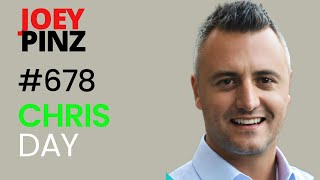
In this 45‑minute podcast recorded at Pax8 Beyond 2025 in Denver, host Joey Pins interviews Chris Day, the founder of IT Glue, serial entrepreneur, and current CEO of Scalepad and partner at TopDown Ventures. The conversation weaves together a high‑level recap of the Pax8 event, personal anecdotes (golf, NFL fandom, weight‑loss discipline), and a deep dive into the Managed Service Provider (MSP) ecosystem. Chris explains his journey from starting an MSP, selling it, creating IT Glue, and later launching Warranty Master, Scalepad, and a $40 M venture fund focused on early‑stage MSP SaaS. He discusses the unique challenges of MSPs versus pure SaaS—recurring revenue, people‑centric service, churn drivers, and the need for better customer‑success frameworks. The dialogue turns to the AI wave: the surge of AI‑first startups, the importance of data as “oil,” agentic automation, and emerging protocols like MCP/A2A. Chris outlines Scalepad’s product roadmap, especially the upcoming Lifecycle Manager X, which aims to embed VCIO, QBR, and strategic road‑mapping into a unified customer‑success platform. Throughout, Chris emphasizes discipline as a personal and professional driver, measuring success by impact and gratitude rather than revenue. The episode ends with contact details (LinkedIn) and promotional plugs for Joey’s podcast, merch, and the MSPInfluencer community.
Chapters
PAX 8 Beyond 2025.
What an event. Third year they've had it. I've had the great pleasure of being there for all three. This one was the biggest. It was over 3,400 total attendees, 2,400 partner registrations, like over 40 breakouts. Over 40 education sessions. It was, uh, the entertainment was fantastic. Uh, Snoop Dogg came out and performed. Uh, it was a really, really great event. We podcasters there, of course, we had a whole podcaster's row. I think there was 10 of us. It was fantastic. It was done very, very well. I was able to, um, me and my team, we conducted 24 interviews and 24 great conversations there in Denver. Kathleen Lord, Lessons from the Saddle: Grit, Growth, and Tech Insight. Great conversation with Kathleen. Oh, Aaron Pedrick. Yes, Coaching Cybersecurity and Real-Life Comebacks. Fascinating story Aaron has. Shlomi, of course, I've known Shlomi Ajan for a little while now. Really, really insightful. Really, really like talking to Shlomi. Kim Simmons. My goodness, what a— such energy, such life. I hope to be working more with her and her team. They were gracious enough to invite me to a dinner. It was— they've got a great product, Smarter. It's— the name of the episode is Creativity Meets Contracts. Colin Britton, of course, Formula 1 to Intune. Great partner there. Colin, great conversation with Intune with his great platform. Marco Levecchia, yeah, Data Purpose and the MSP Playbook, great conversation, uh, with Marco. Rex Frank, my old friend, I've known Rex for, I don't know, 15, 20 years. He's, he's there at PAX 8, um, really knowledgeable, learned some things about him I didn't know during our conversation. Oh my goodness, Lorna Berman, what a delight, what an absolute delight to talk to Lorna and her team riding Malibu and running MSP Ops. She's got a horse named Malibu, but great insight, great platform they have there too. Tom Harshbarger, my goodness, I've known Tom since he was at Microsoft, about 20 years. Uh, now he's with this great firm, uh, Metallica, uh, misconfig and mindset. Uh, we talk a lot about that. Great conversation with Tom. Uh, Louis, of course, McDonough from MoveVilla, great conversation. We, um, I start We start off with cooking. I like to cook and he does too. Meatball Mindset and MSP Projects. Darren Swan, great conversation with Darren. I've known Darren for a little while now. Enjoyed talking to him. Opened the conversation with vinyl, espresso, and CyberTrust. Pinar, yes, I love speaking with Pinar. Pickleball, Possums and Proactive Security. Great conversation with Pinar, CEO of that great firm. Tanya, of course, uh, got to know Tanya. We had a great conversation on the phone before we met there and had the conversation in Denver. Tanya Alfonso from Kitchen to Cybersecurity. Uh, Damo, oh, I love talking to Damo, of course, from SuperOps. Um, yeah, barbells and AI for MSPs. Great conversations with Damo. Charlie Tamio, I've known Charlie for 15, 20 years now. Great talking. We talk about, you know, phishing and MSP automation, the great Roost platform. Ryan Ettridge, Black Belts and Cyber Surfers, great conversation with Ryan, fascinating insight, the martial arts plays on people's lives. Joe Saunders, Cigars, Securities, and Self-Reflection, great conversation with Joe. Rob Ray, been in the community for, you know, I've known him since he was even before Datto. A fellow Connecticut resident. Great talking to Rob. He's doing great things there as vice president there at PAX 8. Drew, oh, Drew Schlessel, of course, great talking about their Wasabi platform. We actually became a partner as well. The platform is so good. Chance Weaver, AI adoption. He's there at PAX 8 talking about his great story and how he got there, but he's working on AI adoption. @pax8. Christopher Marquez, I've had the good pleasure of knowing Christopher for a little while now. We talk about chili, coaching, and cyber threats. Uh, really great insight from Christopher. Chris Day, been in the— my goodness, I've known him since, uh, oh, from IT Glue all the way, all the way where he is now at Scalepad. Been in the, the system for a lot, been in the channel, the community for a long time. Gene Kim, Surfboard Security and staying operational. Enjoyed talking to Gene. I had the chance to meet him at Secure Connect. Why Secure? And lastly, Ken Tripp, Microsoft Copilot and compliance. Great conversations there at PAX 8 Beyond 2025. Incredible event. Um, can't wait to see what they, what they come up with next.
Hi, I'm Joey Pins, and here's my 45-second introduction. After starting my business in the '90s, I started developing poor habits of eating in my diet because working way too much. Before you know it, I found myself 340 pounds. The doctor told me if I don't lose the weight, I'm not gonna see my daughter graduate. Took the next 7 months, lost 130 pounds. People think there's some secret. Ask me, how'd you lose that weight? Like there's some secret. There is no secret. How'd I lose the weight? Just one word: discipline. I've had other successes in life, and I attribute them all to discipline. Now, I'm not the king of discipline, but I believe that it can help all of us. Friends, colleagues convinced me to start a podcast. The podcast mission: how do we better ourselves and society? I talk to interesting people in health, fitness, sports, wellness, business, technology, science, art, and culture, and I eventually ask them how discipline plays a role in their life. Podcast Vision: growth through learning from others.
I didn't know you played golf.
Oh yeah.
How often do you play? You're out there in Scottsdale.
Not enough. Not enough. Yeah, I used to play a lot. I used to play a lot as a, as a junior golfer and all that.
Did you really?
Yeah.
You carried a number? You carried a handicap?
You played tournaments?
I did, yeah. I think I was down to 7. Ah. Somewhere around there. Never got much better than that.
And now?
Oh, geez. I mean, I'm happy to break 90 these days. Oh, you're lucky. You know what I mean?
You can't get out. But you're in God's country as far as golf over there in Scottsdale. There's some unbelievable courses.
It is.
Yeah. And a lot of the pros live there.
Yeah, so you know I'm from Vancouver originally.
Yes.
In this fast-paced MSP landscape, how do you stay ahead? Introducing MSPInfluencer.com. Your ultimate hub for MSP news, insights, and community connection powered by ForzaDash. More than 75,000 MSPs subscribe to our MSP Influencer Pulse weekly newsletter, staying informed and ahead of industry trends. Tune in to emerging podcasts from Joey Pins and leading MSP voices offering essential tips, powerful insights, and success stories. Explore our multi-authored blogs crafted specifically for MSP leaders, delivering fresh perspectives and actionable strategies. Celebrate excellence with the industry-leading Forza- MSP Influencer Awards, recognizing innovation, leadership, and impact in the MSP community. Join thousands of MSP professionals who trust MSPInfluencer.com to grow their business and expand their networks. MSPInfluencer.com, where today's MSP leaders connect, collaborate, and conquer, all powered by the Forza- platform, helping MSP vendors work effectively with MSPs and helping MSPs grow.
And so Vancouver, it's either Scottsdale or it's Palm Springs. And for me, I, I pick Scottsdale. I think it's more vibrant, more, more golf as well, more vibrant. There's hundreds and hundreds of courses, you know. So yeah, it's awesome.
And so being from Vancouver, you, you're a big NFL fan.
What was your team? Uh, can you guess? Well, I mean, it's not the Seahawks.
Okay, so most people from Vancouver, I would think. Yeah, this—
yeah.
Cardinals? Cardinals.
Yeah, it's one of the reasons we started going down there. Jeez, like 15 years ago.
I see.
And dating myself, but yeah, always been a Cardinals fan. My wife's an Eagles fan. Oh, jeez. And so—
Good time to be an Eagles fan.
Yeah, we don't conflict that often. Every 3, 4 years we have a problem.
Yeah.
Other than that, pretty good.
Yeah. And so how does a— Growing up in Vancouver, is it an NFL town?
You know what, it's not the same, but yes, I would say there's, there's, there's a fair few football fans, but it's not the same.
It's not the same.
It's not the same.
It's not the same now as it was.
It's not the same in general. Like, so if we go out on a Sunday in, in, during the football season in Arizona, it's like families out, you know, Grandparents are out, everybody's having a beer and a burger.
Nice.
And it's a little— it's just a little different. The culture is not the same, probably because of the college, you know, the whole college.
All right.
Aspect. Right. We have the CFL, but I don't follow.
Yeah, I don't know.
Yeah.
Like Doug Flutie was a player for a while, but that was 20 years ago. I don't follow it at all. Yeah, I guess there's some different rules there too. The field's wider, I believe. There's more downs.
Yeah, it's another 10, 10 yards longer.
Ah, yeah.
Yeah, it goes 50 and then gap and then, and then 50 down again.
Does it really?
Yeah.
It's fascinating. Yeah. So, Chris, we're here at PAX 8 Beyond 2025 in Denver. What are some of your goals this week?
You know, it's funny for me at these events. Yeah, I, I am sort of like back to back in meetings.
Really?
So I got in yesterday morning. I think we did 9 or 10 meetings back to back. And then today is sort of the same deal. So I end up, I find it a great place to connect with CEOs of other businesses, MSP CEOs, vendor CEOs and executives, or we're partnering up. And I find it for me, that's, that's the value I get is it's like I would either otherwise have to go do like 20 trips.
Yeah, that's right. Because they're all here.
They're all here. So it's really, really efficient way. And obviously this show being one of the biggest now.
Yeah, it sure is. The growth is phenomenal.
It's a little mind-blowing, right?
Like, it is in 3 years.
Yeah.
Or 2 years.
Yeah. You walk from here back to the lobby and you, you, it'll take you 2 hours and everybody.
Yeah, yeah, yeah. Chris, you've, you've started and sold in so many companies all around MSPs. Why do MSPs— what was, what's so attractive about MSPs for you?
Well, I guess for For me, it was the starting, starting on my own. So I think my kind of origin story was, was similar to a lot of MSP owners, like starting an MSP, building that up. Um, we, in 2022, the original MSP I started 20 years before, we sold to the largest telco in Canada. So I kind of had been through the gauntlet, ran the gauntlet, I guess, all the way up, scale, you know, scaling that business and, and seeing all the challenges firsthand. And so I mean, ultimately, that's what caused me to start IT Glue back in the day.
That was the first one.
Yeah. And then, you know, going through, we had Warranty Master that had started a couple of years, actually only started a couple of years after IT Glue. So I had that running while I was running IT Glue. And then that is the sort of, was kind of already had my next chapter paved with that. And then also getting in on the top-down side, we've invested in a whole bunch of other companies. Since then, many of which have either been acquired by Scalepad or have gone on to scale on their own. So yeah, I'm like so connected. And our venture capital fund, the TopDown, launched last year, $40 million VC fund.
Wow.
And entirely focused on early-stage investments for MSP SaaS companies. So we've done, we've done 3 of those in the last year and, and continuing that as well. So yeah, I'm pretty well stuck. I don't think I'm going to be going into medical. Manufacturing, right, or anything else, uh, at this point.
What do you miss about the MSP, about running it?
Is there anything?
Um, you know what, it's a hard business. Yes, you know, like, and it's— it was, you know, it was always— it was always hard. I think the, the— it's been a bit of, bit of a case of moving goalposts. Um, just always trying to optimize for like the customer experience, but at the same time dealing with like margins, and those things are often at odds. So I feel like it's hard. It's like any service business. Interesting thing about the MSP business is recurring, like, like SaaS, but it's so different from running a SaaS company. Your product is not an app that people have to click, right? Click on. Your product is like heavily people dependent.
Yes.
And yes, it's recurring. And yes, you have churn and you have upsells. And you have cross-sell, and you have all these things that are consistent with a recurring revenue business. But at the end of the day, it's like if the process falls down or the people fall down, you know, that, that's creating churn. In the software world, as long as you create a great product and it continues to evolve and you innovate, like you listen to feedback, you see what people click on. Hmm. A little bit different in the MSP business. You don't get to see what, you know, you don't get to see if someone doesn't like somebody. That's a problem. And that's harder to solve than, you know, fixing a dropdown and making it a button or something.
Right. You know, for those MSPs, like ConnectWise has the Pitch It program where a lot of MSPs make a product and want to productize it. What's your advice about, you know, becoming a vendor and trying to resell your platform?
Yeah, it's tough. I mean, we see a lot. So like lately, let's say like in the recent days, I think we're looking at 2 to 3 AI-first startups like per week right now. Like there's a lot of companies spinning up. And I think that there's this big kind of paradigm shift that's happening because you're seeing like the incumbent, the large companies that are trying to sort of retrofit AI into the, into the platforms. You know, we're not immune from that at Scalepad. You know, there's— you've got a business that's been running for 10 years or 20 years or 30 years, and you're trying to retrofit AI. So there's a lot of promise, I'd say, coming from the AI startups, like really looking at things differently. Like we're seeing startups with founders that aren't even from the MSP space, like Silicon Valley founders that are recognizing the MSP space. But I think the thing that's consistent is like is data being sort of the oil for AI. And so, you know, platforms that are coming up and creating a system of record or a system of action where things happen for the customer, where we can automate things for the customer. I think that's— I said it, you know, I've been saying it every week, but this idea that we keep focusing on the MSP as vendors.
Hmm.
There's a long, long answer to a short question.
Yes.
But I think that the recentering that we need to do is looking at the customer experience. So if I'm a customer of an MSP, I'm an SMB, what do I experience when I work? And I think that there hasn't been enough effort put into that. There's a lot of great startups that are really focused on that. It's like, hey, I'm really used to using Venmo. I'm really used to using Uber, right, or Waymo or whatever, like this on-demand kind of aspect. And it feels like that hasn't quite made its way to these subscribers. So I think that there's a lot, and that applies to strategy too. You know, there's two— what are the two things that MSP delivers? Reliable service and, and some form of strategy. I think we've gotten pretty good at the reliable service. We've gotten better and better and better at that. But then what about the strategy? Most of the SMBs that I talk to, even the ones that work with really large, really successful MSPs, you ask them like, hey, you feel like you have like a good grasp on like where you guys are headed with tech? And they'll be like, not really.
Really?
So I think that just, that's just sort of a symptom of the way we've kind of approached it, is like, yes, software should make MSPs more efficient, but then like, what does it do for the customer? So I think if we keep that in mind and, you know, risk and cybersecurity compliance, all these, these great things that we're working on, the nice thing about those is they do provide value.
Wow.
So I think it's sort of like a kind of drawing a line in the sand now and saying we got to like show value, right? We got to create outcomes for the customers. Wouldn't it be nice if we could help these SMBs grow? Rather than focus on like, hey, let me make you more efficient, because that's sort of like, how much blood can we squeeze from that stone?
Hey, Joey Pince here. Want to take your podcast experience to the next level? I'm excited to invite you to become a YouTube member. It's the absolute best way to support the channel and enhance your connection. Join our amazing community and unlock the incredible perks, custom loyalty badges, exclusive emojis, and priority comment replies. Your voice will always stand out. Be the first to watch new videos with early access, receive special membership shoutouts, and get exclusive behind-the-scenes photos and updates. Dive into content available only to our members—special videos, deep dives, and insider perspectives. Engage directly with me, suggest podcast topics you want to hear, and even get personalized video shoutouts. Hit the join button right now and become part of something special. Let's build this amazing community together. I can't wait to welcome you as a new member. Join the Joey Pins family today.
The old, the old cliché, start with the customer. I mean, that's what you're saying. Yeah, it seems obvious, doesn't it? What problem are you solving? And those newer companies that are kind of— we used to say born in the cloud, right? Now we're saying born in AI, right? Instead of attaching it out. Even Pax8, they kind of started with the platform. Yes. And moved from there. So they had a certain advantage over other— I don't think they like to be called distributors, but whatever, whatever class they're in. But yeah, yeah, those ones. So when 2 to 3 AI companies a week is still blowing me away, it's not— yeah, it's not. So with TopDown Ventures, like, what do you look for in some of these companies that you may invest in? Yeah, we're, we're—
there's a couple of avenues. So I think that there's, um, you know, like Scalepad's got a pretty, pretty good scale now. There's a bunch of us in that, in that kind of realm and the 2, 3, we're about 300 employees. There's a bunch of companies in that size, the 50 to 100 million ARR range companies. Those companies are fairly acquisitive. And so there's opportunities, I think, for a lot of these startups to be acquired. And because I don't, I don't know that a lot of the The bigger companies are able to innovate that quickly because there's a lot of debt to make that happen. So that's kind of the things we're seeing is like, hey, even something as simple as like ticket triage, like a robot taking a request, trying to fix it on its own and interacting with the user. It's so much harder to build that in a PSA natively, just given what they have to deal with than a startup that could put that on top. And so I think there's a bunch of those use cases. I think that there's, there's sort of the big, big data machine learning use cases like MSP is sitting on a crazy amount of operational data and sort of trying to figure out how can we mine that data and create automation. This whole concept of agentic and trying to get work done that otherwise would require a human, or creating assistance for humans so they can get more work done. There's— we're scratching the surface now, and there's a bunch of startups in that area that are very promising. Uh, it's like the, the tech is going— it's sort of like the, uh, the universe and trying to imagine how big it is. Yeah, I feel like we're kind of going through that with AI right now because it's like every week, right, your mind's getting blown by what it can do, something else. And you're like, oh, that thing that sounds like it would take 2 years to develop is like it's done in 3 days. So there's these, these scales that I think for the average human are tough to understand. Wow. So yeah, I think, I think the vendors have got to support the MSPs on that journey. MSPs typically themselves don't have big data science teams. Yeah, typically. Or, or AI, you know, engineering resources. And so I think it's on us to sort of bring some of that stuff forward. How does Scalepad, Chris, help MSPs? So we think of it this way: customer success. That's what we— that's our mission now. So it's basically the idea that if we put the customers— sort of what I was saying. Yeah, obviously there was a reason for that. We put customers at the center of the story. It makes makes delivering solutions much easier if it's tied into their outcomes and goals that they have. So, you know, something as simple as the QBR, which for 20 years we've been talking about the QBR. Yeah, for sure. 20 years we've been talking about VCIO. Yes. And account management and how to do that properly. And we've had lots of opinions on how to do that. I think what Scalepad aims to do is sort of put a pin in that discussion and recognize that there is a methodology that exists that we should, we collectively need to figure out. Scalebuyers is not going to solve that on our own. But like, how do you approach customer success as an MSP? This has been really established in software companies, companies like Gainsight that have come to fruition where it's all about managing like, hey, you got the commit, customer signed on the dotted line, they onboarded with you. And then what? You're going to deliver a QBR, then what? You got someone who wants to churn, then what? And it feels like we haven't put the necessary attention into protecting the customers that we brought on board. And so that's kind of the mission that we're, we're out there to solve. And Lifecycle Manager is part of that. Lifecycle Manager X, which is launching in the summer, is really about bringing that customer success program, and it's, it's providing that underpin technology to run customer success, which includes VCIO, which includes QER meetings and other meetings. It includes roadmaps and initiatives that are going on, includes assessments that need to be done. So it's kind of putting a wrapper on that, and then, like I said earlier, making it consumable for the customer, which is the thing. It's like you can have all these great plans, but if your customer is not aligned, then it's just a quote, basically. It's a proposal. But if your customer says, I want to improve my risk from X to Y, my position from X to Y, all of a sudden you're like, well, these are the 3 things that I recommend that we're going to do that. Does that work? And then they go, yes, let's move forward. So it's just a small nuance. I think, you know, getting And QBR is almost a bad label. It's just like we just need to have great conversations. We need to ask great questions. And if we ask great questions, we'll start to be seen as a strategic partner. Sure. And if we ask people if they want a faster antivirus, then we're always going to be the tech guy. Right. And so I think that's what it's— that's where it's at. That's the next— the next 10 years is recentering the story on The customer, getting them everything they need to say yes. And, you know, everything else is sort of irrelevant. That'll create the growth that'll, that'll have people consume the compliance service that you want to offer. That'll have people sign up to do AI workshops with you because they want to move AI forward in their business. And so it's like we've got to create the plumbing to make space for those conversations to happen. And stop sending ticket reports and stop sending backup reports.
That's for you to use.
Yeah, that's not what the customer cares about. Yeah, right.
Has there been anything in the last month or so, Chris, you changed your mind on?
Interesting question. In the last month or so, I think there's still a lot of conviction. I think probably the one that that is again happening faster than I expected is the agentic world and the rise of agents. I think I would've said a month or two, even maybe two months ago, that that would be a while. But I think it's here. And I think those use cases are popping up. I don't think it's in a spot where, you know, MSPs are gonna be getting rid of employees and replacing them with agents. But I think the agents, the rise of MCP, the rise of A2A these protocols that like, even for ourselves, we're like, wow, we were thinking API. Now we need to be thinking MCP and because now we can participate with other agents to get work done. That's literally in the last couple months. I know. Right? Before that, nobody knew what that was.
No, I just learned MCP a month ago.
Yeah. Yeah. Exciting. It is. It's wild. It's wild. It's super exciting. It's super overwhelming. But, you know, yeah, you got to just keep going.
Yeah. So I started my MSP in the '90s. I sold in 2019. So I was working way too hard in the '90s, 14, 16-hour days. You're no stranger to this, Chris. No. Putting my health in the back seat. Next thing I know, I'm in front of the doctor. She tells me I'm at 340 pounds.
Wow.
Yeah. She said, if you don't lose this weight, you're not going to see your daughter graduate. My daughter was just born.
Crazy. Scared the hell out of me.
I'm driving home, punching the steering wheel. What did I do to myself? I can abuse myself all I want. I've got this family now. So spent the next 6, 7 months, lost about 120 pounds. Wow. And you can't look at it as a finishing line, right? These are lifelong changes. So when I tell people this story, they always say, what's your secret? What'd you do? And there's no secret, Chris. Discipline. That's how I kept it off. How does discipline play a role in your life?
Yeah, I think for me, um, disciplines come in a couple different forms. I think I've always been a grinder, so like there's no, you know, there's no clock. Um, I'll work, I'll work around the clock for sure. Yeah, I do have discipline around— it's been this last year, so I took the helm as CEO of Scalepad in September, so it's 10 months. Wow, that was a major wake-up call in terms of just life before and life after. Just a lot of things to do to sort of prep us for the next phase of growth. So, I would definitely say, you know, there's the sort of the 3 buckets like business, personal, and family. I would definitely say it's really tilted on business right now, but it's something I pay attention to and I know I have to bring back into balance. It's one of those weird things. If those three are in perfect alignment, it's wonderful. It's great. Yeah. But if it's too tilted on personal, you get antsy. If it's too tilted on family, you're like, I have no me time. Right. And all permutations of that. But I think there's discipline in that. There's discipline in having balance. There certainly is.
But it's hard. It's very hard.
It's constant challenge. Constant challenge. And it's bottomless. Like, you can work away. Good point. Indefinitely. Yeah, yeah. Even, even with AI tools, you can—
even with those tools.
Yeah, yeah. What motivates you? Um, I think for me it's, uh, it's making a change that, you know, for me, I mean, it sounds, sounds a little, um, a little bigger than it needs to, but, but making a change to an industry, sort of why I'm here now. Um, you know, I, I was fortunate to go through that with IT Glue, like Prior to IT Glue, nobody thought they needed documentation. And now everybody knows that.
You pioneered it. That product pioneered that. Absolutely.
And I think that's what gets me going with our next chapter here on customer success and really sort of recognizing that this deserves care and feeding. We put so much effort into getting new customers and we struggle to retain and grow those customers. And so I think for me, the fact that we're making a change to the industry, that people can look back and go, oh yeah, remember when that thing was a problem and nobody managed, you know, their book of business in the right way? Um, I think that's what, that's what gets me motivated.
Want to show your love for discipline, inspiration, and the Joey Pins Podcast? Now's your chance. Introducing the brand new Joey Pins merch store where style meets discipline. Choose from premium apparel, cozy hoodies, stylish hats, durable bags, and your new favorite coffee mug, all featuring the iconic Joey Pins logo. Perfect for podcast fans, discipline enthusiasts, or as unique gifts for friends and family. Every purchase supports the Joey Pins Discipline Conversations podcast, helping us continue to inspire greatness and promote positive change. Visit joepins.com/store today and wear your discipline proudly. Joeypins merch.
Wear it, share it, and live it.
So given impact, it sounds like impact to me you're talking about. Yeah. So given that motivation, how do you measure success?
Um, I think it's, it's in what other people say. Hmm. You know, I don't think— I think it's not revenue. It's not number of employees. It's like people coming up to you and going, man, thank you. And I still have that today, by the way, on the documentation side. Like, that's cool. Literally, what is it, like 14 years later? Something like that. Yeah. 14 years later, I have people coming up to me and going, man, thank you for creating that thing. So that's impact. And it sort of like went past, you know, my tenure there and it continues today. So hopefully that's, that's what it is. Left a mark.
Chris, I've been dying to talk to you in this format for a long time. I know you're busy. I appreciate it. Anybody want to get in touch with you? How can they get in touch with you?
Yeah, best way would be on LinkedIn. Look me up. That's probably my only and most active social channel. So look me up. I'm always sharing unhinged posts there.
I loved your post about the flight here. Everybody's taking those selfies. You took a Guy Ritchie thing. That was great. There you go. Changing the game, man. That's right. Chris, thanks so much. I appreciate it.
Thank you for listening and or viewing Joey Pinn's Discipline Conversations. Please share this episode with 1 or 2 of your friends who you think may benefit from the episode. Our website, www.joepins.com. There you'll find lots of resources and you could join our mailing list. Please follow us on all our social media, Instagram, Twitter, and Facebook. Podcast information. The video version of our podcast is on YouTube. Please subscribe. Audio is on all major podcasting platforms. Please follow them. And if you like it, please consider giving 5-star rating. Would really appreciate that. Thank you again for listening or watching Joey Pinn's Discipline Conversations.
More from Chris
Episode 31 - Reactive to Intentional: How MSP Leaders Actually Level Up (w/ Guest: Chris Day)