Meet the man who growth hacked his app to 1M downloads

In this episode of The Startup Ideas Podcast, host Greg Eisenberg interviews growth hacker Chrisjjosephs, who walks through his "social engineer" approach to creating viral content and scaling apps. He explains how he built meme‑style accounts (Pelosi Tracker, Michael Burry Tracker, Stop the Spend) that combine humor, investigative journalism, and authority to generate massive attention and affinity. Chris details the step‑by‑step framework he uses to reverse‑engineer viral ideas, craft sponsorship activations (the UFC partnership, fake Pelosi, Cybertruck stunt), and amplify them across Instagram, TikTok, and news outlets. He shares his press‑outreach playbook—maintaining a reporter email list, providing high‑quality story hooks, and leveraging free media. The conversation then pivots to how anyone can apply the same methodology to new niches (plant meme pages, online‑shopping livestreams) and to rapid one‑off app ideas (AI haggle, Cal‑AI calorie scanner). Chris also outlines his monetization strategy: low‑cost customer acquisition through authority, building loyalty, and product extensions like the GPT‑portfolio and marketplace features. The episode ends with practical advice on naming, content cadence, and future growth plans for Autopilot.
Chapters
Today I want to talk about, uh, something that I think you're one of the best in the world at, which is getting attention and going viral. So many people don't know Chris Josephs, and that's okay because they have seen the Nancy Pelosi tracker or the Michael Burry tracker, or they've seen what you've been— you know, the, the recent thing you did with the UFC. And getting a lot of attention there. So what I want people to get out of this episode is by the end of this, they'll be able to internalize their own Chris Josephs, and whatever they're able to do, they'll be able to come up with viral ideas to get millions of people to engage with their stuff. Do you think we can do that today?
Yep. Yeah, I'll try and kind of unveil the curtain and
The Startup Ideas Podcast. It's sipping time, baby.
I've been on your podcast before, and I think like the theme of that one we did a while back was, we call it like trend hacking. When, you know, the analogy I like there was you have a river of conversations going on on social media, and there's different boats that go along that river. As a brand, if you can kind of throw a life jacket or any sort of thing to hook onto that boat and let that trend take it with you, your brand, you can kind of get growth with that. I think with this one, it's a little bit more of like this idea of, and this will kind of set the conversation well, is I don't see myself as a marketer. I don't see myself even as a growth guy. I see myself more as like a social engineer. And like what I mean by that is Social media is all built on algorithms, and it's just one people, one kind of side of the marketplace of the attention span, and then the other side. On our side, it's like, how do we algorithmically and scientifically come up with a formula around our content that would work on kind of both sides? So as a social engineer, like, the things that go into it— reverse engineering viral ideas, reverse engineering a tweet that is kind of written a certain way so that it gets 20,000 retweets as opposed to 15,000. Reverse engineering, like if you're gonna sponsor the UFC, what's one thing to do? You can kind of put autopilot on the banner, or you can kind of really think through like, how do we get this thing to get even more viral? Which I have a full-on kind of calculation I'll get into. And how do I add in the different variables for that one piece to go viral? So As you kind of mentioned, um, yeah, we have the Pelosi Tracker Autopilot. It's the first app that allows you to automatically copy politicians' stock trades. That's kind of a viral idea in itself. Um, I've personally built that Pelosi Tracker, um, with the help of my team. It's not just me, but, um, to around like 750,000 on Instagram. We have another account called the Politician Trade Tracker, which has around 750,000, and our app has around like 1.2 million downloads, $300 million invested. Things of that nature. So the story on the UFC was a lot of people know the idea of the Pelosi Tracker, but not as many people know that Autopilot is the company and the product that powers the Pelosi Tracker. So say 100 people know Pelosi, maybe 20% of them know that Autopilot's the team behind it. How can we kind of start creating that, narrowing that gap and getting more and more people to understand that Autopilot is associated with the Pelosi Tracker because the Pelosi Tracker has such goodwill? The UFC, probably 3 weeks before their big Sphere event, reached out to us and was like, "Hey, we're big fans. We'd love to market with you guys, or we'd love you guys to come and sponsor kind of some of the upcoming fights." And we kind of thought at the beginning, like we don't do any sponsorships. We've never swung big. We've never done anything like that. Maybe now is the time because the UFC is great. Dana White, Joe Rogan's there. Trump goes a lot. Invest Like a Politician, the majority of their fans are libertarians, like that would kind of work well. And we said like, look, like, let's, let's kind of think it through and let's go from there. It's a long, long story. But the way that we approached the, the actual advertising of it was we haven't really gone too public with this stuff yet. I'm going to kind of work on making this viral. So probably after this comes out, you'll see these things on social media. But We realized like as a small startup, and this goes to the formula idea, sponsoring Autopilot or sponsoring the UFC is one thing that is cool, that'll get brand recognition, but how do we kind of take that to another level? The way that we thought we could take it to another level was create like the most riveting and kind of emotionally driving and funny pieces of content as possible around the actual ad. So that was step one. What did that mean? Invest Like a Politician in red, white, and blue directly on the back of the octagon. Figure out a way to get it placed so that it's on the noon timeline or the noon vantage point so that anytime they're talking, you know, we're right there. Another part of that is create the funniest ad read as possible for Bruce Buffer. When he did it, he came up like, And now Autopilot. If you ever wanted to copy a politician's stock trades, well, now you can. Go to joinautopilot.com and invest like a politician today. Like writing that pieces of content so that it goes viral and it can be clipped is another piece of it. And then I'm rambling here, but then the last piece of it is how do you create viral moments aside from the actual sponsoring of the fight? Normal brands, they would just sponsor it. Their marketing team would be like, that's it. It is kind of— it is what it is. We'll hope it goes viral. We'll hope it goes viral. We'll hope it kind of blows up. Us on our creative kind of social engineering team, we're like, that's not enough. We need more and more chances, more and more moments to create virality. And that's where we came up with the idea of, wouldn't it be funny to send a fake Nancy Pelosi to the fight, put her front row, have a whole vlog style be with her? Wouldn't it be funny to get— create this whole slogan of Pelosi 2024, invest like a politician, slap it on a Cybertruck and start driving it around? And then can we kind of create virality from that? I have learnings in kind of what went right and what went wrong with that, which we can kind of dive into. But that was the general approach with the UFC. It was create the most viral campaign possible for the actual event and then create viral moments that could kind of support the actual event to increase chances of virality.
Shh, don't tell anyone, but I've got 30+ startup ideas that could make you millions and I'm giving them away for free. These aren't just random guesses. They're validated concepts from entrepreneurs who've built $100 million plus businesses. I've compiled them into one simple database compiled from hundreds of conversations I've had on my podcast. But the main thing is most of these ideas don't need a single investor. Some cost nothing to start. I'm pretty much handing you a cheat sheet. The Idea Bank is your startup shortcut. Just click below to get access. Your next cash-flowing business is waiting for you. Okay, so during this pod, I actually want to go through step by step and just break all this stuff down. But step 0 was— well, okay, before I talk about step 0, You basically said that the UFC reached out and was like, hey, we want to sponsor, you know, are you interested in sponsoring this event? Step 0 was you created meme pages that had millions of followers. So you created credibility so that you had access to something like the UFC. You know, for someone who wants to create a meme page similar to a Pelosi tracker, but in their space, Do you have a framework for how they can go ahead and do something like
that? Yeah. And I think it's possible in every space. It's happening in the seed oil space. There's an app out there now that is capturing the seed oil things. Joe Rogan retweeted it the other day. It's happening in the hedge fund space with our Burry Tracker, the Pelosi Tracker. And I think it can get more and more. The way that we approach that is It's controversial, but it's— you got to have a little bit of a controversial take to it. Like, the attention spans of people are so short that you need to be able to have your product and have your niche and have your meme page adapt to the different news cycles as they come. WallStreetBets is a good example that does this well. Like, they were finance, but now they got politics, they got inverse Cramers, they got this and that, and they can use any piece of content kind of narrowed down to their thing. With Autopilot and the Pelosi Tracker, we started off specifically with Pelosi's trades and then moved over into politicians' trades and then got into hedge fund stuff and then kind of, um, were able to use the trend hacking method that I spoke about earlier. And I can get into now here too, but, um, that's kind of how we, we did do it. If I were to, uh, start one from scratch, what I would do is I would kind of probably take 3 approaches. And this is specifically to Twitter. Instagram is honestly Even easier, in my opinion. I think Twitter is harder. But step one is I would create an actual account of the name that someone would follow, like Pelosi Tracker. It makes sense. We have other ones that are going to be coming soon. It's going to be called like Stop the Spend. Stop the Spend is perfect. Like, what are we going to be doing? We're going to talk about that. We're going to talk about how the government spends so much freaking money. Oh, if I'm seeing content like that, I'm going to follow an account called Stop the Spend because I want them to stop the spend. Michael Burry Tracker, that's another example. So any piece of content or any account that is in your niche or in your space that you want to build a meme page account, don't be afraid to name it as like something as simple as that. No one follows brands, everyone follows movements, everyone follows like people. So that's kind of the first approach. The second approach would then to do the reply guy stuff. The, you know, if Elon's tweeting, come up with a good comment. Typical stuff that everyone on Twitter does. And the third part though is you really gotta dive deep and become like an investigative journalist with some of your content if you're gonna take that approach. You can do the meme stuff, but the investigative journalist— and like, this is the really, really important part that I think a lot of people don't understand— is this stuff builds your account credibility, this stuff builds your virality. So the meme builds virality, Investigative journalist builds credibility, and marrying them together, then you have an account that's an authority. And if you're not an authority in the space, you're kind of just mixed in with all the other accounts. But if you are that one authority, like the Michael Burry Tracker, that is followed by hedge fund people because we have built out enough authority in people's minds to be like, that is an account that follows the hedge funds and I can trust that account. That's how we kind of would do it from That's how we've done it in the past, and that's how we're— I'm going to be working on a whole workshop, and it's good I'm saying this, is kind of accountability. It's like, I'm going to make a new account called Stop the Spend, and I'm going to try and run this playbook to build an account that highlights the ridiculousness of the government spending and things like that. That's how I would do it though. And then I would take that account, those, those pieces of content, and I would translate those over to Instagram. You could take a post, put it as an actual reel. Instagram is pushing reels these days. You then could take those posts and put them on TikTok. TikTok is pushing carousels, but as long as it's controversial and as long as it is informative or funny, that's how you kind of grow the things to the scale that you would want.
So the investigative journalism bit, can you give an example of one trust-building exercise you did using investigative journalism that really, really put maybe Pelosi Tracker or Burry Tracker on the map.
Yeah, yeah, yeah. I mean, and I do them probably once or twice a week, but earlier on in the early Pelosi days— and these aren't built for virality, again, they're not built to— like, the investigative journalist piece aren't built to, and they're not supposed to get millions of views. But if you remember back in 2022 when everyone was talking about the political stock trading, we kind of did have 2 different approaches to this. Like, we had the Pelosi Tracker, it was around 30,000 1,000 followers, it's like, do we go the meme accounts? Do we kind of just create funny Pelosi talking on the phone? Hey, I want $100 million of this. Like, that will go viral and things like that. But the investigative journalist piece is like, if you take a piece of content and say Pelosi bought Nvidia, one tweet, the, the memey one, Pelosi bought Nvidia, can't believe it's insider trading, that's such corruption, you know, I can't believe she's allowed to do this. That's kind of the, the viral meme page. The investigative journalist example though is like Pelosi bought Nvidia. Interestingly, 6 months before that, they passed the CHIPS Act, which allowed to have $40 billion of investments. That $40 billion of investments trickles down to US-based companies, which is around $13 billion of it. X amount of that could go to Nvidia. This may be why she's buying. Follow for more to come. And that's the sort of investigative journalist that then turns into an Instagram reel. It turns into a TikTok. And it builds accountability and trust because no one else is doing it to that degree. Everyone is doing the fun meme page stuff that gets tens of thousands of likes. And that's honestly why a lot of the meme pages don't— like on a product side, their product is selling advertisements. Whereas with us, it's like we have a full-on product built behind this that makes millions of dollars because we have put the time and effort in. To make sure that it provides value.
Cool. All right. Step 0, check. Step 1.
Step 0, check. You have the accounts. Yeah.
You have the accounts. You have the accounts. Maybe you've gotten it to 50,000 followers. You've built some affinity, which I think is something that most people don't think about when they think about building a social account. They're thinking about attention, not affinity. But you're saying build attention and affinity. What's the next step in the process? And like, what have you learned from the whole UFC thing?
Yeah, so the next step is, once you have attention and affinity and authority, you then can start becoming like adding in creativity. If you think about New York Times, you think about like, they don't have that creative angle, that vibe that, oh, go do cool content just for the sake of it. And people then build loyalty. to your brand, that's the next stage of it. So we were able to, with the Pelosi Tracker, kind of build authority, affinity, attention, but there's no major loyalty. There's no one taking a step back and being like, damn, like that company's cool. Liquid Death has that though. Red Bull has that. Apple has that. Nike has that because they do cool stuff and then they marry it back to their own page. When the UFC reached out, like a perfect kind of two-way example going back to the original thing is like, We wanted to sponsor with them because it adds virality, trust, you know, this and that. But the two approaches is we could have just gone the approach of like, we'll just sponsor with you guys, you guys will build trust for our community, and we'll tell the community that we sponsored the UFC. Everyone would be like, oh, that's cool, you know, cool, they sponsored the UFC, that's great, they have a cool product. But when you do the loyalty stuff where you kind of get into the creative angle, this is the first time we've ever done this. It's Do something so cool that people will take a double take and go tell their friend about. So when we did the auto, the UFC approach, when we were like kind of doing the whole strategy around it, it's let's create that cool invest like a politician thing, put it on the noon camera angle and see what happens. That may make us go viral. Let's take a fake Pelosi, send it to Red Rocks in Vegas, have Mike Malak, have the Nelk Boys gamble with her. because there's gonna be content there. That's another viral piece. Let's take a Cybertruck and put Pelosi 2024, Invest Like a Politician under it and have it drive all around Vegas getting flipped off, giving away TV shirt, giving away shirts. That's another viral piece to it. And when you kind of take a step back, we've done 2 things with this whole thing. One, we've sponsored the UFC as a brand that's important, that's creative, that's smart. But 2, we've maximized surface area for virality which helps offset the costs and creates content that we then can use on the pages that we built to build the loyalty and to have people be like, damn, that company is cool. I like that company. Like that, that was the goal of the UFC. It was to not to drive downloads, not even really to build out brand awareness, but to put Autopilot on the map and differentiate us from our competitors to be like, that's a cool company that I like because they're swinging And they're doing fun stuff.
And if you don't have— if you didn't do step 0 and you don't have the meme page, for example, and you still sponsor the UFC and you did it in this really smart way, what people can also do— and I'm curious your opinion on this— but what people can also do is get that content and just reach out to different meme pages and be like, hey, I'll give you $500 for you to repost this or whatever. You know, you could rent that space if you don't want to actually do the work.
Yep, 100%, 1,000%. And we, we aren't able to do that as much anymore because of, um, we're a registered investment advisor. And once you're an RIA on the autopilot side, you, you got to be careful with payments and things of that nature. But if I weren't a registered investment advisor, that's exactly what I would do. There's, there's a great YouTube video by the Yes Theory guys talking about the, the fake Justin Bieber with the burrito. What they did was they pretty much spoofed the entire world into thinking that Justin Bieber eats a burrito sideways. But what they had, they sparked it was they planted that piece of content on Reddit and then they sort of kind of manipulated the algorithm to get that thing to go viral in the whole kind of world. It took it by storm. With Autopilot, what we, with the UFC stuff, honestly, a little bit of a failure on our end was we didn't do a good enough job planting these different pieces of content places to spark that original virality. We relied on our own social media channels, which worked. It did great for us. But a learning on that was like, there really is so much power in having someone else post about you and kind of having them be the validation for you that goes beyond just anything that comes from your own brand, especially when people know you in the space because they know you got money. They know that you like, you can pay, and it just becomes a harder game to create. Organic virality around. So a last part of the strategy, which that goes into the UFC thing, is you build up all these cool viral viral ideas. You hope they go viral. But again, the idea of five percent, ten percent, fifteen percent, twenty percent, thirty percent. The last piece of it is how do you get free press? And free press is hard because you get pitched all the time. Fox News wants to write about you, but give them ten grand. You know, it's expensive to do. The way that we've kind of done It that's worked well is everything kind of marries back to this idea: the investigative journalism, becoming an authority, being a content creator that people take you seriously, and then providing high-quality content. So the New York Post has already covered the UFC sending a fake Pelosi. Maybe we'll get more, maybe we won't. But the way that we got that organically was we have a great relationship with a lot of the reporters that cover these spaces because for the past three years. I've built out an email list of anyone that has ever written or talked about politicians stock trading, and they are in a beehive. I send them an email anytime something is interesting that comes out. You know, hey, Pelosi made this trade. Here's all the information. If you want to write a story about it, go for it. Hey, this politician did this. Here's all the information. If you wanted to write a story, go for it. Hey, we sponsored the UFC. It kind of went viral. It was kind of dope. Here's all the information. If you want to write a story, go for it. And that's, I think, like the important part that people don't understand about being like, if you really want to be a good growth marketer, you got to have your hands everywhere. And I recommend to people build out an email list of reporters that cover your space and don't sell your product, don't sell you, just give them high quality content. Make them feel like they're always in the know with their space because when they do want to write about it, or if they do, They turn to you because they see you as an authority, and they start quoting you. They start featuring you, and that's the last part that we're going to try and make work with the UFC as well.
And how do you how do you scrape that list? Is that a manual thing that you go and just have
to
do?
Yeah, yeah, purely three years of it. I mean, Twitter is a big thing, and also like the last. We're spoiled by this, but you know this is just from years of hard work. It's once you have an account that is an authority, you can DM people and people answer. Like we we've DM'd with Vivek. We've DM'd with Tulsi Gabbard. We invited Mark Cuban to the UFC fight he was doing. He was doing Shark Tank. We've we DM people all the time, and a lot of the news reporters they follow the accounts. We can send them a very quick DM. Hey. Chris, I'm behind this account. We have an email list that we update people with interesting and suspicious trades. If you'd be interested in kind of getting added to it, just let me know. And they all say yes, why would they not? But yeah, there's no scraping, there's nothing like that. It's just pure grinding of anytime you see an interesting article, find them on Twitter, DM them, get their email, add them to the list, and then just start sending emails out.
And the best part about getting press, especially TV press, is that You know, once you get, for example, a 2-minute CNBC clip, it's not about the 500,000 people that are watching CNBC at the time. It's actually about repurposing that clip, putting it on social, and what not a lot of people talk about, putting some paid behind that to even make it go further.
Yep, 100%. Yep. Yeah, we were featured in ABC. They came in, they flew us out. This is also another— this is so much. The cool thing about what we've done with Autopilot is people are fascinated with us because it's just like I put my face out there. Like, I am behind the Pelosi tracker. I'm not afraid to, you know, will I die tomorrow? Like all that conspiracy stuff. But people respect and appreciate it. Then they realize like, oh, it's just like a 28-year-old guy that— yeah, I'm not rich. I don't have millions of dollars. I don't have access to these things. I'm building this for the community and kind of people get interested with that. I put myself out there and then ABC News, they do a whole feature set. They fly out, they interview us, we crush it. They love us, we love them. We take that piece of content, we put it on Twitter or on TikTok, goes viral on TikTok. We take it on Instagram, put it on Instagram, and then Barstool picks it up. And it's like just constantly getting content out that makes yourself an authority is important for every angle of the growth side.
100%. Okay, cool. And so what's next?
Yeah, so the plan of what we're doing now is we have all this content. We haven't kind of shared the video yet, but we literally did send a fake Pelosi to the fight. She was sitting there in the front row with Mike Malak. There's all these pieces of content around her. The New York Post already kind of took it up. They created an article about it. I'm going to be sharing a lot more content on our social media accounts around the Cybertruck. The UFC is about to put up a story of us that I think is going to be really interesting. And then looking back, if people are listening to this, go check it out because you'll see like the formula of what I've done going back to the surface area part. And this may be helpful for— because this is just scientifically how I think about all this stuff is
quick ad break. Let me tell you about a business I invested in. It's called boringmarketing.com. So a few years ago, I met this group of people that were some of the best SEO experts in the world. They were behind getting some of the biggest companies found on Google, and the secret sauce is they've got a set of technology and AI that could help you outrank your competition. So for my own businesses, I wanted that. I didn't want to have to rely on Mark Zuckerberg. I didn't want to depend on ads to drive customers to my businesses. I wanted to rank high in Google. That's why I like SEO, and that's why I use boringmarketing.com, and that's why I invested in it. They're so confident in their approach that they offer a 30-day sprint with a 100% money-back guarantee. Who does that nowadays? So check it out. Highly recommend boringmarketing.com.
Sponsoring the UFC gives you a 10% chance of virality, 1 out of 10. Sponsoring the UFC and sending a fake Pelosi gives you a 15% chance. Sponsoring the UFC, sending a fake Pelosi, having a fake Cybertruck gives you a 20% chance. And the more and more stuff that you can do to add to that chance of virality is the name of the game, I think, in like the growth team and the social engineers and kind of people in my space. So we're gonna have more stuff coming. What's next though on the marketing side and on the growth side, it's I mean, it's 2 things. One, on the product, kind of without getting into kind of boring everyone on Autopilot, the cool thing, we're a marketplace now. So we're going to have people actually be launching their portfolios and we're going to be building content around those people. Like a Cathie Wood, for example, she can launch a portfolio on Autopilot. She then can monetize it. We grow it for her. We're all happy. Our end users are happy. But on the other marketing side, it's to double down on this kind of Pelosi idea. And this is a bet that I'm going to take the same way that the Nelk Boys are famous for these skits, these pranks. Liquid Death has all— they're known for these kind of crazy commercials. Duolingo has their owls. There's a world where we create kind of consistency around this Pelosi 2024 Invest Like a Politician. Why do we want to get her reelected so we can keep copying her stock trades? That, I think, is going to be the theme of the Autopilot marketing for the rest of the year. And it's going to be building moments around that. There's something going on at Rumble in Florida that we might go to. There's another UFC event maybe we sponsor. And it's just taking learnings from those and doubling down on the consistency of it all in an effort to get just people to love the brand. Like, I think people underestimate how much loving a brand matters, especially in this world, because no one really has any affinity to brands much, but people have affinity to people. Like the Greg Eisenberg podcast, I feel like you guys probably have a loyal, devout following of kind of your top 5 or 10%. On Autopilot, that's what we're working on. And that's what we're building on. And that is what comes next.
I think the other smart thing that you did, which a lot of people don't do, is they create a meme page, they create a set of meme pages, and then they create a product that has very low LTV. But You're doing the complete opposite. Like, you're, you know, Robinhood, TD Ameritrade, companies like that will spend hundreds of dollars, sometimes thousands of dollars to acquire a customer. And you're doing it pretty cheaply and smartly. So I think that's really smart. I want to actually shift gears. We didn't talk about this, but I actually built a meme page In 2020, I think 2021. And it was in the plants space back during COVID when everyone was like getting plants for their office and stuff like that. And we built it just for fun. And I want to get your brain to see if you built this, what would you do next? So I'm going to share my screen and we're going to do this live using your framework. Your scorecard basically that you've created. Let me share my screen. My viral scorecard. Your viral scorecard, yes. So this is kind of crazy. So this, just to show you how easy it is sometimes to build a meme page, this was built in a couple months, maybe one or two months. And we also built a Twitter page which is now defunct, but it had 500,000 followers. And the idea was we didn't create any content. And for people who are listening on audio, You can go to YouTube and see the page. It's I Need Plants. I'll try to describe it as best as I can. But it was basically people would send us pictures of their like good-looking plants. And people like plants. They really, you know, they like being plant moms, plant dads. And I used your kind of idea around the username's I Need Plants. The difference between Yeah, the difference between what you built and what I built here was, I think you can make more money building a stock trading app than you can in the plant space. That being said, people are making millions of dollars a year doing AI plant identifier apps. So my question to you is, you own, you know, I give you this page as a gift, using your methodology, What type of content are you posting? How are you thinking about a product to create? Which type of events would you sponsor? And where do you take it from here?
Yeah, yeah, I love it. This reminds me of— and a lot of my ideas will come from that. This— have you seen the page of the people that it's called like I Love This Stick or something like that? They send in content of like cool sticks they find around on social media. I don't know what the name is, but—
Official Stick Review?
Yeah, Official Stick Review. 2.2 million. Have you seen this account?
No.
So it's brilliant. What they do is they— and I think there's psychologically a couple of reasons behind this. What I would do is— so yeah, if you watch a video, it's, it's just people sending in stick reviews because it's funny. People like them, you know. There's a world where this becomes a plant one too, where, you know, you got a lot of— on your original page, or actually, let me go back. The reason why this is important is on Instagram, growth comes from Reels. So you need videos and you can make one video around kind of looking at the plant, this and that. But the reason why this stick page works so well is because you have the commentary of the person and it just— people just like it. It's authentic, it's real, it's fun. So first step with the actual— yeah, like, look at this guy, you know, it's just brilliant. It's smart. Looking at the plant page, the first thing I would do is I would start trying to build out a strategy around this where I would go, I would personally film myself and just create commentary on like me talking to a plant the same way I would talk to a puppy or the same way I would talk to a kid and be like, This is my plant blank. I've been growing it for this long. Look at how pretty this one leaf is. It looks like a heart. This is how I'm going to treat it. I'm going to do this, this, and this, and I hope it doesn't die. Things like that. And eventually, if you kind of build out enough pieces of content around that, you create open for submission, and then you have everyone in your community start sending in videos of themselves reviewing the plants and being like, hey, This is my plant. I'm in kind of Augusta, Maine. I've been growing this thing and kind of, this is for the community, the same exact way that Stick One works. And I think it's important because one, you get original content. Two, you get content from people that are enthusiastic and like your community and kind of can relate to other people. And three, probably the most important part is If you've noticed on Instagram, the most viral stuff is funny. And that's like, even like, look at this right here. I don't even know what— what is that one with 130,000?
When one of your plants dies.
When one of your plants dies. Funny. It's funny.
Someone's just crying. But you have room for a new plan. Yeah.
Yeah, it's brilliant. The most viral stuff on social media is funny. And that's, I think, like, like the stick thing, 2.2 million views. That's just people reviewing sticks. Why is that? It's just funny. So creating the content strategy around your, especially your meme pages, that is built just to be funny and kind of make people laugh is the last way that I would do it. And then I would introduce the product that you were mentioning. Create an AI plugin. Yeah. Take a photo of the plant, AI identifier, charge $10 a month, $50 a year. Have it in the link in bio, use it in some of the videos, and then, um, start making money. Because meme pages, again, like, I— the, the hard part about the meme stuff is a lot of the original ones, they don't have a product around them because they built an audience just purely around content and memes. The meme pages these days now can be translated into a product similar to the Pelosi tracker that can make people a lot of money if they do it right and also like provide value. Like, I'm sure people will like this idea of identifying plants, but that stick one is good, right? It's like, it's so good.
So good. And that's why, you know, the stuff that works is scroll stopping and that is scroll stopping. You're like, wait, is this guy reviewing a A stick?
Yeah, exactly. Is this guy reviewing a stick? And it's hard to remember that, like, even with my content, the— we have 700,000 followers and the ups and downs of the, of the algo is crazy. And it's like you can get into this path of, um, or this, this trap of just posting just purely funny meme 10 to 15 second pieces of content. But the problem is, again, going back to my original point, That may get you 500,000 views, but like your informative legit one that you put in and timed for authority gets 50,000 views. You still have to do both. And even with the plant one, um, that is, I think, like the, the key to monetizing your audience the best via products is you can't just go full meme. You got to go authority or else people will just scroll right by you and not take you seriously, which is also, by the way, Greg, like Why a lot of these influencers, these earlier ones, don't make money that much either. Like, I don't know if you've ever— 8 or 9 million followers and they put a link in, in a story and no one clicks it. Meanwhile, the people with 100,000 followers put a link in their story and they get 10,000 clicks. I think it's like the time you launched them is under a different era and people have manufactured their pages to work in those eras.
I agree. I think that's a good point. If you, if you, if you were thinking of sponsoring an event, I don't know, just any sort of sponsorship, you know, and for this plant one, how would you, how would you think about it?
I have no idea what— well, so I don't know what type of events kind of even go on with it. But I don't even know if you would have to sponsor it. To that degree because you're not kind of necessarily building it out. What I would do is I would go to the actual events and do street interview conversations using the app. Now that I think about it, there's a lot of money to be made in these apps. I did this kind of plant one, but I would— I wouldn't necessarily— like, you could sponsor it. Yeah, for sure. But it kind of use that— like, the interesting thing about what we did with the UFC was the UFC sponsor was important. People have kind of said to me, like, why did you need the UFC sponsor? Why couldn't you have gone viral with the Pelosi tracker in the— because you need some sort of authority in the entire ecosystem of the content strategy. So if we didn't sponsor the UFC, we would have just been like, oh, you guys sent a fake Pelosi. That lowers the chances of virality. Uh, if there was a plant exposium, um, I would sponsor it and then would go with a t-shirt and I would start using the apps. I would be interviewing people. I would be having fun creative content. How many plants have you killed in your life? You know, things like that. Uh, that's the approach that I would do. And honestly, you could probably do it across a lot of things— bird watching apps, um, animal app. Like, I don't know what other niches there are. There's just so many. Uh, that's what I would do. And I bet you could probably make a couple million pretty easily, honestly.
So when it comes to sponsorship of events, The best sponsorships are kind of the ones that you're like, why are they sponsoring it? Like, why is this, you know, trading app sponsoring this UFC fight? So I'm here in Miami, and it was recently the, uh, the gun show in Miami. It's like one of the biggest gun shows, uh, in, in America. And it's like, imagine I Need Plants sponsors the Miami Gun Show and it's like, don't kill people or kill plants instead of people. I don't know, you know, something like that. And then you create content around that. That could be really cool. That's one idea.
Yeah, that's one. And the second idea— That's so funny. Yeah, I wasn't even thinking about it.
Yeah, well, you gave me that idea when you were like killing plants and I was like, okay, killing plants. Guns kill people. Plants don't kill people. There's something here.
100%. And that's like such a— that's a good, that's a good thought with Autopilot. I wonder what we could do with, like, the stuff that we have coming, because I don't know how expensive it is to kind of do that. And then the strategy that I would run with that as a plant company is I would run that, get a banner, take the photo of it, then go to a big Underestimated piece, I think, of Twitter and Instagram is people have built livings off of being social media news people. There's this major guy, he's a British dude, he's got bright blue eyes, handsome guy on TikTok. I think that's why he crushes it. He's a British dude, and I don't know if you've seen him on TikTok, all he does is just talk about the news. He's like 24 and he got 11 million followers and he just talks about interesting stories. Um, on Instagram or on Twitter, there's people like Colin Rug, there's the Mario, uh, Narf Narfwhal, and they just— they're looking for good content, they're looking for creative stuff. And if you can kind of even go, then you, you sponsor it, uh, the don't kill plant, don't kill people kind of thing at the, at the NRA event as a plant company. You then take those, and then we talk about what we, we said earlier, you plant it Plant. You feed that piece of content to these news people and say like, hey, we did this thing. We think it's pretty funny. If you're interested to cover it, let me know and we can hop on a call. And maybe you get the organic kind of posts on that nature. And that's what, that's again what I think we didn't do that well because we are an RIAA now and you run into a lot of legal issues with that. But that's what I would— that's a great idea with the plant. Plant thing. And honestly, that, that whoever's running that Stick page, they should launch a, um, like a Pokémon Go catch 'em all Stick app, you know?
Totally.
Like, they have so many users, it'd just be funny. Charge $10 a month and see what happens.
Totally. That's such a good idea. Yeah.
Yeah.
Um,
you, you want to hear my other idea?
Yeah, this is the Startup Ideas podcast, so we could, uh, We got one more idea.
So this has been my hot take. This has been my— this has nothing to do with Autopilot. This is in the, the, the beauty brand era industry because I think like, um, there's just so much money in that because there's so many influencers. Uh, and I'd be curious to hear your take on this, but I have— I'm kind of bullish on it for 2 reasons. The idea is guys ages, you know, 7 15, I'll let you say 14 to 25. They watch live streaming of people playing video games. Why? Because it's cool. It's fun video game stuff. They watch Logan Paul. There isn't really a world where that has translated over to the female world. And I think like what, what girls kind of 17, 15 have had to end up with is Get ready with me videos, you know, one minute get ready with me vlogging. Alex Earl, Emma Chamberlain, and now kind of if you've seen on Instagram, there's trends around like girls just kind of get get dressed with me. Let me share my fit with you. I think the next thing is the same way that 15-year-old kid boys watch other boys play video games. I think there's going to be a world where girls should launch their own livestream online shopping channels. Where it's them just going on 10 to 15 seconds, maybe a minute, maybe 2 minutes, and they're just filming themselves online shopping. It's like, all right, I'm gonna wake up. Like, what do I want to— what do I want today? I want a t-shirt. Let me go to my favorite pages. Ooh, I think this one will look good. I don't know about this one. Chat, what do you think about like kind of this one? And they build a whole shopping experience around you just online shopping. I think that is a world where that can turn into the same monetization efforts as boys watching video games of other guys, girls watching other girls online shop. And I don't think anyone's tried that. And I see it as like the next evolution of getting ready with the makeup, putting your outfits on, fit checks, to then, this is like what I'm shopping for, online shopping experience. And I think girls would eat it up. That's my pitch to content creators out there. Go film yourself online shopping and see what happens.
Yeah, I think I like this idea for so many reasons. One is it's a behavior that's happening already, so you're kind of just unbundling it and you're just putting on its own platform. I think the idea for this to work, it's gonna need a name that's just like super, super catchy. While you were— I mean, this name isn't right for this idea, but while you were talking, I was just like, oh my God, does someone own getreadywithme.com? Because that is such a good domain.
Wow.
Yeah.
Does someone?
Someone owns it, unfortunately. But like someone go acquire that domain. Like that is the perfect domain. Maybe actually I was gonna say it's not perfect because it's like, but you know what, maybe it is perfect. Get, um,
so, or even just like GRWM. GRWM. Yeah.
Oh man, that's so good. Hold on. Let's see if that's taken. I might just want to take that.
I see this as a billion because like You know, like the whole, um, Neil Patel went on a podcast and I know that Gary Vee, they've been talking about this idea of like online shopping, like live shopping is going to come to America. It crushes it in Asia, but it hasn't translated to America. And I don't know if online, like live shopping in a third party, me sitting there on my phone watching you sell me something will work as well as you just watching me shop. You know, because like, I know this through all the girls that I know out in LA. LA is run with this stuff. They're all posting videos of themselves, kind of fit checks on Instagram, on TikTok. Every comment is literally, where'd you get that shirt? Where'd you get those shoes? Where'd you get those pants? Like, why don't the girls just film themselves shopping and be like, this is literally where I got it? You know, it's like, and like, the cool thing about it is like, it's such low-hanging fruit that it follows the What's her name? Strawberry Milk Bob. Like her idea, she sells the bikinis. She just hops on, she's like, oh, she just talks and like half of the videos, there's no ending to it. It's just nothing. It's just funny. Like I can see a world where like girls—
A lot of people don't know, a lot of people listening to this might not know her. So just for folks who don't know, she's got like a couple million followers at this point. And she, she's like, just a girl that, you know, people want to hang out with. She's funny, and she's witty. And she's got this bikini brand that she like, if she does 100 posts, only 1 out of 100 she actually like promotes. And she crushes it.
Crushes it. And she's now built out a reality TV because her sister is Coconut. Milk Mob or something. And then she had this boyfriend who they called him Brad. And then Brad launched a golf merch company. And then she then launched a female golf merch company. They're just hustlers. I respect them hard. But I think your point on that is so— they don't sell. They just live. And I think girls love that about other girls with their content. I think the next step of that though is like, people would die to see her scrolling through her phone shopping for herself. I think they would watch 30 minutes of that. Yeah. So I— whether that becomes a full-on product, I'm sure it could. Like, I don't know why Twitch couldn't do it, but I think Twitch is just— it's branded too much as a video game site. Someone should build the Twitch for online shopping.
100%. 100%. If you like this idea, post in the comments. We'll be in there. So I would love to see this become a reality. People are actually taking ideas that we're putting out on here and they're like building it. Like almost every day I'm getting a DM being like, I took this idea. So, uh, someone might build this.
What other ideas have there been? I, I've listened to a couple. Like some of them are kind of easier ones for like one-off apps and other ones are like, like, I think this one is like a venture scalable business, the online shopping for girls.
Yeah, so I'll share my screen for a sec. So have you seen this? AI Hagler? No. So I talked about this on a pod. I was like, wouldn't it be cool if AI can just haggle for you. And this guy did it. And he, he, the use case he has is basically like, there's a, there's a world where you can just use a phone agent that gets you a better hotel price. So it says our AI agent calls hotels and asks for a discount for your last-minute stays. If you never ask, you never know. And he posted it on Twitter. He tagged me in it. He's like, I took your idea. And it got like four or five thousand.
Encantado, te le damos buenas tardes. La playa.
Okay, I'm gonna, I'm gonna. I got four or five thousand likes on Twitter. I'm gonna just play this. Our AI agent calls a hotel in Colombia, speaks Spanish, gets a discount on the hotel rate from four hundred and ten thousand pesos to three fifty.
Hola, estoy buscando una habitación para esta noche para dos personas. Puedo preguntarte si tienes una habitación disponible.
Sí, sí, tengo habitaciones disponibles. Aló, aló, ¿logra escucharme?
Sí, te escucho perfectamente. Me dijiste que tienes habitaciones disponibles para esta noche. ¿Cuál es el precio si reservo directamente contigo?
Bueno, tengo la habitación estándar y la tengo en 410,000 pesos. Hasta en 400,000 se la puedo dejar.
You get the idea. Basically, you know, he's getting a deal because he's booking direct and he's charging $5 for every phone call, I think. So people are like taking these ideas. And the best part about that guy is that he didn't know how to code at all. He like learned to self-code. Wow.
So it's like full-on AI.
Yeah, it's crazy.
Yeah, that's the dream. Partly, I love my job. I love the startup. We're crushing it with Autopilot, or we're trying to crush it. We got a long way to go with Autopilot, but we're in it for the long haul. I get envious a little bit of these people at Google, these people at Meta. It's like, you guys could be launching these one-off things constantly. You should be. I think like an example like that, especially now, if like that guy can do it, he can learn how to code it. And like there's clearly product market fit with it because like, why not? Why not do it? More and more people should be launching stuff like that. That's— it's cool that he actually followed through with it though. It sounds like Do Not Pay, if that— Exactly. And
yeah,
yeah, it's similar. It's funny, we— the— so I don't know, you've been to our office in LA, but for those that don't know, it's We have a little startup kind of hub, all number one apps, all kind of like we're all growth hackers at heart, but we all are venture-backed startup guys. And there's been now multiple apps that have come in 3 weeks, prototyped, built it out solely to work. And I don't think I can share the exact ones because they don't want me to, they don't want people to know, but they built apps that literally work for TikTok and Instagram algorithms where it translates perfectly to the algorithm to work. And then everyone comments, what app is that? They then get downloads. Multiple apps have made $60K, $70K, $100K a month, similar to what's his name, the guy that built the Cal AI app. Like, people should be launching apps like that constantly. Cal AI is an app that you can scan your food Plugs into ChatGPT, tells you roughly how many calories are in each serving. Um, there's a world where you can build that for everything, and more people should, because I, I think that also provides value. That's what's kind of cool about it. It— people will— AI has changed the game because it's not just Flappy Bird video games. It's like this thing could actually make your life easier. So it's good that we're moving in that direction. It's cool that you're bringing people on and just Jamming on ideas. I wonder if anyone will run with the, uh, the shopping one.
They probably will. They probably will. Keep us posted. Yeah, do it. Like straight up do it. Um, don't, don't like do it tomorrow. Do it now. So Chris, this has been obviously so fun. It's a pleasure. You're like a fountain of knowledge. Thank you so much for coming on. Where could people get to know more about you and Autopilot?
Yep. So we're big on Twitter. Twitter is kind of our main spot. And then we are kind of also on Instagram. My personal Twitter where I try and tweet more, but I do, I use my social battery so much on these other accounts that I don't have enough time and mental energy to tweet on my own. My personal Twitter though is @Chrisjjosephs. On the Autopilot account, we're going to start putting more and more fun content out. You'll see if you go there, you'll see the— I'm starting strategies in around like nearly Monday, kind of every Monday I'm gonna post like, it's Monday, go get that money, kind of because we're a money app. And you guys can follow the journey of seeing if that will work. I don't know if it will. That is called Join Autopilot. And then the bigger accounts that we run, the Pelosi Tracker, the Michael Burry Tracker, those are— if you search those, it'll show up. I'm gonna try this new account. I don't know if it'll work, this Stop the Spend. That was inspired also by the All-In Podcast. If people listen there, Jason was like, someone should do it. And I'm like, I'll try. Why not? And then we're also going to launch the GPT portfolio again, if you remember that one where a year ago we thought it'd be funny to give ChatGPT $50 grand, build an algorithm and have it not even build an algorithm, just have it tell us what stocks to buy. That account will be coming back. Maybe soon. Um, OpenAI sent us a cease and desist, so we had to close that one down. Uh, but that one should be back soon too, and that's all on Twitter.
Beautiful. All right, my man, it's been real. Catch you later, dude.
Cool. Appreciate it. Thank you.
More from Chris
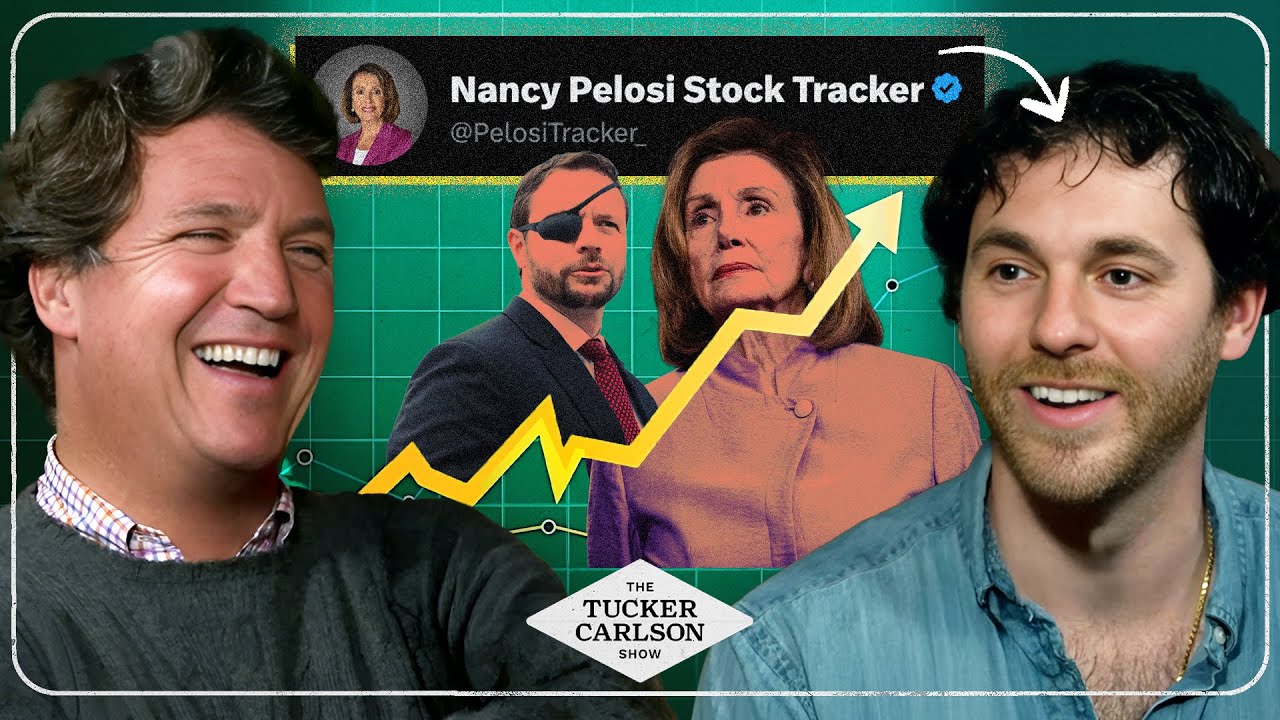
Chris Josephs: Nancy Pelosi, Dan Crenshaw, and How They Get Rich at Your Expense
