Unveiling Chris Josephs' Million-Dollar Meme Strategy

Chris Josephs built a viral growth engine around memes, starting with a Nancy Pelosi stock-tracker that hit 150k TikTok followers and 150k app downloads with zero customer acquisition cost. He repurposes single pieces of content across platforms and argues memes are severely underrated for startups. His Autopilot app now lets users copy-trade vetted investors.
Chapters
Chris, welcome to the show. I am a stranger from the internet that cold reached out to you because I saw your app Autopilot just climbing the finance charts. And I was like, how is he doing it? And that led me to your Nancy Pelosi tracker. And then I was just like, okay, I gotta reach out to him, bring him on the pod. Welcome to the show.
Yeah, it's, it's been a journey. You know, we've been doing this kind of quietly for 2 years. And then it's finally nice to say that what we've been building behind the scenes is out for the public. And now the full judgment, the full issues of, you know, what we've done, the politician stuff, it's about to become front and center stage. So we're excited. But this is my first time chatting about it.
So Take us from the beginning. You know, where did the idea come from? And why did you start working on it?
It all started, though, from a simple idea of what we were initially building. We built out a platform called Iris that was essentially a social network for your investment portfolios. You can connect your broker, you know, if you had a Robinhood, I had a Webull, and our other buddy had a Fidelity account, you connect it to our platform, you get simple trade alerts, you follow each other's portfolios. Kind of a simple idea, solve the problem of getting notifications. When I was thinking about like, how do we grow the thing? The only way you can really get people to pay attention to what you want to do, in my opinion, was getting notable names. But we couldn't get, you know, high-profile Twitter guys, they wanted too much money. We— no one really cares about the smaller guys. So it's like, what can we do that would get people's attention? And that's where the Pelosi idea came into play. This was back when she was trading Tesla. This was like early, early 2021. So what we did was we built out just a simple profile on Iris, called it the Nancy Pelosi Tracker, and made a couple tweets, made a couple TikToks about it, and it blew up. So everyone was like, oh my goodness, I can follow Nancy Pelosi's trades. I can get little notifications. It's fun. It's riveting. It's kind of a bit of the anti-establishment element that that has become so popular. And from there, it's just taken off. We had an NPR article written about us. We've been on Fox News, a couple of the other news stations. And it also hasn't just been us, to clarify. Unusual Whales is a massive, massive voice in the space. They brought a lot of publicity to the movement of politicians and their stock trading. We just saw it as an opportunity, though, to exhibit how our product works with someone that people would care about. So the V1 was build out a profile on Iris, let people follow her portfolio and get notified whenever she makes a new trade.
What's really brilliant that you did that I think a lot of people could do something similar is you identified a movement and you said, how can I plug into that movement? You're like, okay, there's a lot of people talking about Nancy Pelosi. There's a lot of people talking about her stock trades better than other people. It's very much a conversation that millions of people were having daily. And you were just the perfect audience basically to plug into.
Yeah. Yeah. And the way that we thought about it too, because, you know, when we, when we were initially launching, it's like, how do we grow? And we couldn't grow through paid, we couldn't grow through, you know, affiliate program because we didn't have any revenue. And what I kind of thought was, how do we marry The ability to display how the product works with organic growth channels already out there. Like a huge thing that I believe is social media is sort of like a web of just like the neurons in a brain. Everyone is just sending stuff through the different distribution channels. But the one thing to note is those distribution channels are already made. You don't have to go out and create a new message, a new platform, a new way to tap into it. Just create content that can be distributed into those distribution channels and that will, that's what will pick it up. So when we saw on Twitter and TikTok, everyone's talking about the politicians trading, it's like, okay, everyone's already sending those to each other's friends, they're all having the same viral thoughts at once. Let's find a way to capture the value of what our product provides, create content around it, and just literally pump it into that channel and let the channel take it from there. And that's essentially what we did. Well, you know, on TikTok, you get 2 million views of just that. And the Twitter, it gets even bigger. But yeah, that's how we kind of envisioned it. And it's been nice, honestly, because it perfectly displays how our product works. That's, I think, the nice thing about it too, in the startup side. It's not just a random thing to get followers. It's a way to actually exhibit the value prop of our product.
Yeah, I mean, there's a few ways to go about it. Like, you can actually just start with the audience build up as much buzz as possible and then be like, okay, I've got this audience, this Nancy Pelosi tracker on Twitter, and it tweets out what her trades are. Let me go build a product around that. Or what you did, which was you basically had built this product and then you're like, how do I figure out how to get people to it? And then you reverse engineered how to create a bunch of attention.
Yep, yep, yep, exactly. And the other thing too that that we've been subtly doing behind the scenes and tapping into how other people have done it is this sort of mascot for your brand. You know, Duolingo has that little bird. You know, Tesla has Elon Musk. And the spokespeople for these brands are great because as an end user, you don't want to follow another brand. It's like, I want to follow an actual person. I want to follow like a movement. And that's what we were able to do with the Pelosi thing. The nice thing about it, though, is we controlled that narrative. We controlled that brand. It's like, yes, it's Pelosi. It's a public figure. All we're doing, we're doing everything 100% legal. We're just sharing what her trades are doing. But we aren't beholden to anything that she can do to kind of ruin that brand because it's not necessarily married to her. Like the example I like to say is like with Dispo. Remember when Dispo launched with David Dobrik? They got all this buzz. It was tremendous. It was awesome. They had a spokesperson for their brand. It kind of represented what they did. But the problem with it is you're then beholden to whatever happens to David Dobrik. So one scandal comes out, he gets in trouble, your brand gets in trouble. By having us kind of own the Pelosi tracker and just that movement, we can control and make sure that we are not only building a brand that has a spokesperson, but also we can control the narrative around that pseudo spokesperson because it's owned and built by us, if that makes sense. That's another thing that we did specifically.
So you have this idea for this tracker, you register the Twitter account, like what next? Because like you say, like, okay, and then, you know, you just make a couple TikToks and all of a sudden 2 million views and before you know it, your top 5 finance apps. Take us through the messy middle.
It's funny, because once you understand and realize that like 80% of the internet is just content that's either rejuvenated, packaged a different way, or sort of pseudo-manipulated, you get a little bit of a better sense of how these things grow so quickly. So when we started out with zero with Pelosi, we just had one account, Nancy Pelosi Tracker. We had a lot of these friends. Liquidity is an investor in us, Trust Fund Terry, A lot of these other meme accounts. And we said, okay, we know this content will go viral if it's picked up in the right channel. We know how to write the content that can go viral through the messaging. How do we just get it into that ecosystem? And that's how we just worked with partners. So when we went from 0 to around 100,000 followers on Twitter, we worked with different meme accounts to kind of pump in that content into those channels. One shout out is Parikh Patel. So Parikh Patel, he's like a pseudo advisor investor for us. We worked with him early on to say, hey, Parikh, we're going to write up these tweets. We're going to kind of make them built for virality. We're going to tweet it. Can you go retweet it and kind of get it out there into the public? And that's exactly what we did. It was that simple. Write the tweets, make sure they go viral, and use Parikh.
Did you like cold reach out to Parikh?
No, we worked with a studio, Bullish News. Tremendous people. Brian out there, he's great. So we worked directly with him to kind of build out these ideas, and we've been working with them ever since. But no, we didn't reach out directly to Parikh. We worked through Bullish Studio.
Okay. And Bullish Studio is what exactly?
They are a talent agency for these Twitter accounts on like these anonymous Twitter accounts. I think they do stuff for Ramp Capital. Parikh Patel is one of their big ones. WallStreetBets, Liquidity a little bit. And I think they helped them get marketing spend and they helped us kind of launch the product. But it It would've taken a lot longer if we didn't have that initial bump to get us into the viral ecosystem.
So for those of you who don't know, Dr. Parikh Patel, @parikhpatelcfa on Twitter, he's got 606,000 Twitter followers. You know, his bio basically says investor at Samosa Capital, the world's tastiest investment fund. So he makes a lot of memes, finance memes and jokes on Twitter. So you went to this Bullish Studio group, basically were like, hey, like, we've got a very small budget, probably. Who do you think would make the most, most sense to go to? And then, you know, they reach out to him and you kind of draft these tweets for him. He posts it and that generates the followers back to your Pelosi tractor.
He, he just retweets it. So that's all he does. All he does is Send, like, to use the analogy from before, all he does is just send the messaging that we created into the ecosystem and then let the channel of the politician trading, you know, mindset on Twitter pick it up because there's enough people out there that care about it. I mean, that's what we identified. And ever since then, we can sort of go— we go viral now on our own. He's just an advisor with us. But yeah, to clarify, that is exactly how it went. And I would recommend working with them if you know the audience is out there. Like, that's the biggest problem is how do you get enough eyeballs to you as quickly as possible?
Right.
And working with these meme accounts, memes are just so powerful because it's one thought, one single thought being done by thousands of people at the same time. And when that happens, it's just, it explodes because everyone sends it to their friends. And that's how the, I think the meme ecosystem works.
How do you define a meme? And would you say memes are underrated or overrated for startups?
Severely underrated. But I would define a meme as a representation of a thought that can be related to by multiple people. And what that means, in my opinion, is like, if I were to say, like, what's a good example of a meme? Like the meme of The Simpsons guy in the bush going out of the bush and back into the bush. You can make that meme and say, you know, hey, I'm a bandwagon fan. I was a fan of the Warriors. The Warriors lost. They'll go back in. Now I'm a Laker fan. Every sports person has that same thought. They understand what it is and they can relate to that because they know someone that has gone through that experience. And that translates across the board from finance to sports to anything. And are they underrated? I think severely. I think they're severely underrated for one reason and one reason only. And it literally is the distribution that comes with If you were to create an ad, no one is going to share an ad with their friend. Like, what? No one shares even like normal tweets with their friends. They share these threads that either provide value or they share memes that are funny and that they can relate to. That's why I think the power of memes are so good, because it is a friend, a close-knit person sending you a representation of your brand without you having to do it.
Yeah, I also think that memes, for whatever reason, stick in your brain just really deeply.
Yeah, 100%. So
when you see that Homer Simpson, uh, going out of the bush and back into the bush, you, you, you almost transport yourself into the bush, you know? Like, you feel like you're there. And human beings want to be seen as clever. And people are more likely to retweet, reshare a meme because they want others to see them as clever. And that could be, you know, consciously or subconsciously.
Yeah, 100%. And I think the memes go beyond just the startups too. If you look at— I was studying this before we even launched the Pelosi stuff of like, how do we grow? Netflix is a tremendous example of how they capture memes through their stuff. I'm 99% certain that they have a team when they make this content, they have a team go through the entire episodes or the videos and say, what part can we meme and turn into like a much bigger thing? Squid Game is a perfect example of that. If you look at some of their tweets, their least tweeted tweets are just the normal promotions and stuff like that. But when they promoted Squid Game with some one meme, they got 10,000 more retweets than the other ones. And that just the organic distribution of it is just tremendous. So I think it goes even just beyond startups. They did one recently with that girl dancing. That was a trend on TikTok. I don't know if you saw that. Minions was another one. If you know what happened with Minions, that was a meme essentially.
What happened with Minions?
With Minions on Twitter or on TikTok, excuse me. There was a couple really smart guys that worked directly with the Minions creative people and said, we're going to create a viral trend on TikTok where you wear a suit to go watch the movie because you're going to pretend to be Gru and the Minions doing it. It picked up steam, it was funny, and it became a whole trend to the point where AMC Theaters were banning the kids from coming. And it became a top-selling box office kind of hit. But It was a meme. It was essentially a meme advertising their video just because it was funny and people wanted to be a part of the meme movement happening over there.
That plays into, you know, human nature. People also just want to be a part of something bigger than themselves.
Yeah.
And like, yeah, it's just funny and it's, you're, you know, you're going to the movie theater and like there's this sense of like, who else is wearing a tuxedo or whatever. And the people who are like you and the people who are not like you and taking video content of it, I think it's really core to who we are.
And the downside, I guess, that people kind of criticize the memes for is the professional part of it. But like, okay, it's not as professional, it's not as polished. Like, would Apple do it? And it's like, okay, Apple wouldn't do it, but Apple is Apple. In this new world, when you're trying to go after Gen Z and millennials, people our age, you know, it's— we just think differently. We prefer authenticity over, honestly, like formality. So even when we're building our app with Autopilot, it's— we've turned politician trading into a meme. It's like we run a Nancy Pelosi tracker that just tweets out when these politicians trade and the individual kind of weird insider trades that they make. When you go to our platform, we tell you just how much money is literally copy trading politicians. And it's like, did we— do we think politicians trading is dumb? Yes. Did we build an app to literally copy them? Yes. $8 million of the community money is already copy trading politicians. Join the movement, sign up and throw a couple grand behind it too. That's the messaging that we've had on the app. And that's the messaging that we've seen work externally, because the whole thing is just a pure meme. And that's what we've been trying to capture.
I mean, going back to Apple, like if you're Apple, Why aren't you doing memes?
It's fair. I don't know. I think that it's not the Apple way.
But do you think that Apple would sell more iPhones if they, you know, had a meme department?
I don't know if they would sell more iPhones, but I think they would sell more other services. Another example of this is Spotify. Those Spotify share your stuff, like it essentially is a pseudo representation of what the meme culture is. It's, I'm sharing kind of something that I can relate to that I think you guys will relate to and will find funny and find interesting and create a conversation around. Apple Music doesn't do it. Spotify Wrapped. Yeah, Spotify Wrapped. Yeah, for those that— yeah. So every— at the end of every year, Spotify Wrapped, they send that out and you talk about it and it's fun. It's a representation of yourself the same way a funny meme that you can repost to your story is a representation of yourself too. So I don't know if Apple would use it for their iPhones, but like Apple Watches, the smaller stuff that they could probably push, they probably should. Like the VR stuff, I'd be very interested to see if they sort of meme that into existence.
A lot of people ask me, Greg, how do you build products that foster community? Well, I've got good news. That's exactly what Late Checkout does. My company, we partner with the largest brands in the world and fast-paced startups to design products that resonate with your community. We add a couple interesting clients every single year. So if you're interested and that sounds like you, email frontdesk@latecheckout.studio with what you're working on. What you need help with, and don't forget to mention the Where It Happens pod. Thank you. I was actually doing some research on some old Apple ads, and I came across like the old iPod ads. It's basically like red and green and yellow, these like bright, bright colors, and then there's a silhouette with like the earbuds from the iPod. And it was actually one of the only campaigns that Steve Jobs didn't like.
Really?
My point is, I wonder if like, fast forward to today, like if it's 2023, and Apple was releasing like a music device, and they were using a campaign like that, where they have all these people kind of, you know, dancing with these earbuds in red and yellow, You know, these backgrounds and silhouettes. Like, to me, that's like, that's a meme. And there's so much you can do there.
Like, I wonder, did you watch any— was there any kind of humor around the AirPods? Like, because like a meme of, a meme of an AirPod essentially could be everyone loses one of their AirPods, and then they become useless type of thing. Or like the plugging in with all the different devices. It might be detrimental to their brand, which is why they don't do it.
The future of brands are less serious brands. Like, I think that if you are really trying to optimize for connection and sales and just getting the word out there, making fun of yourself a little bit is the way. So when the AirPods first came out, I don't know if you remember this, but it was like people made fun of people who wore AirPods.
Oh, I see. Yeah, the robots, right? Or something.
Yeah, exactly. There was a ton of people that made fun of people. Hey, it looks like you have a Q-tip in your ear, stuff like that. And the question is, what could have Apple done to lean into that to sell more AirPods?
What you just said reminds me of what Elon does with the Tesla. You know how like when Tesla releases their updates to their cars, do you remember when they would— you could change the horn sounds and you can make it sound like an ice cream truck. You can change whenever you put the flicker on, it can make like a little fart noise. Like those essentially are just pseudo memes packaged into your product. And Elon uses that to promote it because it's funny and it gets people talking about it. He's probably a tremendous example of a modern company that has embraced humor to push marketing. I don't know if he'll do the same with Twitter, but I'm trying to think of other brands that sort of do it. Chipotle, maybe a little bit with some of their marketing stuff. And I think Netflix is a clear winner in that too, though.
If you found a niche that you want to work in and you're trying to build an audience and you're looking to figure out what the right meme culture and memes to build are, how do you go about it?
I think a lot of it depends on the niche community that you're going after. With regards to the Pelosi one, just as a simple example, we knew that that was sort of the anti-establishment, anti-trustworthiness kind of element to it. So when we would establish meme characteristics of the brand, we made sure that we would kind of create the messaging, create some of the pseudo ways to show a lot of money, possible insider trading, questions, suspicious. And that was kind of what drove us with that. When you think about it broader, though, in my opinion, I think it would have to depend on what the people that you're going after are saying to each other. So that the messaging of the meme I think is the first part to creating the meme and the meme campaign and the template following that. So, you know, with Minions, for example, if they are going after 13, 14-year-old kids, what are the one things they're going to say to each other that can transition from one kid to the other? That's an example we use of transitive messaging. So, it's like if I were to tell you something and you were to go tell your friend something, we want to make sure that what I told you is the exact same thing That you told your friend. That's how these things truly, truly go viral. And if I were to start it from the culture, I would study who that end user is and I would try and figure out what are the characteristics that they're saying to each other that's consistent across the board. Take that, create a template around it, and then start building content through there.
To add to that, like, what are they talking about right now? Like, what's something that you can capture their interest? So for example, like, yeah, Nancy Pelosi. I barely knew who Nancy Pelosi was.
Yeah, me too.
Literally straight up. Like, I don't, I'm not a huge, you know, I don't really follow politics that much. And I just kept seeing Nancy Pelosi, Nancy Pelosi, Nancy Pelosi, to the point where, because of all the stock trading stuff, to the point where I had to like Google her name, read her Wikipedia so I can like have a baseline amount of knowledge about her.
I believe it. And
yeah,
and now you do know about her though. And I bet you like, you know about her through the stock trading, through the memification of people telling you what it was like. And like, that's, I think, the pseudo manipulation of making sure that the transit and messaging stays consistent throughout the board. And I don't know why more startups, more kind of younger, smaller companies don't do it because we've built a million plus followers through this idea. And it's just been me. I've run the Twitter accounts, I run all the TikToks, I run the Instagrams. We've gotten banned on Instagram a couple times. So we've had to come up with some different ways. And what's even interesting though, is once you have that one meme, you can leverage it for multiple different platforms. So if you go to the Nancy Pelosi tracker on Twitter, we have the Pelosi tracker and we said, okay, what other ecosystem, kind of small community, small niches out there on Twitter that we can leverage this to kind of build out more with? The obvious answer there was Michael Burry. It's like Michael Burry, The Big Short, the recession, that's a niche community they love about that. And he's a walking meme, kind of just what he tweets. He tweets and deletes all of his stuff. Who does that? Like, that's just an interesting thing. Who— I don't know why he does it, but he did it. So what we said, it's like, look, we have a Nancy Pelosi tracker, Let's create a Michael Burry tracker, not really tweet about it too much, but just link it in the bio. And from there, without even tweeting about the Michael Burry tracker, we got up to 60,000 to 70,000 followers just from the traction from the Pelosi thing. We took the Michael Burry one, started tweeting about it, and now we're up to 130,000, 140,000 followers on that. Spun off a newsletter writing about the stocks that Michael Burry owns and now have around 350 paying clients for that. And then brought him to the Autopilot app where people are paying to have their money just literally do what Michael Burry does. But that all started from the Pelosi tracker and understanding that we can trickle in kind of more people organically by just promoting one account to grow that. And Greg, it's gone on. Now we have a Warren Buffett tracker, we have a Bill Ackman tracker, we have a Ray Dalio tracker, and we've mirrored that and done the same thing on Instagram and TikTok as well.
I think what's really smart there, and just to recap what you said, it's like find a meme, find an in, find a why now, build traction through also people spreading your memes, i.e., Preet Patel, etc. Then from there you can expand into different sub-niches or horizontal niches, Warren Buffett, Burry, etc. And what's also interesting is then you can experiment with new format types. So what you said, like newsletter, I'm curious, why did you go to newsletter? Why was that an interesting format for you?
Yeah, so honestly, it wasn't necessarily to launch the newsletter for the sake of having a newsletter. It was more so because we saw it could live concurrently with our long-term startup product. Like through our app, you can copy trade these people, but we only support certain brokers. We only support Robinhood, Webull, and TD Ameritrade. So for all these people that didn't have it, we wanted to create a platform and an alternative for them. And that's where the newsletter came into play. But we realized though, the newsletter is a much, much bigger thing than even we imagined because one, you can grow it so quickly through Substack. And 2, people like the content that we write. So like we have a full-time writer, he writes stock reports of what Michael Burry buys. And we can capture and make sure the community on that is specific to Burry, as opposed to the community for Pelosi is specific to Pelosi. And then we plan on kind of really ramping this newsletter up. And we think we kind of can through this distribution.
And is there no one else doing email newsletters on what Michael Burry's investing today?
Yeah, they do. But I don't know why it shocks me that people don't tap into these kind of distribution channels already there. There's massive platforms out there. One's called GuruFocus. Another one is called Watcher Guru, where you can go to these platforms on— they're just SEO websites and you pay to see what Burry owns and you can get little trade alerts kind of through those websites. But the growth, they're just pure SEO and pure blogs. I don't think there's really necessarily a paid newsletter and I don't think they have any sort of social media growth. So you could, but that goes back to what we said earlier though. That's the old school traditional way of building a company. Let's build out SEO, let's get someone to write blogs and let's try and optimize for keywords. Or you just go to Twitter, create some funny informative content, launch a Substack around it and start making 20 grand. It's not that complicated. If the distribution channels are there, Identify them, create content, and then pump the content into them. Like, it really is that simple when you think about it.
You also moved to TikTok and Instagram. Can you talk— yeah, I know, I know a lot of people are interested in TikTok and short form and going viral on that platform. Can you talk a little bit about what you did on TikTok?
Yeah, so TikTok and Instagram, you can kind of— and YouTube Shorts, you can throw into that mix too. It's The nice thing about all that stuff is one piece of content can be posted across 3 different platforms with the option or the possibility of going viral across the board. And that is so powerful because it 3x's your time. Instead of me having to make 3 different videos, I make one video and go from there. But with TikTok specifically, once you understand the algorithm and you can kind of write up the hooks and the messaging to get people, I would highly recommend everyone to start trying out and trying and creating content for it. The reason being is you can't think of it as a— it started out and I think a lot of people still think of it as a social media platform or even just a way to follow your friends' videos or even just kind of a way to get informative content. It's not. I think it's like the 21st century television where I ran my own personal TikTok account, you know, the Chris J. Josephs account, and I built up a brand. People knew who I was. They liked what we were building. And concurrently, we started building, spinning off these different channels, a Michael Burry channel, a Nancy Pelosi channel, a Warren Buffett channel. And now we run currently 4 different TikToks, making the same sort of content across all 4 of them, but just packaged for that one specific niche community. Because we know on TikTok, that's all that matters, making the content for the community that's following you. Let the virality pick it up if they pick it up, and then see where it goes from there.
So your Chris J Josephs account, like what kind of content was that and how big was it for you to start cross-pollinating the other accounts? Yeah.
So the Chris J, it's not Chris J Josephs anymore. I transitioned that to the Join Autopilot reason. And real quick, the reason being is before you get big and before you launch a product, if you create a personal brand, more people want to follow personal brands. But the downside is you don't get as many clicks. Once you have the larger account, you switch it. We switch it to join autopilot and the clicks 5x because people know they're following a brand and they see the video. But the way that we launched the initial Chris J. Josephs one, it was understanding the people that we wanted to go after and understanding what we wanted to represent as a brand and creating content for that. Obvious example is politician stuff. It's like I was known for a little bit and there's other people. It's not just me. But I was known as the guy that would call out the politician trades. They didn't know what Autopilot was. There was no product, there was nothing. It was essentially, hey, can you believe Nancy Pelosi made this trade again? I copied her in my Robinhood and I made 30%. Follow for more trades and I'll continue to expose the corruption. Same thing with Burry. And then kind of the— you can transition that out into the bigger idea of like what is going on with the macro environment. Like the politicians just raised the debt ceiling. This is what that means for you. Like the IRS is going to come after anyone with $600 Venmos. Like this is kind of what's going on with your money. I'm going to help you and I'm going to represent and I'm going to call them out for it. Follow me for more. And that's where we were able to transition it into the new thing. But one thing to note though, Greg, is it's much harder to cross-pollinate. You got to create different channels and just stick to those channels. I just create 8 different videos for each channel. But I'm talking about the same stuff. And then I use those same ones and cross-pollinate on Instagram and on YouTube Shorts.
And how big has the TikTok and Instagram empire gotten and how long did it take you?
So the TikTok one I started back in probably early 2022, around, and I went probably 4 months without posting and you just get burnt out. We are at 150,000 followers on that account and that with our old app got us We grew our Iris app to 150,000 downloads, mainly through TikTok, all organic.
Which is a big deal in the fintech space, right? Because I think what a lot of people don't realize is a TD Ameritrade will spend $300 to acquire a customer. So if you have 150,000 users times $300, that's, you know, a big number. I don't know what that is.
I mean, it's a lot more than what we've ever spent. It's probably more than we've Probably more than what our company was worth. But yeah, that's the funniest thing in the space. And, you know, when we chat with even just people on Twitter and other investors and whatnot, their one thing is like, how are you going to grow? And it's like, you're going to spend $30 per customer. It's like, no, we know how to use social media. One of our moats is like, we're just good at it. Like, this is kind of the skill that I have. And I don't know why I take a very philosophical approach to it, But our CACs have been zero. You're like, we have not spent necessarily any money directly to acquire users. We've spent some money to build distribution. That's one thing to note, but we have not spent money to actually get a user in a space where the average CACs are at $60. Robinhood was paying like $80 or something like that during the peak of COVID to get a user.
And Robinhood is supposed to be like, wow, how did they acquire a user for $80? You know, like, that's supposed to be That's cheap in like traditional brokerages. So I think, yeah, I mean, the only money you're actually spending is, you know, Pari Patel type stuff. And of course, the time required to create the content.
Yep. And we launched that Iris app and it didn't have product market fit just because we didn't do it right. And also the markets tanked. We started from scratch. Built this Iris, the Autopilot app, and the Autopilot app now has around 53,000 downloads. We launched yesterday, 2 days— we launched on Thursday, so we launched a couple days ago. But that app already has 53,000 downloads, $0 CAC, all just through the messaging. And I haven't even formally announced it yet. Like, I haven't made a formal announcement on our Twitter accounts. This has all just been through prior building up through pre-orders on the App Store. And we're making solid money too, which is insane. You know, we're at $220,000 ARR. We tried to pass Cash App. And what's even funnier is we bring users to Robinhoods, to the Webulls, to the Fidelities, because people join our platforms like, hey, I want to follow Pelosi, but I don't have a broker. Like, yeah, go open a Robinhood. That's why I think what we're doing is valuable for the institutions as well, because the fintech space is the most expensive CAC by far. And the payback periods are 12 to 18 months as well. So we circumvent all that through messaging.
So you talked about memes, building the audience, the different channels, a little bit about the product, but I want to dive deep into the product and what the vision is.
We think of the product in kind of 4 different stages. Here's like a question that we like to ask our community. The largest wealth transfer is about to happen over the next 10 to 15 years, or something around like $45 to $60 trillion is about to pass from baby boomers to their heirs. 75% of those heirs, when they receive that money, fire their parents' financial advisor the same day they get that money. So there's about to be a plethora of trillions of dollars out there saying, I want to invest my money. Where do I go? What do I do? What do you do with it? It's, and that's, I think, like the biggest thing. And that's what we're trying to go after. Do you go to Google and kind of say, hey, find me a local financial advisor? Do I go to my stock guru on Twitter or TikTok saying, okay, this guy's investing this, I'll pay for the service to kind of buy his trade alerts in his portfolio? Or do you try and do it on your own? The massive vision of what Autopilot will be is a marketplace for you to go to our platform, find vetted professional people, That transparently show their returns and publicly say what they believe in, and then just sort of choose them to have them manage your money. If I got a $40,000 bonus from my Facebook job, you know, I can go to autopilot, put it in Robinhood and say, okay, I want to choose this guy. I'm going to have $20K autopilot this guy. I'm going to have $10K autopilot this guy. And then I'll put $5K behind Pelosi and I'll have all the money still in my Robinhood, but I'll have the decision-making and the hard part done by someone who actually is good and takes it seriously.
How worried are you about like the institutions and the Robinhoods of the world just copying your features and adding it to their platforms?
We're not too worried about it, honestly. The analogy we like to give is the same thing that Patreon did for creators, we think we can do for financial advising and financial wealth management. Instagram has their own subscription service where I can pay X amount of money to kind of get exclusive access from this creator. Snapchat has their Snapchat Plus or whatever, where I can pay Y amount of money to get access to that creator. But the creator is on every single platform. So what's the best solution for the creator? To limit themselves by that one individual platform or use a Patreon or a FanFix or a link in bio, have it there and then be able to monetize every single person across all the platforms? If you go just the specific Robinhood way. They can launch their own pseudo financial advisors and their own pseudo wealth managers, but those wealth managers will just generally not make as much money if they go down the route that we want to go down, as opposed to a platform that lays above them all. And Robinhood could, like, they could launch their own financial services accounts. We think, though, the ability for someone to launch their own hedge fund or their own ETF or anything like that, Anyway, we can't necessarily use those words, so it won't be like that, but we want to be a platform for someone that is good at investing to make a living investing and just let people follow them and copy trade them.
Anytime you're building a startup, you have to start with a feature. And the obvious question is, well, can't insert incumbent XYZ here just copy that feature, right? And I think like Yes, they could. But first of all, by the time they copy that feature, you'll probably be a threat to them, in which case you're kind of chilling, you know, in the sense of like you've got millions of users. Okay, they're going to copy the feature. That's not great, but, you know, you've gotten pretty far. You're essentially Series B or Series C. Yeah. Once you've gotten there, the idea is that, you know, they're copying you 12, 18 months, 24 months even before. They're copying you in the past, right? And you're marching towards somewhere else in the future. So I think that as long as you understand where you're marching to and you're continuously being extremely purpose-built, around the core feature that you're building for, that's when you have an opportunity to be a real threat. And people could have asked, and I'm sure they did in 2011, Robinhood, why doesn't E-Trade or TD Ameritrade just come up with a mobile app and do zero free trading? Well, most of them did eventually, but by the time they did Robinhood was a $10 billion company.
Yeah. What did Robinhood do so well at the beginning that they kind of then grew from? It was the zero-commission trading. That's what got everyone involved in the ecosystem. For us, the analogy is copy trading Pelosi. You know, they— Robinhood went way beyond just the zero. They launched options trading. They have, you know, the bank accounts, they have the credit cards and debit cards. We are trying to capture everyone kind of to your point that what you've been writing on Twitter and LinkedIn is through that one niche community and then expand from there. The Pelosi stuff, the Bill Ackman, the Warren Buffetts, that is what gets everyone into the door. And then once they're in the door, we sell them the actual traders. We say, hey, we got this guy from Goldman. This guy manages $250 million. Throw a couple grand with Pelosi, throw 50 grand with that guy because he actually does it for a living. We are a big believer in that. And you don't have to be married to that one specific reason why everyone came in from the beginning, as long as you have a way to transition and showcase to that user the bigger picture. And that is our bigger picture. It is the sort of have your money managed by someone that you can trust and you know is good.
What this has really been is like a masterclass for people to understand how to think about memes. How do you think about building audiences? How do you build a product around it? And How to think about the North Star. I agree with you. I think that there's a ton of Nancy Pelosi-like memes that people could jump on to and create products around. And it's— it is remarkable that you don't see more companies start from memes. But I think that that's a trend that's only going to accelerate.
There's a reason why we have them on our cap table. We have all the major meme accounts on our cap table. So what's the biggest strategic investor? You know, liquidity that has 600,000 followers on Instagram that can retweet anything you want or repost, or like a guy that can help you with growth marketing through paid ads? It's like, I'd rather have liquidity because he'd do the same thing for me because he's an investor. He's a tremendous guy or girl. But
last question before we wrap. If you're trying to build an audience, be it your personal audience or brand, what's the biggest piece of advice you can give people?
That is be authentic. I think like that is the most powerful thing that people truly, truly don't capture is like just talk to people like a way that someone normally would talk to you. You know, whether that's through memes, whether that's through Twitter, whether that's through TikTok, anything, it's people are afraid to just talk like a normal human being and they want to come off as this professional polished idea and that's going to work less and less. You know, there's a reason why everyone skips over ads because you know it's an ad, but you don't skip over an ad if it comes across as authentic and genuine. So if I were to say, if you were to build a brand, it's speak the way that you normally would and just be honest with what you're comfortable with saying. And just make sure you do it in an authentic way. That's why the Pelosi stuff, I write literally the way I would say it. And I think it works because of that.
It's easy to fall into the trap of let me wordsmith this as much as possible and add fancy adjectives here and there and try to sound really smart and really academic. But we forget that we're all just people. at the core. And, you know, we want messages that are simple and that we can connect with. And I think that that's the opportunity, is just be authentic, speak plain, have fun. Yeah. And I really like Tobi from Shopify, the founder of Shopify, his like Arm the Rebels framework. Yeah. Thinking about memes in the same way, which is if you're focused on a niche or you're focused on a community, And you want to arm the rebels, well, maybe you arm them with memes to start and see where that goes. And then once you do that, build the product around it.
That's exactly what we did with the Pelosi stuff. We said, hey, we're going to call out these politicians' stuff and we're going to make it and message it in a funny, simple, clear, authentic way. Go retweet it, go repost it, do whatever you want with it. And it's worked. So yeah, I think I'm going to study that. Arm the rebels. I didn't hear— I've never heard of that one. Yeah.
All right. Where could folks follow you and Autopilot to follow the journey?
Yeah, Twitter. So my personal Twitter, @Chrisjjosephs. From there, I kind of tweet. My little mantra there is I like to expose how our money is managed. You know, VCs investing in dumb stuff, I want to call out. Politicians wasting our money, I want to call out. That's kind of the brand and what I've had fun with tweeting about. And then if you want to follow Join Autopilot, that's that on Twitter. And obviously the Pelosi Tracker, which is something that we'll continue to push forward and we'll try and continue doing it. I honestly hope they get banned. Like, they shouldn't be able to. If they get banned, it's bad for our business, but I think it's better for society and it's better for the trustworthiness of our government. So we'll see what happens. But that's our— that's where you can follow us.
All right, man. It's been real.
Cool.
More from Chris
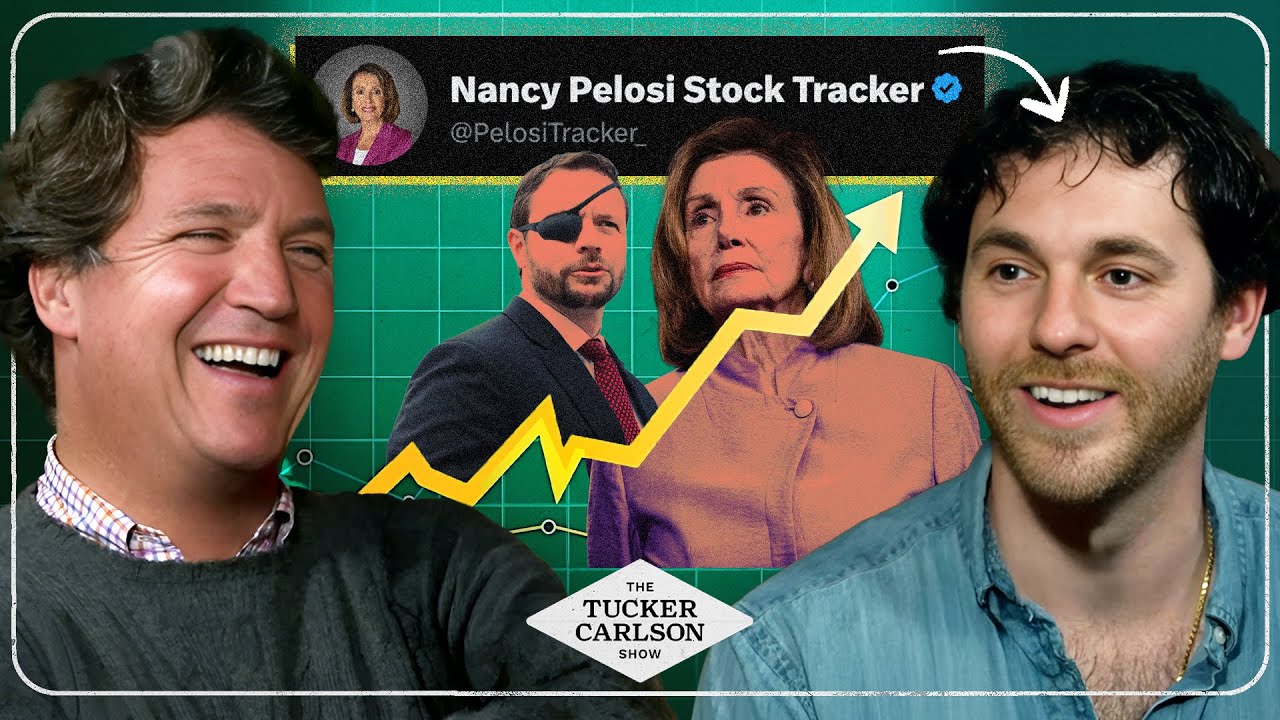
Chris Josephs: Nancy Pelosi, Dan Crenshaw, and How They Get Rich at Your Expense
