Cultivating Strong Banking Relationships for Small Business Success with Dana Walters
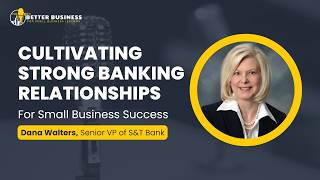
This is a transcript of a YouTube interview (host Chrissy Myers) with Dana Walters, a Business Development Officer at Consumers National Bank. Walters explains why strong, ongoing banking relationships help small businesses (regular check-ins, being treated as a trusted advisor), common owner mistakes (not meeting or using their banker), services banks provide (lending, referrals, mentorship connections), and practical advice for entrepreneurs (interview multiple banks, join local networks). The piece emphasizes trust, investment by the banker, and valuing each other’s time.
Chapters
Check in when it's status quo, like business is normal, check in when it's slow. So I think when you have that consistency, I think that builds trust. That's just common.
So today on the show we have Dana Walters. She is a business development officer with Consumers national bank and she's going to be talking to us about the role that having a good banking relationship can have in your small business. So, Dana, thank you for being on the show today.
I'm glad to be here. Thanks for having me.
So you've had a long and impressive career in commercial banking. You've worked with a wide range of businesses. What initially drew you to this field and what keeps you passionate about it?
So what drew me is better hours, because I believe it or not, yeah, I was a operations manager for an exclusive catering company on the east side of Cleveland, ran that company alongside of the owner and that job required you to be in the office early hours. There you'd have to be on the job site because we had really high profile clients. So you had to be the face of the company. And so really what drew me to banking was better hours and greater opportunity because I was thinking, you know, you have a larger organization, there's more job types to really kind of navigate through and explore. And then I would say what keeps me passionate about what I do is seeing the success and being a part of that, of the business owner's visions, their dreams and being their advisor and knowing that you helped along with the bank to contribute to their success.
Nice. So what are some, you work with small businesses predominantly. So what are some of the most common mistakes you see small business owners make when it comes to their banking relationship?
I think that they don't. We reach out, let's say, as a banker and they don't meet with us. People get busy. It's common. But then like as a banker, you hear these surveys like, oh, I never hear from my bankers. So I think there's this disconnect. There's always your group of bankers, clients that do get together with the bankers, but I think they don't really put that time forth to meet with the banker. And I think there's a couple things, you know, I think you develop a better relationship. You're meeting with them in all times. Not when you just maybe have a specific need because I got a new thing going on, I need a loan, I got to open an account. I think you just have a working relationship. The other part is you should utilize your banker. We can talk about a lot of things without keeping confidentiality, of course, we don't have to get in the specifics of company names, but we have a lot of experience seeing things. And so you can say, hey, I'm thinking about this. Have you seen this before? So I think we're underutilized. And you know, when you look at the other advisors, your CPAs, your attorneys, you need them, but you're going to get charged an hourly rate. So I think you got to put them up there with your trusted advisors.
Yeah, I think that sometimes. I know for me, starting out in small business, I always was afraid of my banker to some degree. I thought they're always going to tell me no, they're probably going to tell me if I'm doing something wrong, if they can always see how much money I have in the bank. So there was a little bit of anxiety around that. And working with you and getting to build a relationship has really been impactful because I realized you know a lot of people. I mean, I know a lot of people, but you know even more because you're working with small businesses every day. So the advice that you give can be really valuable. The connections to other business owners, other organizations that could potentially be collaborative partners can be valuable. And you've seen a lot in banking, Dana. Like you've been in the top of the economy, you've dealt with challenges in the economy. And so helping businesses kind of navigate some of those things, you've made banking a lot less scary for me. So I appreciate it. I appreciate it.
I didn't know we were scary. That's funny to hear that, but that makes sense. I think we all have things in our head. I remember when I first took this job, I thought I was supposed to know everything on a financial statement. Well, they don't all look the same. So you're afraid to make that phone call to the cpa. It's the same thing. So I think it's getting past those barriers I think we have in our heads getting to the point where we have a relationship and we can help each other really.
So as we emphasize talking about the importance of relationships, can you tell me some of the qualities of what you think a successful bank client relationship looks like and what are the elements that foster trust and long term success? How do we not be afraid of our banker?
Well, from the banker, I think it's check ins. And when, I mean check ins, it's not when a project's going. You just check in when it's busy for the client. You know, they're like, I Have a lot going on or I'm going to do this, or I'm going to build a new building or buy a new business or whatever might be making them busy. Check in when it's status quo, like business is normal. Check in when it's slow. So I think when you have that consistency, I think that builds trust. That's just common. And I think if you're just getting, maybe you're prospecting and the prospect is trying to determine do I want to go with this banker or not. I think this is a good opportunity to give the banker to give that prospect some names of people they've worked with. And then they've got to ask, well, what do you like about that banker? Because maybe what's important to Chrissy is not important to John, you know, so it's kind of figuring that all out.
All right. In talking about some more specific areas, things that a banking relationship can be getting working capital, expanding your business, protecting fraud. As small businesses evolve, we've got interest rates going up, going down. Who knows what's going to happen with the market over the next couple of weeks. What are some of the things that you can provide at the bank that small businesses can benefit from?
You mean in regards to specific lending.
Or whatever direction you want to take it, whether it's lending or there's different services that you think a small business should absolutely look at.
So when you say small business.
You.
Can go from startup all the way up to pretty large. And so the advantage of that is like a startup, I think they need a lot of more hand holding. They don't have that experience under their belt. So, you know, I think you can really have some good conversations they can steer you in. If you don't already have a CPA or an attorney and different groups, now it's escaping me. The innovation hub in downtown Akron. Score some of those services there that can help them really kind of delve into what's needed. Business plans, projections. And then on the larger, what I'd say a larger or more experienced business, I think what they get there is they have that experience under their belt, but they still run into bumps because they have growing pains or they're very good and have the skill set of where they've gotten to today. Then we've all been there where you're like, oops, I don't have anything in my toolbox because I got these new challenges. Or a business gets stale and you don't know which direction to go. So with that, I think that's where we can help and say, okay, here's some folks we know that can help to connect them. And I also think about business owners. It can be a lonely road, you know, you can't. I guess you could, but it may not work out so well. Go to your employees, like, who do you have as your mentor? Who do you have as. Who do I go to to balance ideas? You know, I. A group of other business development officers I work with. So I can be like, hey, I've got this going on. How would you handle it? Business owners don't have that luxury. So I've seen even very small companies, larger companies, they kind of put together a small board or so this is their mentoring group. And I think that works well.
Nice. So oftentimes, at least my experience has been if banking isn't broken, we don't fix it. We maintain a relationship with a bank. Not necessarily because we're getting a huge benefit, but sometimes just because it's not broken, it's not awful. So we'll just stay where we are. Oftentimes the best time to change banks, I would assume is not in the middle of an emergency or when you have a whole bunch of things going wrong. Can you kind of educate the audience on what are some things a small business owner should be paying attention to to maintain their banking relationship? Or what are some of those red flags to say, hey, it might be good to evaluate some other options.
So I think a good way. Once again, I talked about those check ins. So do they check in now? I have clients that are always like super responses. Some people, it's like once a year is good enough, but I'm checking in at least once a year. You kind of get a read on people like, don't check in with me every quarter. Once a year is good enough. The other thing is you want that banker to be vested in your business and you, you'll know you don't want them being transactional. And there's a lot of people that are, that's just, you know, it can be like a business owner a lot to manage. You've got all these balls up in the air. So is this job, you know, so knowing, knowing that person has the ability to multitask and keep all. And also you as a client, you're top of mind. Like I said, they're invested in you and the business, not the transaction, if that makes sense. Like anybody can do a loan, anybody can open an account. But are you invested in your business owners and their companies?
Are you giving me advice or connecting Me. What else are you doing in addition to just the basic banking service skills of everything.
Does that banker have that little extra something that you're like? Yeah, I can tell it's not just this product but it's. They care that I'm successful.
Yeah. And I would say something that's been interesting for me and I like to get your feedback in it. Whether you say yeah, that makes sense or no, it doesn't. That's totally fine. Is as I've built relationships, as my business has grown, I've realized that it is valuable to have more than one banking relationship because as you grow your needs may be different. It's not. I may need a loan for a specific piece of equipment and a bank may specialize in that. I may need working capital, a line of credit and that another bank may be a better option. Do you see value? Are there things in your bank where we don't specialize in X? Let me refer you to someone else. Do you see that or does it depend on.
I think there's, I think in the. Since we're a smaller community bank. So we're going to do your startup like I say, you know, we could probably do larger than 20 million in sales because our lending limits 12 million.
Okay.
Most people don't need. Big companies don't really typically need more than 12 million. So I think banks have different niches.
Okay.
Okay. Even, even your larger banks and I can think of them just because I'm in the industry, probably in your industry there's probably things you're going to be like. That's not our greatest thing.
Yeah.
So I mean we do international but if you need a day to day international I would say to somebody you probably need to go to Key or PNC like that day to day hedging, that type of thing. So we wear a lot of hats at consumers very similar to our business owners. Community banks work like the businesses we serve and I'm not picking on larger banks but they're just like companies that are huge compared to you. They're not. They're not a good comparison. So I liken consumers or community banks very similar to the companies we serve. So I think we feel that pain. So I think that's what's. When you say is it a better and then you'll know if it's a better fit too. And sometimes I will tell you when you grow and you have multiple banks it can be a lot to manage.
Yes.
So there's always like everything pros and cons. So it's like where's my time better served? I got three different things going on and now I gotta pay attention. Is it better that I just have one? Because I'm at a point in my business that I need this to work like very quickly. I know about it, I can see it. Make decisions because you've got other things on your plate.
Yeah. So given your vast experience where things are, what you're continuing to do, what advice would you give an aspiring entrepreneur who's just starting out in their banking journey?
So in their banking journey and in their business, I would say interview a couple different banks. I say this about everything. Your advisors do the same thing. Interview a couple people. You know, if they're all skill set wise, they probably all have the skills. You're going to know who you click with, you're going to know who this feels. Right. They feel like they're behind me. You're going to make those choices. So you've got your. So that's what I think to myself. Make sure you have good advisors. Also, if you're a new business, get involved with your chambers, some type of networking organization so you can meet others. And the other is call existing business owners. I think people don't do this. So they don't say, hey, I want an hour of your time. You know, tell me the good and bad. I just had said earlier I was at a graduation party, there was somebody there that's going to be opening a new business. Well, my better half owns a company and you know, they're sitting there chatting and that was a nice conversation for her to have because he's like, hey, not every day is great because everybody starts this, I'm gonna own my company and I'm gonna have A's. So you know, it's nice to have those conversations. But it wasn't, you know, he's telling her the good and the bad and so then you're not going into it blindly, I guess you're more realistic. So I always tell people talk to something and it doesn't have to always be in the same type of business, but I think just having that advice from an existing business owner always helps.
Yeah. So coming from a community bank that's very invested in the world around them building a better, stronger community, there are definitely things that you get to do and be passionate about. So let's go outside of work. What are you the things, the passions that influence your approach to business and your relationships with clients.
So, you know, I'm not going to go into all the organizations I'M really, really. I'm really just passionate about my family, really. My parents, my kids. I think my parents did a good job. You want to put good humans out there. Right? And I think I've done that. And then things that are important to me, I've always been a very integrity, honesty, transparency. And I laugh because that's a word now. And I was transparent. That was a big thing to me before it was a word. So it's very important for me to be all those things. And it's kind of come full circle working with that company. I was very young and became the operations manager, worked alongside that company owner. And I've always been passionate about business. Before I knew I would be doing this, I just always was drawn to it. So, I mean, I just look at it as the backbone of the economy. So that's really kind of. You see your life kind of coming full circle. It makes sense.
Yeah. You know, so we've talked about, you know, the role of relationship that you can have with your commercial banker, how important it is to get to know them, for them to get to know you at the same time, not being afraid, being willing to talk to them, asking for different resources. So one thing that we like to do in this podcast is to have at least one usable thing. Like what's the most important thing that you would tell someone about having a relationship with your banker? What is that one takeaway that you want every small business owner to know?
I think that you want to work with somebody that, like I said, values you. So invested in you, but both ways, you want to value each other's time because time's really, really precious. And so I think you always want to. You want to be able to say yes to everybody, let's be honest. And then I think the danger for a business owner is be very careful of people that tell you yes all the time. Sometimes you gotta have tough conversations because they make us better. So at that point, I think a person that values your time and mine, because when you do that, I think you have really good things that happen. I think that's where true success and I think that's where you have healthy relationships, being personal or professional. So that's what I would say. You'll know when those they click, you'll know.
Well, Dana, thank you for your time today and sharing how important it is to have a good relationship with your bank, how we shouldn't be afraid to talk to our bankers, and that we should value the time and the expertise that they have. Thank you.
Thank you.










