Episode 11: Mastering Sales Team Synergy with John Stephens
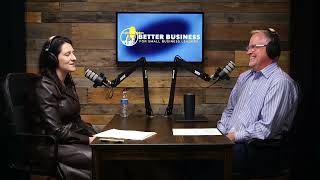
YouTube interview (Episode 11) with John Stephens (recorded Jan 29, 2025) about revving up sales teams for small/medium businesses. Stephens emphasizes authenticity in selling, hiring for role-fit (hunters vs farmers), the need for sales infrastructure (CRM, playbooks, onboarding), using data/KPIs to define success, and building monthly sales plans that list risks and opportunities with probabilities and dollar-values. He also discusses practical AI uses (CRM, AI-assisted playbooks, content generation) and coaching teams to own measurable pieces of the business.
Chapters
The best salespeople will get frustrated and leave if you can't help them get to that point.
John Stephens is the man that you call when you want to rev up your sales team. With over 30 years of sales experience, he is the man behind fractional sales leadership with sales acceleration. So, John, welcome to the podcast.
Thank you very much.
Can you tell us a little bit about what you do in your business?
Certainly. I work with small and medium sized businesses. They have sales problems. They haven't been able to figure it out themselves, but bottom line is they haven't achieved however they define success in sales. So when they're ready to take action on those kinds of things, I help them resolve the problem, but they usually don't know what the problems are. They just know the result is not what they want.
Okay.
So there's usually a lot of things behind that.
Some of those sales problems are they we don't have enough sales, we don't have enough salespeople, we don't like our salespeople, we don't know what our salespeople are selling. What are some of those common problems?
Well, all of the above. Okay, they're all different, but the end result is always the same. They're not satisfied with the results, but so sometimes it's people, sometimes it's structure. Almost always there's some level of infrastructure, types of things that aren't there or they aren't right for what they're trying to do.
So with over 30 years of sales experience, sales management experience too, I would assume that you have some key elements to your own personal sales philosophy. So can you share some of those with the audience?
Sure. Authenticity is really, in a word, what it is. I mean, I think I mentioned that early in my career I needed to define what that should look like myself. There was a limited amount of training. It was go travel with some people and good luck. Oh, so that's why I had to develop a lot of those things on my own. So. But your style is really all about who you are. I mean, that's why being authentic is, it's paramount. It's really all you need to know. I mean, a good sales organization is going to have the right tools and resources and support and processes in place. So that's the mechanical side of selling is following those things and utilizing what you have. But it's your personality and your approach with your clients or your customers that is, I guess, the personalized part of it.
So can you train authenticity or is it something that you have to find when you're you're interviewing and you're. You're looking for new team members.
I try to ask questions that reveal, are they being authentic with me or not? Being a naturally curious person in sales is like, it's, that's right up there with being yourself.
Yeah.
So, but, but I try to ask those questions that help reveal without just saying, are you, are you self aware and are you just being.
Are you full of crap?
Right.
Okay.
And there's people like that, for sure.
Okay. So what advice? You've been in sales for 30 years. What advice would John, who's been in the business for a long time give John, who was just getting into the business of sales?
I'm going to sound repetitive.
That's okay.
There's a reason behind that. The first 10 or 20 years of my career, I worked for some large companies, publicly traded companies. You're not talking like, you know, billions and billions of dollars, but half billion, billion dollars in sales. So big, big publicly traded companies. And I think I, my, my mindset was, whoever's above me, they must be just rock stars and superstars. Right. I need to learn from them. I. And it's a way of almost kind of putting yourself in your place, so to speak. But when I, when I've said before that nobody's better than me and I'm better than nobody else, I wish I'd taken that advice or approach throughout my career, because it's true. We're all human.
Yeah.
You know, we're a culmination of all of our experiences, which leads to wisdom. So I think not putting people on the pedestal unnecessarily is another way of putting that.
Yeah, I like that. So in talking with you and working with you, one thing I know is that you always emphasize the importance of having the right people in the right types of seats, especially when you're talking about sales versus account managers versus customer service. So what are some of the key qualities that you look for when you're hiring a sales team, and how do you ensure that they're a good fit for the clients that you work for?
To simplify it, most sales roles that I'm hiring for or that I might be managing in a fractional level are hunters or farmers.
Okay.
Both vitally important to companies.
So tell us the difference between hunters and farmers. For those of us who may not always, we just think salespeople are salespeople.
Right.
What's the difference?
Right. Just hire the right one in your problem solved.
Yeah, exactly.
Okay. A hunter is someone that's focused and has a certain skill set that leads to being successful, finding new business. And they're very comfortable in those situations. They're comfortable talking to anybody and many, many people daily. The farmer is going to take that active customer and dive deep into that list of customers they have responsibility for. And through meeting and building relationships with not just their primary contact, but as many people as possible, they optimize and maximize the business they have with a defined list of customers. So they dig deep.
So do you think, cultivate. Does every business need hunters and farmers or not everyone?
Okay, not everyone. It depends on the business.
So what would be an example of we just need hunters?
A business that wants to add new customers, but has the type of business that already has a support system built in.
Okay.
Kind of like yours.
Okay.
Your benefits side of the business is like that, where you need people that can bring in new business. You already have the infrastructure and the support system there to do a great job managing them and handling that client moving forward.
Okay. So moving from hunters and farmers, I know there's also some science that goes into sales. And you've talked to me a little bit about the science in sales and how oftentimes it's undervalued. So can you share some examples of how data and analytics can be used to optimize sales process and strategies? Maybe why we shouldn't be afraid of our sales data, which sometimes small businesses.
Can be right, or understanding how to get it and what to do with it.
Yeah. What is it?
Right. So let's start with the first thing that often is misunderstood, which is just go find a great salesperson and the rest will take care of itself.
Exactly.
That's kind of the art and science. I guess the way I would describe it, the art is having someone that has a real good skill set and personality and capabilities to sell and build relationships with people, and then connecting the dots between their problem and I have a solution for that problem. But that's the art side. And there's so much more on the science side that's also really important. That's usually not understood. Meaning how do I go about doing this? I've got a new salesperson. How do I help them get off the ground and be successful and not frustrate them? Because the best salespeople will get frustrated and leave if you can't help them get to that point. So having the right system to get them trained and onboarded is important. But as far as the data and the analytics go, there's. There's a growing number of Applications that are available, especially even with AI. Now, that. But having the right data and identifying the data, or KPIs, if you want to call them that, those are. Those are the definitions of what success looks like for that person. If I'm doing these activities and behaviors and I'm doing them regularly to a certain level, then at least I know I'm on the right road or right path to success. And having those then being measurable and visible to self, correct hopefully for themselves, but also hold accountable to, hey, here's what we've all identified as being critical to you being successful and what we need you to do and what you're also going to maximize your own income on.
I like that. So for someone who runs an HR company, oftentimes some of the most challenging personalities to navigate are salespeople. And we forget that the value that those salespeople have and the importance that they have and how they're pretty much a lot of times oxygen to the business, they continue to feed the organization. You mentioned the importance of having key metrics and not exhausting or frustrating your salespeople when they're there. And also the importance of having a clear pathway to success for your salespeople. So what specific steps do you take to motivate and incentivize sales teams? And what's the most effective strategy that you find?
What's the end goal? What are we trying to do? Okay, what's the end goal of your success for you and how that contributes to the company? I think anybody needs to understand how what they do contributes to the whole.
Do you feel salespeople need to know what the clear pathway is more than anyone else? Are they just a different type of employee?
I don't think they're a different type of employee. I think every employee needs to understand what role they have, and it's kind of okay. Take a football team. There's 11 players on the field. If any one of those fails on what they're doing, they're not going to advance the ball. Right. So I think that applies to any company. Everyone has a role to play, especially small businesses. You don't have excess people around to fill in for gaps of people that aren't doing their job. You don't have that luxury.
No. Okay, so you talked about technology a minute ago. So AI is increasingly entering our business lives in a lot of different places. What are some of the technologies that you're seeing that you can utilize with sales teams? And are you using any right now?
Well, the CRM is a Sales CRM is an easy one.
Okay.
There's a hundred of them out there.
But customer relationship manager. Right, okay.
And specifically for a sales. That's not just as a database, but a tool that a salesperson can use. If you've got the right CRM built for a sales team, then they're going to spend more time in that than they would in Outlook even, Which might sound strange, but they would want to live in the CRM because that's where they have their pipeline and any open opportunities that they're chasing. So those have been around a while, and there's a lot of clients that I see that aren't that either. Don't have them, don't know what a CRM is, or they have one and it's really just a database or an Excel spreadsheet. Sure.
Okay.
So bringing that to life, there's a.
Judgment there that it's an Excel spreadsheet, John. Right, right. Okay.
But outside of that. And AI is changing that almost every day. But, you know, as an example, the company I'm associate or licensed with, Sales Acceleration, they're constantly looking for applications and tools to help us with our clients. And AI is a good example of that. We have a tool now where we're building playbooks with AI with the help of AI by providing some input information. And that would have taken a consulting company months and tens of thousands of dollars to deliver. And now it takes about a month. Wow. At a much lower cost, obviously, because there's less labor, just less time involved. But that's just one example. And AI is continuing to evolve as it relates to identifying and acquiring people who might be interested in your business or your solutions, and how do I find them and how do I use those tools to make it more efficient. For salespeople, it's all about technology helping them be more efficient and productive. It's from my experience, it also provides a leg up in saving time because I think a lot of times salespeople are looking for the right words and the right content to say. Or maybe if they're posting something on LinkedIn, they're looking for the right content to say. And I know in my business I utilize that because it might take me X amount of minutes to generate a posting on LinkedIn, but if it takes me, let's say, 15 minutes to think through, okay, what do I want to say? Well, now it takes me 10 or 20% of the time because I can ask some questions. I can frame that question and move the information around through even just ChatGPT. Which is the basic tool. And in five minutes or less, I've got 80% of the wording and content that I want. And then I can roll that into my message. It's a big time saver. So.
So becoming more of an editor than just a creator.
Yeah, less for me. What's the right words to use? And that's what takes the time for me. And I think a lot of people.
Okay, so let's shift a little bit. I want to talk about sales plans, but before we talk about sales plans, I want to give context. So a lot of times small business owners, they're the primary salesperson. Sometimes they have a few other people that may or may not do sales because they've read the book that you just need to hire people. They don't necessarily have the structure in place. And you come in when people don't know what to do and help put that structure together. And one thing I've heard you talk about is having a sales plan and kind of pulling together historical data, key risks, opportunities, understanding trends. When I first started hearing some of this stuff from you, and I've been around a while, some of it was foreign to me. I had no idea. So what I'd like you to do is kind of elaborate on what, what a sales plan is and maybe give the audience of an example of how you've applied this approach and making things successful.
A company needs a sales plan and specifically a monthly sales plan, whether it's revenue based or, or some other basis of measuring, which is, for example, what you use different things, but without that, you can't cascade that down into your sales team so that they can each take their portion of that. But building that plan is not a normal thing for a lot of companies to do. They usually have some type of target that's either maybe a developed plan or it's a hope. So it's a sales hope, not a sales plan. But pulling that together is critical for the rest of the sales organization. But starting with what's the accurate sales history depending on what business you're in, it might be depending on different products and families or different services you provide. But having that accurate history to build from is the starting point and evaluating as you move in. Usually these are done in the fourth quarter of the existing year for the next year and identifying trends that you already know about. Things going into next year that you know are already going to happen, good or bad, bake those in. Identify trends that you're seeing, good or bad, bake those in. But at A high level. I like to build a list of risks and a list of opportunities, attach a value to each one of them, define them accurately, like what does this really mean? And then apply a dollar value to each one of them. And then think through the leadership team. What's the probability of that happening? What's it really worth whether it's a good guy or a bad guy?
Yeah.
And then applying that percentage, which gives you. Let's say we're going to go get new customers because we've got this new product and it's going to generate a million dollars in sales. That's an opportunity, that's a good guy for the year. What's the realistic opportunity you're going to actually realize a million dollars worth. It's 60%. Whatever the percentage is. You use that to calculate net dollar values of each one.
Okay.
You add the two together, hopefully you have a positive.
Yeah, that'd be nice.
And if you don't have any pricing action, depending on your business, sometimes people are raising price a couple of few points here if you're selling products or widgets. But then you layer those numbers into the history and whatever pricing action you have. And that at least at a 10,000 foot level gives you an idea of what we expect from the air and cause you've given a real thoughtful thinking process on what do we expect good and bad to happen. Maybe they're even macroeconomic situations like interest rates are going up and that's going to cause us to lose some sales with certain customers as an example.
So what I'm hearing from you is that you create in essence a roadmap. It's not necessarily exactly it's where we want to go, but as we go, there may be different choices that we make. We could turn left, we could turn right. There may be a mountain over here, there may be a valley over here. As opposed to what a lot of us do in small business and we treat sales like a dartboard and we're just going to try to get there. And if we do great and if we don't, we don't know where we went or what we did. Is that for those of us that are a little more visual and not as technical. Is that a good example? Good summary.
Yes.
Okay.
Because I also need to gain everyone in the leadership room to embrace this. But I also need the sales team to do the same thing. So this starts with the sales team.
So the sales team buys in and then leadership buys in.
I need their help because they're closer to the front lines, so to speak, than I am. So I want to know from them, what are your, you know, your book of business, your own business here. Let's go through that process of the risks and opportunities in your world, and then let's roll them together. Let's also talk about what each of you are seeing to understand things that you might have missed collectively. We can roll something up and then I have something. I can walk into an annual planning meeting and say, here's what we think. You might look at me and say, we want more than that. Okay, how much more? And what do we need to do differently to get there? Because I don't see that. Or maybe your expectations were less than that. That's great. Then you're thinking, that's great, let's just go get it. But sometimes there's a gap and then we need to identify, okay, well, that gap is this. What do we need to do differently so that we can actually achieve that and then take some actions for it.
So where do we go and how do we grow?
Yeah.
Nice. So as we wrap things up, I want to tell you thank you for your time today. Last question. So we always leave the listeners with the one thing that you want to let them know to get 1% better in their business. And it can be anything. It can be specifically sales related, sales manager related, or it can just be about being a business owner. So what is the one thing that you'd like to share to help business owners get 1% better?
I guess I'll go outside of sales and I would say work with your employees to understand what one piece that they own, what do they own? What can you measure with it? Because that's the critical thing that they provide that helps the company be successful.
Thank you, John, for your time today.
You're welcome. This was fun. Thank you.










