Episode 15: Challenging Conventional Finance with Fred Hubler
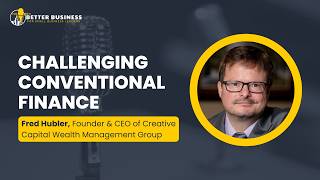
Episode 15 (YouTube podcast) featuring Fred Hubler of Creative Capital Wealth Management Group. Hubler explains his journey from corporate IT/MBA to independent financial strategist after dissatisfaction with commission-driven brokerage practices (his first day in the industry coincided with 9/11). He focuses on alternative investments (private REITs, private equity, real estate, institutional-style strategies) citing Harvard/Yale allocation practices and emphasizes selection criteria: sponsor quality, regulatory oversight (FINRA/SEC), accreditation requirements (standard SEC definitions), matching client risk/needs, diversification, and liquidity limits. He says typical client constraints: accredited investor rules (net worth $1M excluding primary residence or income thresholds $190k single/$300k married), but his firm sources some alternatives with lower qualification thresholds (~$70k net worth and income) to broaden access. Hubler recommends limiting illiquid alternatives to roughly 20–25% of net worth, performs quarterly reviews, uses behavioral-finance tools (risk questionnaire scoring 1–100) to align client comfort, and employs technology (CRM, AI meeting summarization) and a salaried team to avoid sales-driven conflicts. He advises small business owners to "be a contrarian," test ideas, and take massive action while being comfortable with discomfort.
Questions this video answers
March 26, 2025
His first day was 9/11; his Series 7 license was activated a week after 9/11 when markets reopened.
Net worth of $1,000,000 (excluding primary residence), or income of $190,000 single / $300,000 married.
Approximately $70,000 net worth and $70,000 income.
About 20–25% of net worth.
Chapters
So be a contrarian. You know, test it to make sure you're right. But you can do that at your W2 job. You can do that at your own job. And don't do something different. Just if you do something like look at it out from an outside point of view.
If you are looking for a contrarian thinker, I would like to introduce you to Fred Hubler, who is the principle behind Creative Capital Wealth Management Group. Fred, thank you for coming on the podcast today.
Thank you so much for having me. It's a beautiful Friday and it sounds. Sounds like we have some fun today.
We are. Can you tell me just a little bit about your business? I know about you, but our audience doesn't. How you got started because you've been in this organization for a very long time.
Yes. So I started, like most people, I didn't want to be a financial advisor. I got a real job at a real place in it, they paid for my mba. And I'm old enough to be the guy that was in charge of Y2K for this large international company, all of North America and Brussels. And the promise of the raise and the promise of the promotion after Y2K. And nothing happened, by the way, if you, you know, if you weren't there at the time. I didn't have that. So I left. And I'm like, all right, what else do I like to do? And I was always the guy that did my friend's E Trade accounts and they changed the oil in my car. And so I loved money. I didn't come from money. I come from Delaware County. So I still say water. Like, I am not the money guy I am now, but I'm not from money. And I always felt that the rich got richer because they knew things my parents didn't know. And no one worked harder than my parents. So I'm like, all right, I'm going to be a financial advisor. Because I wanted to be like a doctor, but I don't like bodily fluids. So I'm like, all right, what can I do there? I get a relationship with a finite set of people. And so I started at a brokerage firm and my day, my first day was 9 11, so. So you. You had to fly. You. You couldn't fly to the home office to get your license. You had to drive. So me and, you know, two other three other guys from the Pennsylvania area drove to St. Louis and couldn't call anybody and the market wasn't open. So my. My series seven, which is the stockbroker license, is actually was turned on a week after 9, 11. Because for the, for, you know, that week, everything was closed. And I came from an mba. I came from finance and technology background. So I had new numbers. I didn't know sale of this kind of sales. And the one thing that started me down the aisle of leaving that and doing my own thing was regardless of who I'd called about, hey, what do I do now? Cause I had a list of people that I was working with. I had a list of people that trained me or trusted me. And whoever I called, the answer was their product. Call the annuity guys, I guess you buy annuities. Call the stock office, and that's best time to do stock. And then call the bond guy and get the best time to do bonds. Like all three of you can't be right. And so I realized that most brokerage firms and most financial advisors, nothing wrong with them, are in a sales organization that just happens to have the product, be a financial product. And the thing that was the last straw for me was we would get a printout in overnight. So in the morning you have a printout. And. And my dad was at the top of the list. And it was a. I think it was Merck was the stock of the day. And I called the. The brokerage, you know, investment committee, and I said, hey, how do you know these people need this stock? And they basically said, this is the stock of the week. And these people have cash. Like, that's not planning, you know, so. So after two years, I got, you know, I felt a little guilty because I'm like, I would make money if the stock went up, I would make money if they then sold it if the stock went down. I'm making an emission on both sides. And so I left and started my business. And when I went on my own, I was the same zip code as Vanguard. So I knew I'm not trying to be bigger, not going to be cheaper. So I started to study where Harvard and Yale foundation manage their money. Because if you start searching for how to manage money, or where large people manage money, or where you always end up at the world of alternative investments. About 70 to 80% of Harvard and Yale's foundation are not in stocks and bonds. And so that. That again, was. Was the thinking that started my company. And I literally, and I tell everybody this. Krissy, Blessed, Lucky and smart, in that order. I just wanted to look different. I'm in Vanguard's backyard. Everyone's buying mutual funds from them with no cost because there's no fees or no commissions. And I'm, I'm, I'm, I. If I was going to try to sell a mutual fund in the commission side of the house, it was a 5%, you know, commission to me or to whoever, you know, sold it. And, and to me, and, you know, I'm a football guy, that's a five yard penalty on every play. Like every dollar you give me is worth 95% once it's in the account, if there's that 5%, you know, commission. And I didn't think that was right for anybody. And frankly, I thought it made my job 5% harder. So 22 years later, I'm, now, you know, I was in left field most of my life and now 22 years later, the fields moved and I'm ahead of the pack and I didn't move. So it's, you know, the camaraderie and the national recognition, it was not what I was trying to do. I was just trying to look different and help my clients do the things that I thought they needed to be done.
So as you're looking different, I think that some of our audience may not be acquainted with what the world of alternative investments is and your realm of expertise. So can you give us like a quick example of some of the things that you look at and you do?
It's like the word smurf or it's like the word annuity, or it's like the word blue. You don't know what blue's in my head when I'm saying blue. So alternatives is a very wide net, but basically it's something typically that is not directly exposed to the stock market or the bond market or really a public market. So most good alternatives have a liquidity lockup. Like there's that you can't get in today and out tomorrow. So an example would be real estate. You can get into real estate a bunch of different ways. There's private REITs, which are like a REIT you could buy in your 401k, but it's, it's private. You're buying it directly from the company and then when you sell it, you sell it back to the company. But the, but there's no stock market ups and downs. There's ups and downs in the investment, but it has nothing to do with buying and selling of the security, private equity. And for any of your listeners, I now get paid to write for Forbes, which blows my mind, and I wouldn't take the call. So eventually we have a PR guy. Now he's like, hey, are you not Taking the call me, I don't need to pay for Forbes counsel, which is some sort of an advisor can pay. I don't know what it is, but they can pay to have that on their business card. And to me that's like stolen valor or purchased valor. He's like, no, it's the Ed wants to talk to you and he might want to hire you and pay you to write about alternative investments on Forbes.com and of course I said, well have him call me back. I'll take the call now. So all of, all of the kind of ideas that I'm talking, that we're talking about free on Forbes.com Put my last name in. I think you get five articles, you know, a week or a month or whatever. There's no cost. But that, that's, that's how they can find out more. But private equity, which it was Richard Gere and Pretty Woman, remember him? He would buy companies and split apart. So there's funds that do that and so not that you know, and some of them are friendlier. You're not just laying people off just to get to the bottom line. So private equity, real estate, a lot of institutional things. So there's a lot of roll up strategy. So I try not to get in the weeds. But they're, they're investments that are, have a value add component, meaning there's something they're going to do to make this thing better that has nothing to do with someone else paying more for it. Because the fallacy of the stock market is buy, hold and hope. Just because you bought Tesla stock doesn't mean it's going to go up. And you probably can't ever buy enough Tesla stock personally to move the, you know, you're never going to move the needle and planning can't be based on hope. So if there's investments out there that they're buying a piece of real estate and they're going to fix it because they bought not the nicest piece of real estate. We all can make sense. Like that all makes sense. So it's interesting. People assume alternative investments are very complicated. They're actually simpler than the stuff most clients are invested in. Wow.
And Fred, I appreciate the conversation that we're having because we have small business owners that are continuing to generate income from their businesses thinking about how do I diversify, what do I do, how do I keep things in different buckets. You're providing some additional options and opportunities that I think a lot of times we're entrepreneurial in our spirit and how we build our businesses. But we're not always entrepreneurial in how we build investments and make investment decisions. I appreciate the information and the wealth of knowledge that you're bringing to the audience. I have a question because you talked about Forbes and we'll make sure that we link to the show notes so that our audience can get that information as well. But I also know that you've been featured in some pretty prominent publications as well, like the Wall Street Journal and U.S. news. I want to know, since everyone seems to want to talk to you, Fred, and you don't always take their phone call. Since you ignored Forbes for I don't know how long, what are some of the key factors you look at when you're advising clients on alternative investments? What are those criterion that you're thinking of?
Sure. The biggest drawback for my 22 year career is the feeling that we all, I think, have that the rich get richer because they know things the rest of us don't. Well, not only is that 100% true, it's a government program called accreditation, which means it is illegal for me to solicit you if I don't know your background to buy into an accredited investment. It's literally illegal. I can get, I can go not to jail if I do it enough. I probably could go to jail, but I could get fined and have a ding on my U4. So the hardest part for me is great people who just don't have that accreditation. And I know no one knows what that means. It means a million dollars in net worth, not counting your house. Or you could be accredited on the income side, which is 190,000 if you're single or 300,000 if you're married. So either of those qualify you for a different page in the, you know, Cheesecake Factory menu of what's out there. You get to look in the back and you get to order off of things. But the hardest part for me is one, I need to know that they're accredited. So a lot of times accredited clients know other accredited clients and they know what it is. So it's not as hard for me anymore. And it always blew my mind. The very first clients I had, which we kept until God takes them away. They liked me, they trusted me and they had no other reason to work for me. I didn't have money, I wasn't in Forbes. I wasn't doing all these other things. They are very, I'm very sensitive to them. I wouldn't be where I'm at without them. They are, they're Blue blooded, hard working. So we've spent a lot of time finding alternative like investments where the qualification is 70,000 of net worth and 70,000 or 70,000 of income which all my clients, you know, even the smallest clients, even my friends and family can kind of, you know, they can qualify for that. So that's been very important for us to make sure it's available to everybody. And I'm not the only guy doing it. So it's not like you have to come here or not. But what we look for is matching the client's needs with what's going on in the world. And so we've been very defensive pre election just to see where it's going. And we're still concerned with debt. I don't think we're going to be cutting $22 trillion tomorrow and everyone wants it cut for everyone else but not them. So there's going to be a lot of fun there. It'll be interesting times to read. And I'm still not bullish on the stock market. I think it's a really, really, really, really the risk isn't worth the return when I can get for my clients a similar risk or similar return with much less risk.
So when you're looking at alternative investments, I would think similar to stuff, there's a million things out there. How often are you evaluating new opportunities, new investments, how many do you usually go through before you're like, this is one that I would be willing to put people in. This is one that I mean, is it 10, 20, 100? What's it, what does it look like every day?
We have a playbook. We just had our playbook meeting yesterday. And that part of the chief strategist. I'm the CEO, I used to drive the trains, now I run the railroad. So I have to have. So I have nine other full time people and they're all staff and they're all salary and they don't make a commission if we sell something. So to answer your question, we narrow it down. We know everything we do has to be FINRA or SEC regulated. So I'm not saying, hey, Chrissy has this thing she's doing on the side and she's raising money. Go there. I can't now if I know they love what you're doing, I'll say, hey, talk to Chrissy, she might have something you want. But I'm not even an arm's length, I'm like a mile away from that. Like I have nothing to do with it. So it has to be finran. SEC regulated. But the big people, the big firms, the firms can. Or Fitzgerald that they're coming down from, you know, institutional, working with Harvard and Yale and those types only to working with family offices, which is the category I am. We're in 30 states. We have about 300 families we work with, you know, and so start with. For us, we start with the sponsor because we need to know someone can handle it. Because they're like you or whoever is trusting me, I'm trusting them. And so I'm handing the ball off. They gotta be a Saquon. They gotta be able to run and jump backwards over, you know. Told you I'd get football in here.
I knew you would. Yeah.
So to answer your question, not counting the asset management, we still do stocks and bonds. Like, you can Only have about 20, 20 to 25% of your net worth in these illiquid alternative investments. So if you had a million bucks to give me, I can only put 200,000 in these illiquid things, and that's fine. You probably should only have about 20% of your money locked up. So we do have money managers that we hire and fire whenever we want to if they're not doing their job. On the. On the asset management side we are looking for today is the end product that the company or the investment is working in. Is it a must have or a like to have? And we're moving away from the like to haves because that's the first thing that goes away when things start to slow down. And I think things are going to slow down no matter who's in the White House. Way too much money was spent for way too long, and there's going to be repercussions, and I don't know what they are, because no one in the world and the history of man has ever done what we did the last four, five, six years. You know, so there's a lot of things we don't know because we've never been here before. And the stakes are much. The scale is much bigger. Just the amount of debt globally is much bigger. So it must be a must have. And then we also want to make sure it matches the risk to the client and that, you know, the juice is worth the squeeze. We're not waiting 15 years to make 6% a year. So it has to be a bunch of things. To answer your question, we look at it every quarter, and we look at every client every quarter. And so everything is matched up. And then as we. As we have exposure to a certain thing, like a Certain private equity, we'll cap it so that we can have exposure for those clients to a different private equity. Because I don't work for anybody but my clients, so I have no quota, I don't have to sell one over the other. But we also want to make sure we're diversifying because you can have the right person doing the right thing, but at the wrong time. And it just doesn't play out like we thought it would. So diversification helps manage that.
All right, so Fred, you've talked a little bit about changes in the economy, looking at alternative investments. You're managing wealth for a lot of different people, a lot of different personalities. And you said again, we're in a space where we don't really know what's going to happen because we haven't been here before. How do you manage the emotions for yourself as running your own business, but then also with your team and then with your clients and individuals as they're kind of. I feel like you have to be a master, not manipulator of emotions, but kind of how do you navigate and help people feel comfortable, to stay in things, to invest, to move forward? How do you educate and kind of build their resilience and tolerance? Because some of the things that you look at in the alternative space may have a long Runway and they may be something that a client's never thought of before. So how do you manage their emotions around it?
There's two parts of it. One, I took a course to be a behavioral financial advisor and I have all the books. And so I've been in my office needs to read the. I don't send them to the court because I got the book now so I can just.
So what does Behavioral Health advisor mean?
Behavioral. Behavioral Financial Advisor was a course on how to do exactly that. And so the dumb. It was a weekend course, but the dumb it down few things we do and you take the course and then you apply it the way you want to apply it. One, we have a third party software that will address the client's risk. Like you take a questionnaire and it's almost like an eye doctor. Do you like this portfolio? At the end of that, five or six questions like it's not. It's not War and Peace you have to fill out. You're going to get a score from 1 to 100. 100 is really risky. One's not really risky at all. That's just where you are. And then we look at where your money's at and do the same analysis there because Everything either has history or has a proxy of something with history. So if you're 72 and your portfolio is a 20, we know you got more risks we can legitimately take. If you're a 20 and your portfolio is a 72, you're out on, on a limb. And the software, which is awesome, shows if you do nothing and you have investments, the best six months and the worst six months. So part of, to get to them, to stick through it, we say, hey, here's the range in which this stuff's going to wiggle. Are you comfortable? Can you sleep? And a lot of them say yes, and a lot of them say no. And if they say no, then we use other vehicles. There's equity indexed vehicles that can't go down, but when they go up, they're capped. Okay, well, this is. And I let them decline. I don't care how you invest in the S and P. You can do it naked and go up and down and, you know, and ride the, ride the roller coaster. Or we can do a protect and grow strategy. And we vetted and again, every quarter we make sure we're using the best of breed, because we're not. I don't have a pit bull tower, pit bulls telling me what to sell. I don't have the stock of the day like we talked about earlier. We can do anything. Which when I was by myself and no one, it was completely overwhelming. And that's why I cheated and went to Harvard and Yale's endowment annual reports, which are still out, by the way. And they're public. You can see what they're doing. And so they go away. They're in storage. What are they doing really? How are they getting that? Oh, who are they working with? Their money managers. And I'd call them up and say, hey, I'm a financial advisor. And. And when I was at the brokerage, they wouldn't return my phone call. I'm now independent. Now we have. Now we have. And I picked a broker dealer, which is someone I have to be underneath of so they can supervise. And it's good. It's the way the business is. But I picked one that's a boutique that specializes in alternative investments. So. So that, that's kind of the answer. You find out where the client's at, meet them where they are, and then you package around that something that lets them feel comfortable because things are going to go differently than we planned. And if it's different on the way up, no one complains. Different on the way down. Now we're like, well, you never told me it's going to go that well. We can say, no, we did and you said it was okay. Or here's your score. And so it's honest conversation and it's putting the, in the ways, in the way before they're in the way, like just putting out the bad news or the potential bad news. In some cases, they want all the upside, none of the downside. Don't want lockups, don't want. Well, then they can't be invested. If you and I tell them, hey, if you want to, if you find something that gives you that, let me know what it is and I'll come work for you. And I'm, I'm much easier to say that now because I don't need any more clients. We can help who we want to help, but we're not, we're not, you know, we're not going to force people to come in. Yes, we're open for business, by the way, but we're not, we're not actively, you know, going to force someone if we can't help them. And that open conversation is much different than a sales guy saying, oh, it'll be fine, just give me your money and I'll put it in this thing.
Yeah. So people are pursuing you as opposed to you pursuing them. But I would say this too. You talk about how you cheated and you took Harvard's playbook. I would say that you were a true entrepreneur and that we borrow ideas constantly and improve upon them. So congratulations on finding something that could work for people that are accredited, but then at the same time also looking at those individuals who are everyday people and enabling them to get into the space as well. I have two more questions for you.
Sure.
The first is cigars technology and the Eagles, which breaks my heart as a Cowboys fan, but whatever. Those are some of your passions. How do those tie into your organization and how do you and how you approach your business?
Yeah. So technology, I've always, I drive a Tesla. I love. I get every new Apple is my Christmas. If there's a new Apple thing, I don't care if I want, I get it. I just want it. So I know technology or technology is a force multiplier when applied. Right. It's what I did for my mba, you know, at the business where I had my mba, they were, you know, mainframe, you know, big, big, big company. And so even with no employees, I had a CRM that was software based because I knew someone someday would also be typing in the next steps and all that stuff. So in our office we utilize a specialized CRM that's off the shelf for financial advisors. But then we built workflows because now we have nine people. So we have someone doing the onboarding, we have someone doing this. We have someone who's a strategist, which is our version of an advisor. Because we don't do financial advice, we do strategy now we'll deploy it, but, but we're, we're strategists because I want clients to know we'll look at even things outside of us and tell you what to do with your 401k at work or whatever. So the short answer is technology is a force multiplier. It is fun. And I've never seen it. It's always harder to set up, but I've never seen it not be the right answer. So we have AI now that does a lot of our meeting. They don't, doesn't record the meeting, but it summarizes it. And then it talks to, because the APIs have to do this and it talks to our CRM. So if you and I talk about doing 15 things and three of them are on me, I'm going to have those three things on my CRM once I, once I synchronize it. So technology is. Cigars is the only thing I really like that I haven't implied. You know, actually I have a lot of clients because of cigars. And we'll have a lot of really deep conversations because you're building your network without the, without having to be outside or outside in the rain or whatever. So having long form conversations that aren't about business really helps business.
Wonderful. So as we wrap up, the one thing we like to leave our listeners with is the 1% that one thing that you can do or that you would give them advice in their business to be 1% better. So what is that, Fred?
So I think all of us have an opportunity to be a contrarian. And I figured that out because at one point I realized how big this had gotten and I didn't know how it got there. I, I was just surfing and I looked and I'm on a tsunami. And I realized I did three things, three things by accident. And then I couldn't, I couldn't back test it and have it fail. So when I did the research of what the mind, I mean, and so it's very generic, very simple and it works be a contrarian. So look at things different, do things different, be right, which is not our call. I could, I could have done this alternative investments 10 years ago and it would have been the wrong time ten years from now. I'm late to the game. So you got to be a contrarian. You have to be right, which means you test things. You don't just put all your eggs in one basket. I did regular stocks and bonds while I dabbled in the alternative investments to understand it. The industry was new. There were dogs there that we had to deal with. So be a contrarian. Be right, which you don't control, but you can test. And then the third one, what most people kind of I did because I wanted to take my moonshot while everything lined up. Like there was a lot of things that were like, oh my God, I'm the only one doing Forbes calling me. Like they have other people they could have called, but they called me. So the third thing is take massive action. So be a contrarian. You know, test it to make sure you're right. But you can do that at your W2 job. You can do that at your own job. And it don't do something different. Just if you do something like look at it out from an outside point of view. And then I realized Elon Musk did it. Henry Ford did it. And the thing that really surprised me, because the world's not going to want things different. And I think we all kind of underestimate how much pressure it is to stay in whatever box it is. But the year that Apple computer company was started was the same year the New York Times said the worldwide demand on personal computers globally is 300 units and you're starting Apple. So. So electric cars with Elon, like, you can go back to anybody, Henry Ford, all the people with the horses, like, oh, no one's ever going to do that. Well, now the rich people have horses and the poor people have cars. Back then the poor people had, you know, it's all flip flopped. So be comfortable being uncomfortable. So I gave you two things. Be a contrarian and be comfortable being uncomfortable. And I think we're all getting, you know, confidence. Used to be, I hope you like me. Confidence really is, I'm okay if you don't. And you have to own that. You have to earn it. You have to almost be that fake it till you make it or kind of like believe in yourself because if you don't, no one else will.
Well, Fred, thank you for your time today. I feel like we went into the deep end of the swimming pool with alternative investments. Talking about two being a small business owner, contrarian thinking, and, you know, all of the things that you can do to continue to grow yourself, grow your business and think differently. So thank you for your time today.
Thank you for having me.










