Episode 32: Playing The Long Game: Values, Community, And Sustainable Growth
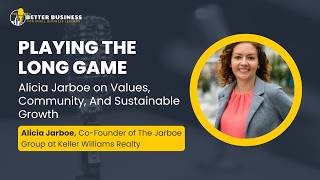
Alicia Jarbeau built a real estate business in Worcester by treating clients like long-term relationships, not transactions. She sends handwritten notes and hosts appreciation events. Financial hardship led her to start the Jarbo Foundation, which served 173 families at Thanksgiving this year and supports local food pantries and schools.
Chapters
We are client focused, we are relationship focused, where there are people who are super transactional, like one and done, you know, do the deal and move on. We don't want to do that. We realize it was easier to work a database that already knew and liked you instead of trying to find people that didn't know you at all.
So today's guest isn't just going to talk to us about building a successful real estate business. She's also going to talk to us about how to connect community with values and vision and the things that she sees towards the future and building an organization that lasts. So I'm so excited to have you. Alicia Jarbeau from the Jarbo Group and the Jarbo Foundation. Thank you for being here.
Thank you for having me. I'm excited to chat today. Yes.
So as we start talking about things, you know, you've built a real estate business that's more than just transactions. It's about trust. So I would love to know, tell us a little bit about your business, where you are, because I know we're not. You're not in the studio with me today. So talk about that. And then I would love for you to tell us some of the intentional touches you've added to the Jarbo Group that turn clients into long term relationships. Because I feel like you make real estate go on and not just be transactional. So tell us how you do it differently.
I appreciate that. So we operate a real estate business listings, working with sellers, buyers, investors incentives. Central Massachusetts, specifically Worcester, is where our office hub is. So that's about an hour west of Boston. It's not quite Boston accent here, but so we are currently a husband and wife team. We've been in and out of the phase of growing our team, minimizing our team going through Covid growing again, minimizing again, people leaving for other brokerages, things like that. So it is strictly a husband and wife team at this point, where we work together on a lot of things. There's very few business things that we're sort of separate on, which can make divvying up tasks difficult and sort of taking responsibility for. Because you're like, well, you did this thing. No, I did this thing. So how we kind of go and beyond, above and beyond with our business, we are client focused, we are relationship focused, where there are people who are super transactional, like one and done, you know, do the deal and move on. We don't want to do that. We realize it was easier to work a database that already knew and liked you instead of Trying to find people that didn't know you at all. So cold calling is not something I do. I don't just, like, pick up the phone and randomly check the. Do not call us and start calling everyone. I don't. Door knock. Unfortunately, I'd be terrified. I don't do that. So we. Once you're in our database, you're in our sphere of influence. You come to our client appreciation party. We book a box at the AAA stadium in the city once a year. People come out for that. We've got a bunch of people. We'll get photos and, you know the. We're right above where they do pitching practice so the kids will get balls thrown up to them. Things like that. We do birthday cards, anniversary cards. If you bought a house with us. Wow. We have. I love getting pictures of babies from clients who are like, hey, you know we're pregnant. Like, here's a baby picture. Like, that's so cool to me that, like, you care enough to send your real estate agent a picture of your new baby. Like, you're still in the hospital. Like, go take care of your family. We've been to engagement parties, weddings. So these people, like, once they're in our sphere, they're like, oh, we like you. Like, we're friends. And I'm a huge. I know we haven't talked about this before, at least, like, not in our questions, but I have clients who I meet them where they're at. So if I meet someone, the super fast talker, like, you're gonna get this. If I meet someone who's like, senior, and we're trying to retire you and move you to Florida, like, my approach is very, very different with that person. But no matter where they are, to meet them where they're at. And then I'm super transparent, too. I've had clients who were, like, near tears, text me at, like, 9 o'clock at night, like, hey, I need to talk. And I'm like, full disclosure, I'm two glasses of wine. And like, just. You just have to know, like, where I'm at right now. And some of them are like, okay, take the phone call. Like, I need to be talked off the ledge right now. Right. But I think that clients appreciate that level of honesty and not. It's not just a wine example, but, like, any example. Like, hey, I'm doing this thing with my kid this weekend and I can't do this. So, like, I'm having someone cover for me. And that's a much more palatable response for clients than, like, oh, you're just not showing up for me. No, I'm showing up for someone else who's more important than you. And honestly, my family is more important than you. And so I think it's important they know that too. So a lot of handwritten touches. We get Christmas cards or like New Year's cards. We used to do voice drops before that became sort of problematic with. With do not call us and stuff. But yes. Yeah. So, I mean, once you're in our. In our database and in our sphere, you're much more like family to us. And I always hate that adage, like, oh, we treat them like family, but we do. And I think that shows up for us by getting invited to, like, family things, housewarmings. And you're like meeting their grandparents at a housewarming party that you helped them sell two weeks ago. So, yeah, so that's some of how, you know, personal touch gets involved.
Well, and even meeting people with where they are. Something that I know about you and I love about you is that you're willing to tell a client when something isn't a good fit, even when it costs you the sale. And that, I feel, is. It's still rare in sales to be able to really tell people no the right way. We do it a lot at Clarity as well. So how has honesty shaped the way people see and trust you as a leader?
So you have to get out of. The first step to do that is you got to get out of scarcity mode. So we've also fired clients. Right? Like, and there's. That's hard to come by too. Like, hey, you don't align with my values anymore. Hey, you want me to help you buy a strip club? I'm not going to do that. Hey, you know, and we've also talked to a seller who's like, hey, I want to sell. And my husband's looking at the data and he's like, you're in short term capital gains. Like, I'd wait six or eight months. And like, did we not get that deal? Absolutely. Does he still live there years later? Absolutely. He never sold it. But, like, I know that people appreciate that level more than anything. We've had clients that talk to us, we're super honest, we build rapport with. And they're like, yeah, I'm just not going to sell for the next seven years. But how many calls have I gotten from them saying, hey, my cousin wants to buy something, give them a call. So even though you're not making money in that moment, you have to, like, do the right thing.
Yeah.
And that can be really, really hard. Like, integrity can be really, really hard. Especially. I know we'll get to these. But like, the cash crunch moments of being like, shoot, like, I could have sold that next week. And like, I didn't because it wasn't the right thing to do. So doing the right thing all the time is not the easiest thing to do either, so.
No, it's not. And I've watched you. You've coached your team through situations. Instead of those hypotheticals you live in, say you live in reality, but you do. You're giving examples. Can you share a moment where that real time, hand in hand approach has paid off for you? I know you talked about the one with. With the short term capital gains, but I mean, really talk to us about how it's paid off for you as an agent, but then also on the client side, because sometimes telling people no, you're saying no to the sale. But where has it actually worked in your favor too?
Yeah, so one example wasn't even that I was thinking of, wasn't even with another agent on my team. It was me when I was new to the listing side. And so Justin, my husband, is my business partner, and he's like, hey, come to this appointment with me. She's trying to sell. Like, we don't really know what's going on. So we go out, sit with her, meet her where she's at. I mean, she's crying half the appointment, and her kids are not quite in college yet. So she doesn't want to relocate all the way, even though she wants to go elsewhere, to another state to. To be with family. I think her sisters or something. And she's like, I still need them to be able to come home even when they're in college. Like, I can't do this yet. And we're like, okay, then, like, now's not the answer. Like, if you still need to do these things, like, now's not the answer. And then it was like, well, I'm having trouble affording things. So then we're having a whole different financial conversation with her about how you can do this. How can you talk to your bank? How do you. How do you get more money? How do you deal with your job? Like, having life conversations with people. Then at the end of the day, like, she still lives in her house. And this was probably. I think this was pre Covid, probably six or seven years ago, she still lives. She comes to our client appreciation events. And then even though I was the one at that appointment, not leading the appointment by any means. I was kind of just there like, okay, let me build some rapport with her. But not like you're walking around the house looking for hold the boilers. Like, I don't. I don't know. And so maybe a month ago, she texted me directly and was just like, hey, I'm looking at my options again, because I've already applied for this thing out of state. Like, what can I do? And he wasn't the one that got the phone call. I got the phone call. And so I think there's. It's not just the rapport. So you come into client appreciation event. She's getting a monthly email from us. She's hearing from us on a regular basis. She's getting a Christmas card. I don't know if I have her birthday, but if she's on Facebook, I can probably find her birthday, which I've done. And so it's causing her to come back to us. But it's also, I've gotten phone calls and emails from her referring friends, so I probably could look up how much business I've done because of the relationship with her. But that was a real life example of sort of training on the job and learning some empathy and just meeting them where they're at.
Well, and one of your strengths that I've seen in knowing you and getting to be friends with you is just the intentionality and the focus that you have in caring for people. And that just. It continues to radiate through everything that you do. Which I just. As a business owner, business leader, Alicia. It's just, it's refreshing to see that because not everybody has that same level of detail that you do and that level of care and compassion that doesn't necessarily always translate into dollars right away. So you're willing to farm those relationships. So it's really good to see that. It's refreshing.
Appreciate that. It's a long game. It's a long game.
Yes, exactly. So let's talk about, you know, the long game. Let's talk about volatility. Because, you know, you have said, and I've heard you say, you know, real estate isn't for the faint of heart by any stretch of the imagination. Some months it's fireworks and other months it's kind of tumbleweeds and a dry desert with nothing. So what keeps you steady and dealing with the situation? When deals are dragging, when cash flow, roller coaster hits? How do you manage that? The ups and downs? Because we hear from a lot of business owners that are trying to figure out how do I navigate the cycles. And real estate has a natural cycle. So I feel like you probably have a little bit more wisdom than some of us do in the other spaces that we're in.
So, like that example, it is a long game. It's very, very much a long game. Like building your database, keeping up with your referrals. There are years like, this has been a really, really strange year. After rates went up, we lost some clients that literally were barely limping in and now just can't buy anything. So you didn't lose clients because you did anything wrong. You lose clients because their mortgage is a thousand more than they can afford now. So it is a long game. We focus on that, but also our repeat referral and just still building trust. So we've had people be like, I have, you know, 100 realtor friends. Because everyone does. Everyone knows a real estate agent. Like someone lives in your neighborhood.
Just like everybody knows an insurance agent. Yes. Right. They know five.
But she's like, hey, you stay in touch with me. My uncle doesn't like. Okay, so I'm taking your uncle's business and that's totally fine with me. Yes. So, yeah, we also. I don't have a great. I wish I had a really great nugget of like, I do this thing every day and it keeps me grounded. I wish I had that thing I'm still grappling to get. I wish I had that thing. For us, the financial volatility of it is having other means of income as well. Right. So I have a small portfolio of our properties that we manage so I can pull money over there when I need to or put money in my business if I needed to have an influx of costs for something over there. So I really wish I had a better how to handle it other than just being a good stress manager.
You are. That's okay.
I don't break easily in terms of like workload. If I'm like, I have these hundred things that have to be done before 2 o', clock, like, something's going to make that happen. I'm a very work better on the edge of the cliff than I am with like two weeks of time to do something.
Yes.
I saw really the other day that someone was like, hey, I'm coming over in 30 minutes. And then the person runs around and cleans up. And then they call their friend 45 minutes later, they're like, where are you? And he's like, didn't you remember you told me a month ago to call you once a week and tell you I was coming over in 30 minutes. So you would rush around and clean up. Like, you're welcome. Like, I'm not really coming over, but now your house is clean. And that's how I feel. Like, all the time. It's. I work much better that way. If you give me two weeks to do something, it's probably. It's not a procrastination issue. It just doesn't ever feel urgent until it, like, needs to be.
So you're one of the people that thrives in deadlines.
Yeah. Yes. I was told that a long time ago. I was like, you. You're not. Like, there's people on both ends of the spectrum. Like, you're so far down that spectrum. Like, if I give you a long time to do something, it's just gonna get done when it needs to get done. So.
Yeah. Well, I would say, too, in knowing you for a while, I would describe you, and maybe you do too, as. As the glue. So you're someone who leads quietly, and you keep everything moving behind the scenes. And to some degree, I don't even know how you. You do it. You just. You get so much done. So how has that mindset and kind of being the glue shaped both your business? And then let's talk a little bit about your nonprofit leadership. How's it shaped both?
Yeah. So I'm a big behind the scenes person, and it can be difficult. I'm actually super vocally intense too, which people think makes me more assertive. I'm actually not super assertive. I'm like midline assertive, but because I'm like. I, like, tell stories and I'm, like, all amped up. Right. So that can be really hard for other people because if they see you a certain way and then you're. You're showing up with 30 volunteers, and you're kind of just like, okay, here's what the plan is. And then people start talking. I had a board member the other day when we were doing the Thanksgiving project. She was like. She saw me in that moment and was like, oh, she's not gonna yell at people right now. Like, I need to do. So she stepped up, and it was like, I almost was crying because I was like, oh, my gosh. Like, this is what I needed someone to do. Like, I can do all the planning I need, but I'm not the person. Even though, like, you're a volunteer, it's hard for, like, me. I struggle a bit with, like, I'm not paying you to be Here, like, how do I keep you accountable to that? Like, how can I say, hey, you said you deliver these meals and you're not. So I'm probably going way off on a tangent here, but. So in that moment she saw like, hey, I need to be louder and was like, hey, guys, like, listen, let's do this thing. Move over here, get this here. And I'm like, okay, thank you. Because I'm doing that in my head because I did all this in advance but like, I had trouble doing that. But I lead a lot from example. I lead a lot from doing. I know you asked, like, I don't know how you do it, but I'm a task oriented doer, so my calendar sort of drives what's happening and.
I.
Do it because it needs to get done, right.
Yeah.
But I'm not the visionary, so I still struggle a bit with that because I feel like a lot of leaders are also the visionary, where I'm more of the implementer. So I can lead a business, I can lead a nonprofit, I can do those things and lead my family to some extent, but I'm not coming up with the big ideas, if you will. Like even, even going 501c3 status wasn't my idea. And it's like he could be like, hey, let's do this thing. I'm like, okay, here's like the 12 things we're going to do now to get it done. But it wasn't like, oh, you can have a big idea and I'll just take care of it. And I like that. I like being that person. It's like, oh, you want like a 12 course dinner Sunday? Like, let me do it, like as a silly example. But like, that's just who I am. It's like, tell me what to do and I'll do it. But I'm not the like big ideas person.
So as, as the woman that gets the things done, I want to shift and kind of talk a little bit about the Jarbo foundation. If you can talk a little bit about, you know, what inspired it, even though you're the one that did the implementation work and kind of how it connects you back to your work with clients and what you're doing. If you want to share, I mean, I know you just did a giant Thanksgiving project, which was amazing. So whatever you want to share about it, I would love to hear.
Yeah. So without sharing the entire life story here, we had gotten into a struggle over a decade ago where some of the benefits of my company, my company had started downsizing so their benefits package reduced. So my insurance tripled overnight. My out of pocket expenses tripled overnight. Justin had made an active decision to go into real estate from car sales. So we actively made a decision to lose an income to go to a 1099. But in the throes of doing that, knowing that like this was future potential, right, we'd buy properties, we'd sell more, make more, and that was an active decision. We didn't do the legwork behind the scenes to make that monetarily a good idea. I was more of a saver growing up. He sort of wasn't. I don't want to say he was a spender, but it was definitely like he didn't balance a checkbook. He did, you know, nothing like that. So savings disappeared pretty quickly. Cashing out cards, you know, went pretty quickly. We had a condo at the time, tried to deeden loo, tried to give it back, like here, take it back. At one point we got an offer on it, tried to rent it. Another point, like gave them the offer and said like, hey, here's what they're offering. It's not, you know, as much but like it was kind of before short sales were a more.
Yeah.
Talked about things so they wouldn't, they're like, nope, we don't want it. We're just going to foreclose, you know. Came home to things being rubber banded around my doorknob. If you told me about this in advance, I would have said like, lock me in a padded room, I can't do this. The only person that knew we're going on with at the time was my best friend. And our parents didn't know, like no one knew. It was this kind of like suffering in silence. We weren't going to food pantries. We were just like, okay, we're, we're not going out with our friends if we're, if we're out with people at Starbucks, we're getting in line at a different part of line or pretending to take a call so that you don't have to take everyone's coffee in front of you on your bill. Driving home on E on Wednesday nights because my check hit at midnight on Thursdays. Like it was, it was a tough time. And so, you know, popping in at your in laws to dinner on Sunday nights just to hang out. Well, no, we're here because, you know, and then I need to like, you know, giving us a couple things. I think she started to kind of pick up on it. So we were officially a 501c3, the year we actually went like through the foreclosure and through all our years in real estate. Fun fact. We got sued for the deficiency and I've never heard that happen to anyone else. So we got sued for the deficiency and interestingly, what they ended up actually selling the condo for years later is what we had the offer on that they didn't take. So have fun paying all the condo fees for two years while you didn't have the money and then you got the same money I tried to get you. So of that we were going through a leadership program and one of Justin's projects was, you know, big community impact. And he's like, hey, let's do a non profit. Okay. And then it was a decision factor for us of like, do we use some of the raised money because it was minimal at this point to go the legal route and go the 501C3 route or do we use the money to help families? And that was a really, really tough choice.
Yeah.
But if we go back to like business, it was a long game choice. It was a, we need to do this to make this a legit thing that we can continue growing, not a one and done year 15 years ago. So we went the legal route, did that, and that's how it was born. That's how it's continued. The Thanksgiving project is our biggest project every year, where this year was 173 families, which is more than we've ever done. But frankly, we are part of a church that has an outreach program as well that's sizable, a sizable community and a sizable amount of volunteers. And they did like 150 families. And when I saw that post on Facebook, I was like, oh, snap. I did more than church with way less and probably less resources. So I thought that was cool. And it's not a competition. Like, thank goodness we all helped over 300 families. But like, it was just cool.
No, but it still feels good.
It was like, you know, a big load on me. So. And we helped five food pantries. We consistently help the boys and girl club, the Nativity school in, in Worcester, which is an underprivileged application only school. So yeah, at one point we were doing Christmas, which I, I do have a family right now that's like, hey, we're not having Christmas. Thank you for Thanksgiving. So I'm shopping for five kids right now. But at one point we're doing Christmas and Justin was expecting bikes and like being super cool and like showing up with a truckload of bikes for all these kids. And kids are like, can you give me winter clothes so I can just go play with my friends? Or like, I don't have a blanket.
Yeah.
And that was a whole shift in how we, you know, meeting people where they're at, like, back to that in business, back to that in the nonprofit was like, okay, like, let's, let's do boots, pants, coats, gloves, hats, like, here you go. Because then the comment was like, well, if you give me a cool video game or a bike, like, my older brother's going to steal and sell it for drugs. And that is not the, that's not what we thought was going to happen when we were offering Christmas support. So I still take some of those notes. Like, even with the kids I'm shopping for now is, yes, you gave me items of like, hey, they need makeup or, hey, they need leggings or whatever. I'm also like, okay, well, now I bought five throw blankets too. Like, oh, I know they're struggling with food. So, like, there's two totes full of food for mom and dad too, or really for all of them. So, yes, that's a little bit about the foundation and just kind of how it started and how it's, how it's going. I do expect it to grow. I. I would like to hit 200 families next year, and I would love to have a community garden and a community food pantry and sort of mix in. We might even be able to do it combined with our business where this would be the first kind of big thing that could be business related, but with the community impact, like commingled, you know, buy a property, buy a senior center, that kind of thing. And like, okay, yes, there's this monetary piece over here, but now there's a community garden. Like, I can have the boys and Girls club, I can have local schools, I can have these people work in the community garden. And then there's a food pantry that then also supplements Thanksgiving. So I think for us, that's the next, like, the next iteration of what the foundation looks like. And that would be like, my ideal. So I guess in some ways there's a little bit of vision here of, like, what I really want out of this, but it comes back to, like, needing all the pieces to work. But that would be a really cool next step for us.
That's wonderful. So, as we start to wrap up the podcast, I have two questions for you. So, first one, I mean, you know, you're building a business, you're raising a family, you're leading a foundation. I mean, let's be honest. Like balance doesn't exist. Really. So how do you decide where your energy goes on any given day?
Okay, let's. I would like to use the example. And you probably know this example of taking a jar and you put the rocks in first.
Yes.
Right. So the rocks for me are first our son. So I made a very active decision before he started kindergarten that when he got off the school bus and he's not in kindergarten anymore. This is years ago. Yeah. That I was done in my office. Yes, I might be on my laptop at 8:00 at night. Yes, I might be answering that client call with a glass of wine at 9:30 at night. Yes, I might have an open house on Sunday. Yes, I might have a zoom call at 6 o' clock because someone works 9 to 5 and can't do my schedule when I'm done at 3. But he knows that I'm not like coming into my office, shutting my door and shutting him out. Right. So that was an active decision I made. So call that like the rocks and then you add pebbles. So for me that is now we're on to like appointments. Right. So that could be. Hey, you have a listing appointment. Hey, you need photos. Hey, maybe not an appointment, but that listing needs to go up Wednesday. So on Tuesday there's a three hour chunk that needs this like block needs to be held so that those are the next things would be the business things that cannot move that are potentially driven by someone else's schedule as well. Then we go to stand. And that for me is those tasks. Right. So if I'm bookkeeping for my properties, like I might move that three weeks in a row till I actually it becomes urgent. Right. Like it's tax time. Oh, you didn't do books for November. Let's get to it. And then it's done in two hours. Right. And it might be like, hey, let me do the cards for January. Like does that have to happen on 12:1? No, but as long as it's done by like 12:25 when I might have to send the first one, it's going to get done. So. And then the water comes last and that's all the miscellaneous crap. Like answer the phone, text that person back, check in on this thing, like all the little, little stuff. So that's sort of how I prioritize and that's sort of how I deal with some of the balance. Mostly because the rocks have to be in there before anything else can be in there. And if you don't, you kind of end the week, and you're like, oh, crap, I missed that thing, or I didn't do the thing for Cub Scouts, or like, and that feels bad. So even though I don't want to let anyone down, like, there are times where something has to. To get the rocks in right. Like, some. Something's going to have to fall through. So hopefully it's. It's a random task and something minimal and not like a person, but I'm sure it's happened.
Yeah. I appreciate the intentionality that you're sharing and kind of giving the listener the ability to see, you know, this is how things go together. So it's. It's a really great relational example. So I want to thank you for your time. And as we're closing out the podcast, we always ask the same question. And it is, you know, what piece of advice would you give small business owners so that they could get 1% better in their business today?
1% today, I want to say, like, integrity. It's the long game. So maybe that's just a mindset shift of, like, today, it's not about the $25 today or the $2,500 today. It's about the relationships and the long game. Like, and that's maybe not a 1% shift today, but over time, that's way more than a 1% shift in your business if you can focus on something that's not just about you and it's not just about today.
I love that. Alicia, thank you for your time today. Thank you for taking time out of your busy schedule and the things that you're doing. We're going to link everyone to the Jarbo foundation so they can follow you and kind of learn about the things that you're doing and, you know, hopefully serve along with you or be inspired and do the same things.
So love it.
Thank you very much.
Thank you.










